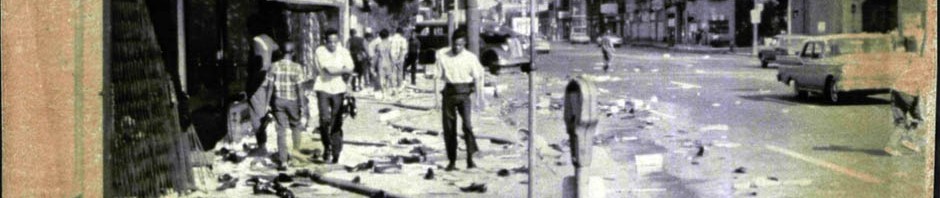
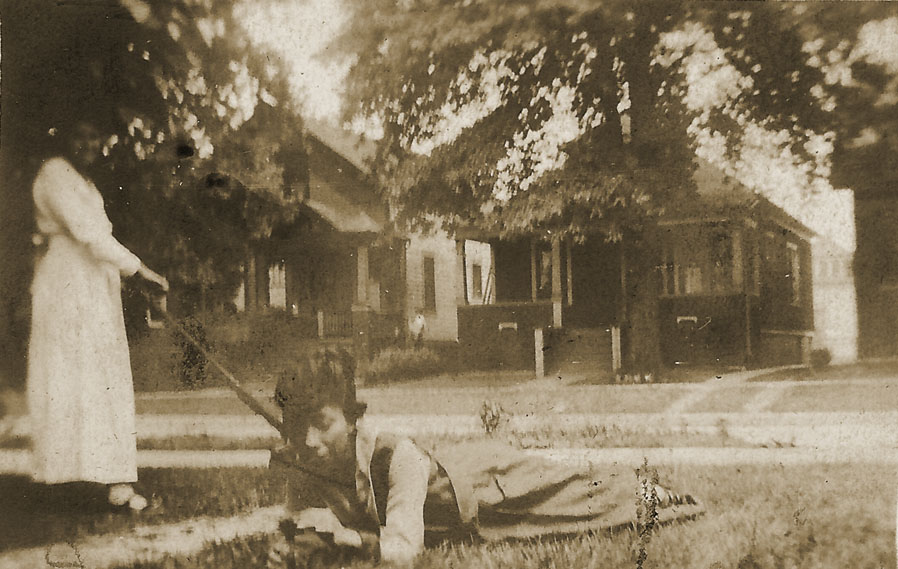

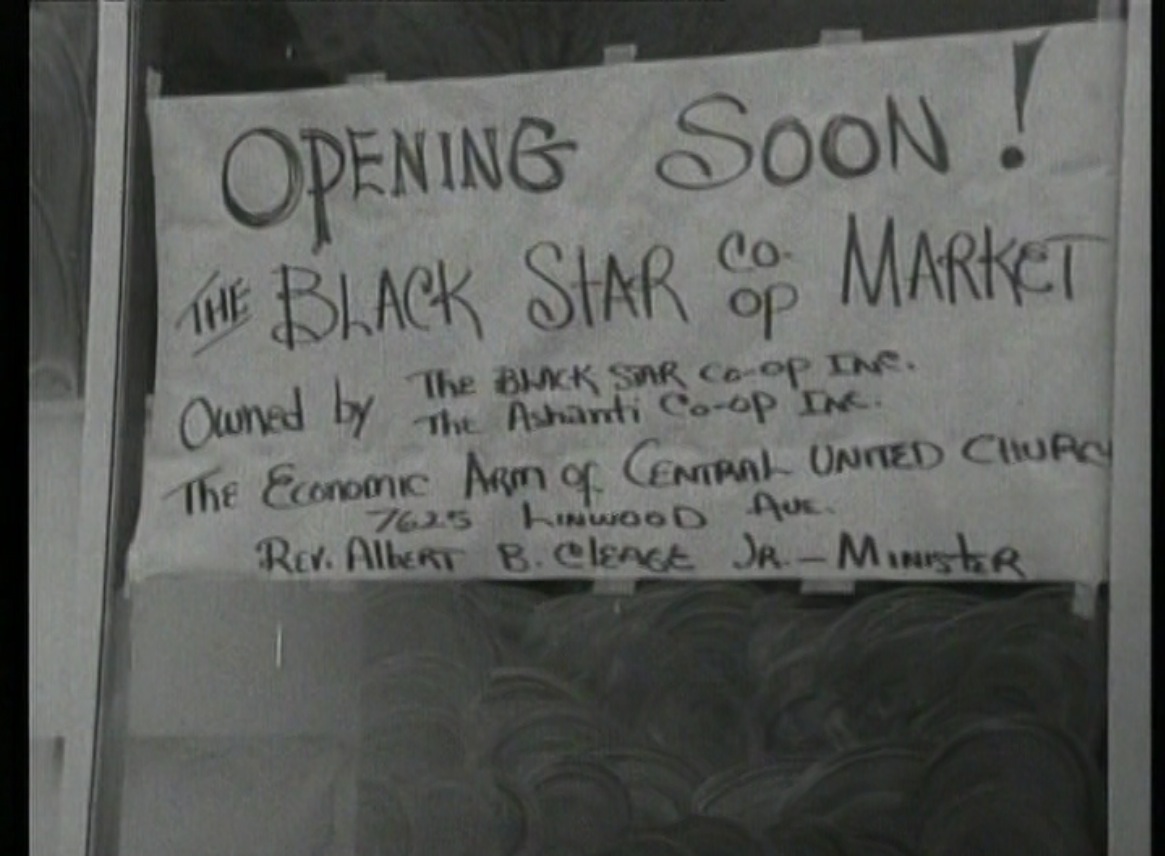
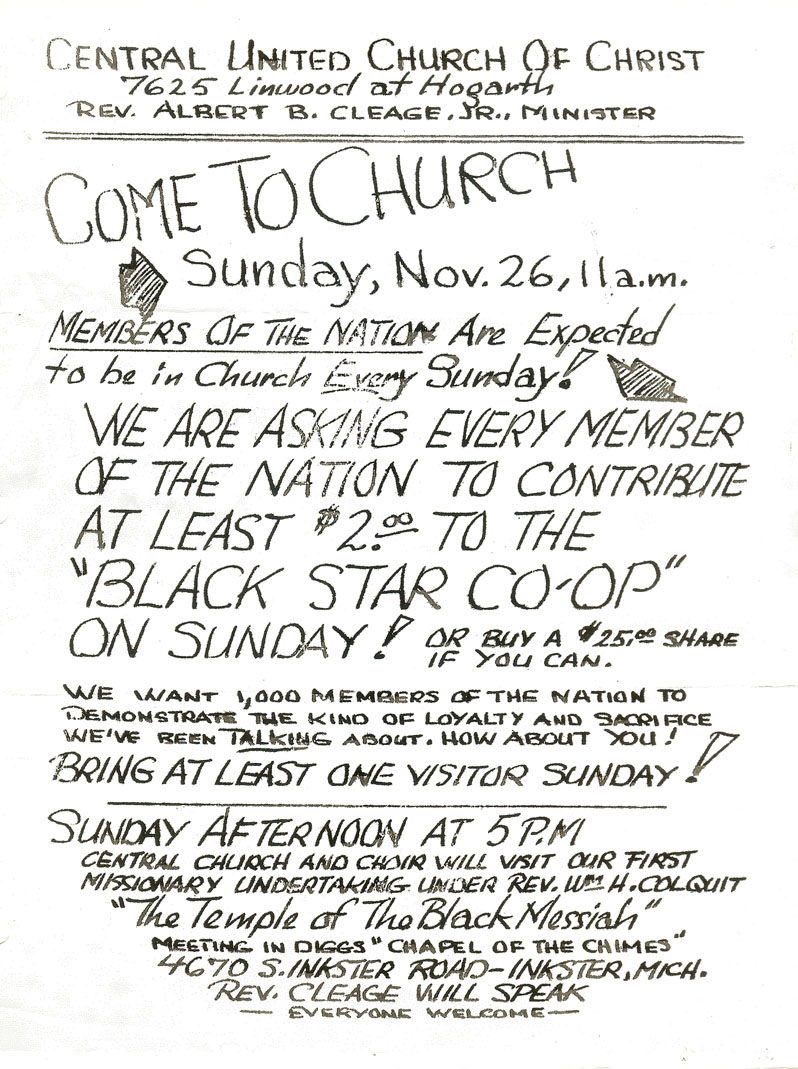
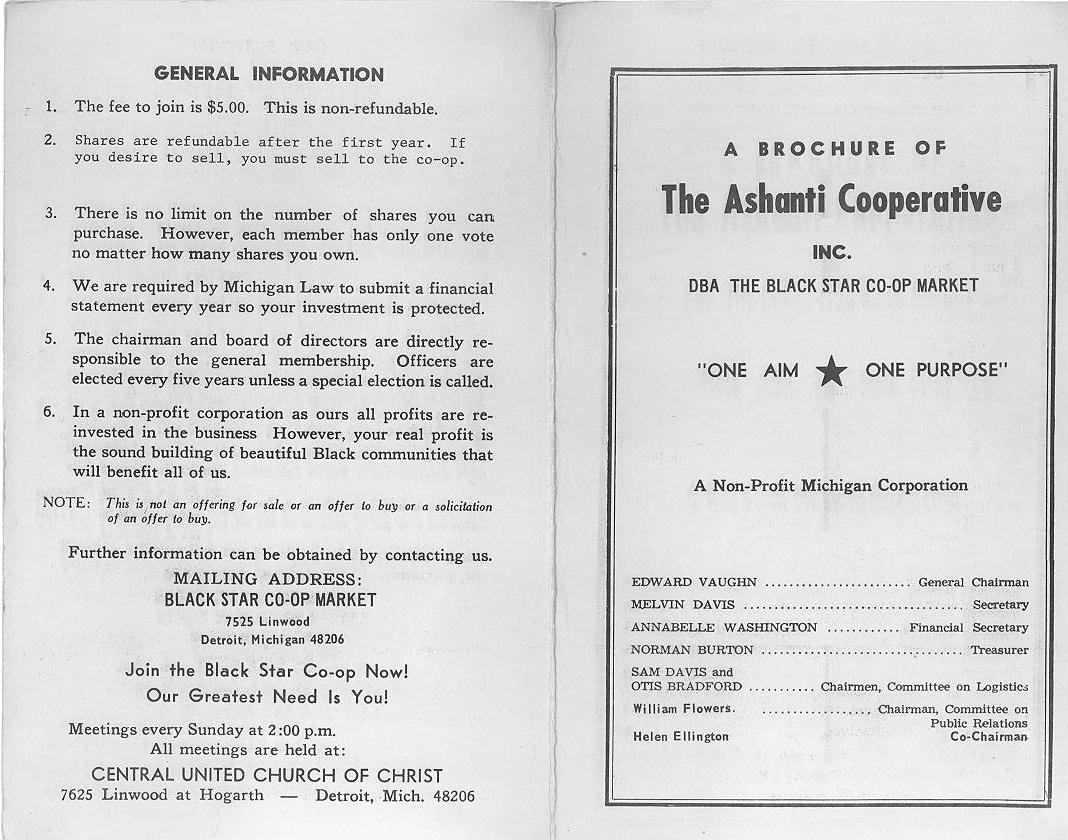
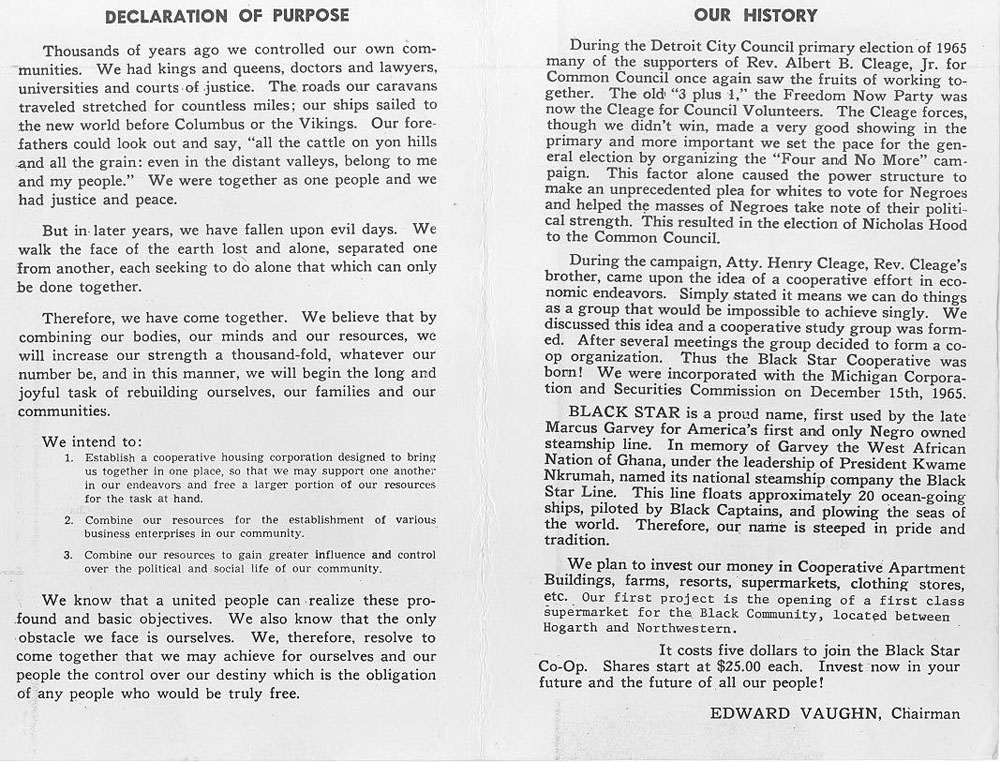
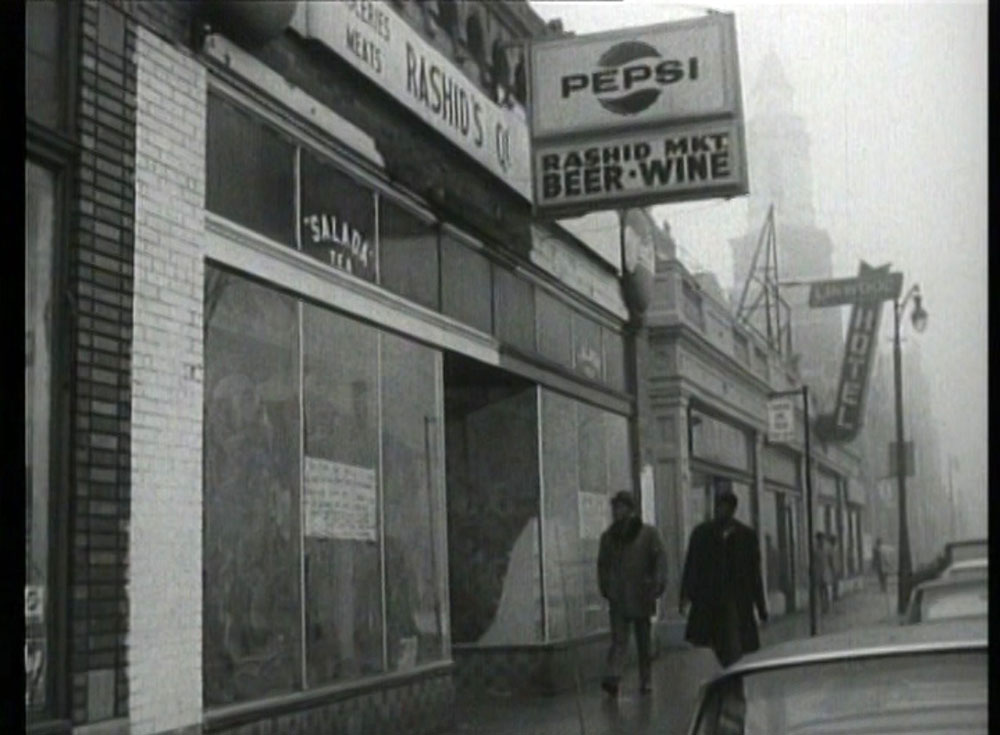
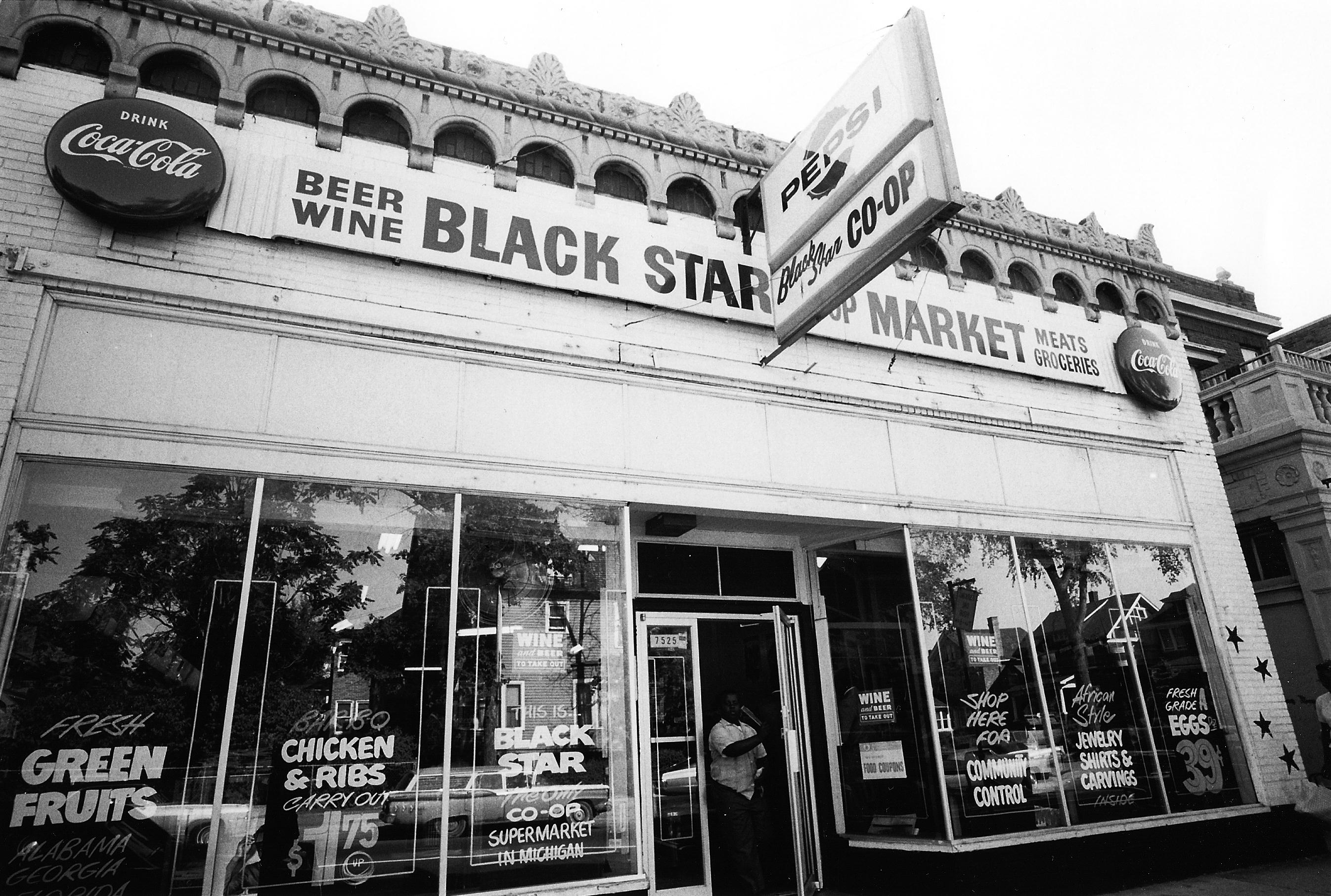
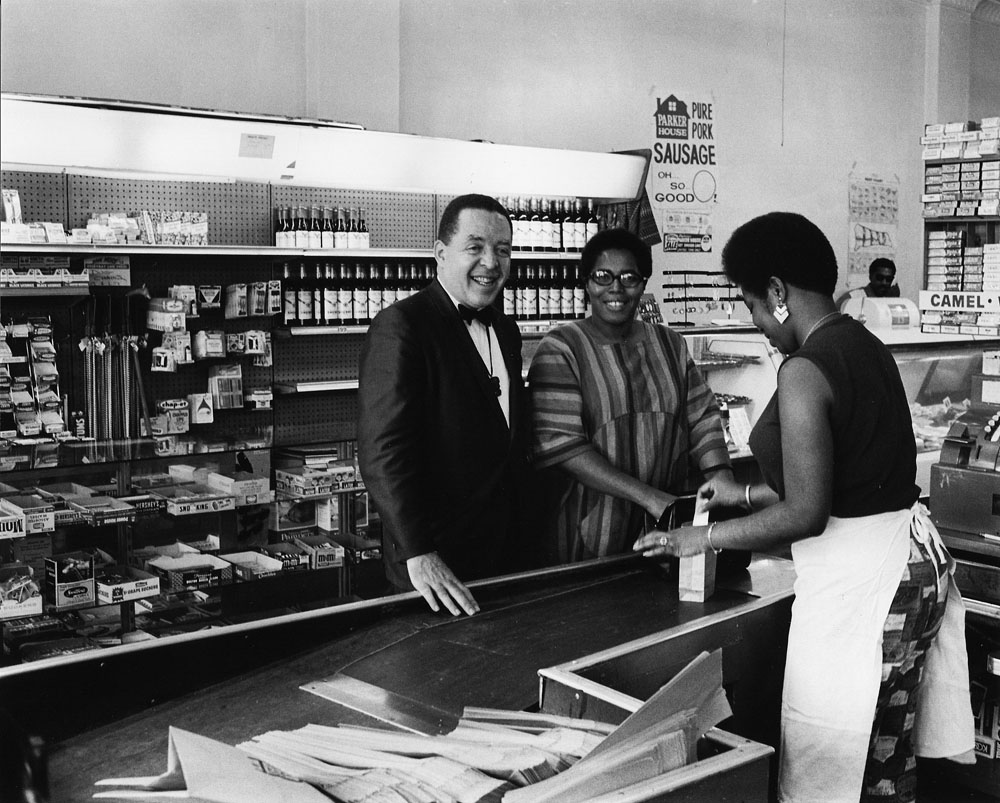
In 1965 the idea of the Black Star Co-op was born at Central United Church of Christ. In 1968, the year after the Detroit riot, a grocery store was opened a block from the church. Due to a variety of reasons – inexperience of management and staff, costs of keeping enough stock, high prices – the store did not last long. Later the church operated a long running food co-op. Several people would go down to Eastern Market early Saturday morning and buy produce which was shared by everybody who paid $5 that week. There was no overhead and no paid staff. Later the church had a farm in Belleville, Michigan and the food for the co-op came off of that farm. Below is a short photographic story of the Black Star Market.

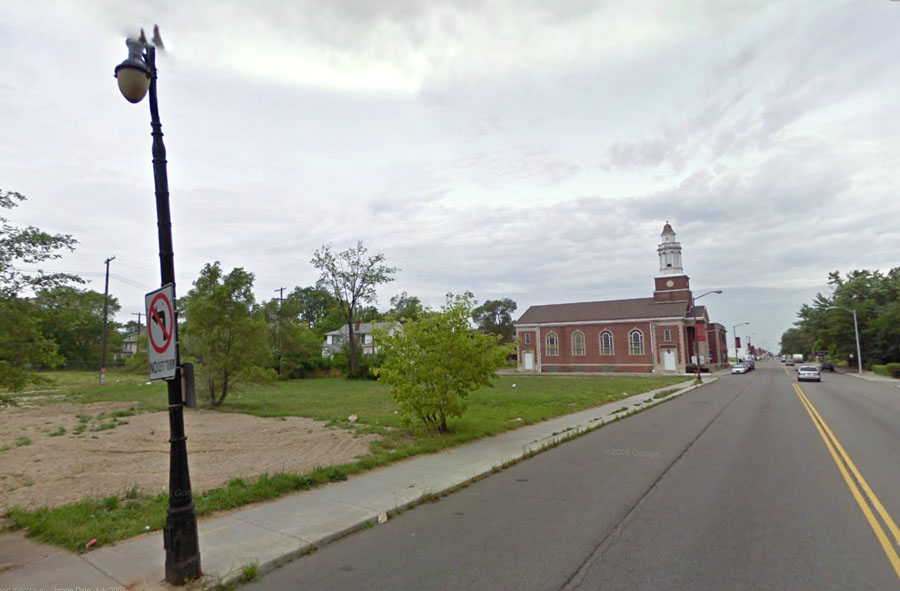
To read more about the church and the street it stand on, click on these links: “L” is for Linwood (About the street of Linwood), “H” is for Linwood and Hogarth (About the church).
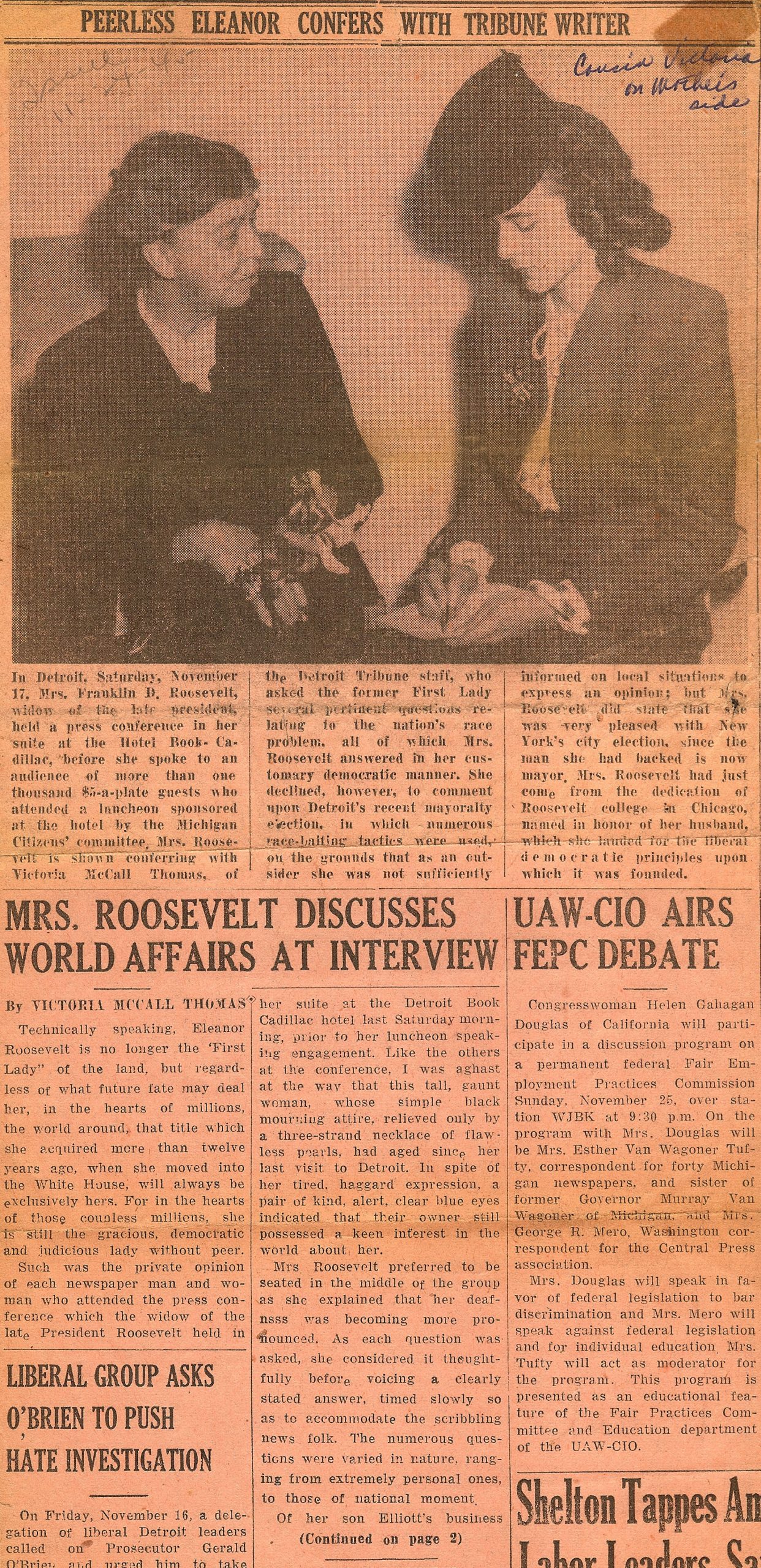
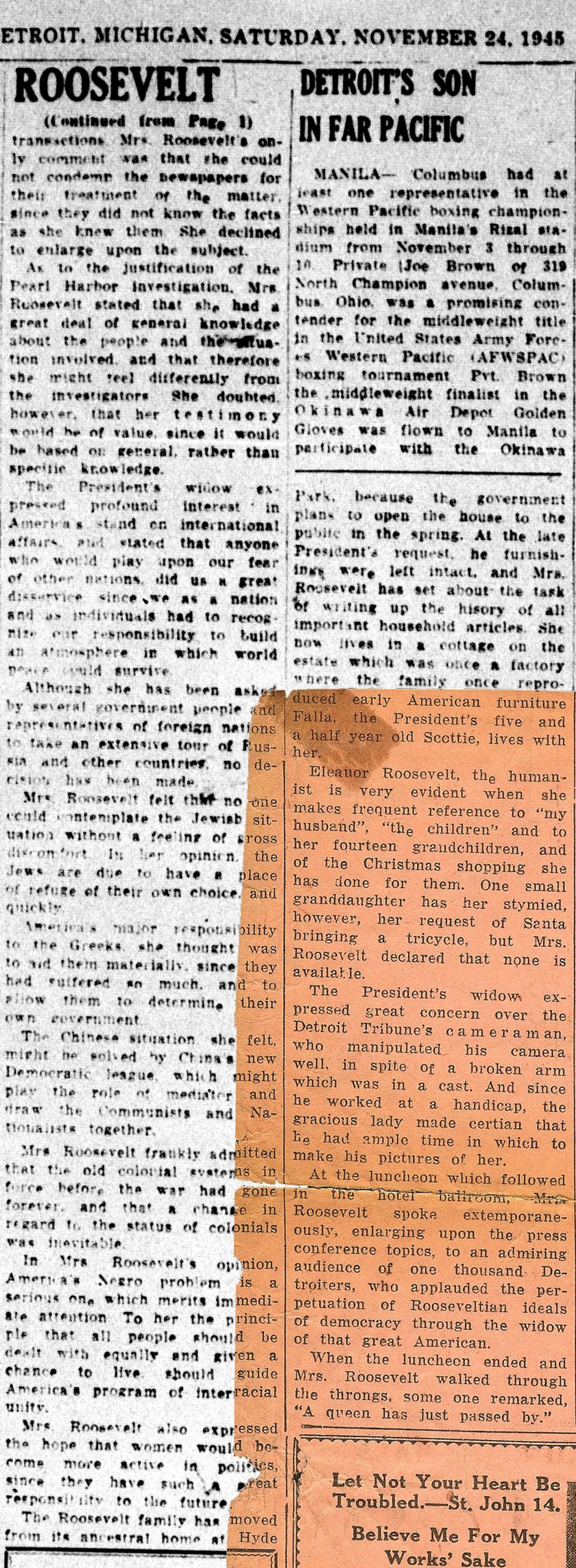
This article is from my Grandmother, Fannie Turner Graham’s scrap book. It was printed in the Detroit Tribune on November 24, 1945. Victoria’s parents, James and Margaret McCall, were the owners and operators of the Tribune. My grandmother wrote the date and my mother wrote the identifying information.
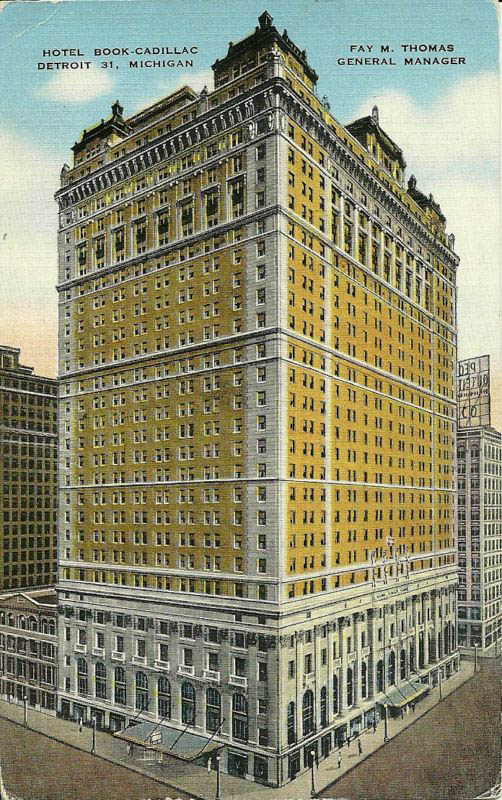
The postcard on the left shows the Book-Cadillac Hotel, where the interview took place, in the 1940.
Part of the article is missing. I think my grandmother trimmed one side and part 2 was on the other side. I combined her pink article with a scan from online.
You can read more about the Tribune and the McCalls in this post “James Edward McCall, Poet and Publisher“.
Week 46. Politics. What are your childhood memories of politics? Were your parents active in politics? What political events and elections do you remember from your youth?
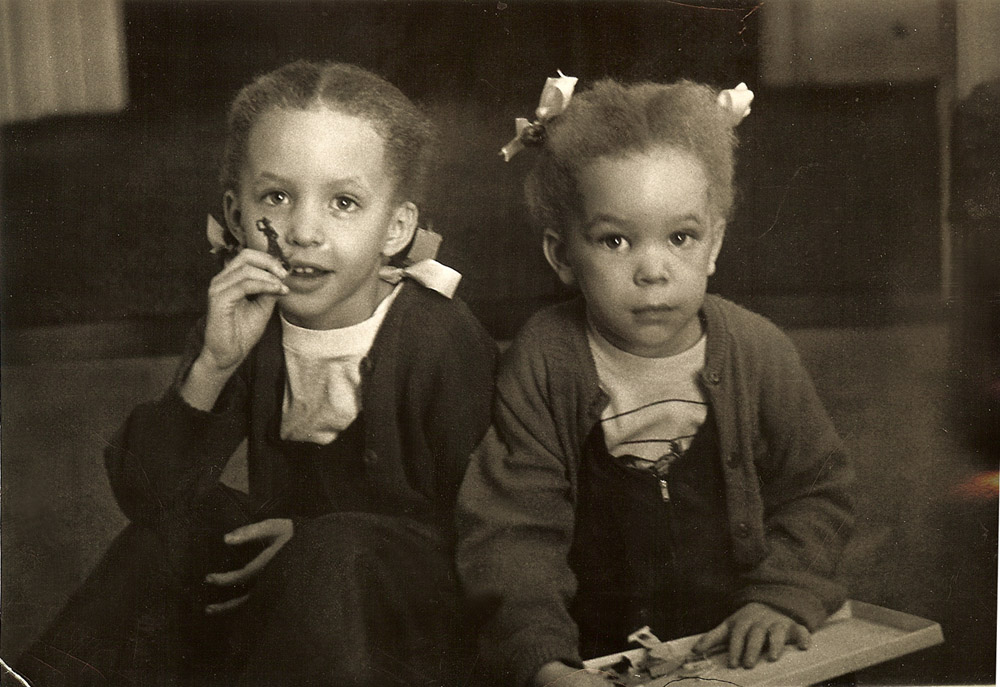
My first memory of politics is the 1952 presidential campaign. My parents supported Adlai Stevenson and I remember waking up the day after the election and asking who won. I was quite disappointed when I found it was not Stevenson.
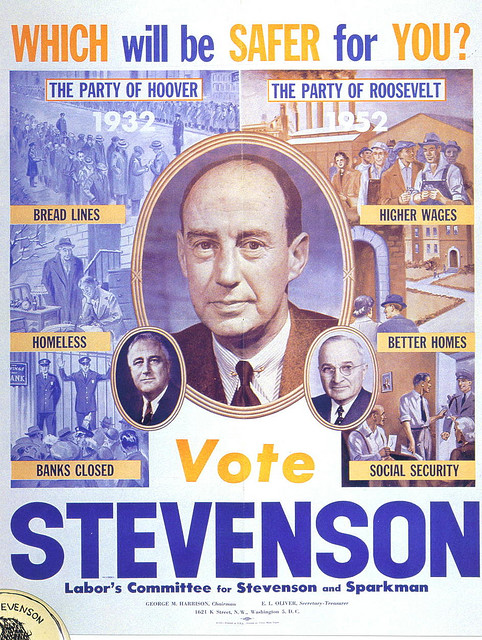
For more about my family and politics, click on these – 1965 Cleage for Congress and Elections Past.
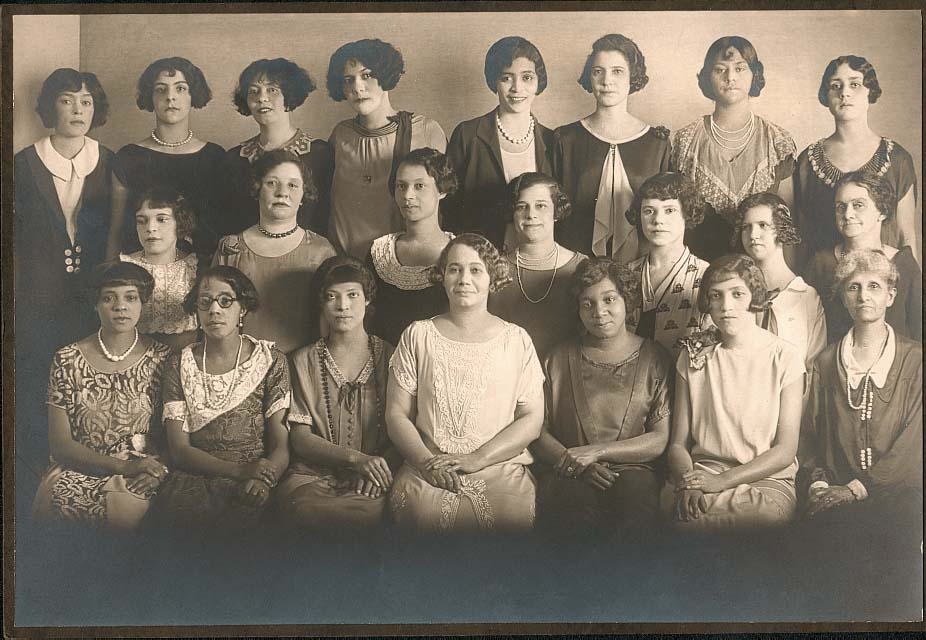
The staff at Annis Furs in Downtown Detroit. Taken in the 1920’s. My great grandmother, Jennie Virginia Allen Turner is in the second row, far left. Her daughter Alice is next to her. Skip the next woman and her daughter Daisy is there, 4th from the left. The three of them got jobs at Annis Furs soon after moving to Detroit from Montgomery, Alabama in 1922. I remember a little teddy bear Daisy made for my younger cousin Marilyn Elkins out of scraps of real fur. To read more about my Great Grandmother Turner, click Jennie Virginia Allen Turner.
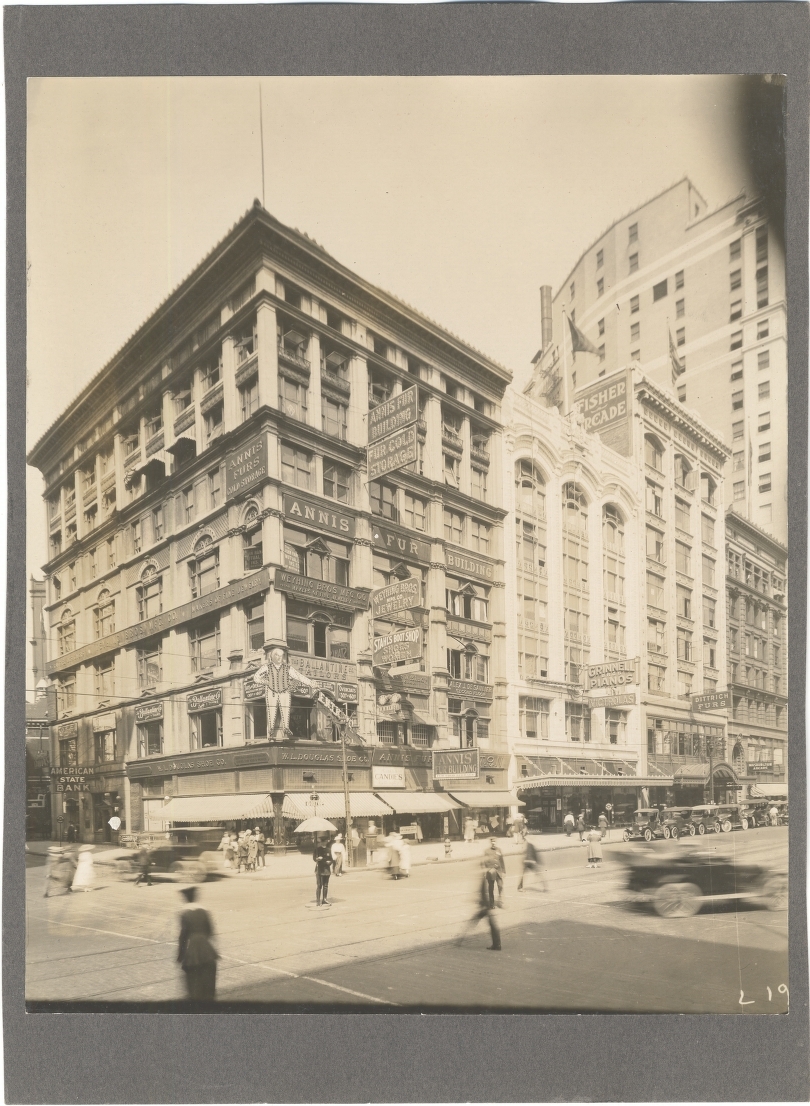
Above is a photograph from the Burton collection at the Detroit Public Library. The Annis Fur Company is in the corner building. Although this was taken in 1917 I think the area looked pretty much the same 7 years later. To see a photograph of the Woodward Ave in 1910 click at Shorpy. You can see Annis Fur Post and Grinell Bros Pianos on the left, looking down the crowded street, past the Eureka Vacuum sign.
For more photos of crowds of women and other fascinating subjects, click Sepia Saturday.
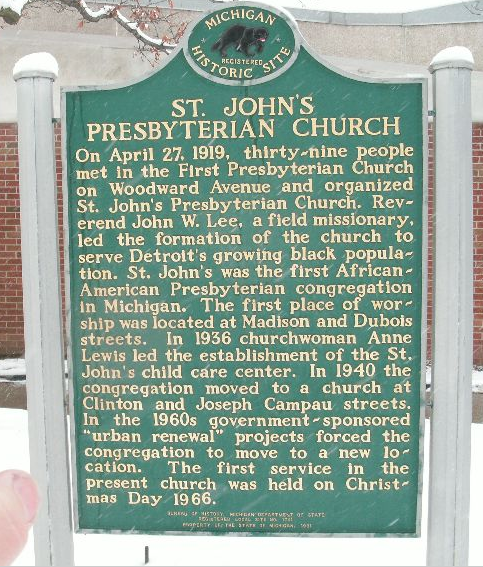
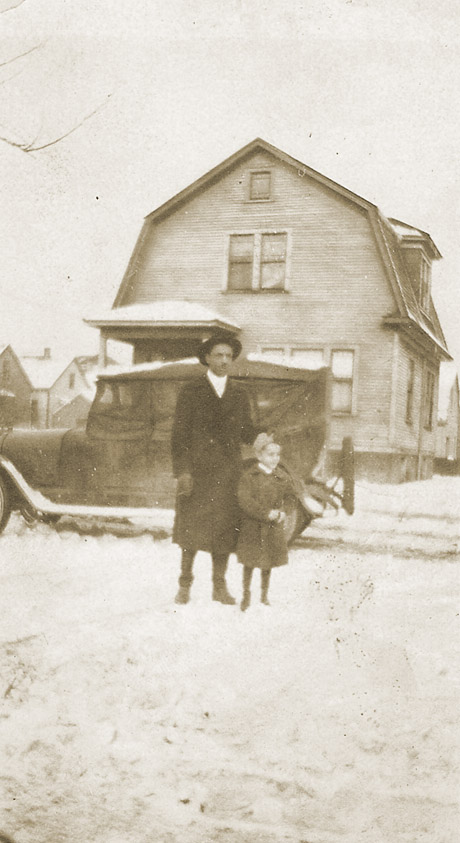
Yesterday I was working like mad to complete an entry for the “Carnival of Genealogy – Our Ancestors Places of Worship”, by the midnight deadline when I came across two interesting pieces of new information.
First, even though I thought I had done this before with no success, I asked my cousins to ask their mothers what church they had attended as children in Detroit. The answer came back – St. John’s Presbyterian Church. At first I thought there was some confusion because I knew that my father had been pastor of St. John’s Congregational Church in Springfield, Mass. and St. Mark’s Presbyterian Church in Detroit but St. Johns Presbyterian? I didn’t remember ever hearing of it before. So, I googled it and found that not only was there a St. John’s Presbyterian Church in Detroit but that my Cleage grandparents were among founders and that it was founded in 1919, the same year my Graham grandfather was participating in the founding of Plymouth Congregational Church, also in Detroit, also on the East side. I looked for more information on St. Johns. I searched for even one photograph of the old church. I came up with very little. I looked through the family photos for something that looked like it was taken at a church but also found nothing aside from a few where the family is on their way to church. I did find the information below.
Detroit and the Great Migration 1916-1929, by Elizabeth Anne Martin Religion and the Migrant
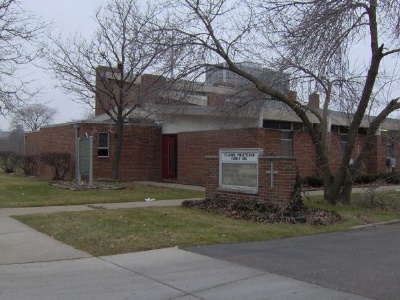
“We, the believers in Christ members, are very proud of our rich heritage. We rejoice always; give praise and thanksgiving to our Lord for His abundant blessings of the faithful shoulders we stand on. We accept our charge of ensuring an African-American Presbyterian witness for our Lord in the city of Detroit, Michigan and beyond to the glory of God! St. John’s Presbyterian Church was among the new congregations formed because of the migration. In the winter of 1917 Reverend J.W. Lee, “field secretary for church extension among colored people in the North,” came to Detroit hoping to establish a Presbyterian church. He was disturbed by the fact that many migrants of the Presbyterian faith had turned to other denominations because there were no Presbyterian churches in Detroit. In April 1919 Lee organized thirty-nine believers into a new congregation. He served as pastor until 1921, when he recruited a southern preacher front Alabama to take his place. By 1925 the Sunday services at St. John’s were so popular that some people arrived as much as three hours early in order to secure seats. Hundreds of persons had to be turned away at both Sunday and weekday services.” One clarification, there were Presbyterian churches in Detroit but they were white.
Something the churches my grandparents helped fond have in common is that they were both urban renewed and torn down to make way for, in the case of Plymouth, a parking structure and I’m not sure what for St. Johns but neither of the historic church buildings are standing today, although both churches are still going strong in their new buildings.
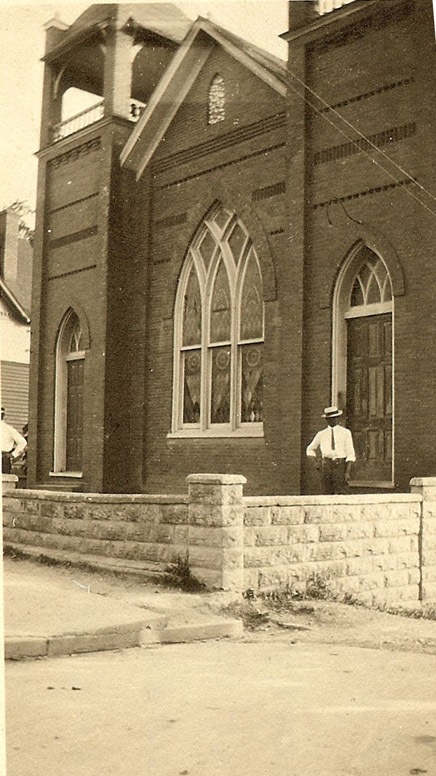
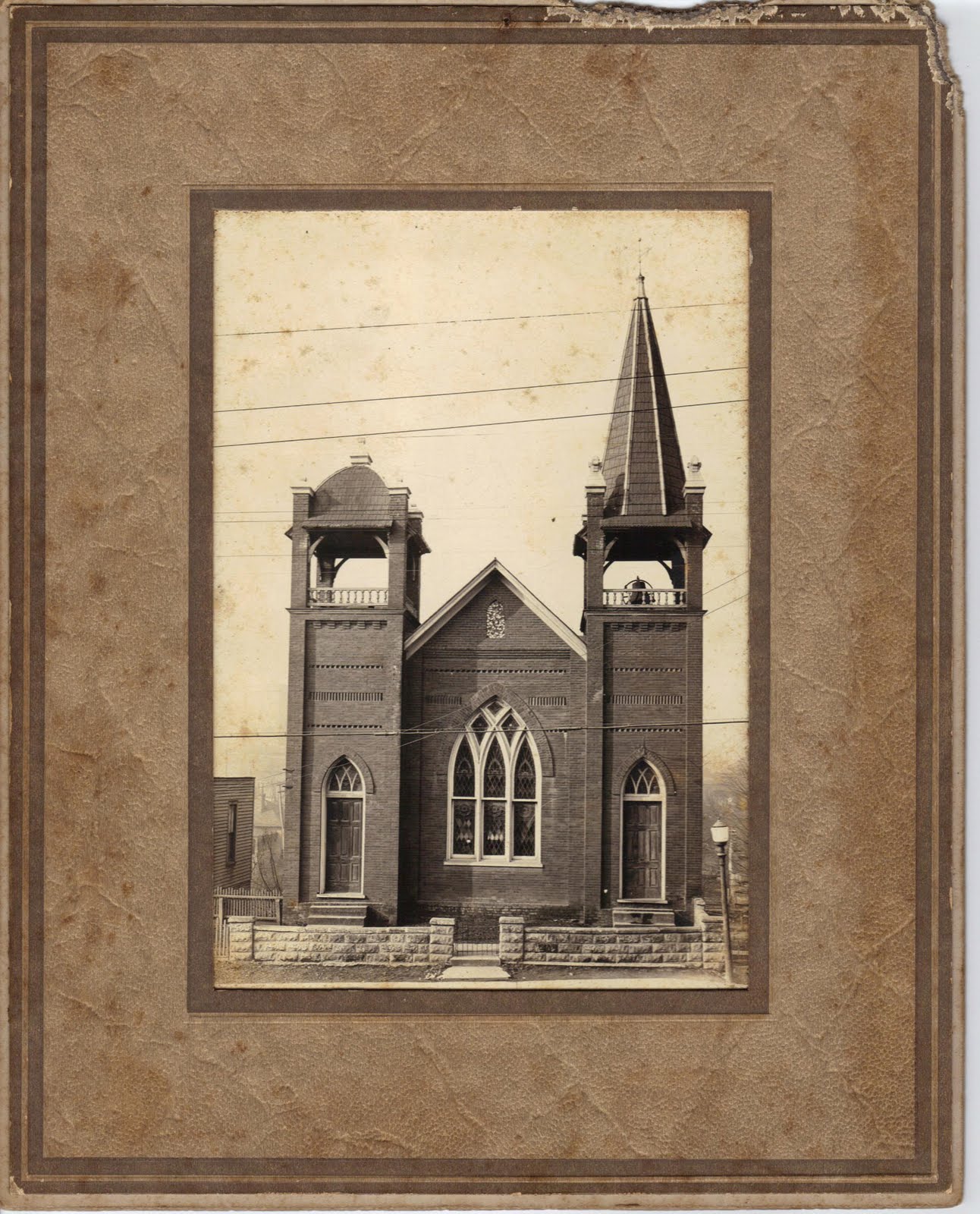
Next I decided to google the church my grandfather, Albert Cleage attended when he was growing up in Athens Tennessee. I found that he was too young to have helped start First United Presbyterian Church, it was founded in 1890 and he was born in 1883. However, his step-father, my great grandmother Celia Rice Cleage Sherman’s second husband, Rodger Sherman, is listed as the architect of the church on Wikepidia. Amazed? Yes, I was. Mr. Sherman and Celia Cleage weren’t married until 1897, First United Presbyterian church had been standing for 5 years by then. The church is still standing and still looking good today.
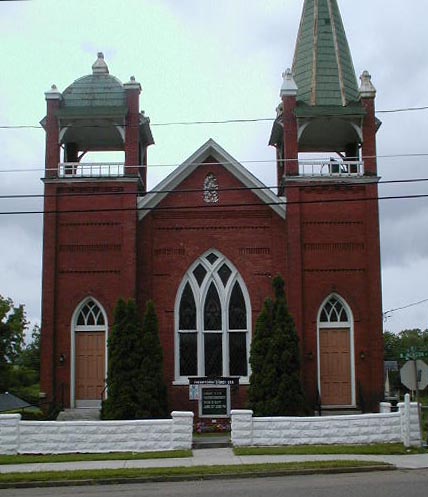
From the Website “J. Lawrence Cook – An Autobiography”
“After a short time at Fisk, just how long I do not know, my father (note: J.L. Cook) entered Knoxville College in Knoxville, Tennessee. [5] He worked to pay his expenses, and was also aided by donations from individuals back in his home town of Athens. In 1888 he received his bachelor’s degree from Knoxville College and entered Allegheny Theological Seminary in Pittsburgh, Pennsylvania to prepare for the Presbyterian ministry. [6] On 9 April 1890 he was licensed as a minister by the Allegheny Presbytery, and with this credential returned to Athens to establish a United Presbyterian mission. Fresh out of seminary, he began holding services in an old dance hall. [7]”
Other posts about church founding in my family.
From Montgomery to Detroit, A Congregational Church – COG Our Ancestors Places of Worship
Witherspoon United Presbyterian Church 1909, Indianapolis Indiana
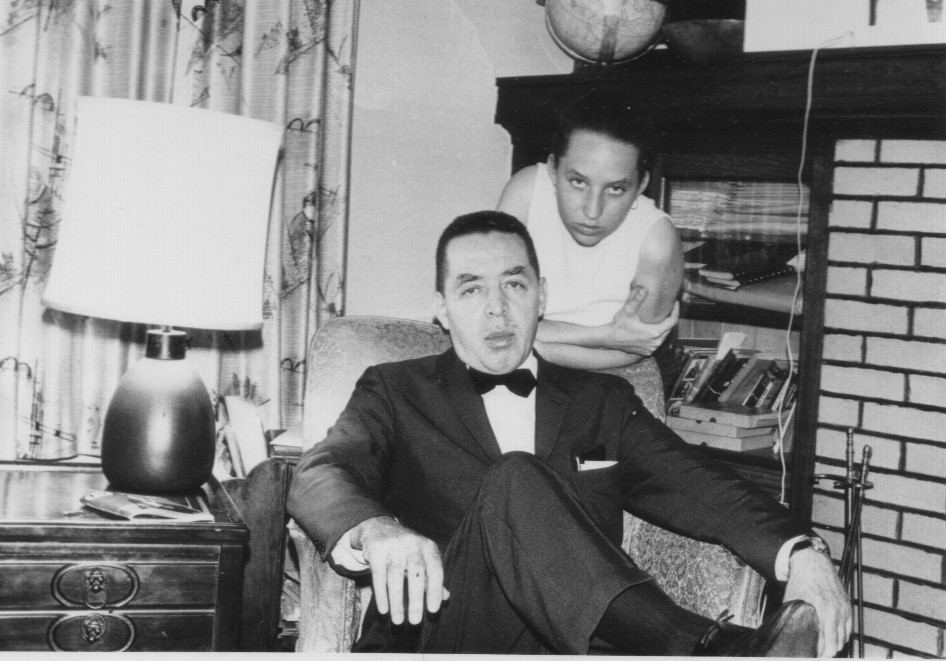 My father, Rev. Albert B. Cleage & me.
I wrote this after the Detroit riot in July of 1967. I was 20. I had been in Idlewild, MI at my Uncle Louis’ cottage with my Aunt Gladys and some of my cousins when it started. I ended up at my Grandmother Cleage’s house where my father, several uncles and cousins were also gathered. Her house was on Atkinson, about three blocks from the 12th street corner where the riot started. Aside from a little editing for clarity, these are my memories from 1967.
____________________________
The fire siren that night in Idlewild went on and on and on. Gladys got a phone call that a riot had started. We left that morning. The sky was pink with smoke as we drove into the city.
During the riot, when it got dark, we turned off the lights, put on black clothes and waited. The shots that had been going all day got louder, closer, smashed together. We sat on the porch and watched the tanks go up and down the street full of white boys wearing glasses, aiming their guns at us.
One during the day went by in a yellow telephone repair truck. He rode in the elevated stand, pointing his rifle. We looked back at him.
Lights from helicopters whirred over us. Troops went down 12th, down 14th. The street shook. Afraid to sleep because somebody might shoot through the window, we stayed up until the sky got light. My cousins cleared out the furniture in front of the windows, so they could shoot.
Should they let them get in or shoot before they reach the porch? They lay there on quilts, looking out the window. Seeing soldiers and armored trucks in flowerpots and dump trucks. Dale asked how the gun worked. Ernie shows him by the hall light.
The guns sounded like they were in the alley. I sat on the landing. Thorough the window it was dark and unreal outside. Blair came up, scared, so we went in the basement and turned on a program about Vietnam, but then off to a horror movie nobody watched.
Daddy came down, with a drink, to use the phone and dictate demands to the papers. Ernie showed us how to bolt doors if someone tried to come in the window.
They tried to get Grandmother down to watch TV, but she wouldn’t. She stayed upstairs, watched TV and came out only at times to turn lights on and silhouette everybody hiding guns as the soldiers were pulled back.
On the police radio: Fifty policemen wounded in one hour. They were run out of the Clairmont Square again. A woman turns in her sniper husband.
Dale was left on the porch when they flashed light on the porch and summer-salted in. Bullets were so close I was afraid and went back inside.
Grandmother turning on lights with armed flower pots aiming at us.
Turning Vietnamese guns up loud to drown out theirs. Jan and I, sleeping on the hard scratchy rug. Ernie wanting just a ring to show he was there. Dale taping, taking pictures to show his children. Jesus painted Black.
All that Sunday cars full of white folks went down Linwood past the Church. Windows rolled up. Sightseeing. Long, slow lines, car after car, windows shut tight. Troop Jeeps going by pointing guns.
For other Sepia Saturday offerings click HERE.
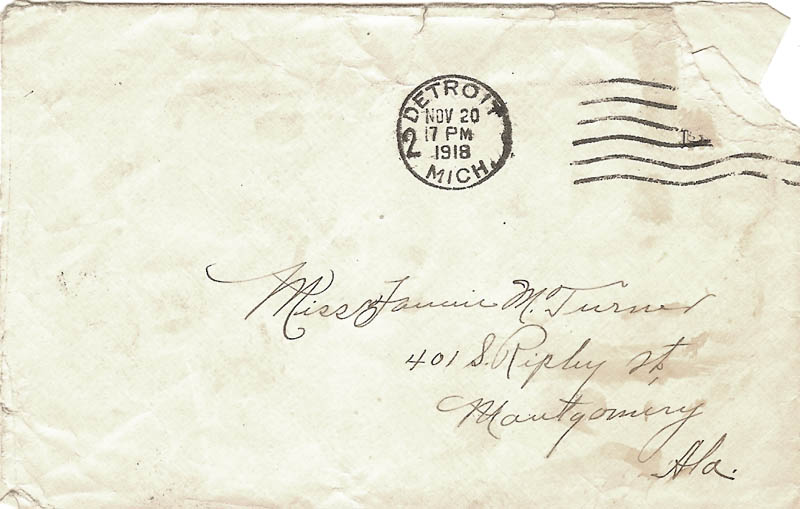
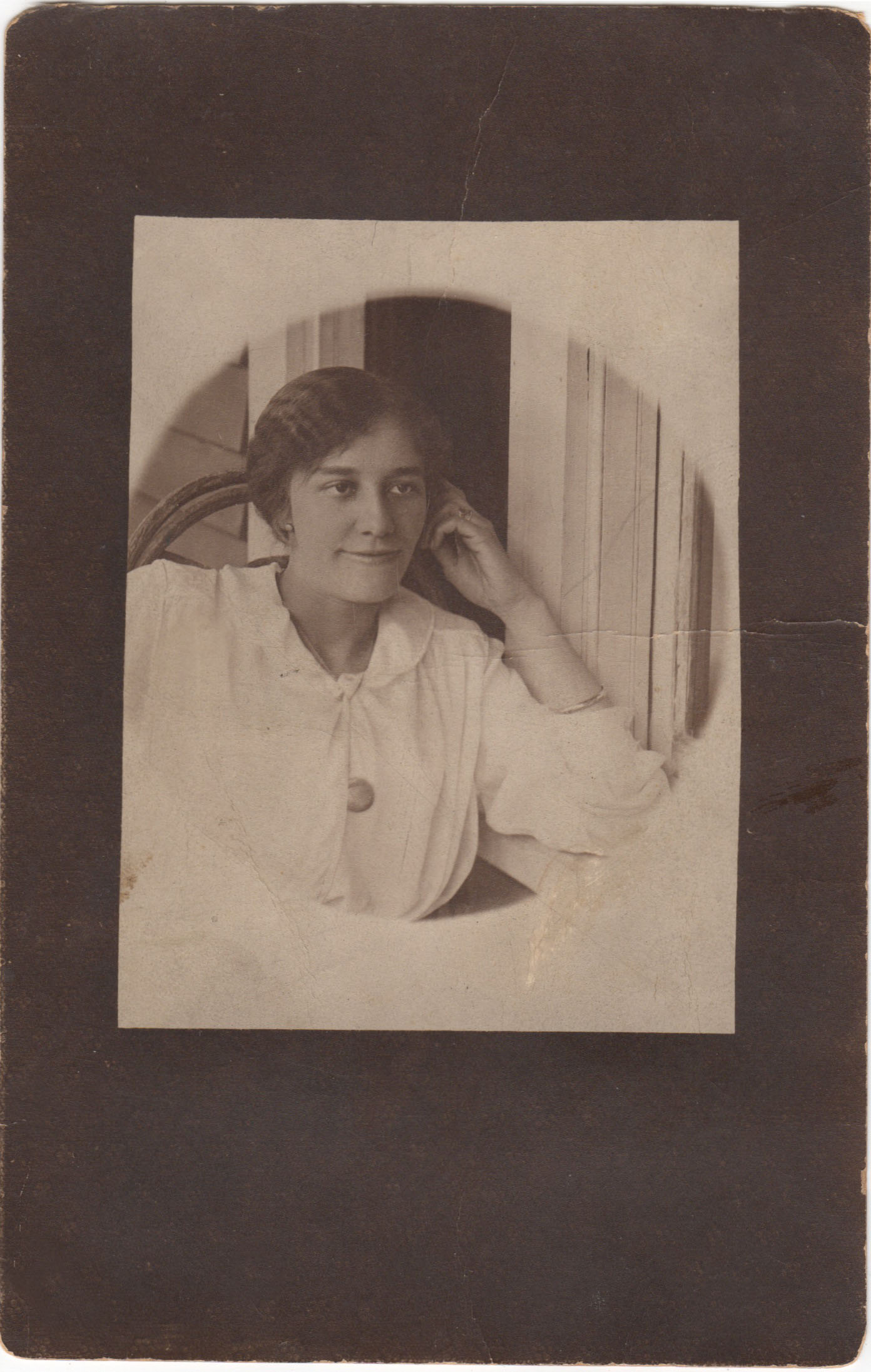
Dear Fan,
I am feeling fine today and I hope that this will find you and all at home well. I am off from my work today. No, not sick just felt like taking a bit of rest and too it has been raining all day and it was such a fine day for sleep before taking my midday nap I had to talk a little to my sweetheart, I only wish I could hear her voice and be made to feel happy. Dear I don’t know anything of interest to write about just now. Things are pretty quiet in Detroit, the factories are all getting ready for a big after war business and I think this city will get her share of it. I am sorry that your mother has been sick, I hope she is O.K. and her self again.
Miss Snow formerly of Montgomery now Mrs. Kelly of Detroit lost her husband last week, I think she will bring the body home for burial. They have him now in storage until she is ready to leave for home with him. Now dear I wrote you sometime ago and told you that I had something to tell you when I saw you, but I just can’t keep it any longer, what I want to tell you dear is this, I feel as if I have tried a single life long enough and now I am going to ask you to become my wife. Now dear, if you will commit to the above request let me know right away and I will write and ask the permission of your mother to marry you, and with her consent we will then fix the time of the wedding. Now I hope you won’t let this shock you any, and please answer me as soon as possible, if we should get married I shall want you to come to this city to live after the wedding, so dear while you are considering the questions of marriage you may also consider the question of residing in Detroit, also.
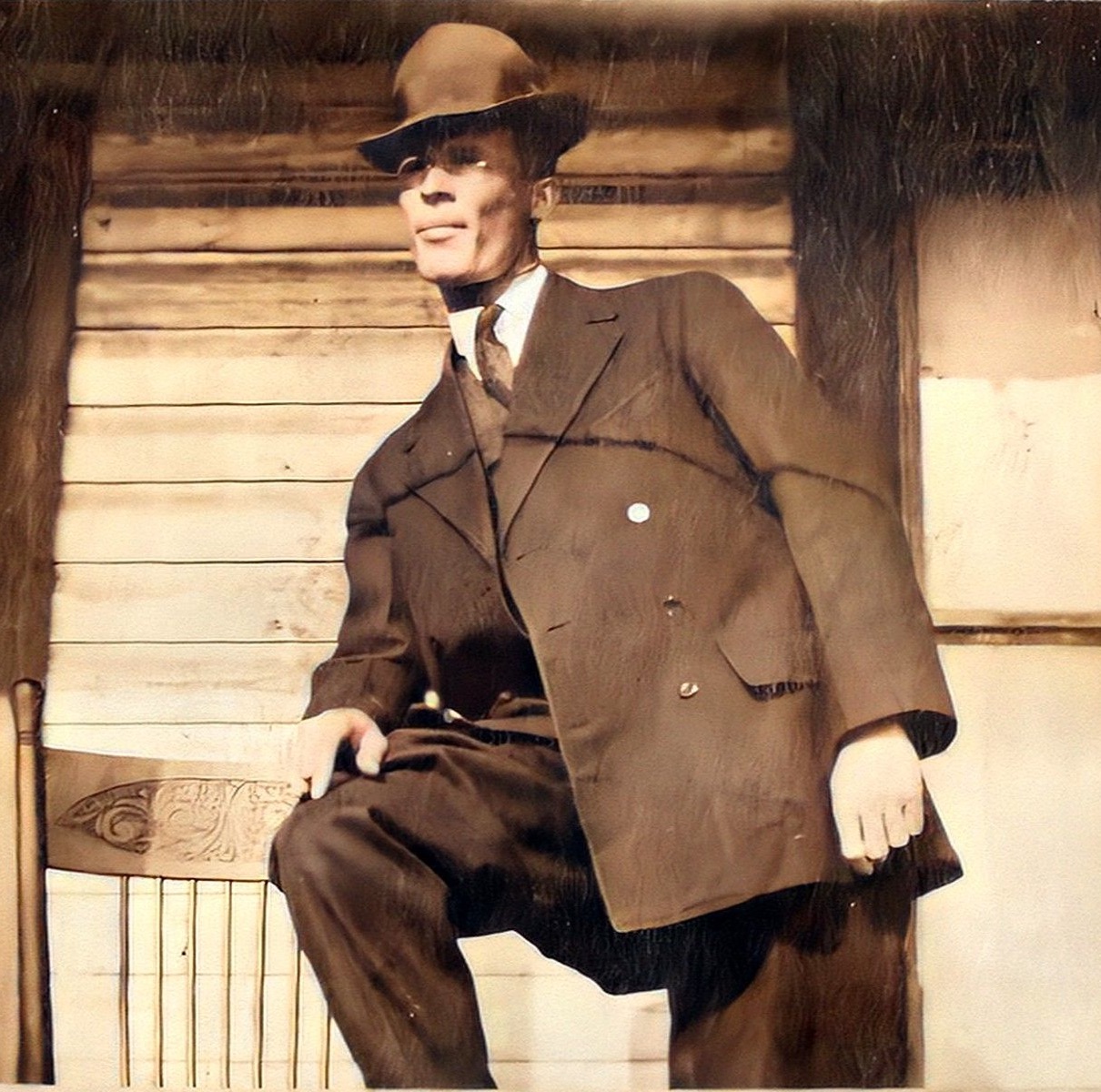
Now dear please don’t keep me waiting too long for an answer to this letter, as I am over anxious to hear what your answer will be. Remember me kindly to your mother and sisters, with lots of love and many thousand kisses I close, looking to receive an early and favorable reply
I am as ever the same,
Shell
To read Fannie’s acceptance letter click here
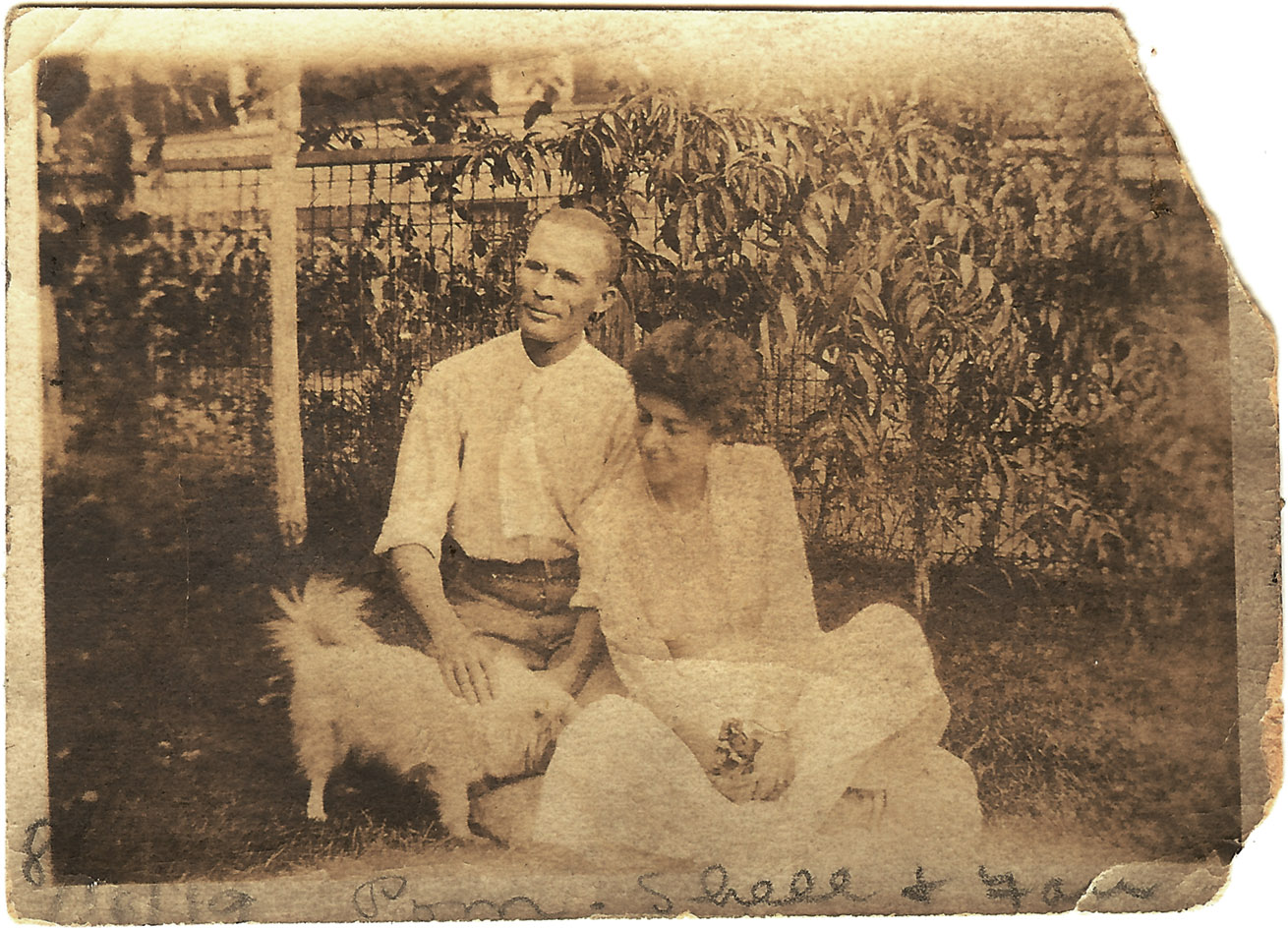
24 November 1918
Montgomery, Alabama
Dear Shell,
This has been some cold day, but we went to church this A.M. and heard a splendid sermon on “Thanksgiving.” Rev. Scott never spoke better. He’s really great. The people never will appreciate him until he’s gone. Last Sunday was Harvest and it was fairly good. Might have been better but for the flu. They realized $12.50 from it. Our club held it’s first meeting last Friday evening at Madaline’s. She put on a strut, too. We certainly had a good time. We are all feeling okay. Mama is so much better, though she complains yet.
Now, Shell, about your question. Willie Lee and several others have been telling me that we were to get married for a month or more. I’ve been wondering where it all came from. I know you wrote me some time ago that you had “something to tell me,” but I never dreamed it was on this subject. It’s all okay though and if you will overlook my deficiencies, I’ll say yes. You know you like good cooking and I’d have to learn to do that, even after working in a grocery store all my life. Ha, ha! Now that you know about my inability as a cook does it shock you? Just let me know what you think about it.
Now, Shell, please don’t write any of this to any one, for it’s our own business and we can keep them guessing awhile longer. What do you say? Do this for me as a special request.
Well, dear, I’m so sleepy that I can’t write longer so you must let me off tonight with just one kiss. Ha, ha!
As ever,
your Fan
To see the proposal letter click The Proposal – Migration Story.
To read all about the wedding, click Announcement
___________________________
Being in the middle of the corona pandemic 2020, I decided to look back at my family history and see if anything was mentioned about the spanish influenza pandemic of 1918. I remembered that my grandmother wrote in a letter to my grandfather that church attendance was down because of the flu.
Because my grandmother was living in Montgomery, Alabama at the time, I took a look to see what the Montgomery newspaper’s were saying about the flu in November, 1918.
The article below came out the same day as the Sunday service mentioned in the letter.
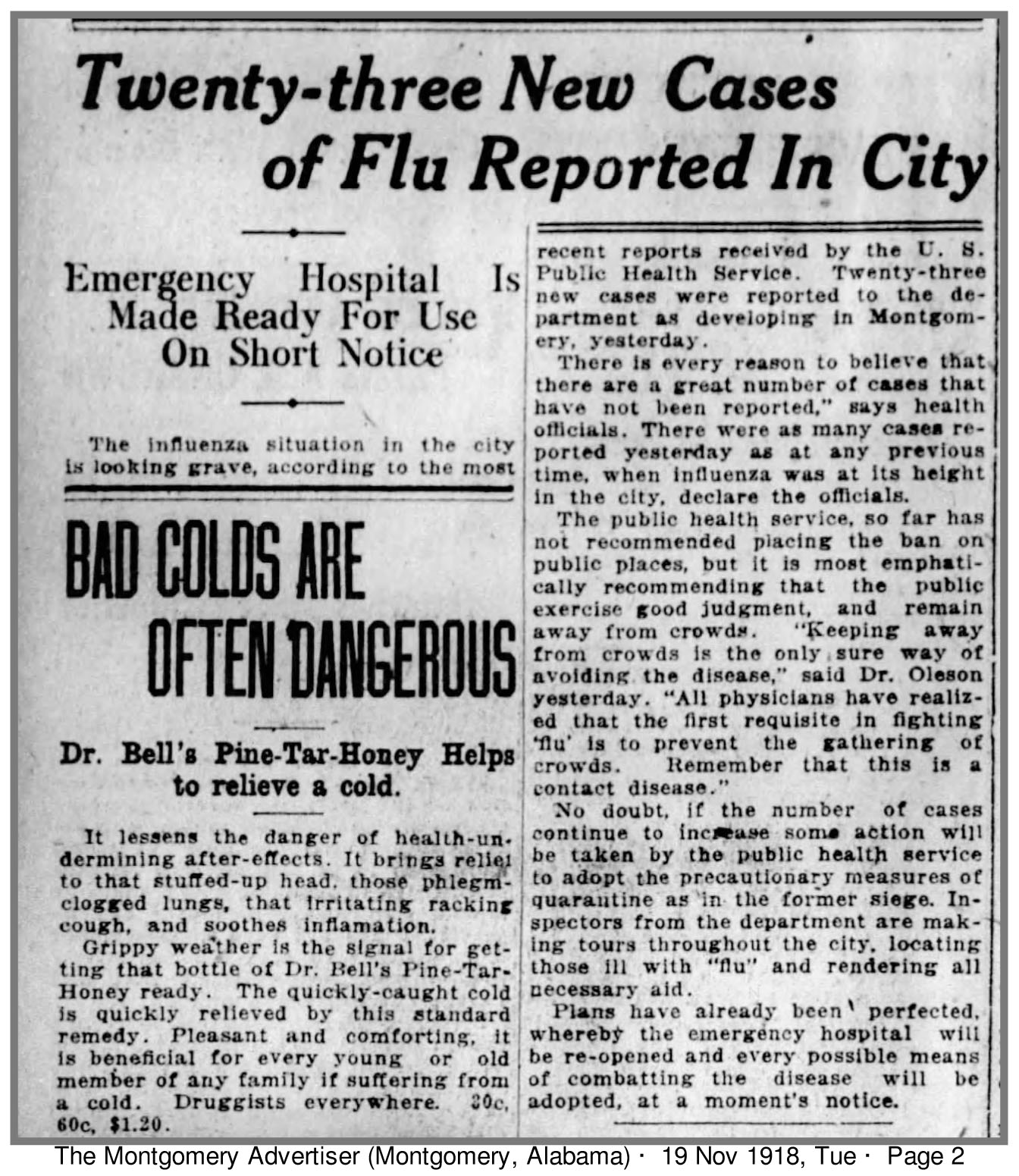
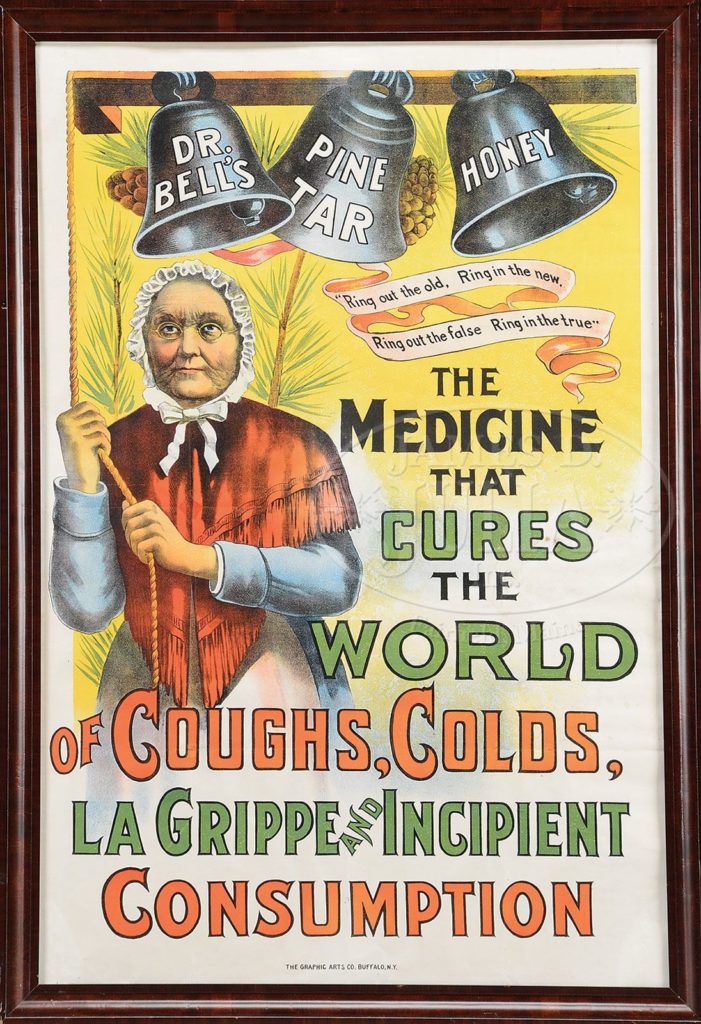
Click for more about Dr. Bell’s Pine-Tar-Honey mentioned in the advertisement above.