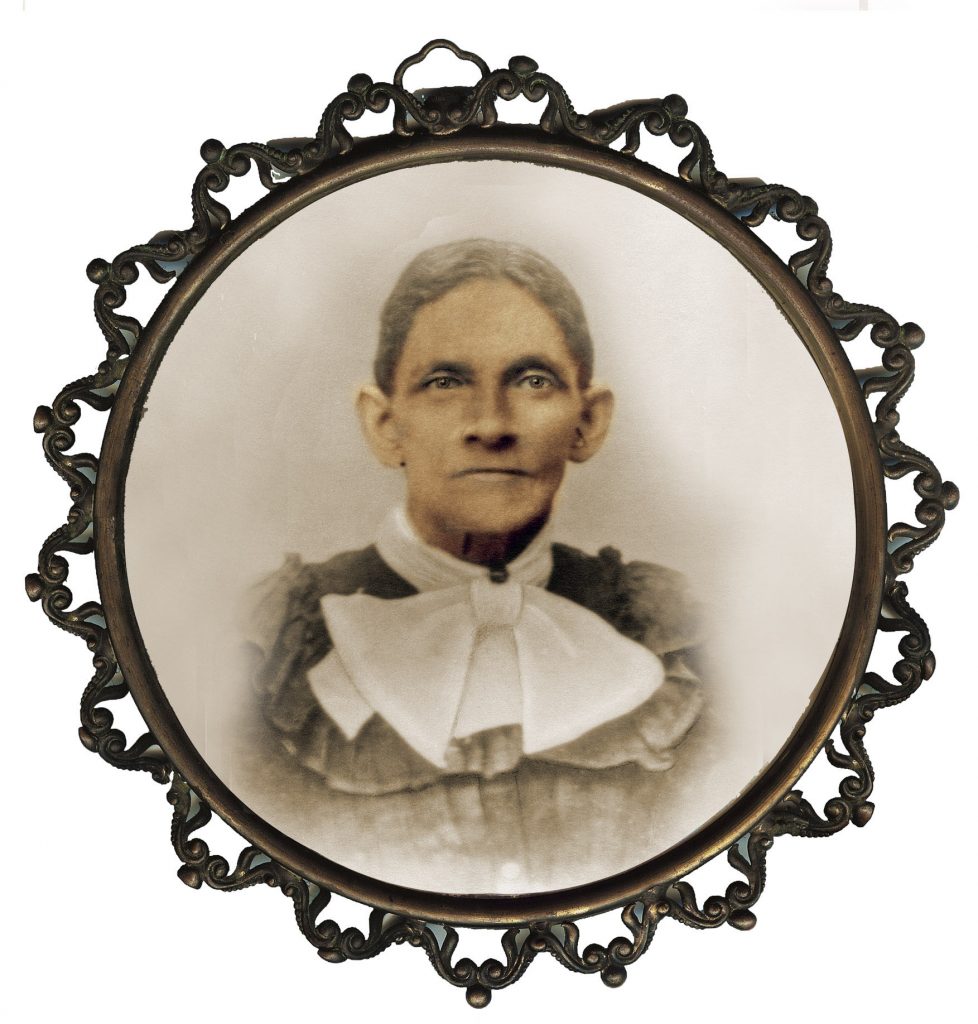
I came across a copy of a letter that my mother, Doris Graham Cleage sent to my sister Pearl on September 28, 1980. Page three, which seems to have been more information about Eliza and Annie has disappeared. There is quite a bit of erroneous information here, but also some truth.
Info Alert:
Know very little about Colonel Harrison. Understand it is very easy to find out about army officers in Virginia – good records were kept about them and their lives – including slaves, etc. A little research might give considerable info about him. We know he was childless and that he freed two female slaves, Eliza and Ann, sometime around 1840. About Eliza, his mistress, and mother of his child, Ann, your great-great grandmother (I think that’s right), Grandmother Turner’s mother. Mother said Eliza was a little quiet brown skin lady. Ann was a lighter brown with long, straight brown… (missing page 3)
Facts: Colonel Edmund Harrison was born in Virginia but made his way to Alabama in the early 1800s. He married Jane Irvin and they had four daughters together.
Ann was Eliza’s mother. Col. Harrison did not free either of them.
…Col Harrison is that Mrs H. ordered him to get rid of the two slaves when the daughter was about 17. (This is very interesting, I think. Why get rid of them after all those years? She must have known about the relationship all the time. Did he feel affection for Eliza and Ann? Was Mrs. H. afraid Ann might inherit the plantation? You know, he could have sold them. Or just freed them there. Instead he took them by carriage to Montgomery, bought them a big house with big porch and yard, found a “good” husband for Ann. Why so far away? To get them out of Mrs. H’s reach? I wonder if he ever knew he had so many grandchildren or if he ever saw any of them?)
Facts: In 1851 when Eliza was about 17, Col. Harrison’s 18 year old daughter, Martha, married Milton Saffold. After Martha died, in 1856 he fathered Eliza’s daughter Mary. Saffold married his second wife in 1857 and freed Eliza and Mary before 1860. The second wife was most likely the mean one referred to by my mother.
So much for Col. Harrison. Will write more of grandmother Turner and her sisters next time. Don’t know any more about Eliza and Ann except that Eliza was a seamstress on the plantation (worked in the big house, no?) and she taught Ann to sew, Also in the big house and they taught grandmother to sew.
Facts: Eliza and her daughters did work as dressmakers throughout their lives.
Hope I don’t repeat myself too much as I go along. I can’t believe all I’ve just remembered. Thought a few lines would do!
You can find more information about Eliza and her family here -> Eliza’s Story
After writing about the deaths of Harjo Jackson’s children, I decided to look through the newspaper reports to see if there was any more on Harjo. I didn’t find anything, but I did start to notice the other causes of death as I went through the weekly reports in the Montgomery Advertiser. Today I am sharing some of those.
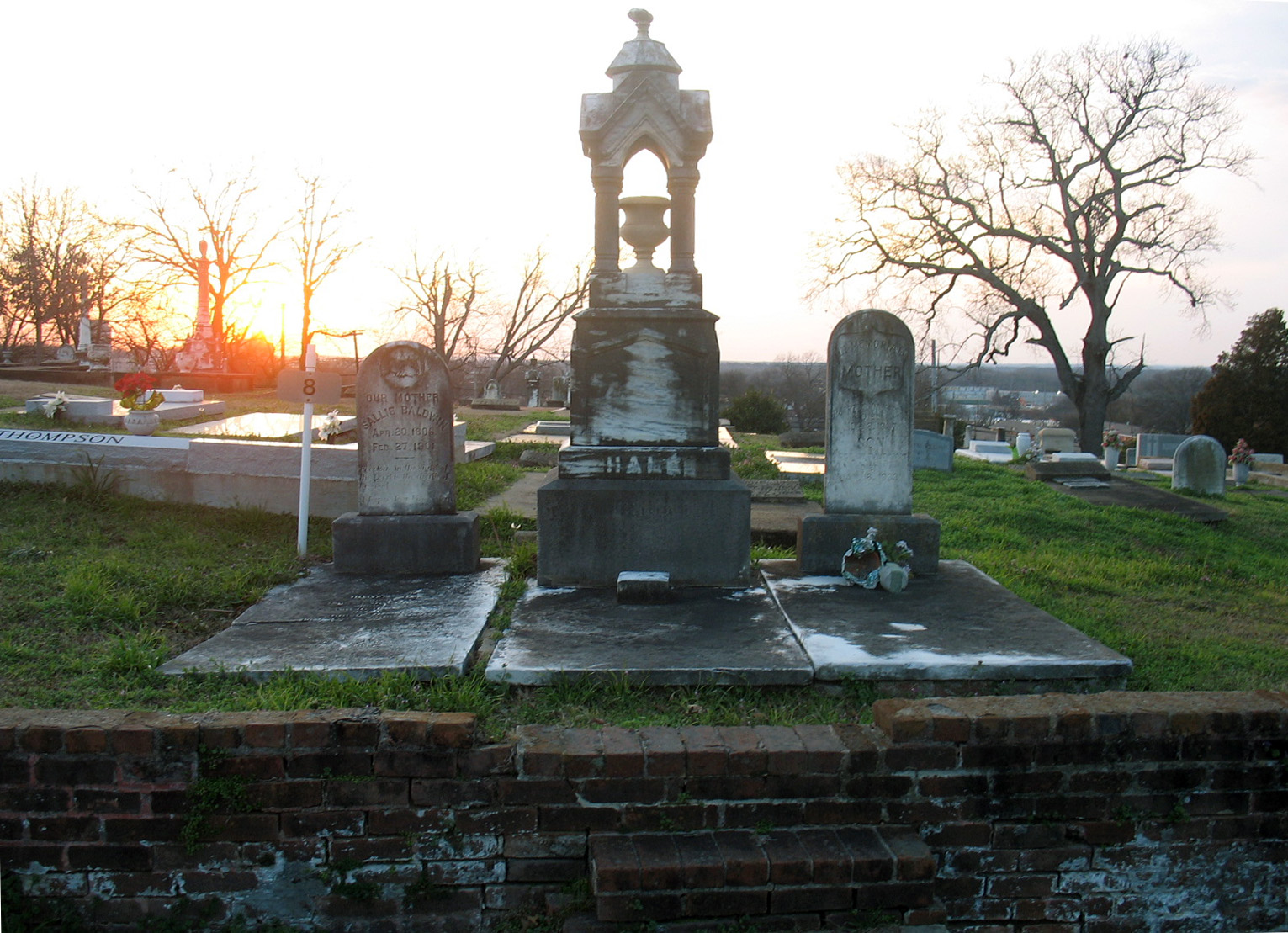
The notifications were for interment in the Montgomery Alabama City Cemetery, which is now Oakwood Cemetery. This is the cemetery where my 2Xs great grandparents Eliza and Dock Allen are buried. I named this blog for Eliza. Other family members are buried there.
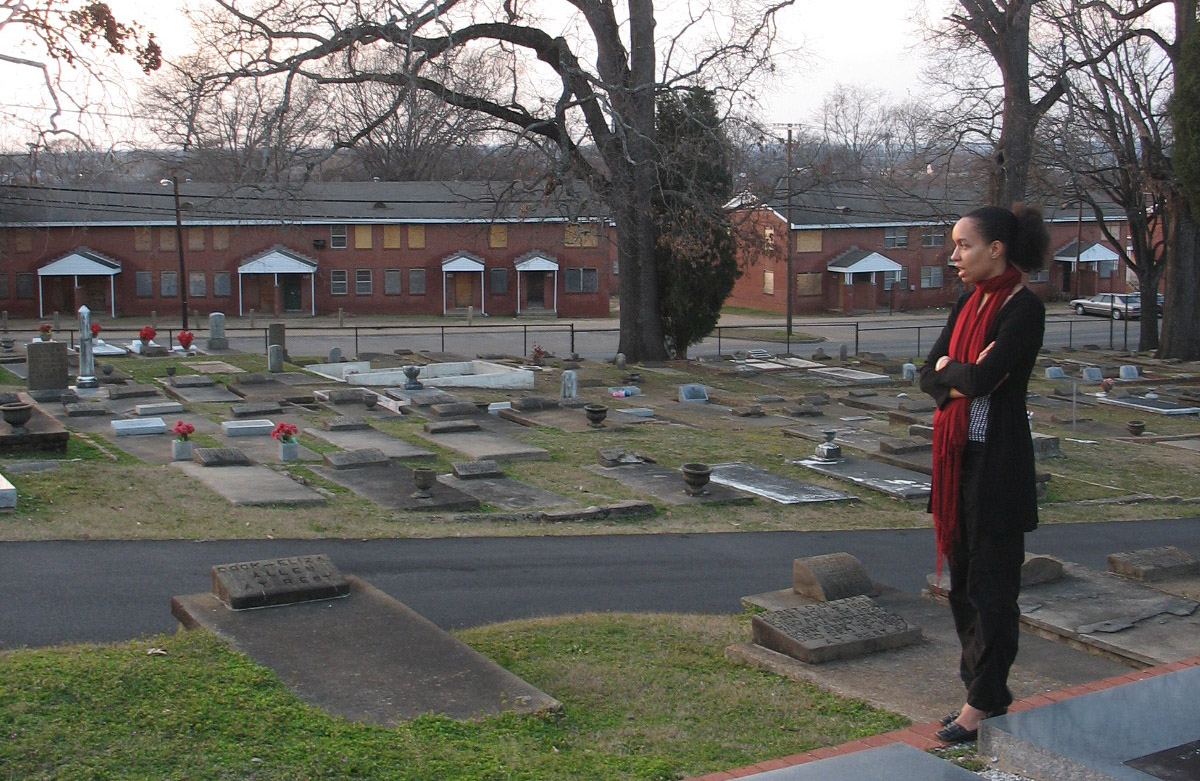
My daughter Ife standing to the right of Dock and Eliza’s grave stone.
Oakwood Cemetery started with donations of land by Andrew Dexter and General John Scott in 1817 and 1818. The earliest part of the cemetery was known as Scott’s Free Burying Ground. Over 200,000 are buried in Oakwood Cemetery. Both black and white are buried there, although in different sections.
__________________
Below is a random sample of some of the interment reports for 1883. The numbers in front of the names are the dates on which those deaths occurred. I have added explanations for various obscure causes of death.
The Montgomery Advertiser. February 27, 1883 Page 2
The interments in the city cemetery the past week, ending last night the 24th, were as follows:
WHITES.
18. *Child of Norah Reed, bronchitis. •
COLORED.
18. Randal Brooks, menengitis.
19. Ruth Ann Lewis, consumption (tuberculosis).
20. Child of Walter Freeman, premature birth: *Laura Meriwether, a child, inanition; *child of Mary Miles, infantile remittent fever. (Malaria is a common cause of intermittent fever)
21. *Alice Jones, syphilis, (tartary.) (Tertiary syphilis final stage of an untreated infection, occurring 10–40 years after initial exposure. It causes widespread, severe damage to organs, including the heart, blood vessels, brain, and nervous system
23. Betsy Hailes, pneumonia.
24. Dave Driver, consumption; child of George Robinson, unknown, no physician.(Cause of death was unknown because no doctor was on the case).
The interments in the city cemetery the past week have been as follows:
WHITES.
4. Child of John R. Pugh, Bronchial Phthisis (Bronchiectasis is a condition where damage causes the tubes in your lungs to widen or develop pouches. It makes it hard to clear mucus out of your lungs and can cause frequent infections. Coughing a lot with pus and mucus is the main symptom.); E. Cleveland, Insanity and Inanition. (Inanition – physical or mental exhaustion due to lack of nutrition.)
6. C. L. Lowery, Congestion.
COLORED.
*2. Child of James Green, unknown no physician.
4. Louisa Sturdivant, a child, after effects of measles.
*5. Louisia Lewis, Consumption; child of Caroline Ligon, Convulsions.
*6. Child of Matty Smith, Trismus Noscretium (lockjaw).
7. Child of Ida Fair, still-born.
Whites 3: colored 6. Total 9. *Died outside of city limits.
__________________
The Montgomery Advertiser. September 11, 1883 Page 3
The interments in the City Cemetery the past week were as follows:
WHITES.
Mrs. Carrie Cater, puerperal eclampsia. Thomas J. Dillard, opium poisoning suicide.
5. Child of Emmet Fowler, meningitis. MA Bellie L. Schley, typhoid fever.
COLORED.
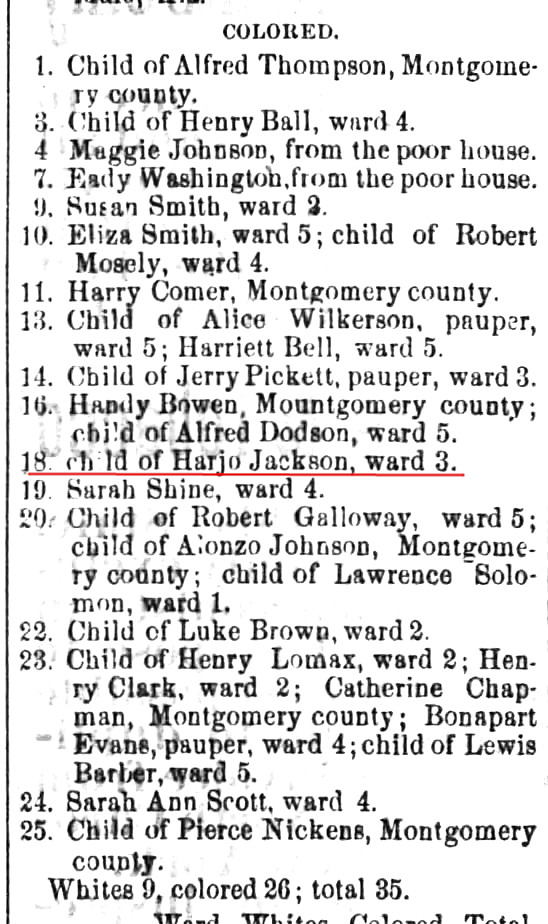
3. Child of Henry Ball, cause of death unknown; no physician.
4. *Maggie Johnson, cories of vertebra. (I found nothing for “cories”)
7. *Eddy Washington, old age and cancer of liver.
whites 4; colored 3; total 7.
*Died outside the city limits.
_______________
The Montgomery Advertiser. April 1, 1883 Page 4
The interments in the city cemetery for the week end March 31st, were as follows:
WHITES.
26. *Child of Charles W. Joseph, cause of death unknown; Woodie Carter, smallpox.
30. *Mrs. Harriet I Singletary, heart disease.
31. *J.N. Waddell, Bright’s Disease. (a historical classification of kidney disease)
COLORED.
26. Child of Jane Sturdivant, inanition.
27; *Edward Jefferson, child, unknown.
29. Child of Richard Scott, pneumonia; Eliza E. Jackson, a child, scrofula.(An infection in the lymph nodes of your neck. It causes a swollen, sometimes discolored mass that’s usually painless.)
30. Rosa Syers, a child, unknown, No physician.
Whites 4; colored 5. Total 9. *Died outside of city limits.
______________
The Montgomery Advertiser. Mar, 25, 1883 Page 5
The interments in the city cemetery for the past week, ending Saturday, March 24th, have been as follows:
WHITES.
22. Child of M. M. Turbyfill, still-born
COLORED.
19. *Margaret McKenzie, dropsy. (edema is a medical term for swelling caused by excess fluid trapped in the body’s tissues symptom of heart failure. modern medicine identifies the underlying cause, such as congestive heart failure, kidney disease, or liver issues)
22. Gracy Thomas, worms (Children, particularly in areas with poor sanitation, can die from severe intestinal worm infections (helminthiasis)—such as roundworms, hookworms, and whipworms—which lead to acute malnutrition, anemia, and intestinal obstructions.)
24.*Charles Seaborn, old age.
Whites, 1; Colored, 3. Total, 4. *Died outside of city limits.
_____________________
The Montgomery Advertiser. Oct 21, 1883 Page 4
The interments in the City Cemetery for past week have been as follows:
WHITES.
14. Miss Mary Josephine Howell, congestive fever. (malaria or severe malarial chills)
18. E. A. Curtis, typhoid fever.
19. *Child of Charles Newman, from Greenville, inflammation of bowels (Symptoms of both ulcerative colitis and Crohn’s disease usually include belly pain, diarrhea, rectal bleeding, extreme tiredness and weight loss.); Tommie Stewart, lock jaw.
COLORED
14. *Fenton Harris.
17. *Charlotte Oliver, hypertrophy of heart (abnormal thickening or enlargement of the heart muscle). child of Matthew Stodemeyer, ulceration of bowels (Ulcerative colitis is an inflammatory bowel disease that causes chronic inflammation and ulcers in the superficial lining of the large intestine).
19. Reuben Dean, unknown, no physician; child of John Young, teething. (historically used as a catch-all diagnosis for infant deaths caused by infections, diarrhea, or malnutrition in the 19th century)
20. Henry Drayton, tuberculosis; *Cheney Fraser, cancer of liver.
Whites 4, colored 7; total 11. *Died outside of city limits.
Harjo Jackson first appeared in the probate record of Crawford Motley Jackson. Crawford M. Jackson was Harjo’s slave master and probable father. He died in 1860 of pneumonia leaving his 135 enslaved people to be divided up between his siblings or auctioned off. Harjo was nine years old and was auctioned off along with his mother and five siblings. He was valued at $500. Follow the links for more information.
Prissy 35 $1000 Harjo 9 $900 Griffin 8 $900 Frank Prince 6 $650 Delia 2 $200 Iba 12 $1004 Mary 4 $450 (Poppy’s mother)
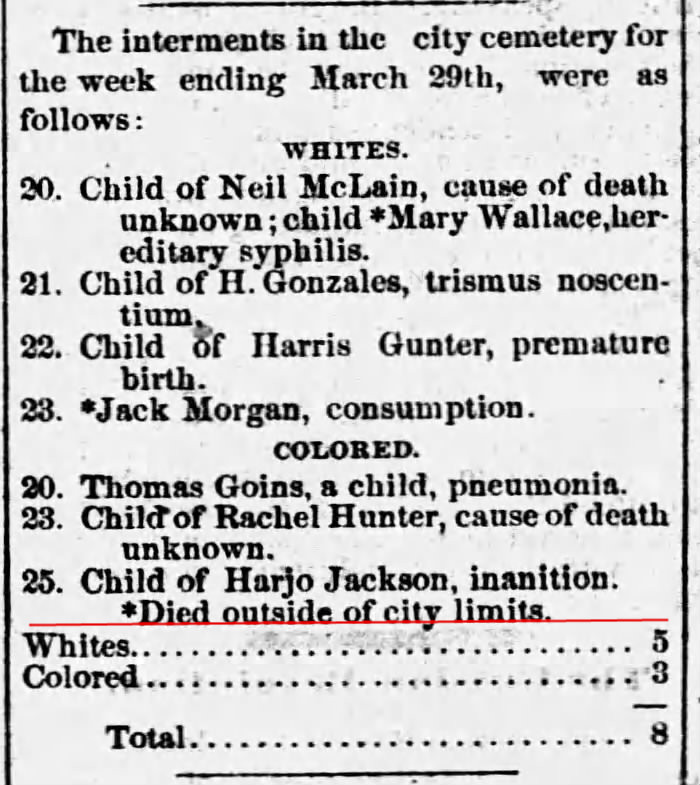
I could not find Harjo in any more records for years. He didn’t appear in the 1870 census with his mother and siblings. Recently I found three items in the Montgomery Advertiser, all were for deaths of infants of Harjo Jackson.
On March 25, an infant of Harjo Jackson died of inanition which according to Wikipedia isthe exhausted condition that results from lack of food and water.
The Weekly Advertiser Montgomery, Alabama • Tue, Mar 29, 1881 Page 2
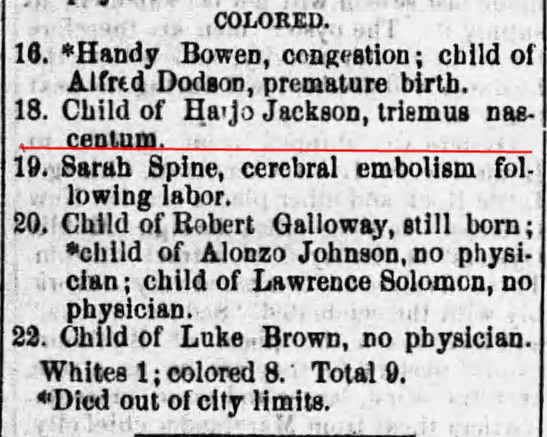
On September 18, 1883, a child of Harjo Jackson died of Neonatal tetanus (trismus nascentium), a form of generalised tetanus that occurs in newborns. Infants who have not acquired passive immunity from an immunized mother are at risk. It usually occurs through infection of the unhealed umbilical stump, particularly when the stump is cut with a non-sterile instrument. (from Wikipedia)
On August 13, 1886 Another child of Harjo died. There was no cause given this time.
The Montgomery Advertiser Montgomery, Alabama • Fri, Oct 5, 1883 Page 3
Well, I was horrified to find that my maternal grandfather, Poppy’s uncle had lost so many children in such terrible ways. And I wondered why I hadn’t found more about him, since he was alive. Today I decided that he might have changed his name as other family members had, to a more common name, like Joe.
I searched for Joe Jackson and have found several promising leads that even involve shared DNA. I’m going to keep digging and if I find anything new before the end of the A to Z, I will work it in.
For this year’s A to Z Challenge, I will be posting an event for that date involving someone in my family tree. Of course it will also involve the letter of the day. It may be a birth, a death, a christening, a journal entry, a letter or a newspaper article. If the entry is a news item, it will be transcribed immediately below. Click on photographs to enlarge in another window.
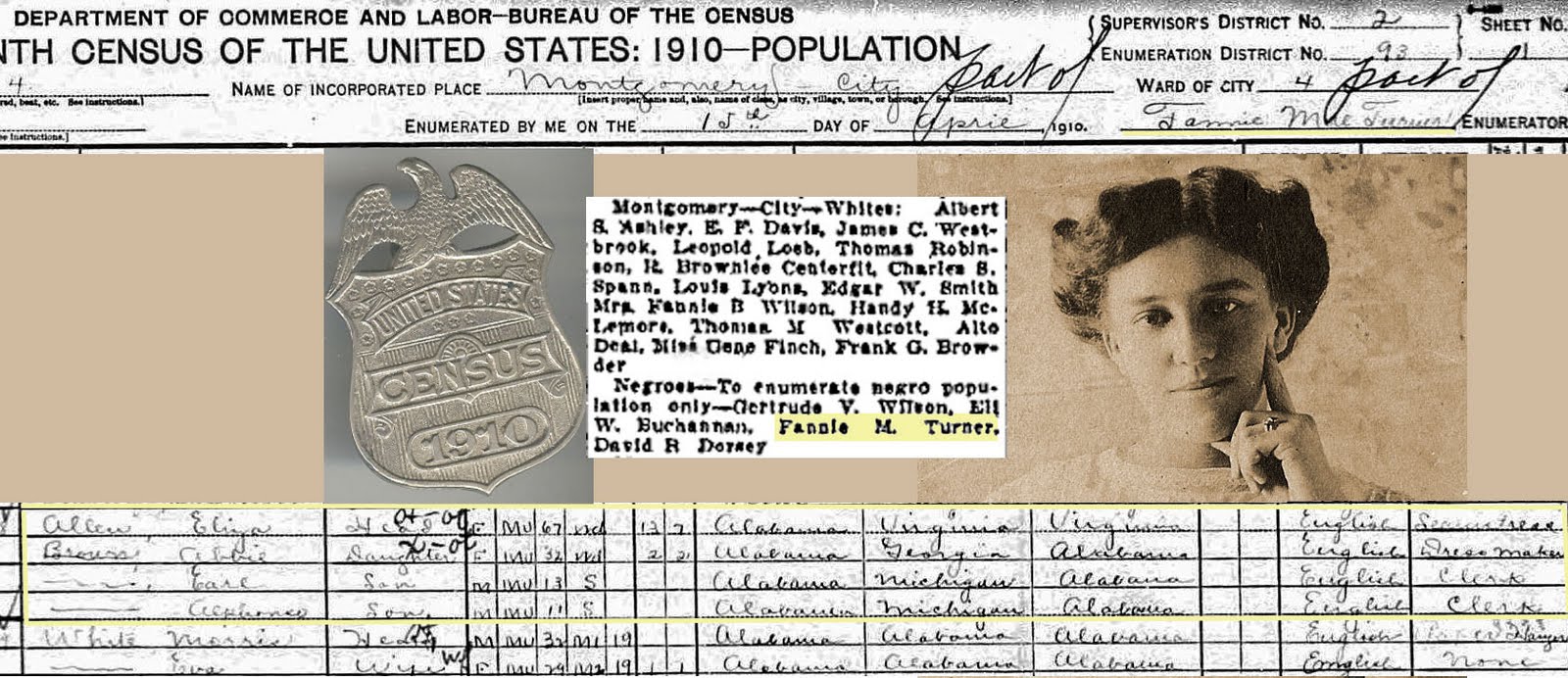
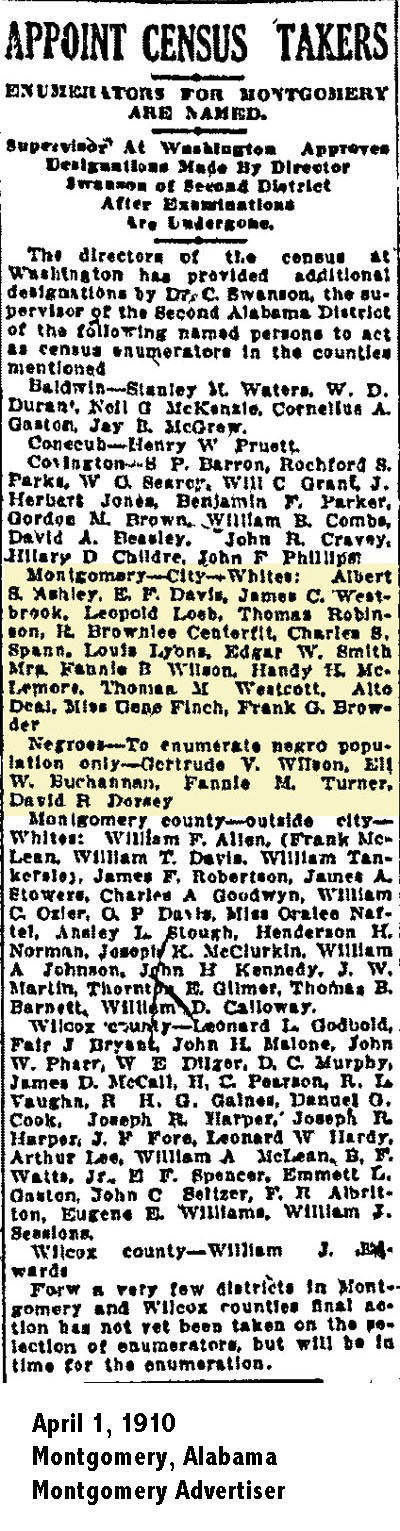
My grandmother Fannie M. Turner was an enumerator for the 1910 US Census in Montgomery, Alabama. She was 22 and lived with her mother and younger sisters in Montgomery, although not in the district she enumerated. Her grandmother Eliza Allen lived in that district. I was looking at the entry for Eliza when I first noticed that my grandmother was the enumerator. I found a newspaper article online about the appointed census takers.
APPOINT CENSUS TAKERS
ENUMERATORS. FOR MONTGOMERY ARE NAMED.
Supervisor At Washington Approves Designations Made By Director Swanson of Second District After Examinations Are Undergone.
The directors of the census at Washington has provided additional designations by Dr. C. Swanson, the supervisor of the Second Alabama District of the following named persons to act as enumerators in the counties mentioned:
Baldwin- Stanley M. Waters, W. D. Durant, Nell G. McKenzie, Cornelius A. Gaston, Jay B. McGrew. Conecuh- Henry W. Pruett. Covington- S. P. Barron, Rochford S. Parks, W. O. Searcy, Will C. Grant, J. Herbert Jones, Benjamin F. Parker, Gordon M. Brown, William B. Combs, David A. Beasley, John R. Cravey, Hilary D. Childre, John F. Phillips. Montgomery- City – Whites: Albert S. Ashley, E. F. Davis, James C. Westbrook, Leopold Loeb, Thomas Robinson, R. Brownlee Centerfit, Charles S. Spann, Louis Lyons, Edgar W. Smith, Mrs. Fannie B. Wilson, Handy H. McLemore. Thomas M. Westcott, Alto Deal, Miss Gene Finch, Frank G. Browder. Negroes- To enumerate negro (sic) population only – Gertrude V. Wilson, Ell W. Buchannan, Fannie M. Turner, David R. Dorsey. Montgomery county- outside city – Whites: William F. Allen, Frank McLean, William T. Davis, William Tankersley, James F. Robertson, James A. Stowers, Charles A. Goodwyn, William C. Ozier, O. P. Davis, Miss Oralee Naftel, Ansley L. Stough, Henderson H. Norman, Joseph K. McClurkin, William A. Johnson, John H. Kennedy, J. W. Martin, Thornton E. Gilmer, Thomas B. Barnett, William D. Calloway. Wilcox county- -Leonard L. Godbold, Fair J. Bryant, John H. Malone, John W. Pharr, W. E. Dilger, D. C. Murphy, James D. McCall, H. C. Pearson, R. L. Vaughn, R. H. G. Gaines, Danuel G. Cook, Joseph R. Harper, Joseph R. Harper, J. F. Fore, Leonard W. Hardy, Arthur Lee, William A. McLean, B. F. Watts, Jr. E. F. Spencer, Emmett L. Gaston, John C. Seltzer, F. R. Albritton, Eugene E. Williams, William J. Sessions. Wilcox county- William J. Edwards. For a very few districts in Montgomery and Wilcox counties Anal action has not yet been taken on the selection of enumerators, but will be in time for the enumeration.
___________
Fannie M. Turner began work April 15, 1910 and enumerated her Aunt Abbie and her Grandmother Eliza on pg 2. She finished on April 26. Mrs. Fannie B. Wilson (white) completed the enumeration of Montgomery, Ward 4 by counting the white residents on several pages after that. As noted in the newspaper article, Negro enumerators could only count Negroes. I wonder how that worked. Did my grandmother go to the door, note that they were white and tell them someone else would return to count them later? Did the neighbors alert her? Since she was already familiar with the neighborhood, did she already know where the white people lived or did all the white residences live in the same area?
________
Fannie Turner was my maternal grandmother. She managed her Uncle Victor Tulane’s grocery store in Montgomery, Alabama from the time she graduated from State Normal School until she married my grandfather in 1919. I wish I knew the stories she could have told about that two weeks of counting the citizens in Ward 4.
For this year’s A to Z Challenge I am posting an event involving someone in my family tree for that date. It may be a birth, a death, a christening, a journal entry, a letter or a newspaper article. If the entry is a news item, it will be transcribed immediately below. Click on photographs to enlarge in another window.
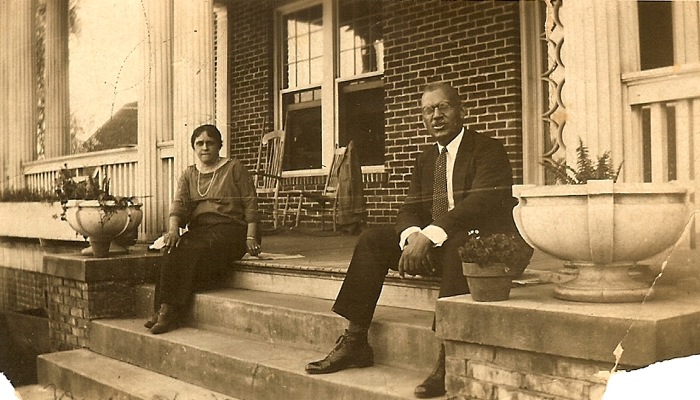
Willie Lee Allen Tulane and husband Victor Tulane on their porch. Montgomery, Alabama..
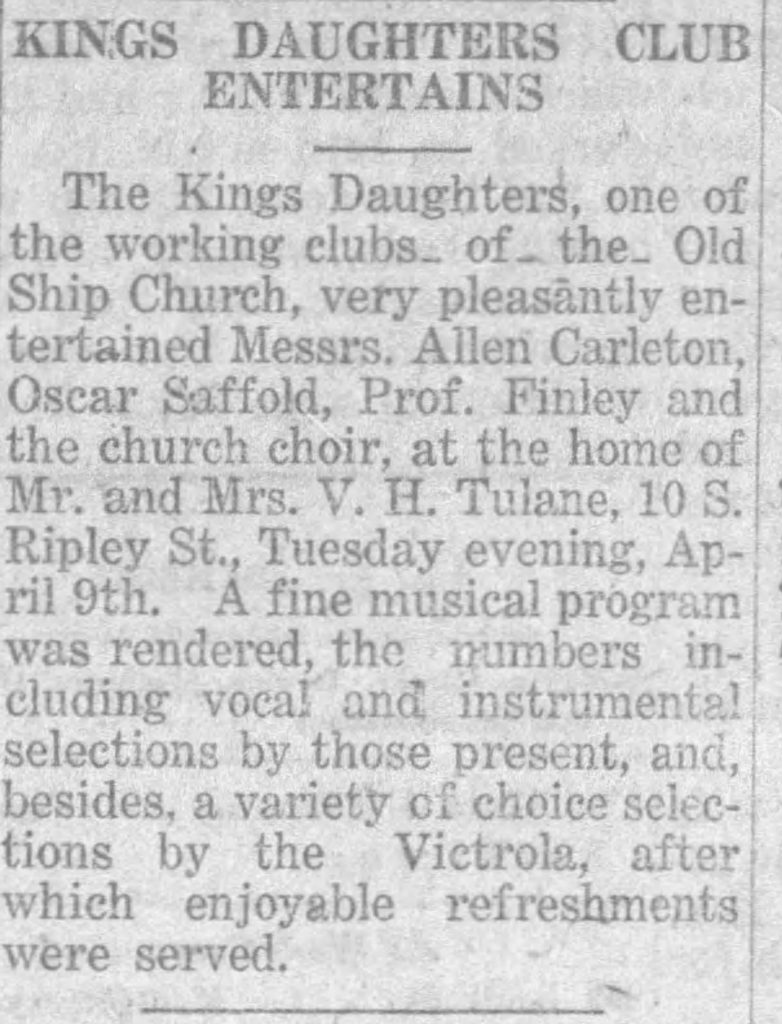
The Kings Daughters, one of the working clubs of the Old Ship Church, very pleasantly entertained Messrs. Allen Carleton, Oscar Saffold, Prof. Finley and the church choir, at the home of Mr. and Mrs. V. H. Tulane, 10 S. Ripley St., Tuesday evening, April 9th. A fine musical program was rendered, the numbers including vocal and instrumental selections by those present, and, besides, a variety of choice selections by the Victrola, after which enjoyable refreshments were served.
______________
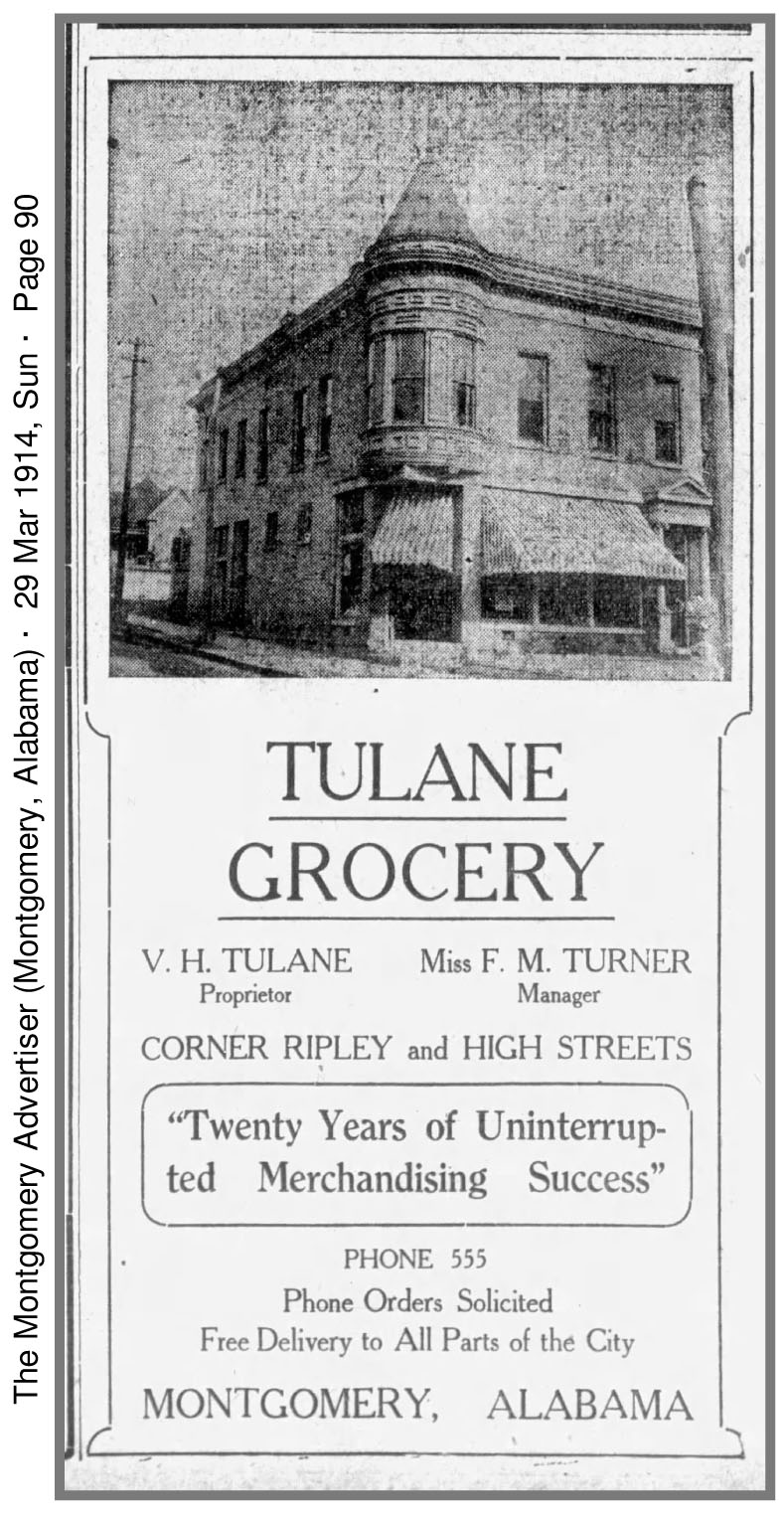
Miss F. M. Turner, manager, was my maternal grandmother. She was the Tulane’s niece.
In 1918 Victor and Willie Lee Tulane and their daughter Naomi lived in a comfortable apartment over Tulane Groceries. In addition to the grocery store, Victor Tulane also was very active in the life of the community. He was on the Board of Trustees of Tuskeegee Institute and cashier of the local Penny Bank.
They lost two young daughters early in their marriage and Willie Lee was overly protective of the surviving daughter, Naomi. Naomi was a student at Fisk University in Nashville, Tennessee in 1918. They were active members of the Old Ship A. M. E. Church.
Willie Lee Allen Tulane was my great grandmother Jennie Allen Turner’s sister.
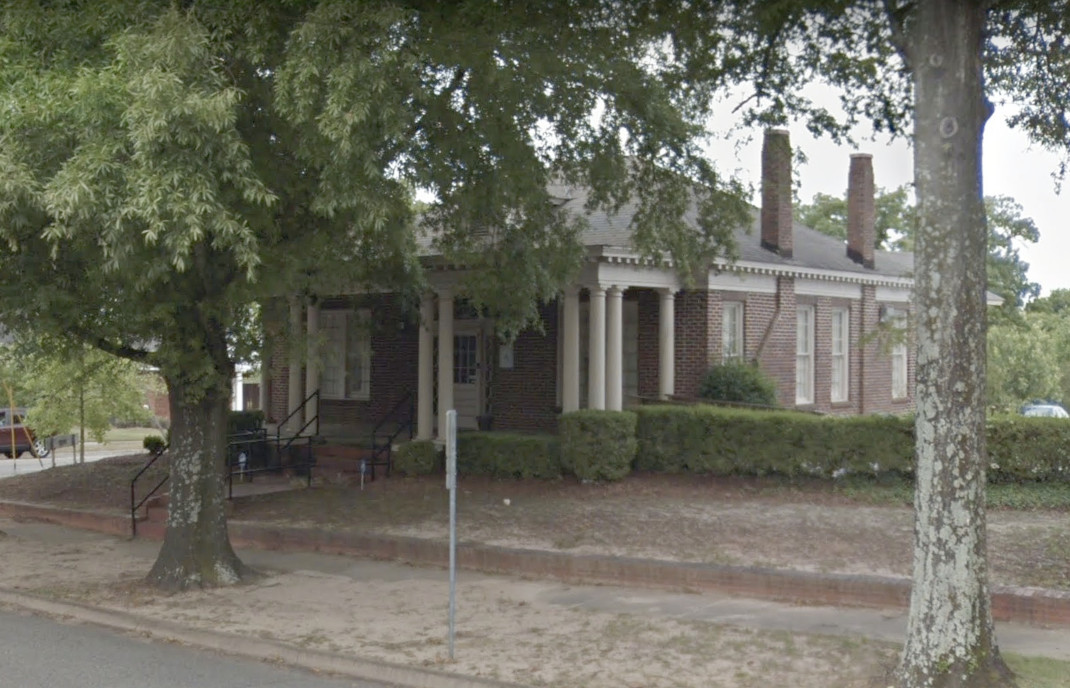
This is the house that goes with the porch. It now houses the Alabama PTA. This photo is from google.
This is my 12th year doing the A to Z April Challenge. For this year’s A to Z Challenge I am posting an event involving someone in my family tree for that date. It may be a birth, a death, a christening, a journal entry, a letter or a newspaper article. If the entry is a news item, it will be transcribed immediately below. Click on photographs to enlarge in another window.
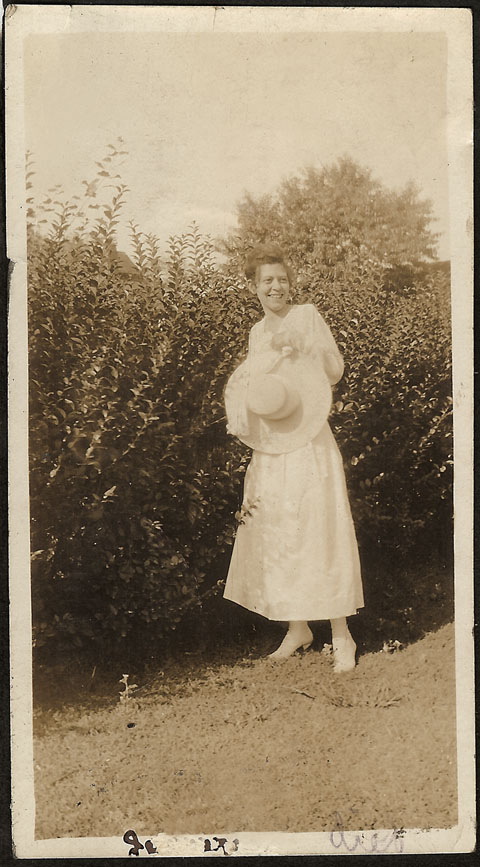
Jeanette McCall
The Emancipator Montgomery, Alabama Sat, April 6, 1918 Page 3
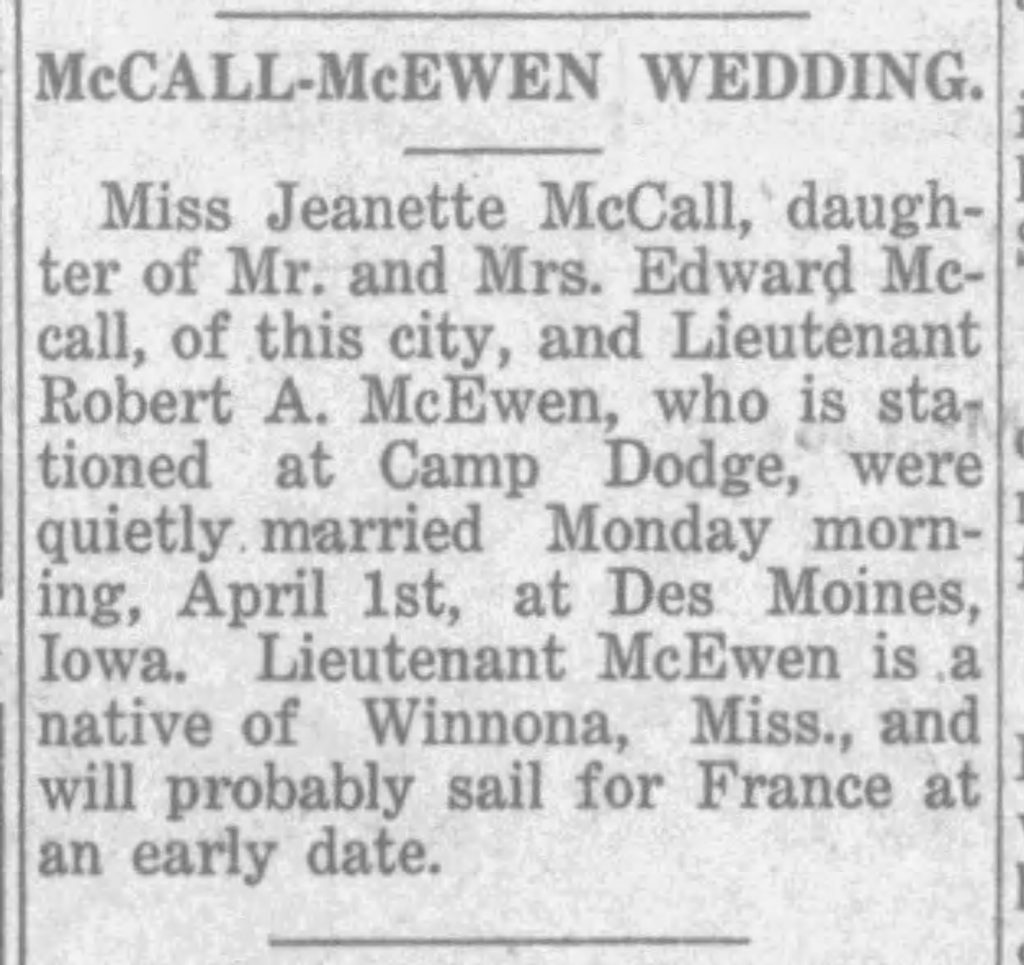
McCALL-McEWEN WEDDING.
Miss Jeanette McCall, daughter of Mr. and Mrs. Edward McCall, of this city, and Lieutenant Robert A. McEwen, who is stationed at Camp Dodge, were quietly married Monday morning, April 1st, at Des Moines, Iowa. Lieutenant McEwen is a native of Winnona, Miss., and will probably sail for France at an early date.
________________
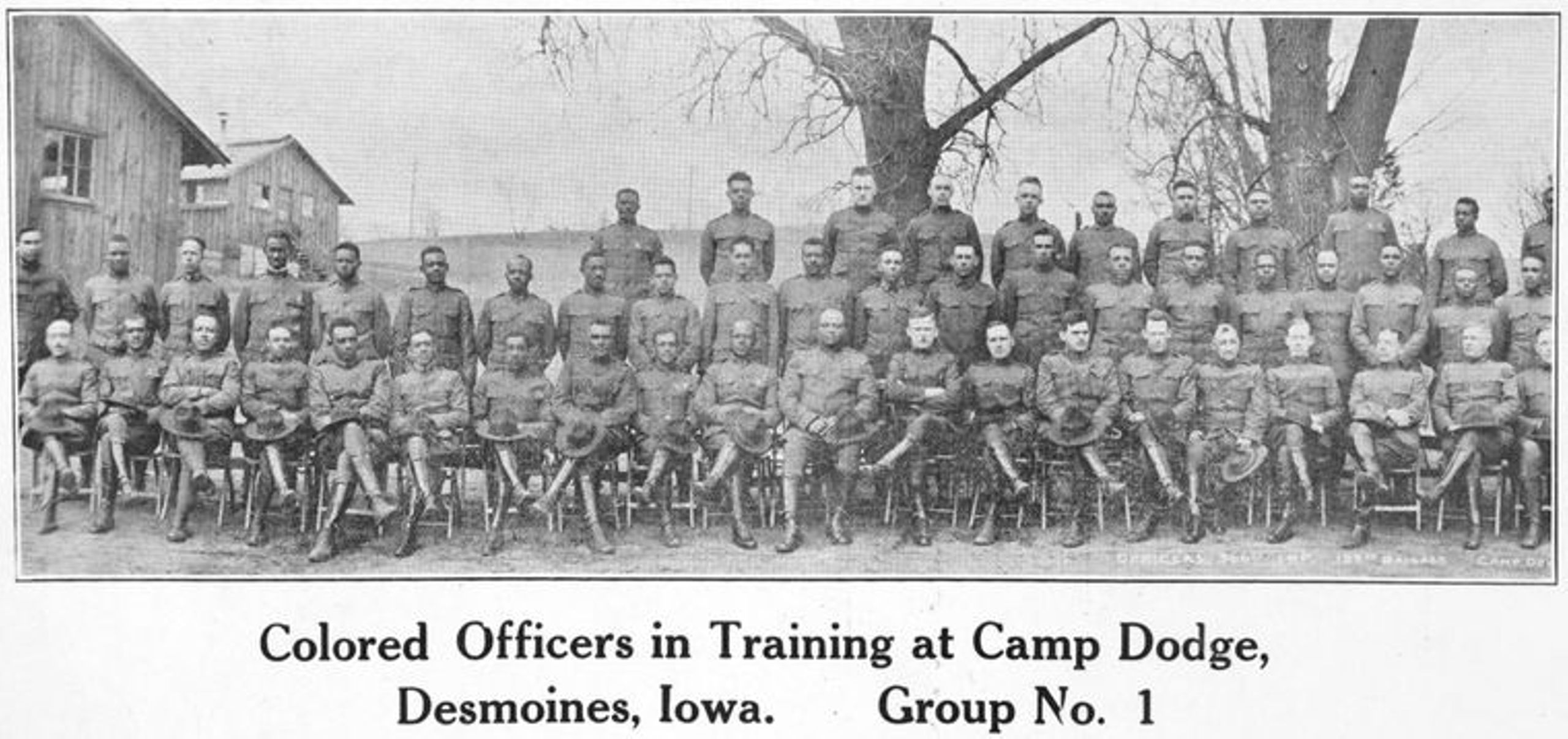
Lieutenant Robert A. McEwen did indeed eventually get sent to France after completing his training at Camp Dodge.
I do not know if Jeanette’s husband is in this photo.
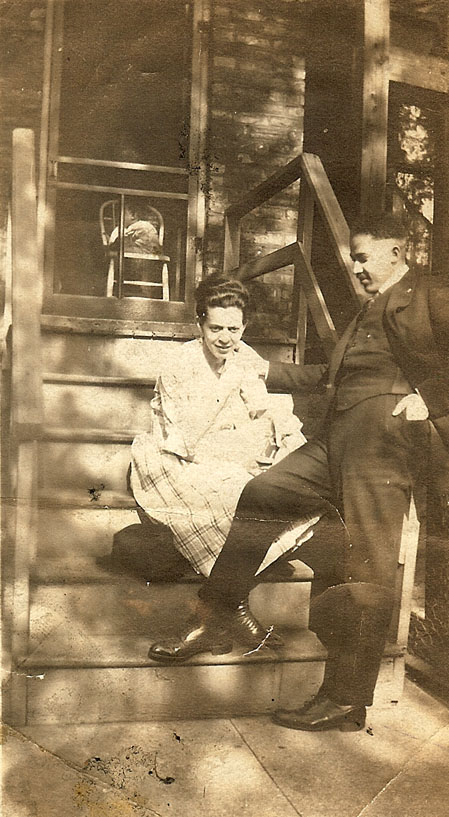
Jeanette and Robert Anderson McEwen
I wondered how Jeanette and Robert met when they lived in different states. Then I saw that Robert McEwen graduated from Rust College in Holly Springs, Mississippi. Jeanette’s older sister Otillia was a teacher at Mississippi Industrial College, right across the road from Rust College. Jeanette visited her frequently, giving her the opportunity to meet Robert Anderson McEwen.
The couple lived in Chicago after he left the service. He was a dentist and she did not work outside of the home. They had two sons.
Jeanette McCall was my grandmother Fannie Turner Graham’s first cousin. Their mothers, Mary Allen McCall and Jennie Allen Turner, were sisters. She died in 1931 of influenza on top of tuberculosis. She was 34 years old.
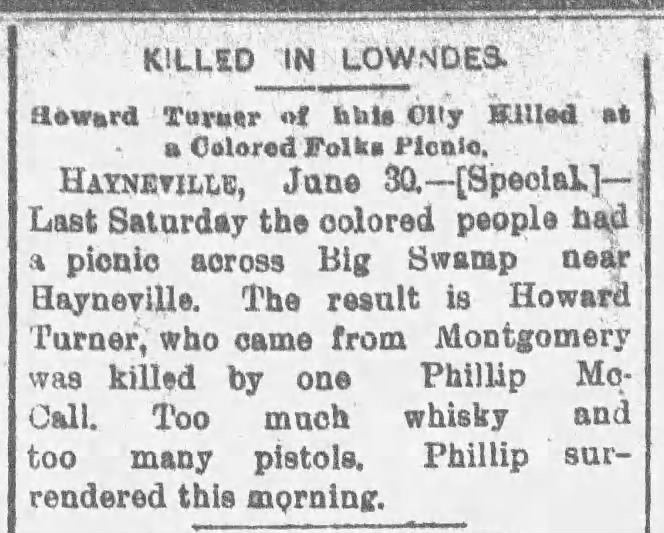
Killed In Lowndes Howard Turner of This City Killed at a Colored Folks Picnic. Hayneville, June 30. -[Special.]- Last Saturday the colored people had a picnic across Big Swamp near Hayneville. The result is Howard Turner, who came from Montgomery was killed by one Phillip McCall. Too much whisky and too many pistols. Phillip surrendered this morning. The Weekly Advertiser (Montgomery, Alabama) Thursday, July 1, 1891 Page 2
We were always told that my grandmother Fannie Turner Graham’s father was killed at a barbecue when she was four years old. After years of being unable to find any documentation, I found this news item on Newspapers.com several years ago.
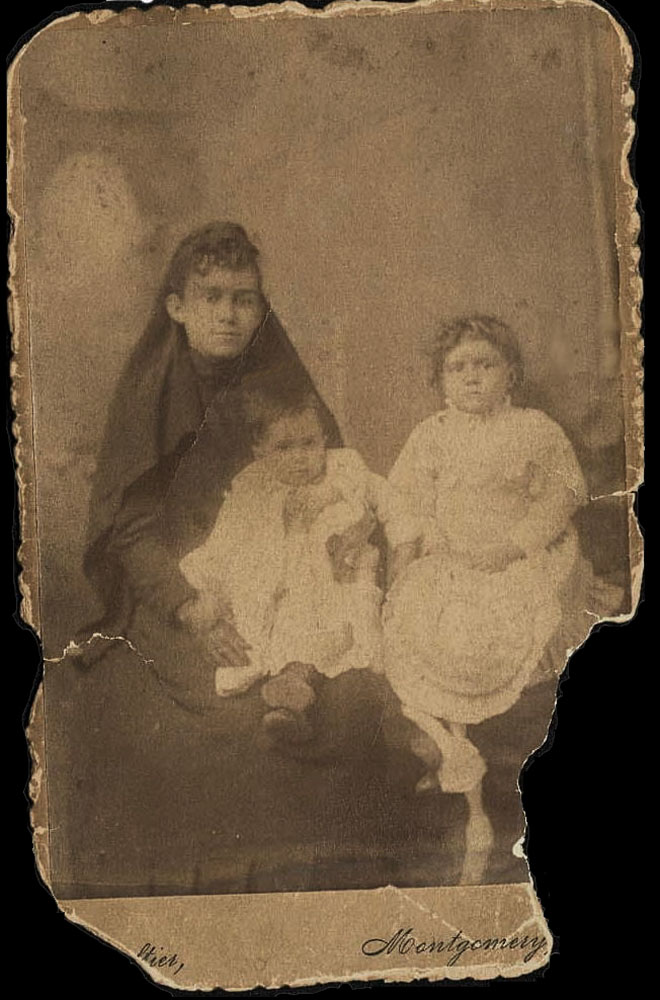
Howard’s widow and children.
Jennie Allen Turner in mourning dress with daughters Daisy and Fannie. 1891.
“In Memory of My Husband Howard Turner who was instantly killed by Philip McCall June 27, 1891.
Vengence is mine, saith the Lord, I will repay.”
Yesterday while searching for more information about my great grandfather Howard Turner, I found this on Ancestry.com in the Alabama, Surname Files Expanded, 1702–1981. It looks like it came from the cemetery. Is it the inscription on his grave stone?
I looked for and found the Hayneville Cemetery, but can find no entry for Howard Turner. I wish I could see that grave stone. Reading it gave me a whole new vision of my great grandmother. I can understand the anger expressed in this inscription.
While I was studying the women in the Edelweiss Club during the past several years, I came across quite a bit of information about some of their parents. They were in the same age group with my great grandmother, Jenny Virginia Allen Turner. My great grandmother was born October 1, 1866 in Montgomery Alabama, seven months after the end of the Civil War and the ratification of the 13th Amendment abolishing slavery. Most of the parents were born in the 1850s and 1860s, during the final years of slavery or during the first years of freedom.
I began by studying these parents and then I became interested in others living in Montgomery, Alabama during that time and began to expand my investigations to include them and by extension, learned what was happening in the community that my family lived in during Reconstruction and after.
I found women and men who worked for themselves as farmers, carpenters, barbers, grocers, preachers and seamstresses. There were others who worked for the government as janitors, teachers and mailmen. Some worked for private families as nurses and chauffeurs. There were murders, scandals and everyday life.
I began by looking for the people I was interested in, in census and death records and city directories. After building a picture of their lives from these records, I looked them up in the local newspapers. I found stories of murders, obituaries, graduations and teaching assignments. Most of the stories appeared in the white papers and were obviously biased towards the African American citizens. I also found stories in black newspapers. Some had long publishing lives, but there were several that only came out once or twice. These papers carried more personal information – marriages, who just moved into town, who was visiting who and other more personal stories. In these newspaper articles I found new people to investigate.
I haven’t written anything on my blog since May and I decided I need to start writing up all the information I’ve found. I need to do a timeline of the events and also place the new people on the map I made for the Edelweiss women. Hopefully I won’t get lost in these for too long!
Edelweiss in red. Other family in blue. Click to enlarge.
Some have wondered if the women associated with the Edelweiss Club who left Montgomery and moved to Detroit kept in touch with each other. Of course without interviewing them, I can only assemble the clues I have found and say that at least some did. There were other of their friends who moved from Montgomery to Detroit that they kept in touch with.
In Montgomery they lived within walking distance of each other. In Detroit they were much more spread out. My grandparents didn’t have a car until 1934. Before that, they caught buses or streetcars to travel outside of their neighborhood. In my grandparent’s lives, their church, Plymouth Congregational provided the groups to which they belonged to after moving to Detroit. Gwendolyn and Lewis Graham were also members.
Gwendolyn Lewis, Hattie and Fannie Turner in Detroit
Gabriella Snow married James Henry Kelly on 8 July 1917 in Montgomery. Although she was not a member of the Edelweiss Club, two of her younger sisters were. The Kellys moved to Detroit shortly after their marriage. They lived at 185 Rowena St. He worked as a machinist at an American Car and Foundry Company on Russell Street and died in Detroit in November of 1918. Gabriella Kelly returned to Montgomery and went back to teaching. She never remarried and had no children. She was buried from Old Church AME Zion Church in Montgomery.
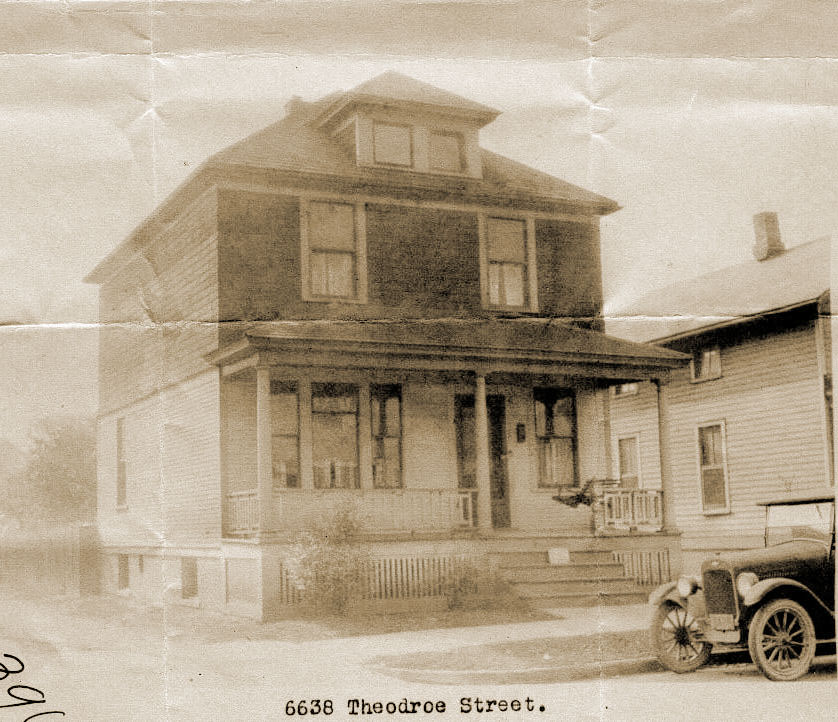
1. Fannie and Mershell Graham’s house on Theodore. Family photo.
Fannie Turner married Mershell C. Graham on 15 June 1919 in Montgomery. They moved to Detroit later the same day. At first they boarded with friends from home at 1031 St. Jean Ave. Mershell worked as a machinest at an auto plant. Fannie didn’t work outside of the home after their marriage. They had four children and were members of Plymouth Congregational Church.
In 1930 they owned their home worth $8,000 at 6638 Theodore, Detroit. Mershell was working at Ford’s Auto plant as a stock keeper. Oldest son Mershell died in 1927. They had three children at home; ten year old Mary V. , seven year old Doris and one year old Howard.
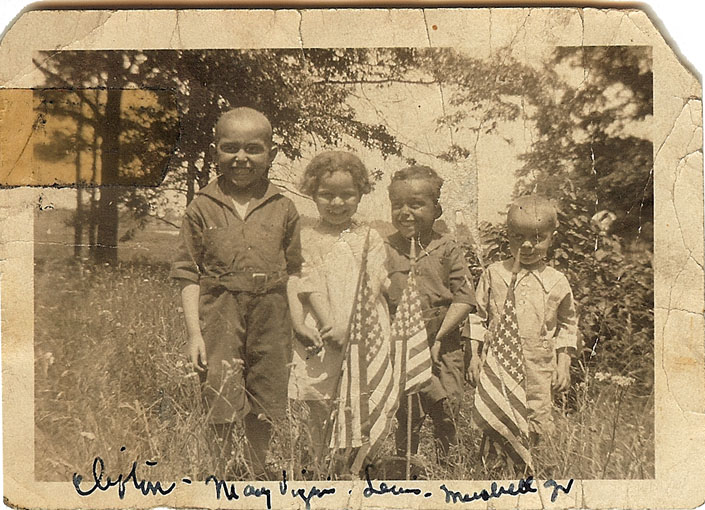
Children of Gwendolyn and Clifton Graham (Clifton & Lewis) and Fannie and Mershell Graham (Mary V & Mershell Jr.).
Gwendolyn Lewis married Clifton Graham in Montgomery. He left for the army and Gwendolyn remained in Montgomery where their first child was born. By 1919 they were in Detroit and members of Plymouth Congregational Church. Their second child was born in 1920.
In 1930, the Grahams owned their own home worth $9,000 at 4431 St Jean Avenue. He was working as a Prohibition officer for the United States government. Their two sons were Clifton age ten and Lewis age nine. Unfortunately that house is no longer there.
Clifton’s older sister, Mattie and his mother Mary were in Detroit by the early 1920s.
3. 6747 Scotten present day photo from Google
Effie Todd married Arthur Robert Chisholm in Montgomery on 9 August, 1919 after he left the army. By the 1920 census they were in Detroit. They rented a house at 832 Roosevelt Street. He was worked as a laborer at the Packard Motor Company. Effie was not working outside of the home, but they had five borders, including Janie Douglas Binford, also a former Edelweiss member. She was working at the post office.
In 1930 they owned their home worth $14,000, at 6747 Scotten Avenue. Effie was teaching. Mary Monroe was boarding with them and also teaching. Arthur was a driving for a cab company. They had no children, but raised Effie’s niece, Cosette.She was seventeen when she died of tuberculosis in 1929.
They later divorced. He remarried. Effie did not. She continued teaching until she died of pneumonia in 1939. She was buried from Hartford Avenue Baptist Church.
Janie White Douglas Binford had one child with her first husband, who she divorced. She later remarried, Alphonso Randolph Smith, on 21 Feb 1921 in Detroit. He was a postal worker. Died June 24, 1946. She attended St. Matthews Episcopal Church.
In 1930 they owned their home worth $9,000 at 5717 Parker Avenue. Unfortunately there is now a vacant lot there. Alphonso worked as a postal carrier. Janie worked as a postal clerk. There were two sons, John age nineteen and Paul age fifteen. Alphonso’s mother lived with them and didn’t work outside of the home. There were two lodgers.
Clara Robinson Baily. Married an older man. They separated and later divorced before she left Montgomery. They had no children. She was in Detroit by 1920 and lived at 449 E. Jefferson. She died in Detroit two years later in 1922. Her death certificate gave occupation as postal clerk and residence as 3130 Chestnut Street.
4536 Harding. Family photo. Jennie, Daisy and Alice Turner. Family photo.
5. Daisy Turner never married. She and her mother and sister Alice moved to Detroit in 1922. They lived with sister Fannie and husband Mershell until they saved enough money to buy their own house. Mother Jennie was a seamstress at Annis furs. Younger sister Alice didn’t work outside of the home. Daisy was head porter at Annis Furs.. All attended Plymouth Congregational Church.
In 1930 they owned their home worth $7,000 at 4536 Harding on Detroit’s East side. They kept in touch with Mary Monroe over the years.
The Detroit Tribune, Detroit, Michigan • Saturday, October 25, 1941 Page 4
6. 18417 Norwood. Annie & Louis Gilmer present day photo from Google
6. Annie Wimbs married Louis Gilmer on 24 Dec 1918 in Montgomery. They were married by Rev. Callahan of Dexter Ave. Baptist Church. They moved to Detroit by 1925. In 1927 they lived at 5304 24th Street. In 1930 lived at 18417 Norwood, in Conant Gardens, northeast Detroit. They had five children.
7. Mary Monroe never married. Moved Detroit. 1930 rooming with Effie and husband at 6747 Scotten Ave., Detroit West Side. She was a teacher in the city schools. In 1950 her niece was working at a fur store. Did Daisy help her get the job? She remained in the house on Scotten after Effie’s divorce and death.
Daisy in the dark dress with the pin with other workers at Annis Furs. Family photo.
The Detroit Tribune, Detroit, Michigan • Saturday, November 15, 1941 Page 4 Daisy and Alice Turner and their mother Jennie have dinner with Mary Monroe.
The Detroit Tribune, Detroit, Michigan Sat, Oct 27, 1956 · Page 3
“THIS IS YOUR LIFE,” honoring Miss Mary F. Monroe of Scotten avenue, former teacher in Alabama State for approximately 30 years of more, took place at New Light Baptist Church, 30th and Cobb streets, Saturday, Oct. 10th. This was a surprise affair for this great mathematician and founder of the popular Century of Progress Club which is about 22 years old. Left to right, seated, members of Miss Monroe’s family, Mr. George L. Carter, Mrs Tommie Dorsey, Miss Mary Monroe, Miss Temple Moore, Miss Daisy Turner and Mrs Helen Hamilton. Standing, left to right and also looking on as Mr. Clarence K. Howard makes cash presentation to Miss Monroe are Fred Hewlett, Dr. William H. Benson, Mrs. Bessie B. Benson, Mrs. Fred Hewlett, Mrs. Jessie Beasley and Mr. George Beasley, all out of town guests; Mrs. Gwendolyn Graham, Mrs. Madaline Nesbitt Phillips, Mrs. Mattie Shannon, Mrs. Bertha Debbs and Mr. John W. Askew. – Photo by F. Williams.
Friends of Fannie and Mershell, members of Edelweiss, some music, some dancing.
I can’t believe that I forgot to include the final event of the Edelweiss Club in my A to Z! It was the invitation card that was included in a post in the 2018 A to Z Challenge and a question by Anne of Anne’s Family History about the Edelweiss Club started my investigation. Click on any image to enlarge.
Fannie Turner (colorized)
Monday am June 2, 1919
My dear shell:
Your letter just came and everything in is was ok.
I laughed so loudly over certain parts of it that Naomi and Rufus wanted to know if they might read it too…. I told them they were too young to read such.
As I wrote you last time, your plans suit me all ok and as you say when you get here, we can talk the balance over.
This leaves all of us in pretty good health. Aunt Mary had Mams, Daisy, Alice and me to dinner yesterday – (Sunday) and believe me we had some time and some dinner.
“Bob” leaves for Chi this p.m. Uncle is a little better tho very weak. The club is planning a dance for next Tuesday P.M. the 10th.- Hope you can be here for it, but. If you can’t I’ll try and not cry. Ho! Ho!
Are you staying at Mrs. Walker’s altogether now? I’ll ask you the other questions when I see you, I’d better not write it…
Mershell “Shell” Graham
I wonder if you want me to meet you? Or if you will come on by the house – guess that will be better for us to meet at house after not having seen each other for so long. What you say? Write me one more letter before leaving- for I guess this is the last one I’ll write before we meet.
With lots of love etc.
Your Fanny P. S. Give my love to all the folks.
This card was enclosed with the letter
After reading my grandmother’s letter and the invitation, I wondered about several things. Where was Washington Park? How did they manage music in a park? How did they get to the park when it was quite a ways from their neighborhood? What kind of dancing did they do? And most importantly- did my grandfather make it from Detroit to Montgomery before the dance?
I found the answers to all of my questions. Unfortunately there was no mention of the dance in any of the newspapers.
Streetcars
In 1886, the first citywide system of streetcars was established in the United States in Montgomery, Alabama. Segregated seating was officially mandated in the early 1900s. There was a Montgomery streetcar boycott from 1900 to 1902 to protest segregated service. The boycott failed and the city council passed the Montgomery Streetcar Act in 1906 that codified segregated seating.
The Montgomery Advertiser Montgomery, Alabama • Thu, Oct 16, 1902 Page 3
In 1903 the Montgomery Street Railroad Company got permission and land to build a park for African Americans in West Montgomery. Parks were also segregated. Black people were not allowed in white parks. Washington Park was not within walking distance from the Centennial neighborhood so the streetcars heading to the park were often crowded. In fact, there were letters to the paper complaining because there was not room on these cars for white people. There were also excursion cars for special events that ran from some where in the neighborhood to the park. I don’t know if there were enough people going to the dance to call for excursion streetcars or if the dance goers had to ride the regular segregated buses.
The Montgomery Advertiser 1904 May 26 page 6
The section below from a Sanford shows the buildings available at the park. I wondered about dancing on the grass and what music would be provided, but there was a dance hall. There was probably a piano there or maybe they had a local band. Would there have been a gramaphone? A player piano?
Washington Park and facilities
I found in the newspapers that the dances popular at this time in Montgomery were the foxtrot, the one-step and the waltz. And, most importantly, my grandfather did arrive in time for the dance! They spelled his name “Michael” instead of “Mershell” but he arrived the day before the dance and in plenty of time for his wedding.
The Emancipator Montgomery, Alabama · Saturday, June 14, 1919Thunderstorms were predicted. I hope they didn’t impact the dance.