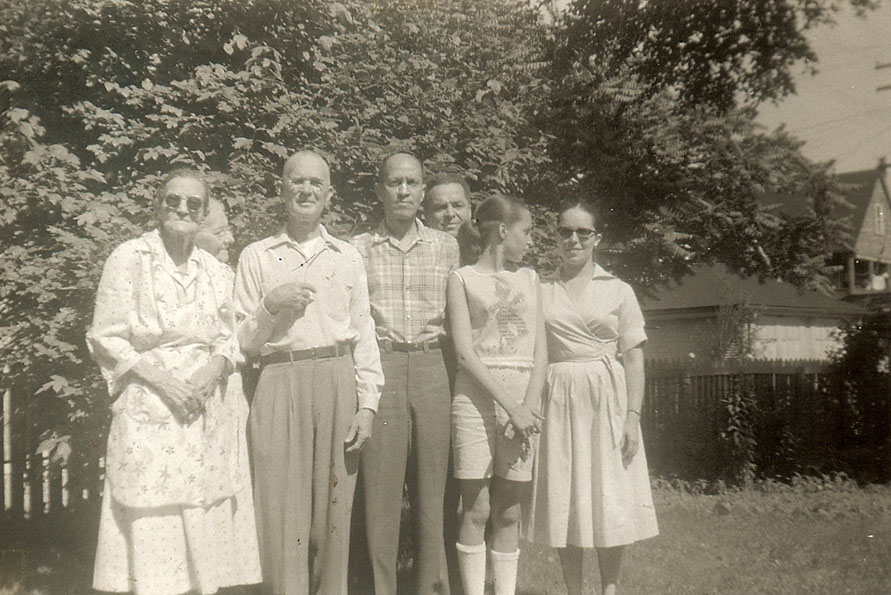
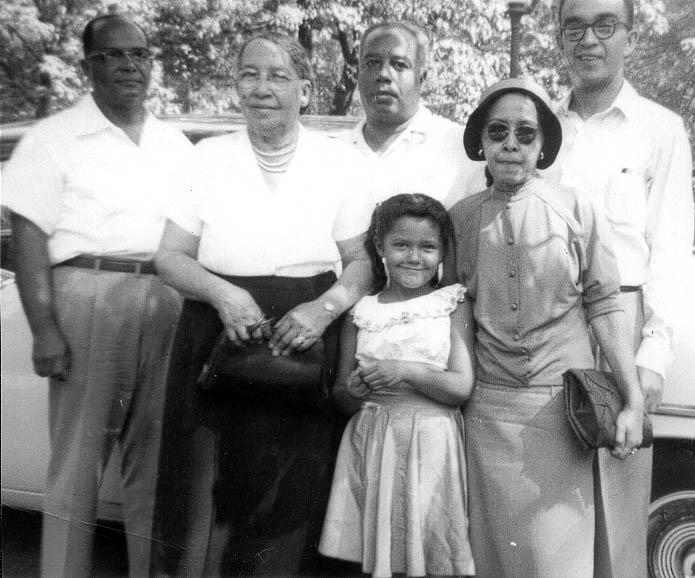
This is my 13th year doing the A to Z Challenge. This year, although I knew that my topic would be family history related, I had not honed in on a specific subject. When I wrote my Reveal post I had no posts written. I think I wrote two before April 1. I fell behind once but was able to catch up and end on time.
Towards the letter Q some family members had questions for me. How handy was that? I was able to answer their questions using the remaining letters of the alphabet. There were several other times that my daughter Ayanna asked questions about posts that sent me looking for answers and gave me a post. During this year’s Challenge I wrote the posts as I went along.
I mostly followed people I had followed in previous years. My very favorite was The Tired Hampster’s continuing story of war, death, love, and the wrath of the gods on Very Important Stuff Here. Other blogs I read regularly were, in no particular order:
I visited fewer blogs and also got fewer comments. I checked the number of comments from this year with those from last year and I did get fewer comments.
I plan to write up my grandfather Cleage’s migration story with input from his letters and news articles. Same with Eliza’s children moving north, if I have the information to add. I’ll keep looking for Harjo and Bessie in the records.
Thank you to everyone who makes the challenge work and to everyone who read my posts and to those who commented. And to my husband Jim who proof reads my posts. Although I do sometimes change up afterwards, so he’s not to blame if some errors creep in!
Pearl asked: What happened to Josie’s daughter Bessie after she left George’s house?
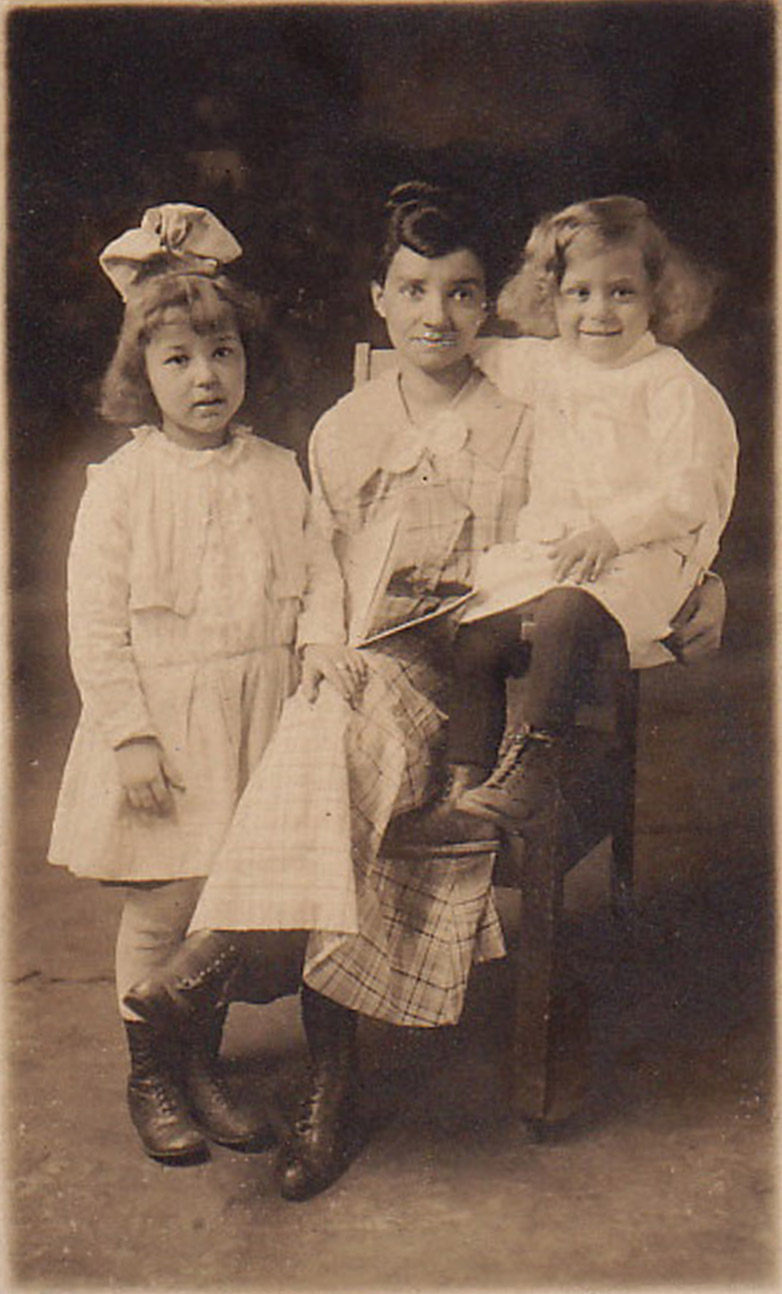
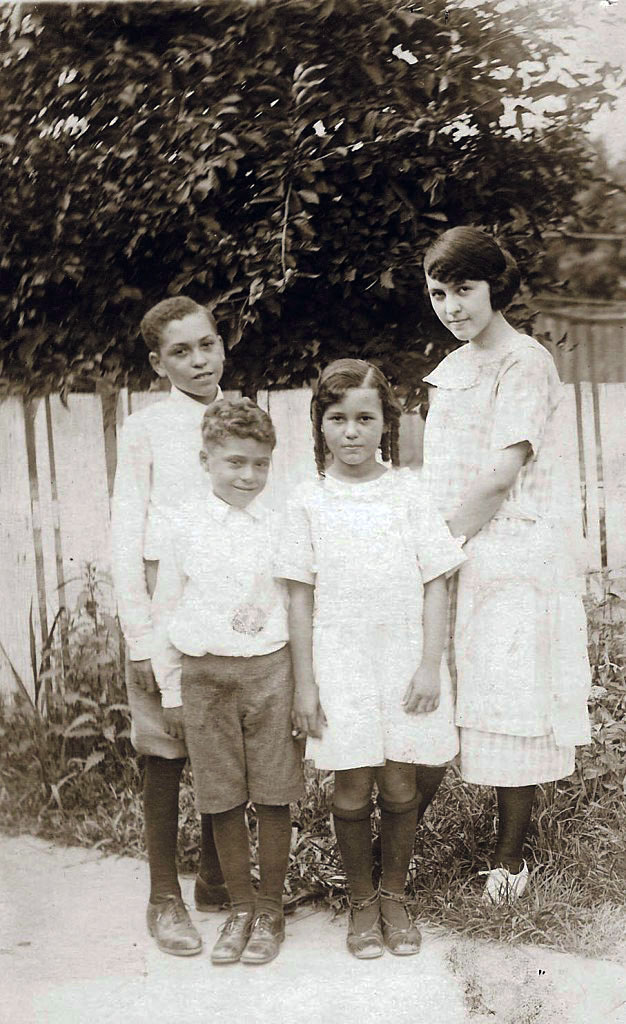
Bessie was my grandmother Pearl’s niece. Because they were nearly the same age, my grandmother thought of Bessie and her brother Charlie as cousins more than niece and nephew. Josephine, their mother, was my grandmother’s oldest sister. There were 19 years between them.
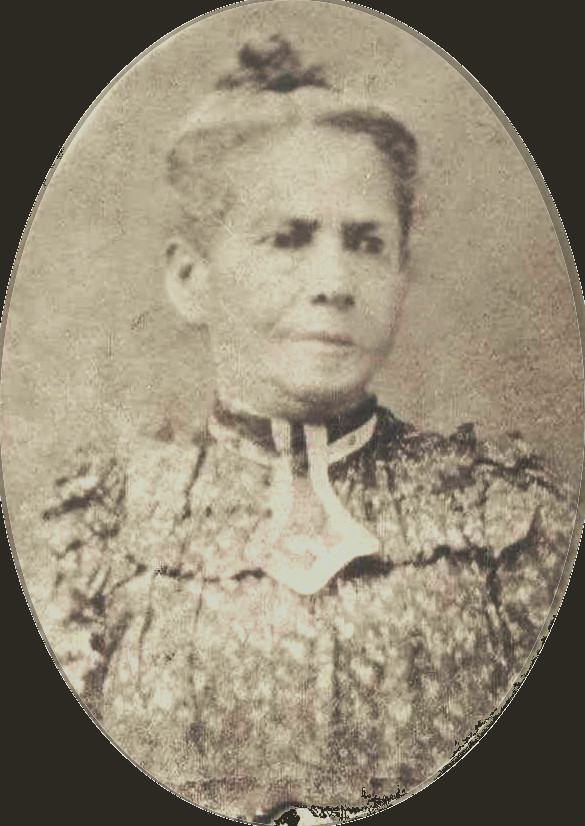
Josephine’s husband, Charlie Robertson left her when Bessie was five years old and her son Charlie was three. He last appeared in the 1891 city directory. Josephine died between 1891 and the 1900 census. Indiana did not keep death records at the time and there don’t seem to be death lists in the newspapers so I cannot be sure of the exact date. I know she lived long enough to stand in front of her son’s photograph and cry.
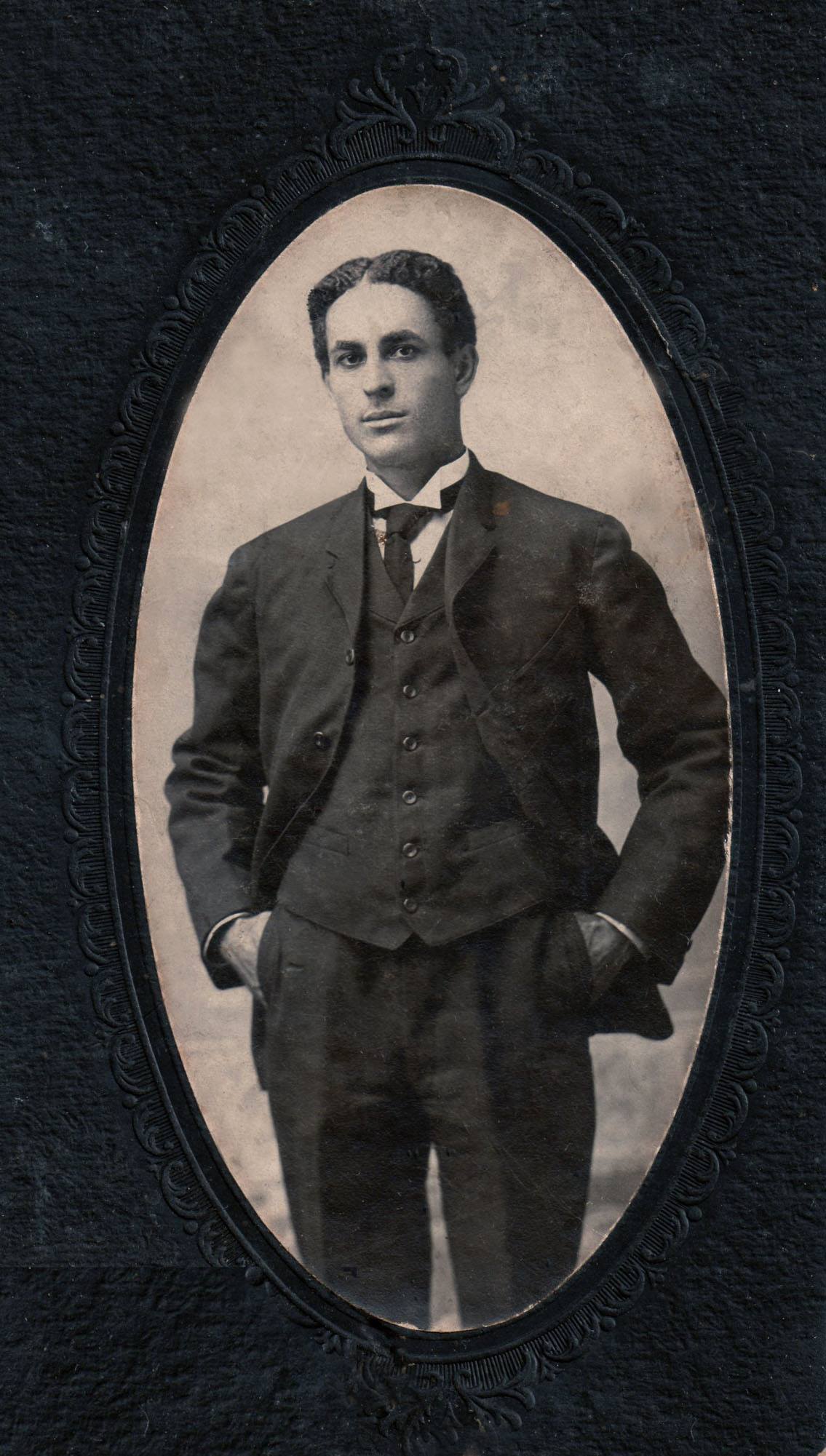
Young Charlie doesn’t reappear in the record until 1917 with his draft registration card. He appears to have been drafted and then gone AWOL. He’s also changed his name to Harry Delos Robertson. In 1925 Charlie Jr. aka Harry, married in Michigan. His parents were listed as Charles Robertson and Josie Campbell. He was born 6 Dec. 1888 in Indianapolis. This is our Charles/Harry. He appears in every census after this in Michigan, working as a barber. In his draft registrations he’s described as blond, blue eyed, medium height and build and white. He died in Michigan in 1961.
The father never reappears after 1891. He is no longer in the Indianapolis City Directory as a shoemaker. From the time he and Josephine married in 1887, his address changed every year until he disappeared after 1891.
Although I’ve searched for years, I have been unable to find Bessie after the 1900 census. I’ve searched for Bessie, Betsey and Elizabeth with surnames Campbell (her mother’s maiden name), Reed (Josephine’s family name) and Robertson (Josephine’s married name.), with zero luck.
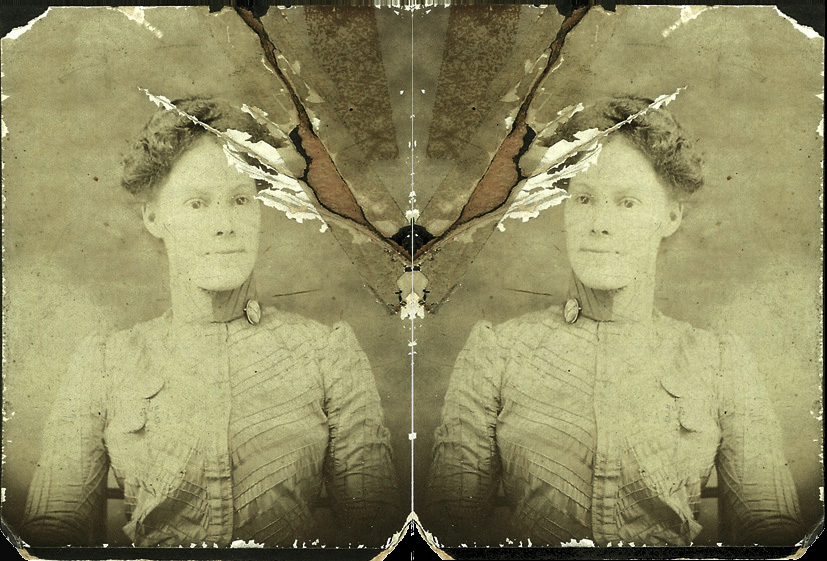
In 1900, 14 year old Bessie was living in Indianapolis with her grandmother and aunts and uncles. According to the census, everybody was born in Kentucky. Before that, oral history says she was left behind with her mother when the elder Charles left with his son. Was she his daughter? Did he leave her because she was a girl? Was she unable to pass for white? Unless one of Bessie’s descendants reads this post and clues us in, all we know is that she left because George, my grandmother’s oldest brother, was too strict.
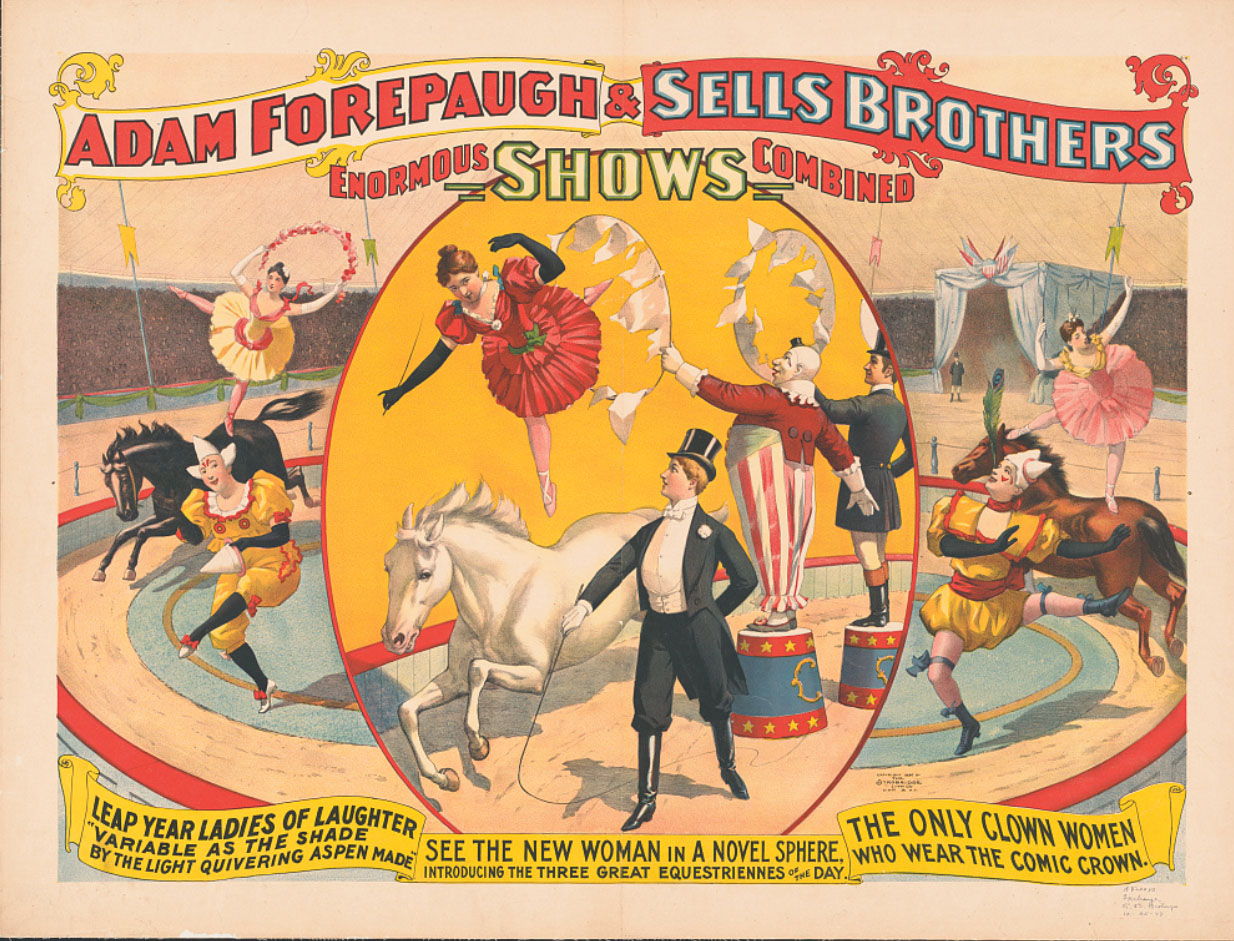
An idea has been gnawing at me. The circus… Do you think that may be Bessie in the pink tutu, riding bareback on the brown horse?
Clara Hoskins Allen Green was born in Kentucky. Her three children, Sarah, Thomas and Anna were born in Lebanon, Kentucky on the plantation of Foster Ray.
Sarah Jane Ray Primus
Sarah Jane married Felix Primus and they had eight children. Several years after Felix’s death Sarah had moved north 70 miles with some of her adult children to Louisville, Kentucky. She died in Louisville in 1907.
In 1864 Thomas Ray Allen joins the United States Colored Troops(USTC). Thomas Ray Allen mustered out in Helena, Phillips, Arkansas, in 1866 and was Honorably Discharged from the United States Colored Calvary. USCT Calvary 5. By 1877 living in Indianapolis, Indiana. In 1880 Thomas married Katherine Wiley of Ohio, in Indianapolis, Indiana.
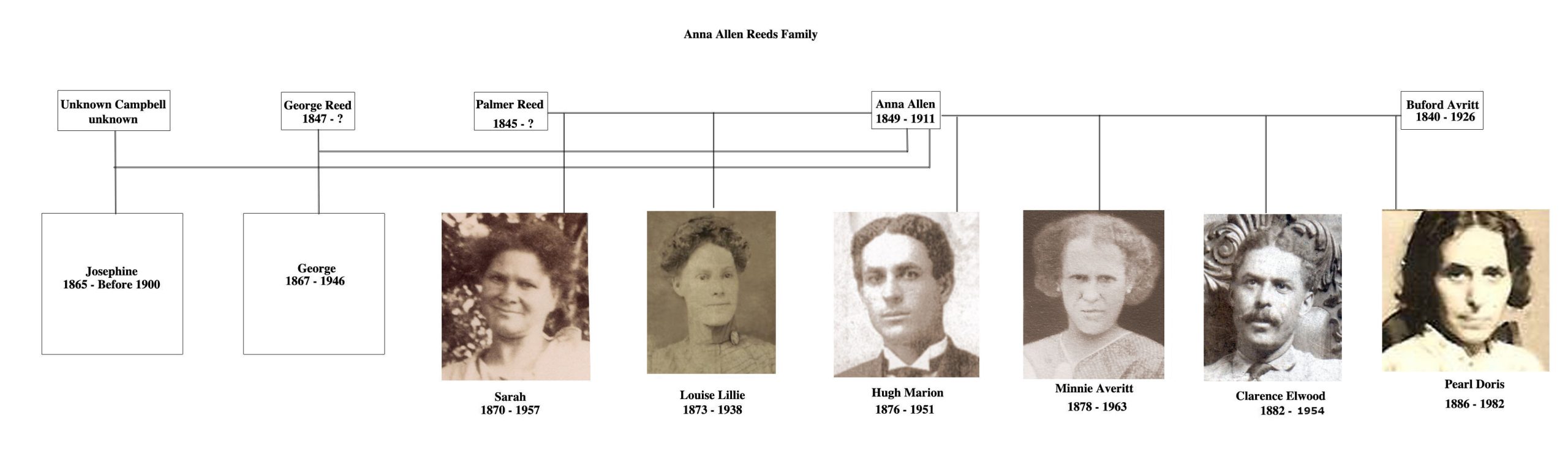
Anna Reed had eight children. In 1887 her oldest child Josie Campbell (22), married Charles H. Robertson in Indianapolis, Indiana and Sarah “Sally” Reed, her younger sister appears in the Indianapolis, Indiana Directory.
Josie’s son Charles Harry Robertson was born Indianapolis, Indiana in 1888, joining his older sister Bessie who was born before the marriage.
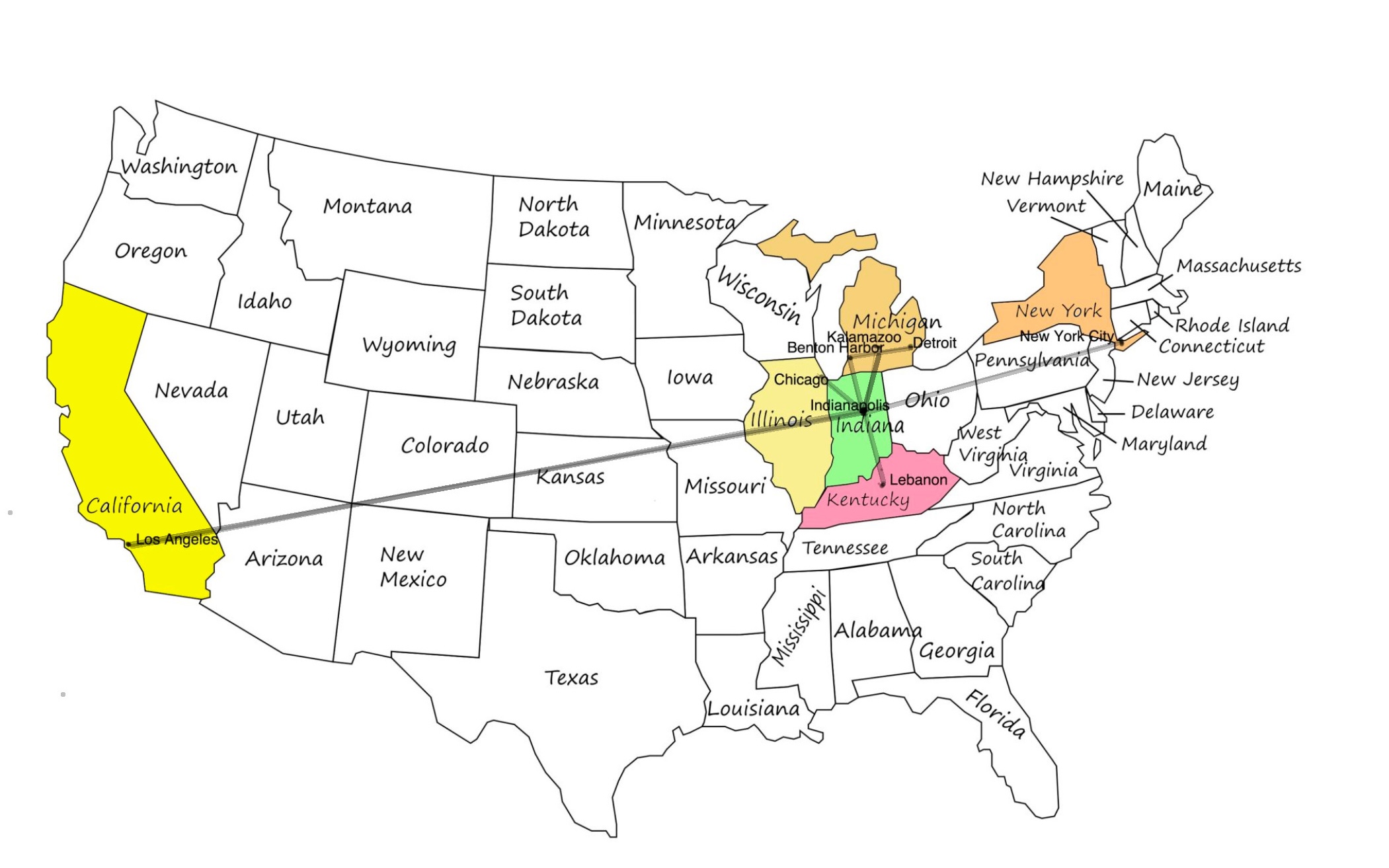
In 1889 Sarah (18), married Michigan native, James Busby (Parents born Virginia) in Indianapolis and moved to Berrien County, Michigan. James Busby’s father was married to uncle Thomas’ wife’s sister.
Anna’s oldest son, George Reed, (24) appeared in the Indianapolis City directory in 1891.
In 1891 Lillian, age 17, married Michigan native, Solonus Shoemaker (Parents born Virginia) in Berrien County, Michigan.
In 1893 Anna Reed appears in the Indianapolis directory. She would have had her four youngest children; Hugh (17), Minnie (15), Clarence (11) and Pearl (9) were with her .
1898, 27 April – Minnie Reed married James Mullins (born Georgia to parents born in Georgia.) in Indianapolis, Indiana.
Hugh Reed Averett
In 1898 Hugh Reed Averit enlisted in the corps of engineers in Indianapolis. He was sent to Willetts Point, New York, where he ended up in the Navy as a coal passer for the next three years on the USFC Newark during Spanish American war. Philippines, China Expedition (Boxer Rebellion) In 1901 – Hugh was discharged from the navy in Boston, Massachusetts. He returned to Indianapolis, Indiana.
In 1904 Minnie and her growing family moved to Benton Harbor where her sisters Sarah and Lillian lived.
Theresa, Blanch and Thomas Reed Averett
Hugh Reed married Blanche Young in 1906 in Indianapolis. Their four children are born in Indianapolis.
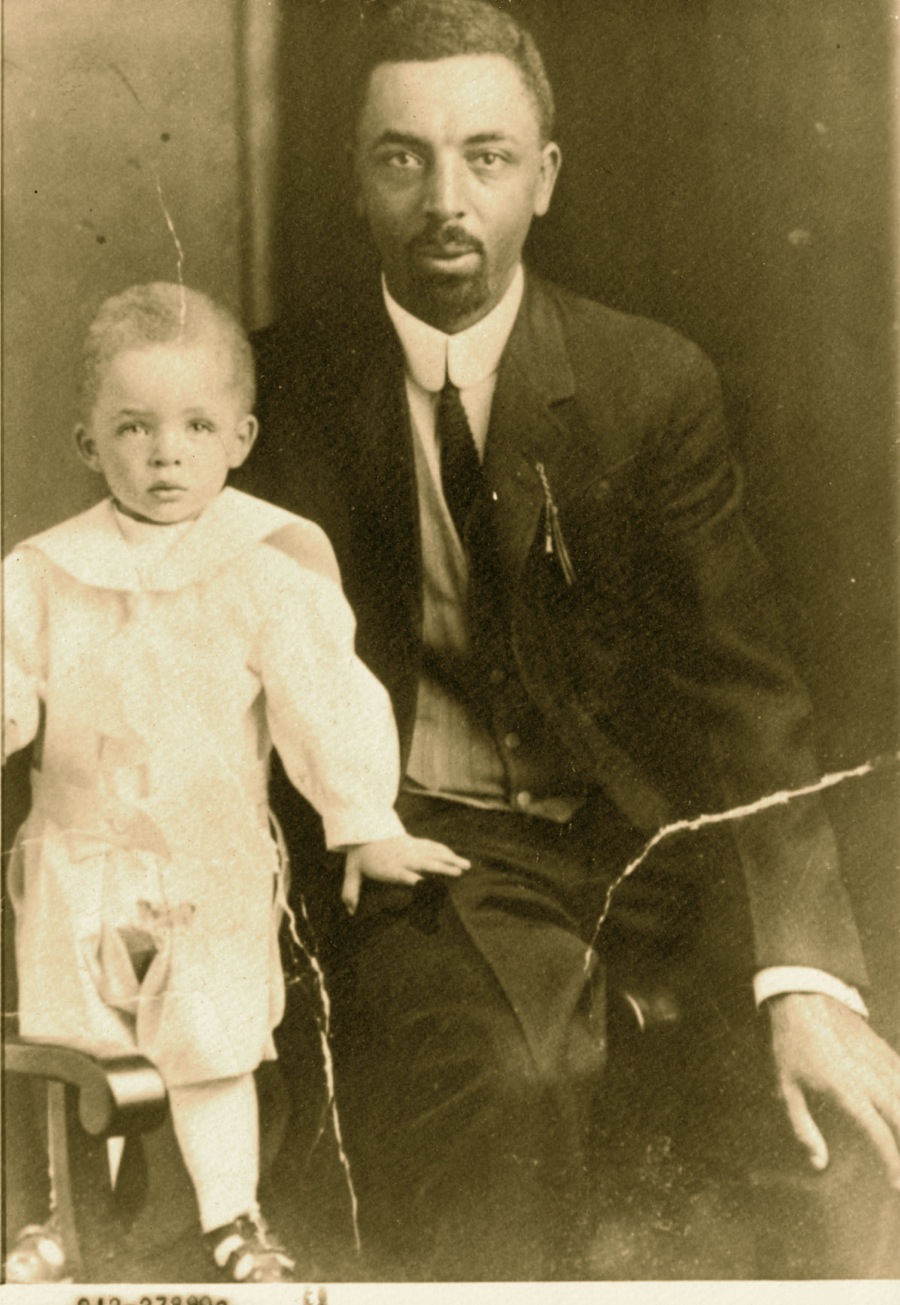
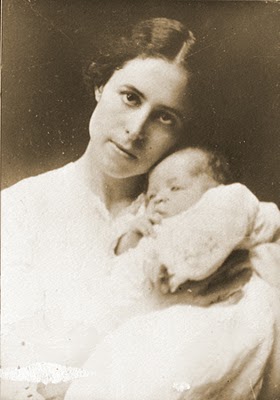
In 1910 Pearl Reed married Albert B. Cleage. The following year, Anna Reed died and my father was born. They moved to Kalamazoo, Michigan in 1912 and then to Detroit in 1915, where they remained.
By 1917 Anna’s son Clarence had moved to Chicago where he continued to live until his death.
Hugh Reed Averett’s children
By 1928 Hugh Reed and family had relocated to Los Angeles, California. They changed their name to Averitt (Hugh’s father’s name), and lived there for the rest of their lives.
Minnie, her daughter Helen, Helen’s daughters and nephew Peter
In 1950 Minnie Mullins was a widow. She lived in Kalamazoo, Michigan near her oldest daughter Helen. In 1963, Minnie died while living with her daughter Barbara in Ramsey County, Minnesota .
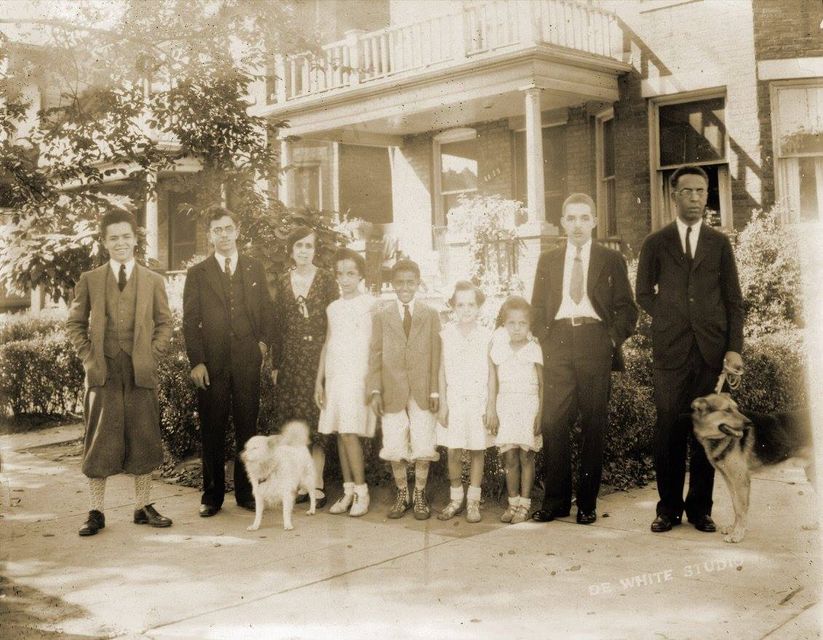
Pearl and Albert with their children and dogs in Detroit. About 1930
Ayanna said: Your blog post today is so full of intriguing tidbits! Who was behind the Chicago Tribune campaign? Who funded that paper? Any notable people writing for the paper during that time?
The Chicago Defender was founded in 1905 by Robert S. Abbott. He was the brother-in-law of Susan Richardson Abbott, who I wrote two blog posts several years ago. The Defender played a critical role in the Great Migration by advocating for racial equality and black empowerment.
American Race Prejudice Must Be Destroyed: Active combatting of racism.
Opening Up of All Trades and Businesses: Equal economic opportunity.
Federal Legislation to Abolish Lynching: Making lynching a federal crime.
Representation in President’s Cabinet: Political representation at the highest level.
Full Enfranchisement of All American Citizens: Ensuring the right to vote.
Selection of Judges: Appointing, not just electing, fair judges.
Opposition to Segregation: Fighting Jim Crow in all forms.
Fair Treatment in Public Accommodations: Ending segregation in transportation and public spaces.
Justice in Courts: Ensuring equal treatment under the law.
The Land of Hope
I’ve watched the trains as they disappeared Behind the clouds of smoke, Carrying the crowds of working men To the land of hope, Working hard on southern soil, Someone softly spoke; “Toil and toil, and toil and toil, And yet I’m always broke.” On the farms I’ve labored hard, And never missed a day; With wife and children by my side We journeyed on our way. But now the year is passed and gone, And every penny spent, And all my little food supplies Were taken ‘way for rent. Yes, we are going to the north! I don’t care to what state, Just as long as I cross the Dixon Line, From this land of southern hate, Lynched and burned and shot and hung, And not a word is said. No law whatever to protect- It’s just a “nigger” dead. Go on, dear brother; you’ll ne’er regret; Just trust in God; pray for the best, And in the end you’re sure to find “Happiness will be thine.” William Crosse’s poem appeared in the Chicago Defender, c 1920
According to Wikapedia: In 1919–1922, the Defender attracted the writing talents of Langston Hughes; from the 1940s through 1960s, Hughes wrote an opinion column for the paper. Washington, D.C., and international correspondent Ethel Payne, poet Gwendolyn Brooks, author Willard Motley, music critic Dave Peyton, journalists Ida B. Wells, L. Alex Wilson and Louis Lomax wrote for the paper at different times.
Lynching was a local crime, but was not prosecuted when white people lynched African Americans. Making it a federal crime allowed the federal government to step in and prosecute the guilty parties. That is why there had been a century long campaign to make it a federal crime.
Imani has a question: she wants to know if there are certain qualities or patterns that you have noticed in our families across the generations.
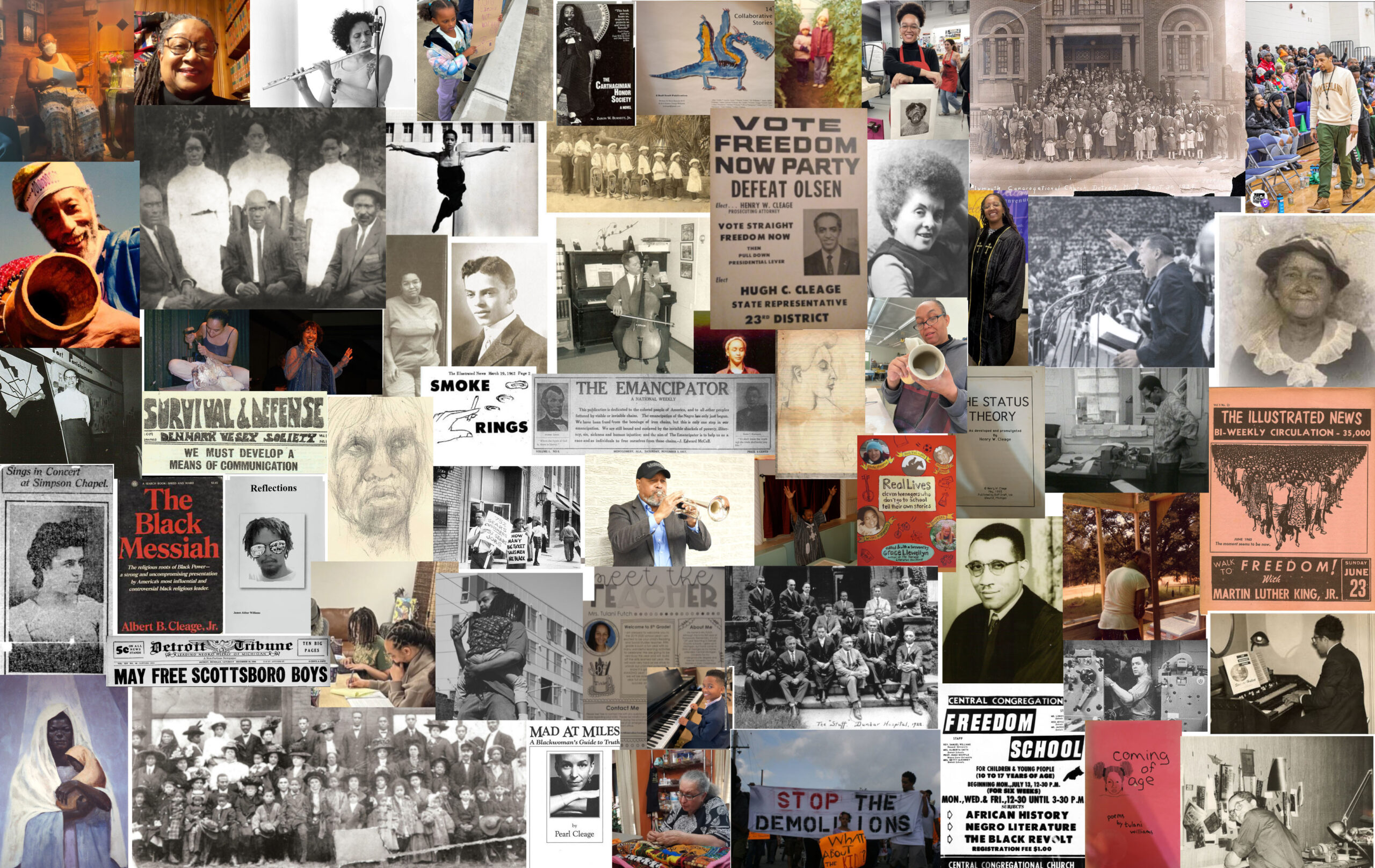
Some of what we do. Click to enlarge.
As I thought about Imani’s question I thought about the many things our ancestors did and that we do to this day. We’ve preached, taught healed and organized. We’ve organized churches, hospitals, GED programs and freedom schools. We’ve published newspapers, marched, voted and run for office. We’ve written, sung, danced and played music. We’ve cooked collard greens, cornbread, fried chicken, tamales and ropa vieja for ourselves,our families, and our friends. We’ve farmed and gardened family and community gardens.
Since our ancestors left slavery behind, every place we’ve lived we’ve worked to make life better for our families and our community. And that’s what makes us, us. We’re not just out for ourselves, we work for all of us.
Ayanna asked: Can you share any more information about John Williams, the man accused of shooting Lillian Louise Shoemaker? Or about his other victims?
I searched and searched and could not find either John Williams or either of his other named victims in the records for Benton Harbor, Michigan and Chicago! I found the two news items below and that’s all! Sorry Ayanna.
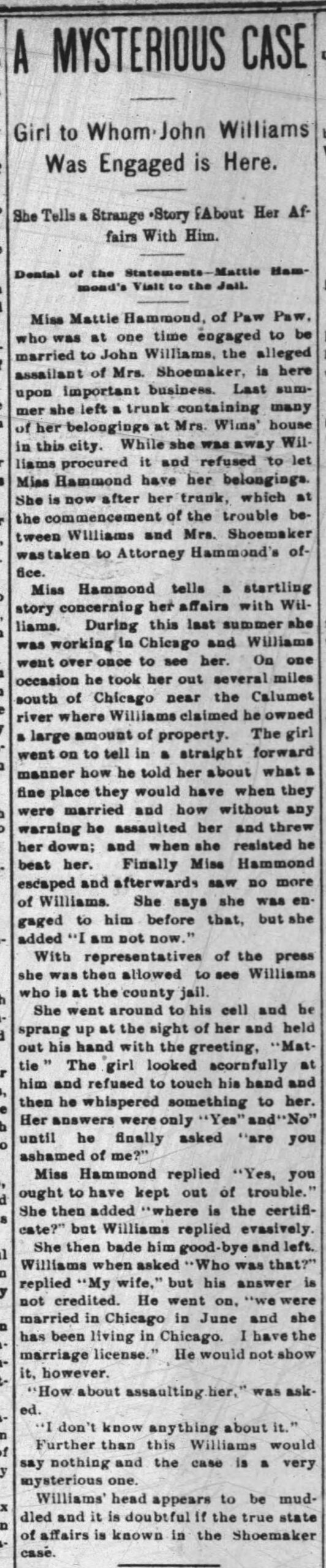
The Herald-Palladium, Benton Harbor, Michigan Thu, Dec 15, 1898 · Page 4
A MYSTERIOUS CASE
Girl to Whom John Williams Was Engaged is Here. She Tells: a Strange Story About Her Affairs With Him. Denial of the Statements – Mattie Hammond’s Visit to the Jail.
Miss Mattie Hammond, of Paw Paw. who was at one time engaged to be married to John Williams, the alleged assailant of Mrs. Shoemaker, is here upon important business. Last summer she left a trunk containing many of her belongings at Mrs. Williams’ house in this city. While she was away Williams procured it and refused to let Miss Hammond have her belongings. She is now after her trunk, which the commencement of the trouble between Williams and Mrs. Shoemaker was taken to Attorney Hammond’s office.
Miss Hammond tells startling story concerning her affairs with Williams. During this last summer she was working in Chicago and Williams went over once to see her. On one occasion he took her out several miles south of Chicago near the Calumet river where Williams claimed he owned large amount of property. The girl went on to tell in straight forward manner how he told her about what a fine place they would have when they were married and how without any warning he assaulted her and threw her down; and when she resisted he beat her. Finally Miss Hammond escaped and afterwards saw no more of Williams. She says she was engaged to him before that, but she added “I am not now.”
With representatives of the press she was then allowed to see Williams who is at the county jail.
She went around to his cell and be sprang up at the sight of her and held out his hand with the greeting, “Mattie” The girl looked scornfully at him and refused to touch his hand and then he whispered something to her. Her answers were only “Yes” and”No” until he finally asked “are you ashamed of me?”
Miss Hammond replied “Yes, you ought to have kept out of trouble.” She then added “where is the certificate?” but Williams replied evasively.
She then bade him good-bye and left. Williams when asked “Who was that?” replied “My wife,” but his answer is not credited. He went on, “‘we were married in Chicago in June and she has been living in Chicago. I have the marriage license.” He would not show it, however.
“How about assaulting her,” was asked.
“I don’t know anything about it.” Further than this Williams would say nothing and the case is very mysterious one.
Williams’ head appears to be muddled and it is doubtful if the true state of affairs is known in the Shoemaker case.
John Williams sentenced to prison.
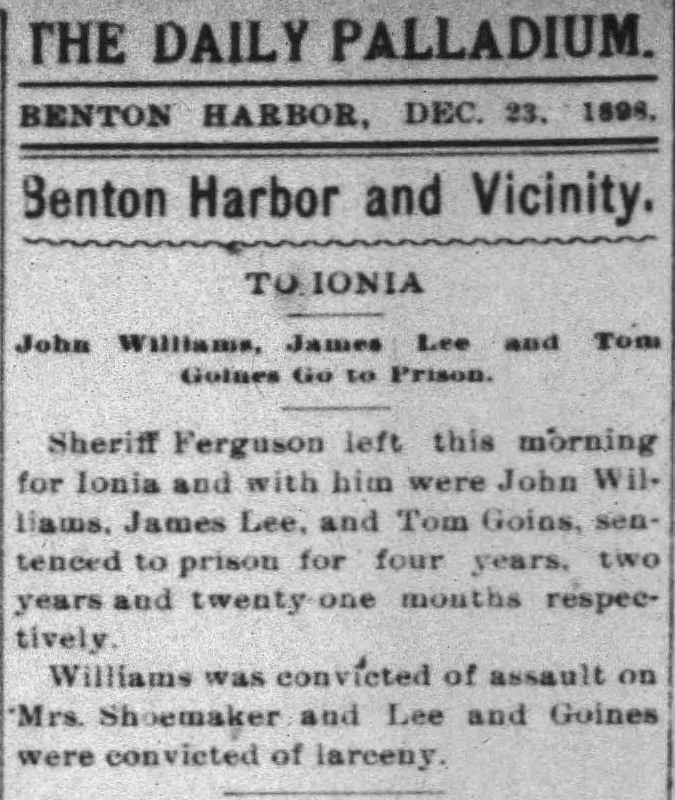
THE DAILY PALLADIUM. BENTON HARBOR, DEC. 23. 1898, Benton Harbor and Vicinity, TO IONIA John Williams, James Lee and Tom Golnes Go to Prison.
Sheriff Ferguson left this morning for Ionia and with him were John Williams, James Lee, and Tom Goins, sentenced to prison for four years, two years and twenty one mouths respectively.
Williams was convicted of assault on *Mrs. Shoemaker and Lee and Goines were convicted of larceny.
Ayanna asked “Any recurring medical conditions like high blood pressure? Did we see an increase in life expectancy as more medical treatments where available.”
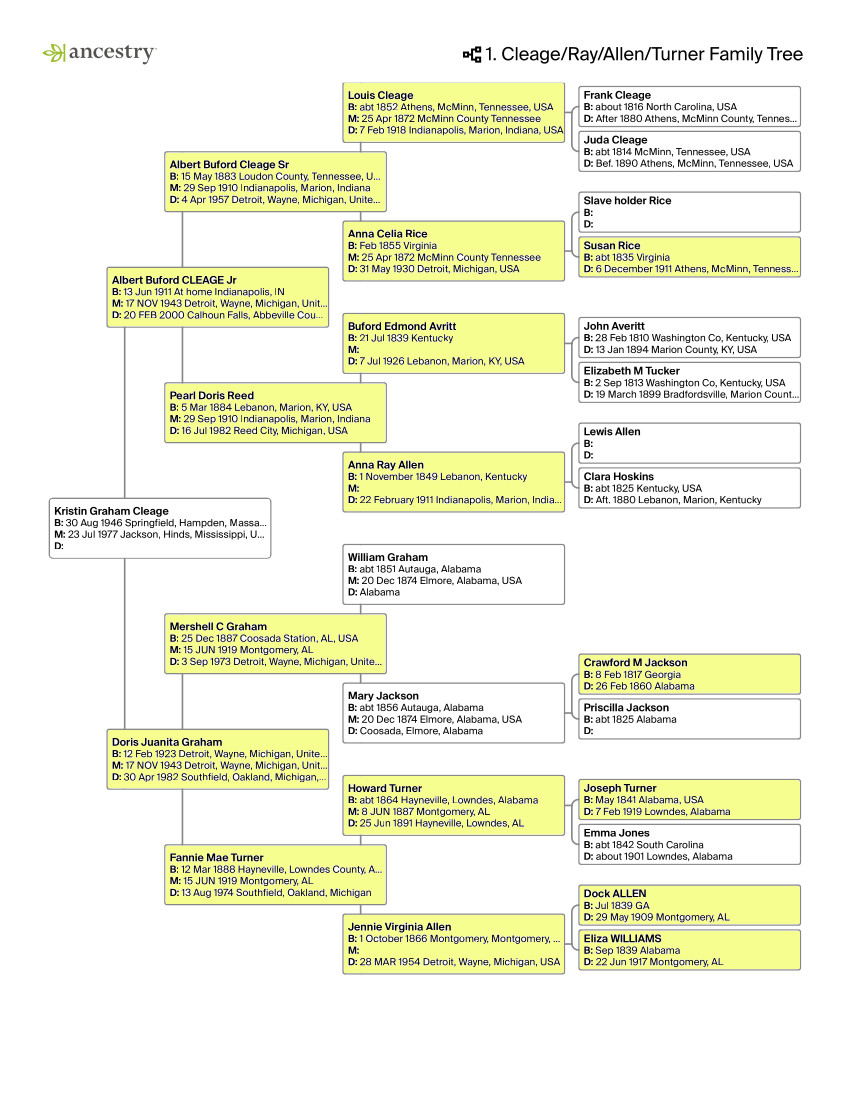
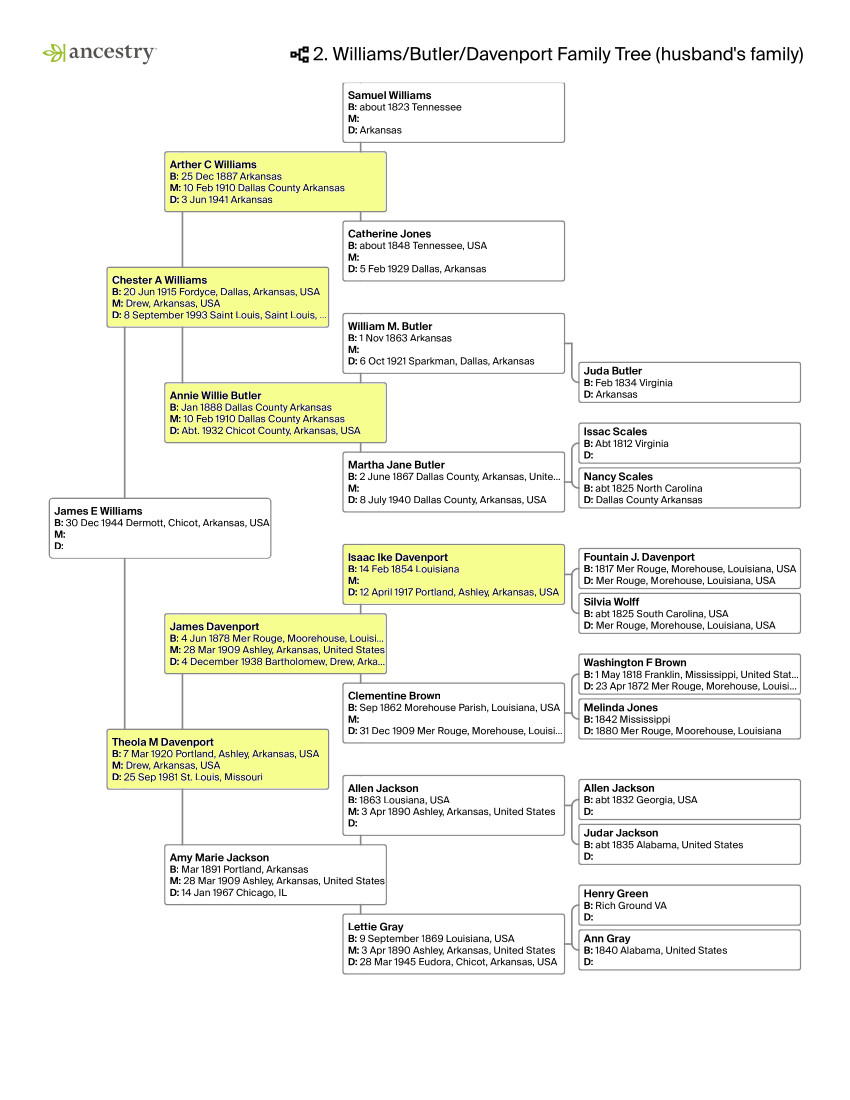
I only did our direct lines. I have causes of death for many collateral family members, but the number was overwhelming to figure out this time around. I may revisit the idea another time. There is a family tree for my family at the top and one for my husband’s family at the end, if you are interested in relationships. In the middle is a chronological list of family members with dates of death and cause. I only listed those I had a cause of death for. As we go back in time, it’s harder to find death information. In the list my husband’s family have a *.
Direct line Family Deaths in Chronological Order
Crawford M. Jackson died at 43 of bronchitis in Elmore County, Alabama in 1860.
Howard Turner died at 27 of gunshot wounds in 1891 in Lowndes County, Alabama.
Dock Allen died at 69 in 1909 of “inflammation of the bowels”. Montgomery, Alabama.
Susan Rice Ragan died at 76 in 1911 in Athens, TN of exhaustion following valvular heart disease.
Anna Reed died at 61 in 1911 of cerebral hemorrhage in Indianapolis, Indiana.
Louis Cleage died at 66 in 1918 of Lobar pneumonia in Indianapolis, Indiana.
Eliza Williams Allen died at 70 of senility in 1917 in Montgomery, Alabama.
*Isaac Davenport died at age 63 of apoplexy in 1917 in Portland, Ashley, Arkansas. (Apoplexy: Now classified as a stroke)
Joseph Turner died at age 80 of prostetic trouble and old age in 1919 in Lowndes County, Alabama.
Buford Avritt died at 86 in 1926 of senile dementia and pneumonia in Lebanon, Kentucky (Dying of “senility” typically refers to the final stages of dementia or advanced age-related frailty.)
Celia Rice Cleage Sherman died at 75 in 1930 of apoplexy (cerebral) in Detroit, Michigan. (stroke)
*Annie Willie Butler Williams died in 1932 at age 44 of cancer in Dermott, Chicot County, Arkansas.
*James Davenport died at 58 of encephalitis in 1938 in Bartholomew, Drew, Arkansas. (Encephalitis is inflammation of the brain)
*Arther C. Williams died at 53 of acute exacerbation of chronic nephritis in 1941 in Dermott, Chicot County, Arkansas. (Nephritis occurs when parts of the kidney become inflamed (swollen))
Albert B. Cleage Sr died at 73 in 1957 of bladder cancer in Detroit, Michigan.
Jennie Virginia Allen Turner died at 87 in 1954 of a stroke in Detroit, Michigan.
Mershell C. Graham died at 85 in 1973 of hypertension, arteriosclerosis, coronary thrombosis in Detroit, Michigan. (Coronary thrombosis is defined as the formation of a blood clot inside a blood vessel of the heart leading to a heart attack.)
Fannie Mae Turner Graham died at 86 in 1974 of a cerebral vascular accident, (arteriosclerosis was a contributing factor) in Southfield, Michigan. (A stroke)
*Theola Davenport Williams died at 61 in 1981 of cancer of the pancreas,
Doris Graham Cleage died at 59 in 1982 of adenocarcinoma of endometrium, metastases to brain and lung, respiratory failure in Southfield Michigan.
Pearl Reed Cleage died at 98 in 1982 of congestive heart failure in Idlewild, Michigan.
*Chester Williams died of cardiac pulmonary arrest. Contributing were hypertension and lymphoma in 1996 in St. Louis, Missouri.
Albert Buford Cleage Jr died at 88 in 2000 of Coronary occlusion, Calhoun Falls, South Carolina. (A coronary occlusion is a complete blockage of a coronary artery, restricting or stopping blood flow to the heart muscle, often causing a heart attack.)
This is part three of my family’s migration story. Today the Cleages leave Tennessee and make their way to Detroit.
Celia Rice and Louis Cleage were both born in McMinn County, Tennessee. After the Civil War, both were living in Athens where they met and married in 1872.
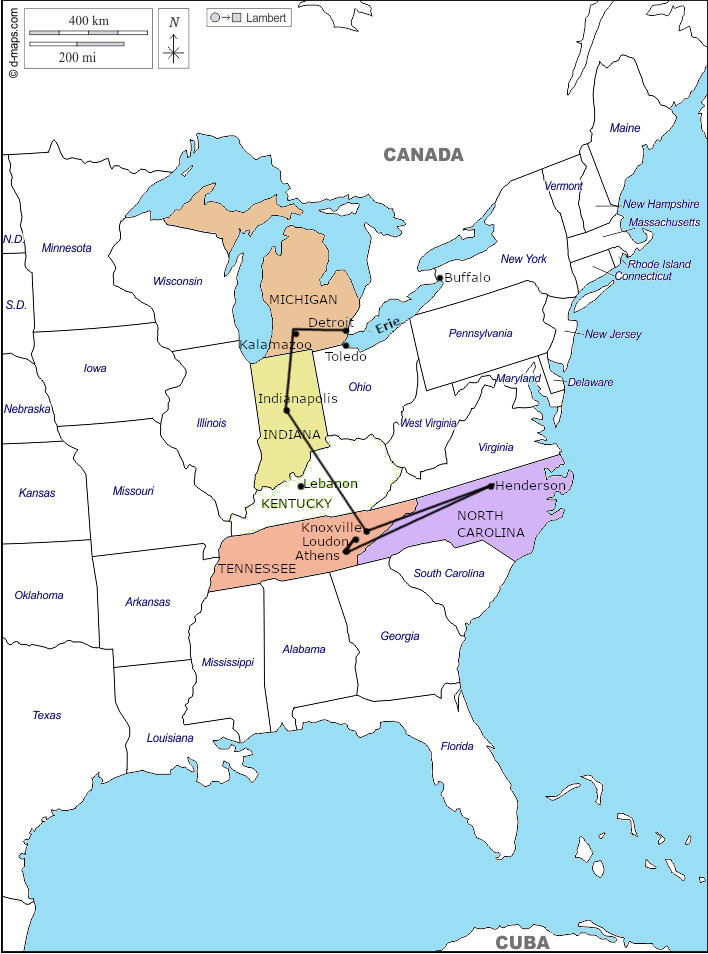
The zig zag path from Athens Tennessee to Detroit Michigan
All five children of Celia Rice and Louis Cleage were born in Loudon County, Tennessee where Louis was share cropping. Sometime in the late 1890s, they separated. Celia returned to Athens where in 1899, she married William Roger Sherman, a carpenter. The five children – Josephine, Jacob, Henry, Edward and Albert, attended school there.
Josephine’s husband, James Cleage (a different branch) and Henry Cleage became teachers. In 1901 James and his family moved to North Carolina where he taught at Henderson Normal & Industrial College. My grandfather Albert went with them and attended two years. After graduating, he went to Knoxville College in Knoxville, Tennessee and graduated in 1904 with a BA.
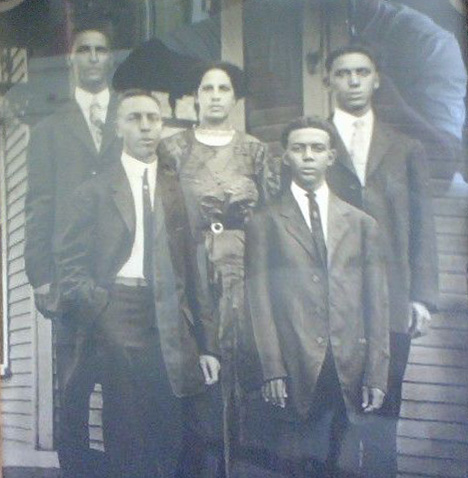
Left to right: My grandfather, Albert, Josephine, Charles Edward. Back left Henry. Back right, Jacob
By 1904 Henry, Jacob, James and Josephine had moved north to Indianapolis, Indiana. Henry’s second child was born there in 1904. His wife died the same year. Celia came north to help with his two motherless children. In 1907, he lost his daughter. Celia returned to Athens with the son. Henry worked at the post office. Jacob worked as a waiter and had various businesses. James was working as a laborer. It was rare for people who had been teachers in the south to move north and continue to teach, unless they took college classes to upgrade their credentials.
By 1907 Albert had moved to Indianapolis. He lived with his brothers while attending Indiana University Medical School. That left Charles and his family in Athens. Everyone else had moved north.
In 1910 my grandfather Albert graduated and married Pearl Reed. He began to look further north for a place to set up his practice. In 1911, after my father’s birth, the family moved to Kalamazoo, Michigan.
By 1915, Albert’s good friend Dr. Parker Gamble had convinced him to move to Detroit. The family settled there permanently.
By 1920 Jacob Cleage was living in Detroit. By 1922 Henry was also in Detroit. After her husband’s death, Josephine moved to Detroit with her son David by 1934.
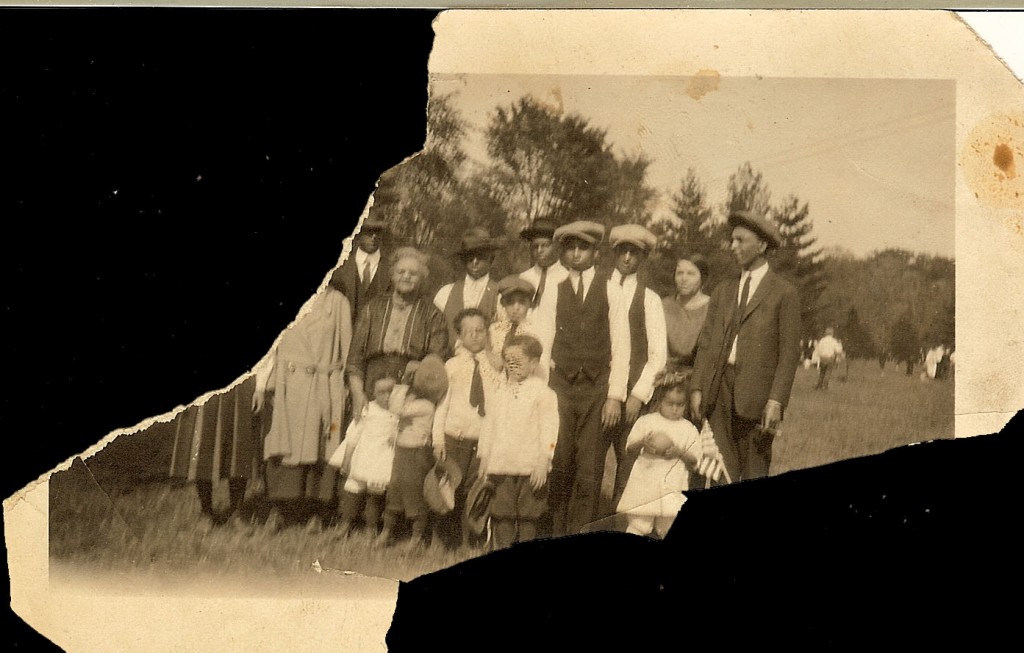
The whole bunch from 1922. Perhaps Belle Isle. Too bad it’s damaged. My grandfather Albert on the far right. Great grandmother Celia in the middle. To her right, Jacob. In the front are from left to right: Barbara, Hugh, Louis, Henry, behind them my father Albert Jr. And in front of my grandfather, Henry’s oldest daughter Ruth.
Charles Edward and his family remained in Athens Tennessee. He suffered from rheumatoid arthritis and died in 1926. His siblings and their families visited both before and after his death.
Scenes from visits to Athens, Tennessee.
No one was sent down for the summer. Uncle Henry’s oldest son spent time there with his grandmother when he was growing up because his mother died when he was very young, about five years old. Some of Charles Edward’s daughters came to Detroit to attend school but returned to Athens afterwards.
Their mother, Celia moved to Detroit in the mid 1920s and lived there until her death in 1930.
Today I continue the Migration story of my family from the Southern United State to the North as part of the Great Migration.
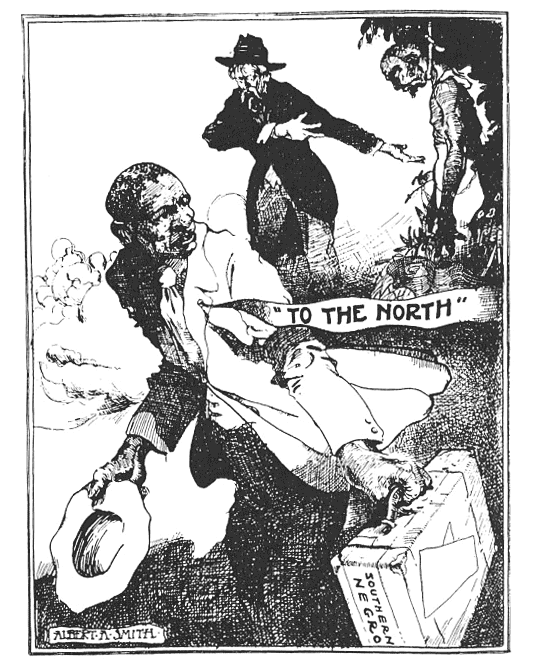
“The Reason,” by Albert A. Smith. The Crisis, (March, 1920)
From Florida’s stormy banks I go; I’ve bid the South “Good by”; No longer shall they treat me so, And knock me in the eye. The northern states is where I’m bound. My cross if more than double – If the chief executive can be found. I’ll tell him all my trouble.
Thousands have gone on there before, And enjoyed their northern lives; Nothing there they can deplore, So they wrote back for their wives. Thousands more now wait to go To join the glorious sop. The recruiters failed to take one more Because the “Crackers” made ‘em stop.
Arise! ye Darkies now a-slave Your chance at last has come; Hold up your head with courage brave, ‘Cause times are changing some, God is punctual to his word, Faithful to his dating; Humble prayers is what he heard, After years of faithful waiting. All before this change was made They took me for a tool. No respect to me was paid – They classed me for a fool. For centuries I was knocked and cuffed, And imposed upon by southern “whites”; For fifty years they had me bluffed And robbed me of my “right.” . . .
Hasten on, my dark brother, Duck the “Jim Crow” laws. No “Crackers” north to slap your mother Or knock you in the jaw. No “Crackers” there to seduce your sister, Nor hang you to a limb, And you’re not obliged to call them mister, Nor show your teeth at them.
Now, why should I remain longer south, to be kicked and dogged around? “Crackers” to knock me in the mouth And shoot my brother down. No, I won’t. I’m leaving today, No longer can I wait. If the recruiters fail to take me ‘way, I’m bound to catch a freight. by Mr. Ward originally published in The Chicago Defender, November 11, 1916
In 1916 the word was everywhere – move north, you have a better chance. Friends and neighbors who had made the journey brought or sent back word. The Chicago Defender sent newspapers all over the countries with articles about lynchings and poems like the above. There were articles about a better life in the north. Jobs that paid a living wage. About being able to vote. Pullman porters distributed the Defender throughout the south, even though the white authorities tried to prevent.
“The newspaper was read extensively in the South. Black Pullman porters and entertainers were used to distribute the paper across the Mason/Dixon line. The paper was smuggled into the south because white distributors refused to circulate The Defender and many groups such as the Klu Klux Klan tried to confiscate it or threatened its readers. The Defender was passed from person to person, and read aloud in barbershops and churches. It is estimated that at its height each paper sold was read by four to five African Americans, putting its readership at over 500,000 people each week. The Chicago Defender was the first black newspaper to have a circulation over 100,000, the first to have a health column, and the first to have a full page of comic strips.
“During World War I The Chicago Defender waged its most aggressive (and successful) campaign in support of “The Great Migration” movement. This movement resulted in over one and a half million southern blacks migrating to the North between 1915-1925. The Defender spoke of the hazards of remaining in the overtly segregated south and lauded life in the North. Job listings and train schedules were posted to facilitate the relocation. The Defender also used editorials, cartoons, and articles with blazing headlines to attract attention to the movement, and even went so far as to declare May 15, 1917 the date of the “Great Northern Drive.” The Defender’s support of the movement, caused southern readers to migrate to the North in record numbers. At least 110,000 came to Chicago alone between 1916-1918, nearly tripling the city’s black population.“ NPR “The Chicago Defender”
Mershell “Shell” Graham
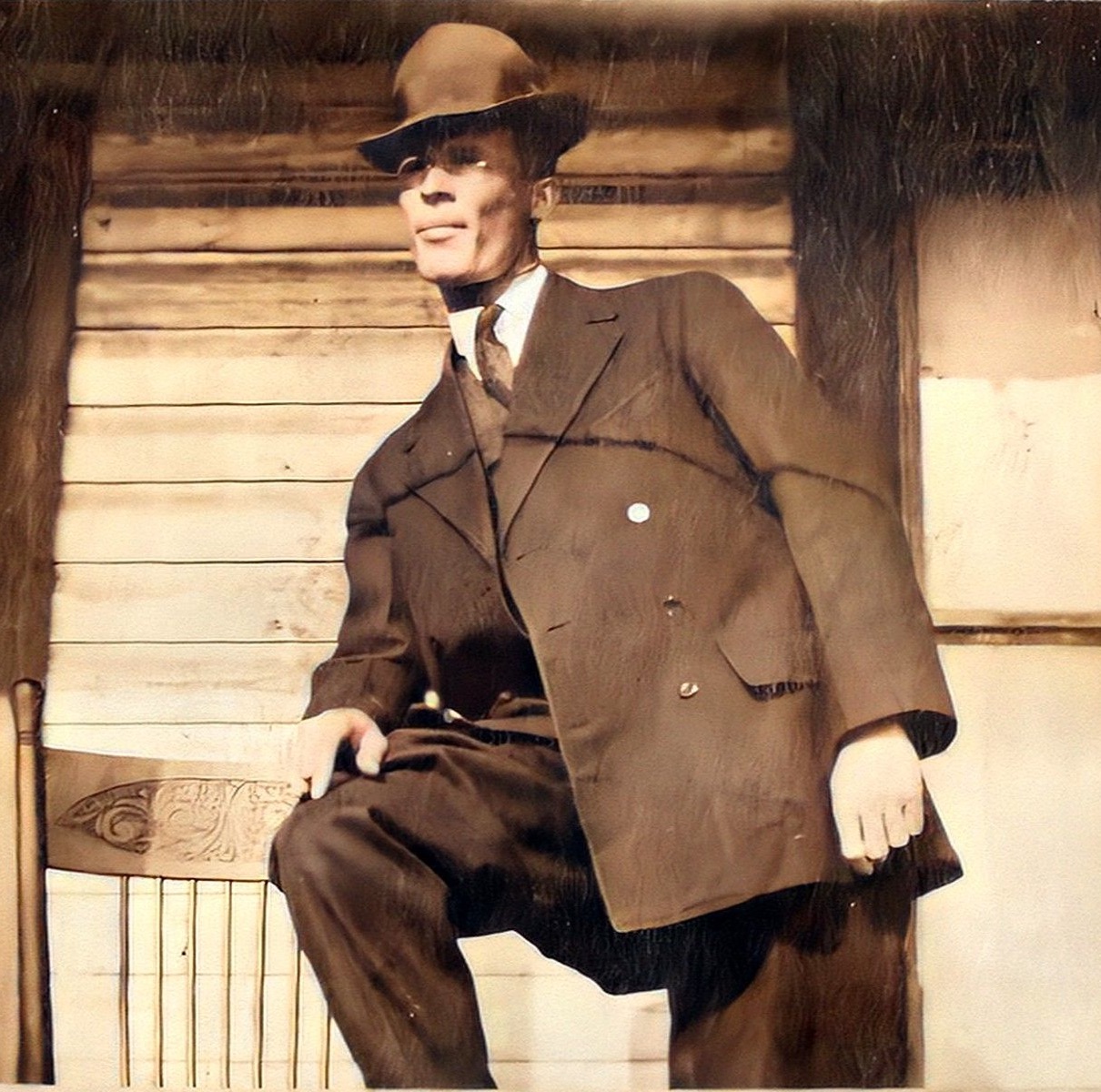
My maternal grandfather, Mershell C. Graham was one of those who listened and decided to leave Montgomery and head to Detroit.
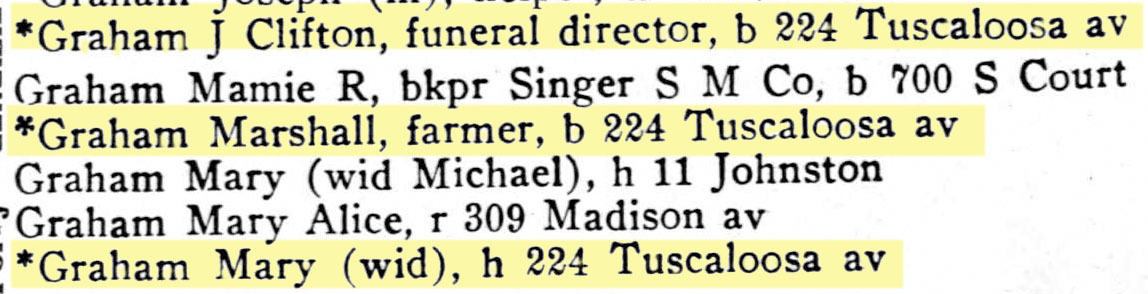
In the 1916 Montgomery City Directory, my grandfather was living with Clifton and Mary Graham. They were his “adopted family” and as far as I know not blood relations.
From the 1916 Polk Montgomery Directory
On February 14, 1917. he sent a letter from Detroit to Montgomery to ask for a recommendation from Seligman & Marx, Wholesale Grocers. Which means he had relocated to Detroit sometime before February 14. And to make that trip he took the train.
“Separate but equal” was a legal doctrine in United States constitutional law, according to which racial segregation did not necessarily violate the Fourteenth Amendment.
There was no food served to black people either on the train or at stops below the Mason-Dixon line. He would have bought a box with food for the journey, fried chicken, sandwiches, perhaps fruit, biscuits, and cake. Maybe enough to share with a fellow passenger who hadn’t brought food.
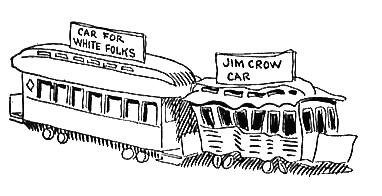
Although the price was the same for both black and white passengers, the accommodations were anything but equal. Below is a description. There are several links at the end of this post to information about segregated travel.
A Way of Travel “From the 1830s through the 1950s, people traveled in trains pulled by steam locomotives. Cars in these trains were almost always arranged in a particular order—an order that reflected social hierarchy. Coal-burning steam engines spewed smoke and cinders into the air, so the most privileged passengers sat as far away from the locomotive as possible. The first passenger cars—the coaches—were separated from the locomotive by the mail and baggage cars. In the South in the first half of the 20th century, the first coaches were “Jim Crow cars,” designated for black riders only. Passenger coaches for whites then followed. Long-distance trains had a dining car, located between the coaches and any sleeping cars. Overnight trains included sleeping cars—toward the back because travelers in these higher-priced cars wanted to be far away from the locomotive’s smoke. A parlor or observation car usually brought up the rear“
When my grandfather, Mershell C. Graham arrived in Detroit he already knew people there who had come up from Montgomery earlier. At that time they all lived in Black Bottom and Paradise Valley. These were segregated, crowded and thriving black neighborhoods. That is where my grandfather found lodging with friends from home.
I found the names in letters he wrote and received from friend back in Montgomery. Using City directories and other records, I found out where he lived and who owned the houses and who lived in the area.
Charles Whyman was in Detroit in 1903 working as a waiter. In 1915 he owned a restaurant on St. Antoine. Lowndes Adams asked about him in a letter in 1917.
Moses Walker, Mershell’s future wife’s cousin’s brother-in-law, was in Detroit in 1915. He worked as a deputy collector with the United States Customs office. After their marriage, my grandparents roomed with his family.
Frank McMurray and his wife were mentioned in several letters that my grandfather received in 1917. They appear in the Montgomery directory in 1915 as grocers. In the 1919 Detroit directory he is listed as a carpenter. They also took in roomers at their residence, 379 Orleans Street.
My grandfather’s play brother, Clifton Graham was working on the D & C Line as a waiter according to the 1917 Detroit Directory. Letters from Montgomery ask about him that same year.
Arthur Chisholm was mentioned in Lowndes’ letter as having gotten away without his knowing. On his 1917 draft card, his address is 379 Orleans St. Detroit, the same place my grandfather was living.
Feb 16, 1917: weather. “At Detroit the weather was fair during the day with the temp at 18 at 8 AM rising to 23 at 11 AM and falling again to 22 at 8 pm. Cloudy Friday and Saturday probably snow flurries” Free Press.
All three of the houses that Shell lived in during his first years in Detroit were two story frame houses with upper and lower porches in the back. It would be useful as a fire escape.
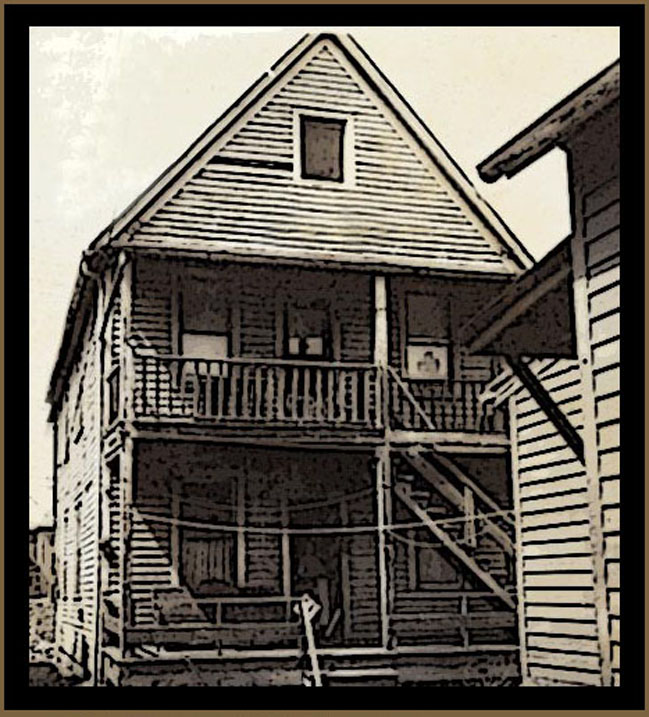
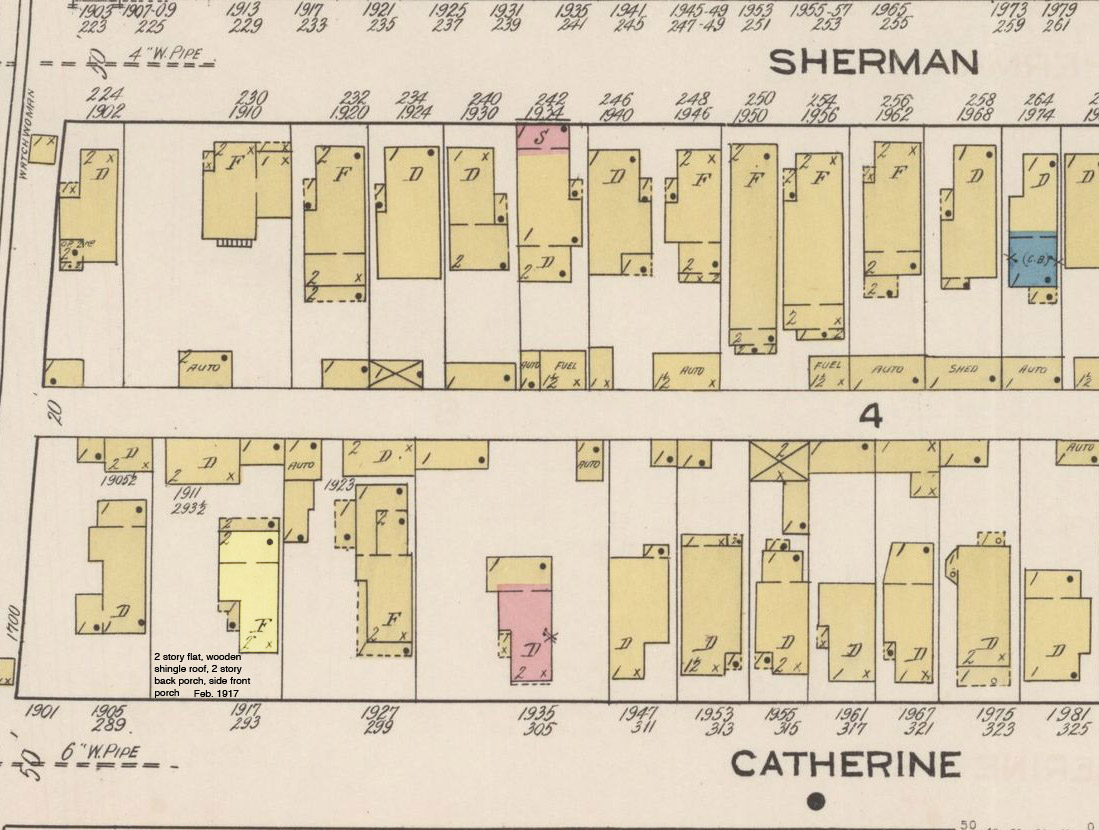
In February 1917, my grandfather lived at 293 Catherine Street between Dequindre & St. Aubin. It was in Black Bottom. It was a two story wooden house with a two story back porch and a small side porch where the entry door was. In the back of the lot there was another dwelling house, smaller than the one in front, also two stories, with a one story kitchen on the side.
The house Shell stayed was bottom row, second from the left. Click to enlarge.
“Women Likely to be Given Ballot,” a headline in Lansing’s local newspaper read on March 13, 1917. “Unless something unforeseen happens a bill giving the women of Michigan the right to vote for presidential electors will be passed by the Michigan legislature, and a constitutional amendment to be submitted at the general election in 1918 providing for universal suffrage will also be ratified,” The State Journal reported.
Apr 4 US Senate agrees (82-6) to participate in WWI Apr 6, 1917, US declares war on Germany, enters World War I
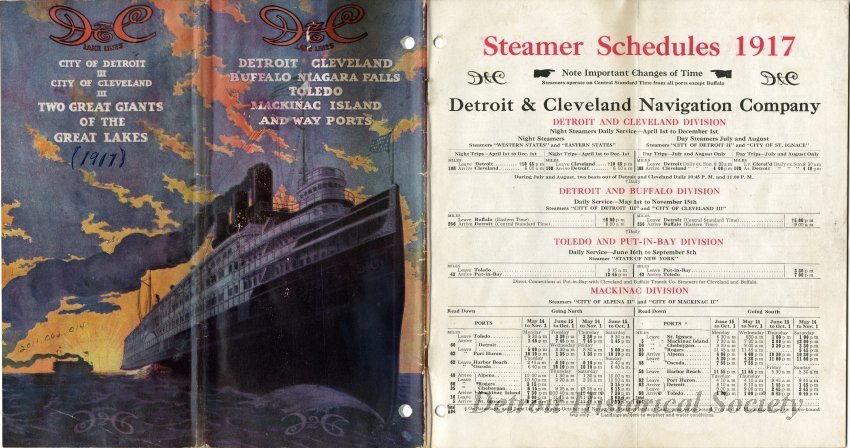
On June 4, 1917, according to his WW 1 draft registration card my grandfather, Mershell Graham was living in Detroit, single, responsible for his father’s support, and working as a steward for the Detroit & Cleveland Navigation Company on the Lakes and living at 2021 Orleans, a boarding house owned by the McMurrays. Formerly of Montgomery, AL.
Detroit & Cleveland Navigation Company
Mershell Graham’s name appears on the list. Detroit Free Press 25 Jul 1917, Wed • Page 14
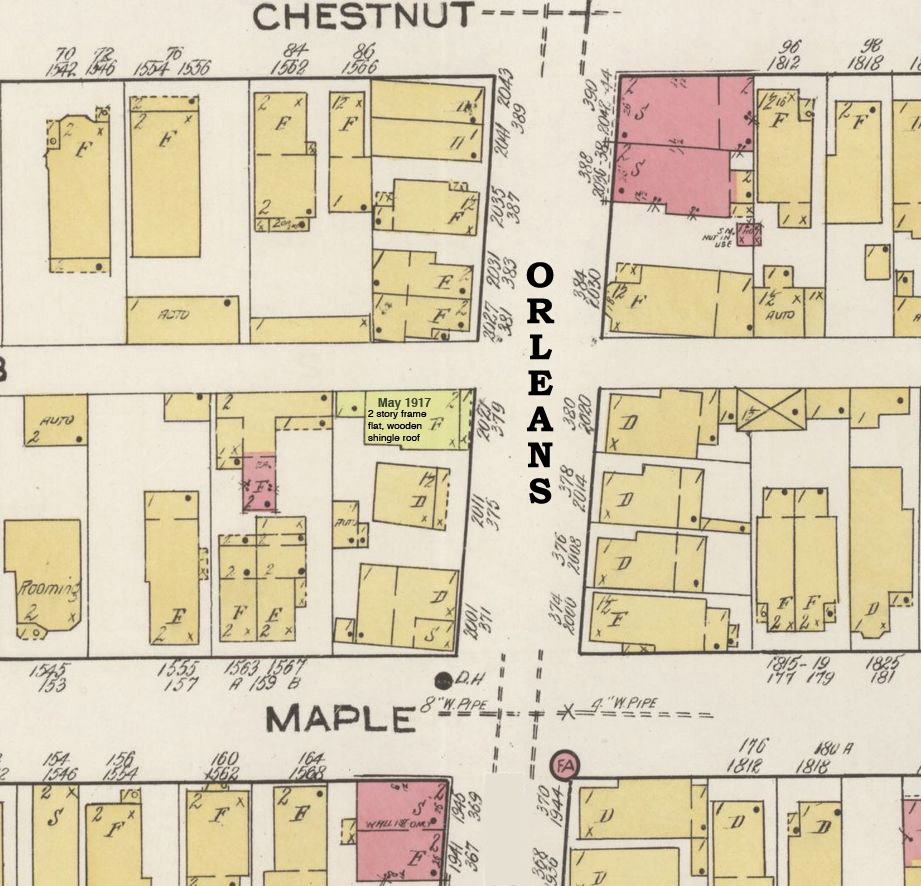
In May 1917, Shell was living at 379 Orleans, half a block from Maple. This was a two story frame flat with a wooden shingle roof. The alley was on the right side. There was a 1 story porch across the front and a one story kitchen in the back. McMurry and wife, who are mentioned in several letters, lived here and ran a boarding house. This house was also in Black Bottom.
House labeled. Click to enlarge
This post is turning into a book! In 1919 Shell went back to Montgomery. He and my grandmother, Fannie were married and immediately returned to Detroit where they lived for the rest of their lives. Fannie’s mother and sisters moved to Detroit by 1922. None of them ever returned to the south again.
Mershell and Fannie (Turner) Graham. August 1919 Detroit, Michigan.
My daughter Jilo asked: I have a question about our family’s migration north. Over how many years did family members move from south to north? Did everyone move to Detroit? Did everyone leave the south or did some family members stay in the south? If people stayed in the south were there visits back or were children sent south for the summer?
Dock AllenEliza Allen
I will start with Eliza and Dock Allen’s family. Tomorrow we will look at the Cleage family migration S – South to North.
Mary Allen McCall, with her son James McCall and his family in Detroit
Mary Allen, Eliza’s oldest daughter, was born in 1856 in Dallas County, Alabama. The family relocated to Montgomery after Freedom. She married Edward McCall and they had six children together. One died in infancy.
In 1920, when Mary McCall was 63, her husband died. Later that year her oldest son, James Edward McCall and his family, migrated to Detroit. Mary McCall moved with them. She died there in 1937.
Mary McCall’s surviving children all left Montgomery and moved north.
Jeanette and husband in Chicago
Jeanette McCall McEwen was in Chicago by 1920.
James Edward McCall migrated to Detroit in 1920.
Anabelle and her family
Anna Belle McCall Martin moved several times, arriving in Lima, Ohio in 1922. She moved to Detroit in 1930 and lived there for many years before moving to California.
Roscoe McCall holding Roscoe Jr & Louise. Detroit 1921.
Leon Roscoe McCall migrated to Detroit in 1920 with his family. Several years later, they moved to Chicago, IL.
William McCall died as an infant.
James McCall, Margaret McCall, Otilla McCall Howard
Alma Otilla McCall Howard lived in Holly Springs Mississippi before the family migrated to Chicago by 1930.
Ransom Allen and wife Callie in Chicago
Ransom Allen was born in 1860 Dallas County AL. He migrated to Chicago with his wife by 1920. There he joined John Wesley Allen, his only child, who was in Chicago by June 5, 1917.
Dock Allen Jr was born in 1862. He died by drowning in 1891 in Montgomery.
Three Generations. Front row Daisy and Alice Turner. Back: Fannie Turner Graham, Jenny Virginia Allen Turner, Mary Virginia Graham. Doris Juanita Graham.
Jennie Virginia Allen Turner was born in 1866 Montgomery. Her first husband Howard Turner died in 1890. She separated from her second husband Edward Wright before 1910. She migrated to Detroit with her daughters, Daisy and Alice, in 1922 to join her oldest daughter, Fannie Mae Turner Graham(my grandmother) after she married and moved there in 1919.
Beulah Allen
Anna Allen was born Montgomery 1869. She left Montgomery for Chicago before 1900. She passed for white, married a banker, had no children and died in Chicago after 1945.
Willie Lee Allen Tulane and daughter Naomi. Montgomery, Alabama about 1910.
Willie Lee Allen Tulane was born in 1873 in Montgomery. Her husband, Victor Tulane, died in 1931 in Montgomery. She remained there until 1958. Several months before she died, she moved to New York City to live with her only surviving child, Naomi Tulane Vincent who had moved to New York in 1920 after marrying Ubert Vincent.
Abbie Allen Brown, Fannie Turner Graham, Mershell Graham, Alphonso Brown(Abbie’s son) Henry Cleage, Kristin Cleage and Doris Graham Cleage. In Fannie’s and Mershell’s (my grandparent) yard.
Abbie Allen Brown was born in 1876 in Montgomery. She married Edward Brown. They were divorced before 1900.
She moved to Detroit in 1946 and lived with her niece, Fannie Turner Graham and her family. She died there in 1966.
Both of her sons moved to New York. The oldest, Earl Brown, lived in New York by 1917. The other, Alphonso Brown was in New York by 1925.
Beulah Allen Pope with children and grandchildren
Beulah Allen Pope was born in 1879 in Montgomery. She married Robert Pope. He died in 1941, in Montgomery. By 1948 She had moved to Milwaukee, WI to live with her oldest son, Charles Lee Pope. She died there in 1962. In addition to her son Charles, her daughter Annie LeePopeGilmer also lived in Milwaukee. Her youngest son Robert Pope and his family had moved to Chicago by 1942.
Charles Lee Pope – Moved to Milwaukee, Wisconsin by 1926. Annie Lee Pope Gilmer married and was in Milwaukee by 1922. Robert Pope and family were in Chicago by 1942.
***
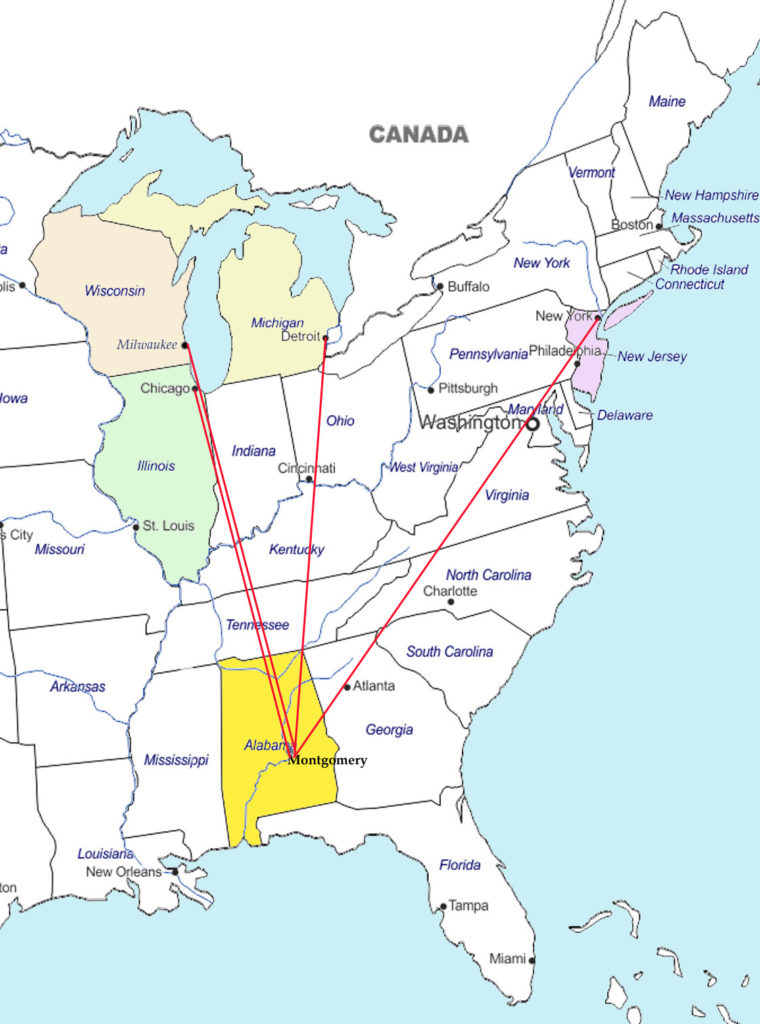
They left in this order:
Anna moved to Chicago alone between 1880 and 1900.
Ransom moved to Chicago with his wife, son and daughter-in-law between 1917 and 1920.
Mary and her oldest son James Edward McCall moved to Detroit in 1920.
My great grandmother Jennie joined her oldest daughter, my grandmother, Fannie in Detroit in 1922.
Abbie moved to Detroit in 1946 to stay with her niece, my grandmother Fannie.
Beulah moved to Milwaukee, WI about 1947, to live with her oldest son Charles, who never married.
Willie Lee moved to New York to live with her daughter several months before her death in 1958, leaving no more of Eliza’s children or grandchildren in Montgomery.