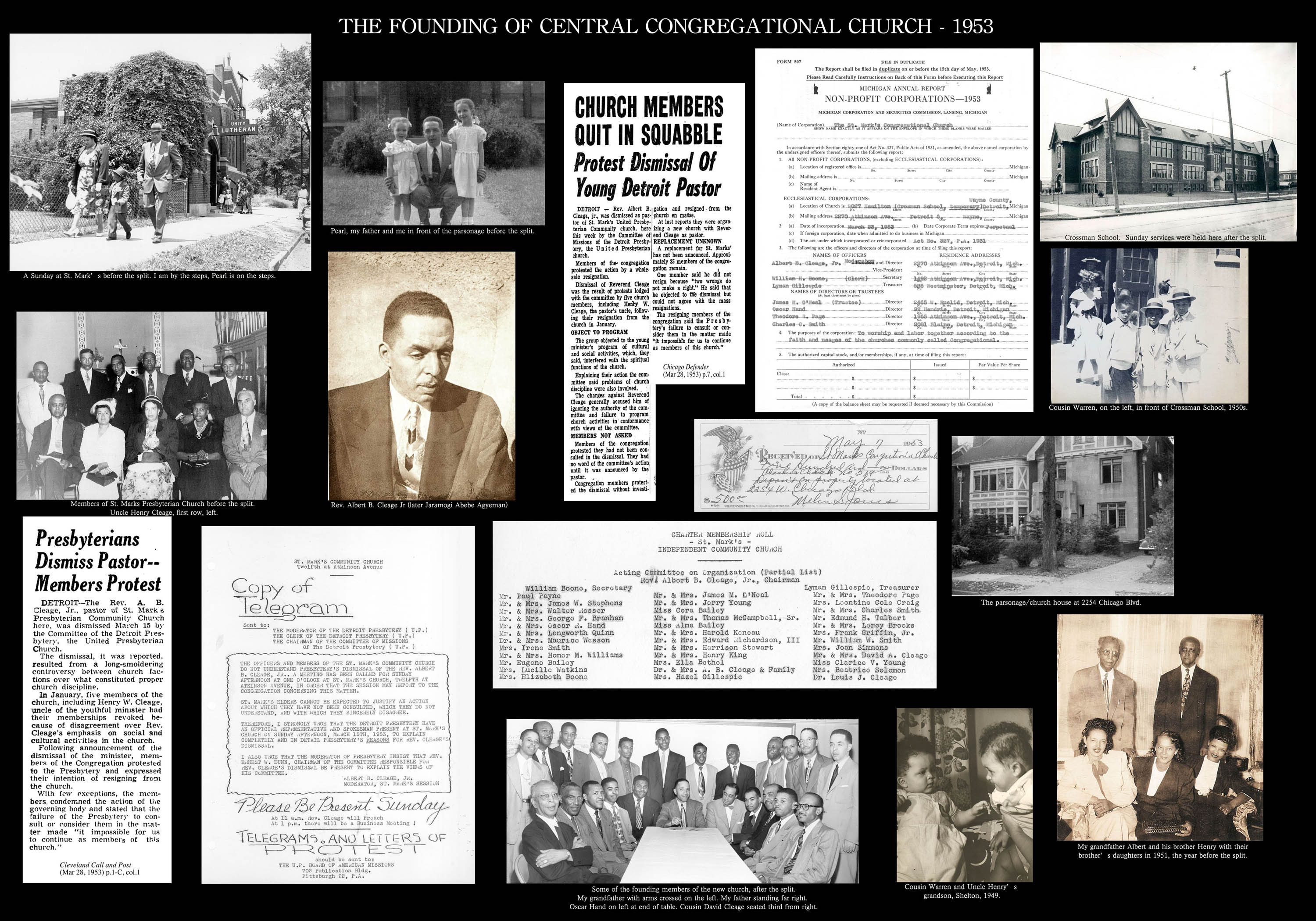
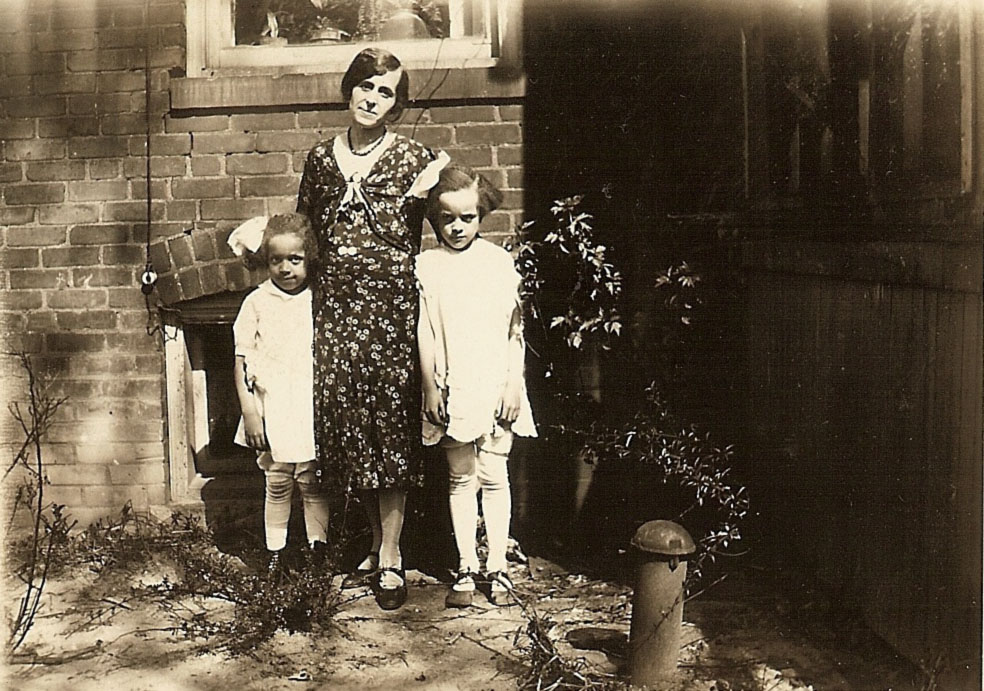
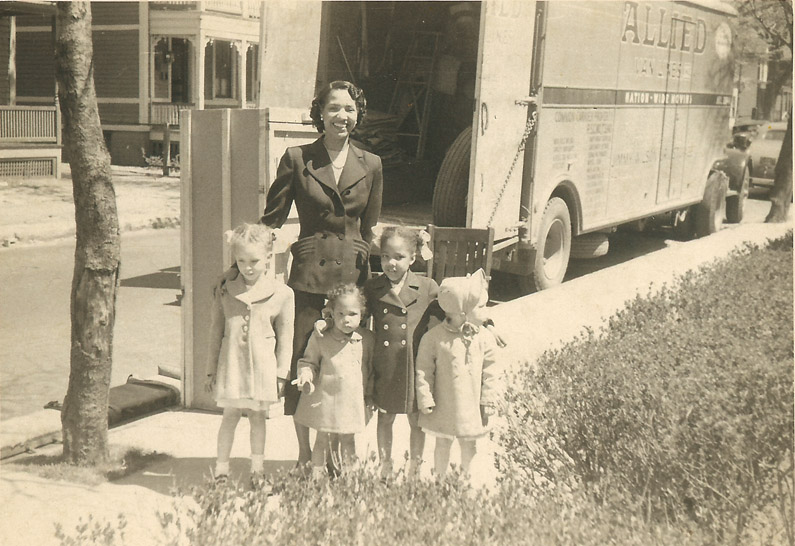
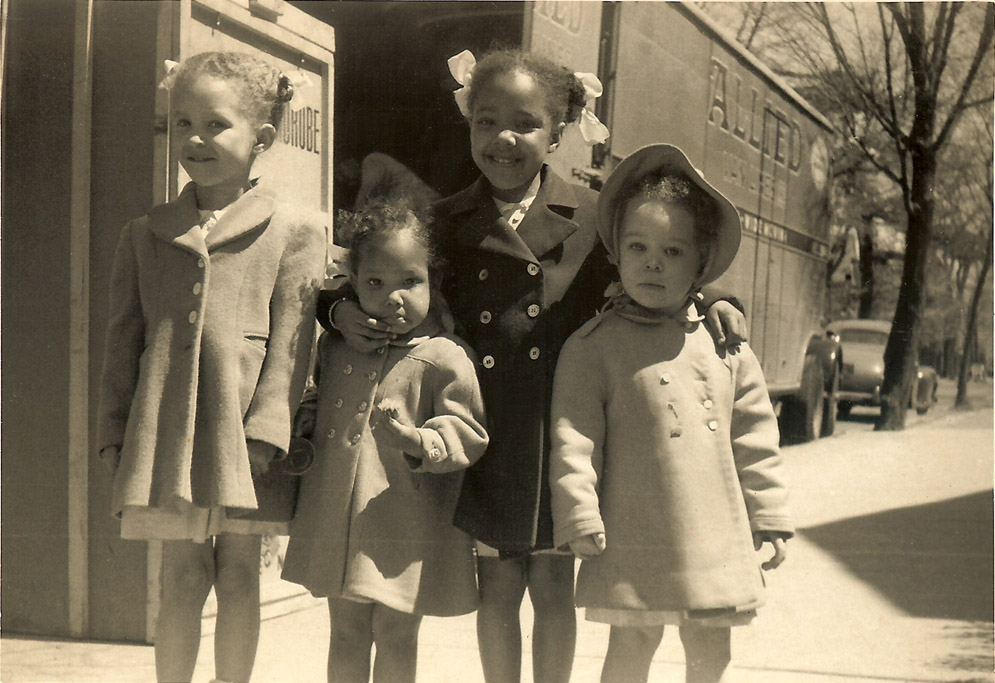
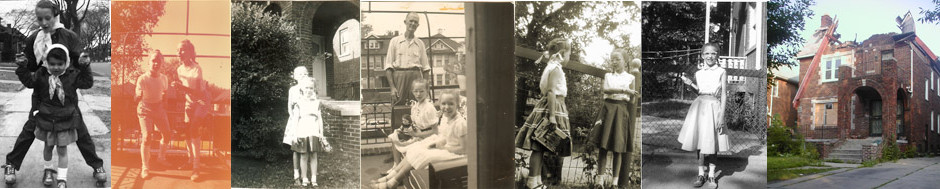
Back in November of 2011 I wrote Moving – Springfield to Detroit 1951 for Sepia Saturday 102. I mentioned that I remembered the little girls in the photograph, but I couldn’t remember their names. Well, I found them!
Moving day (note the boxed up stuff behind me) L to R: Kristin (me), Lynn, Sherrie, Pearl and in the back is Mrs. Johnson. I still have the rocking chair back there.Left to right – Kristin (me), Lynn, Sherrie and Pearl
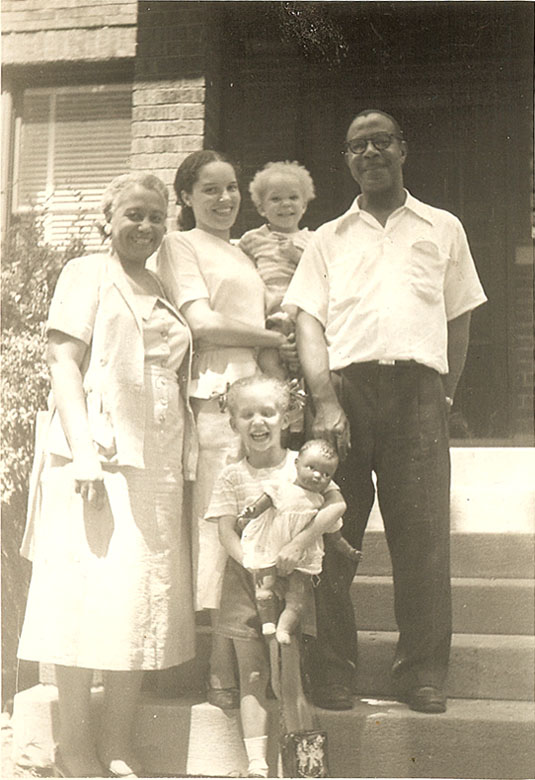
During February, I was working on a post about turtles I have owned, when I came across the photograph below.
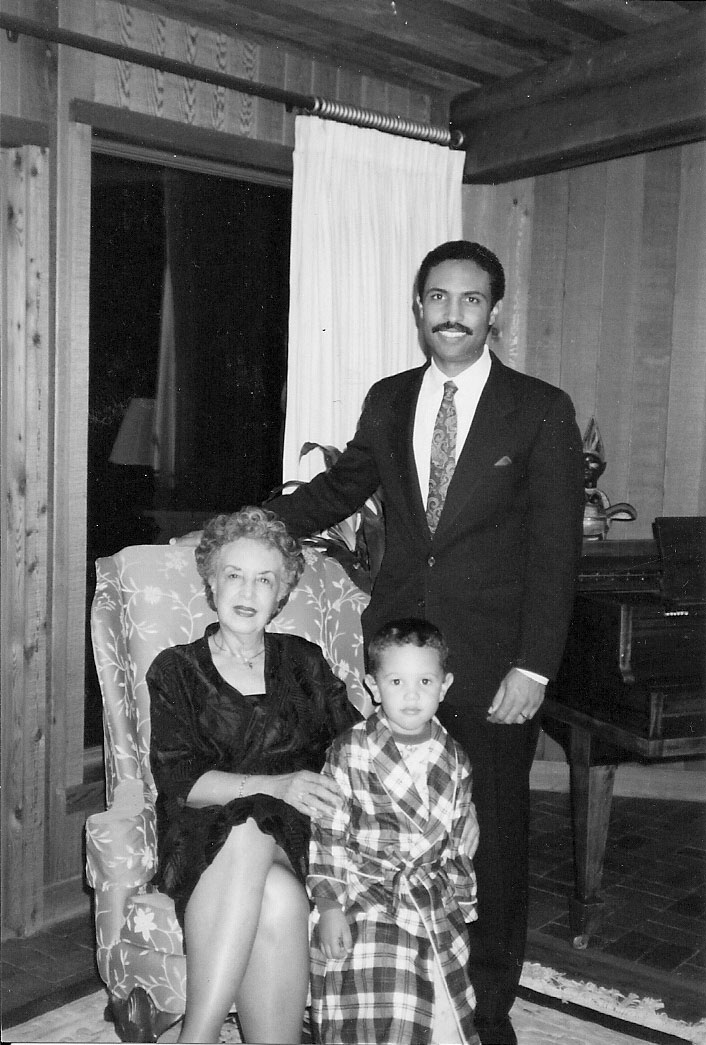
Mr. and Mrs. Funn with me (Kristin) in front and my mother in the middle holding sister Pearl.
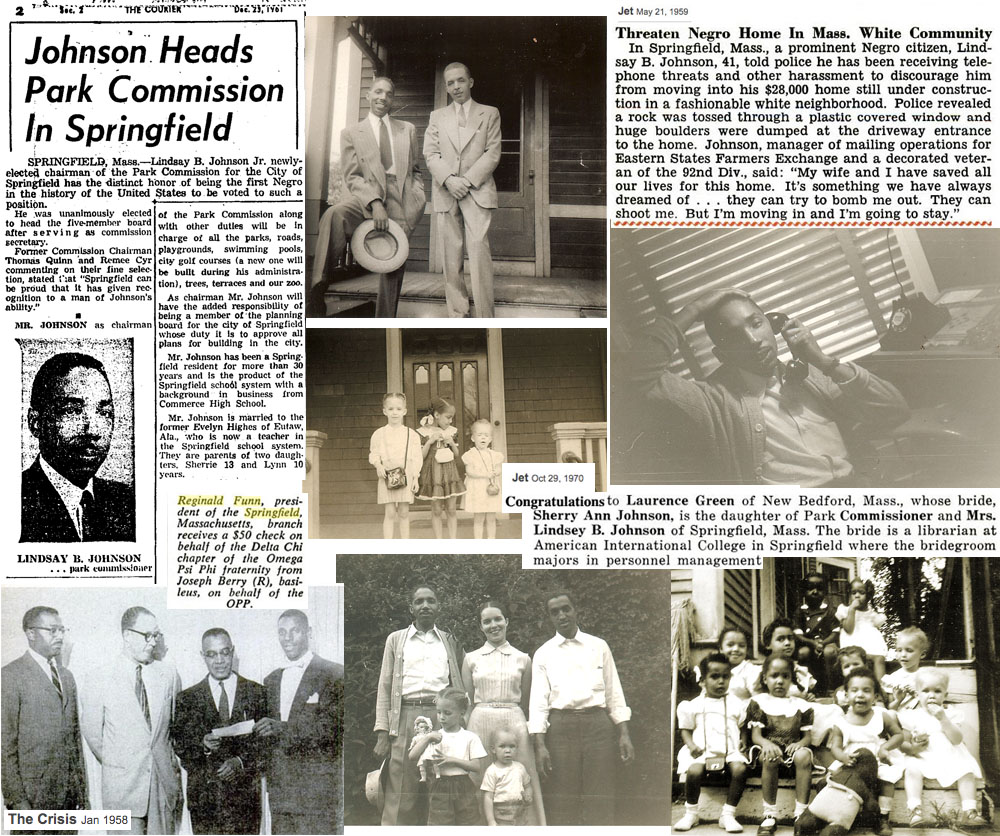
I recognized them as the Funns and realized that the other man’s name that I remembered from Springfield, “Lindsey”,must be the name of the father of the girls in the photographs. How could I find the last name? I decided to Google “Lindsey St. John’s Congregational Church, Springfield, MA”. The first item that came up gave me his last name, Johnson. I Googled “Lindsey Johnson, Springfield, MA” and came up with several articles. This was them! Sherrie was the oldest daughter, the one who poured milk in my dinner on that day so long ago. Below are some of the articles I found and some photographs of the Johnsons and also an article about Mr. Funn. Goggle and newspapers – it’s hard to beat them sometimes.
Articles about Lindsey Johnson and family. The house they talk about is the one I visited with my father in the winter 1968. Click to enlarge and read.To see more posts about boxes and other things, click!
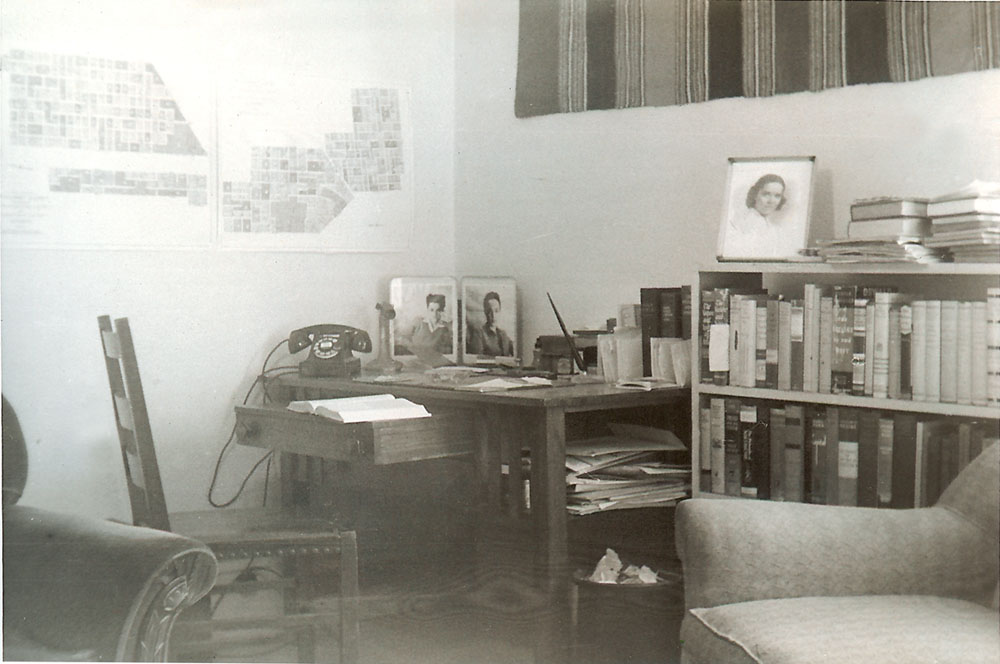
My father’s desk in the San Francisco apartment. Photos of his sisters, Gladys and Barbara on the desk and one of my mother on the bookcase. This desk looks like one that I have from my mother, but it’s not. I think the apartment was furnished. Surprised the typewriter isn’t visible.
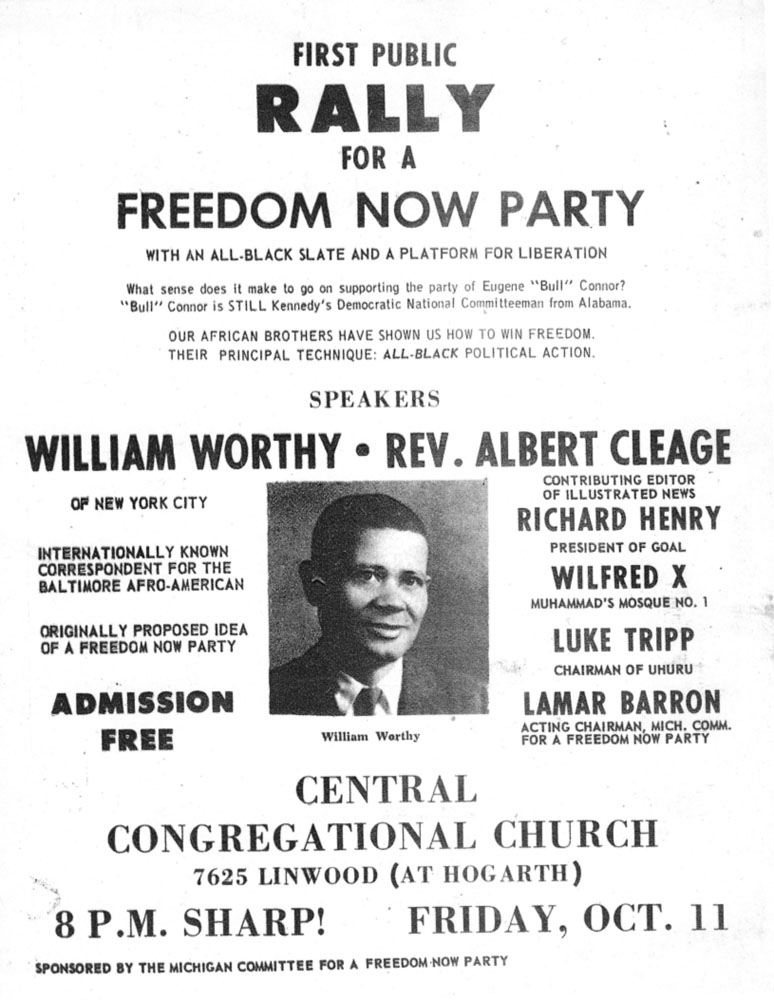
My parents, Albert B. Cleage Jr and Doris Graham, were married in Detroit on November 17, 1943. They left immediately after the ceremony for Lexington, Kentucky, where my father had accepted a call from Chandler Memorial Congregational Church. They were there only two months when he accepted an interim pastorship at the new, experimental San Francisco Church for the Fellowship of All Peoples. He served from January of 1944 through June of the same year. The captions under the photographs are taken from what my parents wrote on the back when they sent the pictures back home to their families.
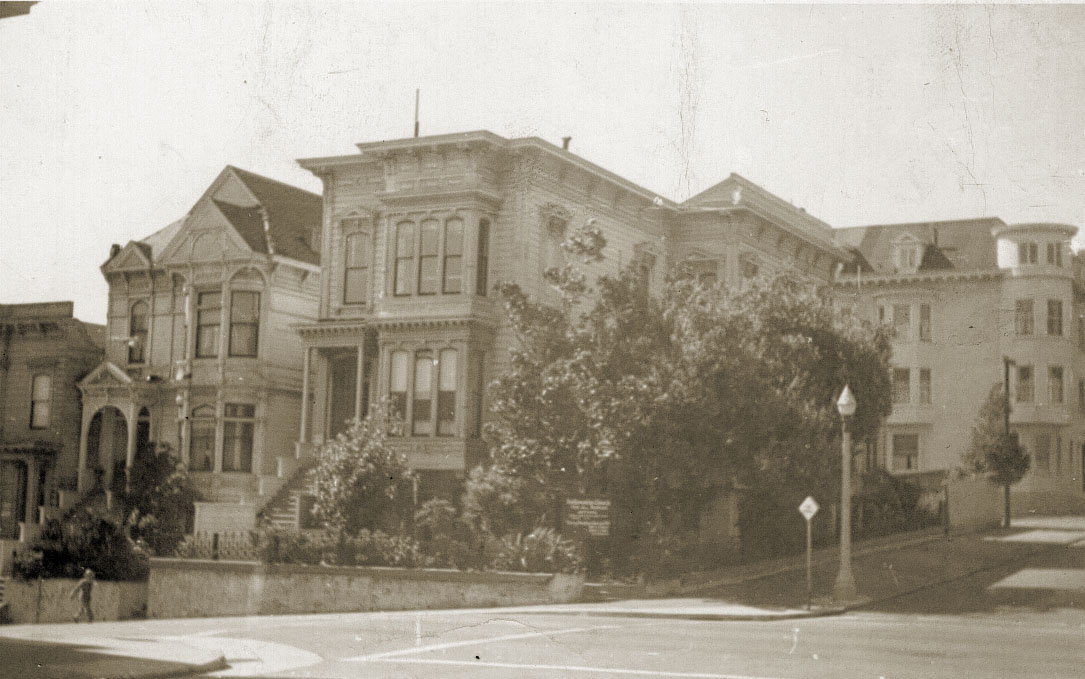
The Church – on the corner. We live upstairs – rear – behind the jungle. (Rubber, Magnolia – Olive, etc.)
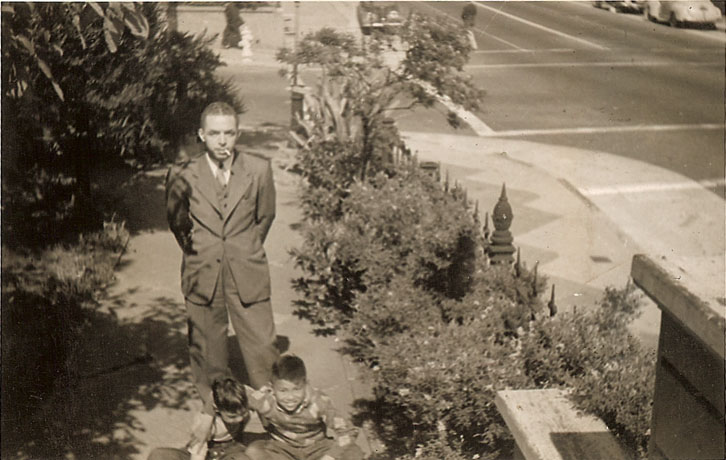
This is Romeo and Patrick and me – fat jaws and all. June 1944
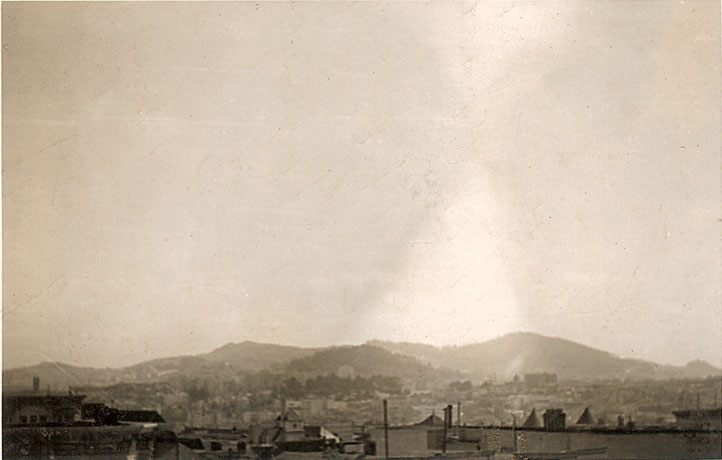
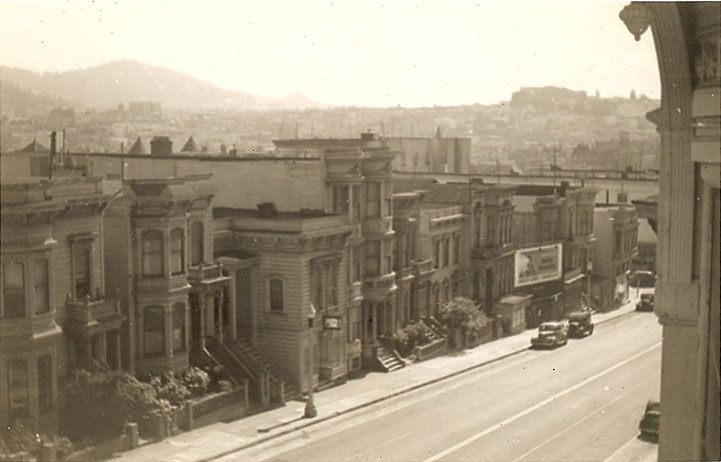
Mountains! Taken out our front window – over the housetops across the street.
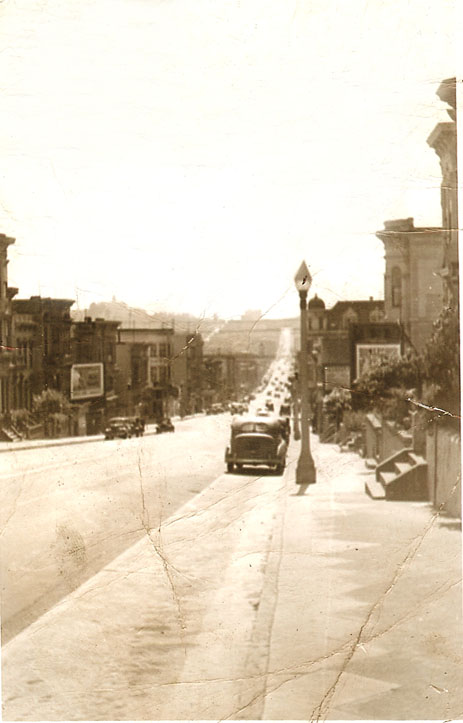
This is Post Street looking toward the Ocean. Looks like you could follow it right on up to Heaven, doesn’t it? June 1944
Looking down at the “Fillmore slum” from our front window. The lady who bakes cakes for us lives over there –
Guess who this gangster looking talent is. June 1944.
Birds eye view of my mother hanging up clothes in the backyard.
Following is an excerpt from a biography of my father, about his time in San Francisco. I wish I had the box of letters I know existed from those six months.
“Cleage does not remember his work with the famous Fellowship Church of All Peoples with any fondness. The new congregation, which had about fifty members when he was there, was a contrived, artificial affair, he says. ‘An Interracial church is a monstrosity and an impossibility,’ he said. ‘The whites who came, came as sort of missionaries. They wanted to do something meaningful, but this was not really their church. The blacks regarded it as experimental too, or were brainwashed to think that it was something superior.’ He called his white counterpart, Dr. Fisk, ‘well-meaning,’ and said Fisk thought he (Fisk) was doing a great work, but had no understanding of tension and power. He felt the Lord looked in favor on this work, and any whites that joined him were headed for glory. He hated to have problems mentioned. Problems included the property left deteriorating after the Japanese were moved out, and the boilermakers’ union ‘which set up separate auxiliary units for black so they could discontinue the units after the war.’ Cleage joined in with NAACP efforts to get at these injustices. He was told he could stay at the Fellowship of All Peoples if he wanted to, and he said ‘they were nice people, but it did not seem to me it was a significant ministry.’ About Fisk, he said, ‘He talked about the glorious fellowship washed in the blood of the Lamb; I talked about hell on the alternate Sundays. He felt upset about my preaching, but he didn’t want to raise racial tension in his heaven.'”
From Hiley Ward, Prophet of the Black Nation. (Piladelphis: Pilgrim Press, 1969), p. 55.
________________________
You can see a newspaper clipping of my parents and a very short post about their time in San Francisco here Newspaper Clipping of My Parents. Soon after July 1, my parents moved to Los Angeles, where my father studied film making for a year before he was called to pastor St. John’s Congregational Church in Springfield, Massachusetts.
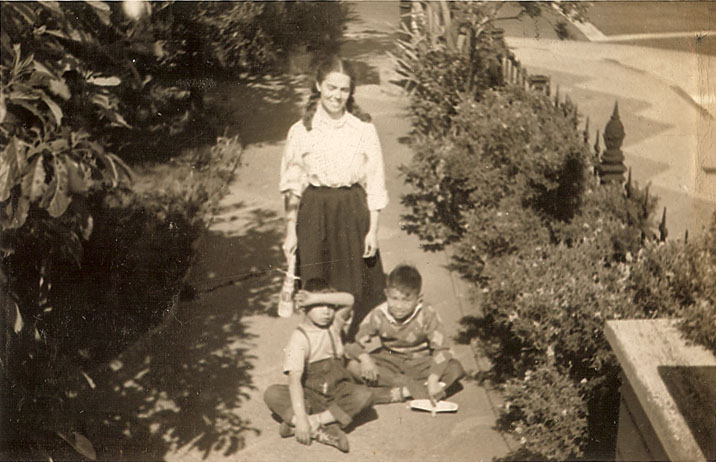
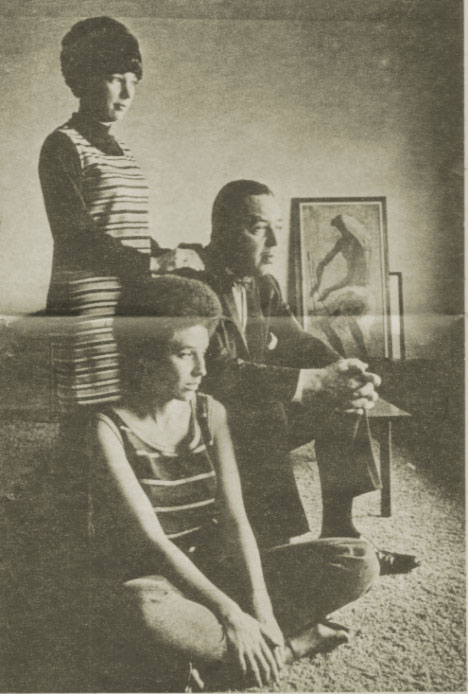
Pearl standing, me seated, my father. The photographer told us to look in that direction.
This is the 17th post in the February Photo Collage Festival and the Family History Writing Challenge. The next four posts will be about some of the places that I lived that I didn’t cover in the Alphabet Challenge last year. Today I am going to remember 1300 Layfette, Detroit. My father, who was still using his name, Rev. A.B. Cleage lived here for a year during 1968-1969. I was a senior at Wayne State University.
In the aftermath of the 1967 riots my father had received many crazy letters, including death threats. Several people involved in the movement had been beaten or shot during this time period. There were also the more well known assassinations that took place. I remember one sermon when my father announced that he had heard there was a price on his head and plans to kidnap him and hold him for ransom. He told the congregation that if he was kidnapped, give them nothing for his return. Strangely, I don’t remember worrying about this.
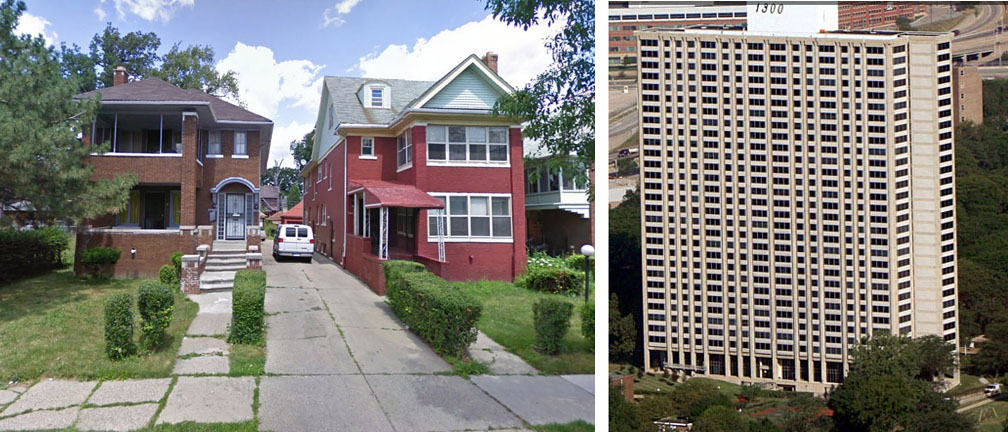
The flat on the left was the one my father lived in. The 12th floor is about half way up.
It was during this time that it was decided that he would move out of his first floor flat on Calvert, that had no security measures, and into the an apartment on the 12th floor of the very secure 1300 Lafayette apartments.
Here is a description written by Hiley H. Ward in his 1969 biography of my father, Prophet of the Black Nation, about the apartment and the atmosphere of the times.
“…He has continued to live alone, until recently in a twelfth-floor panoramic apartment ($360 a month, two bed-room) in the exclusive downtown eastside Lafayette Park overlooking the river, Detroit and Windsor, Canada. His church described his moving there as a security measure… in his immaculate apartment two of three paintings remain unhung after a number of months – not a sign of particular interest in the place.”
Several things I remember:
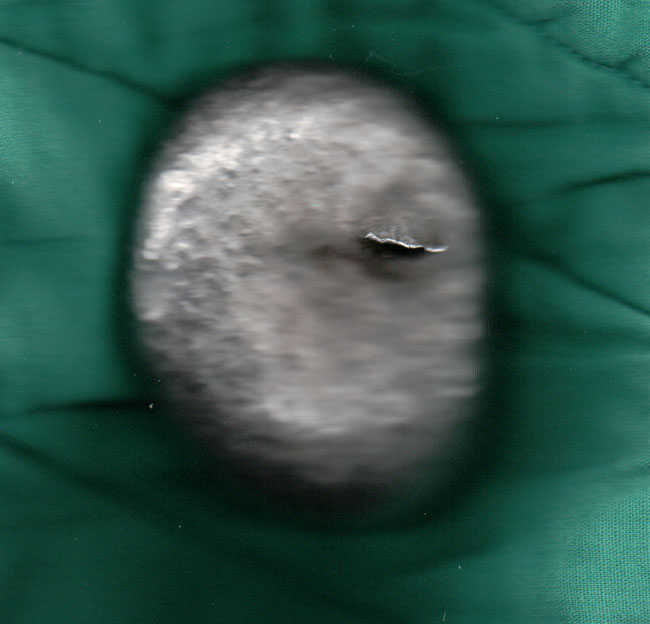
All that remained of the tea kettle.
My father leaving my sister and me standing out in the hall while he went through the apartment with a drawn gun to make sure nobody was there.
The picture above being taken by a Detroit Free Press photographer for an article they were doing about my sister Pearl’s poetry for the Sunday magazine, Parade.
The time I spent a week with him while my mother and Henry went out of town. He went over to his mother’s house on Atkinson for dinner every night. I decided to just fix myself dinner. I did, but I left the tea kettle on and forgot about it. It melted on the burner. I still have a lump of the remains. During this visit I was instructed to give no one the phone number or the address.
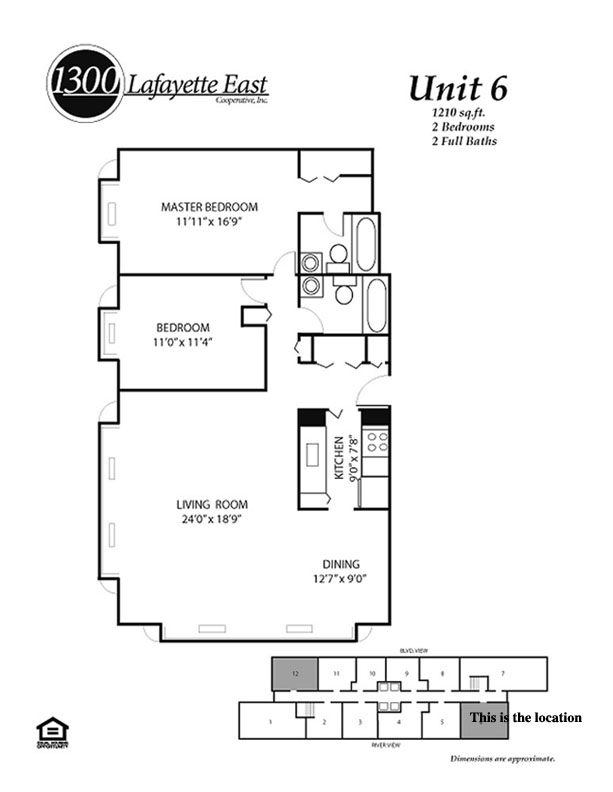
I was trying to reconstruct the layout of the apartment from memory when I decided to look online. Currently the same apartments are in use as co-op apartments and I was able to find the layout and placement at the website for the current cooperative apartments.
At the same time that my father was living here, The Black Star Co-op being developed.
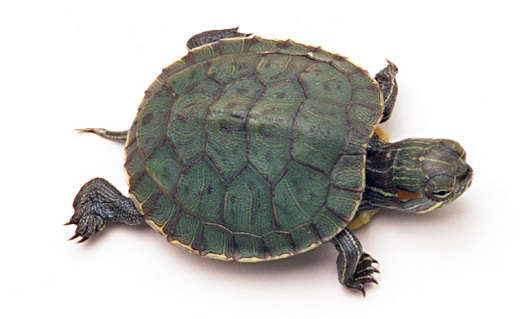
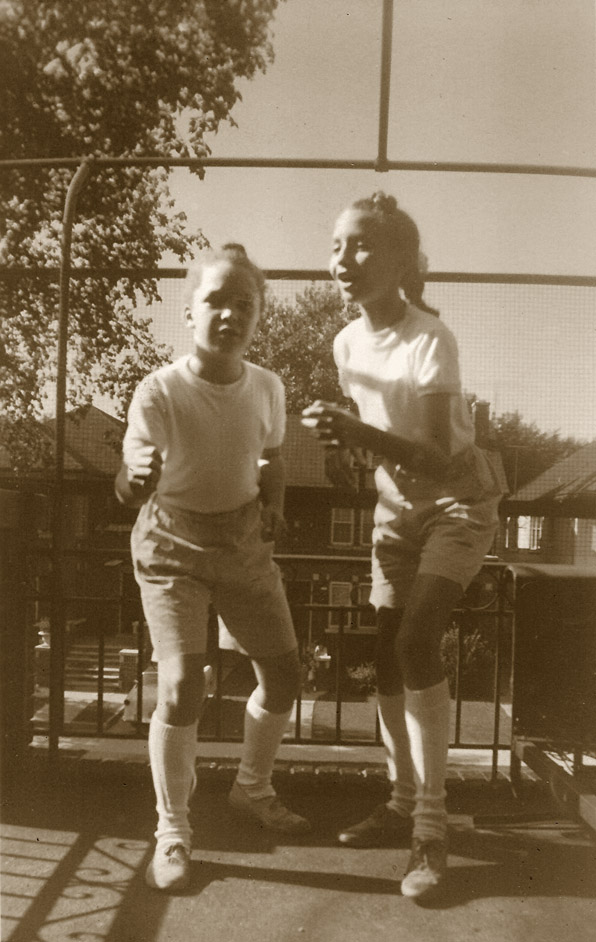
This is the 16th post in the February Photo Collage Festival and the Family History Writing Challenge. Today’s prompt includes a turtle tortoise. None the less, I am going to write about my experience with turtles. My sister and I owned several turtles when we were growing up. We always named them PJ and Pete and they always got soft shells and died. They lived in a little plastic turtle scape much like this one. We added small, colorful rocks to the bottom.
Their bowl sat on top of our bookcase in the bedroom. The room was bright but there wasn’t any direct sunshine there. The turtles were fed a diet of dried food that came in an orange little container. Sometimes we supplemented it with a fly we caught, or some lettuce. As the shells began to go soft, we would try to get them to drink some cod liver oil and moved their island home into the sunlight. All to no avail. They all died. I don’t remember any turtle funerals but there might have been at least one. Perhaps my sister will remember. Pearl says, yes we did bury some of them. I don’t remember being upset, or even minding, when they died.
Our mother didn’t want any real large pets, like cats or dogs, because nobody was home during the day. Maybe because both of her childhood dogs died rather sad deaths too. She was happy to buy us fish and turtles. I think the turtles replaced the fish because it was easier to keep their habitat clean. Once my sister and I took them out on the porch for a walk with strings tied around their shells. Not a big success.
I have since learned that turtles are salmonella carriers. Luckily we never had that problem. My children never had turtles for pets but my husband used to find turtles trying to cross the road and bring them home for them to see before releasing them into the nearby woods or lake. After writing this, I have to wonder if they were disoriented from being moved like this. In fact, this whole thing sounds like the torture of turtles.
My sister Pearl and I pretending to race on the upper front porch of the flat on Calvert. This was the house and the ages we were when we had turtles.
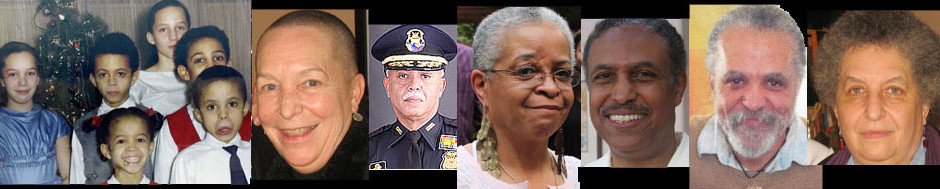
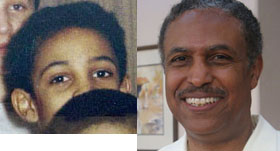
This is the 15th post in the February Photo Collage Festival, and the last post of five that will answer the question someone asked when I posted this photograph (follow the link to see it) – What happened to these kids? Today is the turn of cousin Dale Evans. This is the hardest of the five posts to write because I really don’t know what happened to Dale. I know that for some years he was out in California acting on TV, in the soaps I think. I’ve heard that he did promotions for events, like beauty contests and talent shows. He was making and selling crafts for awhile. He has a tendency to show up once in awhile and then disappear again for years at a time. I hope all is well with him.
Dale in 1958 and 2012.
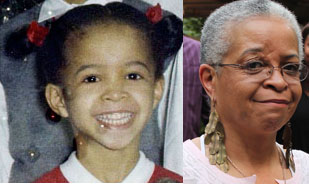
This post ends the series on cousins then and now. I decided not to include myself since you can read many posts on this blog and find out my story.
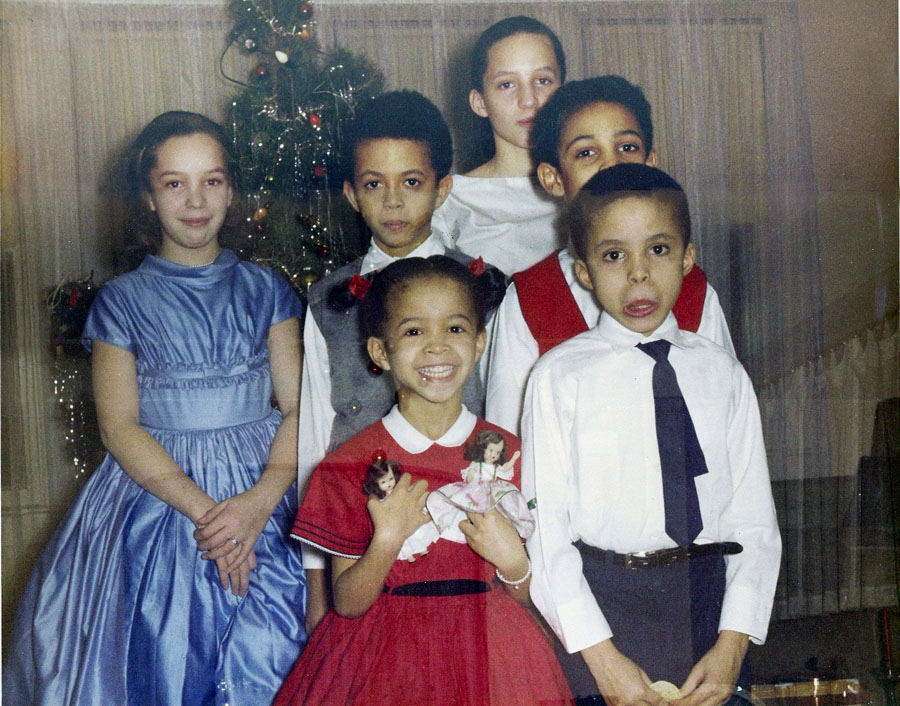
This is the 14th post in the February Photo Collage Festival, and the fourth post of six that will answer the question someone asked when I posted this photograph (follow the link to see it) – What happened to these kids? Today is the turn of my cousin Ernest Cleage Martin.
Ernest graduated from Michigan State University College of Osteopathic Medicine in 1986. He had his residency training of Psychiatry at Wayne State University – Detroit Medical Center and Psychiatry at Detroit Psychiatric Institute. Today he practices Psychiatry, in Anderson, South Carolina with a specialization in Forensic Psychiatry. When I learned he was practicing Forensic Psychiatry I wondered how he analyzed dead people. Of course that wasn’t what he was doing. It means that he specializing in psychiatry as it relates to the criminal justice system.
If someone had asked me at that birthday party in 1958 if Ernest would become a doctor, I would have thought they were kidding. He thought everything was funny, including the kid down the block falling off of his bike. His grades weren’t very good. Sometime during his college career he became friends with someone who made him part of their study group and he learned how to study. At the same time he must have realized that there was a point to it and here he is today, a successful doctor. Following in the footsteps of our uncle Louis and grandfather Cleage. You just never know how life will turn out. Ernest is still practicing today. He and his wife have raised two fabulous children and he still has that sense of humor.
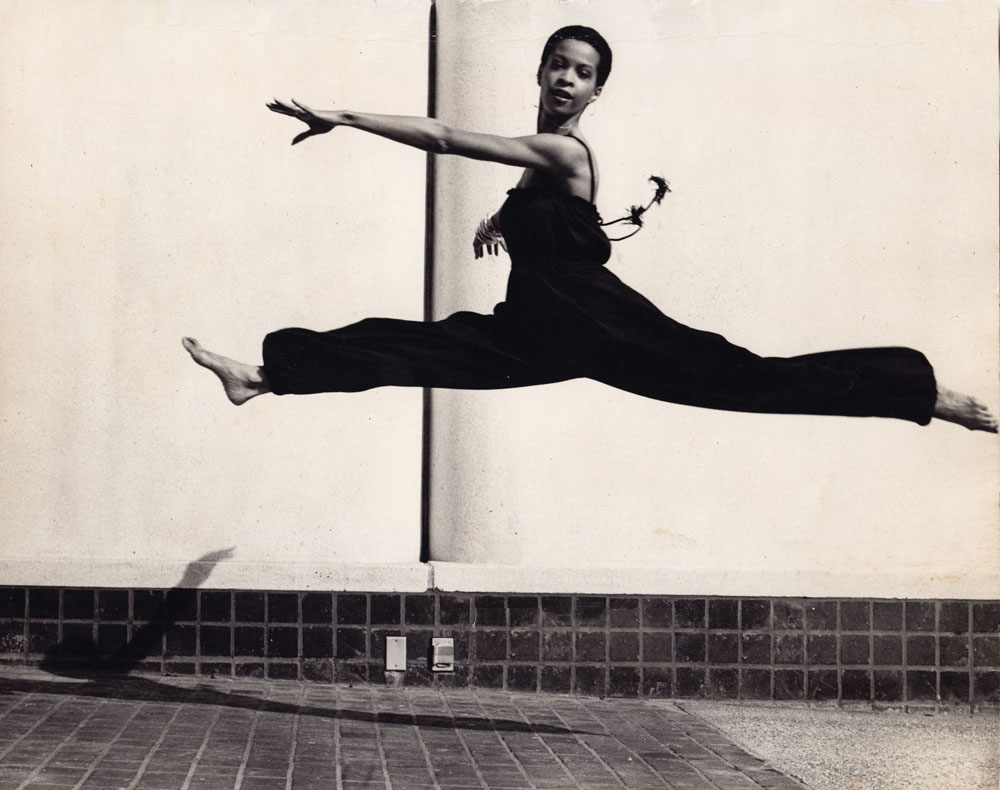
This is the 12th post in the February Photo Collage Festival, and the third post of six that will answer the question someone asked when I posted this photograph (follow the link to see it) – What happened to these kids? Today is the turn of my cousin Jan Evans Peterson. You probably think I am going to tell you she went on to have an illustrious career with the Alvin Ailey dance troupe, but no, she did not. I asked her how long she danced and she replied “let’s see, started around 13, stopped around 25. I danced somewhat with Shashu born and a teeny bit after Kamau.”
I believe there was also some modeling and transcribing of court sessions. Jan eventually moved to Canada and, along with Leonard, raised 4 wonderful, smart and talented children. She has 4 grandchildren. Jan now spends her time doing what needs to be done. This includes, but is not limited to, keeping up with her far flung family, copying and sending me family photos via email, posting inspiring quotes on fb and moving to a higher plane in a spiritual sense. She still wears her magnificent collection of bangles.
This is the 12th post in the February Photo Collage Festival, and the second post of six that will answer the question someone asked when I posted this photograph (follow the link to see it) – What happened to these kids? Today is the turn of Warren Cleage Evans, the birthday honoree in 1958. Warren has spent his working life in law enforcement. Before his retirement last year, he had been a member of the Detroit Police Department, Wayne County Sheriff, Detroit Chief of Police and a candidate for Mayor of Detroit. He also has a law degree, 2 lovely daughters and 5 fantastic granddaughters. He still lives in the Detroit area and is now able to devote more time to his horses, antique cars and playing golf.
Warren Evans then and now.
My personal favorite action by Sheriff Warren C. Evans was when he refused to accept “no” for an answer and took 9 truckloads of supplies and 33 deputies to help in the aftermath of Katrina. Here is an excerpt from the book The Political Economy of Hurricane Katrina and Community Rebound by Emily Chamlee-Wright about that incident.
“One of the best examples of this voluntary initiative is what we call ‘tale of two sheriffs’: Sheriff Warren Evans of Wayne County, Michigan and Sheriff Dennis Randle of Carroll County, Indiana. Both sheriffs were eager to assist the hurricane victims, and both had control over the necessary resources. Sheriff Evans, on the one hand, ignored both FEMA and his governor’s instructions to wait for FEMA approval and went to New Orleans with nine truckloads of supplies and 33 deputies to help (Parker 2005). Sheriff Randle, on the other hand, followed procedure, was buried under mounds of FEMA paperwork, and faced an unnavigable approval process. He never made it to New Orleans (Phillips 2005)”
Josephine “Josie” Cleage was my grandfather Albert B. Cleage’s older sister and today I will tell what I have learned about her.
Josephine “Josie” Cleage Cleage
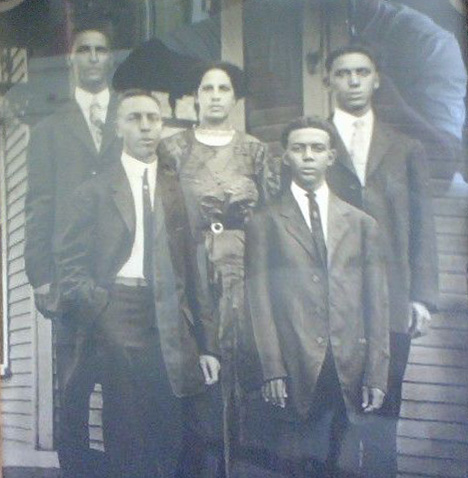
Josephine Cleage, who was always called Josie, was born in 1873 in Louden County, Tennessee. She was the first child of Louis and Celia (Rice) Cleage. In the early years, Louis worked on a farm and Celia kept house. Eventually there were four younger brothers – Henry, Jacob, Edward and Albert. Josie’s father Louis was remembered as a drinker who didn’t always bring his pay home. He started working on the railroad and several years later her parents went their separate ways.
Left to right: Albert, Josephine, Edward. Back L Henry, back R Jacob
In September 1894, twenty year old Josie married 22 year old James Cleage. Although they were both named Cleage, it was not because they were related. Josie’s family was enslaved on Alexander Cleage’s plantation while James Cleage’s family was enslaved on David Cleage’s plantation. James’ parents were Jerry Cleage and Charlotte Bridgeman. You can read more about them here -> Jerry Cleage and Charlotte Bridgeman and here -> Jerry Cleage, A Slave for Life
Both were born after the Civil War. Their first daughter, Henrietta was born in 1897 with second daughter Lucille following in 1899.
In April of 1897 Josie’s mother, Celia, married her second husband William Roger Sherman of Athens, Tennessee. By 1900 the whole family was living in Athens. Josie, now 27, and her family were living next door to her mother, step-father and brothers. Husband James, 29 was teaching school. According to the 1900 census Josie was able to read and write.
Sometime after 1890 Jacob Lincoln Cook, founded the Athens Academy. James Cleage was one of the small group of dedicated educators that worked with him and taught there in the early years. In 1900 J.L. Cook was appointed president of Henderson Normal Institute in Henderson, North Carolina. James also went to North Carolina and began teaching at the Institute. In 1901 Josie and James first son, James Oscar, was born there. My grandfather, Albert, lived with his aunt’s family while he was attending high school at Henderson Normal. He graduated in 1902. By the time Albert David (called David) was born in 1907, the family was back in Athens, Tennessee, but not for long.
By 1905 Henry and Jacob Cleage had relocated to Indianapolis, Indiana and in 1908 James, Josie and their growing family joined them there. Their youngest daughter, Hattie Ruth was born in Indianapolis in 1909. James worked a porter and later at a printing shop. Josie stayed home and raised the children and kept the house.
Josephine Cleage is wearing the dark dress, on the far right.
Both James and Josie were active in Witherspoon Presbyterian Church. I found these short items in the Indianapolis Star “News of The Colored Folk” during 1911.
March 11, 1911 Officers of the Witherspoon United Presbyterian Church entertained its members at the church at a banquet Tuesday night. Dr. H.L. Hummons was toastmaster. Addresses were made by Henry and James Cleage, Mrs. Lillian T. Fox and Mrs. M.A. Clark.
April 9, 1911 Sunday The Witherspoon United Presbyterian Church will give its annual musicale Friday evening at the church on North West street. The following program will be given: Solo, Mrs. T.A. Smythe; reading, Mrs. James Cleage; clarinet solo, Philip Tosch; reading, Mrs. Harriet Mitchel; quartet, Messrs. Lewis, Thompson, Chavis and Thompson. The church choir will render three selections. Mrs. Daisy Brabham has program in charge.
My uncle Henry Cleage remembered family visits to Indianapolis during the summers. He said his Aunt Josie was a real intellectual who read a lot and could talk about a variety of topics. He also remembered catching fireflies and that someone in the family had a goat. My aunt Anna Cleage Shreve remembered her uncle James as a very quiet, gentle man who helped around the house. Uncle Edward’s daughter Juanita Cleage Martin wrote in her memoirs that she remembered her aunt as being tall with a pleasant smile, easy going with a lot of hair.
Josie’s husband and four of her children. I do not have a picture of James Oscar. Special thanks to my cousins from Aunt Josie’s line for sharing photos with me!
Josie’s children all finished several years of high school and then got married or started working or both. Lucille seems to have been the first to relocate to Detroit where her uncles Albert, Jacob and Henry settled. After Josie’s husband James A. Cleage died in 1933, Josie also moved to Detroit. In 1940 she was living not far from her brothers with her son David and his family on Stoval.
Josephine Cleage died in July of 1956 at age 82 and is buried in Detroit Memorial Park East Cemetery.
I found this photo of an unidentified cleaners in my Cleage photographs. There are no Cleages in the photo. It’s pasted on a piece of cardboard and a child, has scribbled in pencil all over the picture. I assume unidentified Cleaners is located in the neighborhood of the Old Westside of Detroit.
I have not been able to identify either the cleaners or the owners. There is a “Detmer Woolens” calendar on the wall but I can’t make out the year even when I scan it at 600 dpi. The dress the woman behind the counter is wearing, the narrow pant legs of the menby the counter and in poster on the wall and the short hair on the calendar girl make me think the photo was taken in the mid-1930s. I found this history of Detmer Woolens interesting.