In September of 2012 members of the family met in Detroit to celebrate my Aunt Gladys (my father’s sister) 90th birthday. On Memorial Weekend we again gathered, this time to celebrate my Ernest’s and Susan’s 25th wedding anniversary. Some of the same people were at both, some were at one and not at the other. It was wonderful to see cousins and cousins spouses, once again at a celebratory event. The younger cousins are getting to know each other. The aunts are getting a chance to see each other and older cousins are getting a chance to see each other outside of facebook! I hope we can continue to meet often to celebrate family. Often enough that the children will not just know they’re family, but feel it.
Cleage family members who gathered at Ernest and Susan’s in May of 2013 – cousins, aunts, children, grandchildren, spouses.
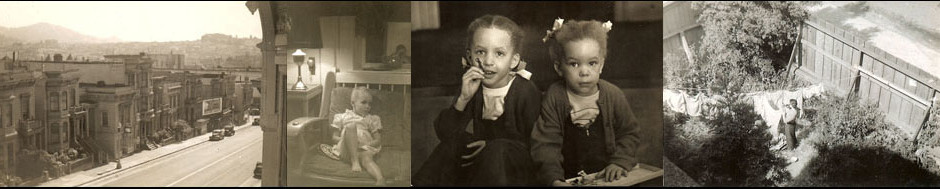
I hope I didn’t leave anybody off. If I did, please advise and I will add them. The header photo is from the September gathering, put them together and you have almost the whole Albert and Pearl Cleage branch of the family. One day maybe we can get those missing family members there too!
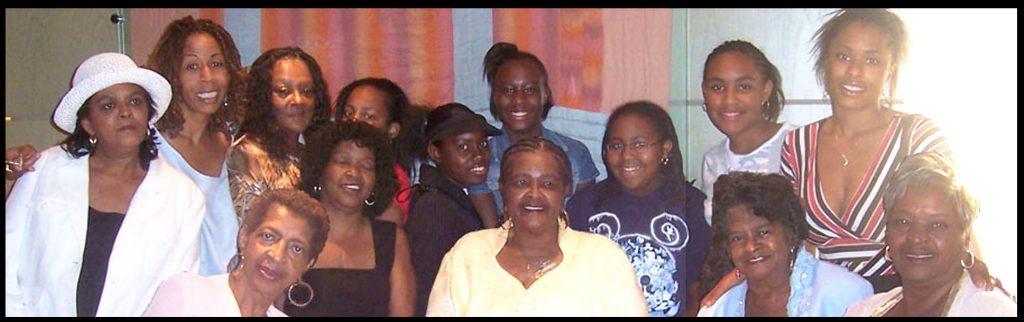
Hattie Ruth’s daughters, granddaughters and great grands
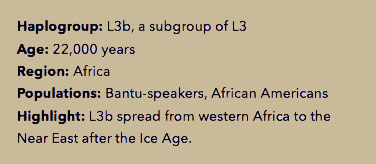
This chart is adapted from the 23andMe website.
Susan Rice Regan is the earliest name I can call for this line. She was born into slavery about 1833 in Virginia and later brought to Tennessee. She gave birth to two sons and three daughters. Her sons were Henry Rice and Philip Ragan. Her daughters were Anna Celia Rice, Sarah Sallie and Mollie Ragan.
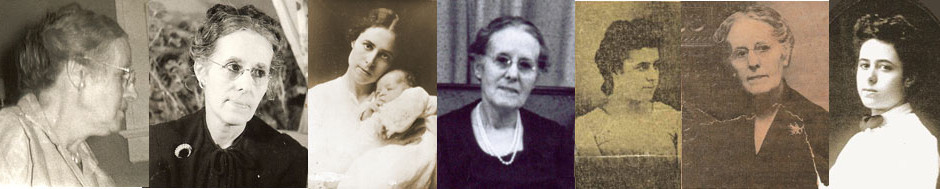
Her daughter Anna Celia Rice, my paternal paternal grandmother was born into slavery in Virginia or Tennessee about 1855. Celia had 4 sons, including my grandfather Albert, and 1 daughter, Josephine (also called Josie). MtDNA is passed from the mother, to the daughter, to the grandaughter to the great grandaughter in a straight line. Although sons receive their mothers MtDNA, they do not pass it on to their children. Their children will receive their own mother’s MtDNA. So, I am going to be talking about daughters of daughters in this post.
Celia Rice Cleage’s MtDNA passed through her daughter to her daughters, to their daughters and on and on and on.
Josephine married James Cleage, (from a different Cleage family) and had 5 children, 2 sons and 3 daughters, Henrietta, Lucille and Hattie Ruth. My cousin Felix, a descendent of Hattie Ruth, shared a chart of family members with me about five years ago. There are probably more family members out there since then. Additions and corrections welcome!
Henrietta had 1 son and 3 daughters, Margaret, Hortense and Ruth. I don’t have any information about their children. Lucille had 2 sons and 1 daughter, Mary, who had 1 son only. Hattie Ruth had 5 daughters, Vivian, Betty, Beverly, Marion and Erma.
Vivian had 2 daughters, Josephine and Laura. She had 7 grandchildren, 11 great grandchildren and 1 2xgreat grand at the time I received my list.. I don’t know how many were daughters. Josephine had 2 sons. Laura had 5 children, 2 boys and 3 girls. She has at least 2 granddaughters.
Betty had 3 daughters, 2 lived to adulthood. Sandra had 3 daughters, Bernita, Jamiliah and Aisha. Bernita had 5 daughters. Jamiliah had 1 son and 3 daughters. Aisha had no children. Charlene had 2 daughters and 5 granddaughters.
Beverly had 1 son and 2 daughters, Tanya and Kim. Tanya has 1 daughter, Danelle. Kim has 2 daughters, Mahogany and Celeste.
Marion had 2 sons and 2 daughters, Alma and Ruth Anne. There were 5 grandchildren, but I don’t know how many were daughters of daughters.
Erma had 3 sons and 7 daughters, Beatrise, Marcella, Haleema, Fatima, Aleah, Ameena, Leshia. I don’t know the breakdown of her 16 grandchildren, but I know there were some granddaughters.
Susan Rice Ragan’s two younger daughter’s each had one daughter each. Sarah/Sallie married first Henry Hale and they had two sons and a daughter, Blanche Augusta Hale. Blanche had three sons had no daughters. Mollie married Grant Hodge and had a son and a daughter, Dora Hodge. Dora had no daughters.
***** Special thanks to my cousin Denora for permission to use the photograph above of Hattie Ruth’s daughters, granddaughters and great grands. And to Felix for the information in the chart. And to Tanya for getting her DNA tested. Family makes it happen.
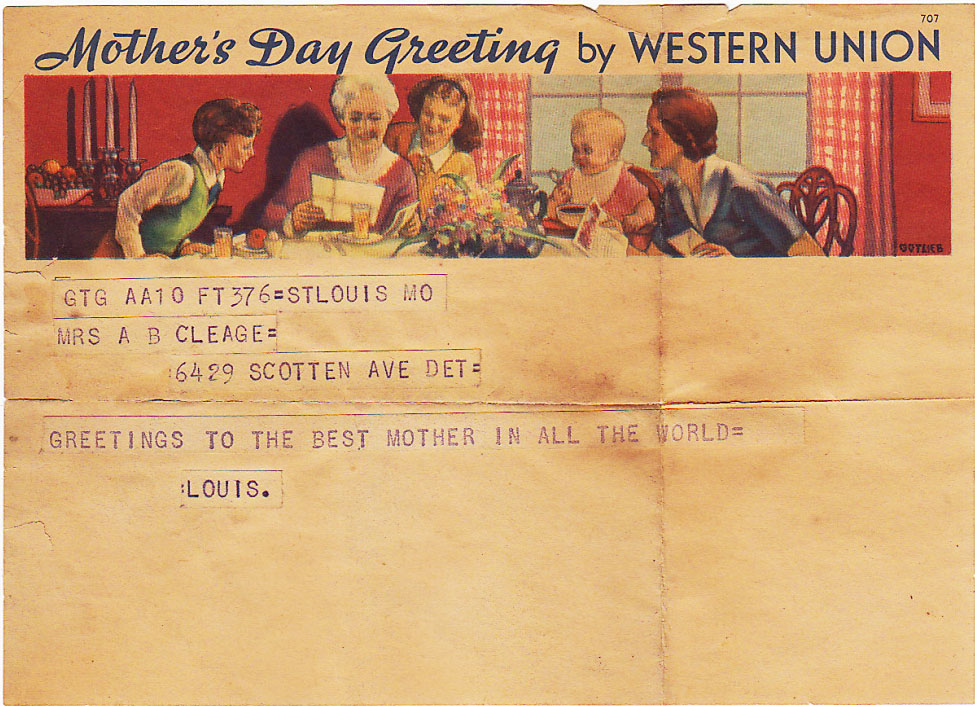
About 1940 my uncle Louis was in St. Louis as an intern at Homer G. Philips Hospital. He sent my grandmother in Detroit this telegram on Mother’s Day. These photographs were taken a few years later.
“The air was cool at night. I stretched out my arms in the moonlight and flew. I raced and raced in the cool night expanse, on the largest stage in the world. Around me the mountains ribbed the sky. Under my feet lay the beat of a full symphony orchestra.”
— Agnes De Mille, Dance To The Piper, pg 174
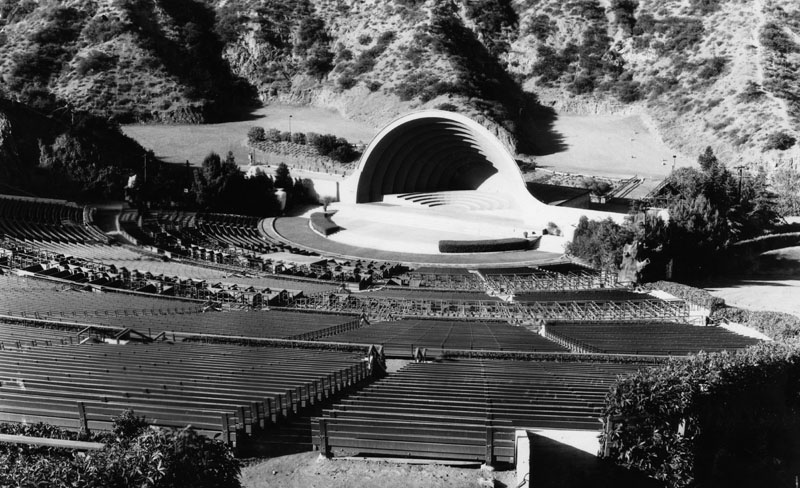
The Hollywood Bowl.
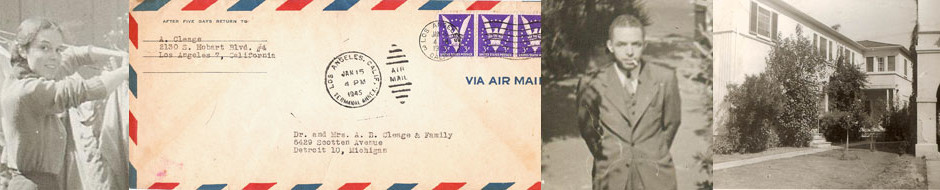
This excerpt below is from a letter written by my father to his parents and siblings in Detroit. You can see my mother hanging up clothes and my father smoking during that same time, up in the header photo.
2130 South Hobart Blvd. #4 Los Angeles, 7, California September 2, 1944
Hi Folks:
It’s Sunday afternoon…hot as usual…Everything goes along about as usual (the poor get poorer and the rich get richer)…
We went to the Hollywood Bowl last night to see the incomparable “Ballet Theater”…Russian Ballet by S. Hurok. The Bowl is way out in “West h—” from were we live. It took over an hour on the street car to get there… and the last mile took about half of the time… the street-car would move about an inch and wait for ten minutes and then move another inch. We were late…as usual… but in plenty of time to see all we cared to see. The Bowl is a dished out place down in between some mountains…with thousands of seats rising up the mountain sides in front of the stage. The place was jammed! We had the cheapest seats, naturally, which Doris purchased through the Red Cross for a slight reduction…but by climbing over the backs of the seats…very undignified…we managed to sneak into the next higher priced section..where we could see the performers… after a fashion…the section where we belonged …ran on and on…up the mountain…and the people on the stage must have looked like little ants or something…which was just as well…considering the nature of the performance. The dancing was about what you would expect Pee Wee, Gladys and Barbara to put on after a week-end of rehearsal out in the barn. Romeo and J. went on and on for hours…The people sitting next to us…who apparently had never heard of Shakespeare…decided the dance must be about an Egyptian princess or something. “Fancy Free” which was supposed to be terrific…dragged on and on and on…long after the dance was finished. All in all it was quite an evening. We left before the last extravaganza in order to catch a street car before the mob…ran a block and a half…and finally caught what they humorously call street cars out here..and made our way home…
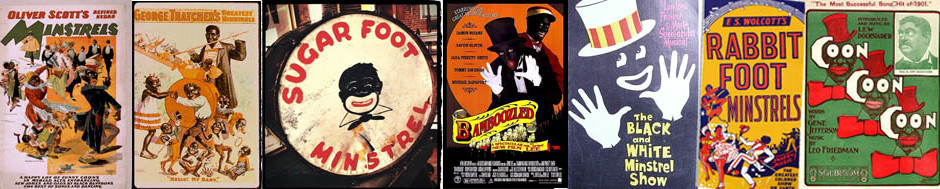
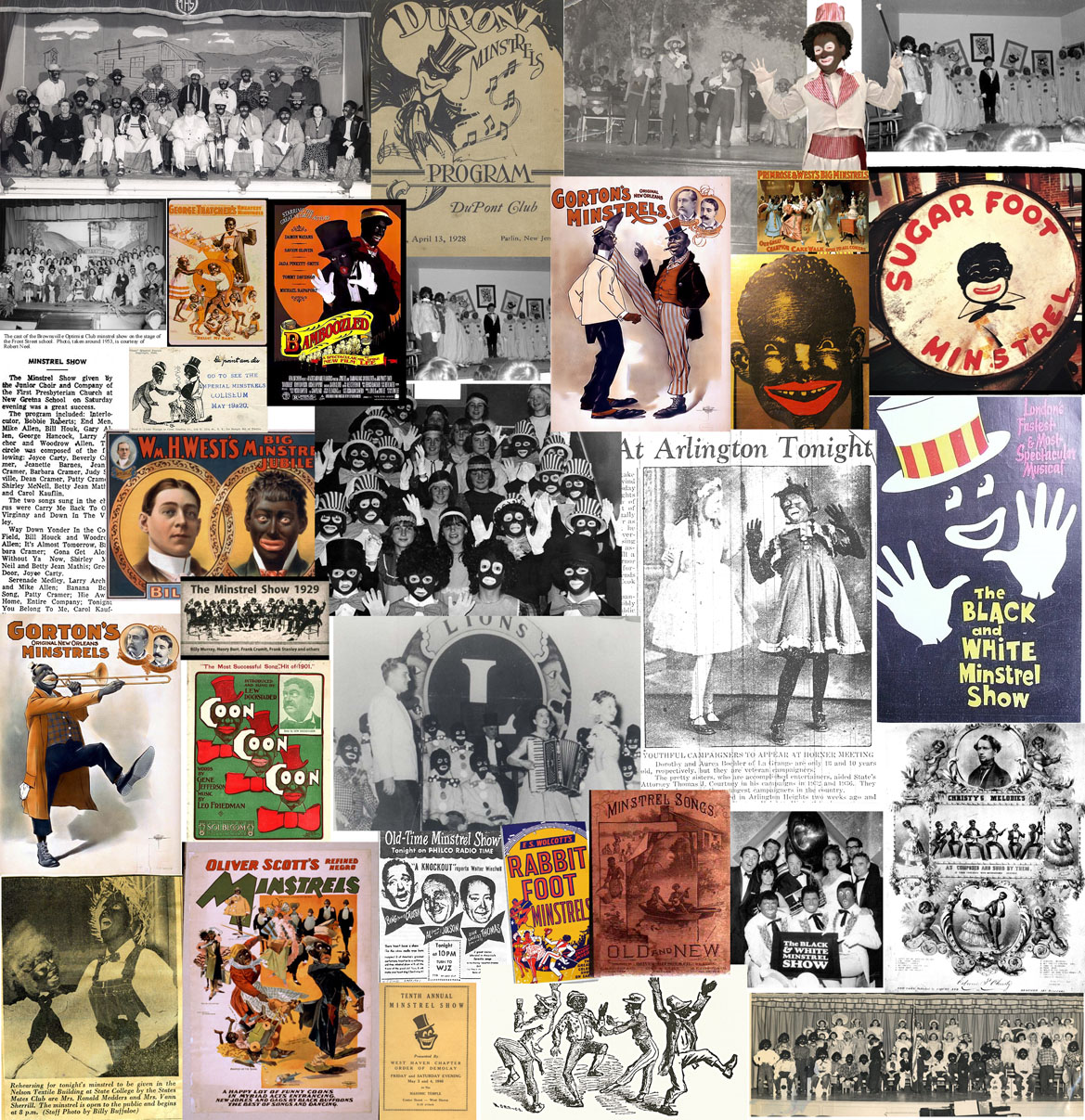
Several weeks ago I read a post on Sheryl’s blog A Hundred Years Ago, about a school play put on in 1913 in which her Grandmother acted the part of Chloe, the maid, in black face. It wasn’t a minstrel show, but there was some discussion about what was accepted in those days and what is accepted now. I googled “minstrel shows” and found photos and articles which show minstrel shows occurring as late as the 1960s in the US. I didn’t realize how many schools, scouts and civic groups put on ministrel shows and plays using black face.
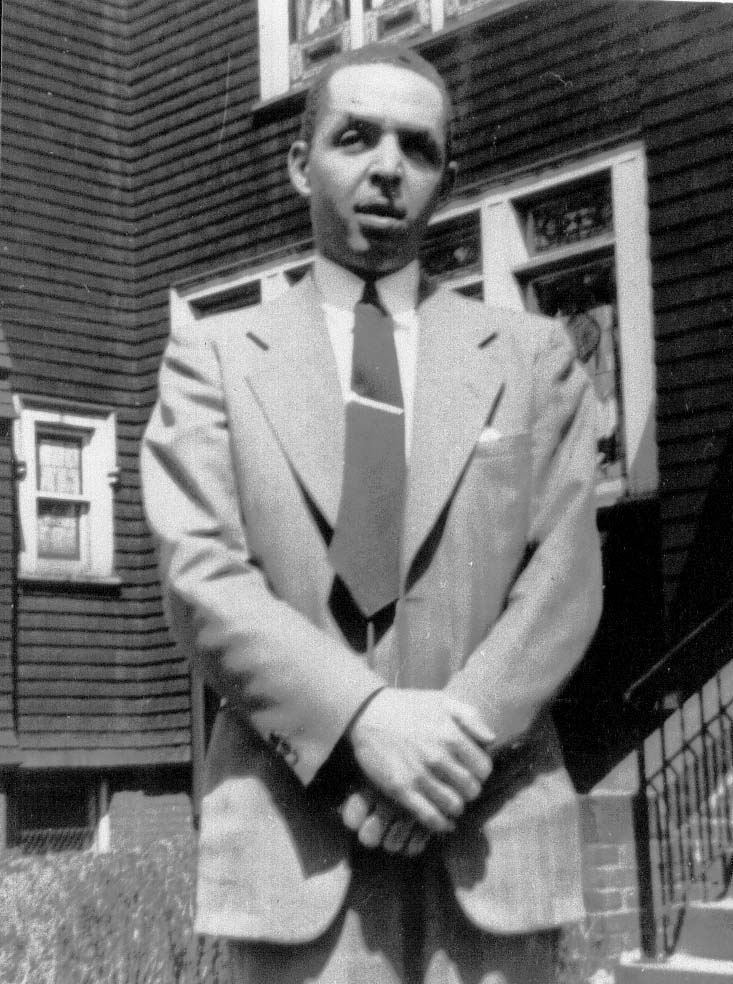
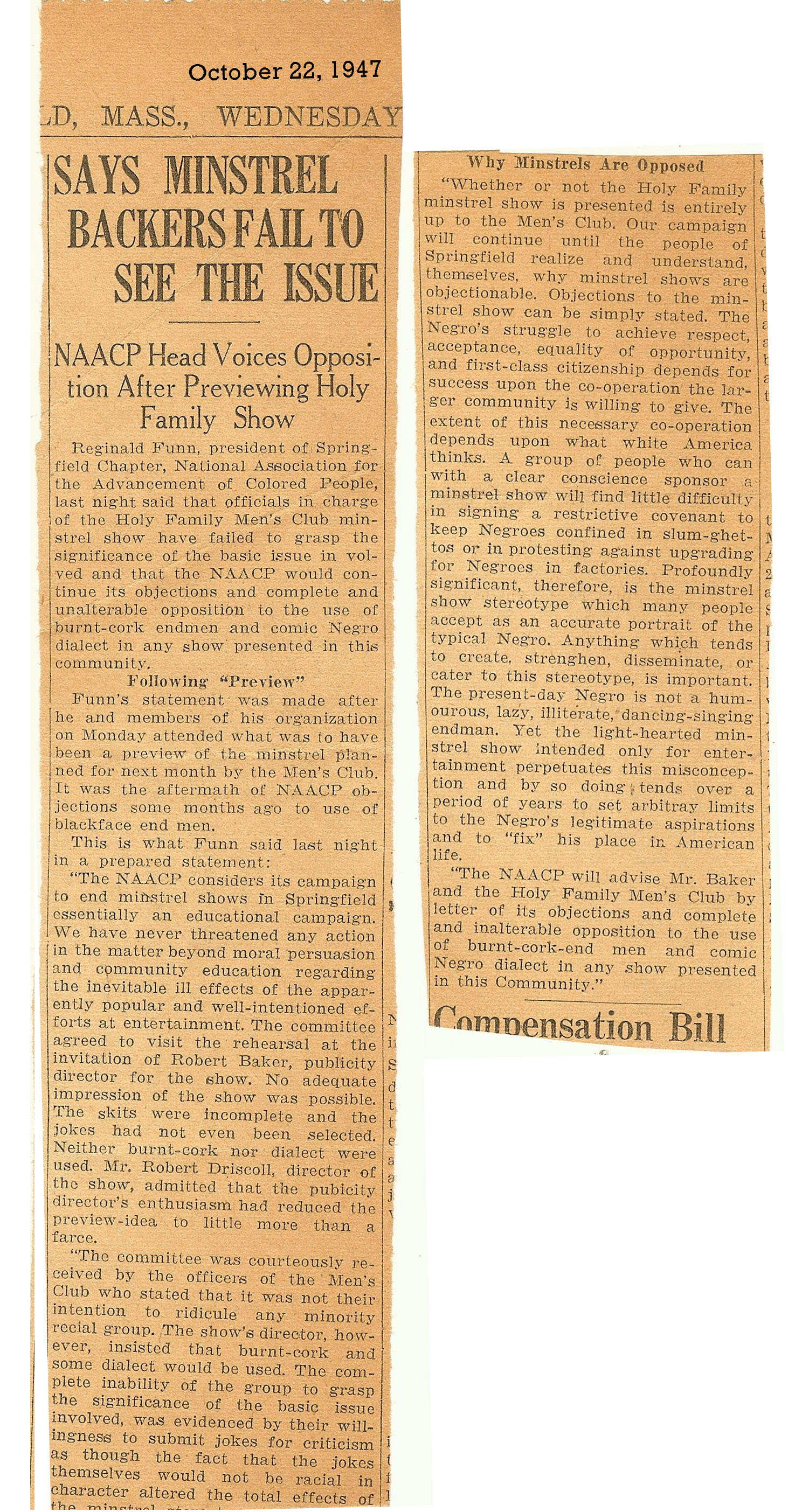
Later, I was looking through my father’s letters home to Detroit while he was a minister in Springfield, MA and I saw the article below about a church that was going to put on a minstrel show in 1947 in Springfield . The NAACP was trying to convince them that this was a bad idea that perpetuated stereotypes about black people that were not true. My father wrote the article below which appeared in the newspaper, The Springfield Republican.
Click to enlarge
Black face and minstrel shows. Click to enlarge.
The first link below goes to a page about blackface and racism, in the past and in the present, with links. The other pages are articles and pictures of minstrel shows from 1901 to 1967. I was surprised that there was a television show in Britain called “The Black and White Minstrel Show” that broadcast until 1978.
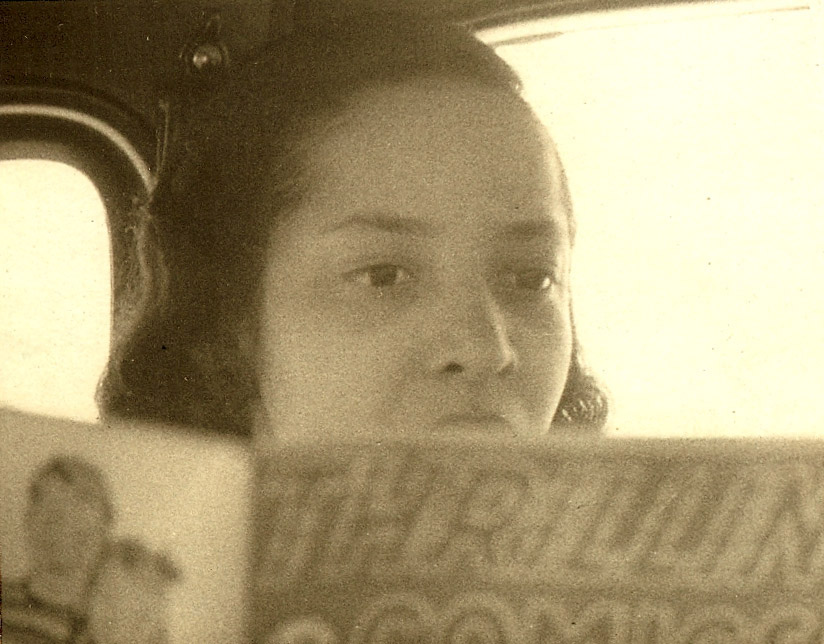
This photo comes from my Cleage stash and features Alice, my Uncle Henry’s first wife, reading a Thrilling Comic. How did she happened to be reading it? Did she enjoy comics? Love thrillers? Was she posing (or posed) for the photo? Was the comic book laying around because that is where Henry got his short story ideas? Judging by her eyes, she does look mildly thrilled.
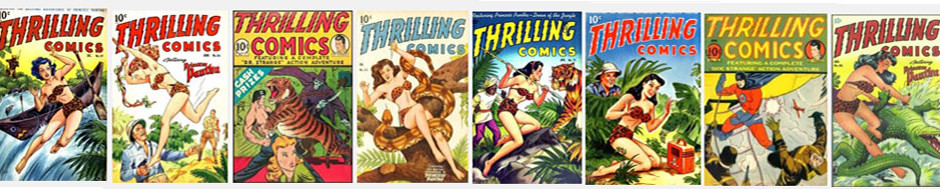
Thrilling Comics
“Thrilling Comics was one of the longest runs the publisher had. It ran for eighty issues. The issues themselves featured many different kinds of comic stories like the standard superhero story as well as westerns, detective, stories, comedies, comic strips, short stories and many more.” The series started in 1940 and ran through 1951.To see all the covers for the 80 issues, click Thrilling Comics.
Click to see more thrilling or newsy Sepia Saturday posts.
In my fourteenth post for the April A-Z Challenge, I am going to share a Nostalgic interview I did with my Uncle Henry Cleage in 1994. I’ve done several posts about the Freedom Now Party before. At that time I didn’t know how to embed the actual audio interview. I figured it out yesterday and so, here it is!
I wish my interviewing skills had been better when I recorded this. Obvious things like, turn off the radio and go to a quiet room. I edited out as much of the extraneous noise as I could. Henry and I were sitting in the living room of my house in Idlewild, MI. You can hear the sounds of the kids getting dinner on the table and hollering at the dog in the background. In 1994 my youngest 4 were all at home and we were homeschooling. Henry lived about 4 miles away and often had dinner with us.
An interview with Henry Cleage about the Michigan Freedom Now Party.
This is my third post for the April A-Z Challenge. I am blogging every day in April using the letters of the alphabet as prompts. Today I am going to write about Samuel Cleage’s building operation. Samuel Cleage owned the plantation where my Cleage ancestors were held as slaves. When he died, the slaves were divided between his sons. I am writing about the time before this today.
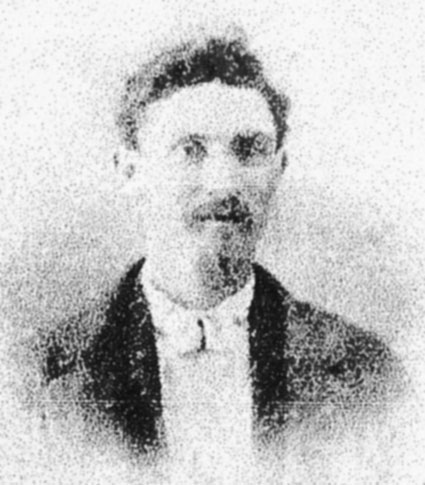
Samuel Cleage, who spelled his name “Clegg”, was born in Lanchaster County, PA in 1781. He moved with his parents and siblings to Botetourt County, VA. After his parents died he moved with his family and slaves to McMinn County, TN.
Samuel Cleage
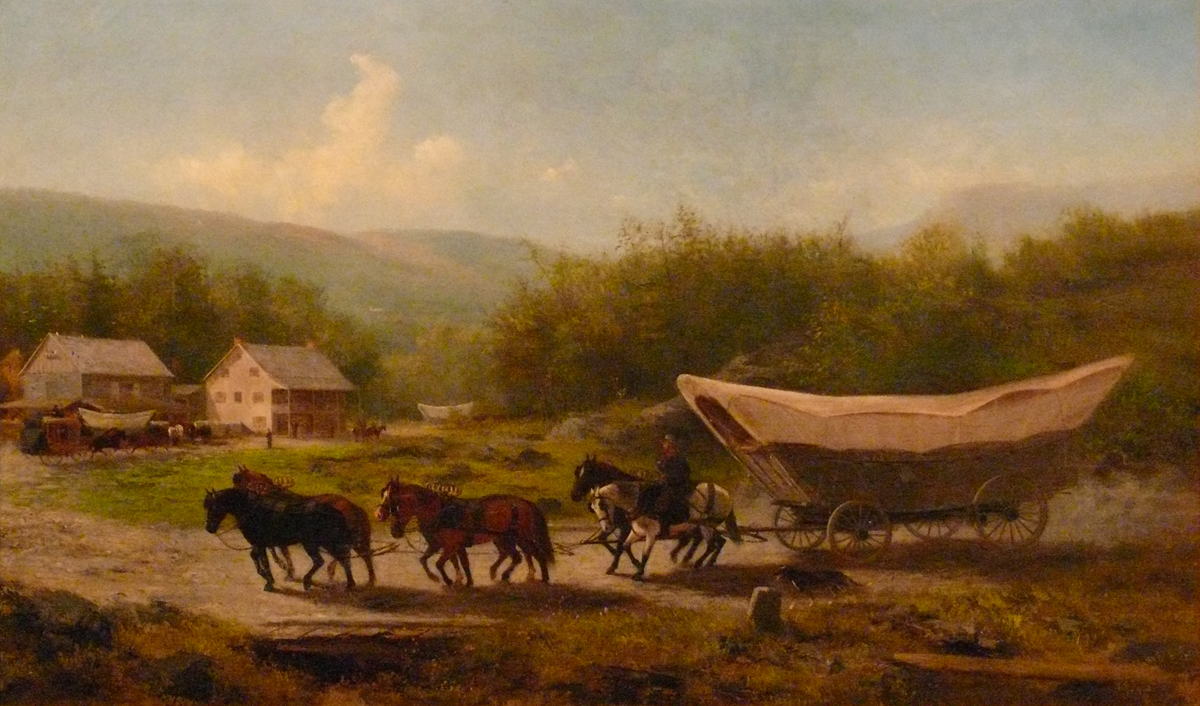
As I was getting ready to write this I realized that he didn’t just get on the train and move, that they must have traveled by wagon down well worn, but primitive roads. Not only was he moving his whole little community of married children and slaves, 339 miles through the Blue Ridge Mountains, he also carried the tools of his trade – whatever he needed to build brick houses. As he traveled he would convince farmers along the way that they needed a fine brick home to go with their fine farm. For payment he accepted slaves, gold or livestock. They say that some of these houses are still standing. I can’t imagine how long it took the group to travel this way. A fully loaded Conestoga wagon, the usual method to move through the mountains in the early 1800s, could travel 5 miles a day. That would take about 4 months if you traveled straight through. They didn’t. They were stopping and building brick houses. And they had to make the bricks! How could that work? All sources agree that by the time he reached McMinn County, Samuel Cleage was a very wealthy man, both in slaves and gold. I think I will have to check into this a little further. Here is a description of the way traveling worked. To read more, click the title.
First the word, Conestoga, America’s first big truck. It was made in Conestoga, Pennsylvania, and it was one huge wagon: 26 feet long, 11 feet high, with the capability of carrying 8 tons. Pulled by five or six horses and followed by as many as a dozen packhorses, the Conestoga wagon became any traveling family’s best friend.
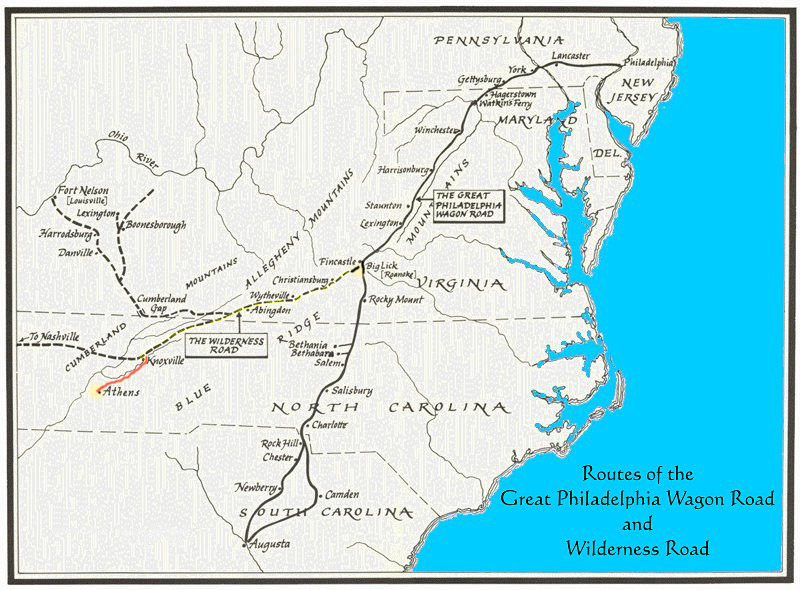
It became the expected sight along the road known by many names: the Warrior’s Path, the Carolina Road, the Valley Pike, the Great Philadelphia Wagon Road, or simply the Great Wagon Road.
With a body the shape of a swaybacked horse, Conestogas could float across a river as long as the wheels were taken off. And those wagons were so heavy and laden with a family’s every possession, they created deep wheel ruts all along the Great Wagon Road…
I outlined the section of the Wilderness Road they would have taken to Knoxville, TN, where the road turns west. At that point they would have continued south to Athens TN in McMinn county.
Above I mentioned that they had to make the bricks before they could build the houses. “They” being the highly trained and skilled slaves that were traveling too. It was not easy to make the bricks. And it wasn’t a quick process. Here is how Joe Guy described it in his book “The Hidden History of McMinn County” There is also a link to this chapter in the title.
Samuel Cleage, the itinerant contractor who traveled into the Tennessee Valley from Virginia in the 1820’s, is generally credited for the construction of several historic homes and buildings in East Tennessee, especially in McMinn County. While it is true that Cleage was the driving force behind his construction business, it is important to remember who, in fact, was actually performing the labor.
Besides livestock and gold, Cleage was often contracted to be paid in slaves after having completed a house or building. Many of Samuel Cleage’s slaves later adopted the Cleage name when they obtaining their freedom, and several black families in East Tennessee still trace their lineage to these Cleage slaves. Cleage was a wealthy landowner besides being a builder, and so he used his slaves almost exclusively as bound workers in his construction business. One of the duties often exclusively regulated to the slaves was brickmaking.
By the time Samuel Cleage was involved in building, the art of making brick had been around since 3500 BC. Essentially, 19th century brickmaking involved five steps: winning or digging the clay, preparation, molding, drying, and firing.
East Tennessee is well known for having the natural clay useful for brick production. Once dug by the slaves (normally in the fall), the clay was exposed to the weather so that the winter freezes could break the clay down, remove unwanted impurities, and allow it to be worked by hand. In the spring and summer, water was added and the clay was worked by the slaves’ hands and feet in large open pits until it obtained a smooth consistency and most of the rocks and sticks were removed.
The clay was then taken to the moulding table, where the slave designated as brickmoulder directed several assistants in the process. A skilled brickmoulder would work at the moulding table for twelve to fourteen hours, producing 3500 to 5000 bricks in a day. A clot of clay was rolled in sand and “dashed” into a sanded mould, which prevented the clay from sticking. Once the clay was pressed into the mould, the excess clay was removed from the top of the mould with a flat stick. Moulds ranged from single to six bricks at a time, but single brick moulds were often desired because even the slave women and children could be employed in carrying the “green” bricks from the table to the drying area. The “green” bricks were then stacked and dried for about two weeks.
Once most of the moisture had dried out, Cleage’s slaves stacked the bricks in a kiln, or clamp. Rows of bricks were built up to construct tunnels, which were filled with wood and set fire. For two to five days the bricks were cooked, the slaves feeding the fires and getting very little sleep. After the bricks cooled, the slaves removed them from the clamp and sorted them as to their degree of quality, the best being chosen for the building’s outside walls. Bricks which were closest to the fire sometimes received a natural glaze from the sand that fell into the flames, and were used in the interior courses of the walls. Some bricks would be left with a salmon color, were only slightly underfired, and made for good insulation in the inner parts of the walls. Bricks that were over burned, cracked, or warped were called clinkers and were saved to be used in garden walls or paths.”
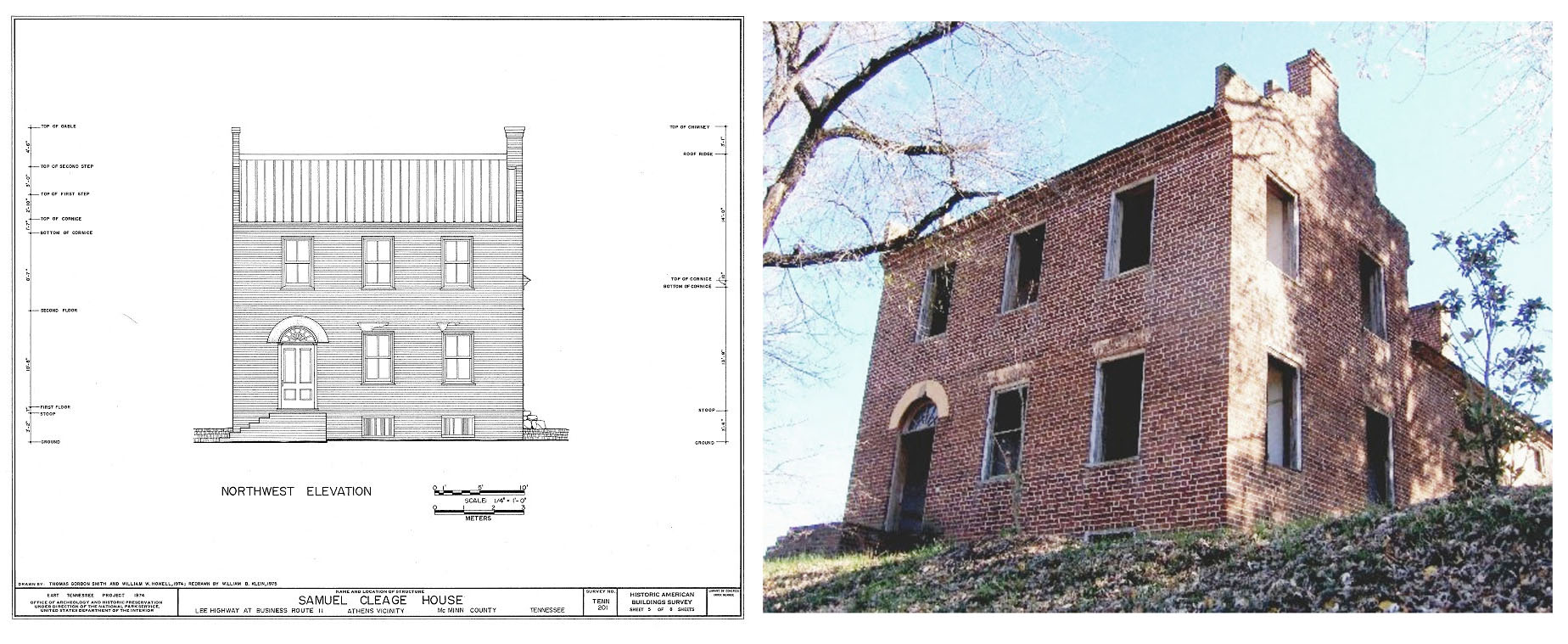
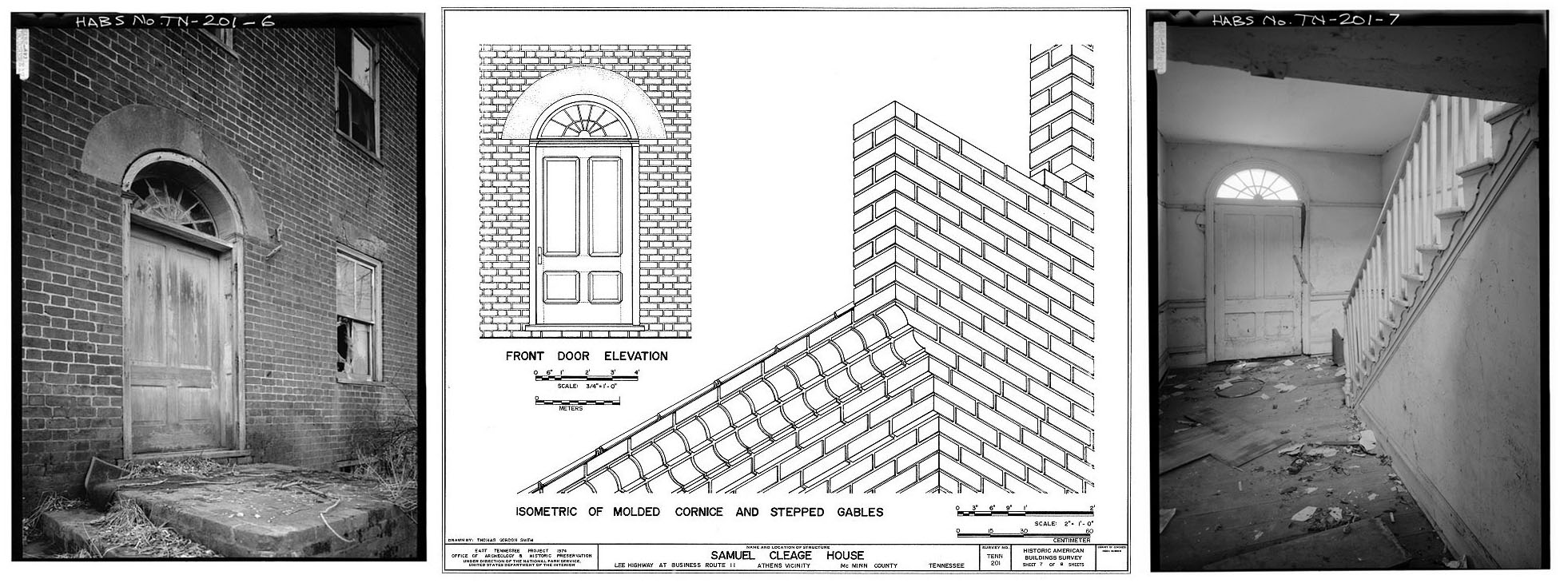
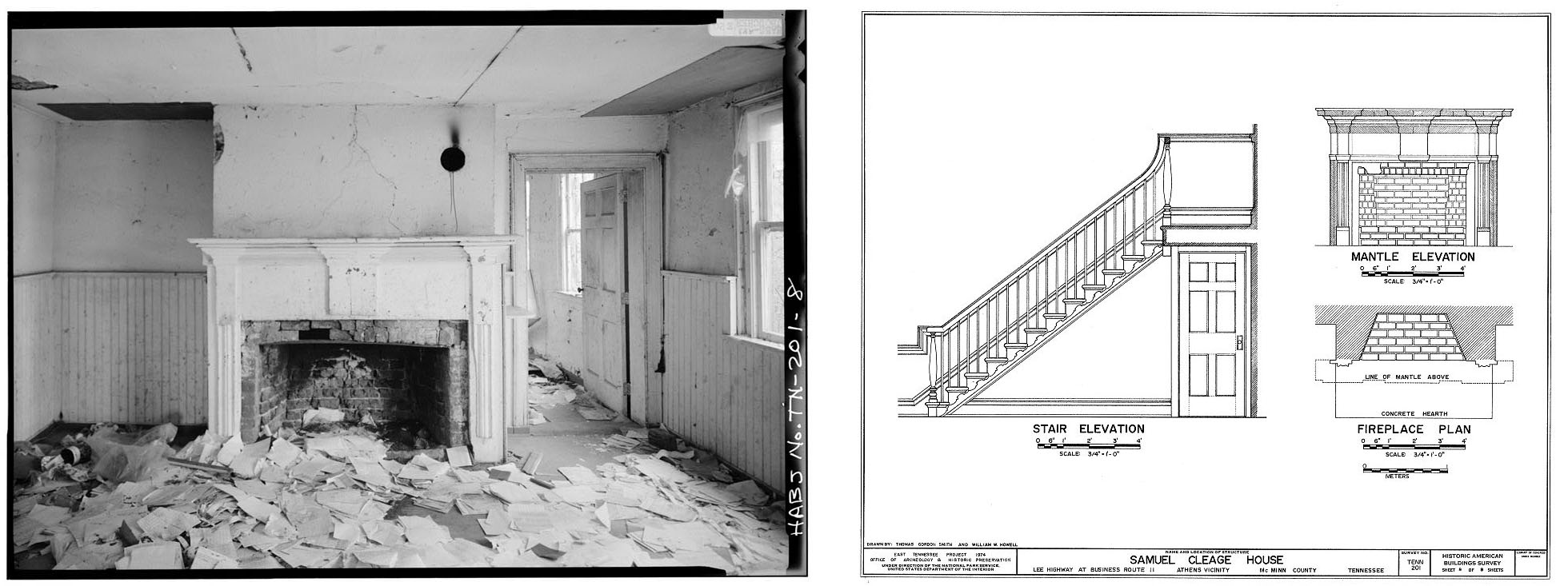
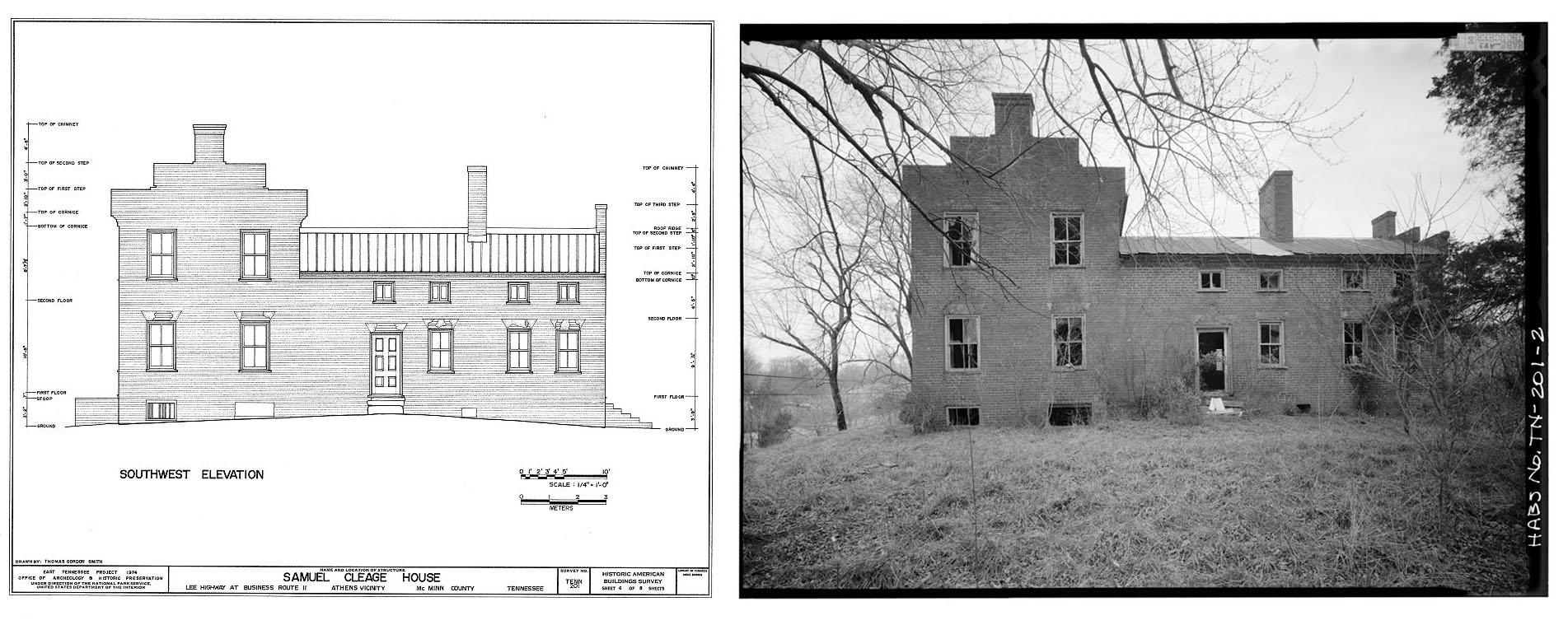
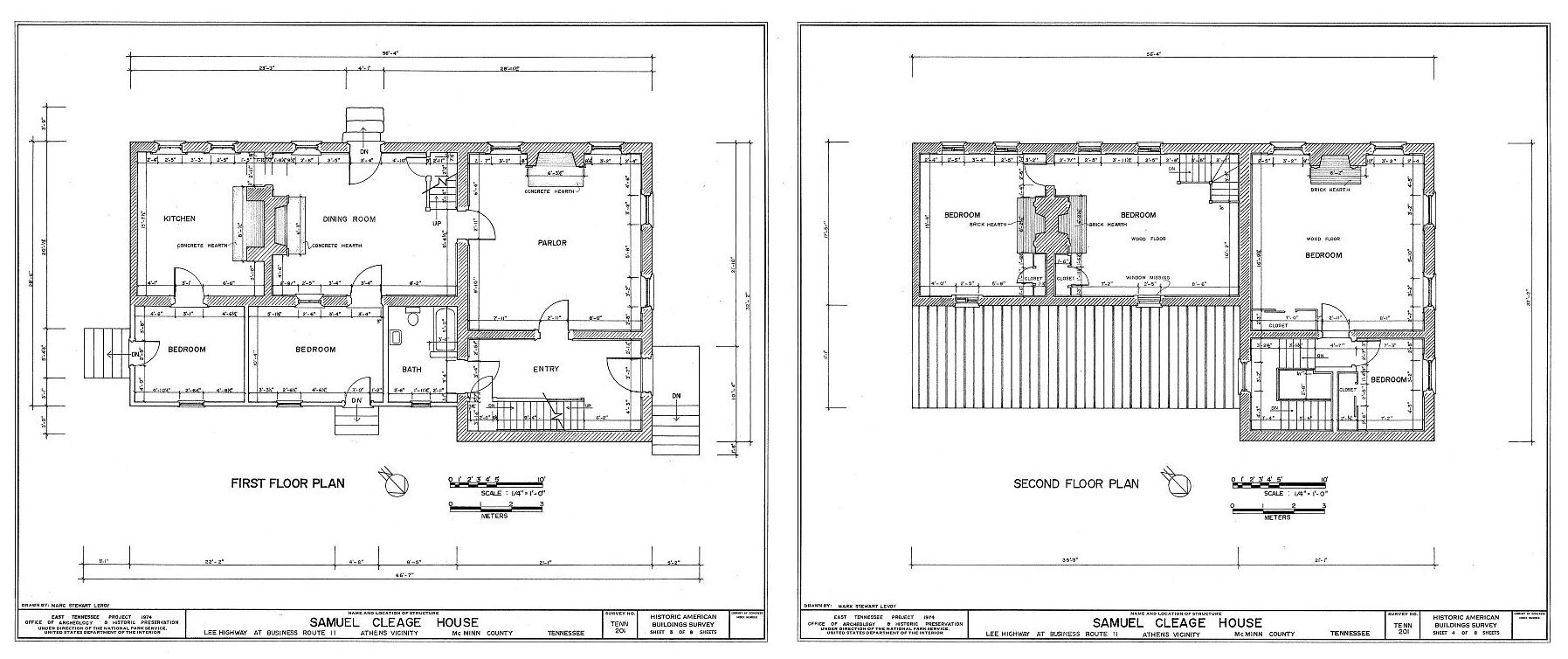
After arriving in McMinn County, Cleage picked out a spot and built the house below, which is still standing. The black and white photographs were taken during the 1930s. The color photo is more recent. I read an article online that described the renovations the new owners were carrying out to make the house livable again. Unfortunately, I cannot find the article again.
My father took many photographs that now help me document my family’s life. There are photographs houses, street scenes and my mother in San Francisco and Los Angeles. In Springfield, MA he took pictures of my sister, my mother, me and along with those of St. John’s Congregational Church and members. For the first few years after we moved back to Detroit, there were photos and then, he stopped taking pictures.
Taking photographs – 1940s.
A few months ago I noticed that my father took no more photographs of our family after we moved from 2212 Atkinson to 2254 Chicago Blvd. Pictures taken during that time were not taken at home. We were at one of my grandparents houses, or in Idlewild. And the photographer was not my father, my mother or other family members were. I wondered what happened during that time that made him stop.
In 1953, at the time we moved from Atkinson to the house on Chicago, there had just been a church split and my father, a minister, was involved in building a new church from the ground up, something he hadn’t done before. This involved finding a church building and raising the money to purchase it. New members had to be found and a program that would get those new members involved and feeling a part of the church, had to be developed. There were constant meetings at our house, a combination parsonage/church activity building. And my parent’s marriage was ending. My parents separated in 1954. Maybe, on top of everything else, his camera broke and he couldn’t afford to replace it because he kept donating his salary back to the church.
______________
You can see some of the photographs my father took in these earlier posts:
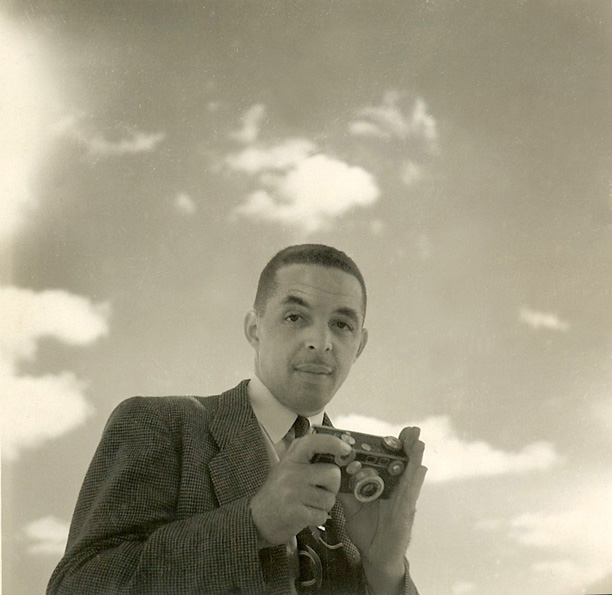
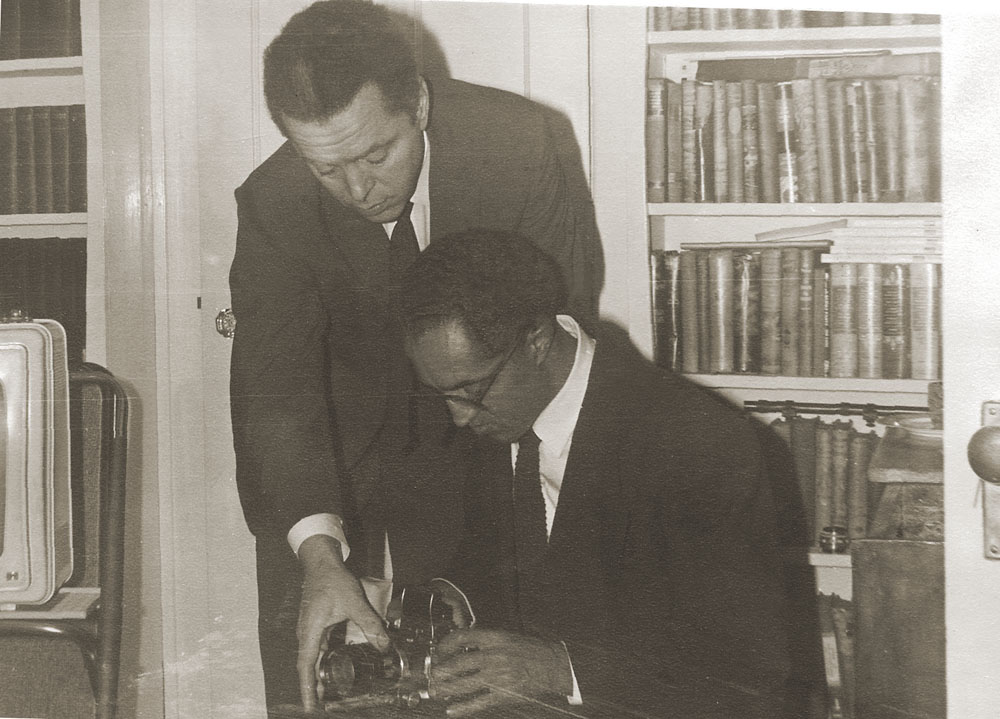
Today is my uncle Henry Wadsworth Cleage’s birthday. He was born on March 22, 1916 in Detroit Michigan. If he had not died on June 15, 1996, he would have been 97 today. In honor of his birthday I decided to run another one of his short stories. He wrote it in March of 1947 and sent it out to an agency but it wasn’t published. He also wrote a longer and slightly different version of this story. There was, however, no mention of a camera and that is the prompt for this weeks Sepia Saturday.
Henry and Hugh examine a camera.
Me, Detective
By Henry Cleage
“Rural Detective Agency routes Thief” was in great big letters and underneath was the picture of the old man Lucas’s cat wearing the false teeth. Then there was a little article about Sam and me. I was humiliated. I jammed the magazine in my pocket and went up to the office. The office is over the drugstore.
I opened the door and started towards my desk. I was almost there when I fell over the tripod. It was sulking in the shadows the better to destroy me. I staggered on to the desk and sat there trying to organize myself.
Finally my mind was made up. Whoever heard of a detective agency with a darkroom? I would just have to force Sam to stop fooling with them cameras and stick to business. I couldn’t stand the strain and the indignity any longer. It was getting so bad I was getting a fixation about cameras. I could smell one a block away, and the smell didn’t do my blood pressure any good either. After all, who was running the joint anyway? I was in a state when Sam finally wandered in.
“Hello Dan.”. he said. He was loaded down with a camera almost as big as he was. He’s just about five foot six himself but he’s all energy and foolishness. Oh, he’s a good boy all right. I don’t mean to say that he ain’t been a big help and all that, but after… Just because he was the one who got us our license and set up the office don’t mean he can run around with a camera all the time. Besides it was only because he happened to know Sidney Jones’s daughter in the university where he was taking some fool course in photography that he was able to get the license.
But take that university business. Ain’t that just like him? If I wanted to be a photographer I would just grab a camera and start snapping pictures. But he’s got to go at it the hard way. He’s got a stubborn streak a mile wide. If he wants anything, he’ll bust hell wide open to get it. I didn’t even speak to him when he walks in. He wanders around awhile tring not to get in my way, but I’m right there looking him dead in the eye.
At last I speak. “Sam”, I says, “What do you think is wrong with the business?”
“Geez” answers Sam “I think it’s wonderful.”
Now, ain’t he a ninny? “Wonderful?” I gasp. “How can you say that when we ain’t had no business since old man Lucas lost his false teeth?”
”I don’t think we can expect a great volume of business, ever.” Says Sam. “That’s why I’m developing a sideline. With photography and our detective business, we ought to do alright.”
“How come we can’t expect a lot of business?” I says, stung to the quick by this fresh evidence of unamericanism.
“Why, the town is too small.” Says Sam innocently, his wide eyes even wider.
“Well”, I says “I think we can do more business if a certain one of us would tend to business and let our hobbies go.”
Sam seemed shocked. “But, I think my camera work can be a help in the business.” he said.
Ain’t he a ninny though?
“Did the camera help in the Lucas False Teeth Case?” I roared.
“The picture I got of the cat wearing the teeth did.” Replied Sam. “We sold it to the magazine for a hundred bucks.”
“Did the camera help in the Lucas False Teeth Case?” I repeated.
“I found the teeth.” Sam had the indecency to say.
“Did the camera find the teeth?” I scored.
“No.” Sam admitted.
I rose to my full six feet and glared down at Sam, sitting at his desk. “Then admit you are wasting time with them gadgets.”
For a minute I thought I had him, but he’s stubborn. He looked pained for a minute and then scratched his head. He don’t like to argue. That’s what I was counting on.
“I don’t think the camera has had a fair test.” He says.
I am almost exasperated but just then the phone rings and I grab it. It’s old man Jones’ daughter herself. She wants an appointment right away. She gets it.
“I’ll tell you what I’m gonna do.” I says, turning back to Sam. “I want to be fair about this thing so we’ll make a bargain.” I look at him like I’m giving him the chance of a lifetime. “That is if you got the nerve, the faith of your convictions.”
“What is it?” asks Sam.
“If you can use your camera in some legitimate way in our next case, I’ll keep my mouth shut. If you can’t, you’ll get down to business and forget it.”
Sam starts to protest but I come in fast.
“Oh?” I says “Welching?” I shake my head disgustedly. “Just a kid who don’t want to give up his toys.”
This gets Sam where he lives. He hates to be called a kid. That’s what I counted on.
“All right.” He says, his face tight and confused, “I’ll go along with you.”
I got him, I got him, I got him! Geez, what a sucker. I don’t know why, but I can get away with anything on him. With other guys, he is as shrewd as the next one, but with me, he is putty.
Things are still pretty tense in the office that evening when Miss Jones comes in. She is a looker all right. A tall well stacked dame with plenty of everything that makes the world go around.
When she sees Sam, she almost picks him up and puts him in her lap. It seems they were regular old buddies at school. Sam seems pretty fond of her too. They act like two old college buddies. Disgustin’.
“How is the demon photographer?” she hollers, laughing like mad.
“How’s the philosopher?” says Sam, grinning like an ape.
They kid each other around like two guys. I look at this chick again. It’s amazing. Usually a big shot chick with as much on the ball as this one, is got a lot of agony and such. You know what I mean. I figure this chick must be a problem to someone. I can imagine her pulling almost as many silly ones as Sam. I clear my throat and bring the meeting to order.
She’s really got a problem. It seems that in her studies at school she comes across something pretty interesting in the way of the law of averages. And being the girl she is, she shoots right out to Whitey’s Roadhouse to see if the books are right. They ain’t. One thing follows another and before all is said and done, she gives an I.O.U. Now, for some peculiar reason, Whitey don’t want to give her back the I.O.U. even for the money.
“Well”, I says, “Why worry?” This chick must have a screw loose, I think to myself. I would take the money and call it a good deal.
“Her father is running for mayor on the reform ticket.” Says Sam.
“What’s that got to do with it?” I shouts, very much put out by Sam’s habit of bringing up non-essentials.
“Petey Grace, the mayor’s handyman called me today and advised me to see that daddy did not choose to run or he would publish a Photostat of the I.O.U. in the paper.” She says.
That Sam, I think to myself. Always showing off. How in the world does he think we can get an I.O.U. if the guy don’t want to give it? Besides, that Whitey bunch ain’t no boys to get too gay with. And he’s in with the mayor too. That’s a hard combination to beat. It ain’t like finding old man Lucas’s false teeth.
I’m just on the verge of telling her that we are pretty well tied up, when I get a flash of genius. This is just the case for showing Sam the folly of his ways. It’s got to be strictly hush-hush, see. The last thing you could use in a case like this is a camera. I turn back to Jones with a suave smile.
“The way I see it”, I says, “the whole thing has got to be strictly hush-hush.”
“Definitely.” Says Jones, tossing her blond curls with a certain twist of her shoulders.
“No pictures or nothing.” I insist.
“Heavens no.”, replies Jones. “That would discredit the reform ticket.”
“I’ll take care of it.” I say, standing up and bowing like they do in the movies when the interview is over.
Sam is pretty quiet after Jones leaves. I am pretty quiet too. She carries quite a thrust, that girl does.
“Dan.” Says Sam.
“Huh?”
“That bargain,” he says.
“Yea?”
“Of course we can’t use this case as a test.”
“And why not?” I come back indignant.
“It ain’t a normal case.” Says Sam.
“There ain’t no such thing as a normal case.” I says.
“The bargain is unfair anyway.” Says Sam.
“Oh!” I says. “Baby wants to back down.”
Sam stalks out of the door. I am dancing with glee, myself. Sam knows he is licked. He is so beat he walks out with only one camera, that little one with the light on it. How can I lose? It’s open and shut. I look around at all the photo junk Sam will have to cart out of here. Why with all that stuff out, I can get a bigger desk. One like them big shots got. Then I can get my bluff in on clients when they come in.
The twelfth hour found me doggedly making my way to Whitey’s Roadhouse. It’s on Latham Road, about ten miles north of town. Ordinarily I would have made it in half an hour. Indeed in even less! The fact is, the gas pedal on my 1936 Ford sticks, sometimes up and sometimes down. Tonight it sticks up and so instead of traveling approximately 80 miles per hour, as I sometimes do, I was traveling ten miles an hour as I sometimes do.
When I finally reached the club, it was all dark. I looked at my watch. Two thirty AM! I kicked the gas pedal so it would know just who was to blame for my unseemly arrival. The pedal, in perverse retaliation, became unstuck at that precise moment and the car, roaring like a lion, charged headlong into a large black limousine then leaving the driveway and pummeled it to a standstill. So authoritatively did my car get in it’s licks that the limousine backed up in hurried confusion and swooshed off into the darkness. But not before I caught a glimpse of Petey and the mayor.
Strange, I said to myself as I pried my ribs from around the knob on my steering wheel. I drove on to the door.
When I walked in the door, I realized that I had taken quite a beating from that steering knob, particularly that spot on my chest where that knob had hit. I stopped a moment in the dark to gingerly touch the bruise.
Immediately a short jug-headed individual who was looming out of the darkness skidded to a halt with his hands waving wildly in the air.
“Don’t shoot, boss!” he said. “The joint’s yours.”
I tried to gather my fumbling wits together but I didn’t do so good. “Turn around,” I growled “and take me to Whitey.” I kept my hand on my chest because I knew he thought I had a gun.
So there we go, across the lobby and down a very discouraging hallway. It felt like I was getting in deeper and deeper with every step. I was in such a state, I wished I could see old Sam, cameras and all. I want him so bad that for a minute I figure I can smell them cameras, even out here. They don’t smell half bad now, but I had to stop dreaming ‘cause jughead stops in front of the last door. I tell him to knock. Then I hear voices inside.
“Did you hear that?” says the first.
“Who, me?” asks the second.
Finally the obscenities quieted and the second voice was prevailed upon to see to the knocking. A guy who looks like the brother of the guy I am trailing opens the door and looks at my boy with considerable disgust.
“What the hell you knocking f…” then he sees the shape of things and waves the air with his hands too.
“A stick up!” grated Whitey who was cowering behind his desk in amazement. To him, the whole thing was like the tail wagging the rat. But a rat is fast.
I’m having myself a time. I got the corners of my mouth turned down like a regular tough guy and I’m looking them over through narrowed eyes. And then I hear the noise. It’ just a little creak but I know it’s the door behind me. Quick as a wink, I wheel towards the door, but I don’t see a thing. Then I turn quick to keep whitey under control, but I am too late. Whitey’s hand darts to the switch on the desk lamp, turns it off and continues on towards my head. Somehow or other there is a gun in it when it point at my head.
Undignified as I must have looked I dived for the back of the desk and the protection it would give me. The crash of the gun seemed to unhinge all the brains that I have. Light and more light seemed to blast the room with almost as much authority as the noise of the gun. It was all so unheard of, that the last I remember is the smell of that photo junk and that light.
The mumble of voices welcomed me back amongst the living. I looked about wildly. I was in my room and Sam was giving orders to the landlady. It seemed he wanted a bucket of hot water and a tub of ice cubes.
“Oh no you don’t.” I shouted hysterically.
Sam dashed over to the bed and looked at me professionally. He had a certain air about him and I didn’t like it.
“What happened?” I asked suspiciously.
“Well,” said Sam “after you dived into the desk and knocked yourself out, they gave me the I.O.U.”
“Yeah!” I hollered, scared that he would see how happy I was, but everything was so mellow. We got the note and Sam has got to give up the camera. Everything is breaking my way. “Where did they find you?” I ask, not that I give a darn but just to make conversation.
“I was there.” Says Sam.
A horrible feeling comes over me.
“If it wasn’t for the picture, we wouldn’t have got it.” Sam is swaggering, even though standing still.” I followed you in there and when Whitey shoots you through the hat, I get a picture. After you knock yourself out, he finds out you ain’t out to hijack the joint, so he is glad to forget the whole thing if I give him my roll of film.”
Sam takes out a cigarette and lights it, all the time looking at me like an owl. “Anything I can do for you before I go?” he says. “I got to develop some pictures.”