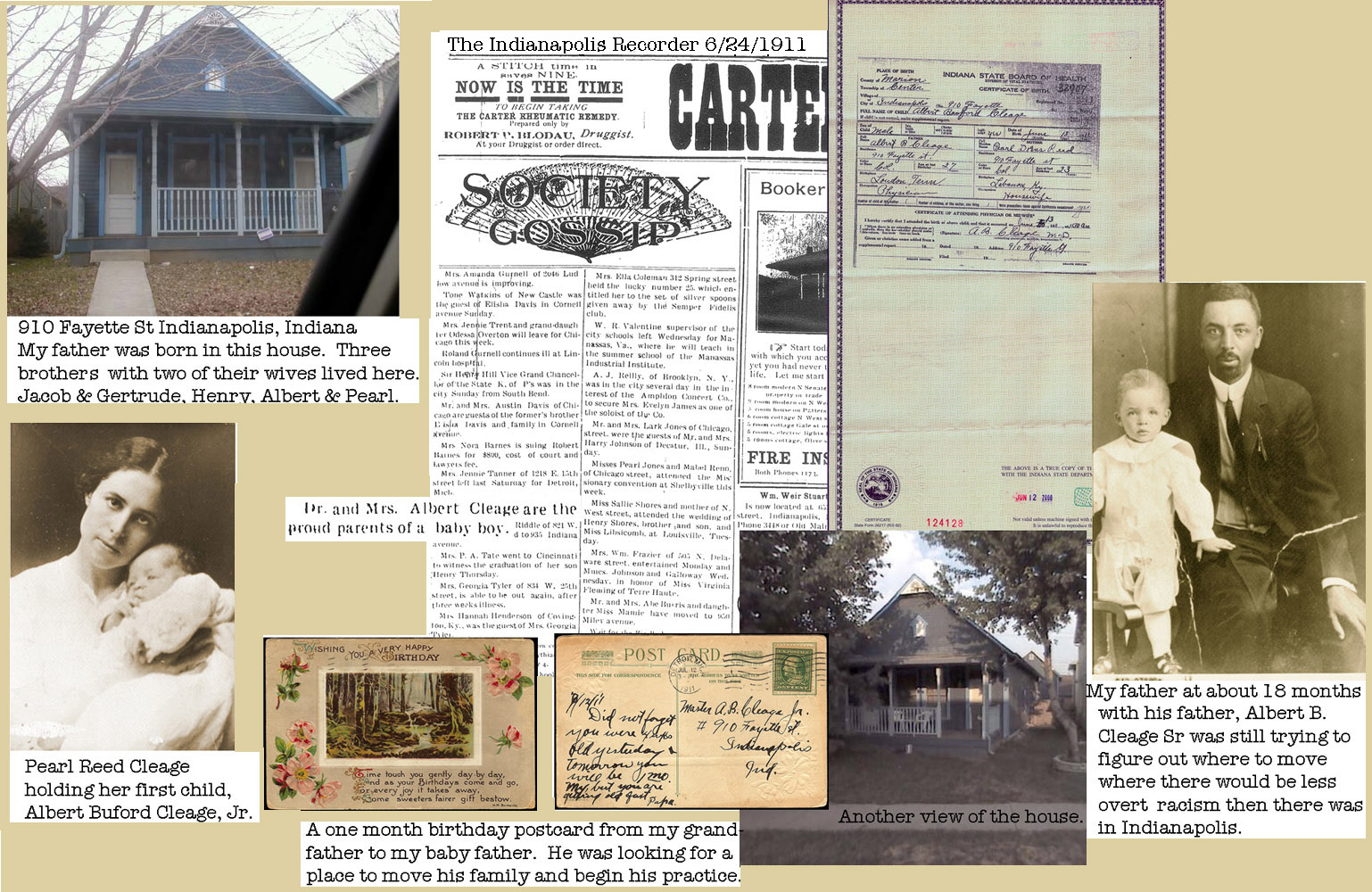
100th Anniversary of My Father’s Birth – June 13, 1911 – June 13, 2011
I don’t know where my grandparents were going in these photographs from the 1950s. They were traveling with a group. I know they started in Detroit and ended up back in Detroit. In between they seem to have gone to the sea shore, the far west and possibly places in between. For other train related (or not) posts, click Sepia Saturday.
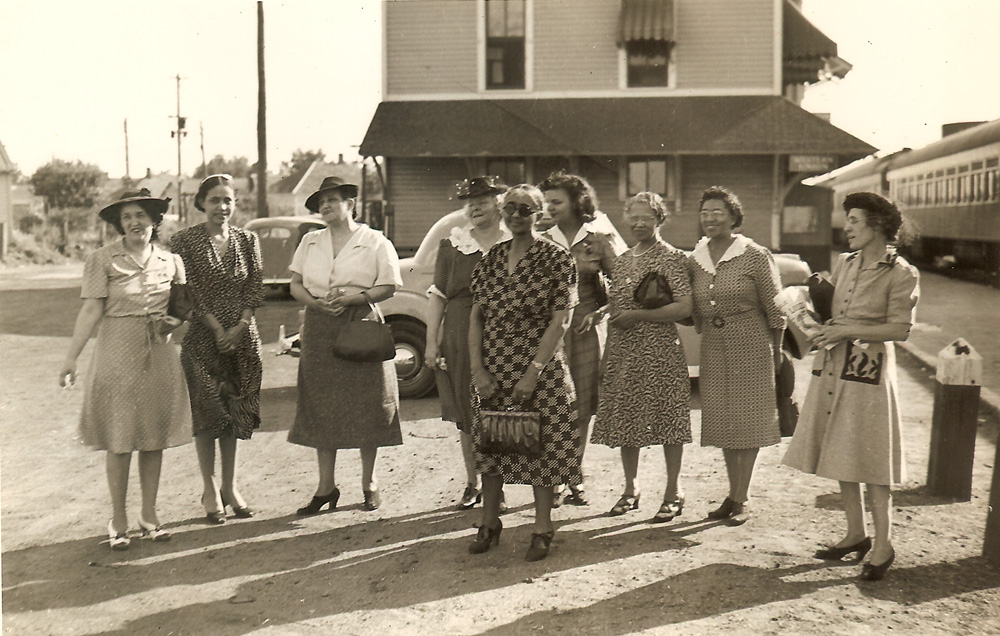
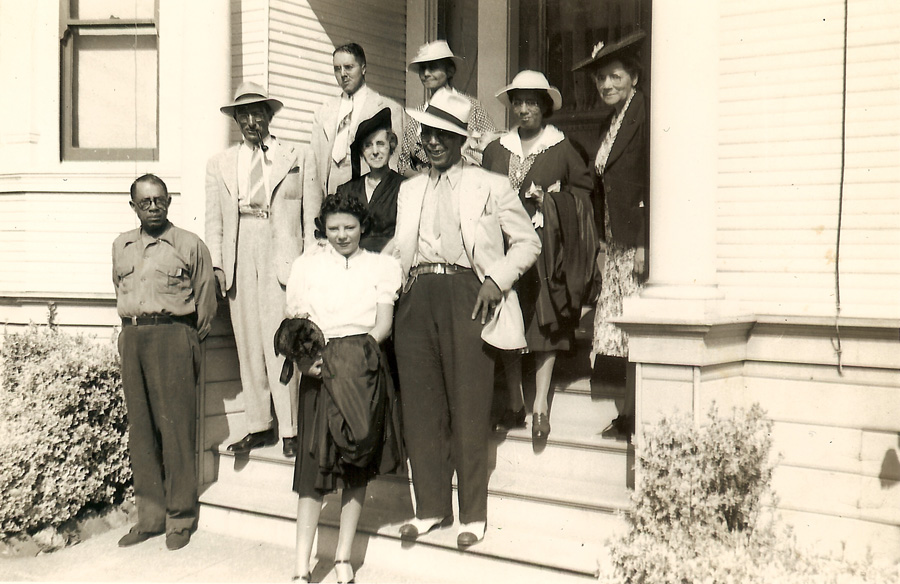
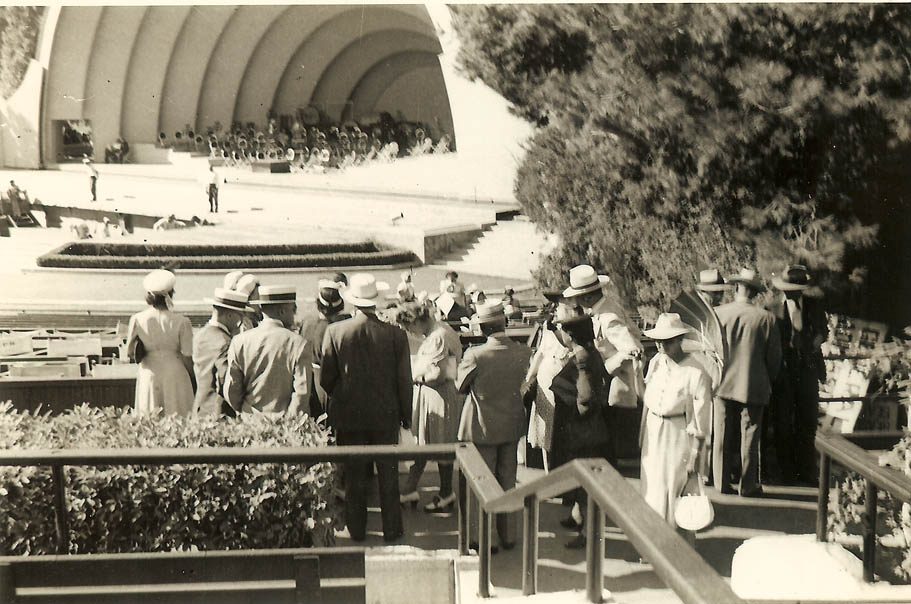
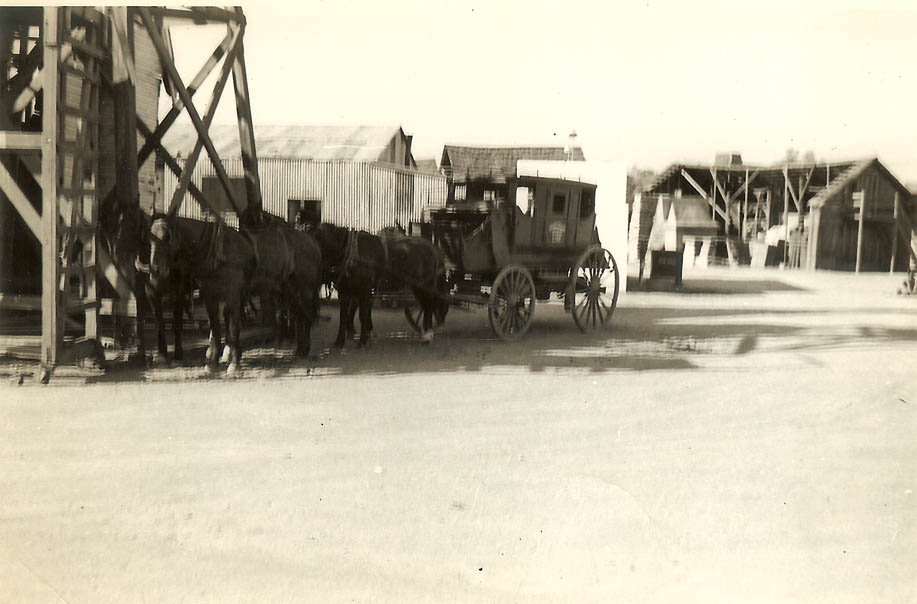
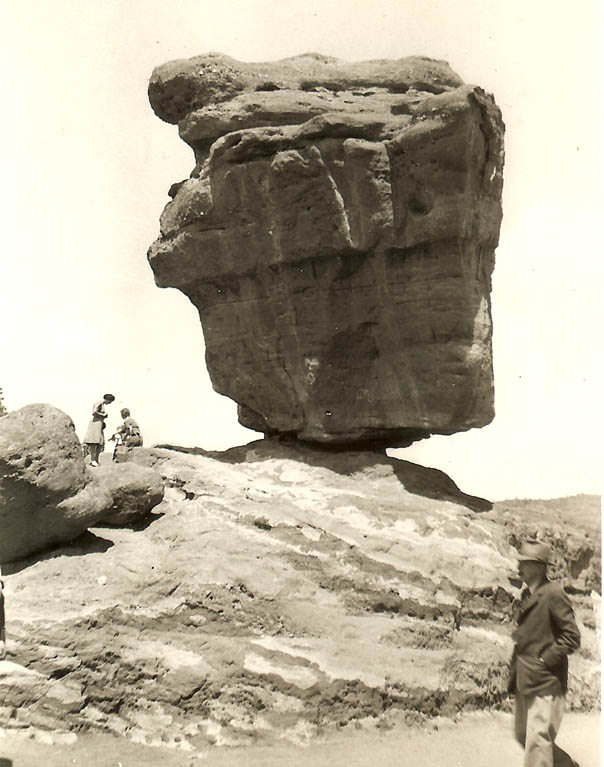
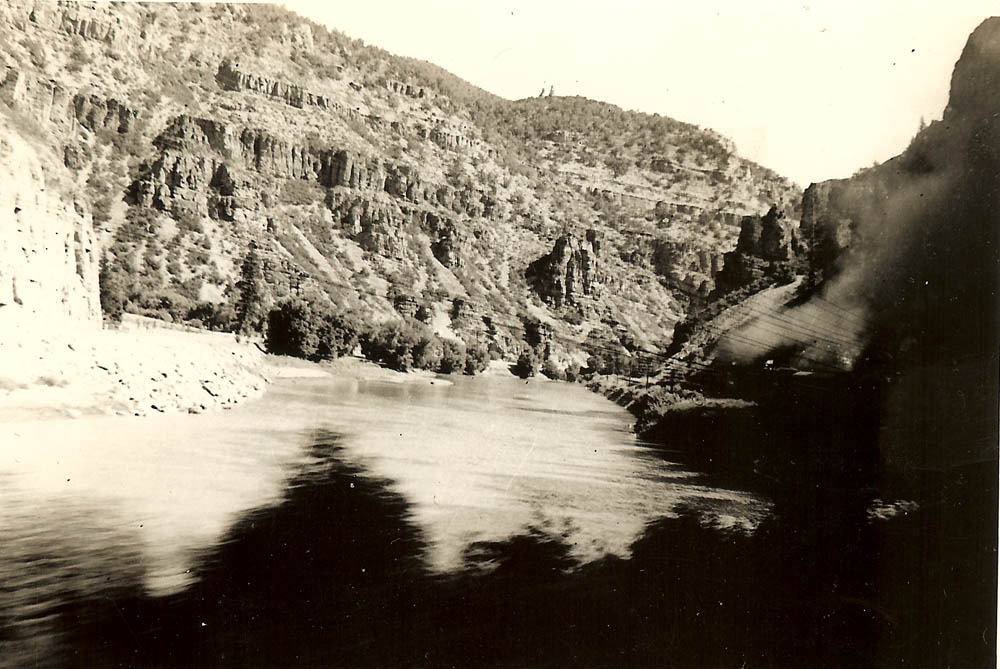
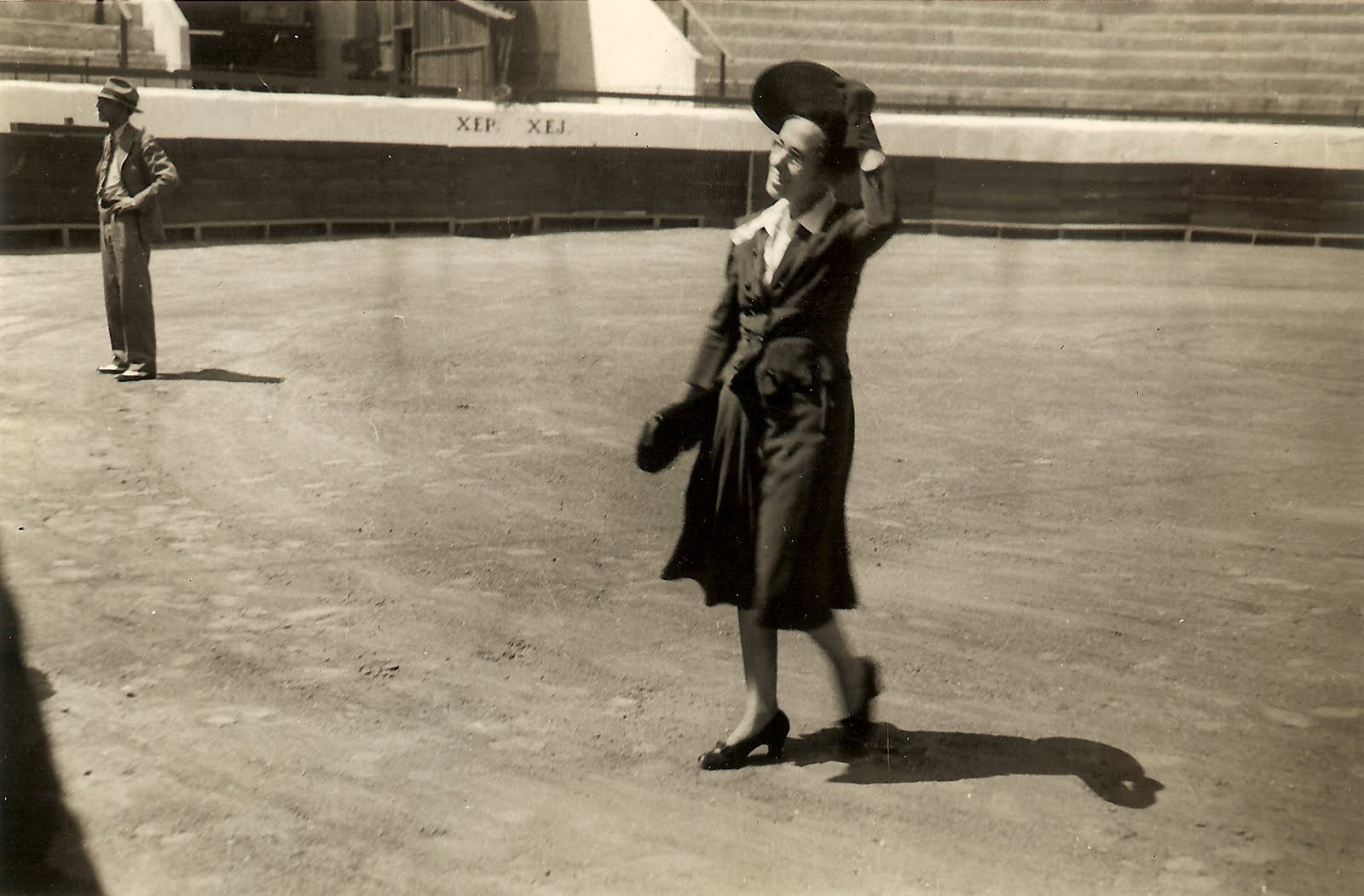
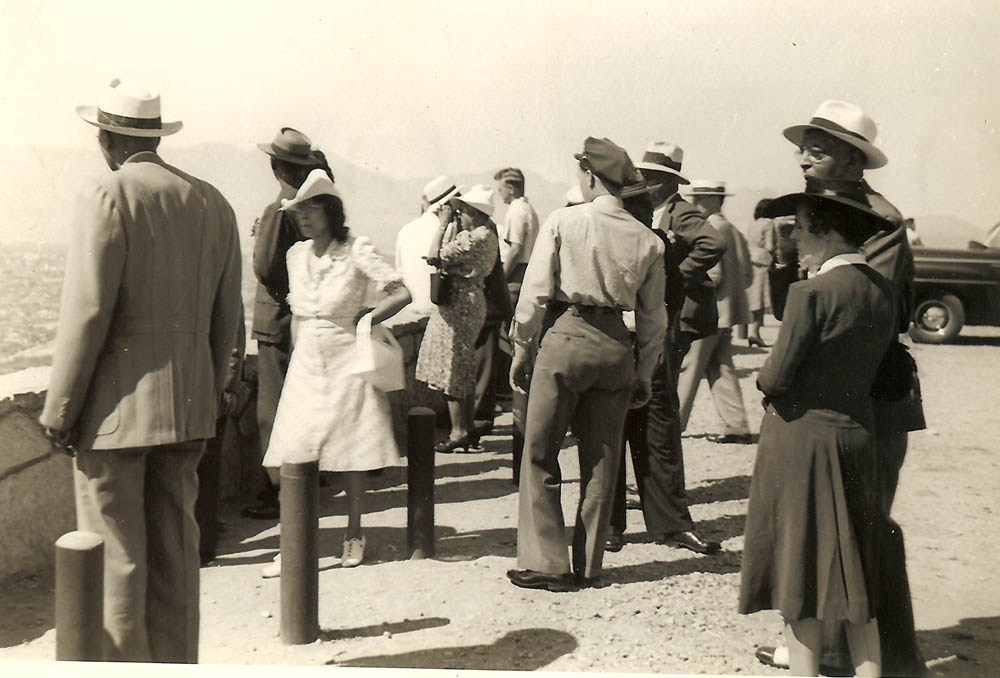

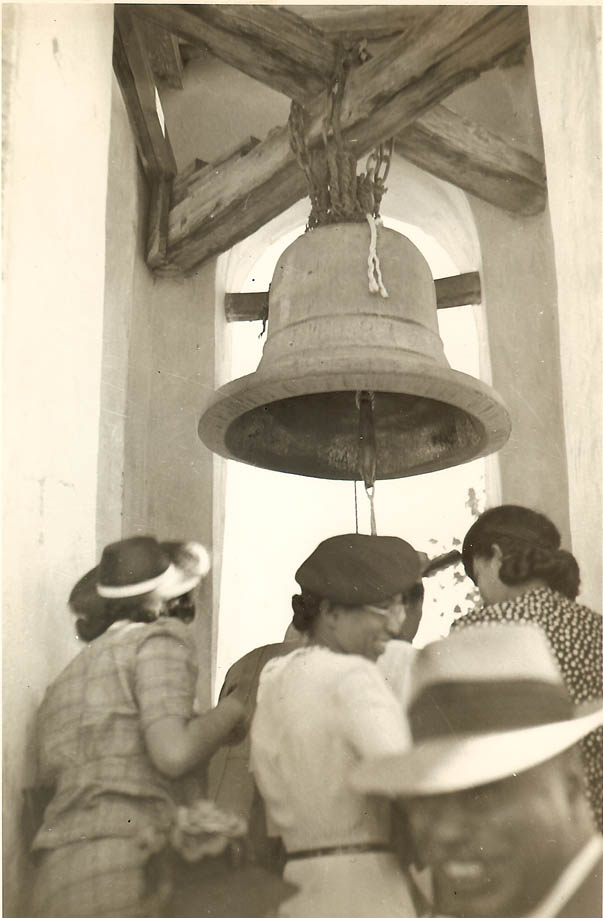
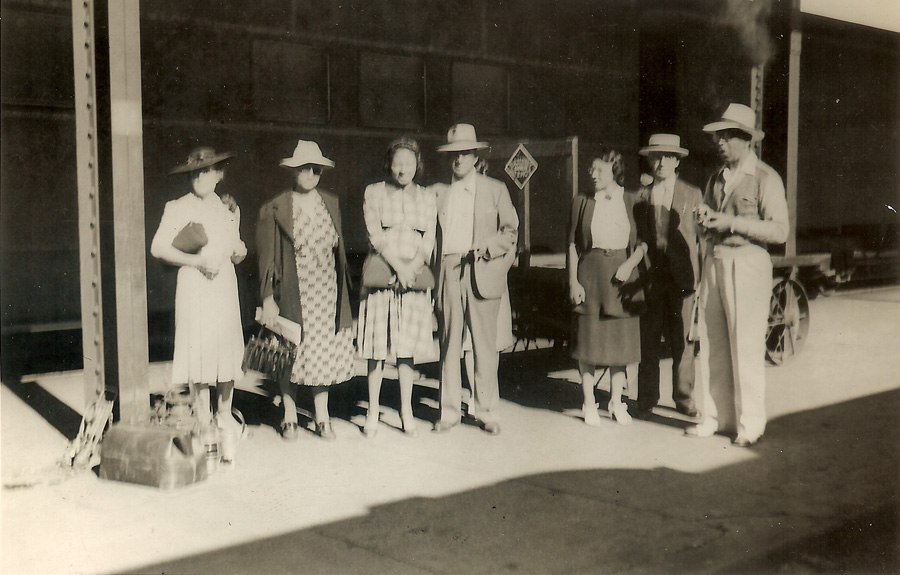 My grandparents on each end. Back on the train.
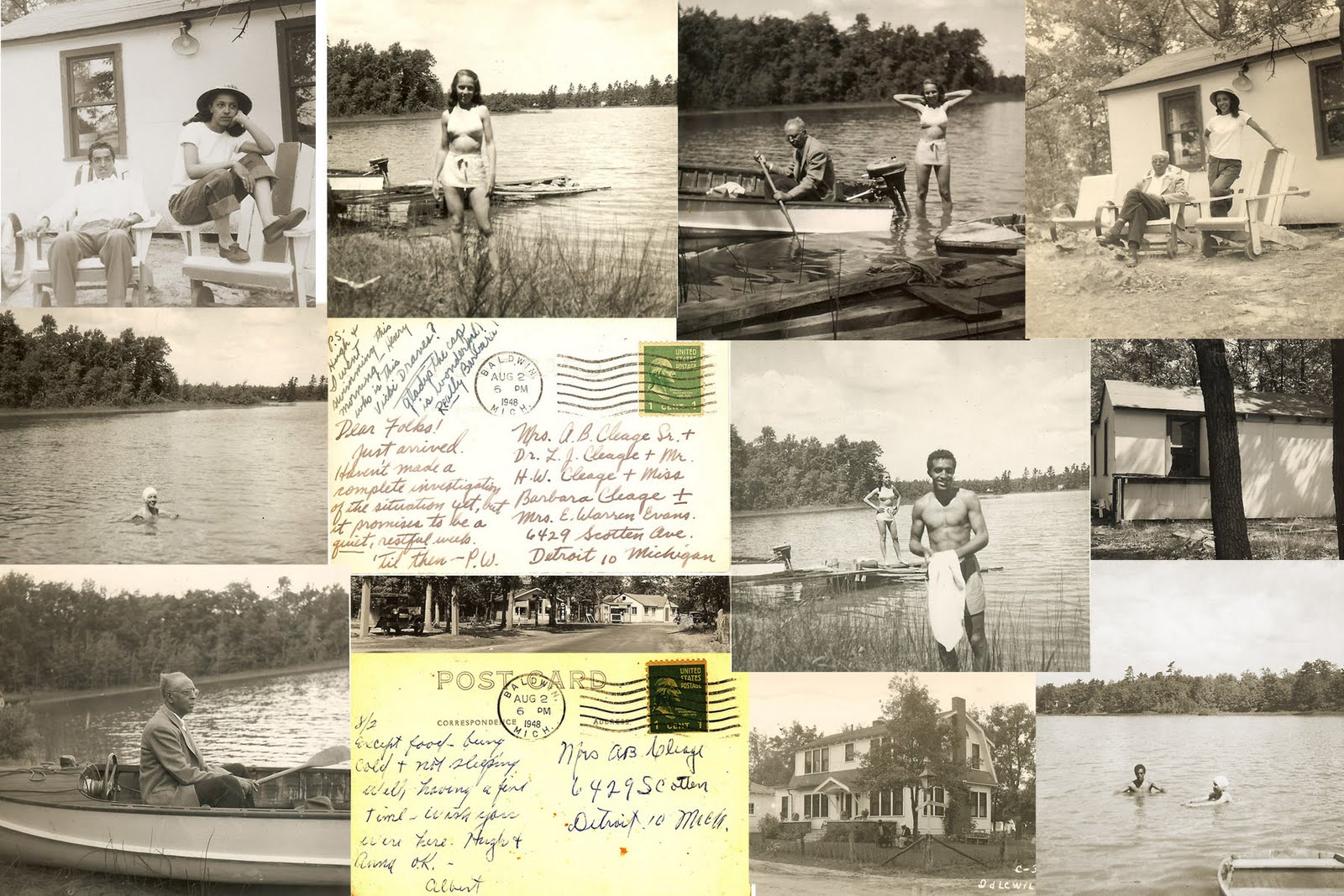
My Aunt Anna addressed her post card to everybody at the house.
Mrs. A.B. Cleage Sr. +Dr. L.J. Cleage + Mr. H.W. Cleage + Miss Barbara Cleage + Mrs. E. Warren Evans
6429 Scotten Ave.
Detroit 10 Michigan
Dear Folks!
Just arrived. Haven’t made a complete investigation of the situation yet, but it promises to be a quiet, restful week.
’til then – P.W.
P.S. Hugh and I went swimming this morning – Henry who is this Vicki Draves? Gladys the cap is wonderful! Really Barbara!
My grandfather addressed his card to his wife, Mrs. A.B. Cleage
8/2
Except food being cold and not sleeping well, having a fine time. wish you were here. Hugh and Anna o.k.
Albert
In 1948 the war was over and Hugh and Henry were back in Detroit after farming in Avoka as their Conscientious Objector service. Hugh was working at the Post Office and Henry was in law school at Wayne State. Gladys was home visiting while waiting for her oldest son, Warren, to be born at the end of December. No idea how or why my grandfather, Hugh and Anna had gone away alone to Louis’ cottage in Idlewild. Anna, who signed her letter P.W. for her nick name of Pee Wee, was the youngest of Albert and Pearl’s 7 children. She was 24 and at Wayne preparing to be a pharmacist.
Idlewild was organized by a group of white businessmen in 1912 as a resort for African Americans. This was during the time of segregation and it didn’t matter if you were in the north or the south you weren’t going to be able to buy a cottage on a lake if you were black. In it’s hey day, Idlewild had night clubs with acts by both the known and the unknown. There was horseback riding at Sarges and skating at the skating rink in the club house. Various clubs from Detroit, Chicago and Kansas City got together to party and socialize. The parties went on forever in the clubs and after hour places. This is what I heard from the old timers before I was an old timer. My experience as a summer person in Idlewild consisted of swimming in front of my Uncle Louis cottage, socializing with my sister and cousins and jumping over the cracks in the roller rink floor (while skating). In 1986 my husband, children and I moved to Idlewild. It was a very different experience to be a local. Lake county, where Idlewild is located is one of the poorest counties in Michigan. But this isn’t that story.
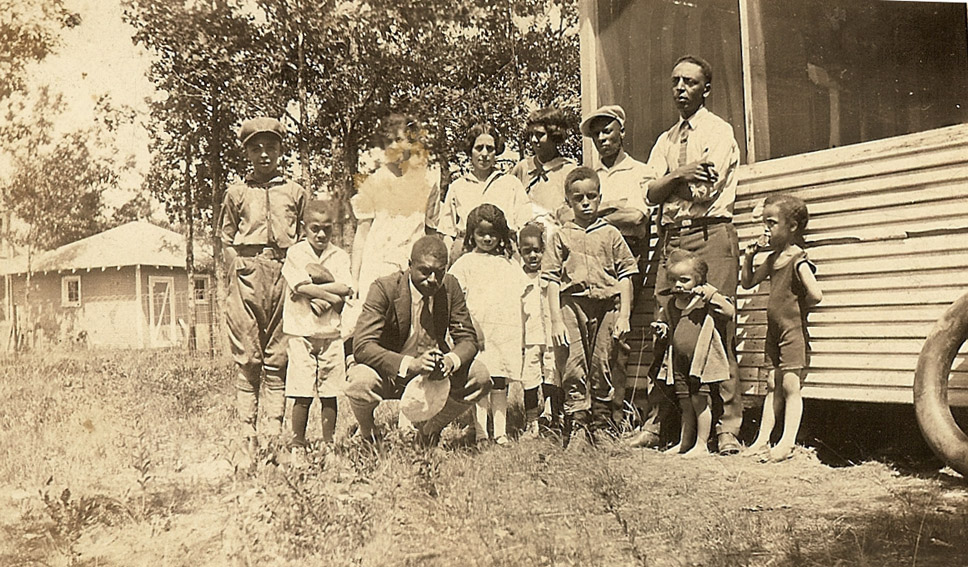 My family started coming up to Idlewild in the early 1920s. In the photo above my father is the tall one with the cap on the far left, cousin Helen Mullins next, then my grandmother Pearl Reed Cleage, two people I don’t know, my grandfather with his arms crossed on the right. Front row far right my aunt Barbara, the shorty in front of grandfather is Gladys, the kid with the bubble gum in his cheek or the chaw of tobacco or a toothache is my uncle Henry. I don’t know any of the rest. Where are Hugh and Anna (aka Pee Wee)? Napping? Waiting until 1948 to show up and steal the show?
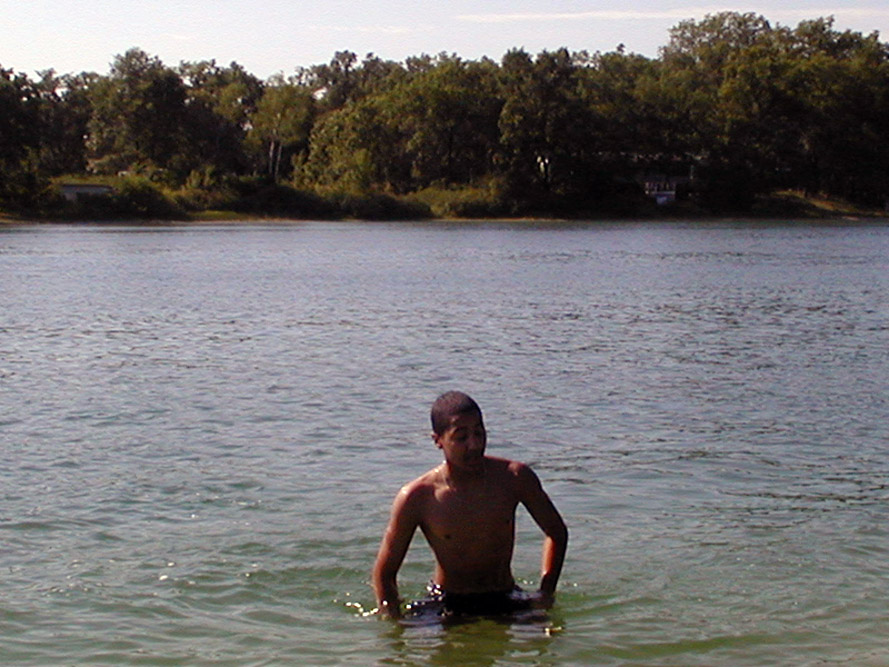
I miss Idlewild. We went up during the summers when I was growing up and lived there for 20 years, longer than I lived any place else in my whole life. When I think about home, I think of Idlewild. In the photo below my son Cabral is coming out of the lake after swimming across and back. It was about 2003.
This blog post was written for The 4th Annual Swimsuit Edition The Carnival of Genealogy, organized by Jasia at CreativeGene.
Obituary
September 28, 2005
BY CHRIS KUCHARSKI
FREE PRESS SPECIAL WRITER
Hugh C. Cleage
Printer, political activist
Former Detroit political activist Hugh C. Cleage, 87, died Thursday after a long battle with bladder cancer at his home in Anderson, S.C., where he had spent the last few years supervising the ranch and riding stables of his nephew, Dr. Ernest Martin.
One of the organizers of the Black Slate and a candidate for Michigan state representative in the 1964, he was a member of one of Detroit’s most politically influential families, which included his brother, the late Rev. Albert Cleage Jr., founder of the Shrine of the Black Madonna.
He was born in Detroit, graduated from Northwestern High School in 1936 and later earned his bachelor’s degree in agriculture from Michigan State University. As conscientious objectors to World War II, he and his brother Henry chose farming as an alternative to military service.
In the early 1960s, he became co-owner of the Illustrated News, which he ran with his brothers and other citizens. The paper was distributed free to black churches.
The Black Slate, which evolved from that publication, sought to educate Detroit’s black voters and urged them to support black candidates.
As a member of the Freedom Now Party, Mr. Cleage ran an unsuccessful campaign for state representative in the 23rd District. It was said to be the first all-black political party.
Mr. Cleage retired to Anderson in the early 1990s.
He is survived by sisters Barbara Martin, Gladys Evans and Anna Shreve, and many nieces and nephews.
A private memorial will be held Friday in South Carolina, followed by a public service at 3 p.m. Sunday at the Shrine of the Black Madonna, 7625 Linwood, Detroit. Memorial contributions may be made to the Salvation Army, 16130 Northland Drive, Southfield 48075.
For more posts about Hugh click Skating Champions, Elections Past, Hugh with Friends,
For more sepia saturday offerings click here.
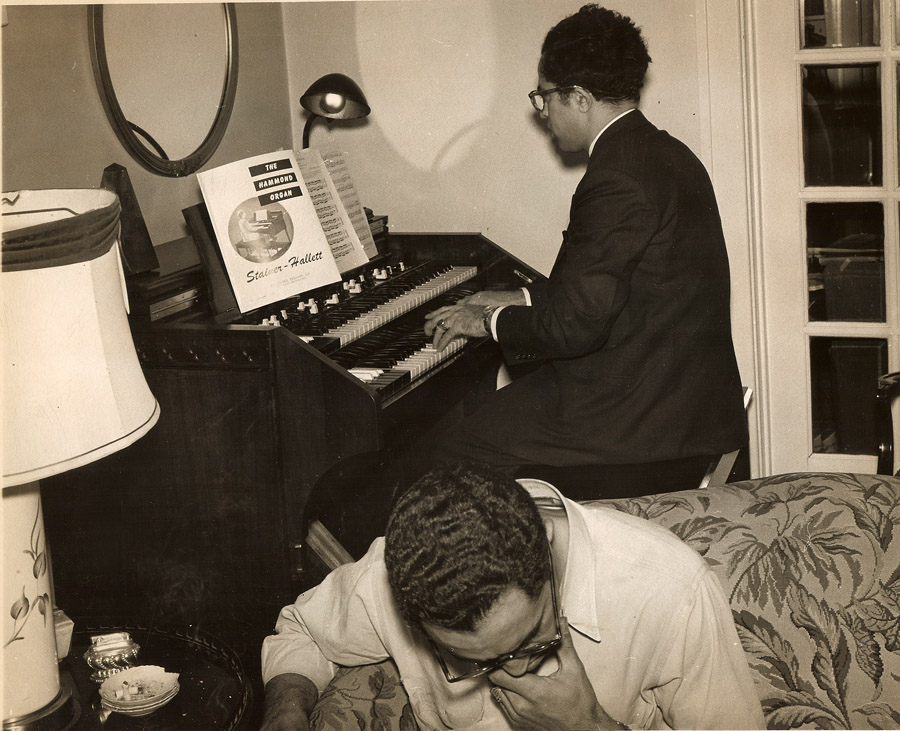
In keeping with today’s Sepia Saturday theme, I offer my uncle, Dr. Louis Cleage playing an organ. Louis had many talents and interests. He spoke fluent Spanish and visited Mexico frequently. He drove the fastest speed boat on Lake Idlewild in his day. He had a short wave radio in the basement and as WAFM talked to the world. He also was wrote “Smoke Rings” for the Illustrated News during the early 1960s. He had a wicked sense of humor and a laugh unlike any other I have heard. And I’m sure I’m leaving out half of it.
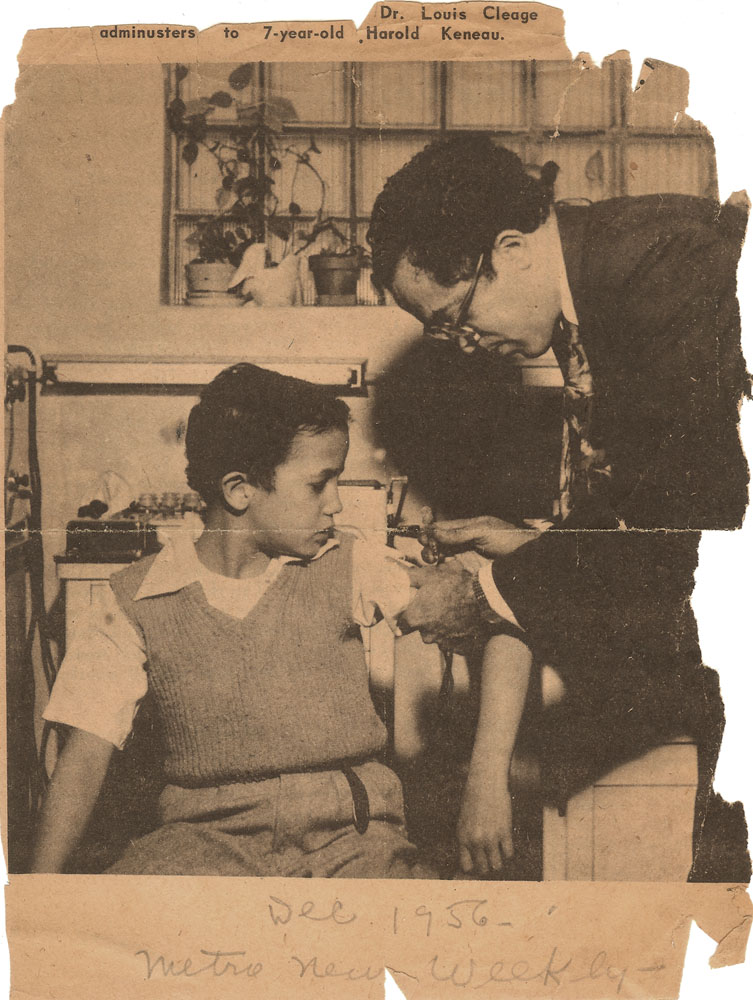
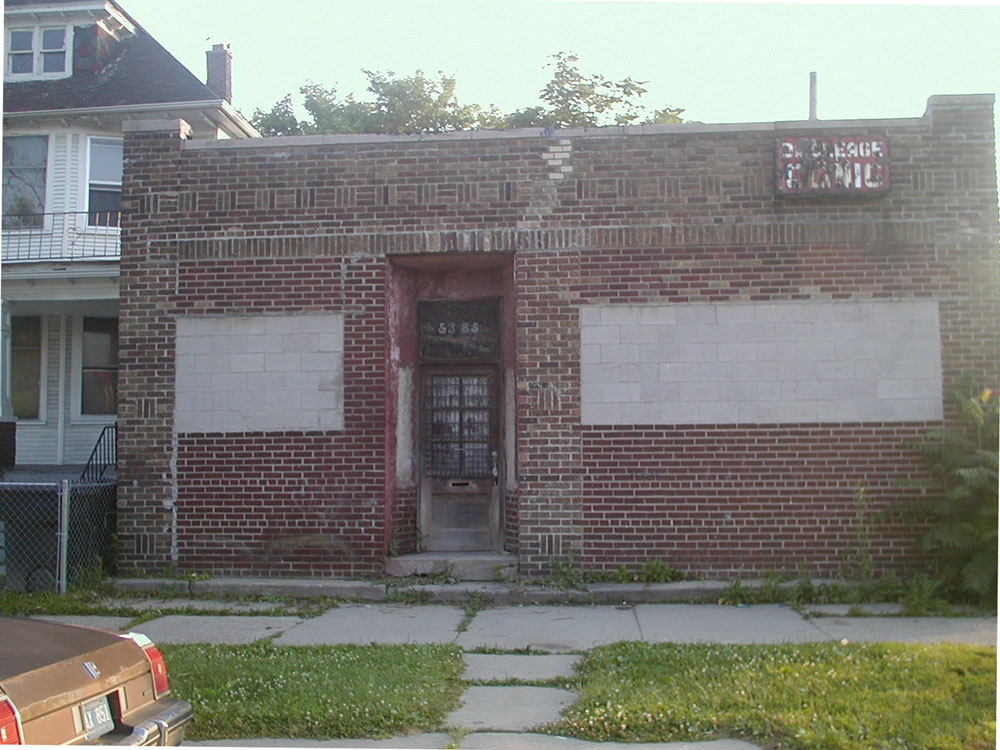
Louis began practicing medicine with his father at the Cleage Clinic on Lovett in the 1940s and continued practicing there until 1974. He closed the doors and walked away after being held up numerous times for prescription drugs.
This organ also featured in a popular Sepia Saturday offering of my mother “My Mother – 1952“.
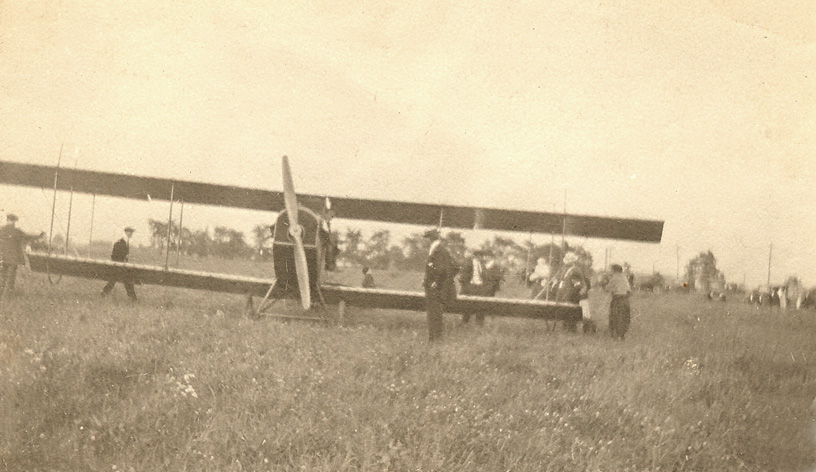
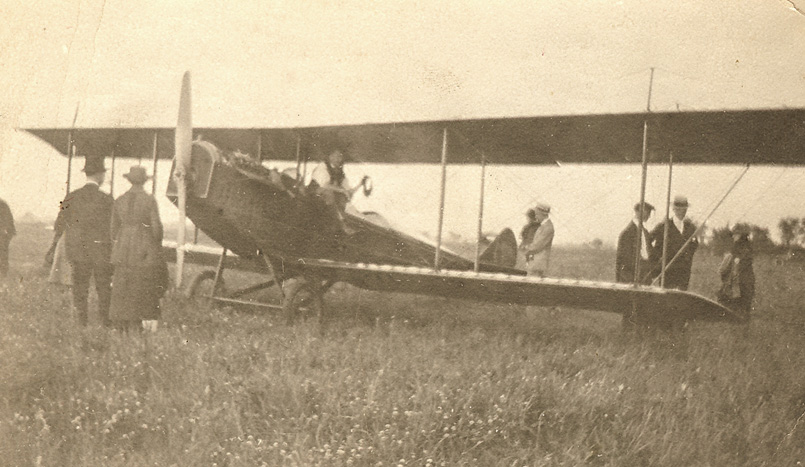
This week’s Sepia Saturday features an old airplane. I have two photographs of a small, old plane in my Cleage collection. Unfortunately there is nothing written on the back of either photo and I can’t recognize anybody in the photo for sure, although the baby in the top photo couldbe my Aunt Barbara. I don’t know where the photo was taken or when. Here is a photograph of my family standing in a field in Detroit, 1920.
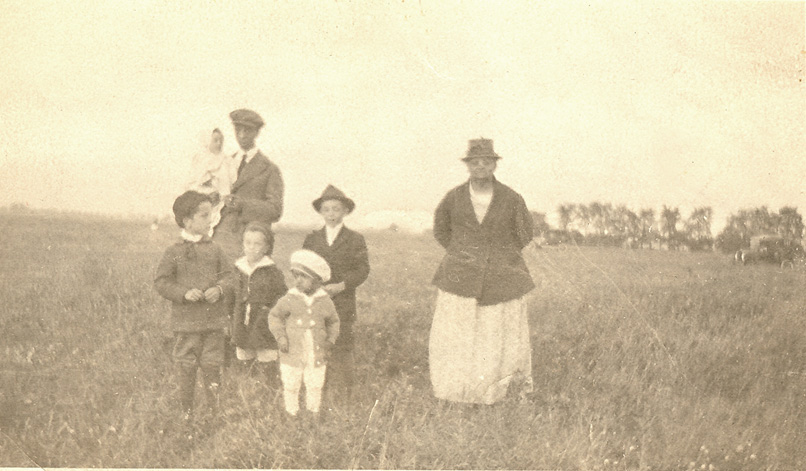
My grandfather Albert Cleage holding daughter Barbara. Next to him my father, Albert Jr. In front of him, Henry. In front of all Louis and Hugh. Standing alone to the right is my great grandmother, Celia Rice Cleage Sherman. And I just noticed the background looks similar…car, trees, etc.
For more fabulous photos of old airplanes and other fascinating Sepia Saturday subjects click here.
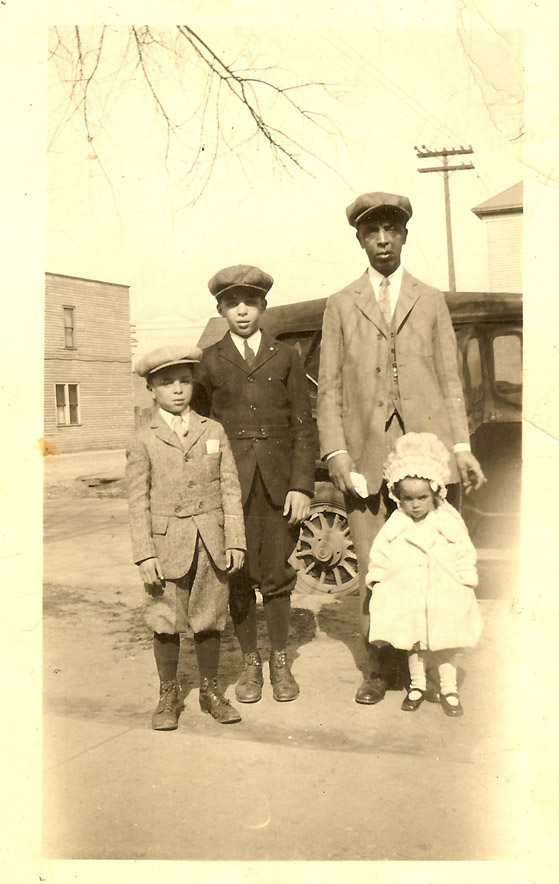


Memories of Easter – dying eggs in my Graham grandparent’s basement on Easter Saturday with my sister and cousins. Easter baskets with jelly beans and chocolate eggs and one big chocolate Easter bunny. Tiny fuzzy chicks. The year someone gave us 4 or 5 real chicks that died one by one in their box in the basement. Sugar eggs decorated with wavy blue, pink and yellow icing and a little scene inside. Reading the book “The Country Bunny and the Little Gold Shoes”, new clothes, going to church. Going by the Grandmother Cleage’s after church. What I don’t remember is gathering for a big Easter meal like we did for Thanksgiving and Christmas. I wonder why?
I have some Easter hats here and although you can’t see them clearly, my sister and I are holding some stuffed bunnies. To see other Easter or bunny Sepia Saturday offerings click here.
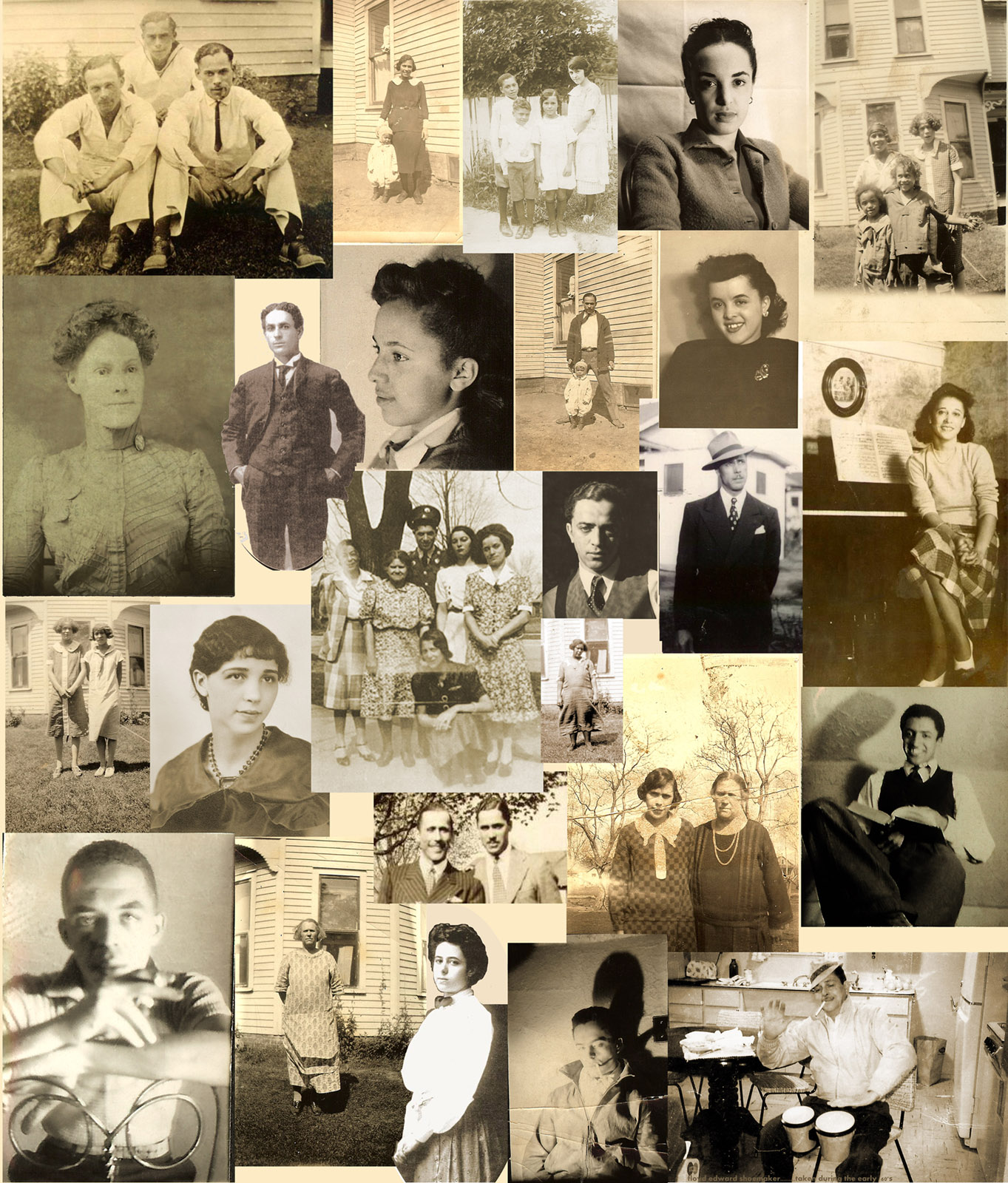
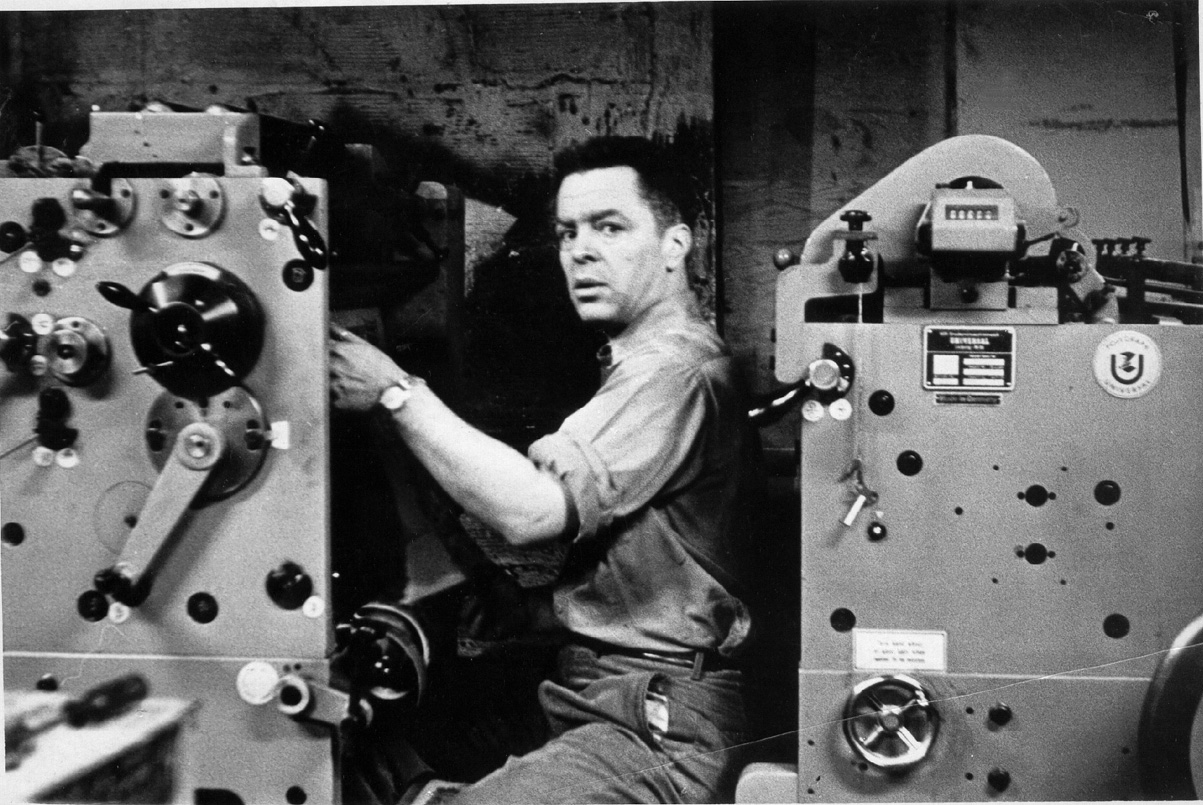 Henry Cleage with the press about 1965
This works for this weeks Sepia Saturday – “Man and Machine”. For other Sepia Saturday posts click here.
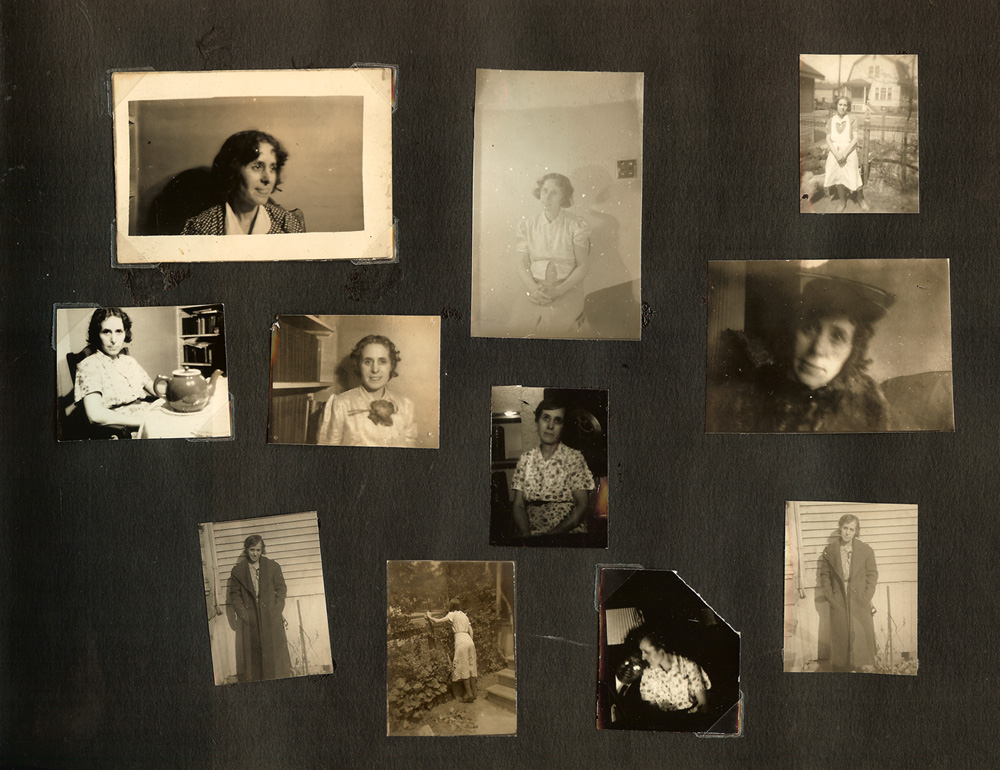
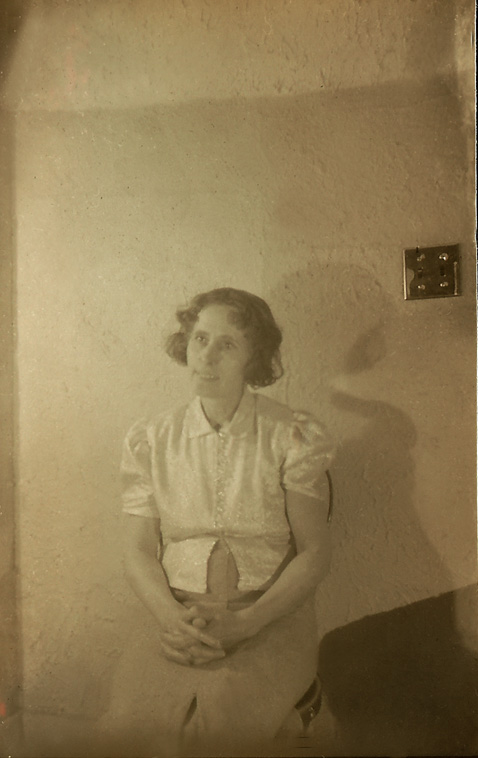
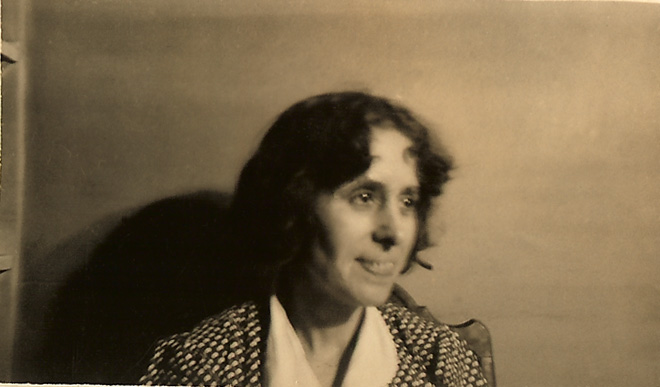
Today is my Grandmother, Pearl Doris Reed Cleage’s, birthday. If she were alive today she would be turning 125 years old. In her honor I have posted some photographs of her from the little black album with the little photos taken by her sons around 1938.
She was born in Lebanon, KY in 1886 and moved with her family to Indianapolis, IN when she was about six. She met her husband, Albert Cleage, at Witherspoon Presbyterian Church where she sang in the choir. They married in 1910 after he received his Physician’s License. Their first child, my father, was born in 1911. Pearl was warned never to have more children because it would probably kill her. They moved to Michigan soon after and by 1915 had settled in Detroit. My grandmother eventually bore and raised seven children. She died at age 96 in 1987.
For more posts about Pearl Cleage click the following links: Grandmother holding my father in 1911 and My Grandmother’s Family Tree and Indianapolis Research and Two Newspaper Articles 1908 and 1950. For more Sepia Saturday photographs CLICK.