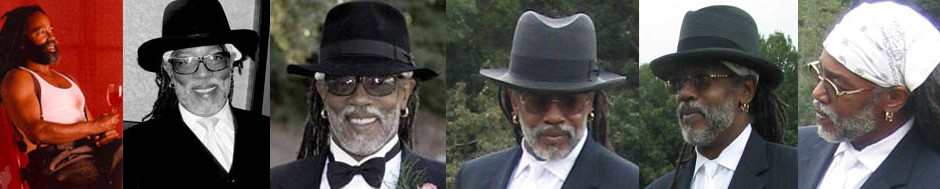
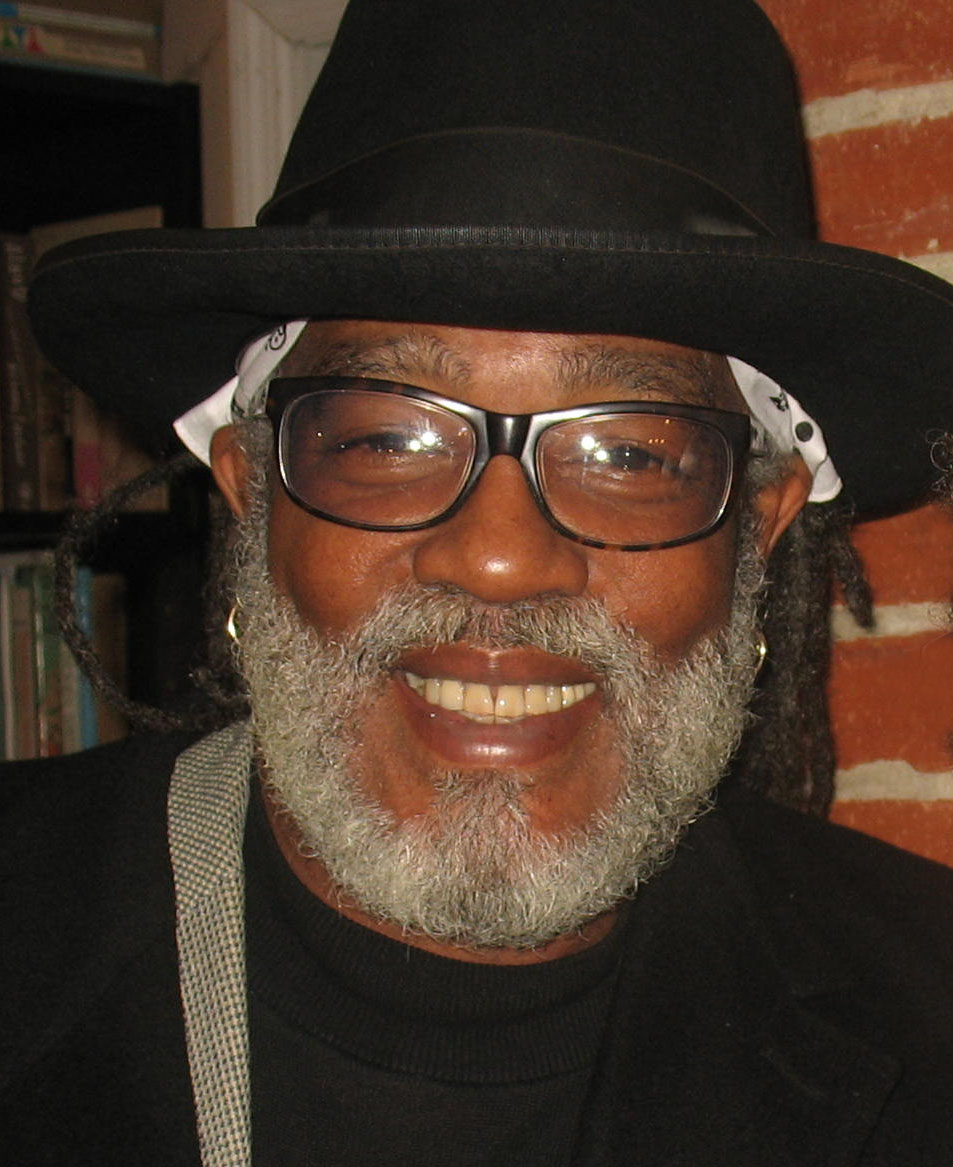
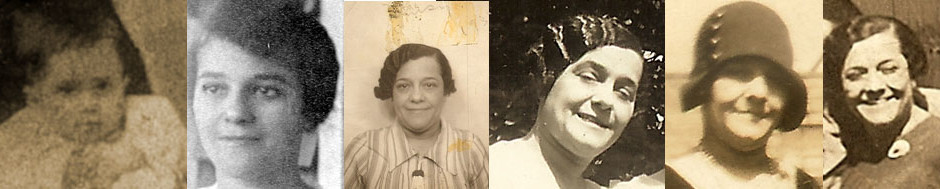
Today is my 26th and final post for the April A-Z Challenge. I am going to post a bit about my brother-in-law, Zaron Burnett aka Zeke. He was a conscious objector during the War in Vietnam, executive aide to the chairman of the Fulton County Commission and lived in a car while writing his novel, The Carthaginian Honor Society. He is a performance artist and the creator of Club Zebra, a performance installation which he describes as “a floating speakeasy and cabaret and the international center of bohemian negritude”. He is an analytical thinker who was dubbed “the merciless” by my uncle Henry, who said upon meeting zeke: “He’s handsome, in a merciless sort of way.” He is co-author, with his wife, Pearl Cleage, of the poem “We Speak Your Names,” commissioned by Oprah Winfrey for her Legends Weekend in 2005. He’s a golfer, a handy man, a protector of those who need protection and he grows the most delicious tomatoes and peppers. Without further ado I give you, ZEKE!
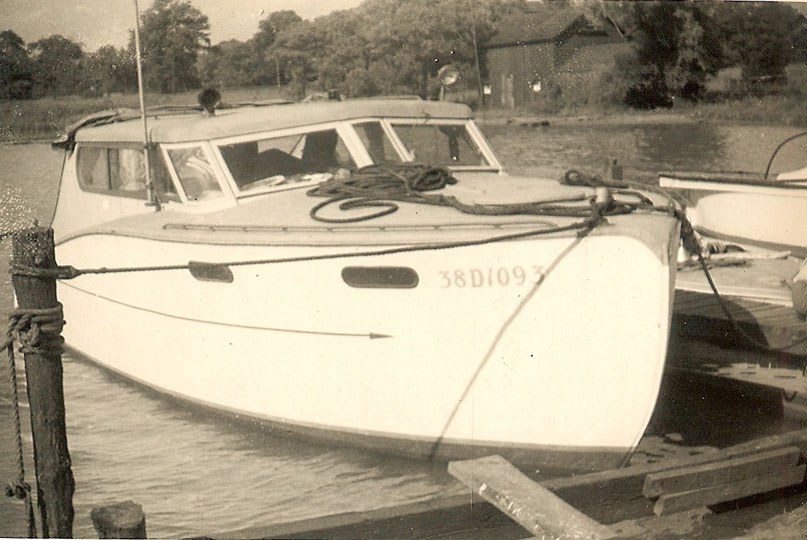
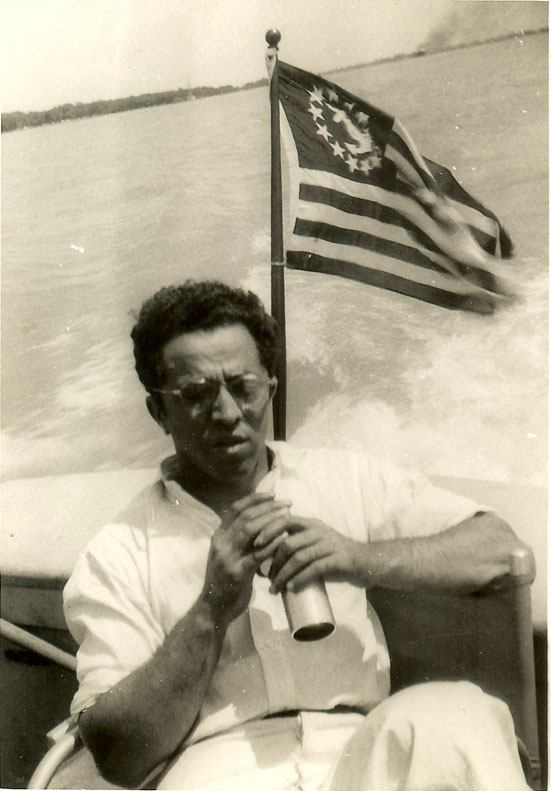
This is my 25th post for the April A-Z Challenge. Today I have a photo of my Uncle Louis Cleage’s yacht. He seems to be appearing a lot, here at the end of the alphabet. Somewhere in my collection, I remembered a comment of my father’s, something like, “Louis joined the capitalist class” when he got the yacht. I thought it was in the collection of letters he wrote home but after reading through them several times without finding it, I think it might have been in the old, crumpling, photo album. I can’t find that either, but either way, that puts the purchase of the yacht during the late 1940s, after the end of WW2. I was only on the boat once and I got sea sick. I also got train sick and bus sick.
Louis Cleage on board.
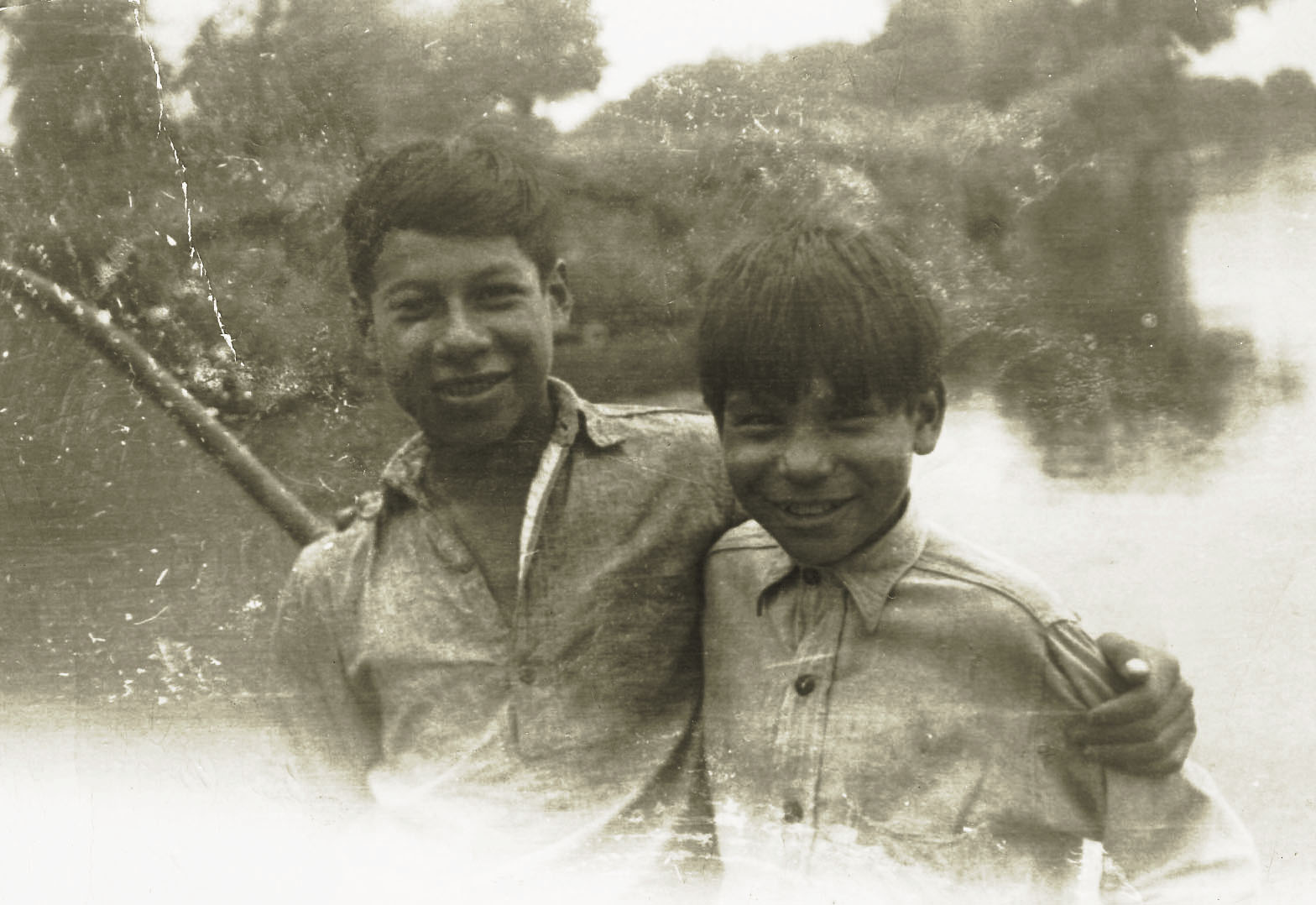
Louis must have sold the boat in the early 1950s because I don’t remember it later. My uncles used to talk about going over to Walpole Island, unceeded territory at the mouth of the St. Clair River, and sitting around talking with the First Nation People. There was mention of campfires and my Uncle Hugh almost staying or being left. I remember a boy in my 6th grade art class who was from Walpole Island. His name was Frank Shipman and he opened a jar of glue for me when no one else could get the top off. Later he moved to Wabash street. I didn’t think it compared with an island between two rivers.
Two boys from Walpole Island. Photograph from the Cleage photo collection.
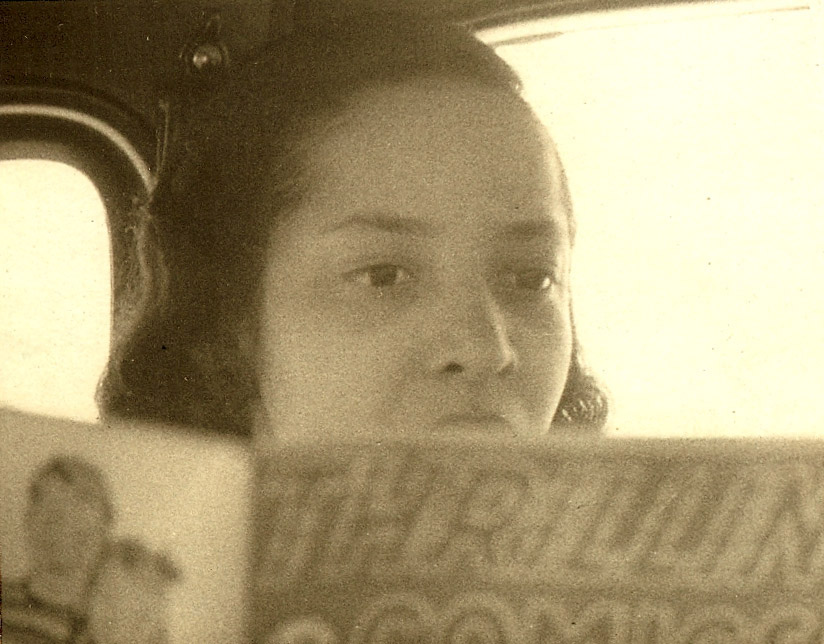
This photo comes from my Cleage stash and features Alice, my Uncle Henry’s first wife, reading a Thrilling Comic. How did she happened to be reading it? Did she enjoy comics? Love thrillers? Was she posing (or posed) for the photo? Was the comic book laying around because that is where Henry got his short story ideas? Judging by her eyes, she does look mildly thrilled.
Thrilling Comics
“Thrilling Comics was one of the longest runs the publisher had. It ran for eighty issues. The issues themselves featured many different kinds of comic stories like the standard superhero story as well as westerns, detective, stories, comedies, comic strips, short stories and many more.” The series started in 1940 and ran through 1951.To see all the covers for the 80 issues, click Thrilling Comics.
Click to see more thrilling or newsy Sepia Saturday posts.
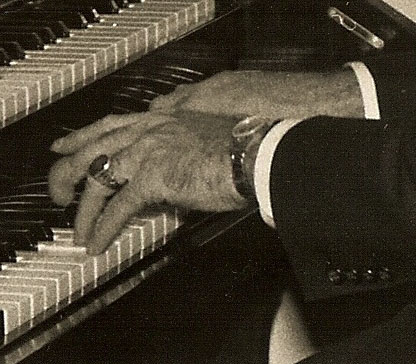
This is my 24th post for the April A-Z Challenge. My Uncle Louis Cleage was a doctor. He had a puffy finger on his left hand. It was the result of an accident with an X-ray machine. Skin grafts to repair the damage gave it the puffy look.
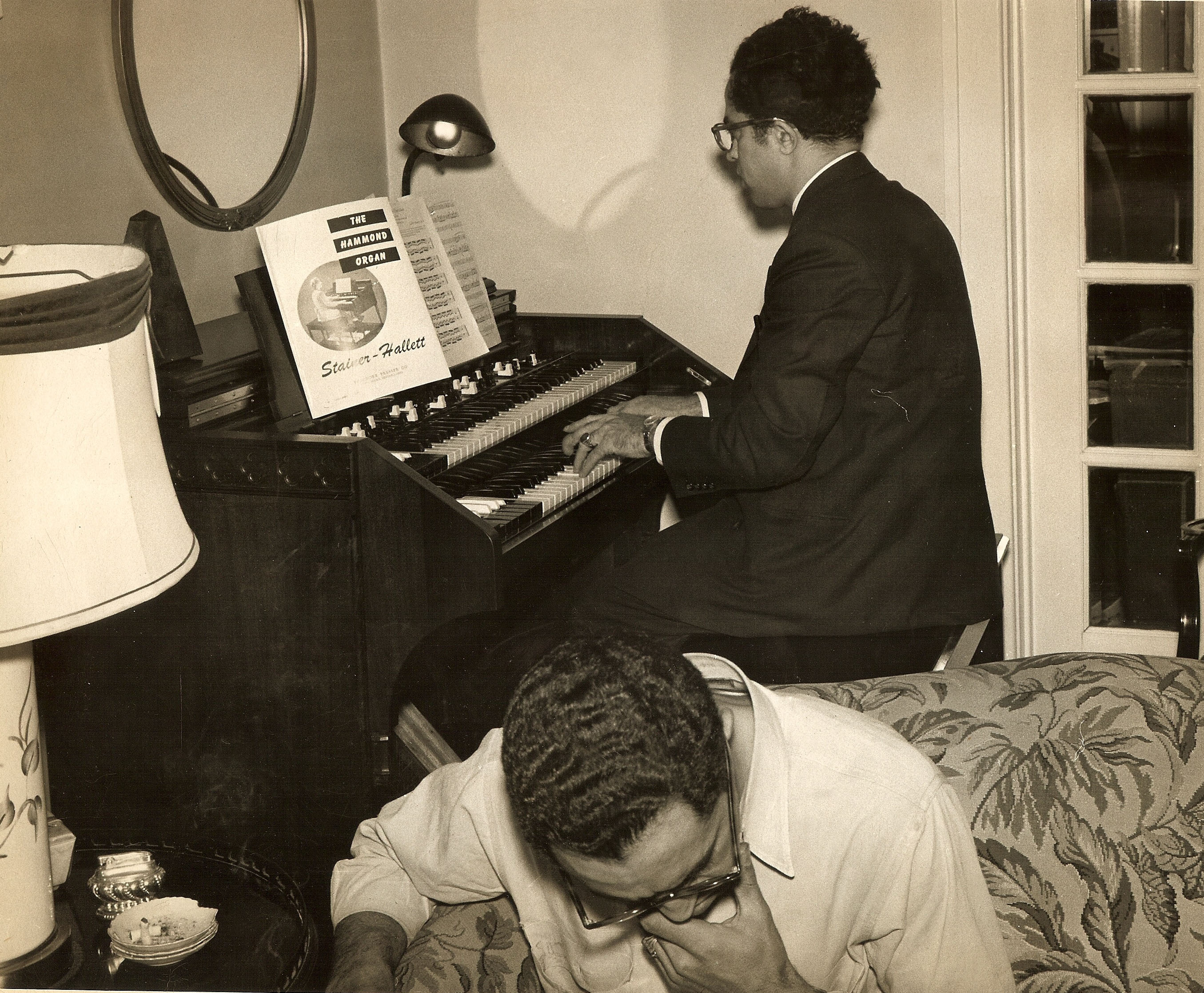
My sister and I called it the “puff gunger finger”. You can see the finger on his hand as he plays the organ here. I have enlarged it below.
Louis playing the organ while Hugh reads the paper. 2270 Atkinson, Detroit.
From a letter written home from Los Angeles by my father in 1944.
P.S. Is anybody sick? I dreamed some sort of nightmare this afternoon about somebody being sick … seemed like Louis had something wrong with his hand or something … probably just something I ate.
My Aunt Gladys assured us that Louis had injured his hand years before this.
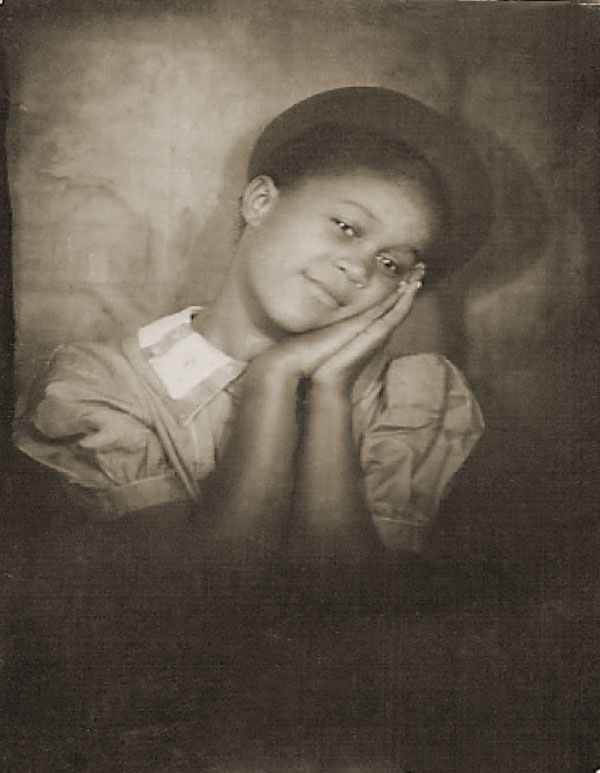
This is my 23rd post for the April A-Z Challenge. Today I’m going to share a photograph of my husband’s Aunt Wilverlyn. This year she will be celebrating her 88th birthday at the 43rd Annual Chester and Theola Williams Family Reunion. This is a rare childhood photo of someone in my husband’s family. Wilverlyn was born June 21, 1925 in Dermott, Arkansas. She was the youngest of the seven children of Arthur Chester and Annie Willie (Butler) Williams. As an adult she moved to Chicago, Illinois, where she worked in the Post Office until retirement and raised her children. She still lives in Chicago.
This is my 22nd post for the April A-Z Challenge. I have been writing about my grandfather, Mershell C. Graham’s possible family several times during this challenge. At times it is a very confusing search. I have put the various documents into a collage, which you can enlarge by clicking on it, to see if that would make it easier to understand. What do you think?
The red arrows point to information that hints at a connection between my grandfather and Annie and Abraham Graham.
The Search – Step by Step
I found a little New Testament in my grandfather, Mershell C. Graham’s things.
I wondered who the Jacob Graham that the Bible was dedicated to and how he was related to my grandfather.
Since I had Jacobs birth date I looked for him in the 1900 US Census in Elmore County, Alabama.
I found him. Although there were two other children and an adult, none of them were my grandfather or the people he named as his parents. I thought I remembered a sister named Annie.
I sent for Jacob’s death certificate. Unfortunately it did not name his parents.
I wondered if perhaps the other boy in the household in 1900, name of Abraham, was, perhaps, my grandfather identified by another name. I searched for Abraham and sent for his death certificate. His descripiton on the WW1 and WW2 draft registration forms matched my grandfathers. The names of his parents on all documents was the same as those given by my grandfather. He wasn’t my grandfather, I soon found out, because he had a complete life of his own.
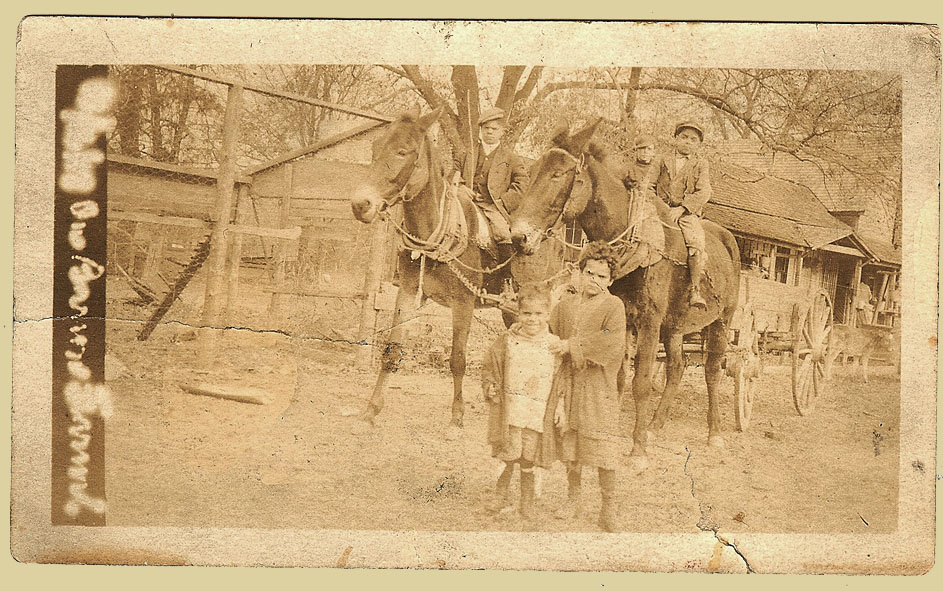
I decided to follow the girl in the 1900 household. She had 4 children and the youngest was named Michele, which was my grandfather’s original name. I found she lived on the farm as a servant of the woman who was the daughter of the people I thought may have been the slave holders of my grandfather’s mother, Mary Jackson. I found a photograph of some children taken on the Oscar Barron farm ( husband of woman I mentioned above, from slave holding family.)
Although I found much interesting information and some things that seem to tie this household to my grandfather, I have no proof that they are related. They never appear in documentation in the same place.
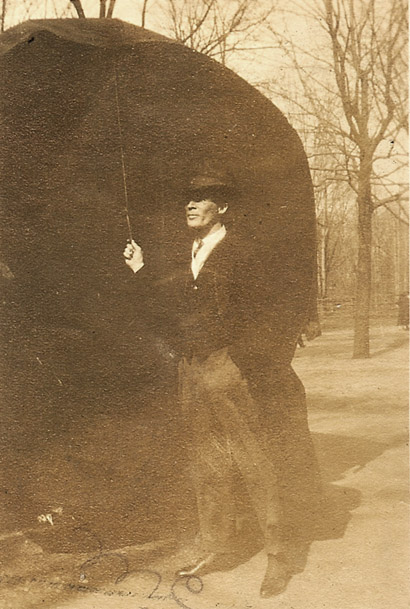
This is my 21st post for the April A-Z Challenge. Featuring a photograph from 1918 of my grandfather Mershell C. Graham with a huge umbrella. I used this photo in 2011 for a Sepia Saturday post. There are several others that go with it. If you want to see them go here – Poppy Was Cool. I think that for my next A-Z challenge I will use all family photographs that go with the letter, minus much writing. This is really wearing me out! Hard to believe there are only 5 left.
This is my 20th post for the April A-Z Challenge. There are quite a few teachers in my family – my mother, Doris Graham Cleage, taught Social Studies and then reading on the elementary level. My father spent his life teaching and preaching. My Aunt Gladys Cleage Evans taught art on the elementary and junior high level. Two of my daughters are teachers. One of my sons is an educational paraprofessional. And there are more than a few teachers amongst the cousins. How could I almost forget my sister Pearl, my Uncle Henry and cousin Warren who all taught college classes.
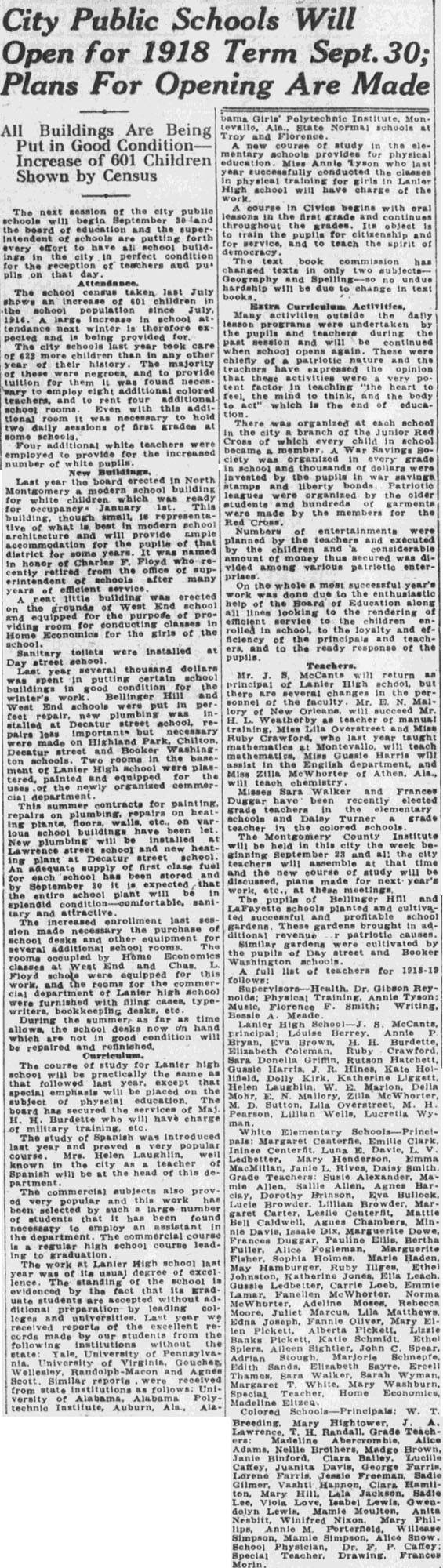
Today I’m featuring my Great Aunt Daisy Turner who was an elementary school teacher in Montgomery Alabama in 1918 and 1919. In 1920 she was a clerk in her Uncle Victor Tulane’s store. There is a transcribed article about that school year below.
City Public Schools Will Open for 1918 Term Sept. 30; Plans for Opening Are Made
Montgomery Advertiser Thursday, August 15, 1918
All Buildings Are Being Put in Good Condition- Increase of 601 Children Shown by Census
The next session of the city public schools will begin September 30 and the board of education and the superintendent of schools are putting forth every effort to have all school buildings in the city in perfect condition for the reception of teachers and pupils on that day.
Attendance
the school census taken last July shows an increase of 401 children in the school population since July, 1916. A large increase in school attendance next winter is therefore expected and is being provided for.
The city schools last year took care of 622 more children than in any other year of their history. The majority of these were negroes (sic), and to provide for tuition for them it was found necessary to employ eight additional colored teachers and to rent four additional schools rooms. Even with this additional room it was necessary to hold two daily sessions of first grades at some schools.
Four additional white teachers were employed to provide for the increased number of white pupils.
New Buildings
Last year the board erected in North Montgomery a modern school building for white children which was ready for occupancy January 1st. This building, though small, is representative of what is best in modern school architecture and will provide ample accommodation for the pupils of that district for some years. It was named in honor of Charles F. Floyd who recently retired from the office of superintendent of schools after many years of efficient service.
A neat little building was erected on the grounds of West End school and equipped for the purpose of providing room for conducting classes in Home Economics for the girls of the school.
Sanitary toilets were installed at Day street school.
Last year several thousand dollars was spent in putting certain school buildings in good condition for the winter’s work. Bellinger Hill and West End schools were put in perfect repair, new plumbing was installed at Decatur street school, repairs less important but necessary were made on Highland Park, Chilton, Decatur street and Booker Washington schools. Two rooms in the basement of Lanier High school were plastered, painted and equipped for the uses of the newly organized commercial department.
This summer contracts for painting, repairs on plumbing, repairs on heating plants, floors, walls, etc., on various school buildings have been let. New plumbing will be installed at Lawrence street school and new heating plant at Decatur street school. An adequate supply of first class fuel for each school has been stored and by September 20 it is expected that the entire school plant will be in splendid condition – comfortable, sanitary and attractive.
The increased enrollment last session made necessary the purchase of school desks and other equipment for several additional school rooms. The rooms occupied by Home Economics classes at West End and Chas. L. Floyd schools were equipped for this work and the rooms for the commercial department of Lanier high school were furnished with filing cases, typewriters, bookkeeping, desks, etc.
During the summer, as far as time allows, the school desks now on hand which are not in good condition will be repaired and refinished.
Curriculum
The course for study at Lanier high school will be practically the same as that followed last year, except that special emphasis will be placed on the subject of physical education. The board has secured the services of Maj. H.H. Burdette who will have charge of military training, etc.
The study of Spanish was introduced last year and proved a very popular course. Mrs. Helen Laughlin, well known in the city as a teacher of Spanish will be at the head of this department.
The commercial subjects also proved very popular and this work has been selected by such a large number of students that it has been found necessary to employ an assistant in the department. The commercial course is a regular high school course leading to graduation.
The work at Lanier High school last year was of it’s usual degree of excellence. The standing of the school is evidenced by the fact that its graduate students are accepted without additional preparation by leading colleges and universities. Last year we received report of the excellent records made by our students from the following institutions without the state: Yale University of Pennsylvania, University of Virginia, Goucher Wellesley, Randolph-Macon and Agnes Scott. Similar reports were received from state institutions as follows: University of Alabama, Alabama Polytechnic Institute, Auburn, Ala., Alabama Girls’ Polytechnic Institute, Montevello, Ala, State Normal schools at Troy and Florence.
A new course of study in the elementary schools provides for physical education. Miss Annie Tyson who last year successfully conducted the classes in physical training for girls in Lanier High school will have charge of the work.
A course in Civics begins with oral lessons in the first grade and continues throughout the grades. Its object is the train the pupils for citizenship and the for service and to teach the spirit of democracy.
The text book commission has changed texts in only two subjects – Geography and Spelling- so no undue hardship will be due to change in text books.
Extra Curriculum Activities
Many activities outside the daily lesson programs were undertaken by the pupils and teachers during the past session and will be continued when school opens again. These were chiefly of a patriotic nature and the teachers have expressed the opinion that these activities were a very potent factor in teaching “the heart to feel, the mind to think, and the body to act” which is the end of education.
There was organized at each school in the city a branch of the Junior Red Cross of which every child in school became a member. A War Savings Society was organized in every grade in school and thousands of dollars were invested by the pupils of war savings stamps and liberty bonds. Patriotic leagues were organized by the older students and hundreds of garments were made by the members for the Red Cross.
Numbers of entertainments were planned by the teachers and executed by the children and a considerable amount of money thus secured was divided among various patriotic enterprises.
On the whole a most successful year’s work was done due to the enthusiastic help of the Board of Education along all lines looking to the rendering of efficient service to the children enrolled in school, to the loyalty and efficiency of the principals and teachers and to the ready response of the pupils.
Teachers
Mr. J.S. McCants will return as principal of Lanier High school, but there are several changes in the personnel of the faculty Mr. E.N. Mallory of New Orleans will succeed Mr. H.L. Weatherby as teacher of manual training, Miss Lila Overstreet and Miss Ruby Crawford, who last year taught mathematics at Montevallo, will teach mathematics, Miss Gussie Harris will assist in the English department, and Miss Zilla McWhorter of Athens, Ala, will teach chemistry.
Misses Sara Walker and Frances Duggar have been recently elected grade teachers in the elementary schools and Daisy Turner a grade teacher in the colored schools.
The Montgomery County Institute will be held in this city the week beginning September 21 and at that time the city teachers will assemble at that time and the new course of study will be discussed, plans made for next year’s work, etc., at these meetings.
The pupils of Bellinger Hill and LaFayette schools planted and cultivated successful and profitable school gardens. These gardens brought in additional revenue for patriotic causes. Similar gardens were cultivated by the pupils of Day street and Booker Washington schools.
A full list of teachers for 1918-1919 follows: (long list of names follows)
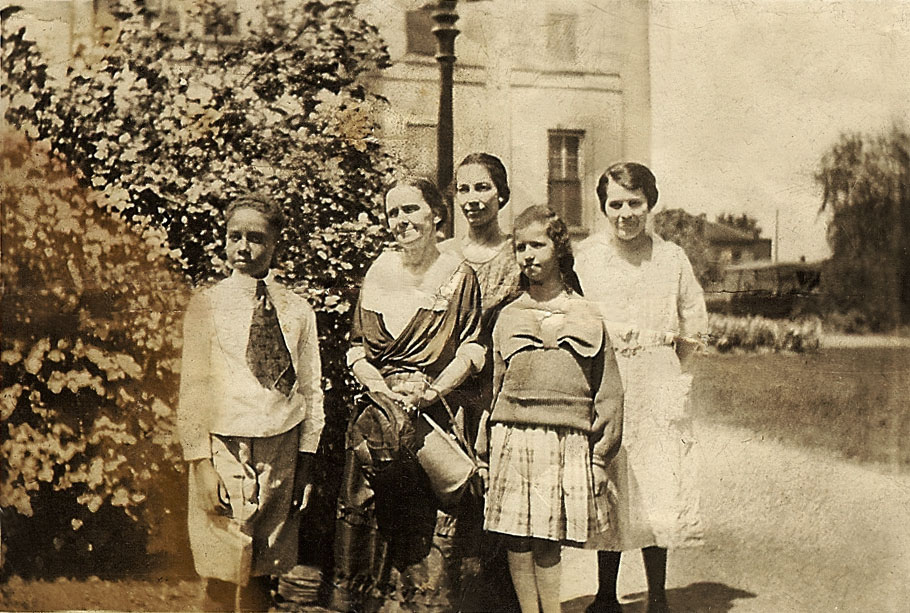
L>R – Robert Pope, Jennie Allen Turner, Alice Turner, Daisy Turner. Back – Beulah Allen Pope. 1921 Windsor, Canada. They were visiting from Montgomery.
This is the 19th post for the April A-Z Challenge. Finding a small New Testament inscribed to Jacob Graham in my grandfather Mershell C. Graham’s belongings raised questions that I am still trying to answer. To read what I wrote earlier, follow these links, Jacob Graham,Abraham Graham, and William Graham and Mary Jackson. I have been unable to connect any of them with my grandfather with more than circumstantial evidence.
Annie Graham
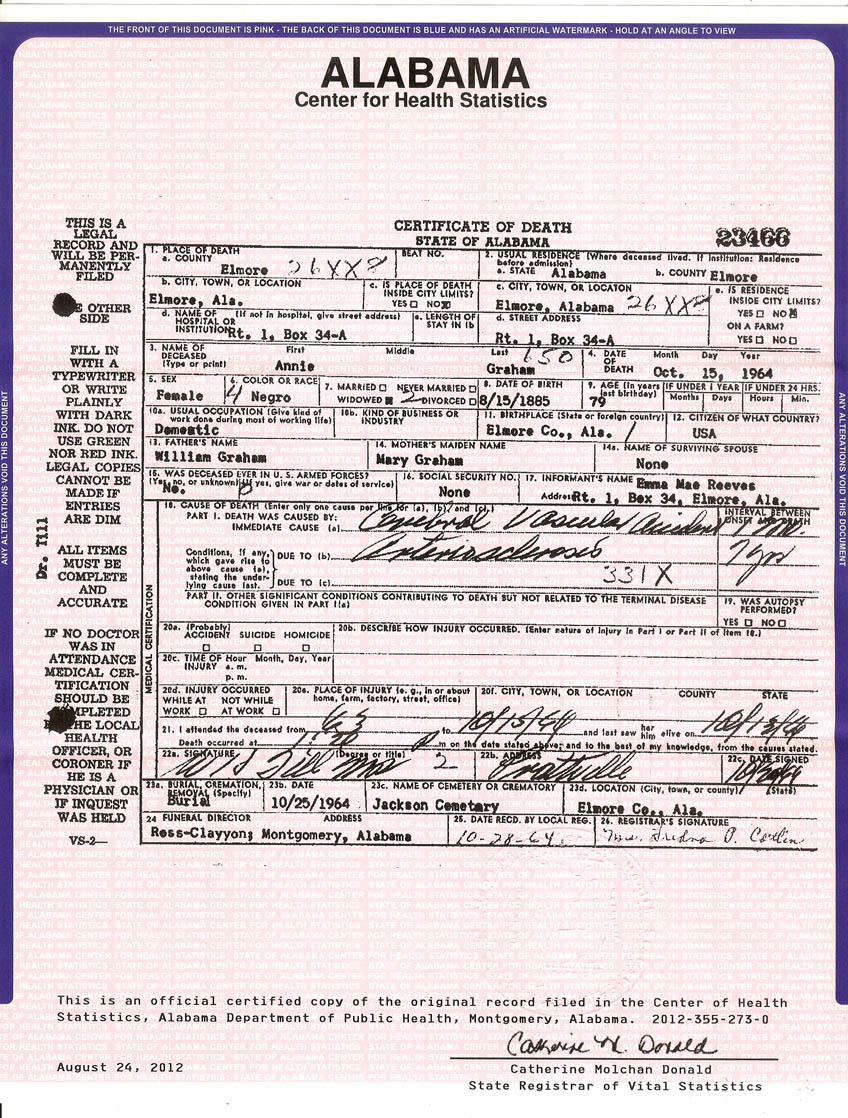
Today I’m going to write about Annie Graham, another possible sibling of my grandfather Mershell C. Graham. Annie was born in 1885 in Elmore County, Alabama. She first appeared in the 1900 Census with Zacharies, Abraham and Jacob in Robinson Springs, Elmore County, Alabama. She was 15 years old, was literate and attended school within the last year.
Annie’s first son, Clyde Graham was born in 1905. William was born in 1906 and Emma Mae was born in 1907. In the 1910 Census Annie and her children were living in the household of Oscar P. Barron and his wife Emma (Jackson) Barron. as servants. Annie was listed as a cook. She was listed as a widow and she and her children all used the surname Graham. The Barrons were identified as white and the Grahams were listed as mulatto.
Emma B. Jackson Zimmerman Barron
Emma was the daughter of Absalom Jackson. He owned a large plantation in Autauga County, Alabama. In 1865, Elmore County was made from part of Autauga. In 2002 I wrote to a descendant of Absalom asking for a copy of the names of slaves owned by James Jackson and divided among his heirs after his death in 1832. I thought that these Jacksons may have enslaved my Jacksons. I wasn’t able to make a connection between the Mary Jackson that may be my grandfather Mershell’s mother and the list at the time but I think I should take another look. That was 11 years ago! In 1860 Absalom Jackson held 62 slaves and lived in Robinson Springs.
Emma Boling Jackson married John Zimmerman in 1867. They had two children. He died in 1873. In 1879, she married Oscar P. Barron. They lived in Robinson Springs, AL. It was in their household that Annie and her children were living in 1910.
Back to Annie Graham
In 1911 Annie gave birth to her fourth child, a son named Michele. Another story, my mother told us that her father, Mershell, had been named Michele by his mother but that when he was a child he was a servant to a little white girl. He had to sleep on the floor outside of her room in case she needed anything. She said Michele was a foreign name and she changed it to “Mershell”. So, Annie’s youngest son was named Michele, the same as my grandfather.
Who are they?
This is an unidentified photograph from my Graham Photographs. I don’t know if any of Annie’s children are in the photo. A few years ago I tried to make out what was written underneath, which isn’t easy. For more information about the camera used to take this photo follow this link to the Photo-Sleuth’s post about the Autographic camera.
“13/2/18 on Barrons farm.”
In 1920 Annie and her four children – Clyde 15, William 14, Emma 13 and Michele 9 were again living in the household of Oscar Barron and his wife, Emma. The household has swollen to include a daughter and granddaughter, husbands and children. Annie is listed as a servant working on her own account. That means she’s not getting wages, but in this case I don’t know what that even means. Her three oldest children are listed as “helpers”, the boys as farm labor. Michele is listed as an “errand boy”. Once again the Grahams are all identified as “mulattoes” and the Barrons as white. All of the Barrons are literate or in school. Annie is literate but none of her children are and none of them are in school.
From Grahams to Jacksons – 1930 to 1940
In the 1930 Census Annie is living with two of her sons next door to the Barrons. Emma Barron is dead but her daughter, Emma Powers, is running the house and Annie is working as her servant. Clyde, 25 and Michiel 16 are both working as laborers doing general farm work. Both are still illiterate and both are now using the surname of “Jackson”. Annie is listed as single and still a Graham. William is not to be found. Emma is now married to Captain Reeves and still living in Elmore County. Emma is also using the name “Jackson” on her marriage record.
I cannot find Annie, William or Michele in the 1940 census. Clyde 35, is married to Edith 29. They have four children, Hettie May Jackson 8, Clyde Jackson 7, William Jackson 4 and Alice Lee Jackson 4/12. He’s never attended school and earned $250 the previous year in the private sector working 52 weeks. They are still living in Robinson Springs, Elmore County.
Emma remains married to Captain Reeves and they have no children surviving. Their one son, Clyde Junius Reeves lived one month, born in November 1927 and dying in December the same year. Emma had zero years of schooling and her husband had three. She is keeping her own house, for no pay. He is farming his own land.
The Wrap Up
Annie died in 1964 of a stroke. Her parents are listed as William Graham and Mary Jackson. Her daughter, Emma is the informant. She died in Elmore County and is buried in the Jackson Cemetery in Coosada, Elmore County.
Emma died in Columbus Ohio in 1993. Her work was cleaning houses. She was an 86 year old widow. Her father’s surname was “Jackson” and her mother’s maiden name was “Graham”. She is buried in Jackson Cemetery, along with her husband.
Clyde died in 1965 in Montgomery of heart disease. His father is listed as Paul Jackson and his mother as Annie Graham. He is buried in Long Cemetery in Coosada, Elmore County.
This is the eighteenth post for the April A-Z Challenge. Finding a small New Testament inscribed to Jacob Graham in my grandfather Mershell C. Graham’s belongings raised questions that I am still trying to answer. To read what I wrote earlier, follow these links, Jacob Graham and Abraham Graham. Today I am going to write about William Graham and Mary Jackson, the parents named on my grandfather’s delayed birth record.
Information My Mother Gave Me
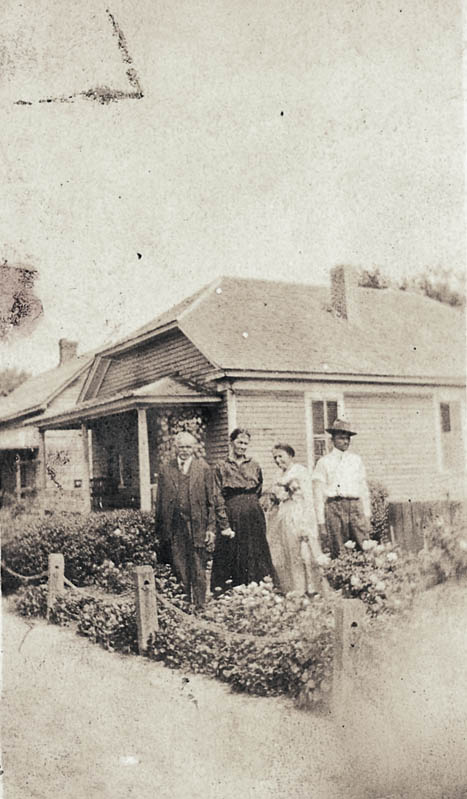
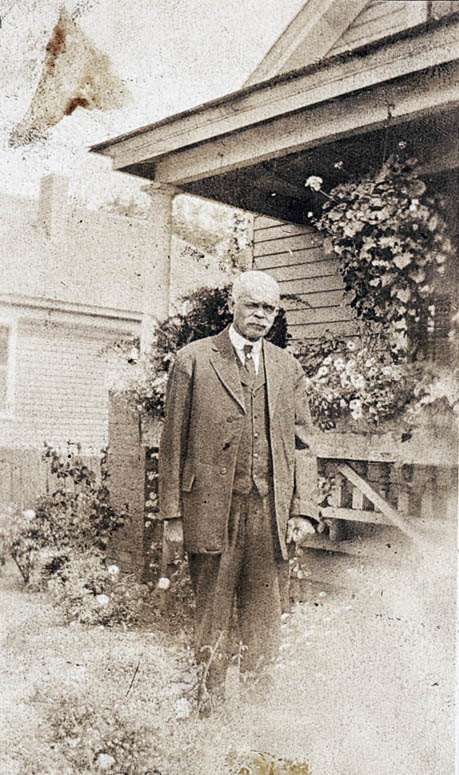
In 1974, my mother had copies of some family photographs made for my sister and me. She identified the one below, on the left, as my grandfather, Mershell’s “real father”. She said that when she asked him if he wanted a copy, he said, no. I hung it on my wall with the others until I came into the possession of the family photograph collection. I noticed that the man in the picture looked exactly like the father in my grandfather’s informally (in adulthood) adopted family, Joseph Graham, and the house was their house. On the left you see a photo that was identified as “The Graham’s at home”. The man and the house in both photos look the same to me. I have heard nothing or found anything that makes me think that Joseph Graham was actually my grandfather’s father.
The Graham’s at home.
The photo of Poppy’s “real father”
Before I forget here is something
Daddy said to me once late in life, while we lived on Fairfield. He
said his real family, the ones in the album, his real sister who is in
that picture, wrote once to the Theodore address and asked for old
clothes or anything they could send because she was having a hard time
and mother threw the address away before they could get anything
together. He said that he had always taken care of Mother’s people and
she would have nothing to do with his. Now that doesn’t sound like
mother, but on the other hand, she had often said that he was too good,
that he didn’t have a dime when she married him although he should have,
had always made good money, but his adopted family got it all from him
because he was so generous, so when they married she told him let me
take care of the money, if you do we’ll always have some when we need
it. He did. She did. And they did!!
I wish I knew Daddy’s real family. Bet they still live in Alabama and could be found if anyone had the energy.
Click to Enlarge
My grandfather’s delayed birth record, which he filed in 1941, gives his parents names and ages at his birth. He named William Graham as his father and said he was 35 in 1888. That meant he was born about 1853. He named Mary Jackson as his mother who was 30 years old in 1888. She would have been born about 1858. He said he was the 4th of 4 children.
Early in my use of the internet for research, I looked for William Graham and Mary Jackson. I found a marriage record for them.
Alabama Marriages, 1809-1920 (Selected Counties)
Name:
William Graham
Gender:
Male
Spouse:
Mary Jackson
Spouse Gender:
Female
Marriage Date:
20 Dec 1874
Marriage Place:
Elmore
Surety/Perf. Name:
Wm. B. Hall
Perfect. I looked in the 1880 census and found them living in Robeson Springs, Elmore County, Alabama with two children, 8 year old Crofford and 3 years old William. Next I looked for them in the 1900 census, expecting to find them with two other children, one being my 12 year old grandfather Mershell. I didn’t find them. I didn’t find him. I couldn’t find a trace of any of the family that was there in the 1880 census. Or the 1900 Census. There is a William Graham the right age in the 1910 census living in the Elmore County Alms House. That’s it.
Monday I will write about what I found for Annie Graham, the other member of the 1900 household that included Jacob, Abraham and Zacharies. She, too has William Graham and Mary Jackson listed as parents. Her youngest son was named “Mershell”.