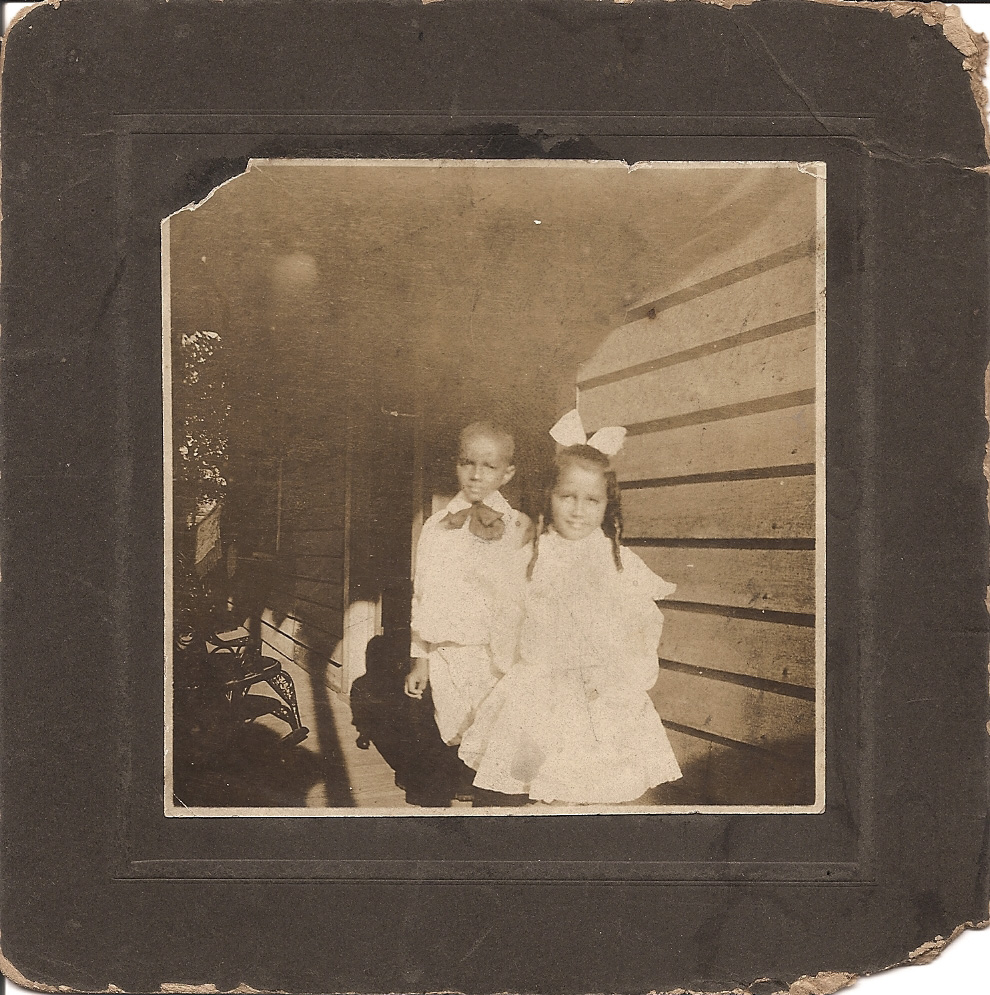
Twins Annie Lee and Charlie Lee Pope in Montgomery, Alabama. They were born February 8, 1903 so I would guess this was taken sometime before 1910. Their parents were Robert and Beulah (Allen) Pope. They were my grandmother’s first cousins. This photo is from the collection of my cousin Ruth Pope Hatcher.
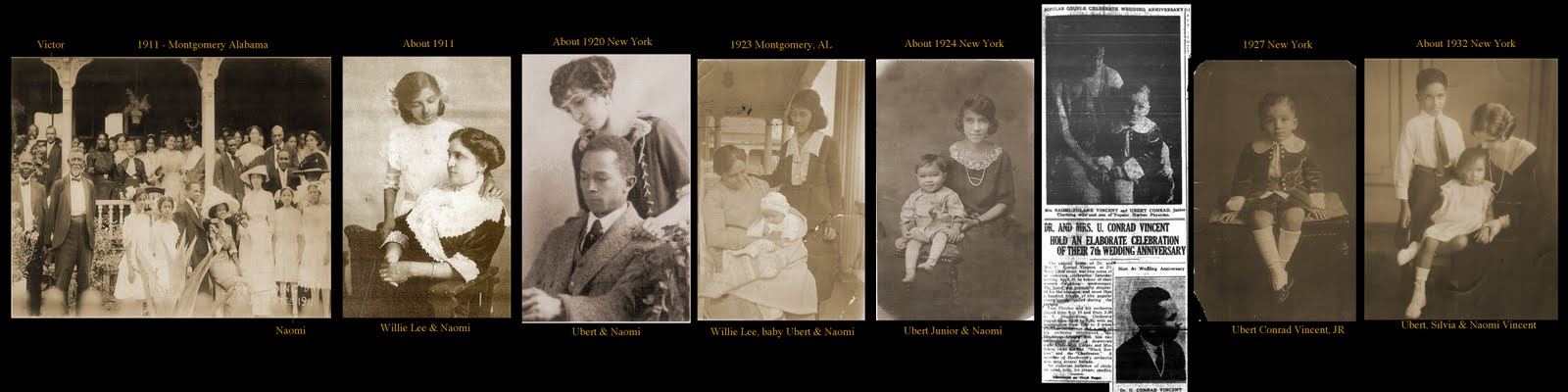
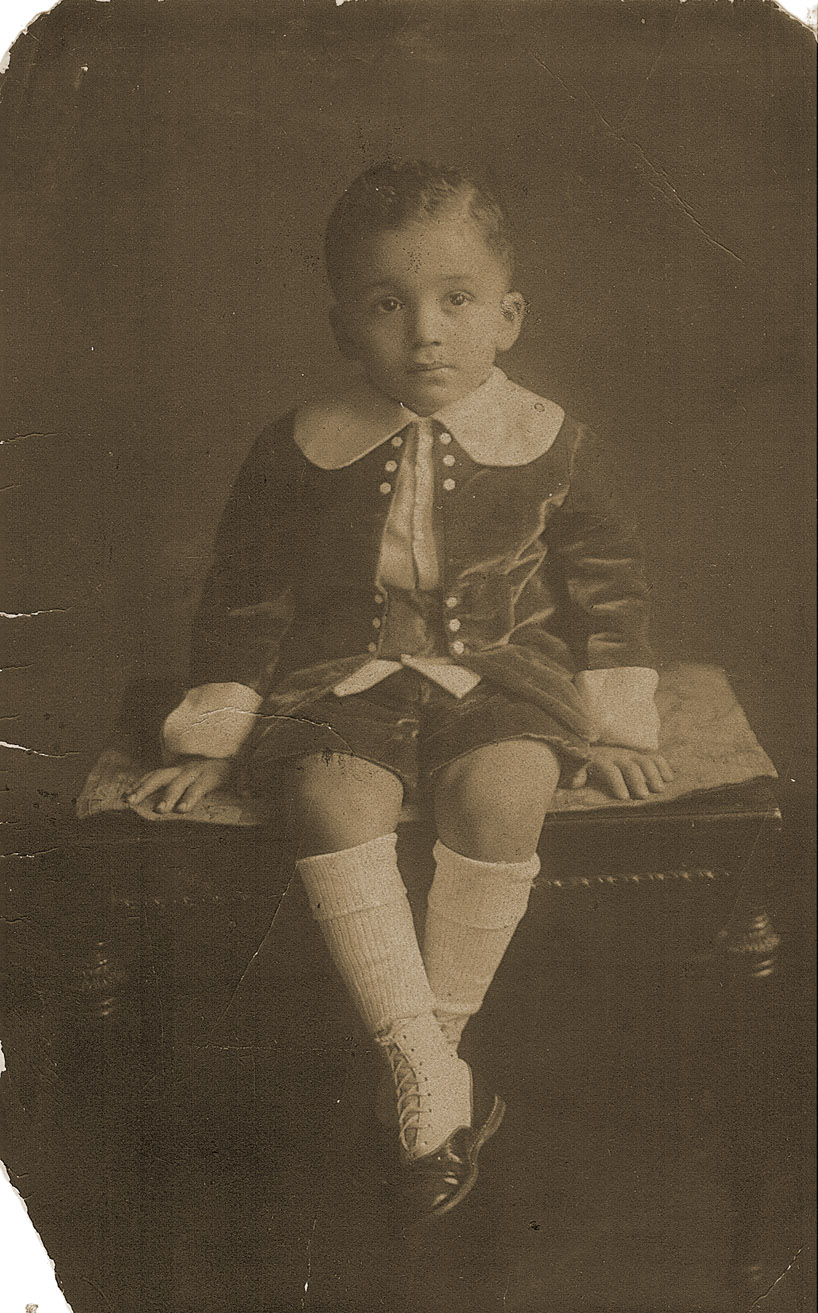
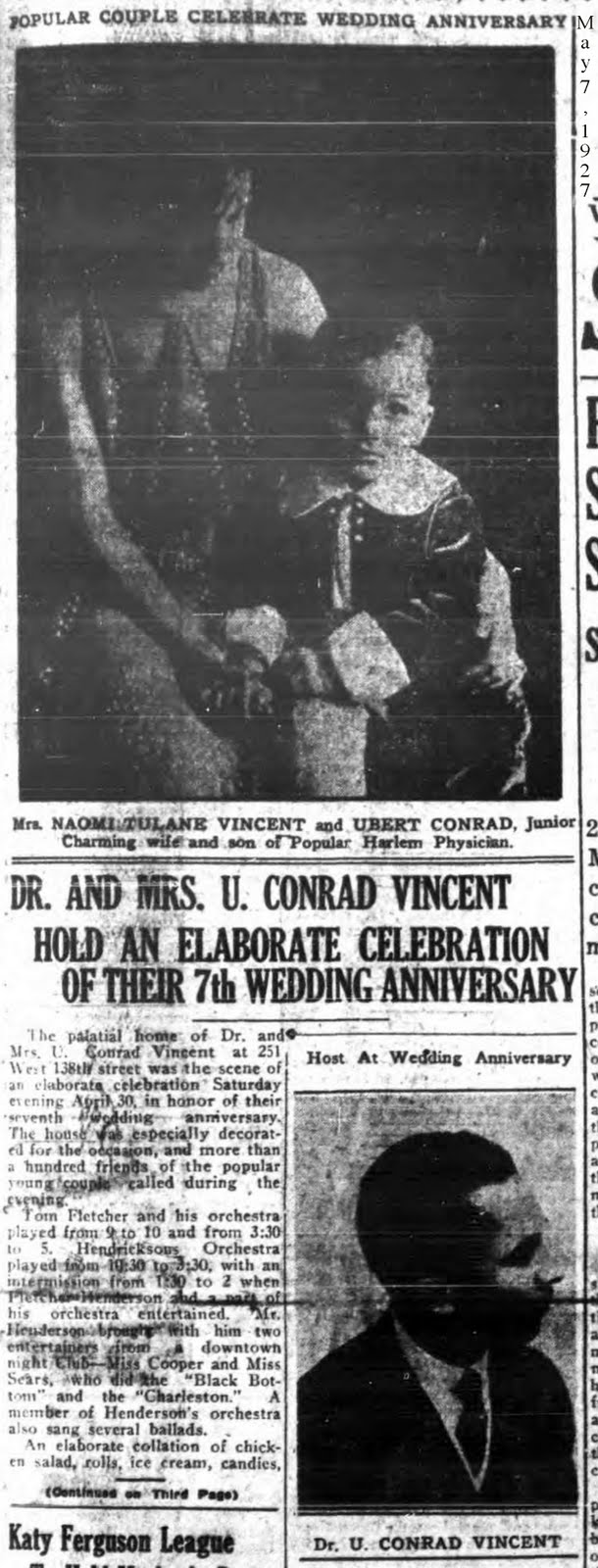
Yesterday after talking on the phone with my cousin Jacqui and posting the identities of the people in the formerly mystery photo, I decided to look online for a photograph of Ubert Conrad Vincent as an adult. Instead I found a newspaper article in The New York Age from Saturday, May 7, 1927 with a photograph of him as a three year old. As soon as I saw it I realized it was the same small boy in another photograph I had from my grandmother’s collection. It wasn’t labeled or dated, but my mother had written on the back “I don’t know who he is but he’s too pretty to throw away!” I hope this doesn’t mean she was tossing photos of those who weren’t all that pretty.
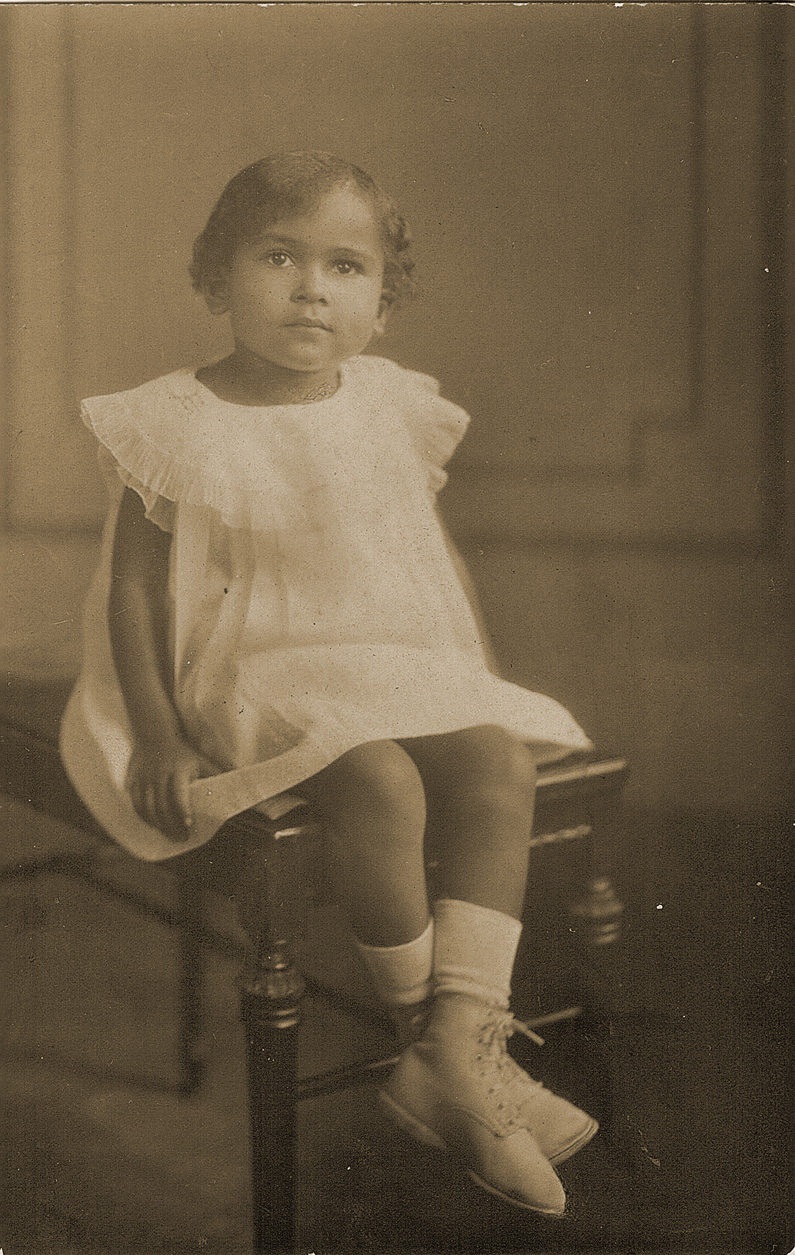
There was also an unidentified photograph of a little girl that is clearly the same little girl in the family portrait, Sylvia Vincent.
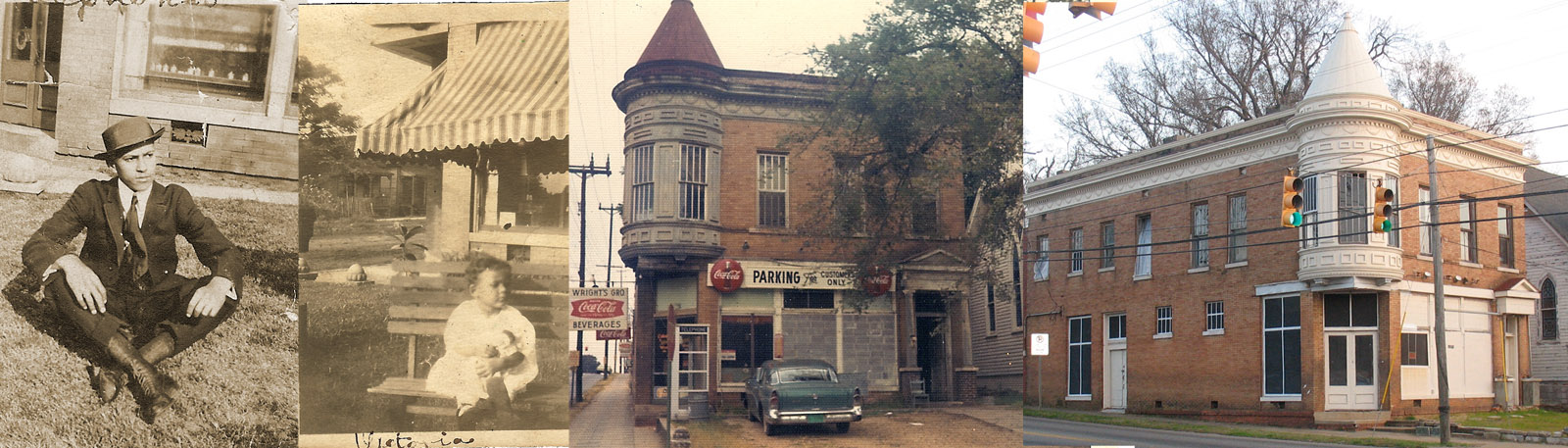
To tie this in with this Sepia Saturday’s theme, corner grocery stores, Conrad and Sylvia’s maternal grandfather was Victor Tulane who, among other businesses, owned a corner grocery store housed in the Tulane building on the corner of High and Ripley streets in Montgomery, AL. I offer several photos of the store from 1919 to 2004 below. For other fine photographs and stories about stores of all kinds and who knows what else click SepiaSaturday.
Today I received a call from my cousin Jacqui to tell me that the mystery photograph is her mother, Naomi Tulane Vincent with her two oldest children, Hubert and Sylvia Vincent. Hubert was born in 1923 and Sylvia was born in 1929 so this photo would be from the early 1930s.
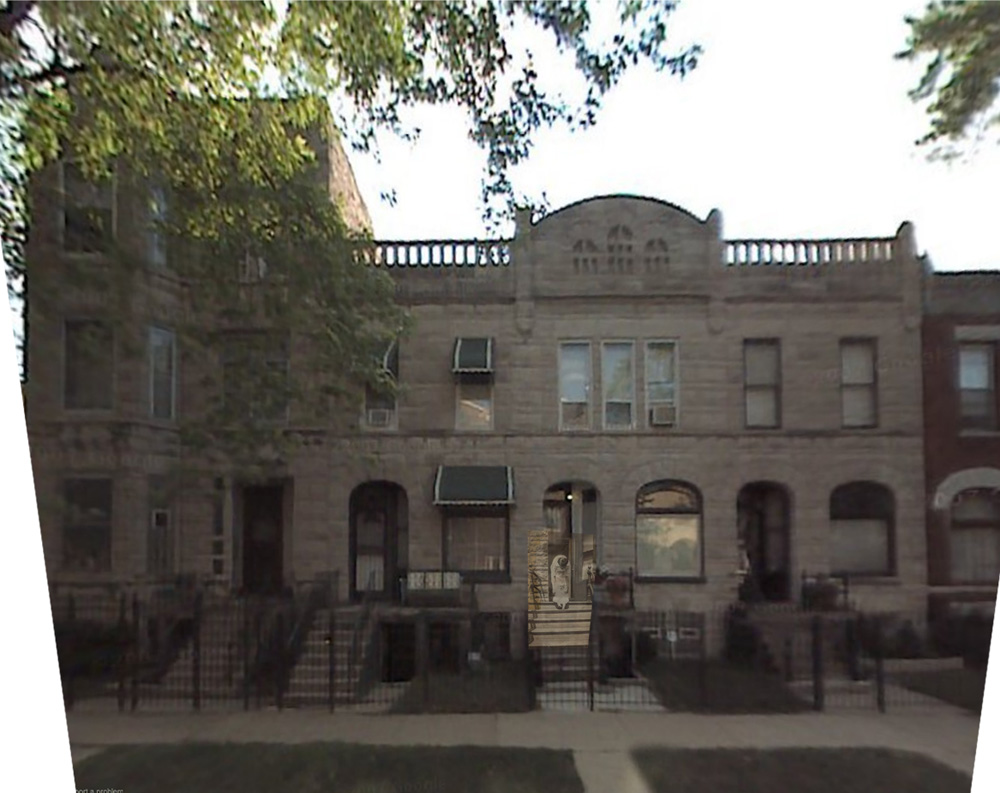
4744 Langley. Jeanette on stoop with son Robert with google maps photograph.
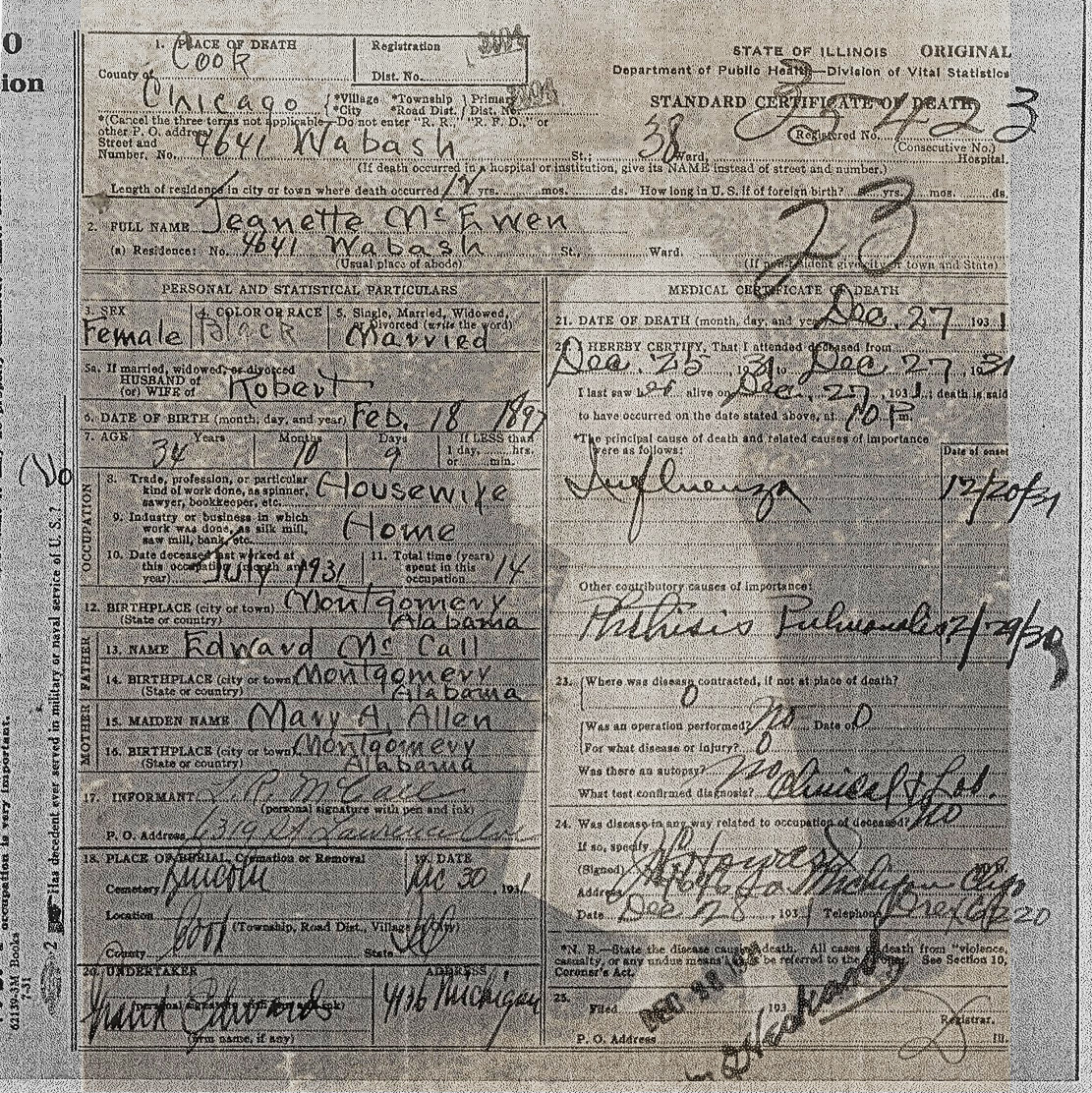
I received Jennette McCall McEwen’s death certificate in the mail this week. I wrote about her earlier here and here. Here is the new information I gleaned both from the death certificate and from a re-reading of other documents I have for this family.
According to both the 1920 census and Robert junior’s birth certificate, the family was rooming at 4744 Langley in Chicago, IL. See a photo of the house above. Little Robert was born at home on January 2. Robert Sr. worked at the post office.
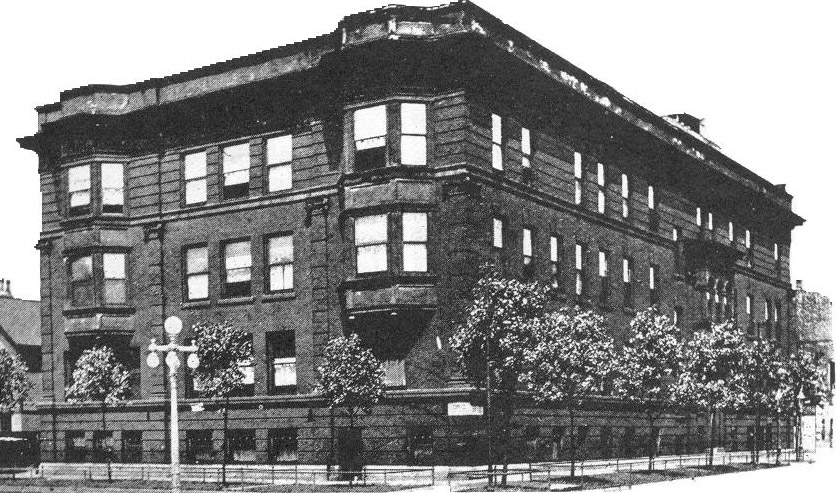
Provident Hospital
On December 16, 1923 second son, Raymond was born in Provident Hospital, one of the first black owned and operated hospitals in the United States. Robert Sr. was a dental student while Jeanette continued to work inside the home. The family had moved to 652 E. 46th St. By the time of the 1930 Census Robert Sr was a practicing dentist. Jeanette was not working outside of the home. When I first found Robert and Jeanette in the 1930 census several years ago, I wondered why they had no children because I had heard that they were the parents of two boys. After looking at the neighbors I found that 10 year old Robert Jr and 7 year old Raymond were living as lodgers in the apartment of Harry and Zada McClatchey. At the time I thought it must be a mistake, but after looking at the death certificate I realized there was a good reason for the boys to be out of the home.
Jeanette died at home of influenza on December 27, 1931. The informant, the person who gave the personal information on the certificate, was her older brother Leon Roscoe McCall. Her doctor was her brother-in-law Joseph Howard, MD. He had begun treating her on Christmas day, although she became ill on the 20th of December. A contributory cause was “phthisis pulmonalis” or consumption. Jeanette found that she had tuberculosis in February of 1930. The Census took place in April. Robert and Raymond were probably out of the house to keep them from being infected. She had been unable to continue to do her usual work as a housewife since July 1931. Jeanette McCall McEwen was buried in Lincoln Cemetery in Cook County on December 30, 1931. Now I’ll send for Robert McEwen’s death certificate to see if he also died of tuberculosis.
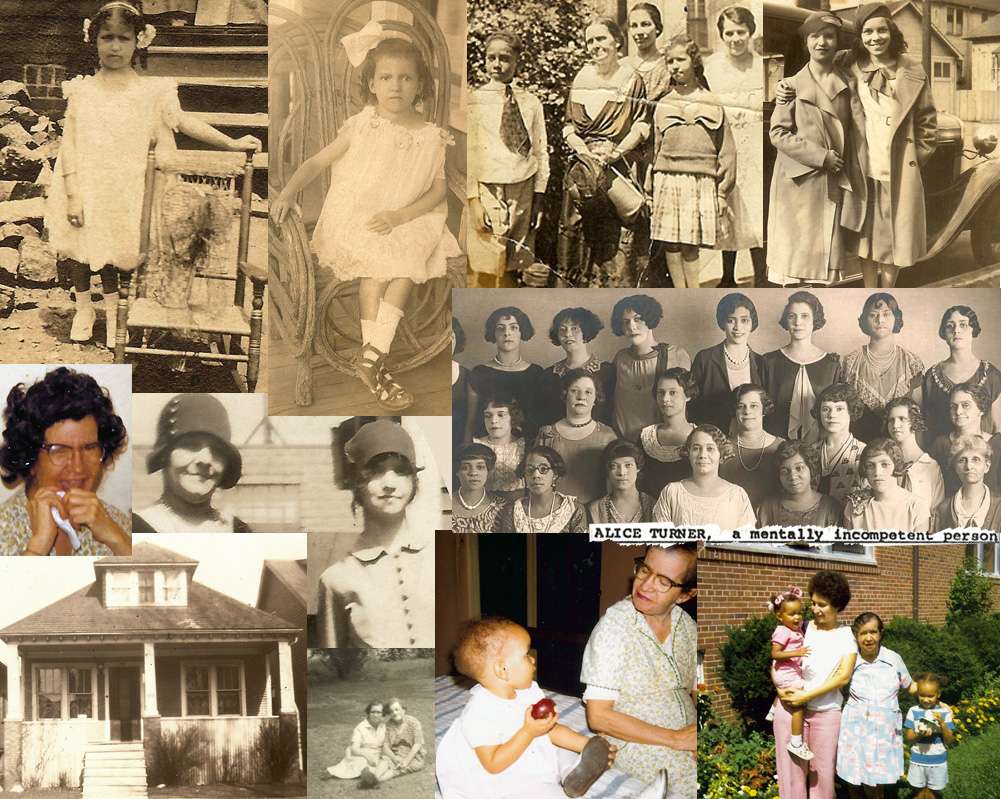
1866 October 1 – Jennie Allen Turner born (Alice’s mother) 1888 March 12 – Fannie born (Alice’s oldest sister) 1890 May – Daisy born (sister) 1905 Jennie married Wright (according to the 1910 census) 1908 August 18 – Alice Elizabeth Wright born in Montgomery, Alabama 1910 Census – 7th Precinct, Montgomery 19 April 1910 Top of the page is Sallie H. Wright, a widow and a teacher Address 712 E. Grove Street Jennie T. Wright – age 40 2nd marriage, 5 years Dressmaker – 3 children, all living (44) Fannie Mae Turner – age 20 book keeper (22) Daisy Turner – age 17 clerk (20) Alice Wright – age 2 father born North Carolina (after this census Alice’s last name is always given as “Turner”, Jennie’s first husband was Howard Turner who died in 1892.) 1918 – Daisy taught school at Booker Washington Elementary 1919 – Daisy taught school at Booker Washington Elementary 1920 Census – Precinct 7 (part of) 19 January 1920 Montgomery Alabama Address 712 Grove Street Jennie Turner – age 52 – Widow Seamstress (54) Daisy Turner – age 25 clerk at grocery (30) Alice Turner – age 11 – attended school, can read and write. 1921 July 31, photo taken in Windsor, Ontario with Beulah and Robert Pope 1922 Nov. 23 Letter from Victor Tulane, he’s shipping Gr.Turner’s things to Detroit. 1924 Oct 11 – Certificate of Survey for Theodore applicant Fred L. Marsh 1920’s – Undated photograph of seamstresses at Anis Furs. Jennie, Daisy and Alice are all in the photo. 1930 Census – Precinct 57 3 Apr 1930 Detroit, Michigan Address 4836 Harding Jennie Turner – age 62 – owns home. Worth $7,000 Widow. Not working (64) Daisy Turner – age 30 – single Head portreress at a Fur Store (40) Alice E. Turner – age 21 – single. Not working 1954 March 28 – Mother Jennie dies. Alice continues to live with sister Daisy in same house. 1961 November 24 – Daisy dies after a days illness. Alice moves in with her sister Fannie and her husband Mershell. During this time Alice is diagnosed with schizophrenia. 1963 SSN issued 365-48-4560 1964 August 18 – Alice made her best/last cake (Entry in Fannie’s bible) 1966 April 18 Alice’s Aunt Abbie becomes ill and is moved to a nursing home. Dies on this date. 1968 Summer – Family moves to a flat with Doris (Fannie’s daughter & Alice’s niece) 1973 September 6 – Brother-in-law Mershell Graham Sr dies (Alice’s brother-in-law) 1973 – Sister Fannie has a stroke and is moved to a nursing home. Alice is moved to senior housing. 1974 August 13 – Sister Fannie Mae Turner Graham dies. 1974 September 27 – Guardianship of Alice Turner, a mentally incompetent person, to niece Doris 1982 April 30 – Niece Doris dies and guardianship turned over to niece Mary V. 1994 November 16 – Alice dies after being in failing health. 1994 November – Cremated and ashes buried in mother Jennie’s grave in Detroit Memorial Park Cemetery.
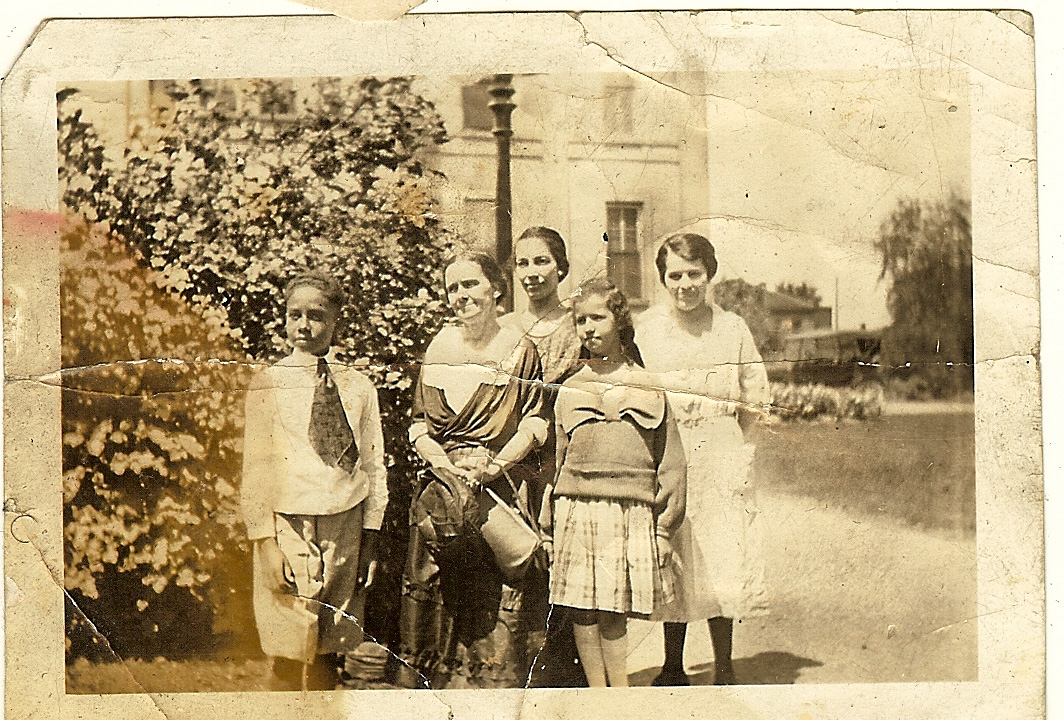
Robert Pope, Jennie V. Turner, Beulah Pope (back) Alice Turner, my Aunt Daisy.
August 18 was my Great Aunt Alice’s birthday. I decided to do a quick post about her. Found a few photographs. Wrote out my memories. Something wasn’t right. I wrote a cousin and my sister asking for their memories. They both sent them and of course all of our memories both overlap and are different. I found my mother’s memories. I looked for more photos. I looked for documents. I realized some of what I “knew” I couldn’t document. So, I’ve spent the last week trying to figure Alice’s life out when there is no one left to ask about particulars. Now I’m working on a timeline to incorporate both the facts and the memories and the contradictions. Today I dug out a photograph I vaguely remembered as being of Alice and my great grandmother Jennie in Canada. As soon as I found it, I realized that the young man and one of the other women were also relatives. The woman behind my great grandmother was her youngest sister, Beulah Allen Pope and her son, Robert is the young man in the front. I recognized them because Robert’s daughter sent me a photograph of them that must have been taken the same day because they are wearing the same clothes. The photo is dated “July 31, 1921 Toronto Windsor, Canada.” I did not realize they were there so early. More wondering and looking. I have ordered Alice’s Social Security application and death certificate hoping to find more information.
Usually I do not post photos from the present but, when I saw the theme for this week’s Sepia Saturday was a Georgia live oak and I had just returned from a trip to Jekell Island, GA with photos of Georgia live oaks with Spanish Moss dripping off of them it was too good to pass up.
My daughter photographing the same live oak. Wish we’d gotten a better shot. Next time.
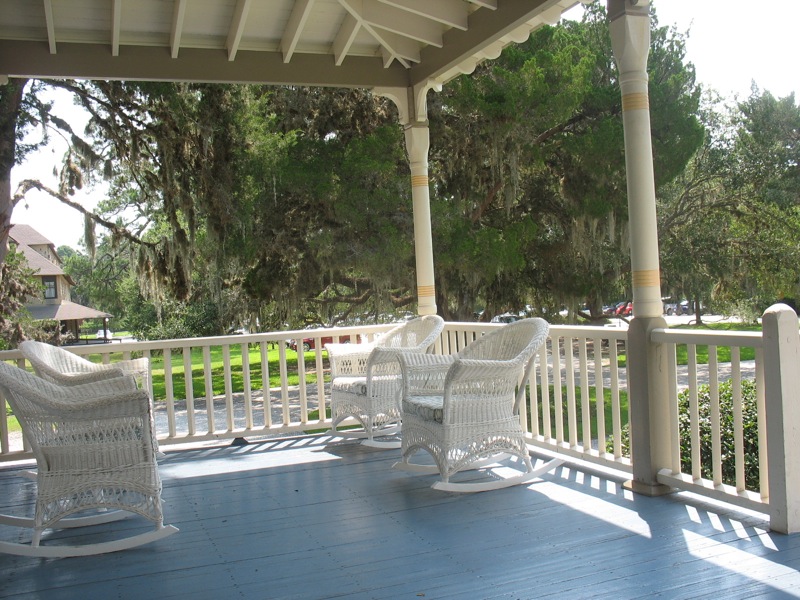
Corner of the veranda where I sat and waited for my daughter to finish her meetings. Note the live oak in the background.
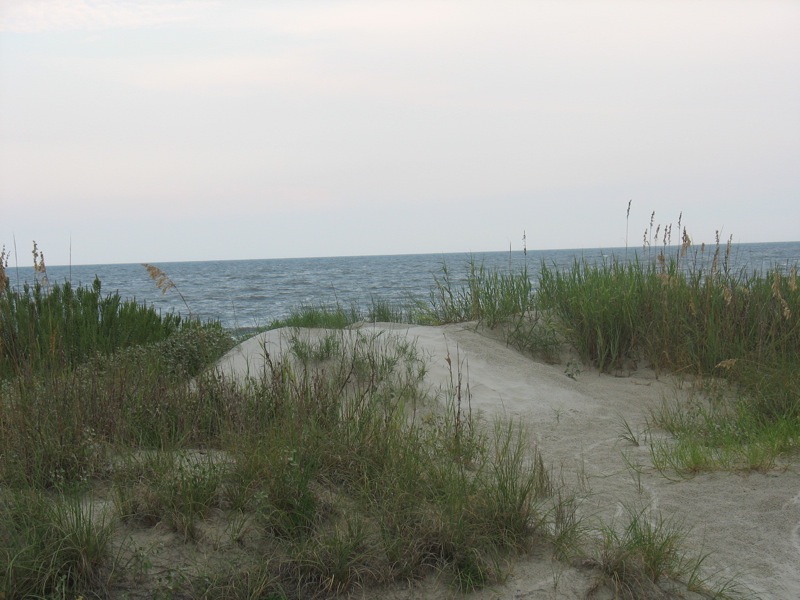
Daughter in the Atlantic Ocean.
Me in the Atlantic Ocean.
Our toes just touched the water.
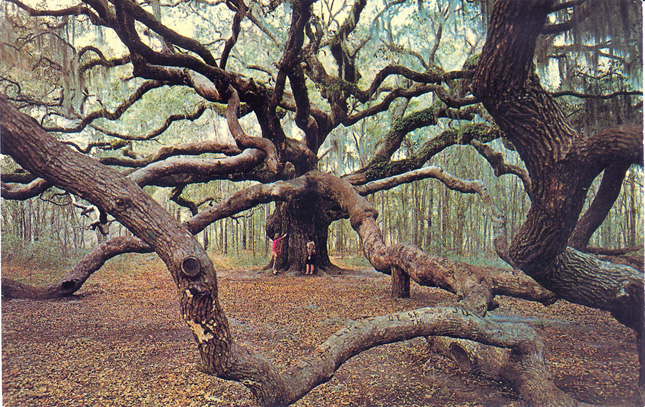
The Angel Oak
To finish up, here is a postcard from my collection. We actually visited this 1,500+ year old oak in 1975 but did not get a photograph! Hard to believe. Click this link to learn all you ever wanted to know about the Angel Oak. For other posts of trees of all types click SepiaSaturday.
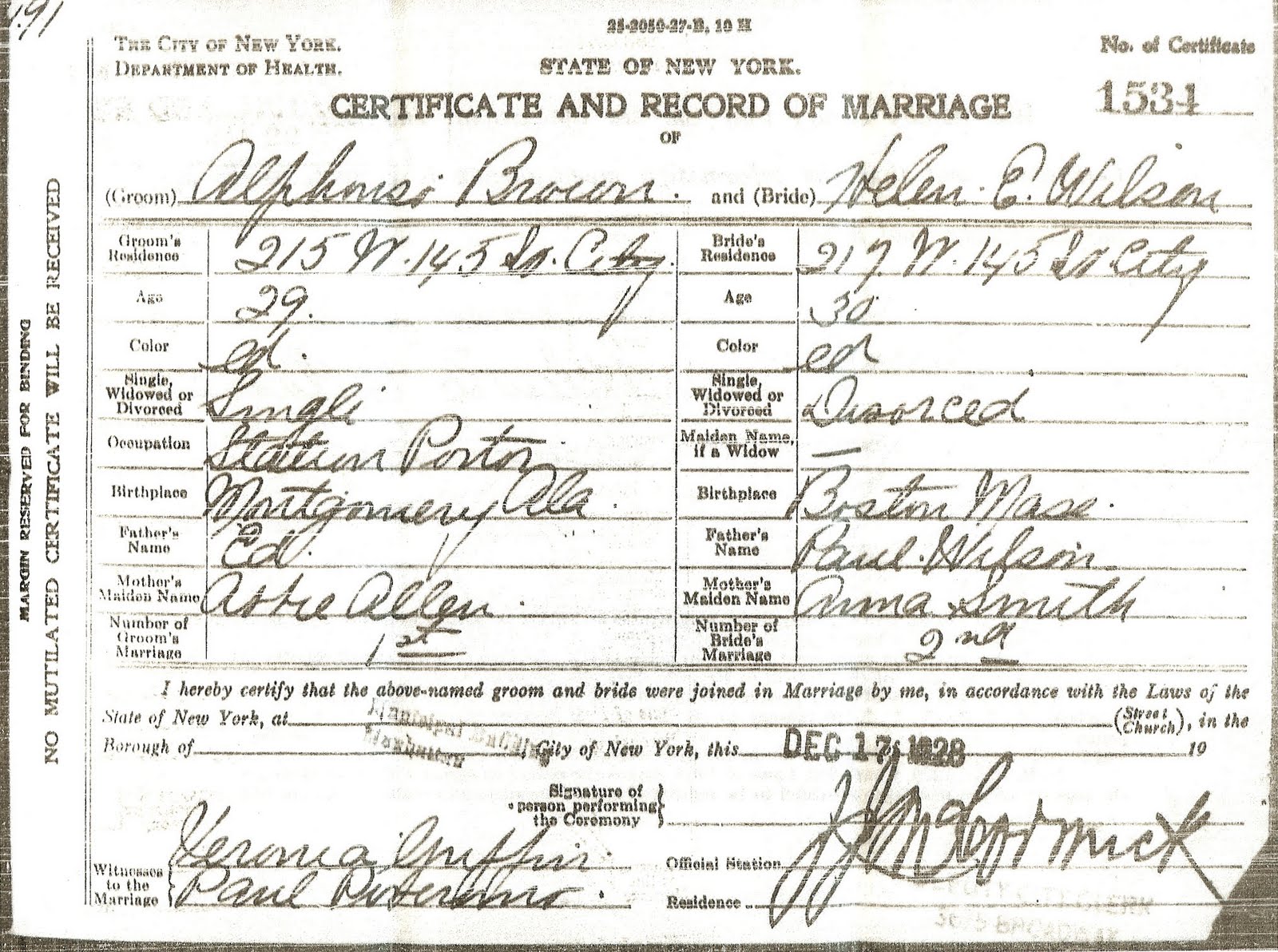
Aunt Abbie, my great grandmother’s sister, lived with my grandparents , Fannie and Mershell Graham since the time I was born. Aunt Abbie’s son, Alphonso, came to visit her sometimes during the summer. My mother told me that he never married and lived alone in New York, as did his brother, Earl.
While looking through New York records for anything I could find about Alphonso or Earl, I came across a marriage record for Alphonso Brown and Helen Wilson. I immediately sent for a copy. It arrived today. Aunt Abbie’s son was indeed married Dec. 17, 1928 to Helen Wilson in New York. More family information/memories proved wrong. This is my second bachelor uncle to actually have been married.
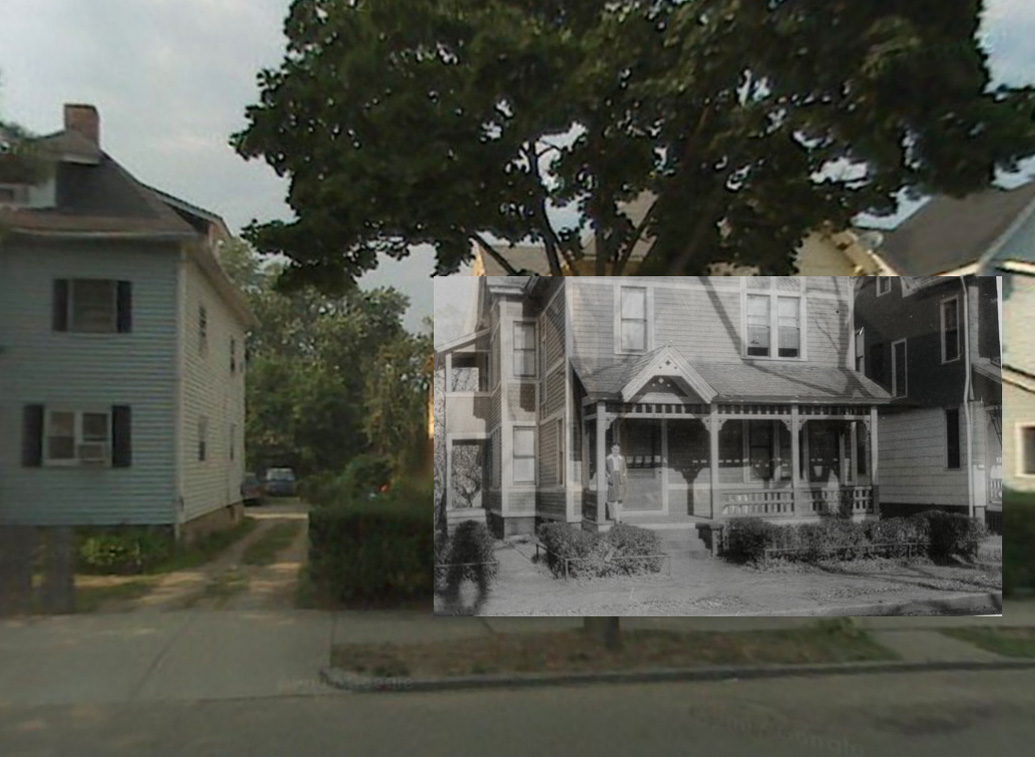
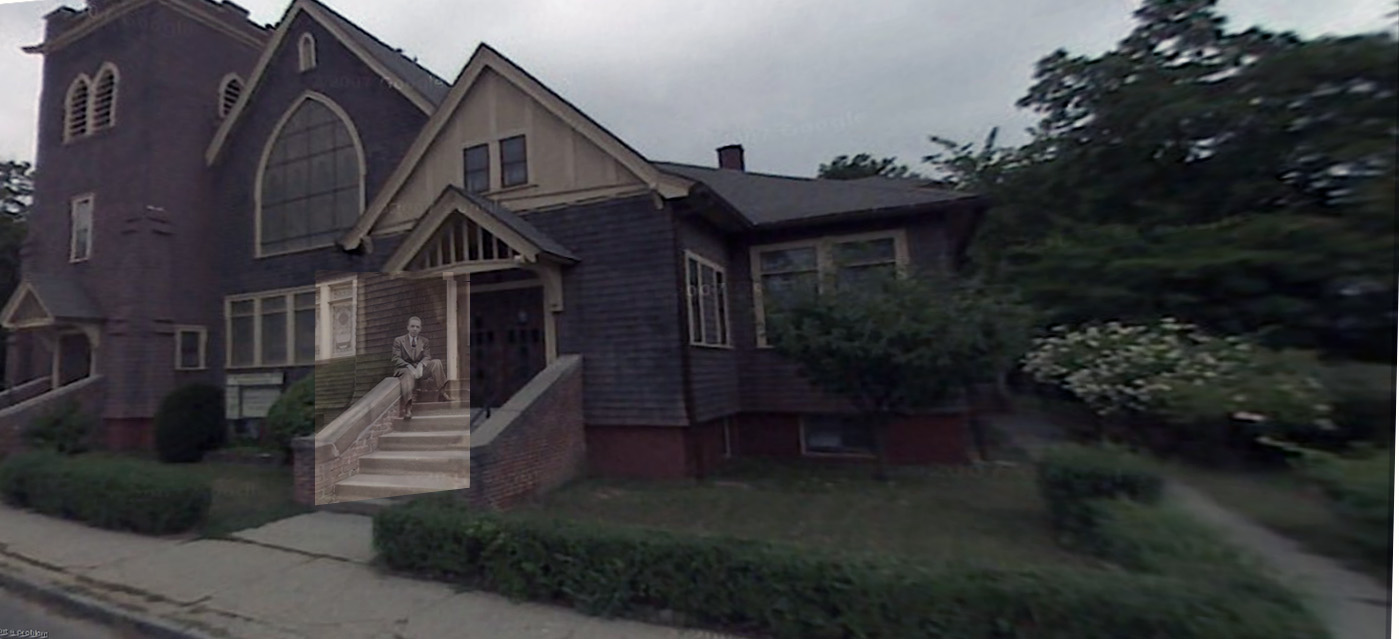
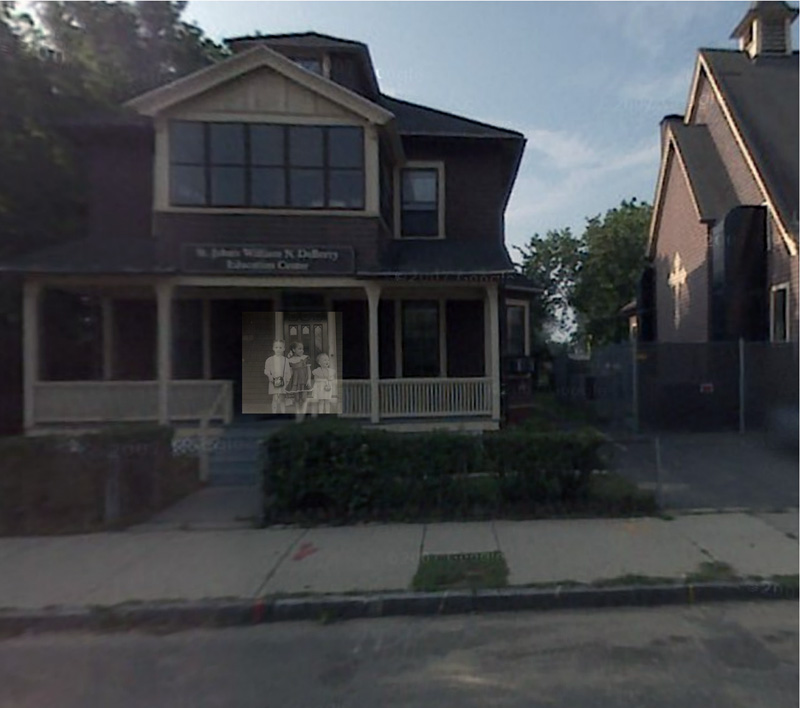
Here are three combined photographs using Google Images with photographs of my family superimposed on them. I am participating in World Photography Day on August 19, through the Family Curator website with these photos.
This a photograph of my mother, Doris Graham Cleage, standing on the porch of the parsonage at 210 King Street. This was taken in 1946, Several months after I was born.
St. John’s Congregational Church on the corner of Union and Hancock Streets in Springfield, Mass. My father, Rev. Albert B. Cleage Jr, is sitting on the porch. This was around 1948.
The last photo was taken on the Community house/parsonage that we lived in after the house on King Street was sold. I am on the left, a little girl from church is in the middle and my sister Pearl is on the right. This was taken in 1950 soon before we moved to Detroit.