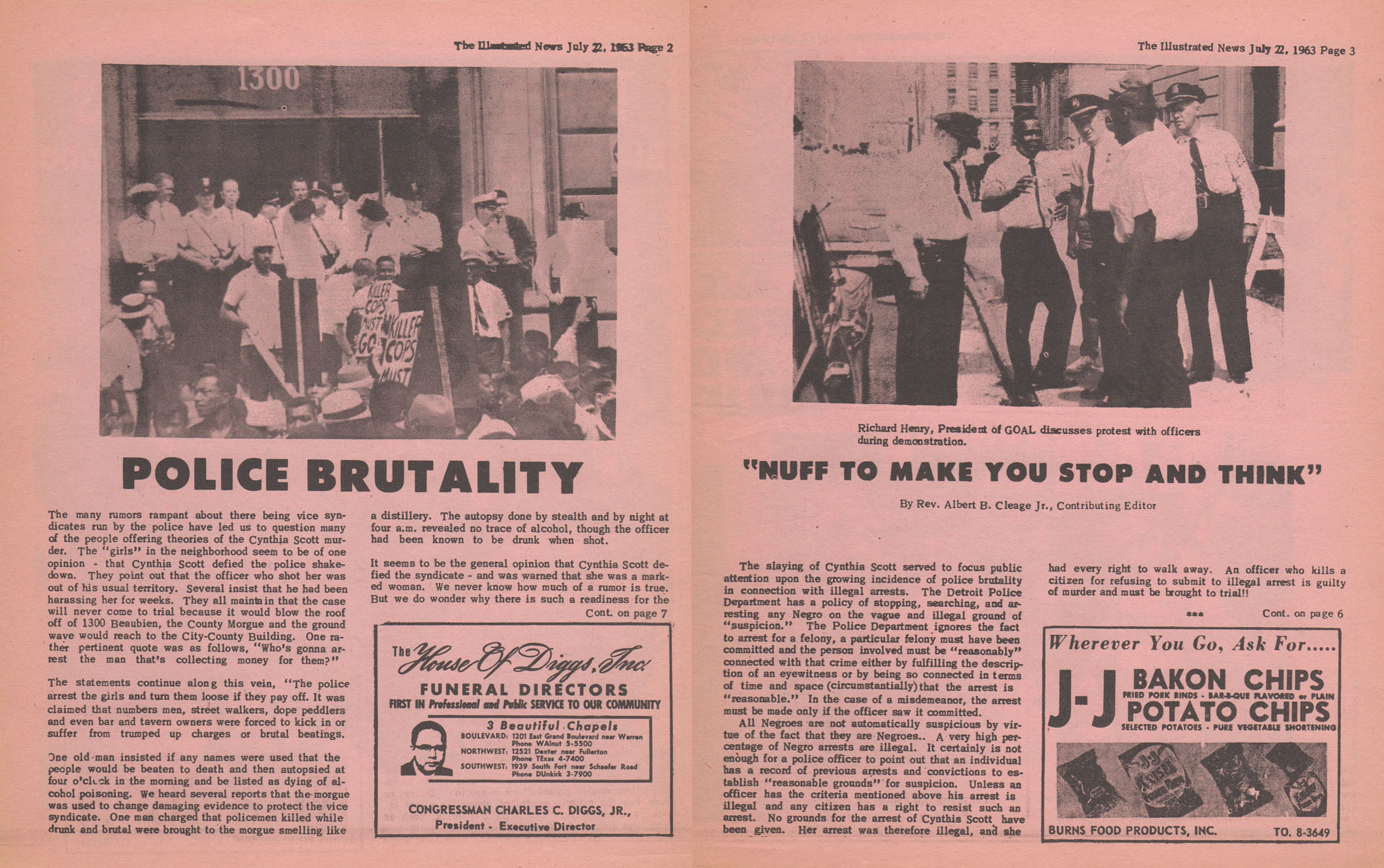
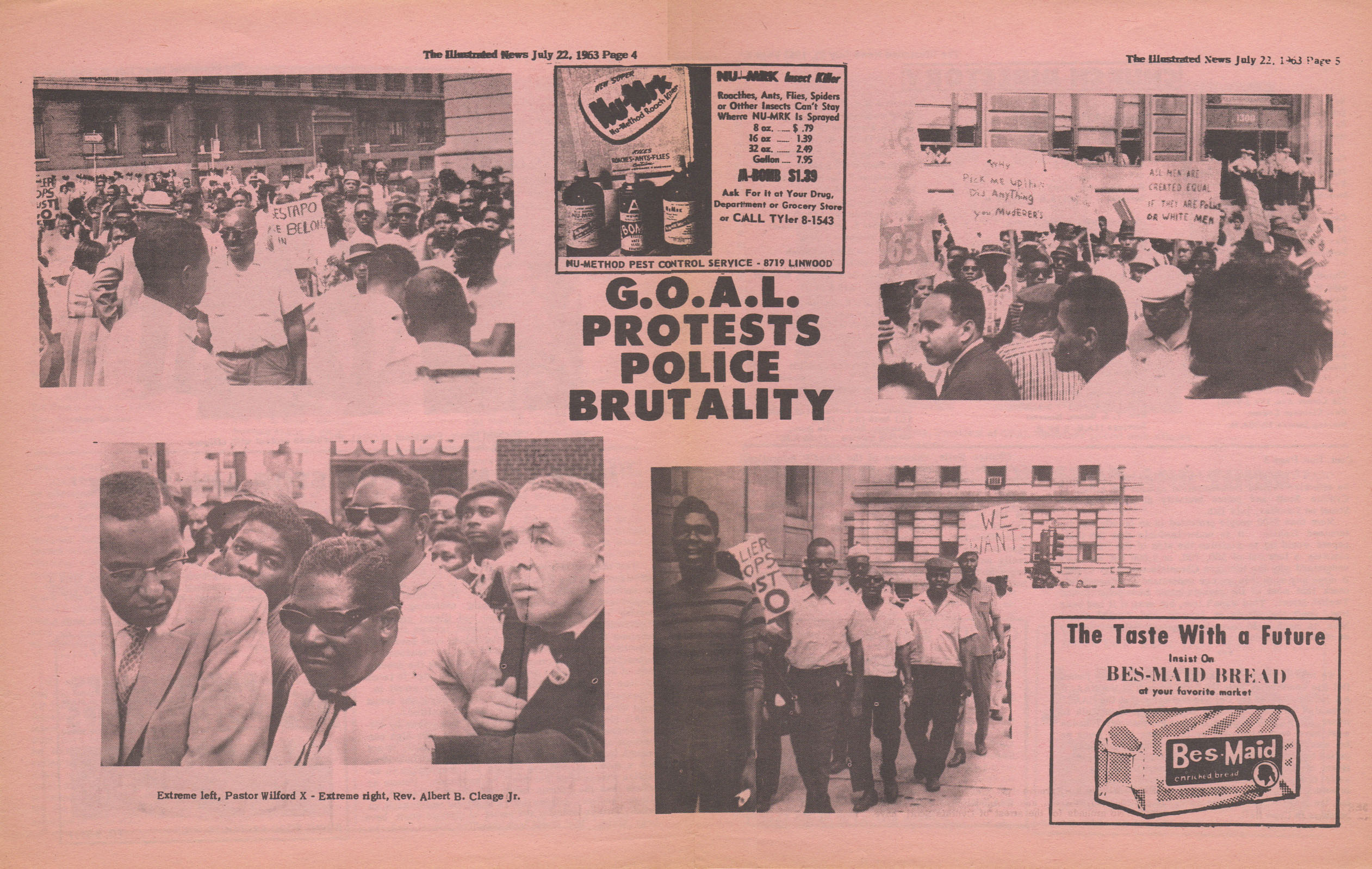
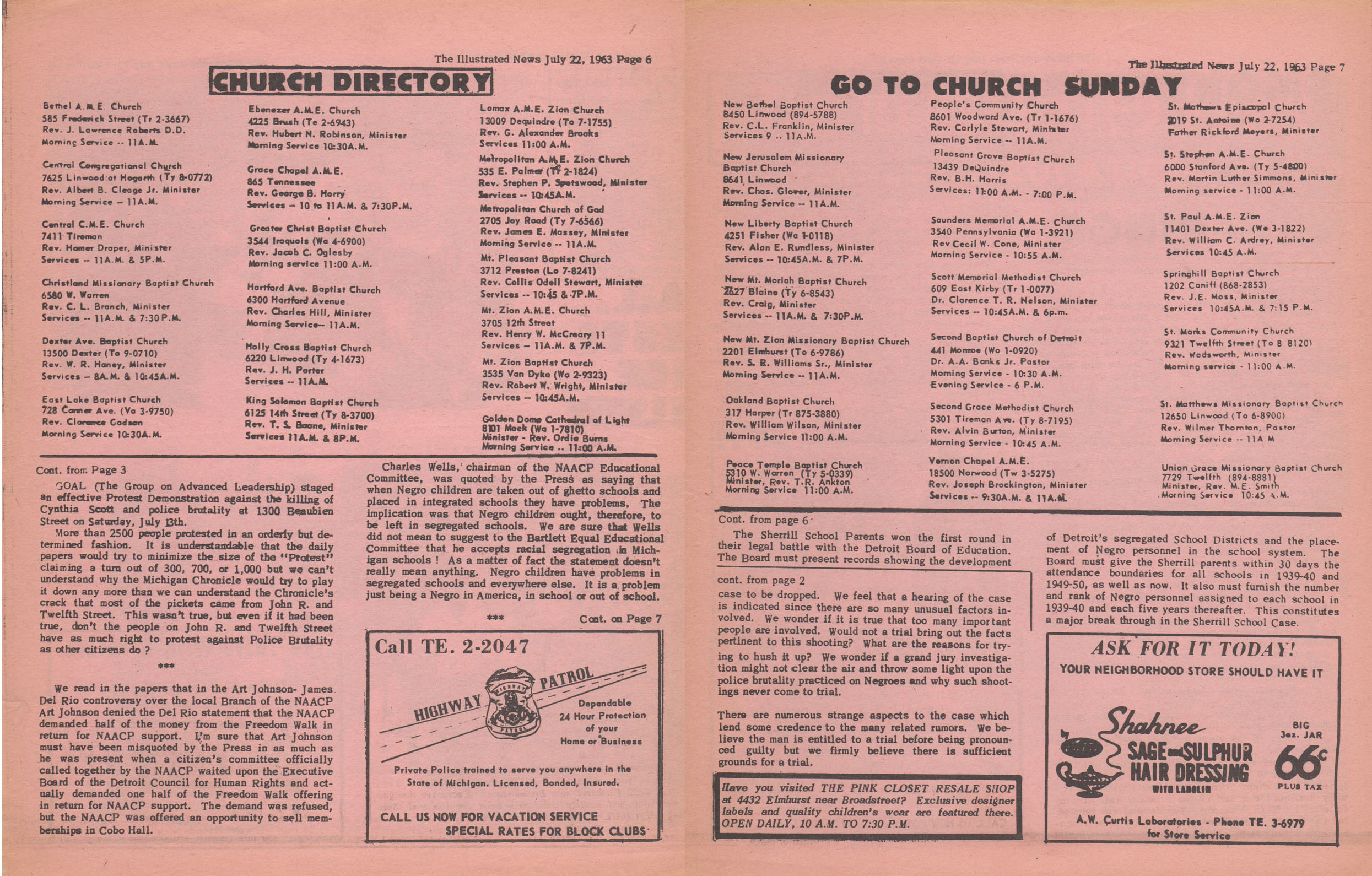
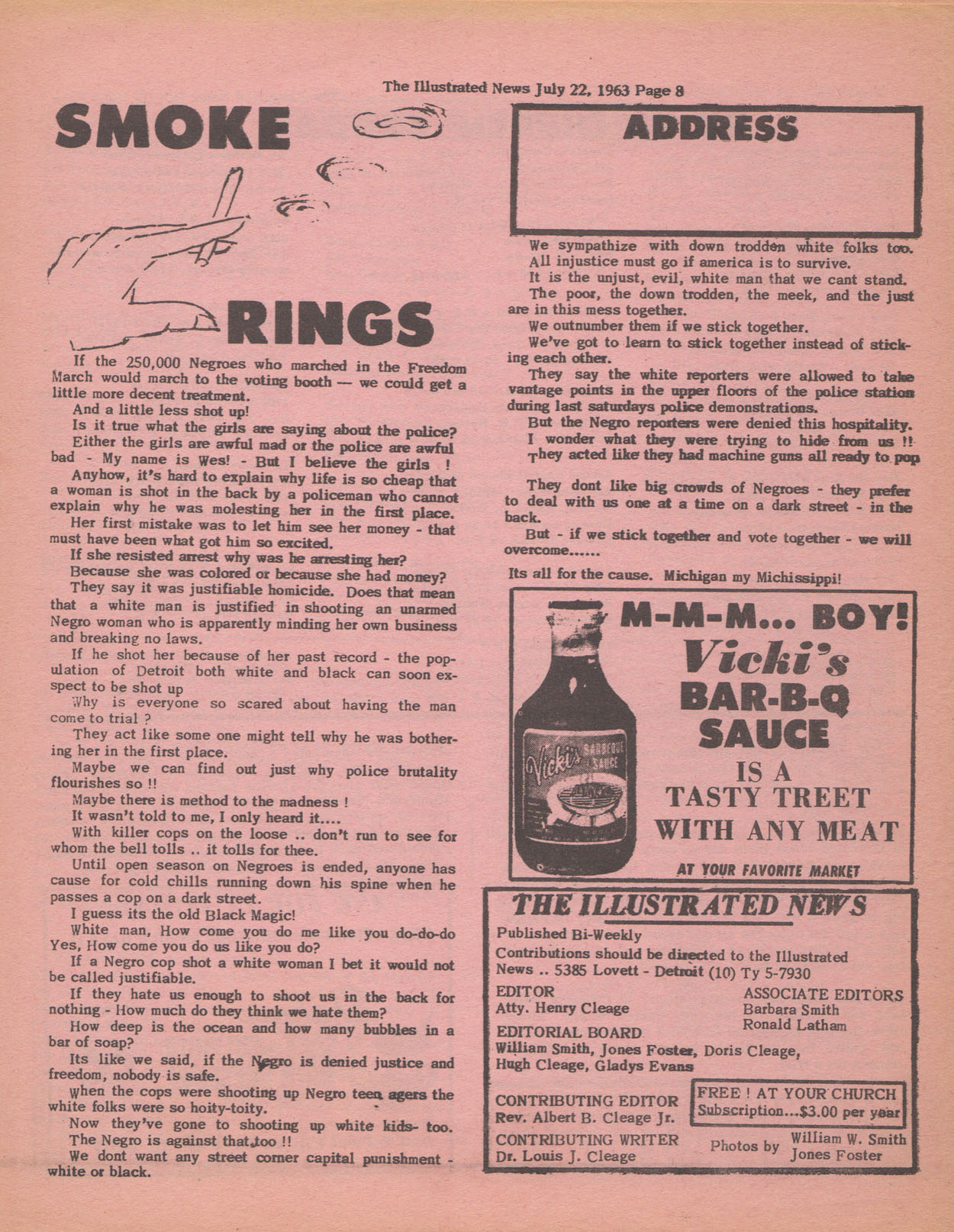
Police brutality was a problem in 1963, as it is today. Today I am sharing an issue of the Illustrated News that covered a demonstration held in front of the Detroit police station, then at 1300 Beaubien. The protest was against the killing of Cynthia Scott, an unarmed woman. She was shot in the back. The demonstration was peaceful and there was no interference by the police. The article says there were 2,500 people at the protest. Also “We wonder if a grand jury investigation might not clear the air and throw some light upon the police brutality practiced on Negroes and why such shootings never come to trial.” And that is something people are still wondering today. There was no investigation and the officer was not charged. Click on all pages to enlarge enough to read them.
Richard Henry, later known as Imari Obadele, President of GOAL discusses protest with officers during demonstration.
Picture lower left includes Malcolm X’s brother, Wilferd X and my father, Rev. Albert B. Cleage Jr. On my father’s left in the beret is Charles Simmons.
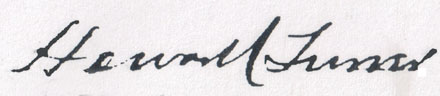
When I started looking for signatures, I thought it would be easy because I have many letters through the generations. The problem was that they did not sign letters with both first and last names. Some repeatedly used nicknames. I was able to find most signatures by searching through documents – marriage licenses, social security cards, deeds, bills of sale and group membership cards. I finally found my sister’s signature in the return address on an envelope and if I’d thought of it sooner, might have found others in the same place.
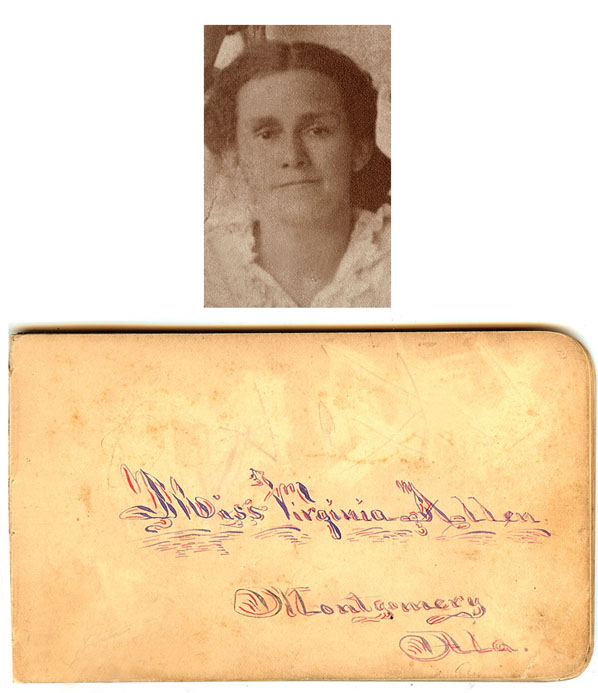
The first page from my great grandmother, Jennie Virginia Allen Turner’s memory book. My mother’s, mother’s mother. The first generation born out of slavery and the first literate generation. I believe that she and her siblings all attended schools founded by the Congregational Church in Montgomery, AL after the Civil War.
My great grandfather Howard Turner was born in 1862 in Lowndes County, AL. He was literate but I do not know what school he and his siblings attended. I do not have a photograph of him but I did find his signature on his marriage license.
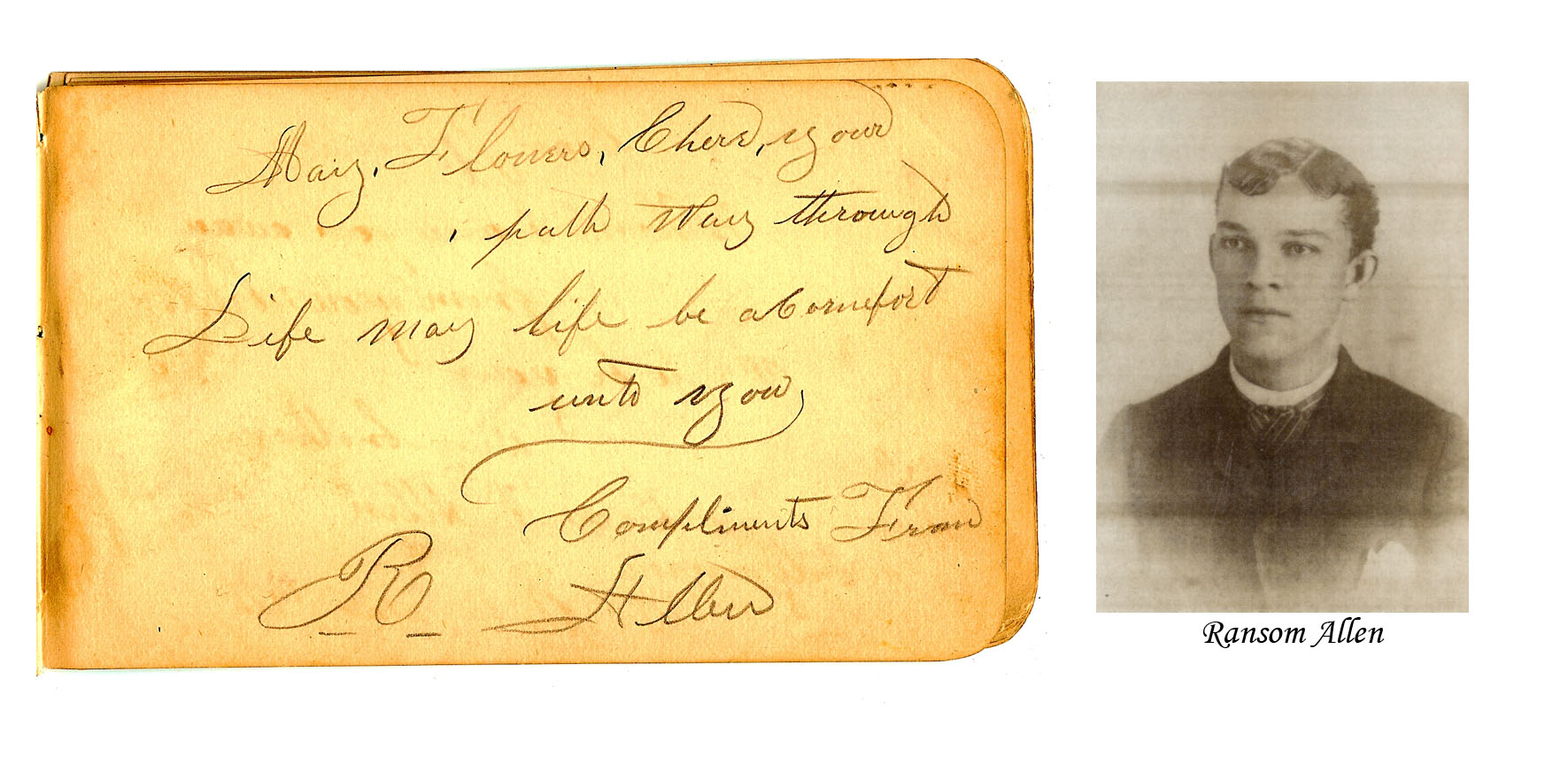
My great grandmother’s brother, Ransom Allen.
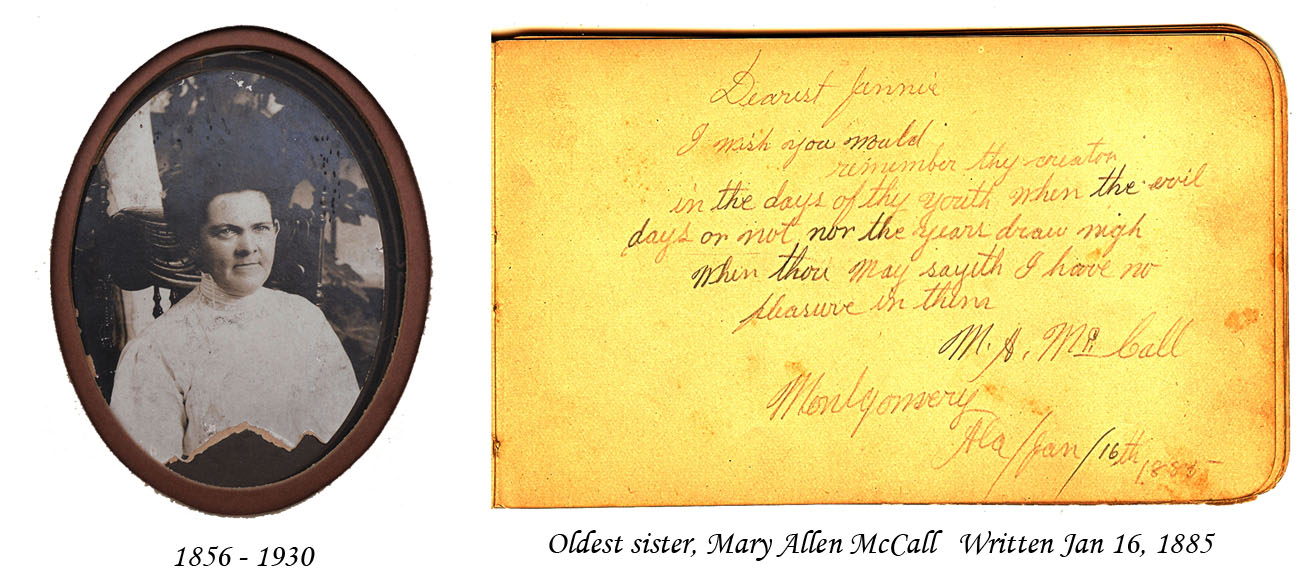
My great grandmother’s oldest sister, Mary Allen McCall.
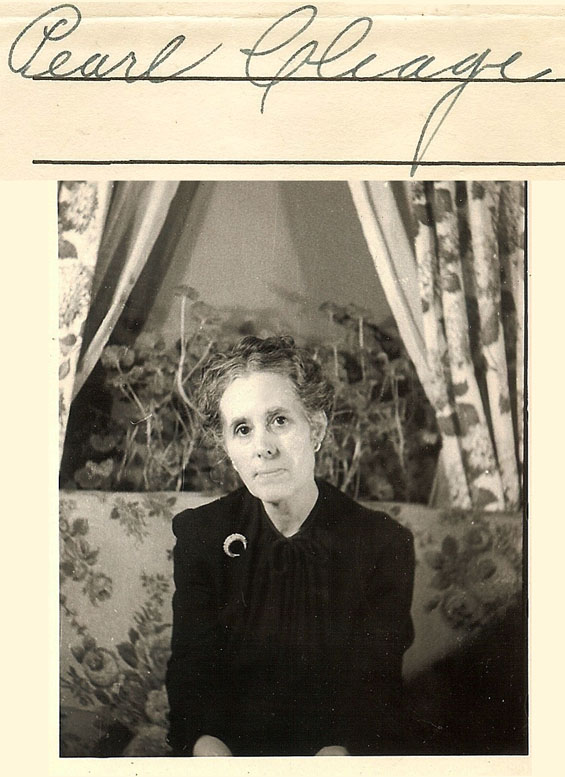
My paternal grandmother Pearl Reed Cleage. I found her signature on some legal papers because all of the letters I have from her were signed “Mother”. I know that she graduated from high school in Indianapolis, IN and received all of her education in Indianapolis but I do not know the names of the schools. Her signature came from a Marion Indiana Probate record for her older brother’s will in 1946.
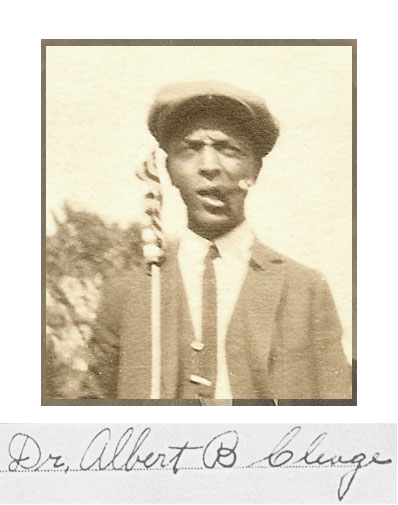
My paternal grandfather, Dr. Albert B. Cleage Sr. He attended the Athens Academy in Athens TN; Henderson Institute in North Carolina; Knoxville College and the Indiana Medical School in Indianapolis, IN. His signature came from his marriage license in 1910.
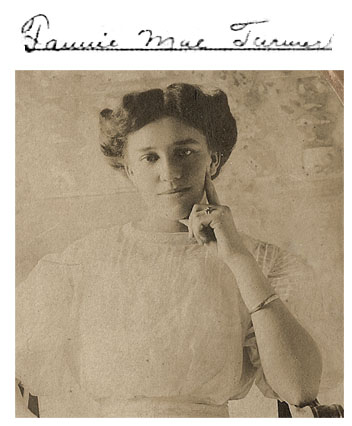
My maternal grandmother, Fannie Mae Turner Graham. Jennie’s daughter, she was educated in Montgomery, AL at State Normal which was a school from elementary to high school, started by the Congregational Church for Black students. Her signature came from the 1910 Montgomery Census form via ancestry.com. She was an enumerator.
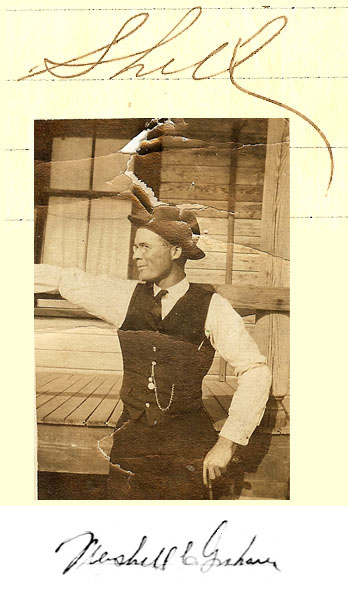
My maternal grandfather Mershell C. Graham. My mother said he taught himself to read. The 1940 census said he finished 8th grade. From Coosada, Elmore Countty, Alabama. His signature came from his WW1 Draft registration card in 1917 via ancestry.com.
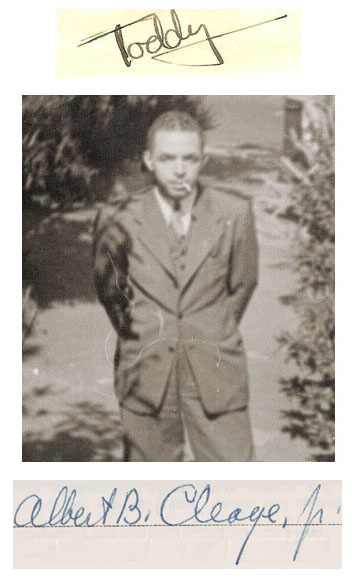
My father Albert B. Cleage Jr. His nickname was Toddy and he often signed his letters home Toddy. He attended Wingert elementary, Northwestern High, Wayne State in Detroit and Oberlin University in Ohio. His full signature came from a Purchaser’s recipt in 1957 for a building Central Congregational Church wanted to buy.
Doris Graham Cleage, Fannie’s daughter, my mother was born in 1923 in Detroit, MI. She attended Thomas Elementary School, Barbour Intermediate, Eastern High and Wayne State University in Detroit. Her signature came from a State of Michigan Teacher Oath in 1964. The “Doris” came from a letter home from Los Angeles in 1944.
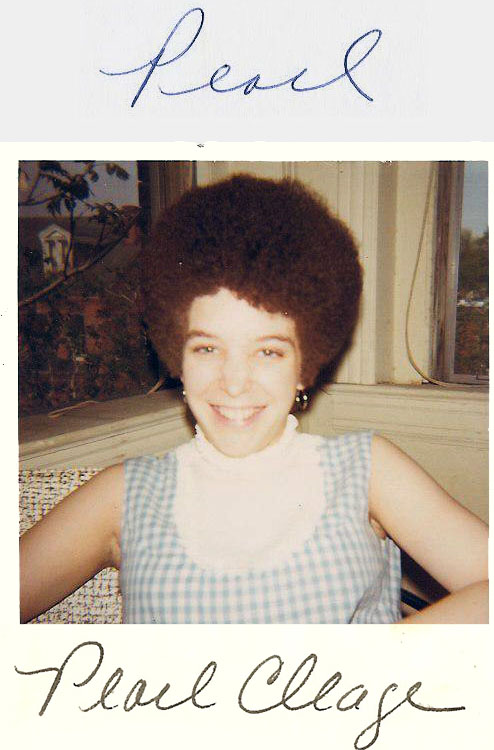
My younger sister Pearl Michell Cleage is Jennie’s great granddaughter. She attended Roosevelt Elementary School , McMicheal Junior High School and Northwestern High School in Detroit. She also attended Howard and Spelman Universities. Her signature came from the return address on a letter in 1991.
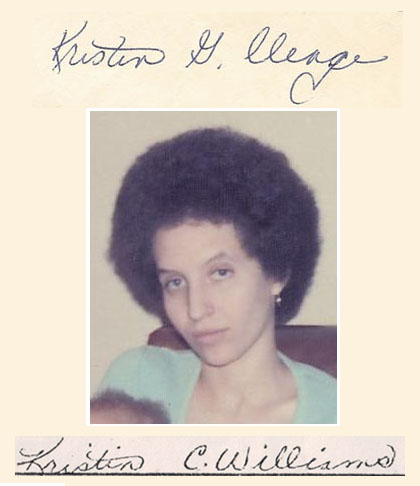
My own signature. Another great granddaughter of Jennie, I was raised in Detroit and attended Brady and Roosevelt Elementary Schools, Durfee and McMichael Junior High Schools, Northwestern High School and Wayne State University, all in Detroit. The bottom signature came from my third daughter’s birth certificate in 1976. The top one came from a deed for the sale of the house on Oregon where I was a witness in 1968.
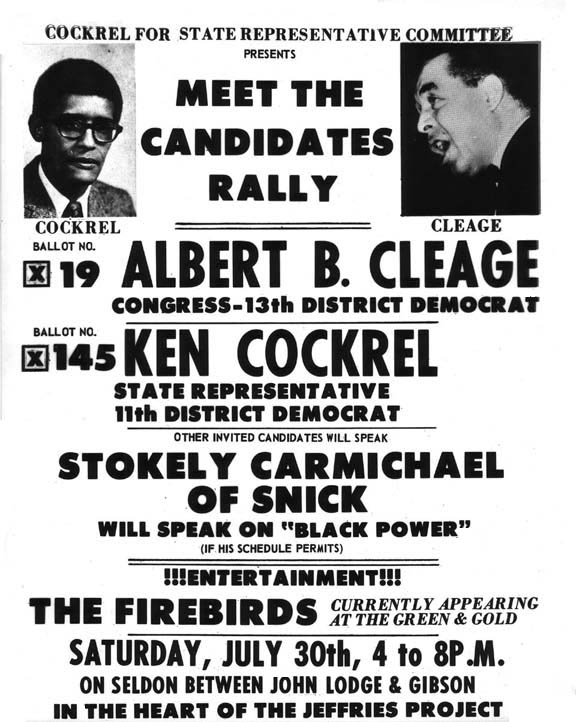
Flyer for political rally. – click all images to enlarge.
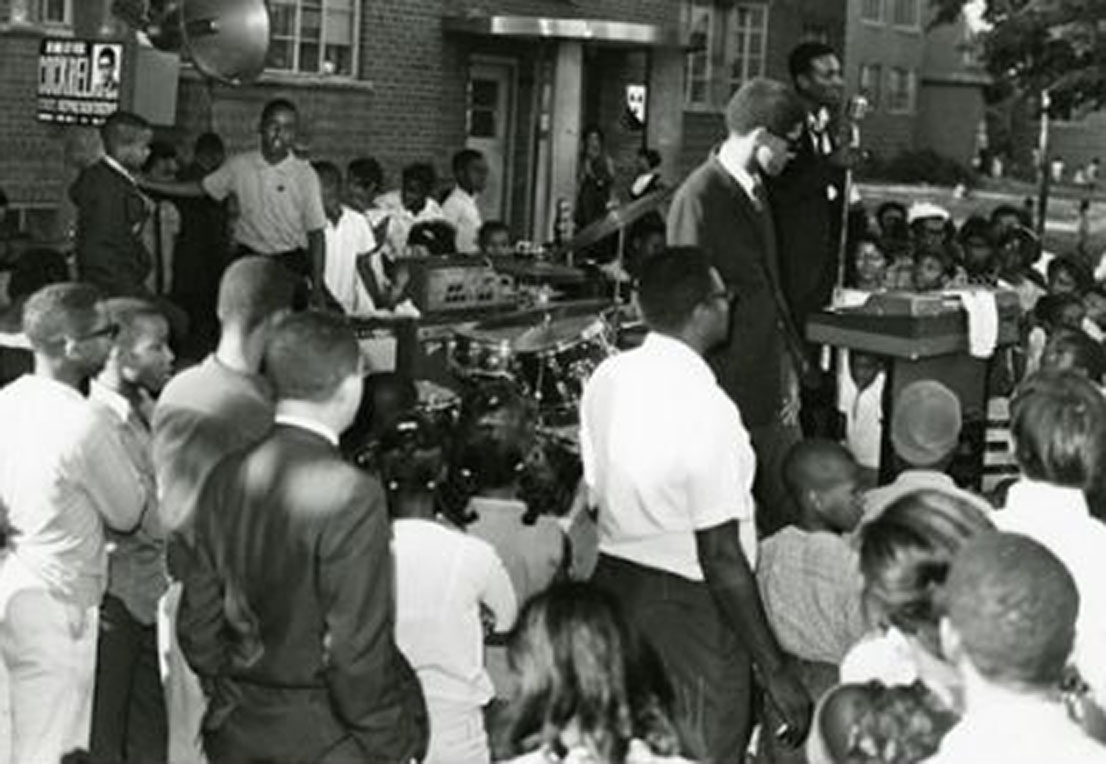
BLACK POWER POTENTIAL: Black Power advocate Stokely Carmichael (later Kwame Ture, right at mic) endorsing the political candidacies of law student Kenneth V. Cockrel, Sr. (left of Carmichael) and Shrine of the Black Madonna founder Rev. Albert B. Cleage, Jr. (later Jaramogi Abebe Agyeman, fourth from left, hands in pockets), Jeffries Projects, Detroit, July 30, 1966. PHIL WEBB PHOTO/THE DETROIT NEWS. (See link to article this photo accompanied at the end of this post.)
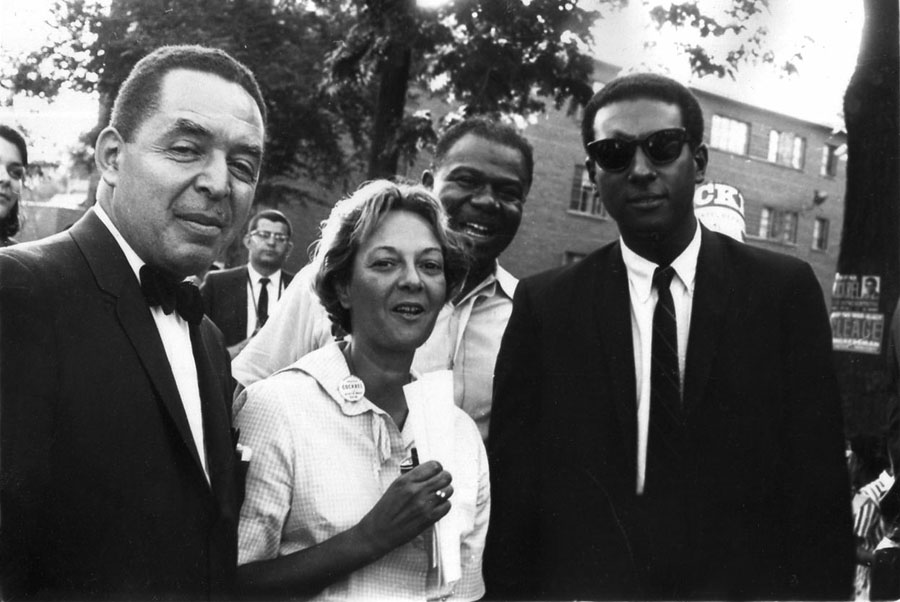
Another News photograph from the rally. Rev. Albert B. Cleage Jr., Leontine Smith, Oscar Hand, Stokely Carmichael.
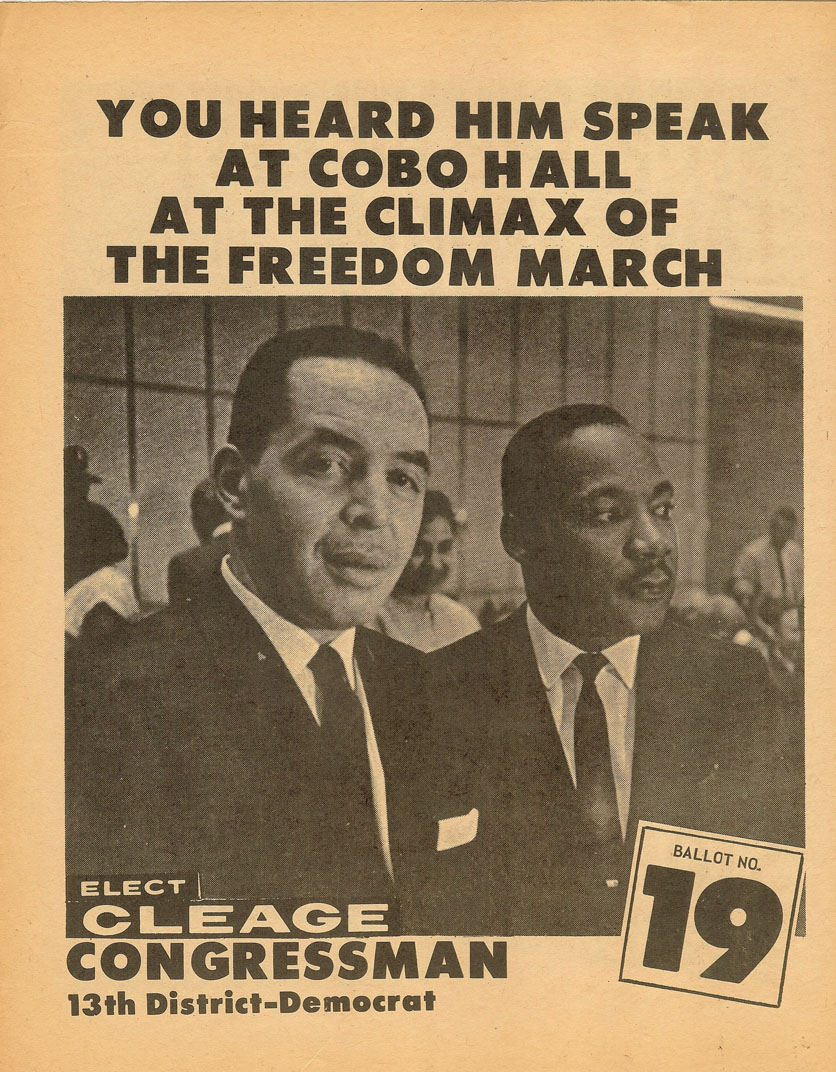
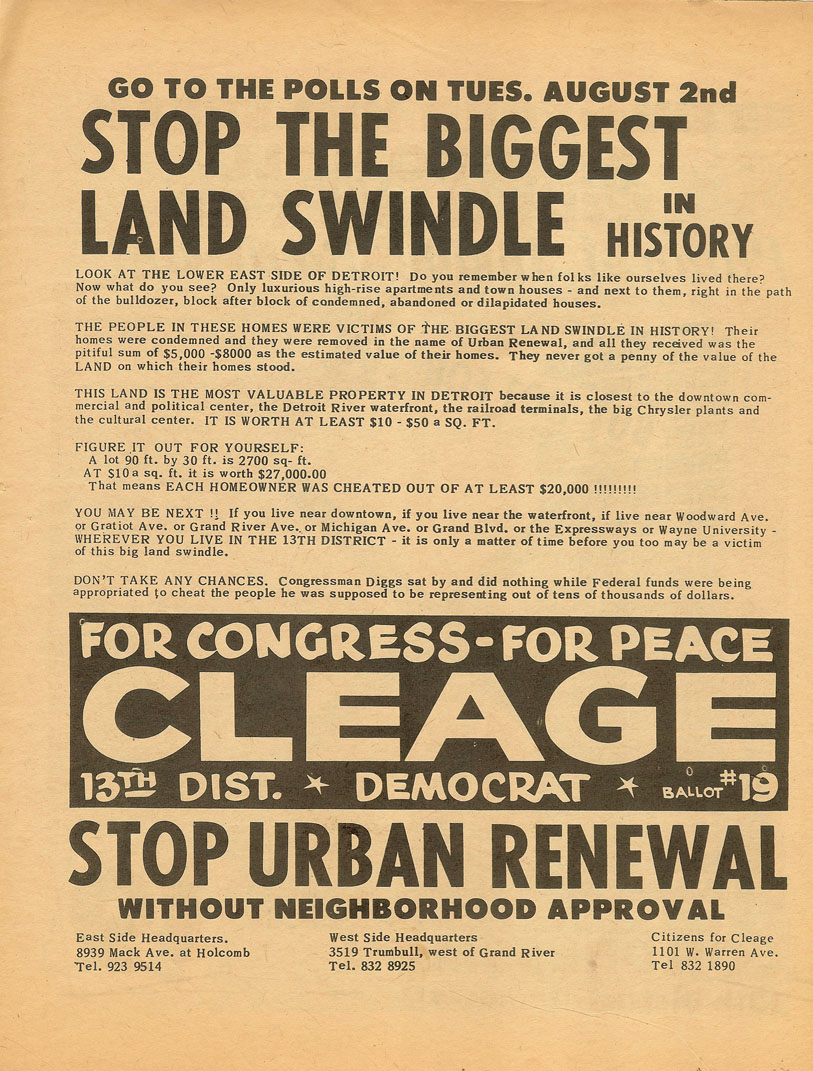
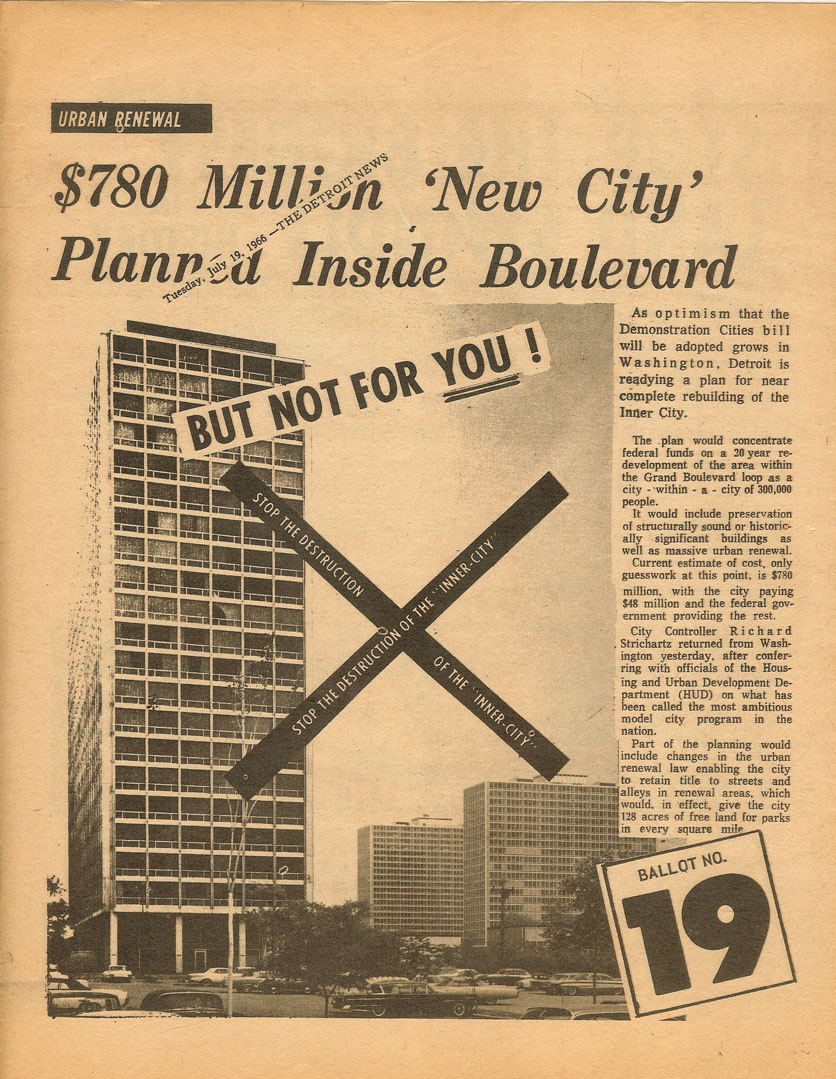
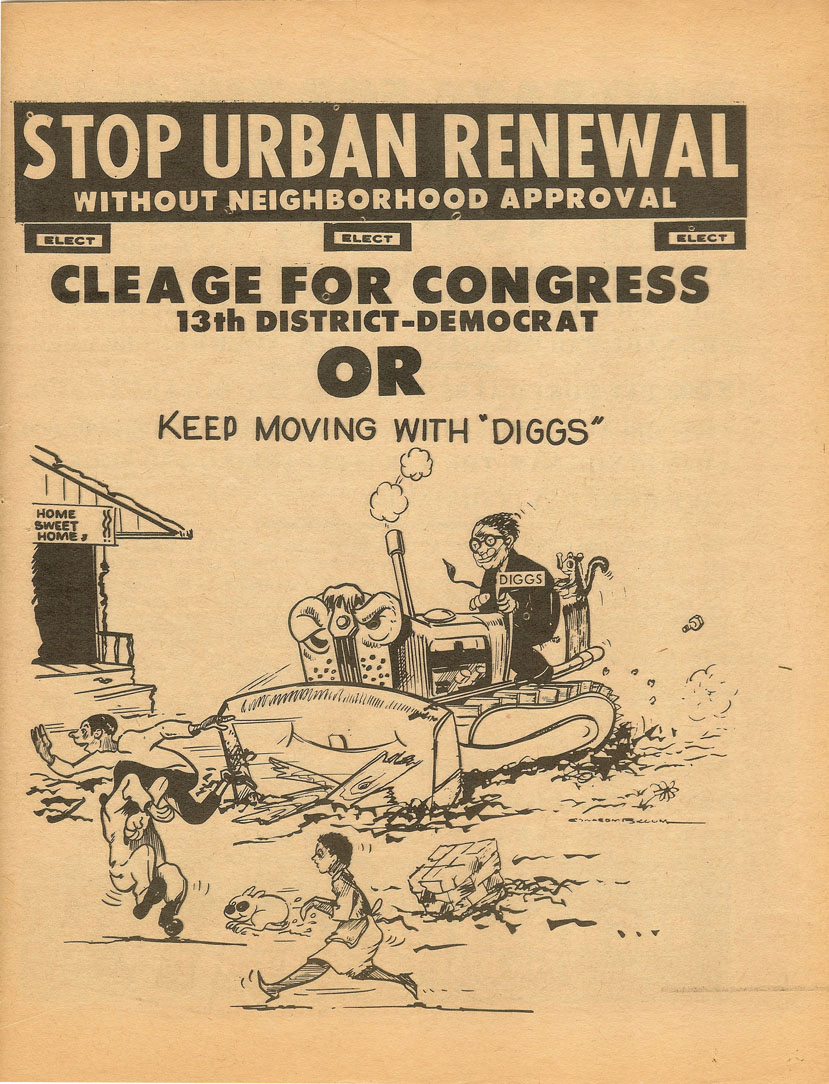
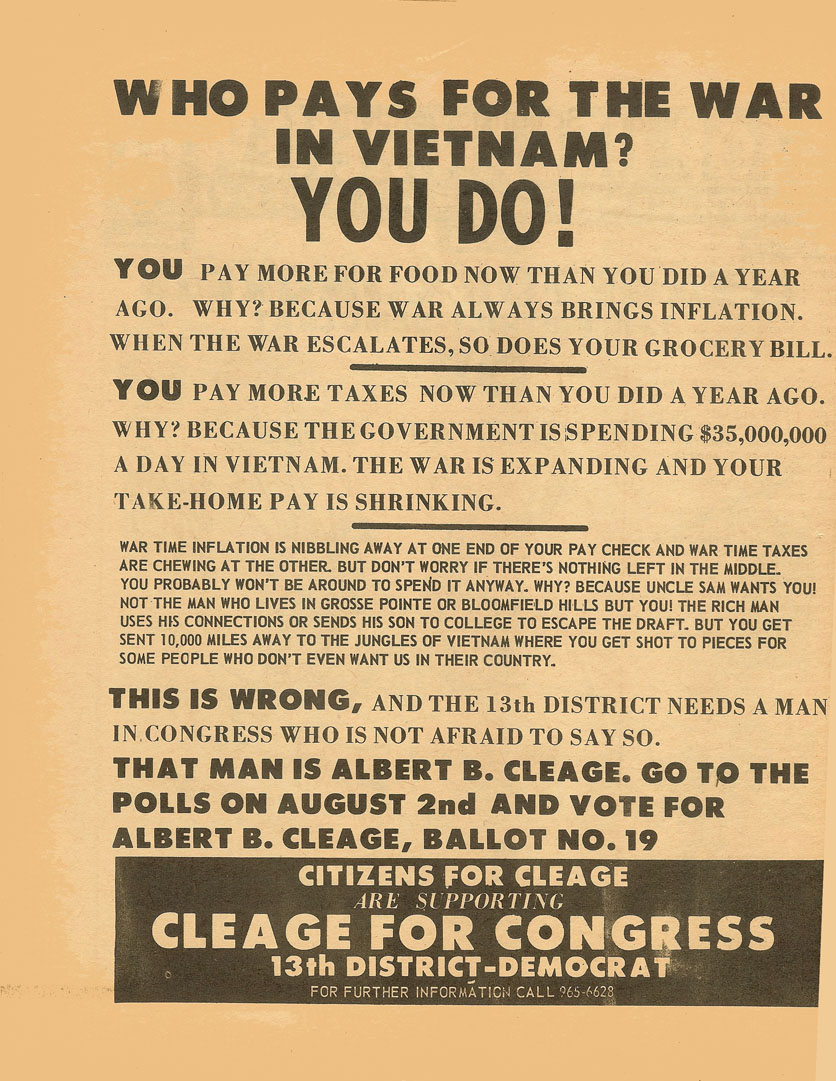
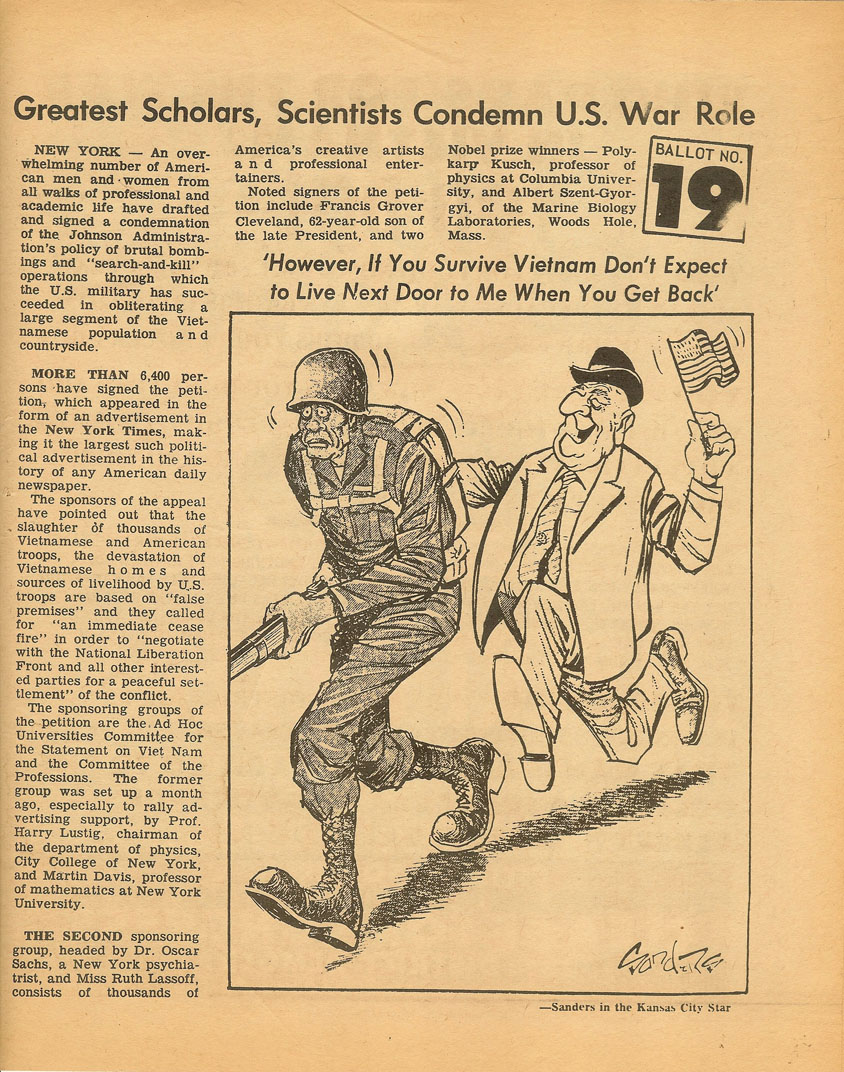
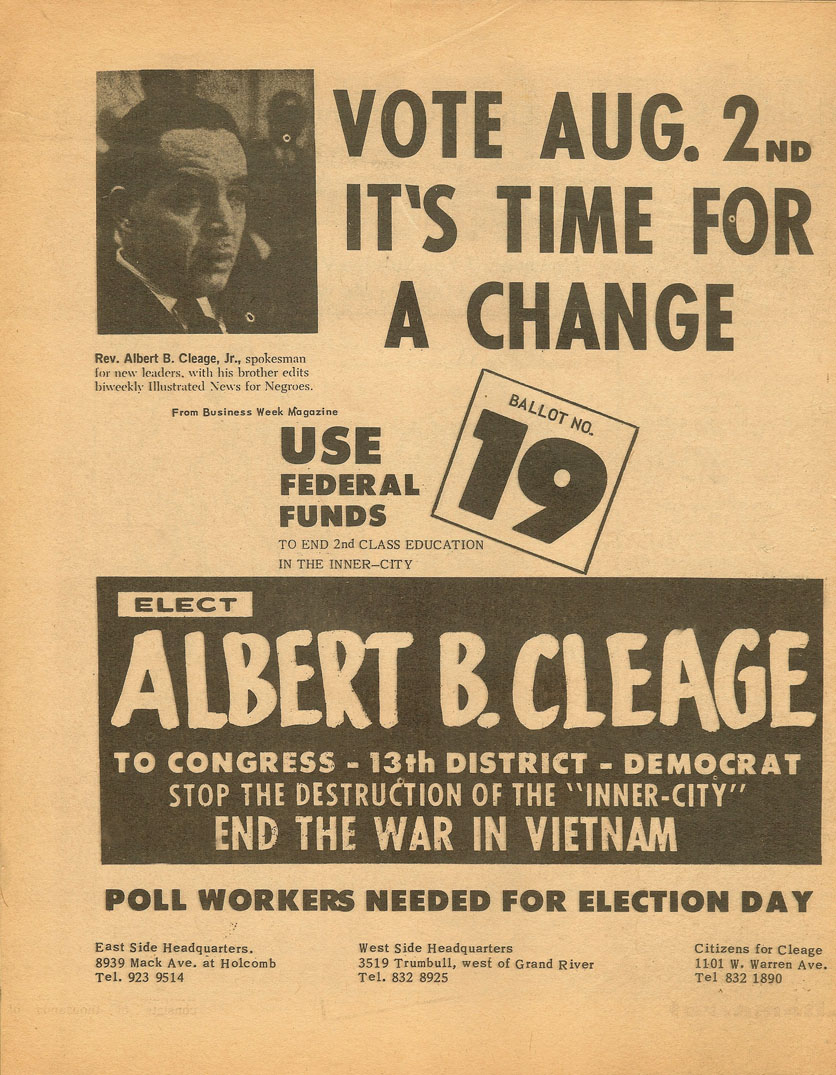
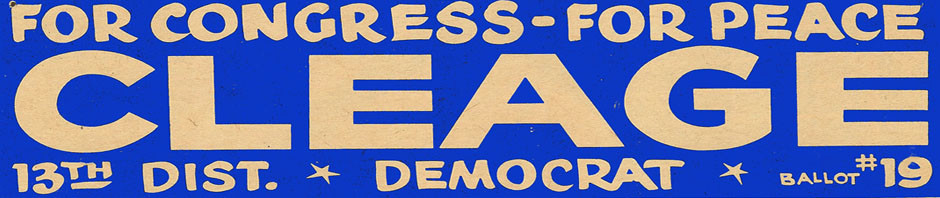
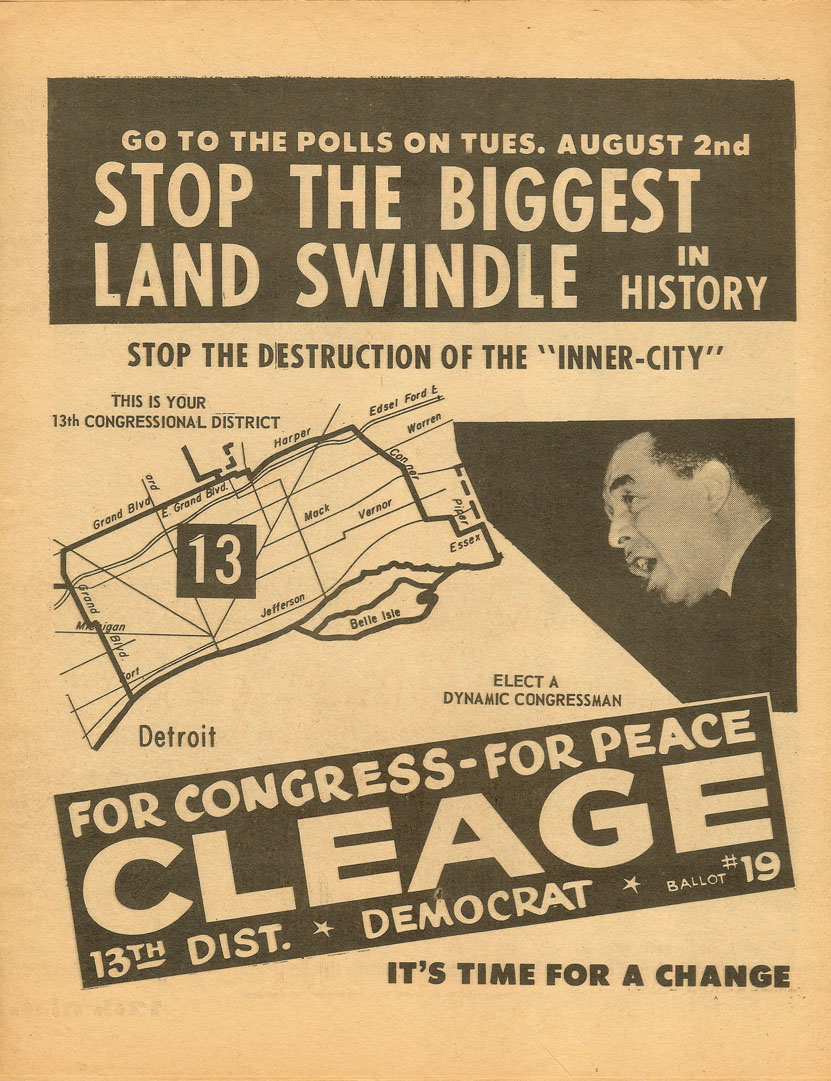
Below is a newsletter from the Cleage for Congress campaign.
Unfortunately neither my father or Ken Cockrel won. I remember passing out campaign literature at Jefferies Projects all day with Jim, now my husband, and attending Ken Cockrel’s “Victory Party ” that night in a flat on Wayne State University’s campus. I just remember it as being almost devoid of furniture and dusty. Jim and General Baker gave me a ride home after midnight where I found that my father, who was supposed to tell my mother that I was going to the party and would be late, got involved in his own after election activities and forgot. Talk about talking fast. I was 20 years old.
To bring history back to the present, read The Roots and Responsibility of Black Power – a reprint in The Michigan Citizen of remarks by historian Paul Lee made at the Detroit City Council meeting on Tuesday, April 3, 2012. He wasaddressing the takeover of the government of the majority-Black city of Detroit by Michigan’s Republican governor. He appealed to their sense of history, to the struggle that Detroiters had gone through in the past to gain political power. The Council voted to turn the city over to a manager appointed by the governor.
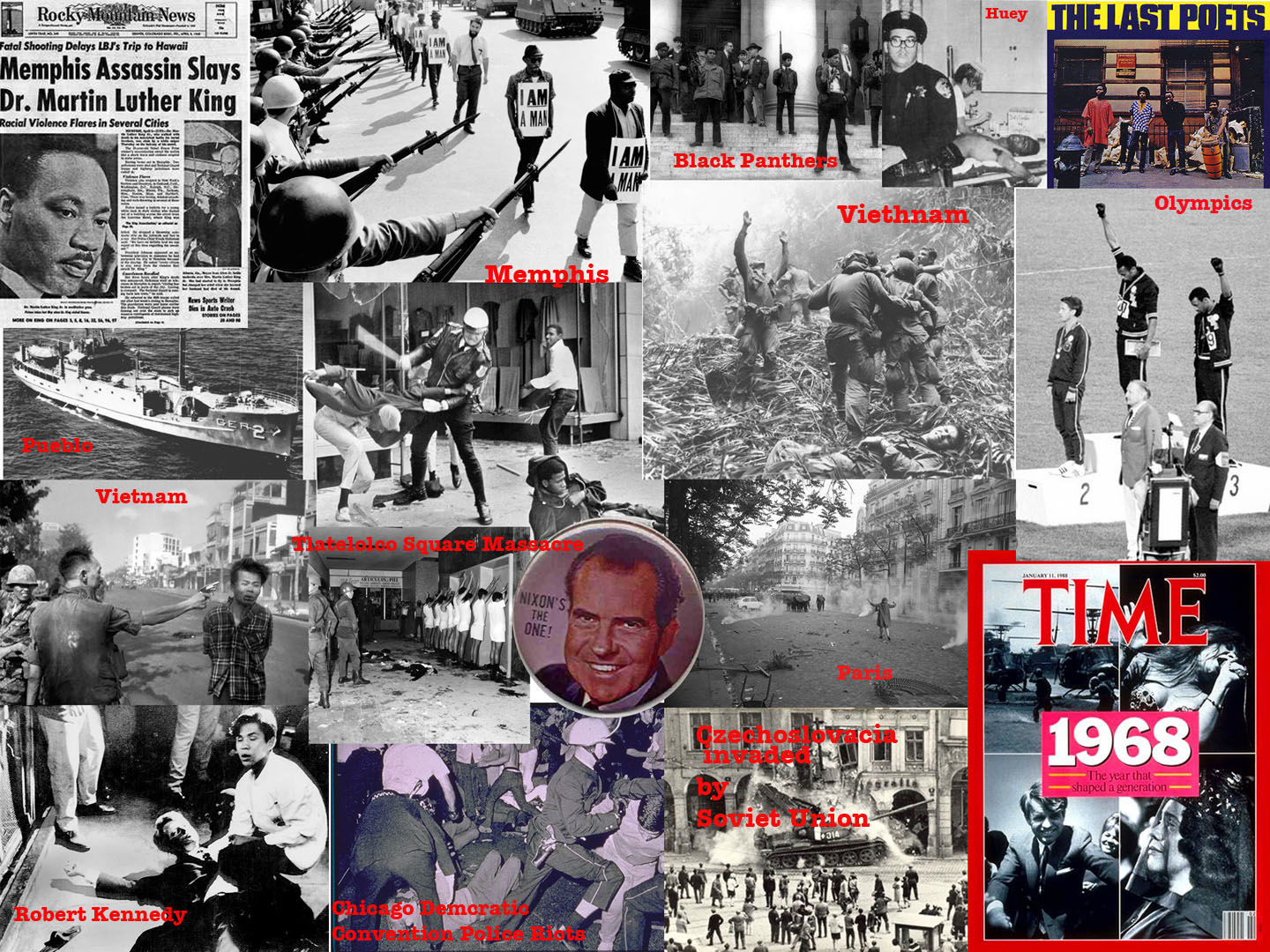
It was 1968. In the United States and around the world there were demonstrations, wars in Vietnam and Biafra, police actions in Mexico and Chicago, riots and tanks in the streets of Prague. Martin Luther King and Robert Kennedy were assassinated. People fighting for their rights were wondering how to change their tactics to fit the repression.
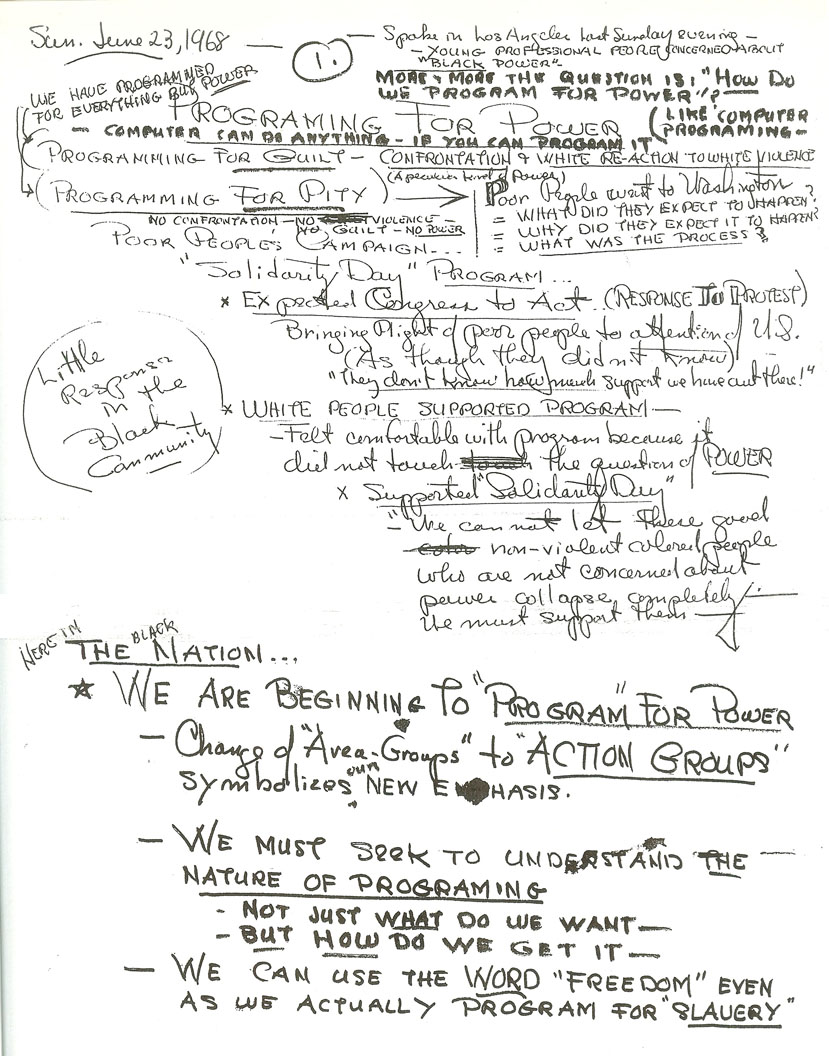
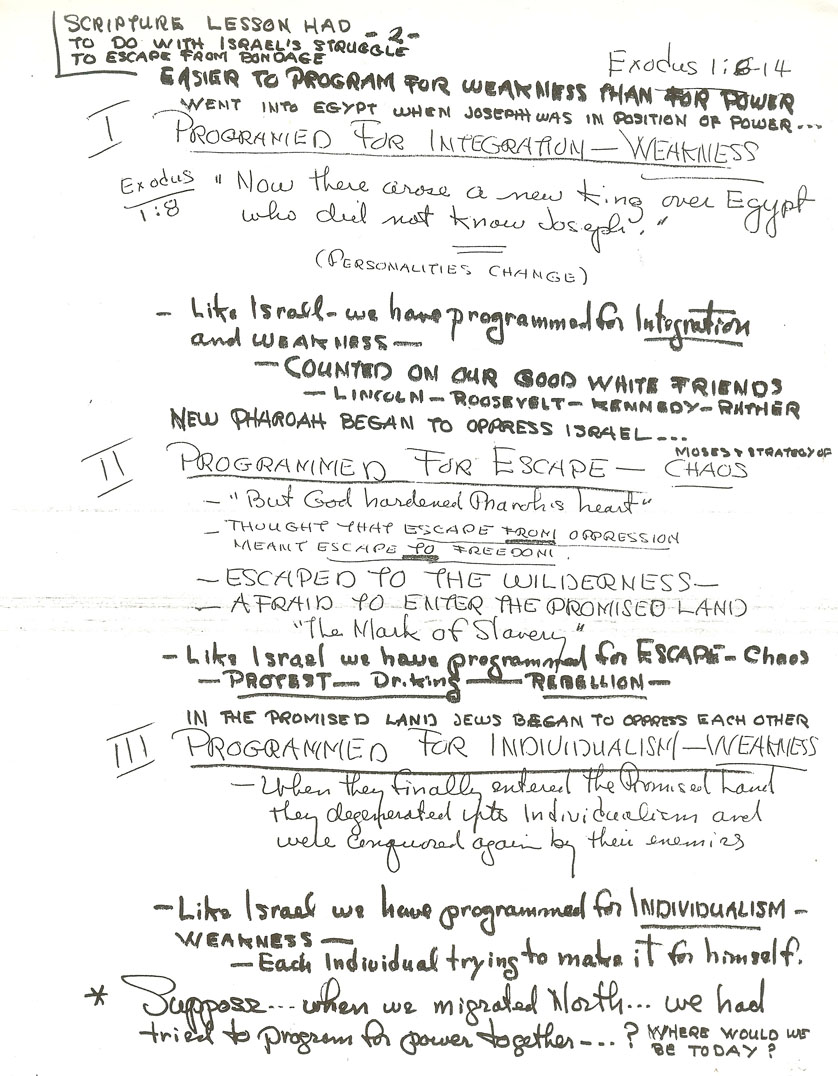
Today is the 103th Anniversary of the birth of my father, Albert B. Cleage Jr (Aka Jaramogi Abebe Ageyeman). In remberance, I am posting his sermon notes from June 23, 1968 where he preached about changes needed to program ourselves for Power instead of slavery. Click to enlarge.
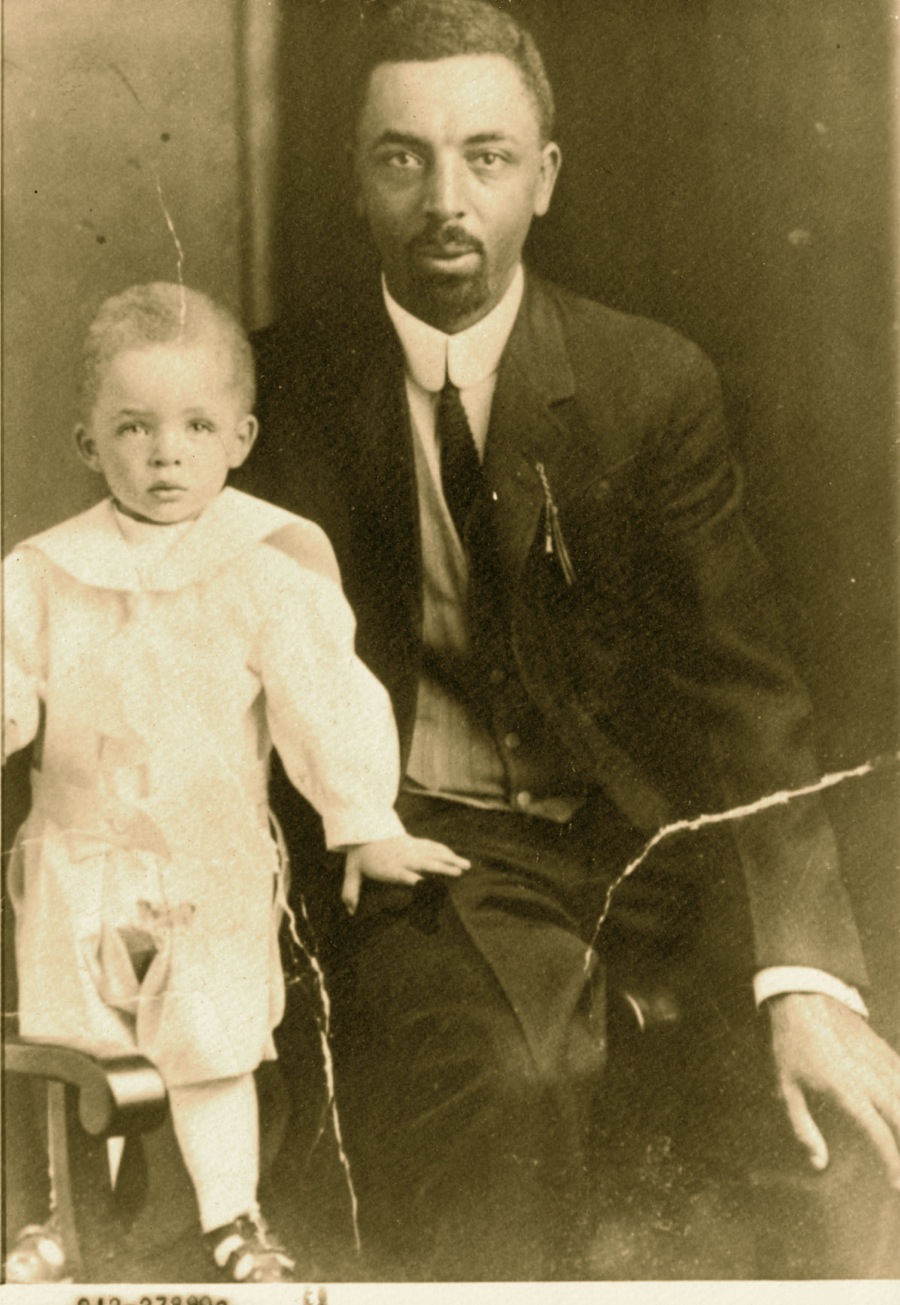
Dr. Albert B. Cleage Sr and son Albert Jr – about 1912. For this year’s April A-Z Challenge I am blogging everyday using items taken from the letters written by my grandfather to my grandmother from 1907 to 1912, starting with “A” and moving right through the alphabet to “Z” during April.
My grandfather did go to the Zoo in 1909 when he was traveling between Detroit and Buffalo while working on the Steamer Eastern States.
July 3, 1909 (Enroute to Buffalo, Steamer Eastern States)
My Dear Pearl:
…Yesterday while Lewis and I were walking up the street in Buffalo, whom did we see standing on the corner (as if lost) but Miss Berry of Indianapolis, her brother and his wife and a Miss Stuart an Indianapolis teacher. Well to be sure we were surprised and they too seemed agreeably so. We spent the day with them taking in the zoo and other points of interest. They visited our boat and we showed them through it…
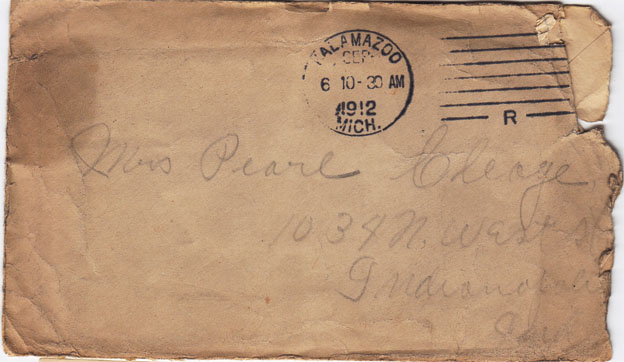
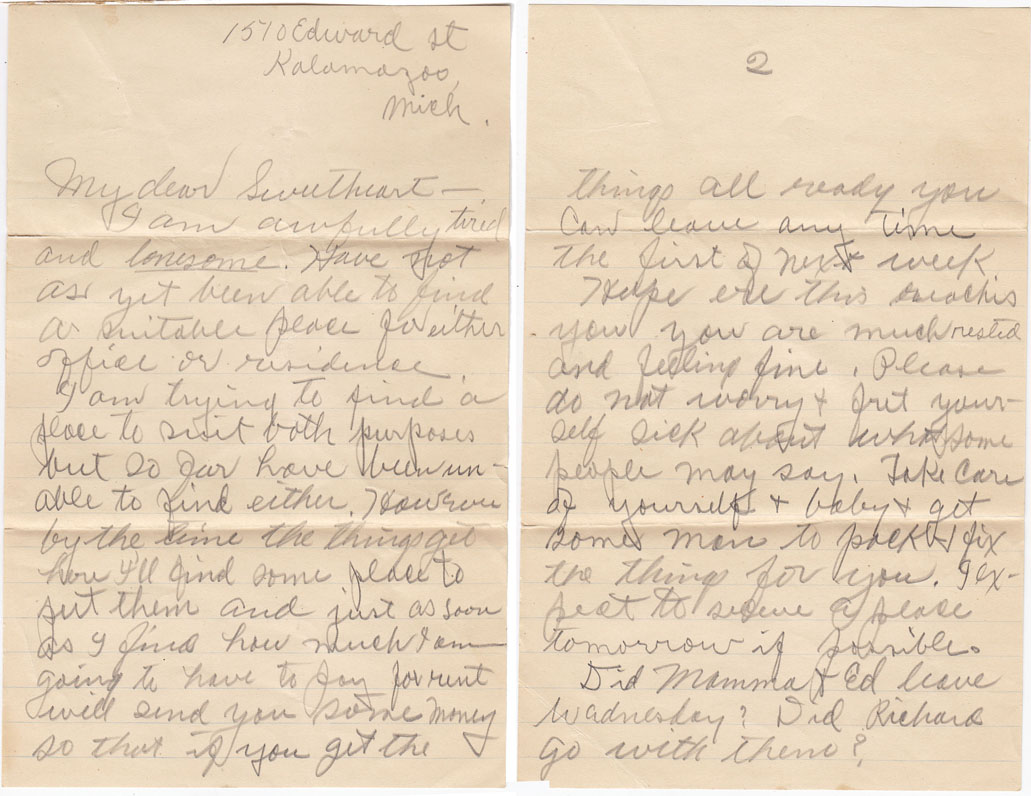
However, it is KalamaZOO that I am more interested in as this is the last letter in the A – Z Challenge and also the last letter my grandfather mailed back to Pearl, now his wife, and little Albert, in Indianapolis as they planned their relocation. My grandfather calls my father “Toddie” in the letter. This is a nickname he kept among family and friends for the rest of his life. This letter is addressed to a house on N. West Street, several blocks from the one on Fayette Street.
June 10, 1912 (From Kalamazoo, MI to Indianapolis)
My dear Sweetheart
I am awfully tired and lonesome. Have not as yet been able to find a suitable place for either office or residence. I am trying to find a place to suit both purposes but so far have been unable to find either. However by the time the things get here I’ll find some place to put them and just as soon as a find how much I am going to have to pay for rent will send you some money so that if you get the things all ready you can leave any time the first of next week. Hope ere this reaches you are much rested and feeling fine. Please do not worry and fret yourself sick about what some people may say. Take care of yourself and baby and get some man to pack and fix the things for you. I expect to secure a place tomorrow if possible.
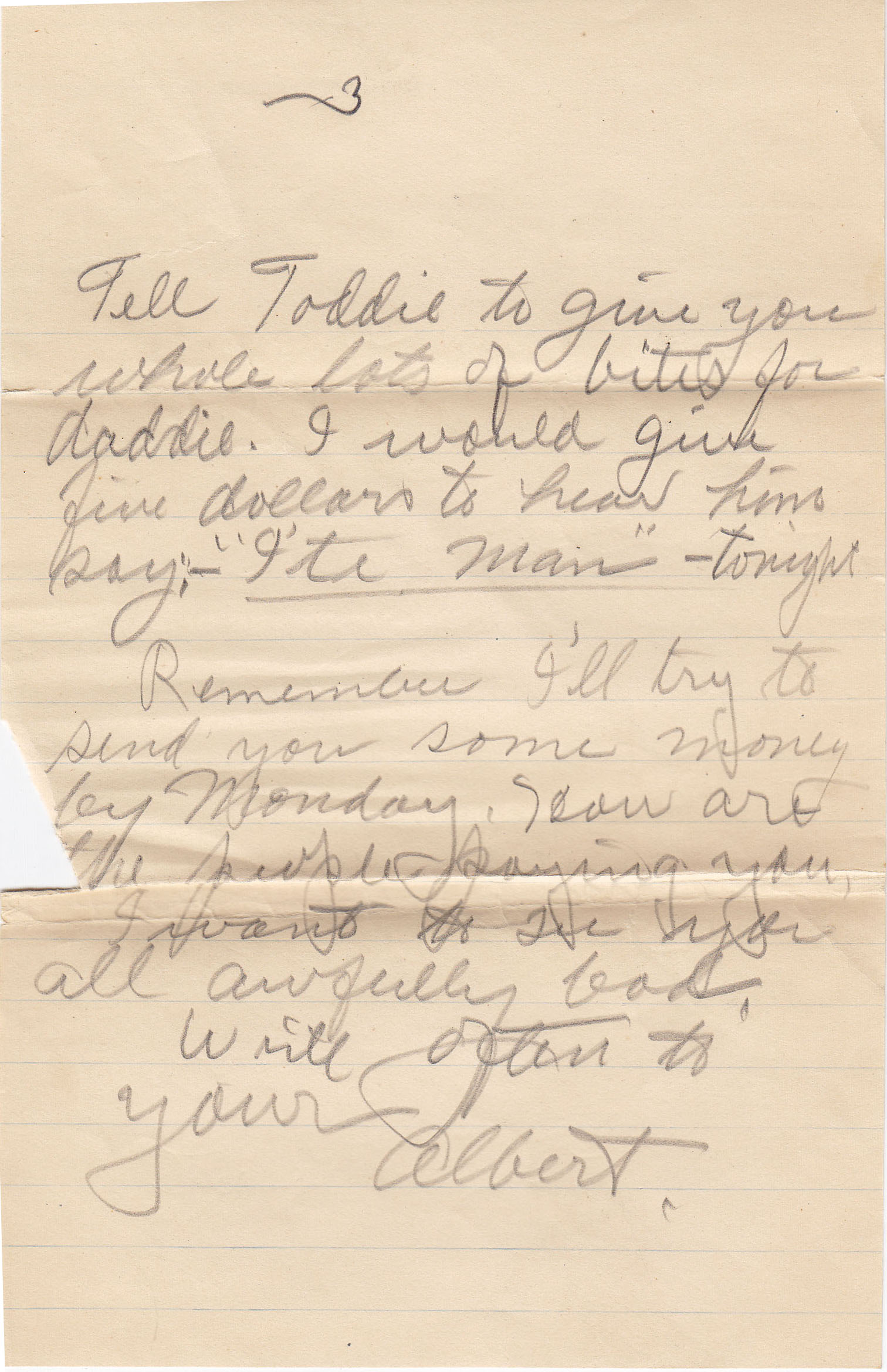
Did Mamma and Ed leave Wednesday? Did Richard go with them? Tell Toddie to give you whole lots of bites for daddie. I would give five dollars to hear him say: – “Ite man” tonight
Remember I’ll try to send you some money by Monday. How are the people paying you, I want to see you all awfully bad.
Write often to your Albert.
___________________
From Michigan Manual of Freedmen’s Progress. Published in 1915. Page 53.
Albert B. Cleage was born in Loudon County, Tennessee, May 15, 1883. He graduated from the Henderson Normal and Industrial College in 1902, from Knoxville College in 1906, and the Indiana School of Medicine in 1910. He was appointed as intern at the city dispensary at Indianapolis and served there as house physician and ambulance surgeon. He began private practice in Kalamazoo in 1912 as the first African American doctor and practiced and lived at 306 Balch Street.
For this year’s April A-Z Challenge I am blogging everyday using items taken from the letters written by my grandfather to my grandmother from 1907 to 1912, starting with “A” and moving right through the alphabet to “Z” during April.
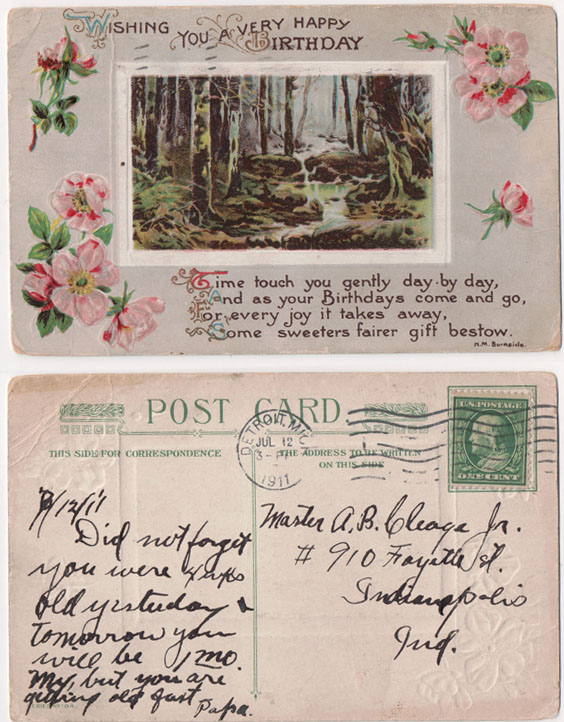
7/11/1911 Did not forget you were 4 weeks old yesterday and tomorrow you will be 1 month. My but you are getting old fast.
Papa
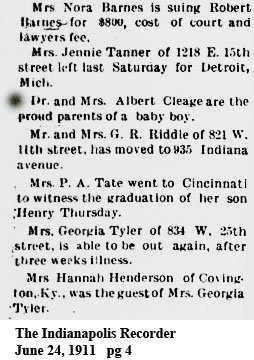
Below is the birth announcement that appeared in the column “Society Gossip”
“Dr. and Mrs. Albert Cleage are the proud parents of a baby boy.”
Prompt for week #28 in The Book of Me is – My Parents, This is a very surface description of my parents. I have written other posts about them. Links to two are below.
Dr. Albert B. Cleage Sr and son Albert Jr – about 1913
My father, Albert, was born in 1911 in Indianapolis Indiana. His parents, Albert and Pearl Cleage, met in 1907 when his father came from Athens, TN to attend Medical School. His mother was born in Kentucky and moved to Indianapolis with her family before 1900. In 1912 my father and his parents moved to Kalamzaoo, MI where his father started his practice. By 1915 they were in Detroit where they remained. He was the oldest of 7 children. His nickname was Toddy and his friends and those who knew him in his youth continued to call him that throughout his life. My father was one of the most intelligent people I have known. He was well read and could think and understand both history and current events. I wonder what he would have to say about the state of the world today.
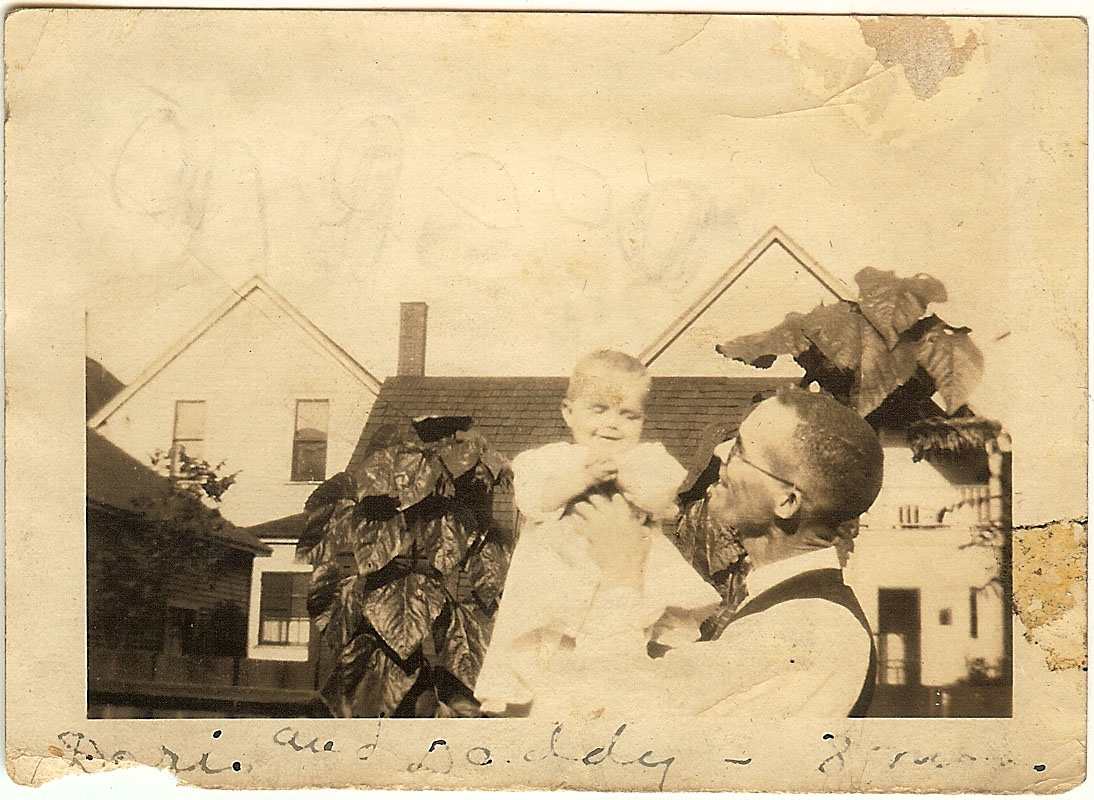
My mother with her father – 1924
My mother, Doris, was born in Detroit in 1923, the third child of Mershell and Fannie Graham who came to Detroit from Alabama in 1917. She lived in Detroit, in the same house on Theodore, until she married in 1943. The only nickname she had was “Stubs”, and the only person I heard call her that (a name she wasn’t fond of.) was her sister’s husband, my uncle Buddy Elkins. My mother was one of the most independent people I have known. She taught in Detroit elementary schools for almost 20 years. She taught reading during the last years before she retired and loved helping children discover reading.
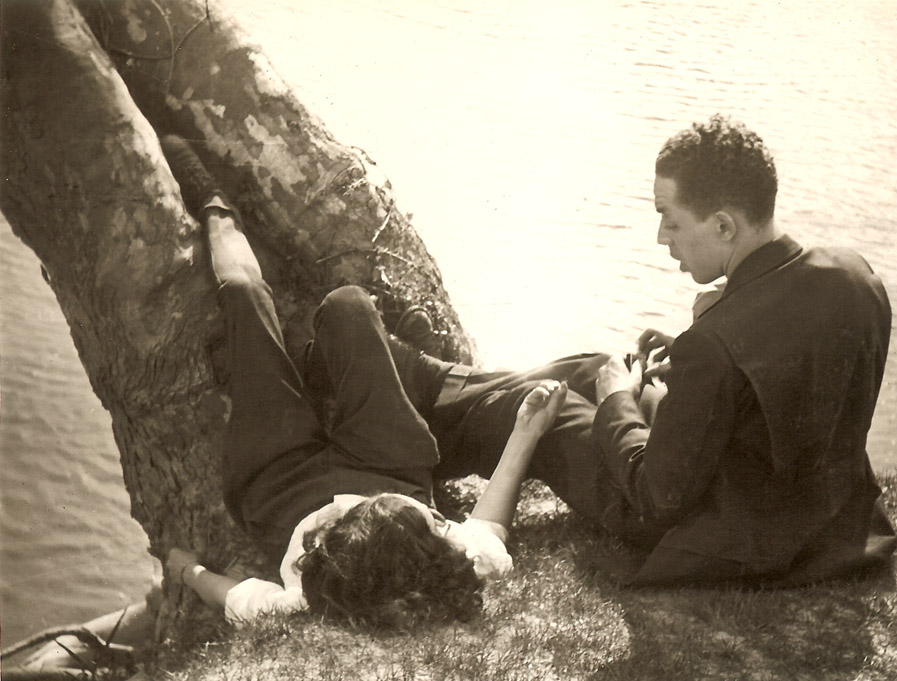
They met at Plymouth Congregational Church and were married there in 1943. In the early years of their marriage they moved several times – to Lexington, KY, to San Francisco and then Los Angeles, CA, to Springfield, MA and then back to Detroit. Judging from letters my father wrote home, their marriage seemed to be one of shared interests and activities, until I was born. At that point, it seems to me, that my father expected my mother to become a traditional wife and mother while he continued the interesting life of organizing and running the church.
They were divorced in 1954. They remained on friendly terms. We saw a lot of my father as he was home during the week so my sister and I ate lunch at his house during school week. When we were older, we spent the weekend with him frequently.
In 1960 my mother married my father’s brother, Henry. They remained together until her death April 30, 1982. My father never remarried. He died February 20, 2000.
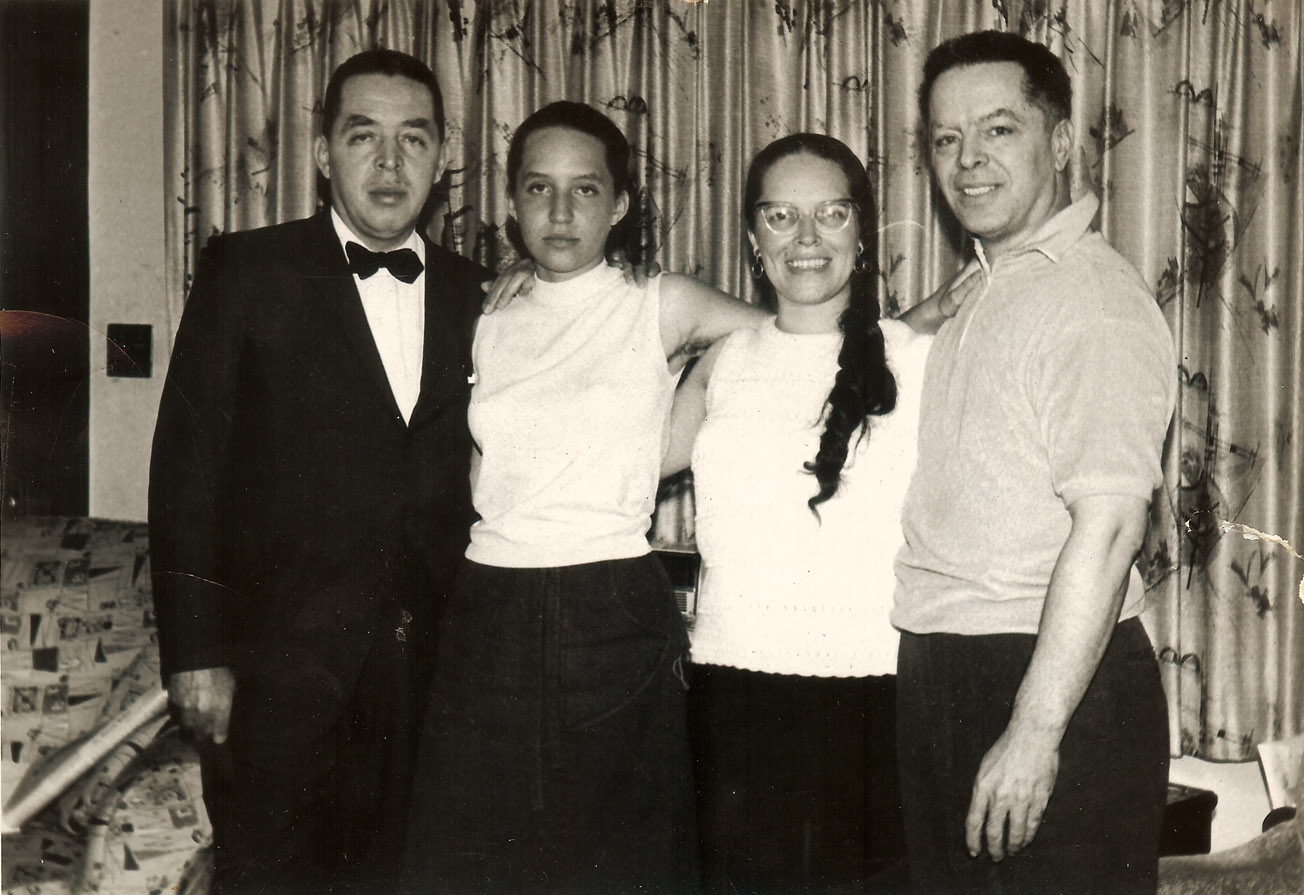
My father, me, my mother, Henry. Photo by my sister Pearl Cleage. 1966.
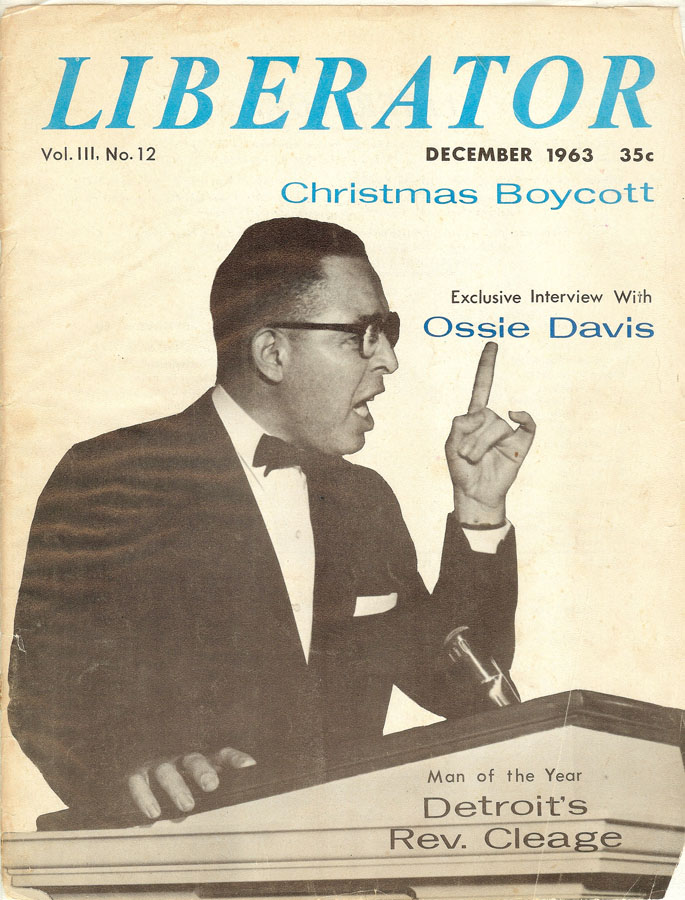
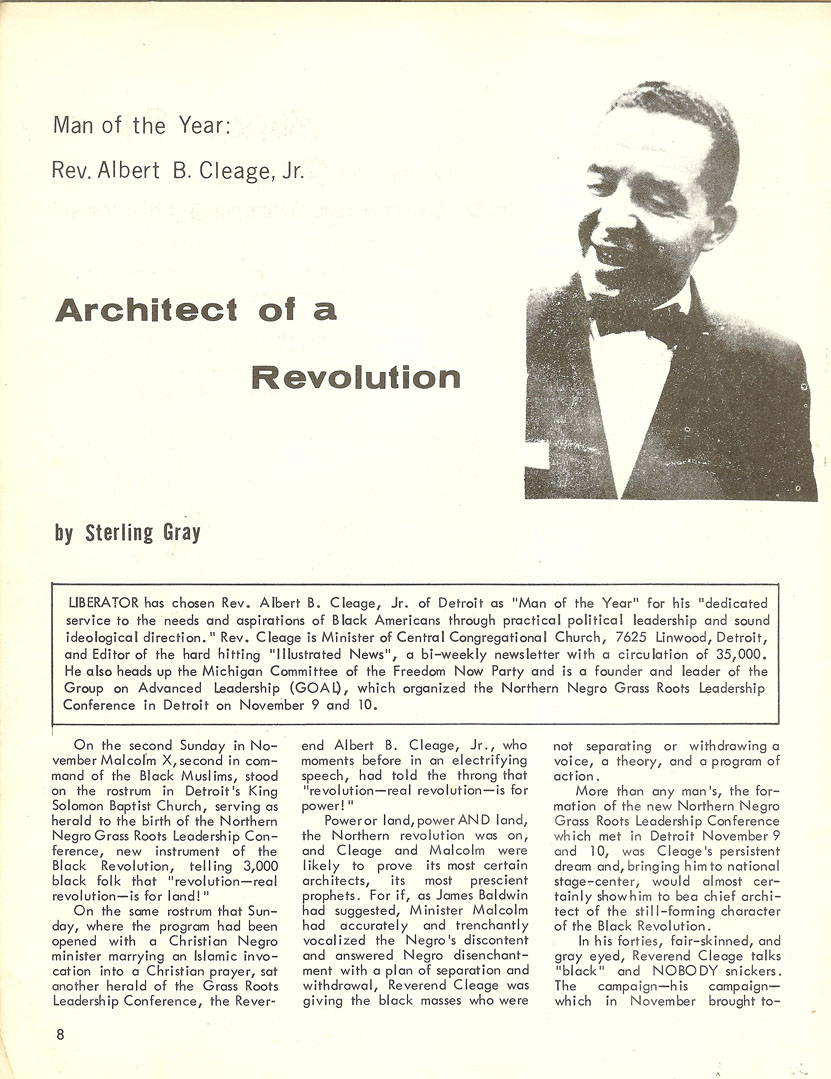
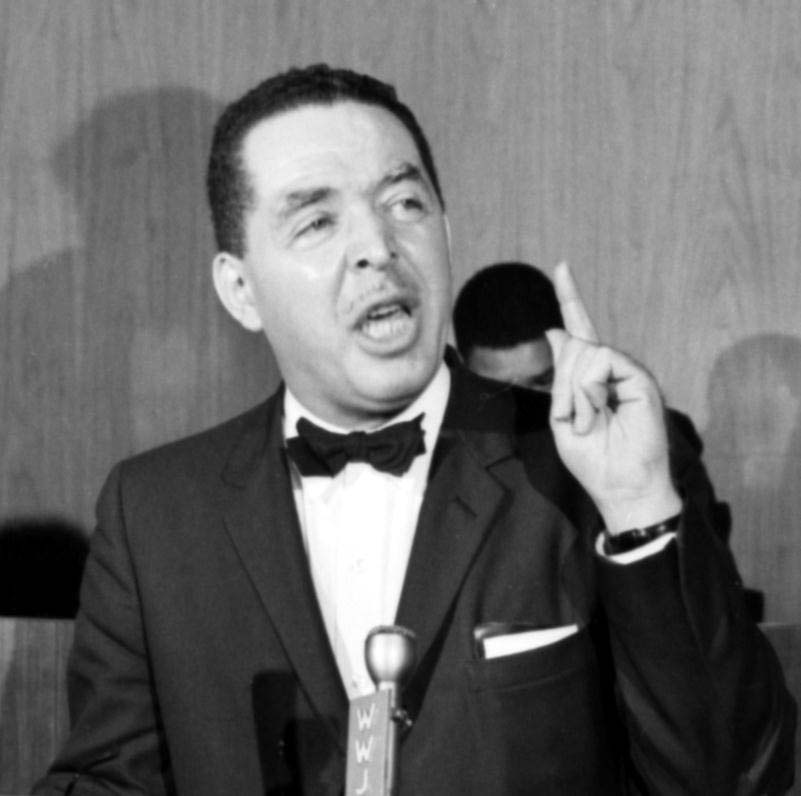
Today I saw a mention of the Liberator and thought of 1963, the year my father, then Rev. Albert Cleage and later known as Jaramogi Abebe Agyeman, was chosen by Liberator magazine as person of the year. Sterling Grey (who wrote the article ) was a pen name of Richard Henry. He was later known as Imari Abubakari Obadele, and served as president of the Republic of New Africa.
My friend, historian Paul Lee shared this today and I am sharing it with you, in remembrance of my father who died on February 20, 2000 on Beulah Land, the Shrine’s farm in South Carolina.
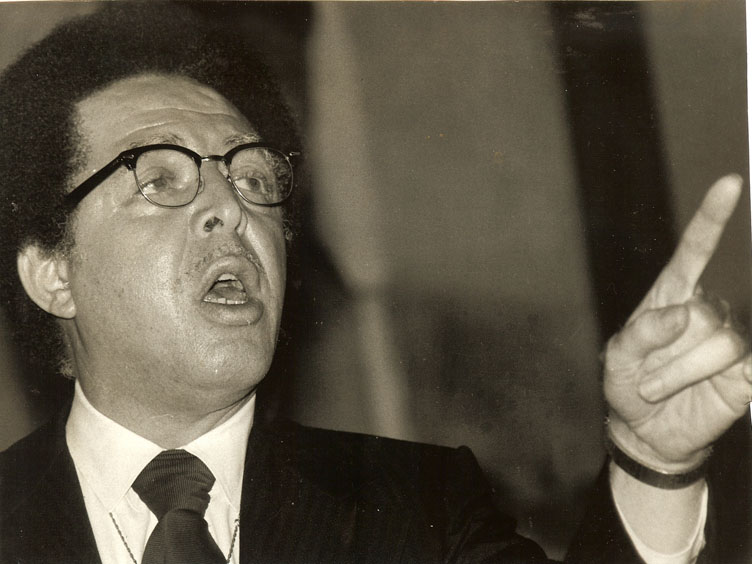
My father preaching about 1972.
‘A Day of Remembrance’ Salute to Jaramogi By Paul Lee
On Feb. 20, 2000, Jaramogi Abebe Agyeman, formerly the Rev. Albert B. Cleage, Jr., the founder and first holy patriarch of the Shrines of the Black Madonna of the Pan African Orthodox Christian Church (PAOOC), returned to the ancestors at the age of 88.
Since then, the PAOCC and others who cherish the life, work and legacy of this visionary theologian, master-teacher, freedom fighter, nation-builder, father and father-figure, who on Easter Sunday 1967 proclaimed the self-determinationist creed of Black Christian Nationalism (BCN) to restore the African roots of Christianity and resurrect the original Israel as a “black nation within a nation,” have commemorated the anniversary of his passing as the “Day of Remembrance.”
COVENANT AND COMMITMENT
This year, I’m honored to share a rare audio recording of Jaramogi Abebe reading the original BCN Creed, his statement of the church’s sacred covenant with God and “Total Commitment” to God’s people, which he promulgated in early 1972.
From then until 2011, church members and often visitors faithfully recited it during every Sunday service at Atlanta, Ga., Beulah Land, S. C., Detroit, Flint and Kalamazoo, Mich., and Houston, Tex., and at the community and college cadres at Georgia, Illinois, New York and Pennsylvania.
FROM MOVEMENT TO CHURCH TO DENOMINATION
Jaramogi Abebe read the creed at a “Black Religion and Black Revolution” symposium at Duke University, Durham, N. C., on April 8, 1972.
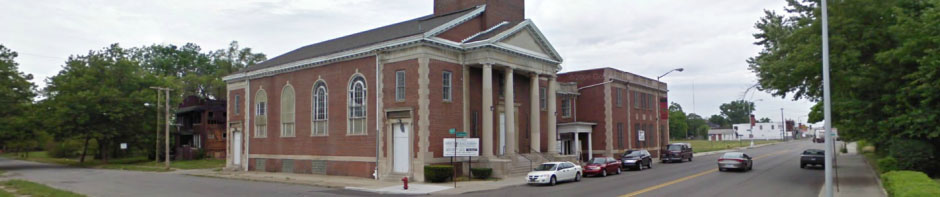
He was then the presiding bishop of the Black Christian Nationalist Movement, founded on March 26, 1967, when he unveiled at Central United Church of Christ, formerly Central Congregational, Glanton Dowdell’s striking nine-by-18-foot Black Madonna and child chancel mural, after which the church would be renamed in January 1968.
From Jan. 27-30, 1972, the then-Reverend Cleage served as the general chairman of the second biennial Black Christian Nationalist Convention at Shrine #1, during which the BCN Movement became the BCN Church, a new “black” denomination. When he read the creed at Duke, he neglected to change “Movement” to “Church” in the final sentence.
In July 1978, the BCN Church evolved into the Pan African Orthodox Christian Church, named in honor of the African Orthodox Church (AOC), which grew out of Marcus Garvey’s Universal Negro Improvement Association (UNIA). After this, “Pan African Orthodox Christian Church” replaced “Black Christian Nationalist Church” in the creed.
NEW TITLE AND NAME
Five days before the Duke appearance, Sala Andaiye (also Adams), the Detroit minister’s new secretary, advised the symposium’s organizer: “We also have given Rev. Cleage an African name, Jaramogi Abebe Agyeman, and address him as Jaramogi.”
His Luo title (Jaramogi) and Amharic and Akan names (Abebe Agyeman), erroneously identified as Kiswahili by an amateur African names book, was given to him by the late Rev. George Bell, the BCN convention coordinator, who soon took the Kiswahili title Mwalimu and the Fulani and Kikuyu names Askia-Ole-Kariuki.
ORIGINAL BCN CREED
Below is the original creed read by Jaramogi Abebe (all-capitals represent the bold font used for “believe”; “INDIVIDUALISM” was capitalized in the original):
“I BELIEVE that human society stands under the judgment of one God, revealed to all and known by many names. His creative power is visible in the mysteries of the universe, in the revolutionary Holy Spirit which will not long permit men to endure injustice nor to wear the shackles of bondage, in the rage of the powerless when they struggle to be free, and in the violence and conflict which even now threaten to level the hills and the mountains.
“I BELIEVE that Jesus, the Black Messiah, was a revolutionary leader, sent by God to rebuild the Black Nation Israel and to liberate Black people from powerlessness and from the oppression, brutality, and exploitation of the white gentile world.
“I BELIEVE that the revolutionary spirit of God, embodied in the Black Messiah, is born anew in each generation and that Black Christian Nationalists constitute the living remnant of God’s chosen people in this day, and are charged by him with responsibility for the liberation of Black people.
“I BELIEVE that both my survival and my salvation depend upon my willingness to reject INDIVIDUALISM and so I commit my life to the liberation struggle of Black people and accept the values, ethics, morals and program of the Black Nation, defined by that struggle, and taught by the Black Christian Nationalist Movement.”
At the end of the recording, Jaramogi Abebe pauses, then says, “That’s a creed.” Indeed!
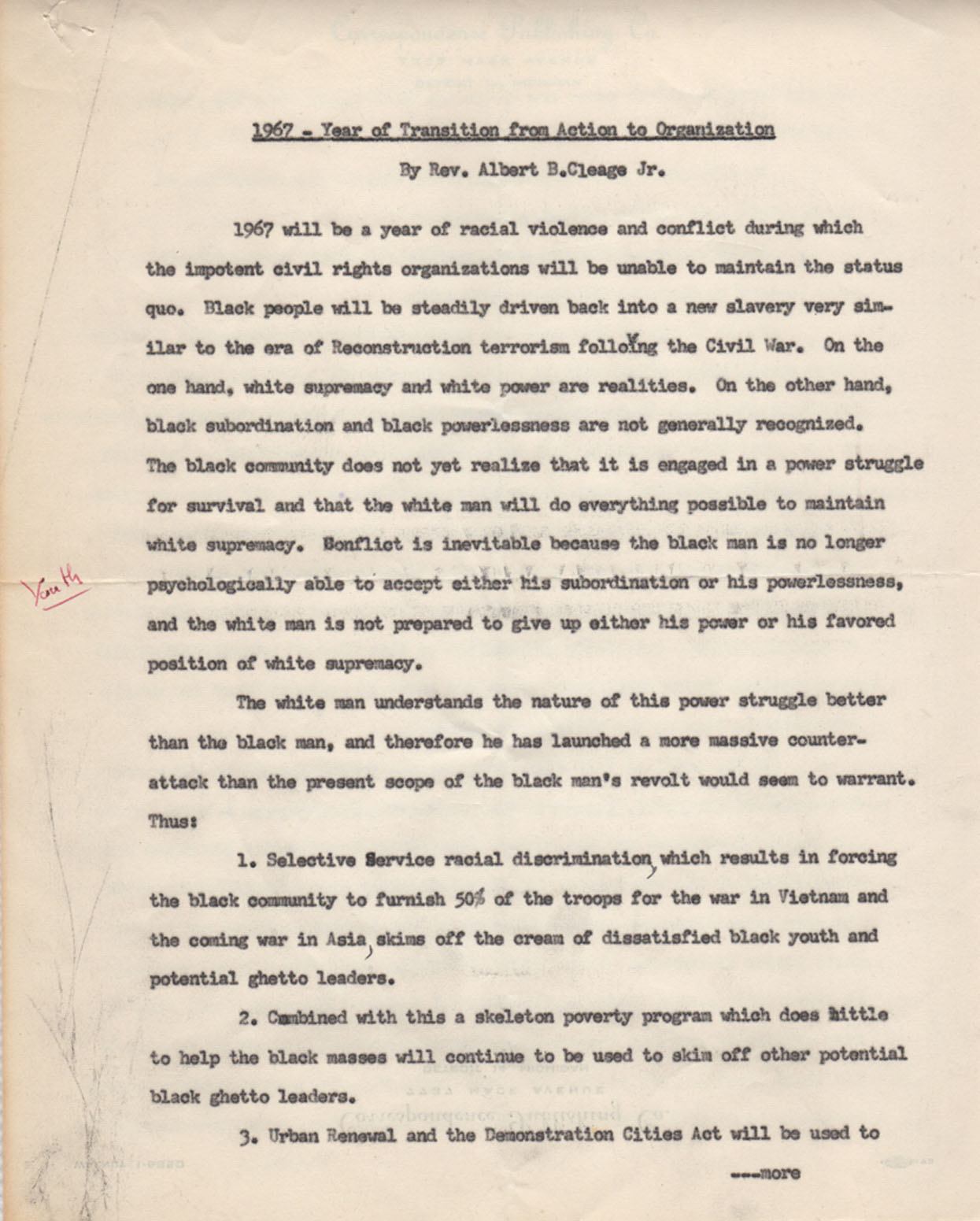
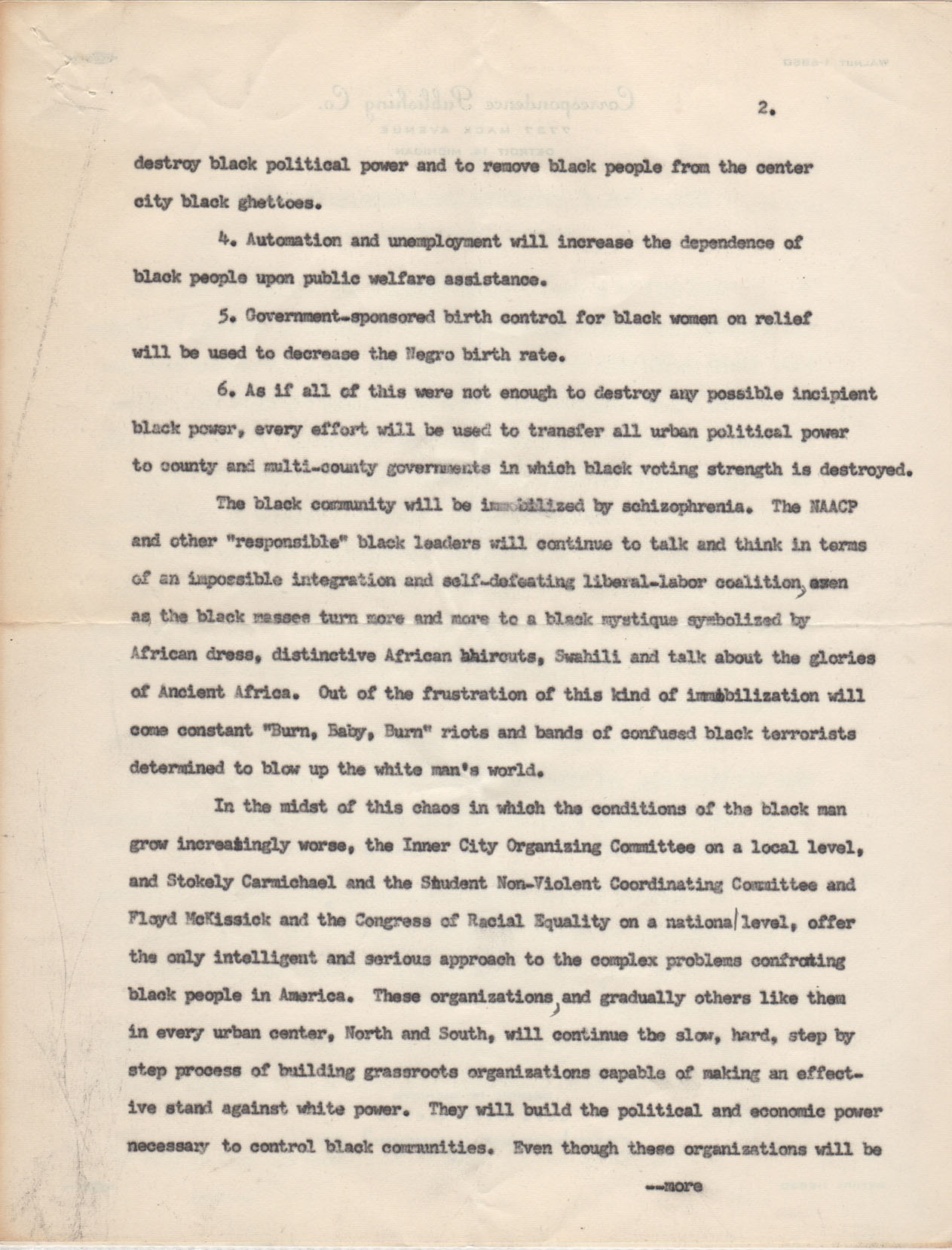
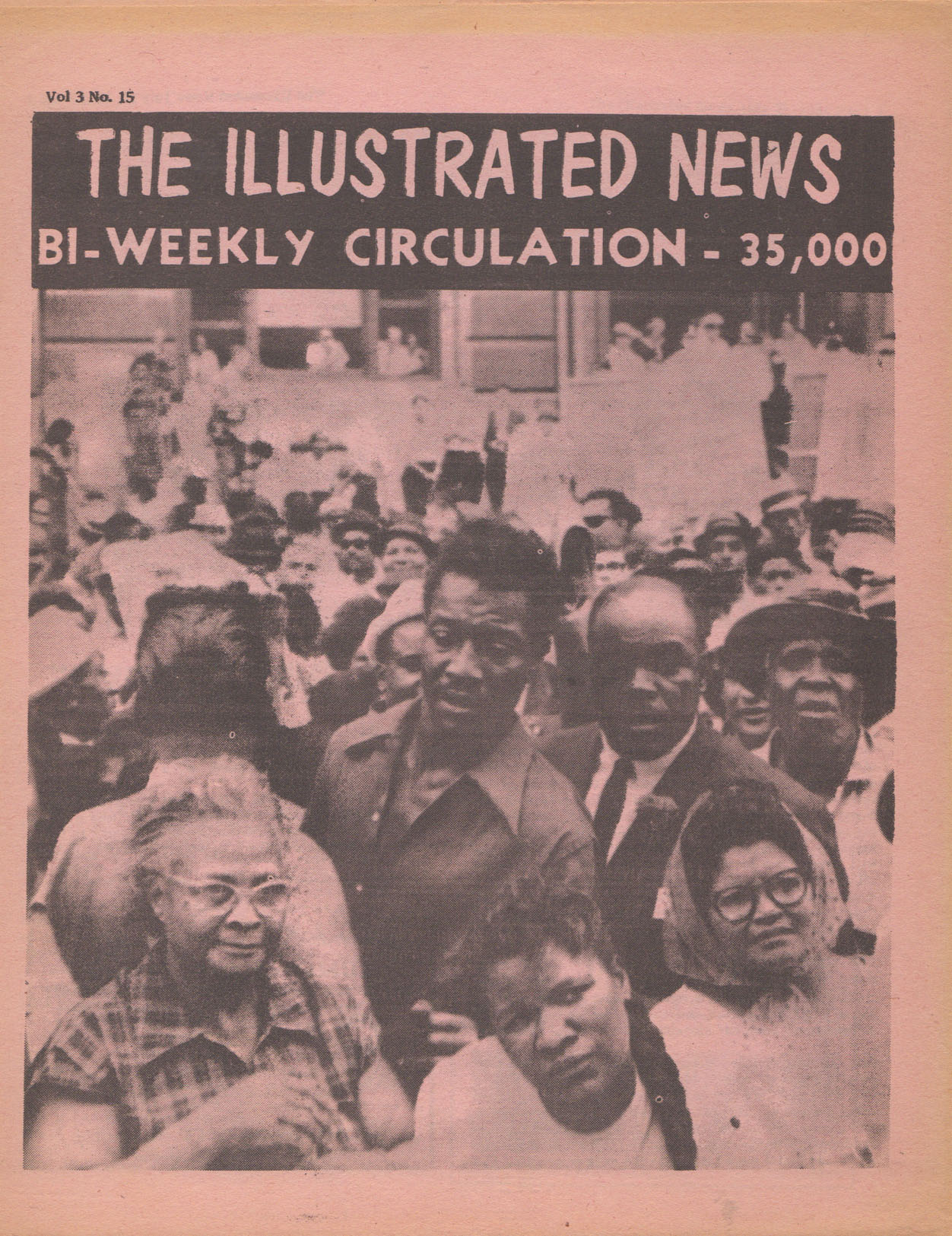
This is a copy of an article my father, Rev. Albert B. Cleage aka Jaramogi Abebe Agyeman, wrote, I believe, for a column in the “Michigan Chronicle” for January 1967. You can read the sermon notes for his New Year’s Day sermon that year here “The Faith of a Mustard Seed”.


 .
.