The Indianapolis Star – 20 March 1911 – Dr. Cleage on a case of suicide

 
Albert B. Cleage 1909

20 Mar 1911 Monday Article
Guard Body of Suicide – Policemen Hold Long Vigil. 
Estal Loc Townsend Cheats Tuberculosis by killing himself with Carbolic Acid After Attempt to End Life by Shooting Fails.

After Estal Lee Townsend, 19 years old, 227 East New York street, a driver, had committed suicide in a room at 120 North Pennsylvania street yesterday, bicycle officers guarded the body for almost three hours until coroner Durham arrived.  The officers were acting under specific instructions given earlier in the week that bodies of persons dying from other than natural causes should not be touched until seen by the coroner.

Townsend swallowed the contents of a phial of carbolic acid while visiting a friend, Frank Black, at the Pennsylvania street address.  The suicide was a victim of tuberculosis.  He tried to kill himself last Friday night.  It is said, by shooting.  He was in the act of firing a bullet into his brain when a friend knocked the weapon from his hand.  The bullet penetrated the ceiling of Townsend’s room.

Yesterday Townsend spent several hours in Black’s room and although despondent gave no hint of his intention to end his life.  About 4:45 o’clock Townsend stepped into an adjoining room.

EMPTY BOTTLE TELLS STORY

A few minutes later Black heard groans and found his friend sitting on the floor at the side of a bed.  An empty bottle labeled carbolic acid was on the floor beside him.  Black asked Townsend if he had taken the acid and the dying boy nodded his head in the affirmative.

Black notified the police and Bicyclemen Trimpe and Bernsuer went to the room with Dr. A.B. Cleage of the City Dispensary, the policemen worked over the young man, but he died in agony within a short time.

Efforts were made to find Coroner Durham but he was not at his home or office.  Trimpe and Bernauer would allow no one to touch the body and it lay on the floor until nearly 7 o’clock.  The two officers in the meantime had been relieved by Bicyclemen Schlangen and Glenn.  Coroner Durham finally was reached and he pronounced the case one of suicide.

Relatives of Townsend said he had been suffering from tuberculosis and had realized that he could not recover.  The body was taken to an undertaking establishment and will be cared for by a sister of Townsend, Mrs. Mary Dickson, 52, West Twenty-sixth street.

Part 4 – Eliza’s Daughters by My Mother Doris Graham Cleage

My mother wrote this as part of her family history memories for my sister and me in 1980.  I am putting the whole piece here then I will reprint each sister’s section with the new information I found and corrections that needed to be made after I found descendants for most of them.  My mother’s grandmother was Jennie Virginia Allen Graham.  The women she writes about are her grandmother’s sisters, her great aunts.  When “grandmother” is mentioned that is Jennie Virginia.

Willie holding grandson Conrad, daughter Naomi looking on.

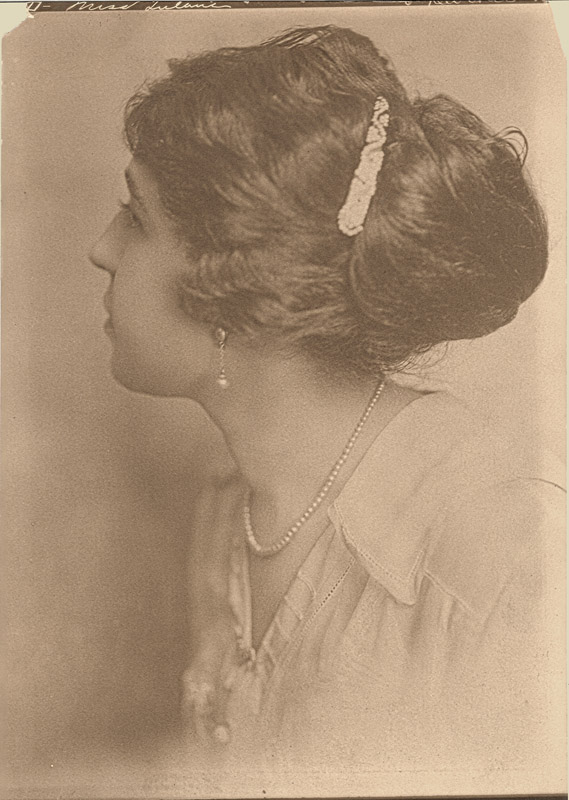
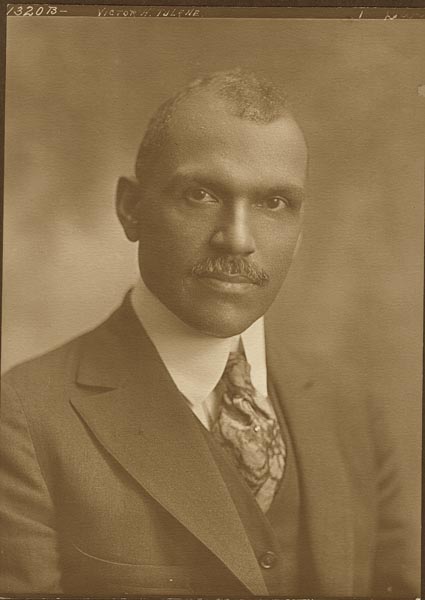
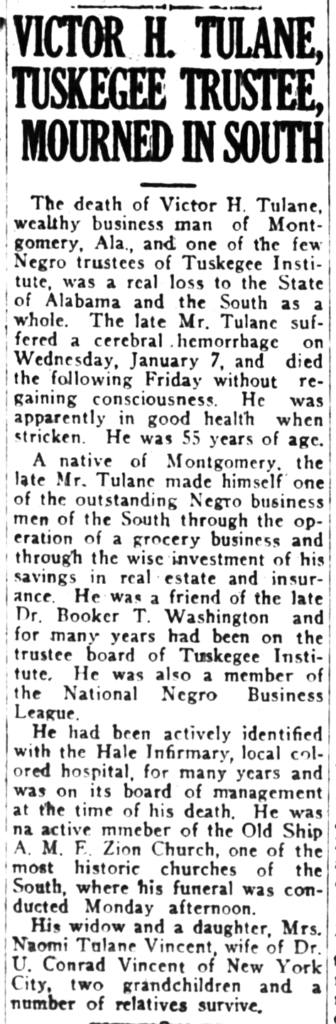
Now a word about her sisters….Aunt Willie was the oldest….married well…Victor Tulane (Tuskegee trustee and owner of a general store and many houses).  He was not what you’d call a “faithful” husband, but Aunt Willie (the family said)  looked the other way because he always took such good care of his wife and only child, a daughter Naomi, who was sent to Howard, married a doctor and went to live the high life in New York.  Aunt Willie had a beautiful apartment over the store.  Always had a maid and never worked.  She was living like this when Grandmother was a struggling widow. She was the last sister to leave Montgomery.  She died in New York.  Her son-in-law had died, left her daughter wealthy with apartments in NY paid for, insurance, money for the education of the four children in the bank, etc.  I remember shoes hand made in Italy being in the boxes of impossible things she sent mother.  They were always distant “rich relations”.  Don’t remember even seeing any of the children except one young woman who came to Detroit briefly, stayed with Margaret McCall.  Saw Aunt Willie once.  She and Aunt Abbie came to visit us when I was small.  Don’t remember her saying much or ever smiling while Aunt Abbie was as you remember her, friendly.

Abbie Allen Brown

Aunt Abbie married a Mississippi Riverboat gambler, swarthy and handsome and no good, who stayed home on two visits long enough to give her two sons and then sent her trunks of fine clothes to wear or sell to take care of herself and the boys.  Whenever she talked about him she sounded like she hated him.  She resented the lack of money.  Said once the oldest boy Earl (named for his father) screamed for days with toothache and she could not take him to the dentist who didn’t want any fancy clothes or jewelry.  She resented raising the children alone. I got the feeling she hated them and they hated her and she resented him being off having a good time while she stayed home with the problems.  She talked about him In a completely different way than she talked about her Jewish policeman who bought her a house on Ripley St. and spent much time there, for whom she loved to cook and keep house.

She came to live with Mother to take care of Daddy (!) so Mother could come to Springfield and help me when Kris was born.  In later years when they lived on Fairfield, Mother and Daddy used to argue about this and they would call me in to referee.  He’d say he took Aunt Abbie in out of the goodness of his heart like all the rest of her family, and that she was not supposed to stay on them forever but was to go live with Aunt Margaret.  Mother would say Aunt Abbie came to take care of him because (here she would make a mouth at me) he could not take care of himself and work even tho he could cook better than she and do everything else in the house too.  I think we are always angered at the way men can say this is the limit.  I can’t or I won’t do this or that and we seem to have lives where you do what is to be done since you have no one who will hear you if you say you can’t or won’t…hold my hand Charlie Brown!  And that he knew very well she was going to live with them and visit Margaret occasionally.  Mother was right.  He said Aunt Abbie came to have cataracts operated and to be taken care of.  He was wrong.  Her eye operations came years later.  He said to me once that he had always taken care of Mother’s people and she would have nothing to do with his.  I know how Grandmother depended on him to fix things around their house and he was most agreeable and I always thought he loved it.  They made over him when he came with his box of tools.  I was always there as helper, but he got very tired and mistreated about having both Alice and Aunt Abbie to take care of.  He didn’t like either one.  But I never could get him to send them to a nursing or residence home to live.  He always said what would people say if I did that.  When people talk like that I give up because they are obviously making the choice they prefer.

Back to Aunt Abbie.  She loved to cook and do everything else about the house.  Mother would not let her do anything except clean her own room and do her own washing and ironing and Mother hated everything about housekeeping except cooking, but she said her husband expected her to take care of him and his house and (she didn’t say this) she’d be damned if she’d let anyone else do it as long as she could.  I couldn’t talk to her about it.

Aunt Anna was the sister who went to Chicago, got a job as teller in a bank, married the bank manager who was a widower with children.  He knew she was black but no one else in his family ever did. I’ve often wondered what they did for birth control.  They were young when they married.  He was well to do.  She used to write Mother and Mother would write back c/o general post office.  Said she loved him but felt very lonely all the time not to be able to see her family and knew the children would have nothing to do with her if they knew.  She was supposed to look like Margaret McCall.  She got sick.  Wrote Mother she was not to live long.  That there might be no more letters.  That she would dearly love to die with her family He had died years before…had left his money to her…had asked her to promise to stay near the children to pass so they would not be embarrassed…and leave the money to them.  She promised and told mother she had made her bed and would lie in it to the end but would surely see them in Heaven.  Mother was the only one she wrote to.  The rest would not answer letters.  That was the last letter.

Mary Allen McCall

Aunt Mary married someone named James McCall whom I never knew.  Also never heard anyone say who he was or what he did.  As I write this it strikes me that the men these sisters married were for the most part very shadowy creatures.  I’ve seen a picture even of only one.  Strange.  Aunt Mary looked rather like Aunt Abbie but was quiet and rather grim, I thought.  Lived with Aunt Margaret and her son Uncle Jim all her life as far as I know.  I think Aunt Mary helped with money although I don’t know where she got it.  Uncle Jim, her son, was blind.  There were two children, Margaret and Victoria, and no help from the state.  He caned chairs and wrote poetry for a living.  I think they were very poor but did better when the state helped blind people  And they got enough money from somewhere to buy the Detroit Tribune and make money.

Beulah Allen Pope and son Robert Pope

Aunt Beulah who looked something like Grandmother, I’ve heard, married someone named Pope and went to Milwaukee.  Don’t know what he did or what she was like.  Never saw her.  Sent one son through dental school  Robert Pope.  Very handsome, his twin sister, a beauty married well, had one child the one who kept pushing me around when they came to visit us.  I must have been about four,  so was he, and he wanted to follow MV everywhere and not let me come.  I went anyway.  I remember him banging my head against the wall beside the stairs.  Strange.  He especially hated me because I could cut up my own meat and his mother wouldn’t even let him try.  Ha ha!!!  Another son of Aunt Beulah was a teacher who married had one daughter who wrote once to Mother and Daddy about family history.  Wonder what she got together.  I keep hoping to find someone who has already done all the hard work.  Back to Aunt Beulah, who was considered the least beautiful of the sisters.  Her son Robert built her a beautiful home and stayed there with her until she died not too long ago.  Ten or twelve years.  They all spoke of her with envy.

The Athens Academy

Although the paper is dated 1894, the dates within the article are for after 1900. Click to enlarge!

This is a transcription of the article from The Athens Post Athens, Tennessee 21 Dec 1894, Fri  •  Page 22

The Athens Mission for the Colored People was established is sustained by the United Presbyterian church through its Freedman’s Board. This board spends annually for the support of this station from $2,000 to $2,500. The public school funds, amounting to $450, are used for incidental expenses. The salaries of the missionaries being paid entirely by the board.

The United Presbyterian Church has always been a friend to unfortunate humanity, and has mission stations among all classes of people who need help. The have established thirteen stations for the Freedmen of the South. Eighty missionaries and $55,000 have been set apart to carry on the work. In all of these stations there are churches which are destined to play a conspicuous part in the cultured Christian civilization of the colored race. This church is strong where the negro needs strength. It demands a clean membership and an educated ministry, family worship and Sabbath observance. It minimizes churchanity and magnifies Christianity. As a result of this its growth is slow. United Presbyterians among the Freedmen are made by a very tedious process.

The schools established by this church are open to all who will take advantage  of them. Money and clothing are often sent to be used in helping worthy poor students. So thoroughly have these students have been equipped that the young people who grow up within the bounds of the school in ignorance are without excuse. The object of the school is to do for eager, ambitious students what they cannot do for themselves.

At Knoxville College board, tuition and furnished rooms can be had for $6.85 per month. In Alabama, on the plantations, where the people are poorer, boarding, tuition and furnished rooms can be had for $4 per month. In this way school advantages are put in the way of many who otherwise wouldn’t have them.

Athens Academy has its doors open to students from a distance. It places an education within the reach of young people of limited means. We would be glad to correspond with persons who would like to come. We can arrange so that you can attend school here for about what it takes to support you at home.

RELIGION AND MORALS

The aim of the supporters of our school has been to make the institution thoroughly and earnestly Christian. All plans of work are devised for the purpose of making our students strong, earnest, and liberal-minded men and women.

INSTRUCTORS

Rev. Jno. T. Arter, principal, Jas W. Fisher, Henry W. Cleage, Miss M. Lea Jones, Mrs. Louise Collier, Miss Christianita Totten. All workers of experience and ability.

PROSPECTS

The prospects for the. Future of the academy are good. The school is gaining many friends among the citizens of both races. The moral and religious training which are being taught by the teachers are being seen in the homes of the older people, and in the daily life and character of the youth. The parents of this and adjoining counties are earnestly requested to send their boys and girls here for their college preparation.

INDUSTRIAL TRAINING

Instruction in needle work, patching, darning, plain sewing, cutting and dressmaking is given under the direction of an experienced teacher. All desiring to have a practical knowledge of plain sewing, needle work and dressmaking will have ample opportunity to learn during the regular literary course.

DESIGN

The “Academy of Athens” is consecrated to the glory and honor of God and the welfare of a needy race. Its object is to impart knowledge, discipline the mind and train the heart, so that those who leave its walls will be better prepared for the diversified duties of college and actual life. In the course of study the training has special reference to the preparation of students for college and for becoming successful teachers in the public schools of the state. In short, the course is comprehensive and practical and the teachers endeavor to drill the students in the branches taught, that their knowledge will be through and not a mere smattering. Furthermore, this being a Christian institution, parents of the vicinity and adjoining counties may feel reasonably safe in sending their children here for instruction.

This is an opportunity for any young man or woman who is really hungry for an education. We are taking special pains to provide for students at a distance, and as before stated, will be pleased to correspond with those who desire to attend school.

MRS. LOUISE COLLIER

 entered the City School In Savannah GA when quite a child. Later she attended the Atlanta University for a number of years. While yet in school she accepted a position as teacher near Americas, GA. She afterwards taught in the city graded schools o Americus where she continued to teach for seventeen years, resigning there to accept her present position in Athens.

MISS CHRISTIANITA TOTTEN

Of the Danish West Indies, came to this country in 1891, entered Knoxville College and graduated from the Normal department in 1885, after which she taught in the Missions for Freedmen for six years. She is now in charge of the sewing department and is very active in the mission work of Athens.

MISS M. LEA JONES

A native of Dallas, Texas, attended Knoxville College for a number of years. She received her appointment as intermediate teacher to the Athens Mission in the Spring of 1900.

JAMES W. FISHER

Attended the public graded schools of Eufaula, Ala, his home town, during most of his boyhood. He next attended Knoxville College in which he pursued his studies for five years. He was in charge of the Mt. Zion District school in Alabama for three years. His present position is assistant principal of the Athens Academy.

HENRY W. CLEAGE

Is a native of Athens. He entered and finished the course of the Athens Academy under Rev. Cook’s administration. He then attended Knoxville College. His teaching one year at Riceville gave him his first ideas of the practical side of the profession in which he is now engaged. At present he is a member of the corps of instructors o the Academy of Athens.

REV. JNO. ARTER,

Principal of the Athens Academy, is a graduate of the class of ’95, Knoxville College; also of the class of ’98, Alleghany Theological Seminary. For two years he served at Catherine, Ala., as pastor of the U. P. (United Presbyterian) Church. He now has charge of the Athens U. P. church.

MRS. MINNIE J. ARTER

In childhood enjoyed the advantages of the public schools of Americus, Ga., her native home. After graduating from Knoxville College, she taught seven years in the city schools of Americus and seven years in the mission schools in Alabama. She is now in charge of the teachers’ home and parsonage.

MRS. MINNIE B. CLEAGE

Is not in the profession now, but she finished the course at the Academy of Athens, and was a student at Knoxville several years. She is now the wife of Henry W. Cleage.

PROF. COLLIER

All of Mr. Collier’s instructors in his youth, except one, both in and out of the Atlanta University, were teachers from the North. He was graduated from the State Normal School at Fayeteville, N. C. Mr. Collier’s experience extends from the rural district to the principalship of graded schools. He is at present substitute teacher in the Athens Academy. Mr. Collier is in very feeble health.

A brief explanation for Eliza’s Story

I just wanted to clarify a few things in the last post before moving on.  Mary McCall’s daughter, Alma Otilla “Tillie” owned a three story brownstone in Chicago.  She and her husband, Joseph Howard, lived in one unit and relatives lived in the other ones.  In 1933, When Sayde visited her sister Blanch in Chicago,  Mary McCall (Eliza’s oldest daughter) was 87.  Mattie (Sayde’s mother and Mary’s half sister) was 59, Victoria (Mary McCall’s grandaughter) was 18,  Sadye was 16 and Margaret(Mary’s grandaughter) was 15.

Mary Allen McCall was born in 1856 in Alabama, probably Lowndes or Dallas County where her mother, Eliza was the slave of Milton Saffold.  Milton Saffold’s wife, Martha Harrison Saffold died in 1856 after the birth of her third son. Mary Allen McCall did live in Mississippi for a short time, but as an adult with one of her daughters between the death of her husband in Montgomery and the family’s move to Detroit, Michigan.  By 1933 she was living in Detroit.

I hope that isn’t too confusing.  I do have a chart showing all these various relationships but before I post that I would like to go back to my mother”s writings and then show what she got right in her memories of her great aunts and how I eventually met people from all branches of Eliza’s children and found more photographs and more stories.

Finding Eliza part 3

Mattie Saffold Harris with family. Sayde little girl, front. Her mother, Mattie, is on the far right.
Mary Allen McCall on left. Granddaguthers Victoria and Margaret, front.

This is an email conversation that took place between Janis M. and me. We shared a cousin, Margaret McCall. It was from information that Janis gave me from her mother that let me piece together the story of Eliza and her first daughter, Mary.  It was so exciting to have the story unfold through her mother’s memories and the records I found online and things my mother had told me. Both Margaret and Janis’ mother Sayde have died.  It was really one of those strange happenings where people are in the right place at the right time and can share the important information. Margaret and Sadye were related through the daughters Milton Saffold had with their grandmothers during and soon after slave times.

Date:    Thu, 16 Oct 2003
Hi Janis,

You talked to my sister, Pearl, recently in Chicago at a book signing and gave her a chart.  Have you ever been in touch with Margaret or Victoria?  I can fill in the missing information for you from Mary McCall’s side.  This past year I’ve been doing some research for Margaret about Milton Saffold.  I found he married the daughter of Col. Edmund Harrison, who was the owner of Eliza Harrison who was Mary’s mother.  Eliza’s mother was also named Annie and I remember my great-great aunt Abbie, who was Mary McCall’s half sister, saying that Annie was African but I can’t find a record yet of anyone before the 1870 census.  Margaret and I have been trying to find some records to place Eliza and Annie on the Harrison plantation.  I was wondering, after seeing your chart, if maybe they, or Eliza went with Harrison’s daughter (Eliza was also his daughter) when she married Saffold.  Do you have access to any records from slave times for the Saffolds?

Eliza married Dock Allen and they raised 9 children.  How do you know about Mary being a Saffold?  Margaret said it was all very hush hush when she was growing up and it’s making it very hard to find information now.

Let me know if you want more complete info for Mary and descendants.  I’m so glad you saw Pearl!  I will pass on any information you send me to Margaret.  Right now I’m at my daughter’s in Seattle helping her with her newborn twins and most of my information is back in Michigan but I’ve got all the basic info on Dock Allen and Eliza.  Looking forward to hearing from you.
Kristin

Date:    Thu, 16 Oct 2003 22:45:31 EDT
Hi, Kristin:
Wow,   I will have to contact my cousin in Birmingham.  He is the family historian and if any information is forthcoming about the Saffolds it would be from him.  I only know that Milton Saffold was my maternal grandmother’s father.  Seems the judge “traveled” a lot!   Will send my cousin your email and hopefully he can help us out.

Milton Saffold. Mattie’s family photos.

As it is late, I will have to take in all that you have written tomorrow.
Janis

Date:    Thu, 16 Oct 2003 22:58:25 EDT
Kristin:
Forgot to tell you that I talked to Pearl at a reading in Bowie, Maryland.   No, I haven’t talked to any other member of your family.  My mother, Sadye Harris James told me that you have a relative who lives near me in a neighborhood called Kettering.  She is the daughter of Hugo Howard.  If this is accurate, I would like to contact her. My Mom got this information from Margaret Ward this past August.   Until then I never knew that Milton Saffold had any children other than Mattie (my grandmother), and Frank.  I look forward to you filling in the blanks in my chart.
Janis

Date:    Fri, 17 Oct 2003 10:09:29 -0700 (PDT)
Janis,
That would be great if your cousin can give me some more information.  I’ll get the information I have together and email it later today. I’ll also check with another cousin of mine who grew up in Chicago and might know about the daughter of Hugo Howard and let you know.
Kris

James and Margaret McCall visit his sister Tillie Howard in Chicago.

Date:    Sat, 18 Oct 2003 10:03:20 EDT
Hi Kristin,
I spoke with my mother, Sadye Harris James, the last surviving child of Mattie Saffold Harris.   Mom told me that in l933 she visited her sister Blanche in Chicago.   Blanche was living in an apartment building owned by Tillie and her husband Dr. Howard.   Tillie and her husband lived in a unit of the building.  Blanche told my mother that Tillie’s mother, Mary McCall, was visiting from Mississippi, and that she looked like their mother, Mattie.  She was described as a little “white lady” dressed in a long white old-fashioned looking dress.  (My mother only saw her from a distance).    When Sadye returned home to Birmingham, she told her mother about  Mary McCall.  Mattie said she knew about a Mary McCall, and that she was her half sister.  Mattie decided to visit Mary in Chicago and confirmed that indeed she was Mary Saffold McCall.

This seems to be in conflict with your information. According to your records, Mary McCall  was the child of Eliza Harrison and Dock Allen.  Perhaps Milton Saffold fathered Mary and  Dock Allen reared her as his own.  By the way, Mattie was born in Selma, Alabama.
Janis

Date:    Wed, 29 Oct 2003 22:05:05 -0800 (PST)
Hi Janis,
Today I decided to look for Eliza in the 1860 census as a free person in Dallas county.  I searched by her first name since I have looked in Montgomery and Lowndes county before with various last names.  I found a 25 year old Eliza Williams with a 3 year old Mary Williams in Dallas county living with a 27 year old woman named Nancy Morgan and several of her children.  All are listed as white.  But Williams is the last name of Anne, Eliza’s mother and they are the right ages.  It wouldn’t be the first time family members were listed in the census as white.

Now I need to find out who Nancy Morgan is and connect her with the Saffolds or Harrisons.  Another day.  Nancy Morgan appears in the 1860, 1870 and 1880 census.  She is listed as single in the first two but always has another child or two and in the last one she’s listed as widowed.  She doesn’t have any occupation listed.  Eliza Williams isn’t listed again as Eliza Williams but appears as Eliza Allen with her husband, Dock Allen.  Her mother, Annie Williams lived with them in 1870 and with Mary McCall in 1880.

Anyway, I’m going to bed.  Just wanted to share that.
Kris

2005 – Janis taped an interview with her mother Sayde.  In it she talked about her mother and Mary McCall being half sisters and their meeting in Chicago.

“Sadye: Okay.  It was the summer of 1933 when Walter, my brother and I drove in his V-8 Ford (It was red) to Cincinnati where he married Edna Gaither and from that we went to Chicago to visit Blanche, my sister, and there she said to me, “Sayde, there’s a little old lady up on the third floor and she sits on the back porch and I think she looks a lot like Mama. And I’d like for you to meet her.”  So I went out in the backyard and looked up on the 3rd floor and there she sat in her long white dress and white hair, but I don’t remember ever being introduced to her.  However her granddaughters Margaret and Victoria McCall, they came to visit their Aunt Tillie Howard and I got to meet them, but I never did meet Miss Marry Saffold McCall.  No her name was not McCall….her name was McCall.  So Mama went up to Chicago, not just to see this woman that was one of the highlights of her visit to Blanch.  I don’t think it was that summer, but may have been the next summer.  And they had quite a delightful celebration because they were half sisters.  And I remember Mama telling me she had a half sister named Mary in Mississippi.  And I could not understand a half sister in Mississippi, but as time progressed I realized that her father, Judge Saffold, made visitations involving his work as a circuit court judge and this took him to a part of Mississippi.  Now who the mother was of Mary, I have no idea.  Perhaps Victoria or Margaret will have some information as to who was the mother of Mary.”

I still haven’t found out who Nancy Morgan is.  I did find a marriage certificate between a Nancy Wiggins and an Isom Morgan in Dallas County.  William Wiggins was the overseer of Edmund Harrison in the 1850 census but I haven’t found any records connecting William with Nancy yet.

When I attended cousin Victoria McCall Davenport’s 90th birthday celebration  in Detroit she told me that her grandmother Mary told her she was about 10 at freedom.  This fits in with the child Mary in the 1860 census.

Six Degrees of Separation – Slavery

Today  I was reading  Nolichucky Roots  She was writing about the degrees of separation between her and her ancestors who where slave owners.  It got me thinking about how many degrees of separation there are between me and my ancestors who were enslaved.  I have always felt that it wasn’t as long ago as some feel.  It turns out I am one degree from slavery 6 different ways.

  • My paternal grandfather, Albert born 1884 TN knew his parents, Lewis & Celia (Rice) Cleage born about 1852 & 1855 in TN into slavery.  One degree.    (photo 1 & 2 – Albert & Celia)
  • My paternal grandmother, Pearl born 1886, knew her mother Anna Allen Reed who was born about 1849 in KY into slavery. (photo 3 Pearl)
  •  My maternal grandfather, Mershell born 1889 AL, knew his parents William & Mary (Jackson) Graham b. Al, 1851 & 1852. One degree. (photo 4)
  • My maternal grandmother, Fannie born 1888 AL, knew her father, Howard Turner, who was born about 1863, AL into slavery.  One degree.(photo 5 – Fannie)
  • My maternal great-grandmother, Jennie born 1866  knew her parents, Dock & Eliza (Williams) Allen born in Ga & AL about 1839 into slavery.  One degree. (photo 6 – Jennie, 7- Eliza, 8-Dock)
  • My maternal grandmother’s first cousin, James born 1880 AL, knew his parents Edward & Mary (Allen) McCall born 1842 & 1856 AL who were born into slavery.  One degree.(photo 9 James, 10- Mary).

Eliza’s Story Part 2

In 1992  Margaret wrote back with corrections to my tree.

Dearest Kristin,
I’ve had this buried on my desk too long.  So to expedite information transfer, I’ve added to your lineage chart, the corrections I am sure of.  I can help you in time with dates (birth and death)  I certainly would like to help identify photos and perhaps I could share or exchange some with you.  I’m quite happy to have help in unraveling some of the family secrets.  Your interest will encourage me to start digging and tracing the Allen’s line again.  Doc and Eliza died in Montgomery, Alabama and are buried in Oakwood Cemetery there.  I’ll stay in touch with you.  Let me know if and when you visit Detroit.  Sincerely yours,  Margaret

1998 – At this time we lived at the end of a dead-end dirt road in Idlewild, Michigan.  We had two large dogs that ran lose in the fenced yard so people did not just walk up on the porch.  I looked out of the window one day I noticed two confused looking woman standing in the road.  I figured they were looking for someone else and went to see if I could help.  One of them turned out to be a friend of my cousin Margaret bringing me a folder full of information from her with  a note:

Dear Kristin,  your letter asking for information on our mutual family history acted as a stimulant to get me going at research again.  I had put my search on hold for (I can’t believe it) almost ten years.  Your interest got me going again.  I did not write then because I had no further information, but I decided to go to the LDS in Salt Lake City to try to get more information on Edmund and Jane Harrison.  I have not been able to establish the connections we are looking for (namely the ownership of Eliza and Dock Allen before 1864.  I am enclosing Xerox copies of census records and marriage records on the Harrisons.  I’ll share what I can learn as I go along.  My hope is that between us we can come up with some answers.  I did not learn a lot in Salt Lake City.  But I’m on the search trail again.  Love, Margaret

P.S.  Marion is a long time friend of mine who has done extensive research on family histories.  I asked her to contact you and deliver this material since she is visiting Idlewild.

click to enlarge

Included in the folder was a copy of the 1870 Census with Dock and Eliza’s household.  There was also a list of the large slave holders in Lowndes County in 1860 and a copy of the obituary of Edmund Harrison’s wife, Jane.   Wait a minute…. she died surrounded by her loving family?  I thought (according to my mother’s story) that she was childless?  And I saw they lived not in Virginia but in Alabama, Lowndes County.

Marion proved to be a big help to me, giving me advice and recommending sources of information.  One,  gave me the names and husbands of Edmund Harrison’s three daughters.  Something was off with my mother’s story.

Somewhere in here I got my first genealogical software – family tree maker for mac. In May of 2000 long time family friend Leontine “Teen” Smith died in Detroit.  I attended the funeral and met Cousin Margaret face to face for the first time since I was a child.  We got together and made plans to do so again.  For the next 7 years we shared information, photographs and ideas.

On July 12, 2002 I joined Ancestry.com.  Whooo Hooo!!  I spent a lot of time at first finding information about Edmund Harrison.  I ran into some people researching because they were Harrisons and hoped they had found some slave records, some photos, something.  But no, they did not.  They had suggestions though.  One was to check and see if Jane Harrison had a will.  I didn’t think so since she was married.. Another suggestion was that I find the records from the church the Harrisons attended because some of them listed the slaves that attended.  I spent months online in 2002 and 2003 trying to find records that would give me proof that Annie and Eliza came from the Harrison’s plantation.  To no avail.  I also looked for Dock and Eliza Allen in the 1860 census in Montgomery.  They weren’t there.  I looked in Lowndes County because Edmund Harrison had a large plantation there.  I looked for  Annie and Eliza Harrison Could find none of them.

In 2003 I sent for and received death certificates for Dock and Eliza Allen, hoping to find the names of their father’s.  Nope. Their mother’s names were there but the space for father’s names were empty.  Margaret was certain that Edmund Harrison was not Eliza’s father.

Margaret sent me several tapes she made.  One was a tape done in 1985 with her uncle Roscoe’s wife, Stella McCall.  Roscoe was Aunt Mary’s son. Stella and Margaret discussed life in Montgomery at the turn of the last century….and Mary McCall, Eliza and the other sisters. Partial transcription below.

Margaret:   Now, did her mother and father live near where they lived?  Did Dock Allen and Eliza…?
Stella: Who?  Did who live?
Margaret: The Allens, Mary McCall’s mother and father.  Did you ever know them?
Stella: Now Miss McCall’s father was white.
Margaret:  Who?
Stella:  Miss McCall’s father was white and then her mother married this man that she had.  Oh yes he was white.  That must have happened way back in, I’d say, near the time of slavery days because she was quite old.  Quite old.
Margaret:  Who was quite old?
Stella;  Miss McCall.  Oh yes. I couldn’t guess her age. She was very quiet about it anyway.(laughs)

Margaret:  She never talked about her mother and father? And her real father.  She only acknowledged this one, the stepfather.  But Eliza was her own mother.?
Stella: Who?
Margaret:  Eliza Allen, that was her mother?
Stella: Eliza, yes Miss Allen.  You know there were five of those girls. Five of them.  Miss Willie and Abbie Allen and…
Margaret:  Jennie.
Stella: Jennie and … name another one.
Margaret:  Willie.
Stella: I named Miss Willie back here.  I get confused.  There was another…
Margaret:  There was Anna.
Stella: Oh, Anna was the one who first made the move to Chicago and when people weren’t even traveling to Chicago.  Oh it was a great thing anybody go to Chicago at that time.  Ohhh it was a big deal.  Well, this Anna, one that was in Chicago, she would come down one time a year and see her mother and they never heard from her because she didn’t write because she had a white husband up there and that’s the way they worked that, but that’s it. (note:  she doesn’t appear in Montgomery in the 1900 census)
Margaret:  Now you’re saying Mary the oldest one had a different father from the others?
Stella: Now yes, that’s what my mother told me.  She said.   Oh no, Miss McCall was the top of the bunch.  She was as blue eyed as she could be. She had blue eyes and no trace of any darkness.  So she was the first child.  The other’s now Aunt Jennie she had a different one. You could look at her and tell.  And Abbie, the same thing. Willie, oh yes, Miss Willie she had black hair.  She was more of an Indian type. I don’t know who her daddy was but they were all different.  Back in those days they paid no attention to difference (laughs) That’s right. No, they didn’t.  They really didn’t.
Margaret:  So you feel, you know, that Mary’s father, was white?
Stella: I don’t feel, I know it (laughs)
Margaret:  But you don’t know who?
Stella: I know the people that know about her… yes she’s white.  Looks to me like she’s all white.  (laughs)

Mary Allen McCall

About this time Margaret asked me to look for a connection between Milton Saffold, a lawyer and son of Rueben and Mary (Phillips) Saffold who had a big plantation (Belvoir) in Dallas County and Edmund Harrison.  She had received some information that Milton Saffold was her grandmother’s father.  Was there a way Saffold could have come in contact with and fathered Margaret’s grandmother Mary?

I started looking on Ancestry.com and the web to see if I could find anything that would tie them together.  I found earlier that Milton Saffold married Edmund Harrison’s daughter, Martha.  I found Martha with her parents in the 1850 census.  I found from the online marriage record that Milton Saffold married Martha in 1851.  Mary was born about 1856.  I looked for Saffold and Martha in the 1860 census but they were not together. I found Milton with several children and a new wife living with his sister and her family.   I couldn’t find Martha at all.  I found on Ancestry.com that Milton had married Georgia Whitting in 1857.  I assumed Martha was dead.

2003 – In October I received a letter from my sister Pearl. Janis and her mother Sayde Harris had come up to her at a book signing in Maryland and given her a chart showing connections between our family and theirs.  They were related, they said, to our cousins Margaret and Victoria through Milton Saffold.  I emailed Janis Mercer.