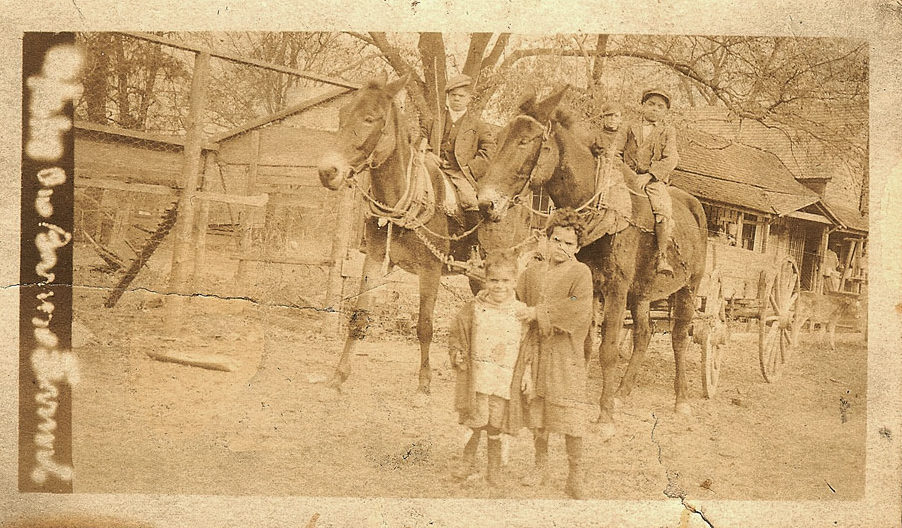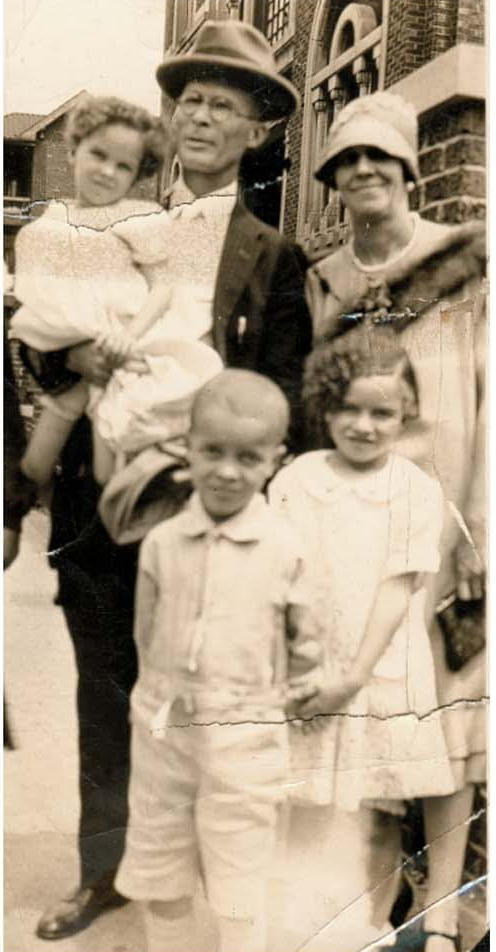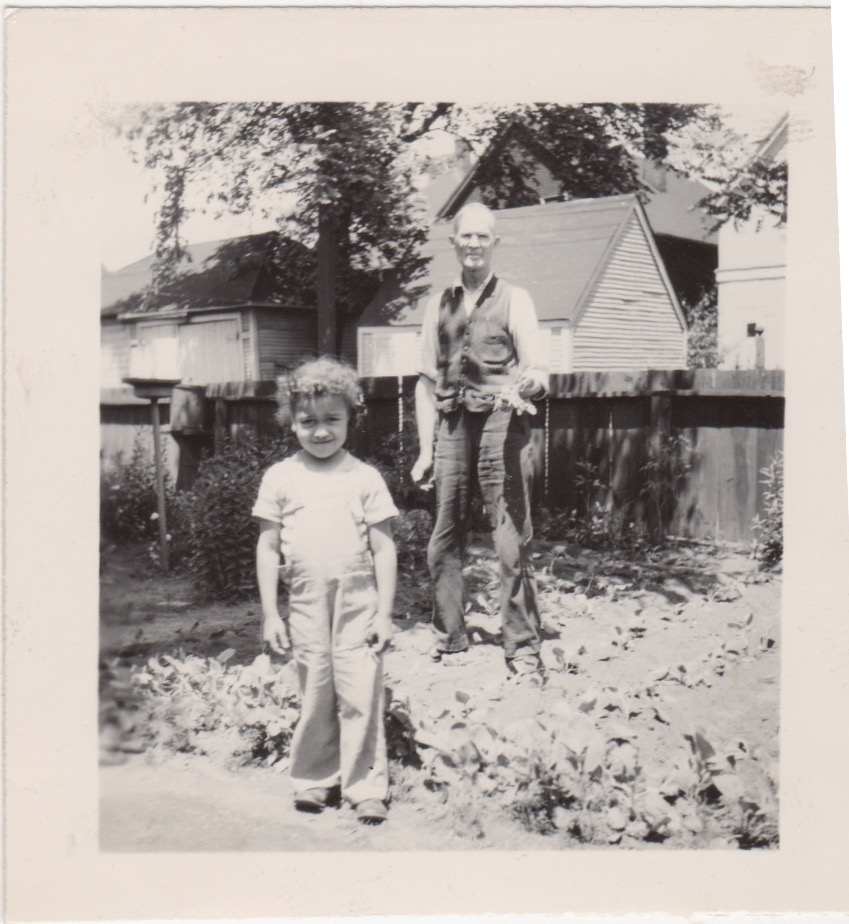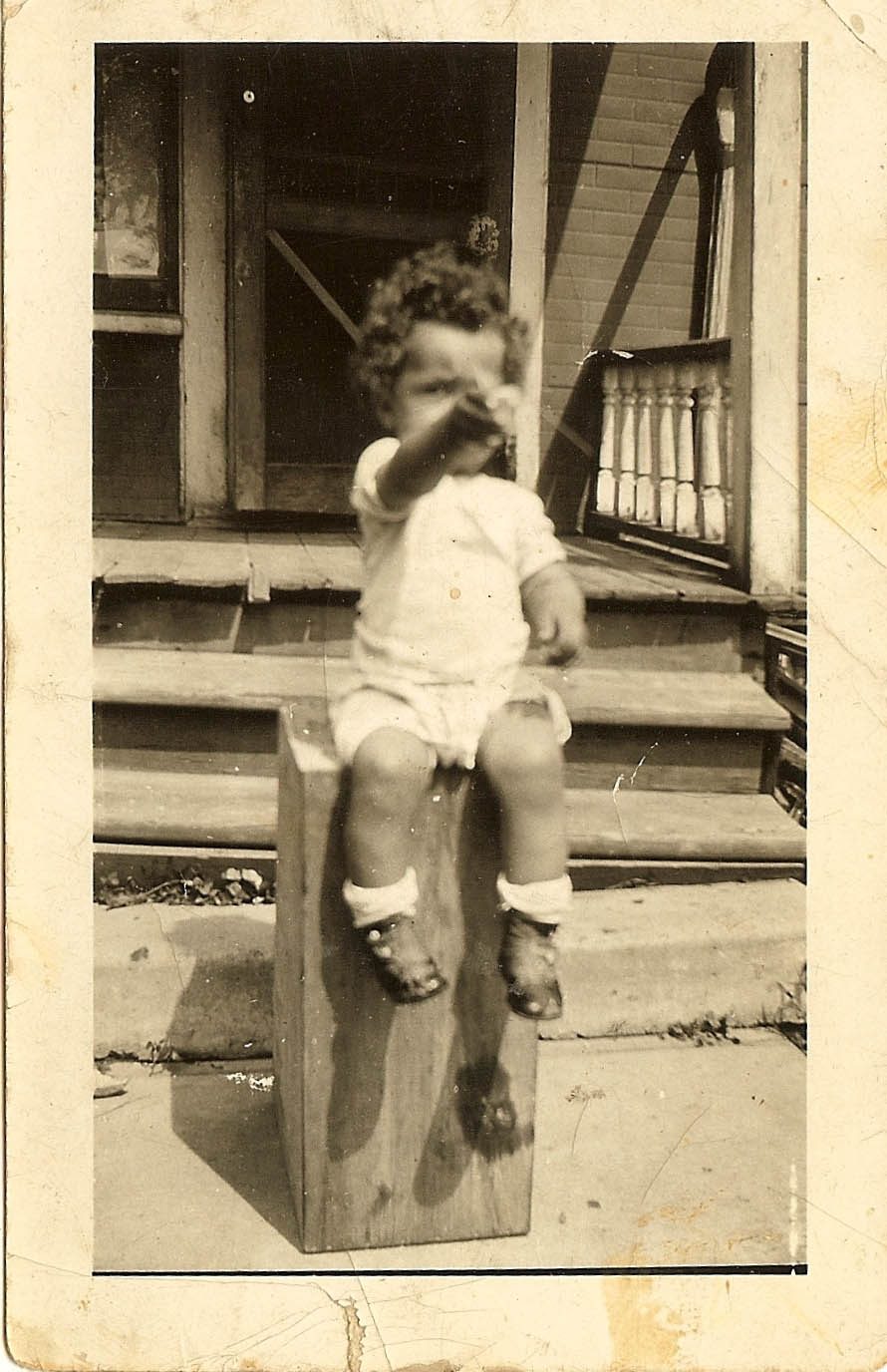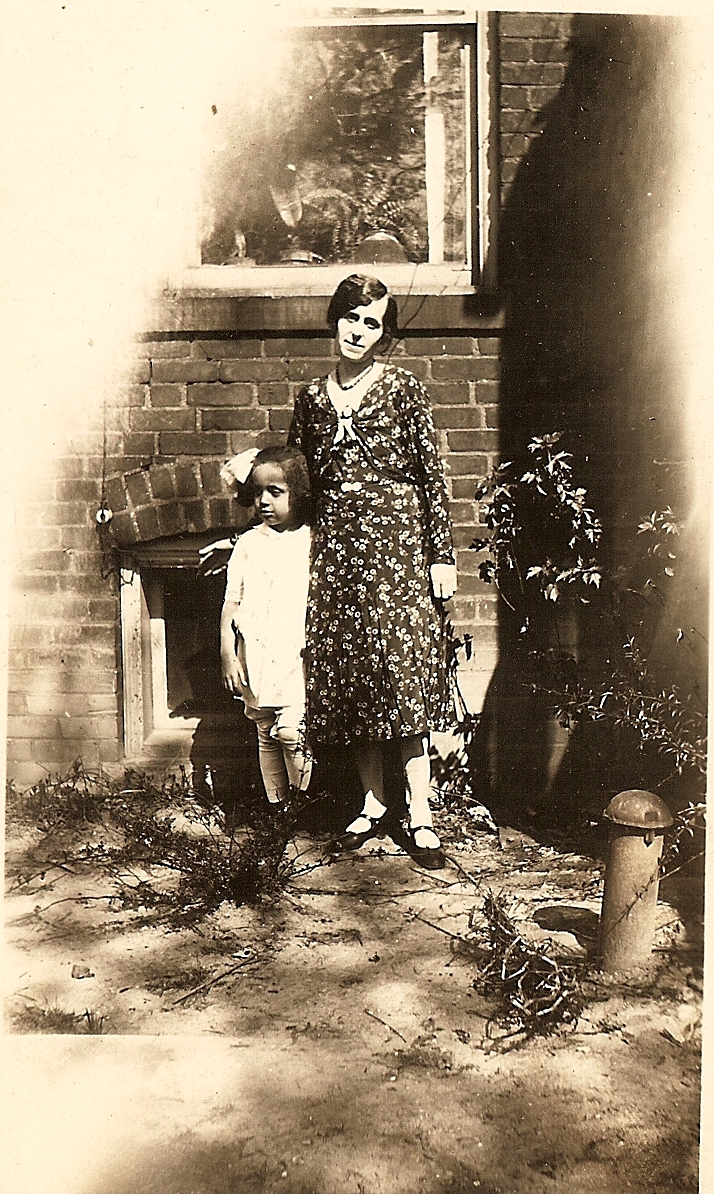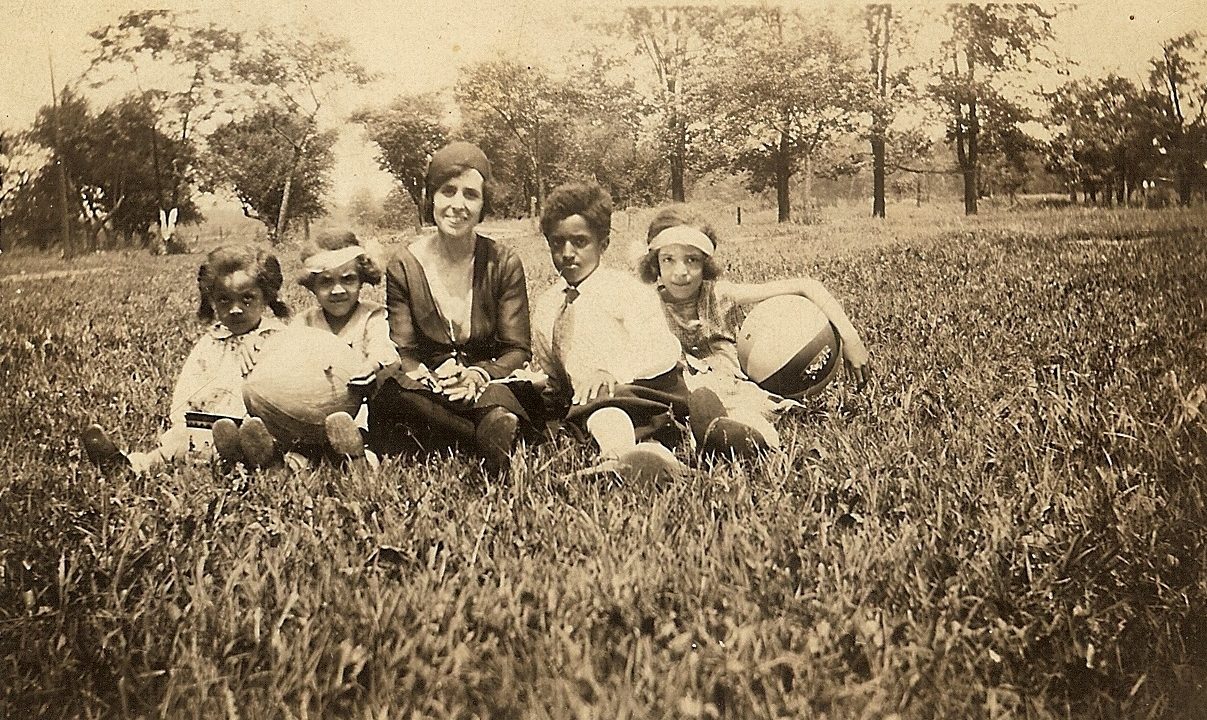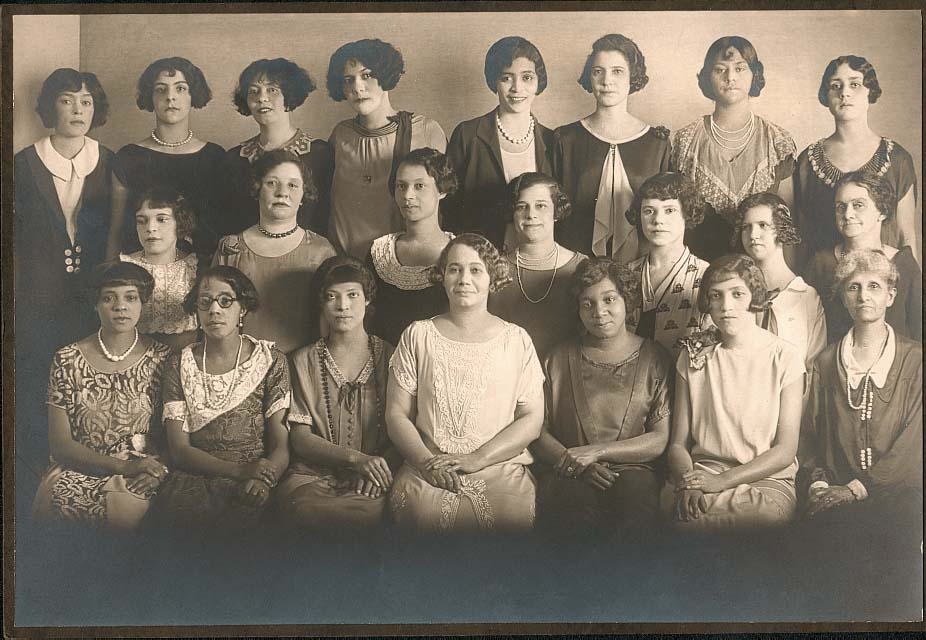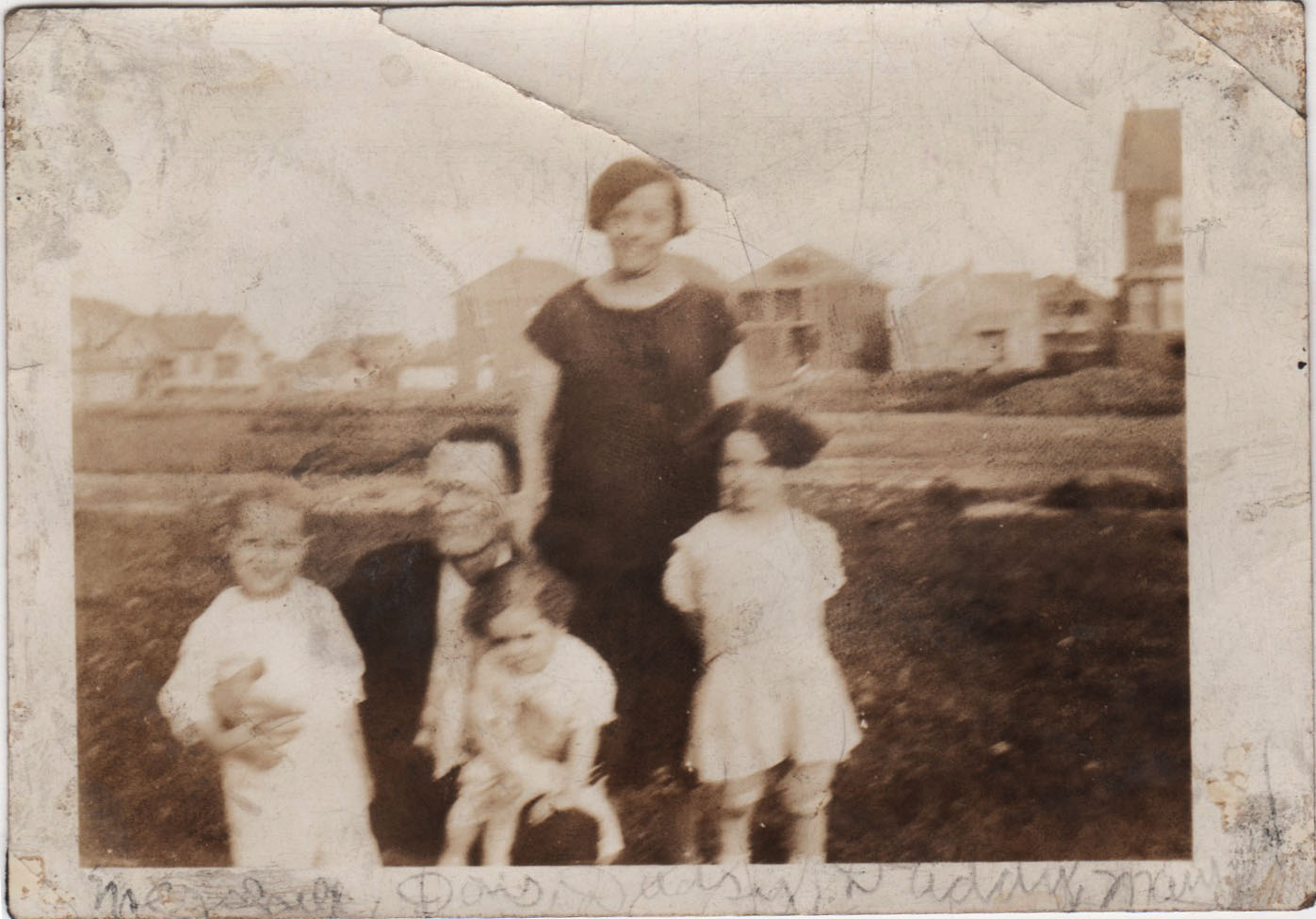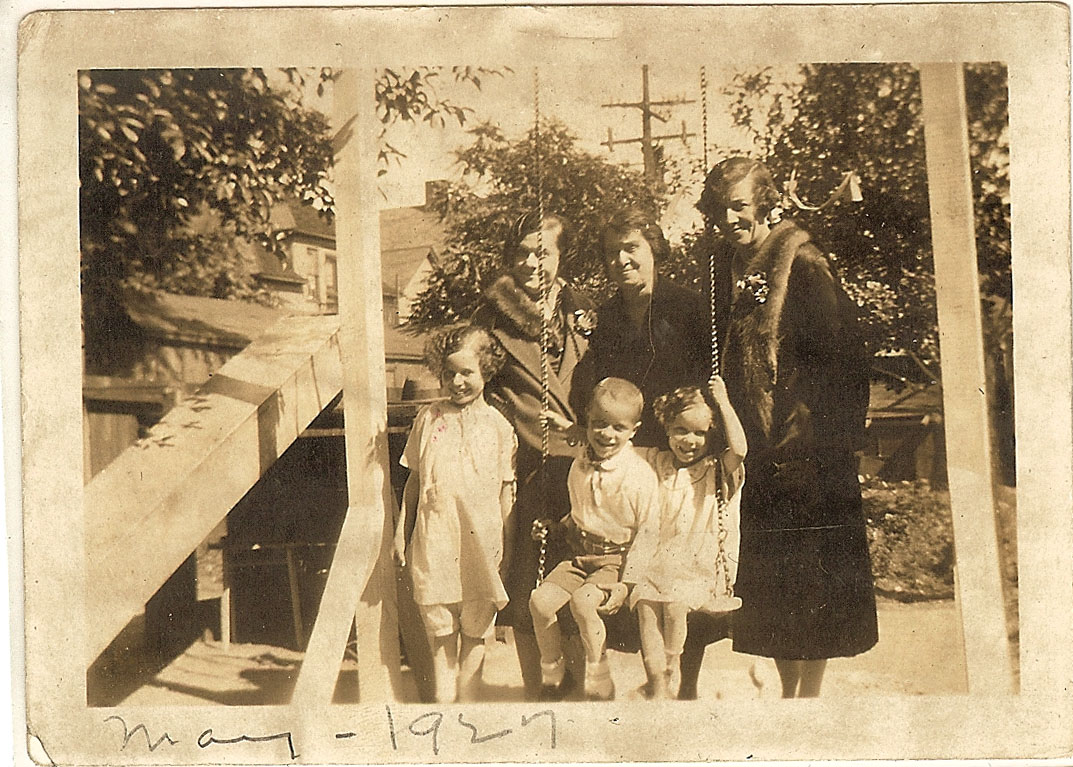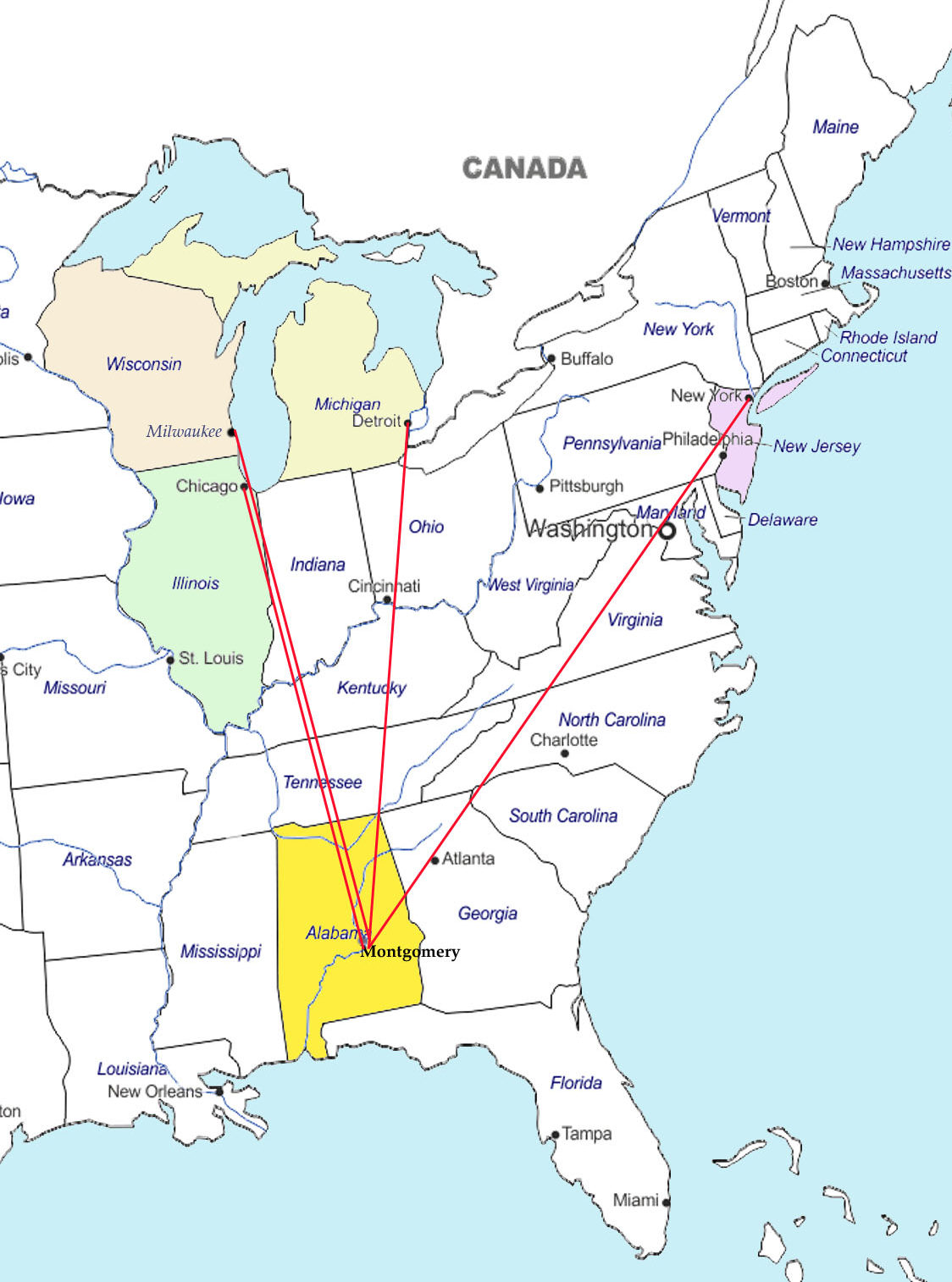
Seventy years later, the descendants of those earlier Thanksgiving dinners are wildly scattered and number in the hundreds. My family gathered around my table, others gathered in other cities. Here is a write up in the style of a news item.
__________
Three generations gathered at the Thanksgiving table of the Cleage-Williams family Thursday. Although several members were unable to attend, four of the daughters and their children arrived bearing their specialties – collards, mac & cheese, cranberry sauce, bread, salad and more. Along with the turkey and dressing provided by grandmother, Kristin and the broiled salmon cooked by Grandfather James all was served atop an Ecuadorian tablecloth provided by a long time family friend.
There was laughter and lively discussions; songs were sung dramatically, and a game of dominoes was played. The family expects to gather again at Christmas time, hopefully with the missing family members present.
Time passed and ten years after yesterday’s 1939 Thanksgiving dinner, we find that Jennie Turner is in a wheelchair, having broken her hip in a fall. Her sister, Abbie Allen Brown is in town, the Graham’s are there with their daughter Mary Virginia, her husband and two children.
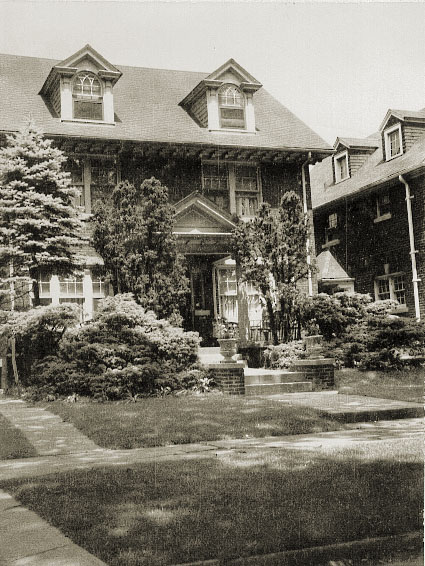
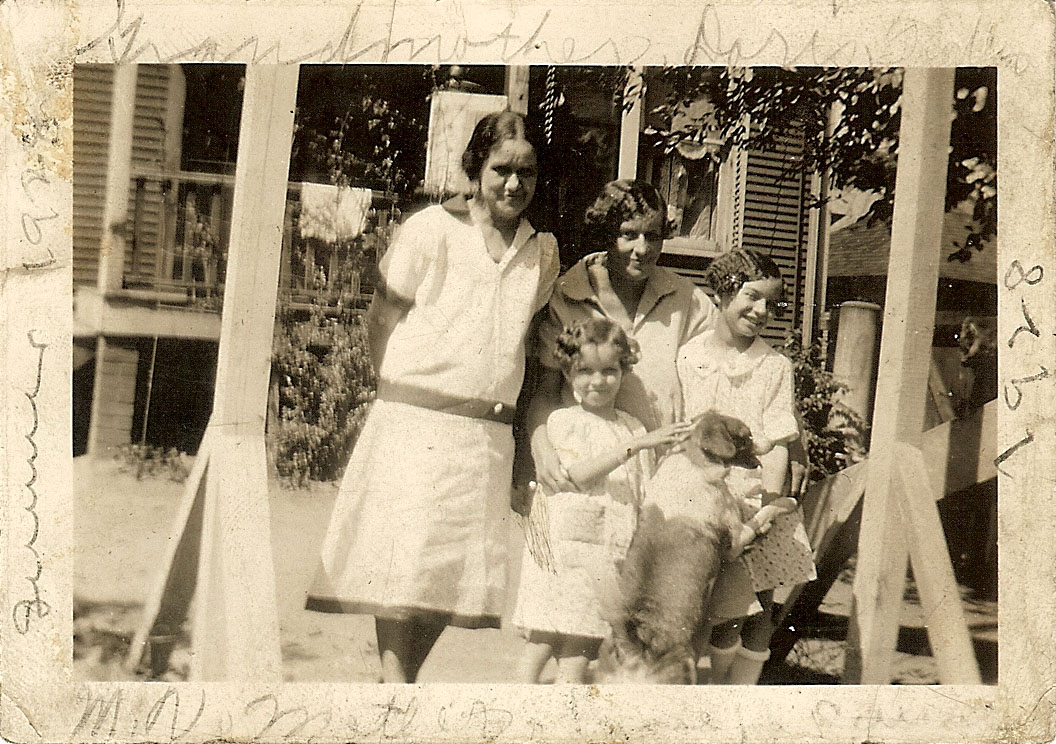
Mershell Graham & granddaughters Fannie, Mary Vee, Barbara & Dee DeeJennie Turner’s house on Harding
The Detroit Tribune, Dec 3, 1949
“Three generations were present at the festive board of Mrs. Jennie Turner on Harding ave. A delicious Thanksgiving dinner was served, which Mrs. Turner who has been an invalid for several years, enjoyed in her wheel chair, while surrounded by her daughters, Misses Daisy and Alice Turner, and her daughter and son-in-law, Mr. and Mrs. M. C. Graham; granddaughter and son, Mr. and Mrs. Frank Elkins, and their two children, and Mrs. Turner’s sister, Mrs. A. Brown.”
Actually Four generations were present – my great grandmother Jennie Turner and her sister Abbie, her daughters (which included my grandmother), my aunt Mary V and her daughters DD and Barbara. My mother Doris and her family (including me) were in still living in Springfield, Mass, and missed this dinner.
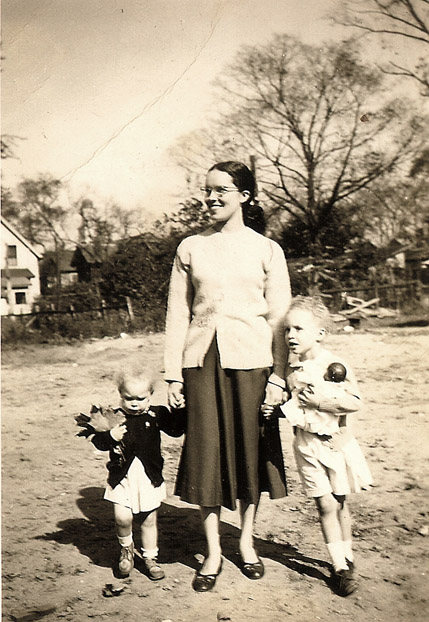
Doris Graham Cleage with daughters Pearl and Kristin (me) in Springfield, MA
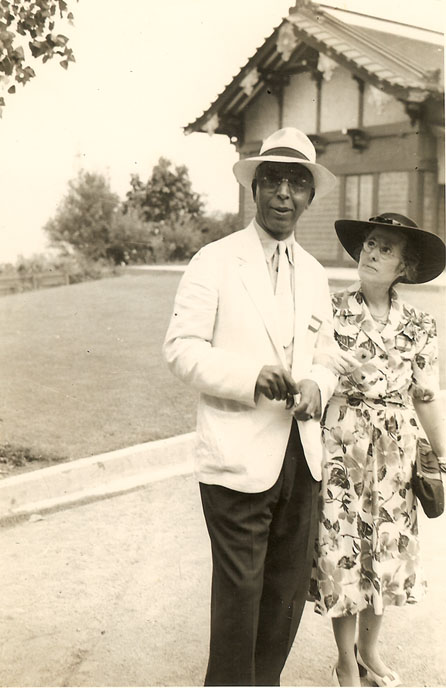
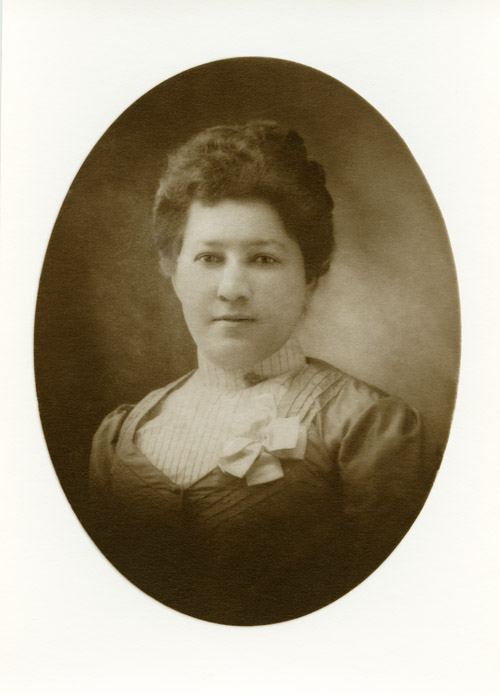
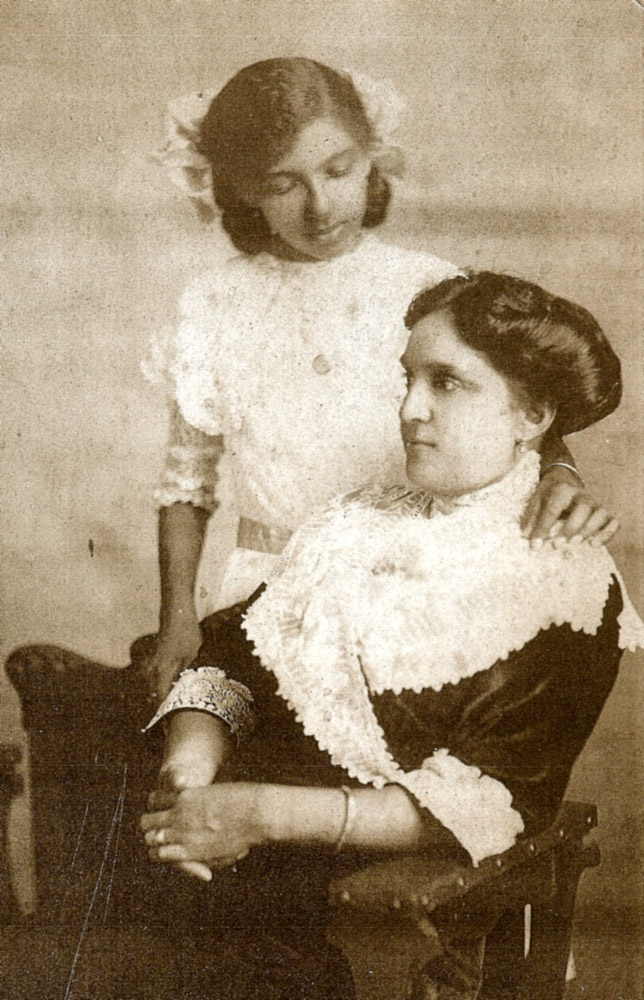
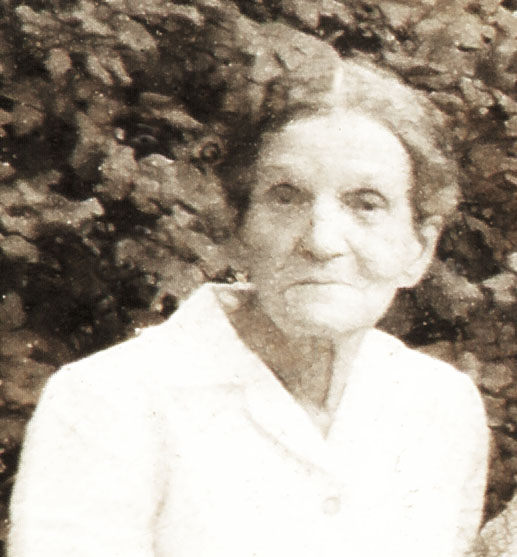
Three Generations. Front row Daisy and Alice Turner. Back: Fannie Turner Graham, Jenny Virginia Allen Turner, Mary Virginia Graham. Doris Juanita Graham. Summer of 1939 at Grandmother Turner’s.
Thanksgiving weekend 1939 was a busy one for my family. On Thursday, Nov 23, there was dinner at Grandmother Jennie Turner’s house on Harding Ave., pictured below. (Click on any image to enlarge.)
“On Harding Avenue, Mrs. Jeannie Turner bade the members of her family to dine with her. At the table were her daughters, Misses Daisy and Alice Turner; Mr. and Mrs. M.C. Graham, and her granddaughters, Misses Mary Virginia and Doris Graham.”
The Detroit Tribune Dec 2, 1939 On Saturday, Nov 25 my mother Doris and her sister “Merrie Vee” Graham, along with a crowd attended the football game between Michigan and Ohio State. I recognize only a few of the names – my mother’s friend Constance Stowers and cousin Victoria McCall.
Wikpedia describes that game thus: On November 25, 1939, the Big Ten football teams played five conference games. Michigan 21, Ohio State 14. Michigan defeated Ohio State, 21-14, at Michigan Stadium. Ohio State took a 14 to 0 lead in the first 11 minutes of the game on two touchdown passes thrown by Don Scott. Michigan rallied with touchdowns in each of the second, third and fourth quarters. Michigan’s touchdowns were scored by Forest Evashevski (pass from Tom Harmon), Tom Harmon and Fred Trosko (on a fake field goal).
The Detroit Tribune, Dec 2, 1939. Names of my parents (Toddy Cleage and Doris Graham) and their siblings are underlined. I also see the names of several family friends – Oscar Hand, Willie Smith. Other names I recognize – Henry’s first wife Alice Stanton, Cousin Lewis Graham, Mary V.’s friend Shirley Turner and my mother’s friend Connie Stowers.
Sunday night the Junior League of Plymouth Congregational Church had the pleasure of hearing their former president, Toddy Cleage, who was here for the holidays, speak to them on the “Modern Interpretation of the Bible.” A few of those who were looking quite interested were: Noman Morris, Jmes Parker, Lois Simon, Ruth Giles, Shirley Turner, Mary V. Graham, Connie Stowers, Doris Graham, Henry Cleage, Alice Stanton, Anna Cleage, Phyllis Lawson, Eugene Kersey, George Payne, Velma Pullian, Hugh Cleage, Charles Harvell, Bo Johnson, Betty Lewis, Carlyle Johnson, Harriet Pate, Geo. Williams, Lewis Graham, Betty Blande, Roger Campfield, Oscar hand, Barbara Cleage, Gladys Cleage, Willie Smith, Bobby Humphrey, Billy Lawson, Joe Stanton, Florance Pate, Carolyn Plummer, Wilberforce Plummer, Elizebeth Patton. Toddy is in the religious seminary at Oberlin.
In an article in The Detroit Tribune issue of February 26, 1938, my grandmother, Mrs. Pearl Reed Cleage was announced as the speaker for the next meeting of the West Side Human Relation Council on the following Monday. I looked in The Detroit Tribune that came out the following week and there was nothing about that meeting or my grandmother’s speech, but I found an article that mentioned a speech on the same topic of juvenile delinquency that my grandfather had made the previous month. Both articles are below.
The West Side Human Relation Council met Monday at the Lothrop branch library, West Grand Boulevard at Warren avenue. Turner W. Ross, president, presided.
Reports from the various committees were made and accepted by the council. A discussion concerning the toy-making project now under way followed. Another suggestion for discussion was the consideration for the organization of a group composed of mothers. It was the belief of the council members that the mothers could contribute much in the fight against juvenile deliquency. John C. Dancy, executive secretary of the Detroit Urban League, spoke regarding a west side community center.
The next meeting of the council will be Monday at the same place. Mrs. Albert Cleage is scheduled to discuss “Good Home Environment as a Potent Factor in Delinquency.”
The January meeting of the Juvenile Protective Association of Michigan was largely attended by members and visitors.
The membership campaign under the supervision of Mrs. Gertrude Henderson assisted by Mrs. Mamye Donovan and Mrs. John O’Dell, have made visits to various churches, taking the program and purpose of the organization to the people. Many pledged their support.
The guest speaker at the last meeting was Dr. A. B. Cleage, a member of the organization, also a staff member at the Receiving Hospital. Dr. Cleage gave a very interesting talk on the need of the home and nurseries for children of the race. He spoke of cases where children who had no home guidance or training, fall easy victims to disease of body and mind.
The next meeting will be held Monday, March 7 at 7:30 p.m. at the home of Mr. and Mrs. John O’Dell. The speaker will be Attorney Charles Roxborough.
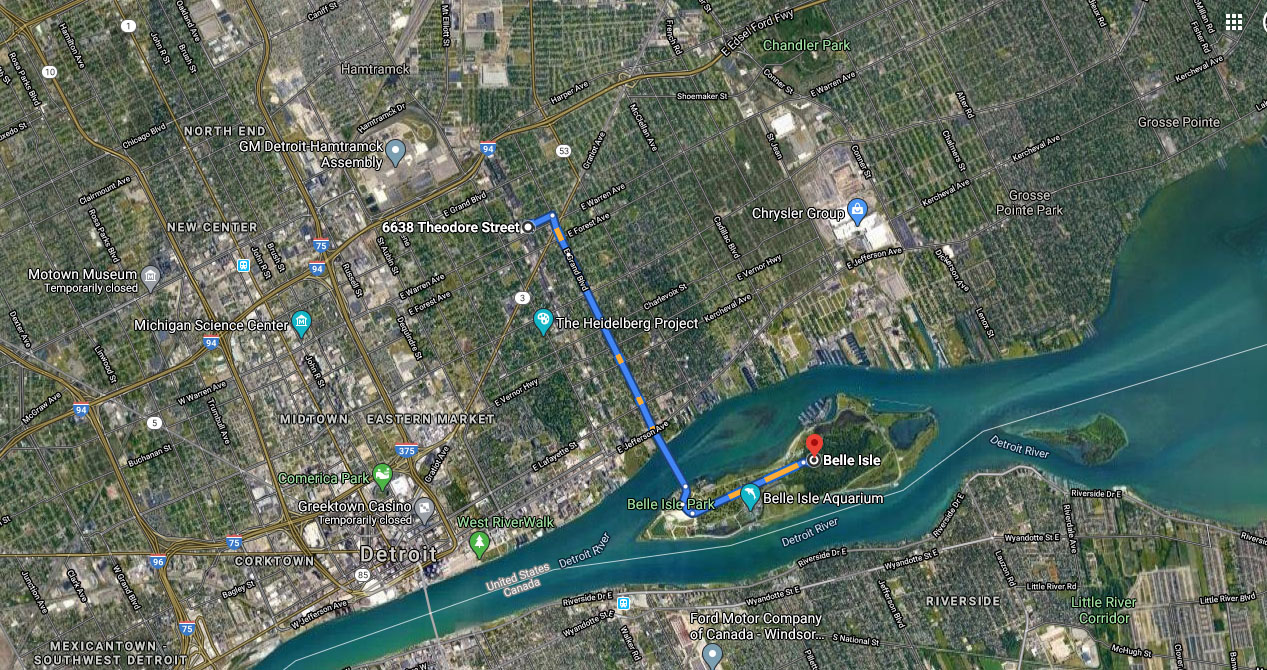
In 1937 Mary Virginia, my mother’s older sister, was 17 and a senior at Eastern High School, on East Grand Blvd within walking distance of the house on Theodore Ave. She graduated in June and in September went to Business College where she excelled in typing.
After attending business school, Mary Virginia worked for awhile at her cousin James McCall’s Newspaper, The Detroit Tribune. In 1940, he helped her get a good job typing with the city. She held the job for many years and received a proclamation from the City of Detroit for her service to the city during a Family Reunion when she was in her 80s.
____________________
Below is a transcribed article from Nov 20, 1937 issue of The Detroit Tribune. The clipping is below.
Mary Virginia Graham, 1937
“Now for a bit of “Who Goes Where.” Running true to the Tribune’s policy of giving our young people a chance, we here introduce Miss Mary Virginia Graham of Theodore Street, and this is what Mary Virginia tells us: “There were a number of social gatherings over last weekend, so there was plenty of competition.
“The Beta Mu Chapter of the Alpha Kappa Alpha Sorority had a dance at McKenzie Union. St. Matthews had their annual Balloon Dance, the play “Go Down Moses” was presented at Cass Technical High school; an Armistice dance was held in Windsor—this was all held on Friday night so everyone had somewhere to go.
“First of all I’ll start out by telling you who was at the Balloon Dance: Howard and his cute new girlfriend, Jean Johnson; Shirley Turner and “Don Juan” Graham and Charles Hill, Bob Johnson, Bud Elkins, Connie Stowers and Ted “Romeo” Williams, Thomas Askew, Lois Hall, Jeanette Bland, Catherine Redmond, who looked very cute in a red lace gown; Tolula Smith, Allie Mae Harriss, Helen Wilson, Veralee Fisher and Robert Truman, Pete Whittaker, Dorothy Smith, Christine Smoot, Bobbie Douglas, William Patrick, Jr., Walter House, Johnny Roxborough, Harriet Dunn, Bob Coker, Paul Smith, Wendell Turner and Mary E. Elkins, Billy Horner, Elizabeth and oh so many, many others.
“Well, the dance at the Mackenzie Union wasn’t lacking for guests either. Those seen swaying to George Dunbar’s recordings were: Margie Dunbar and her one and only Kermit Bailer; Carolyn Plummer and Toddy Cleage, Alice Stanton and Henry Cleage, Mary V. Graham and Carlyle Johnson, Oscar Hand, Charlotte Watts with Bassett Jones, who seems to be giving the little girl quite a rush; Eddie Donald, Frances Raiford with a very handsome stranger; Mr. and Mrs. Kenneth Stanton, Mr. and Mrs. Harry Solomon, Mr. and Mrs. C. Johnson, Marjorie Greenidge, Francess Horner and Billy Russell, Spencer Cary, Lorraine Moss and Albert Wallace, St. Clair Billups, Walter Greene, that wise cracker; Frederick Cain. Theodore Woodson and others too numerous to mention. The Union certainly looks swell after its recent doing over.
“Shirley Turner, Doris Graham, Connie Stowers and M. V. Graham, attended the play “Richard Bordeaux” which was given by the Wayne University players at Wayne last Saturday. The girls reported that the play was put over very well by these student players.
“The Social Sixteen Club is really going places since its organization about 3 months ago. The members give this credit to its president, Miss Doris Graham and its secretary-treasurer, Miss Shirley Turner.”
Thank you, Mary Virginia. You have done well and we invite you to chat with us at another time.
Louis Cleage Responds Poetically to “Two Songs” by Gary Grimshaw
During the 1960s, my uncles owned and operated Cleage Printers. It was what was known as a “job printer,” meaning that it didn’t print books, but rather printed handbills for neighborhood markets and flyers, newsletters, magazines and pamphlets for various radical groups, including the black nationalist Group on Advanced Leadership (GOAL), the Trotskyist Socialist Workers Party (SWP) and the Detroit Artists Workshop, a countercultural collaborative.
The printing plant was a place where people came to find discussion of the issues of the day and there were plenty of issues to discuss. My uncle Henry loved to hold forth on a variety of topics and his arguments were always well thought out and convincing. Hugh didn’t talk a lot, but he would have something to put in, maybe just a quiet shake of his head over what Henry was saying.
Their brother Louis Cleage was a doctor and his office was about 10 feet in front of the printing plant. When he came back, he would join in with his sarcastic comments and distinctive laugh. And surprising to me, my uncle Louis wrote poetry.
On Oct. 6, 2019, my good friend historian Paul Lee, who likes to consider himself an “honorary Cleage,” sent me an email with a copy of a poem that my uncle Louis had written.
I was so surprised because with all of Louis’ talents, I never knew that he wrote poetry. I immediately began to search for the poems that he was responding to, which were written by Detroit graphic artist and radical political activist Gary Grimshaw.
After Googling and looking for Work 4, where Grimshaw’s poems appeared, I found that the Flickr photostream of “jwc 3o2” (Canadian “cultural factotum” jw curry) had a copy of the cover (designed by Grimshaw) and wrote to ask him if he had the whole work and could send me a copy of the poems. He very kindly dug out his copy of Work 4, made a copy of the poems and sent them to me. You can see the cover and the poems by both Grimshaw and Louis below.
These poems by Gary Grimshaw were published in the Artists’ Workshop , Works 4. I found the poems with the help of JWC, who I found through his photostream on fliker.
You’ve made your responsibilities To wash your car and mow your lawn While I’ve made mine To stay excited about being alive And you don’t understand Why I won’t stay home
Without seeing it happen You’ve slipped into the norm While I’ve kept my eyes open For the pleasure of new things And you don’t understand Why I am different from the rest
In the name of reason You’ve drained the joy from life While I make mistakes Because I won’t listen to advice From a dying generation And you wonder why I stare at the floor when you speak August 2
“Prove yourself!” yells the Queen of Morality In her castle on the hill of broken dreams “But there’s nothing to prove!” I yell back From my midnight ancient cellar As the King slips off to the prison factory.
The Queen’s daughters know the virtue of work They dream of an effortless struggle Against inactivity and doubt Carried on in calm organization Won by merciless repression.
The King once was young, like me I often think of him this way Before he volunteered to die His funeral went unnoticed In the steady hum of the factory Where he surrendered to Chief Reason And succeeding days drove out whim and fancy Leaving him with What Is and nothing more What Is, the terrible master. August 12
I heard your song, my son so clear and yet so lonely in the night. The enchantment of its melancholy beauty Transported me through space and time to moon-lit waters of a blue lagoon.
In the quiet of the night, a golden maiden played a dulcimer. A nightingale sang a song of youth and beauty that stirred my senses with such violence as to test the very sinews that bound me to my reason. I was once again the young King in the timeless land. The golden maiden was my queen.
Though now, we are as strangers when we meet, I understand that you are different from the rest. In the quiet of the night, when the beauty of your song stirs my heart, My lonely soul cries out to you, my son, —-for understanding.
Louis J. Cleage, M.D. Detroit 3/27/67
This poem by Louis J. Cleage, M. D. appeared in the April 1967 issue of “The Sun”.
_______________________
Header photograph is of the Cleage Clinic (front brick building) with Cleage Printers (gray cement block building) in the back. I photoshopped it from a Google Maps view from July 2009.
I would like to thank Paul Lee for the additional information that he sent me, which I have incorporated into this post.
I never realized how sociable my mother and other family members of her generation were until I started reading the social items in The Detroit Tribune. I first found this photograph in the family photographs of my mother, (center back row), her sister Mary Vee (seated on the floor), and my father’s sister Barbara seated on the couch to the far right. I also recognized my uncle Bud (Frank Elkins) who later married Mary Vee and a few family friends. I wondered what sociable things they did and when I found the following items in the Tribune, I found out.
No wonder my mother worried that I wasn’t social enough.
The Social Sixteen – 1937 – from my family photos.The Social Sixteen 1937. Howard Tandy, Phyllis Lawson, Shirley Turner, John Roxbourough, Doris Graham, Bob Johnson, Christine Smoot, Bud Elkins, Gladys House, Lewis Graham, Connie Stowers, Burney Watkins, Jean Johnson, Barbara Cleage, Jack Franklin, Mary V . GrahamThe Detroit Tribune, January 8, 1938
“The Social Sixteen Club met at the residence of Gladys and Walter House, Monday, Dec. 27. Plans were completed for the club’s New Yea’s Eve swing, which was held on December 31. Following the completion of these plans, members turned their attention to the refreshments and dancing, both of which were enjoyed. Later in the evening, the crowd went out to Bob Johnson’s home on Montclair, where they had a grand time. These young folk included Jean Johnson Howard Tandy, Shirley Turner, Lewis Graham, Bob Douglas, Bud Elkins, Connie Stowers, Jack Franklin, Jack Barthwell, Vee Graham.”
From The Detroit Tribune, March 12, 1938
“Members of the Social Sixteen Club feel that they will have pleasant sailing, under the pilotship of their winsome new president Doris Graham, talented daughter of Mr. and Mrs. M. C. Graham of Theodore avenue. Miss Graham is very popular among the “teen-age” set and is an honor student at Eastern High School.”
The Detroit Tribune, March 12, 1938
“The Social Sixteen Club held its latest meeting at the home of Mrs. Christine Smoot. After the completion of business, a repast was served by the hostess. The next meeting will be held at the residence of Miss Barbara Cleage, on Scotten avenue. At this meeting, they will render a program as follows; vocal solo, Christine Smoot; tap dance, Shirley Turner and Connie Stowers. The newly-elected officers of the club are; Doris Graham, president; Howard Tandy, vice president and corresponding secretary; Bob Johnson, secretary-treasurer.”
“This is our house the square (unreadable) one. Aug. 1944 Los Angeles
Hi Folks:
Well we is in Los Angeles… (Typewriter is still on the way) Our last two weeks in San Francisco were a conglomeration of everybody sending us on our way. We had supper out almost everyday — and all of San Francisco’s Elite entertained us — quite a time was had by all. We also received several gifts in addition to the church’s gift of books — Cigarettes — Candy — towel set — 2 lbs of coffee — ash trays — and books (even a copy of Strange Fruit). People were very nice — with their regrets and hopes that we will return when Thurman leaves. Frisky kept smiling even though it seemed to hurt his face.
Just before we we left we met Rev. Roy Nichols who has another inter-racial church (Congregational) across the Bay in Berkley. His co-pastor is Rev. Gallager who was president of Talladega College before coming to the “Pacific School of Religion”. Nichols “offered me a job “working with him and Gallager — and tried to arrange a meeting with Gallager but I was too busy. (I’m tired of inter-racial churches for the present!)
President Imes of Knoxville College sent me an application blank which I returned (with a letter in which I re-organized Knoxville’s curriculum around religious education!) He said he had an opening for a Prof. of Religious Ed — and a college Preacher — the combined job paying $1,890 per year and house.
(The top corner of the page, where the return address would be on the reverse side is torn out, leaving four half sentences.
….ply to my application …happy to have …ine training and …Knoxville faulty – but he would have to work slowly to get the Elders of the church – and he does not want to seem to be forcing – the issue etc. He also admitted that the salary is very inadequate (with which I agree!!!) He said that he had mentioned my application to the President of Virginia State College who also is looking for a College Preacher but just for a year while the regular preacher is away studying. He suggested that Virginia State will contact me — giving me the opportunity to pick the position which offers the best position. (Nice, isn’t he!)
Anyway – I’m writing Imes and advising him to take his time — I’d rather stay here until next fall anyway I can finish two years work at the U. of Southern California by that time. As I told him, I’m looking for a permanent position which will still allow me time for study during the summer — with an occasional semester off for study etc. I don’t suppose anything will come of it!
Los Angeles is a fine town! Except for our present financial uproar we like it better than any place we’ve been yet.
Our financial-uproar is due to the fact that we have not as yet received our last — $200 — pay! Dr. Smith stopped payment because I insisted upon $200 instead of $135 –. So — I have turned a bill into the church for the balance of $65 due. I suppose I’ll get it all one of these days! (over Frisky’s dead body!)
Our apartment is Super-duper!!! It’s “on the hill”– which in Detroit would be the “North-End” — except its more like Boston Blvd — or Lake-shore Drive!!! — Big — fine houses, lawns and palm-trees. Negroes have not broken into the “hill district” A Mrs. Hammonds of Detroit owns the building (Husband a racketeer (?) or something in Detroit). Our living room is right out of “House and Garden” magazine — It is long with blue wall to wall carpet — and white walls and woodwork — and white walls and colored upholstered furniture — end tables — cocktail table ‘n that — (Ohhh yes and Venetian Blinds at the windows which are all the way across one end of the room with wine-colored drapes at either end!) The bathroom is pale-blue tile with white woodwork ‘n that. Shower — built in bath tub ‘n’ that!
The only catch is the kitchen which is an alcove between the living room and the bah-room. It’s shrewd, too but it ain’t got neither sink nor stove! We’re supposed to get an electric plate to cook on — and the land lady is supposed to put in a sink! The ice-box and cupboard are in. It was called a Bachelor-apt. — and so had no stove or sink.
Click for more information on in-a-dor beds
Both the kitchen living room and bath have built in automatic heating units (gas). The living-room has an “In-a-door-bed” which is very nice — and the closet for clothes! We also have a garage for storage, the building is new and shrewd! Thousands of Negroes within walking distance and all in nice homes – quiet and taken care of just like white-folks. I can see why Daddy wanted to move out here. It would be a fine place to live if you had money!
We’ve been here eating at the restaurant ever since we got here – There’s a very nice little colored restaurant within walking distance “The Faun” – very elite — ‘n’ that! But our pocket-books won’t stand much more of it, — fun though while it lasts!!!
I registered at the University of Southern California today. Its a fine campus and buildings — I can’t tell about classes yet. With the religion fellowship — my bill was $73.00 for 16 hours (full semester). Without the reduction it would have been over $200.00 (and I’d a been right home!) Most (all but one) of my courses are in Cinema — with one religion course to enable me to register in the graduate school of religion.
Doris starts job-hunting any day now! She has an appointment with the Red-Cross and the Urban League. Can’t tell how everything is going to turn out — quite an escapade however, if we can just last a year! and then move on to New York – authorities in the field of Cinema and Religious Ed. ‘n’ that.
Tell the Junior Doctor to keep his fingers crossed until we wire him formoney — and then to wire the money — and send “the I told you so” on by air-mail!
Just a short not to tell you-all that we have our Los Angeles address and that the apartment is at least partially furnished. We received a Special from Mr Woodard, the agent who has been looking for a place for us, and this is what he said about the apartment he has for us.
“It is a modern apartment in every detail and is equipped with a living-room suite, carpet, Venetian blinds, and a pull-out bed in the living-room. Adjoining the living-room is a small alcove which is used as a kichenette. It has a frigidaire (I can hardly wait!!) in it but does not have a stove. Adjoining this kitchenette alcove, is a complete tile bath.” The rent is $37.50 per month.
Their apartment – 2130 S. Hobart Blvd. #4. Window upstairs between trees.
So ——it looks like we will go to Los Angeles and stay awhile. I hope the apartment is as good as he makes it sound. We are very lucky to have a furnished one…. it will save us quite a bit of expense. We have our tickets for July 2 and will leave at 8:15 a.m. and arrive at 6 p.m. the same day. The apartment will be ready for us when we get there, so we will not have to spend money for a hotel room. I am getting all ready to pack. Freight rate from here to L.A. is 90¢ a hundred pounds and if we ship our things four or five days before we leave, they should get there when we do.
Everything here goes well. We went down to Palo Alto yesterday with the Brittons and had a very good time. It was cold and foggy in San Francisco, but down there the sun was shining and we felt the first hot weather we’ve seen since last summer! Stanford University campus was a very interesting place to see what white-folks money can do. Five thousand acres of palm trees, huge stone buildings, carillons, a 30-room house for the President of the University, and an estate for Herbert Hoover… a mess.
Don’t worry about us if our letters are short for awhile. We’ll be busy getting ready to go. We’ll write something every week, though. It takes about six days for your letters (not air-mail —three days for them) to reach us, so if you mail any after June 25, send them to 2130 South Hobart Boulevard, Apartment 4, Los Angeles.
Doris
Hi Folks:
Looks like the “fabulous” Cleages are off on another “fantastic” adventure or something. WE’D VERY MUCH LIKE TO BORROW HENRY’S ELECTRIC-STOVE if you-all aren’t using it (or planning to use it soon.) It’s about the only thing we’ll have to buy for the apartment … except a desk (or table) for me. IF you-all can see your way clear send it to us at the address above RAILWAY EXPRESS right away SO IT WILL BE THERE WHEN WE ARRIVE. and (O.K. LOUIS) send us the bill (for carting and shipping)
I don’t remember whether I mentioned this or not. I heard from the Detroit Council of Churches a few days ago…saying that my application will be placed on file until they raise the money… and promising to contact me this FALL when the plans are worked out a little more definitely.
Don’t worry too much about our Los Angeles expedition… if it doesn’t work out WE’LL BE ALONG HOME ANY DAY. Seems like it might work if the good Lord decides to keep Albert B. Cleage, 3rd in heaven for a couple more years … and Doris can find an EASY job (which is the only sort she’d keep!)
Everything here is just too sweet … the church is arranging a farewell party … and getting a present etc. I preach my last sermon here next Sunday. We had a fine trip yesterday … down to Palo Alto … SOUTH …warm and everything … (Like Los Angeles). A lady in the church has a FORD she wants to sell for $250.00 … I’m trying to talk Doris out of getting it … (since it would leave us too close to broke!) (You can see she sure is a STA-BAL-IZING INFLUENCE! DON’T FORGET THE STOVE! Let us know, either way as soon as possible so we can try to pick up something here if you’re using it!
After leaving Chandler Memorial Church in Lexington in January of 1944, my parents traveled across county, by train to San Francisco, CA where my father, Rev. Albert B. Cleage, Jr. became co-pastor of the interracial Fellowship Church. Here is an article he wrote in October, 1946, about the experience after he had moved on to St. John’s Congregational Church in Springfield, MA. At the end of the transcription, there are links to other posts about the time in San Francisco.
“Fellowship Church: Adventures in Interracial Understanding” NOW, first half October 1946, p. 4. Click to enlarge or transcription below.
San Francisco’s interracial Fellowship Church is now approaching the close of its first year of existence. Having weathered the storm of birth, infancy and growth, it is now, firmly established with two of America’s outstanding preachers, an expanding community program and a growing congregation.
From the beginning Fellowship Church has tried to de-emphasize its interracial character, preferring to be known as a community church, incidentally interracial. In spite of this theoretical distinction, however, Fellowship Church is nationally known as “San Francisco’s Interracial Church.” The church achieved national attention with the coming of Dr. Howard Thurman and his wife Sue Bailey Thurman.
Time magazine reporter sent to investigate the “project to which Dr. Thurman was coming” explained his interest by stating, “Anything which can drag Dr. Thurman across country for a year must be important.”
Mrs. Franklin D. Roosevelt and Dr. Mordecai Johnson spoke at the testimonial meeting of church notables who gathered to wish Dr. and Mrs. Thurman God-speed on their great Christian adventure. Dr. Thurman spoke of Fellowship Church as “the most significant single step that institutional Christianity is taking in the direction of a really new order for America.”
Clipping in my grandmother Pearl Cleage’s archives, date and newspaper unknown.
I arrived at Fellowship Church a few weeks after its organization. All I knew of the project I had gleaned from the letters of Dr. Alfred Fisk, its organizer. He wrote: “We are organizing in San Francisco an interracial church to be known as ‘Fellowship Church.’
We do not want a church run by whites ‘for’ Negroes or one in which Negroes will merely be welcome to participate. We want to establish a church which will be of and by and for both groups. We are planning to have as co-pastors, with absolute equality of status, a Negro and a white person. The boards of the church, the choir, the Sunday School and its staff will be made up of both groups, and perhaps some Filipinos and others.”
I found the Church located in a very old residential neighborhood formerly occupied by the Japanese, but now termed the “Negro District.” Negroes made up about 50 percent of the population. Twenty thousand Negroes were crowded into make-shift rooming houses and apartment houses which had accommodated about eight thousand Japanese.
The city was suffering from a bad case of riot-jitters. Everywhere people seemed to be waiting for the signal which was to begin the fire-works. Both Negroes and whites were frightened and angry in the presence of something they couldn’t understand. D. Fisk, Fellowship Church’s white co-pastor, wrote to Dr. Thurman, “Unless you come to San Francisco we perish!”
San Francisco didn’t like the “new Negro.” They didn’t like his independence, his war-boom pay-checks, and most of all they didn’t like his increasing numbers. Very trivial things loomed large in their discussions of the “problem”, “the way Negroes crowded onto the streetcars to get home from work” “the way Negro women entered the most exclusive shops in their work clothes.”
Miss Vanita Lewis of the Children’s Bureau visited the city to oil the troubled waters. She lectured Negro leaders on the “disciplines of interracial living.”
Policeman were being taught “sociology” by a rabid Negro and Jew hating priest who lectured at great length on the innate racial differences “about which we can do nothing.”
In the midst of this bedlam I found Fellowship Church with 30 members and an infinity of good intentions. Dr. Fisk stated the problem well, “The challenge to a church in such a community is obvious. If ever the spirit of Christ were needed it is here. To interpret that spirit as an effective force in the community is our task as we see it.”
For the first six months of its existence Fellowship Church functioned without any formal membership. All persons who believed in the fellowship-idea were welcome.
The nucleus of the congregation consisted of a group from the American Friend’s Service Center which had been meeting for some months as the core group (The Committee On Racial Equality). They were mature and sincere young people of both races interested in the ideal of human brotherhood. They earnestly worked to build this ideal into a militant active church program. They brought a freshness of spirit and a sincerity of conviction which made of Fellowship something more than just another church, and which alone carried the experiment through the first trying months. Without them there could have been no Fellowship Church.
To this vital nucleus other individuals were attracted. The Negro residents of the immediate community did not overfill the small auditorium as Dr. Fisk had apparently expected. As the congregation steadily grew, attendance remained almost evenly divided between Negroes and whites.
Fellowship Church, as any interracial venture, in the midst of the American community, faced the task of deciding just how far it wanted to go in its undertaking. Each individual faxed the painful responsibility for his personal decision regarding the implications of his commitment to brotherhood and racial equality.
My months at Fellowship Church were devoted to hammering at one basic weakness. I saw clearly that the effectiveness and future of the church depended upon the building of a common social philosophy. People cannot work together to accomplish any program, however small, unless they agree in their interpretations of the total world in which they live.
A group of people cannot attack the “Negro-problem” unless they understand the socioeconomic framework out of which it has grown and upon which it depends. Only then can they decide whether or not they are willing to come to grips with the problem.
At the close of its first year Fellowship Church faces the crucial problem of undergirding its complete program with a common social philosophy. Its future development depends absolutely upon this decision. In this dilemma, of course, Fellowship Church is not alone. Liberal Christians everywhere cannot longer avoid their total responsibility to society by making pleasant and ineffective gestures in restricted and isolated areas of living.
To do something about the Negro problem implies also doing something about the Jewish problem, the Indian Problem, the African Problem, the Labor Problem, the Mexican, Chinese and Japanese Problems.
A Christian church must be even more thank a place where Negroes and whites can worship God together, or it will inevitably become less. It must function in every area of life as a united liberal force striking fearlessly out against all forms of oppression, bigotry and inequality. Its friends are the friends of human freedom no matter what the banner beneath which they march, and its foes are the oppressors of mankind, even though they march beneath the banner of Christ.
________________
The only article I found from the time in San Francisco.