Week 46. Politics. What are your childhood memories of politics? Were your parents active in politics? What political events and elections do you remember from your youth?
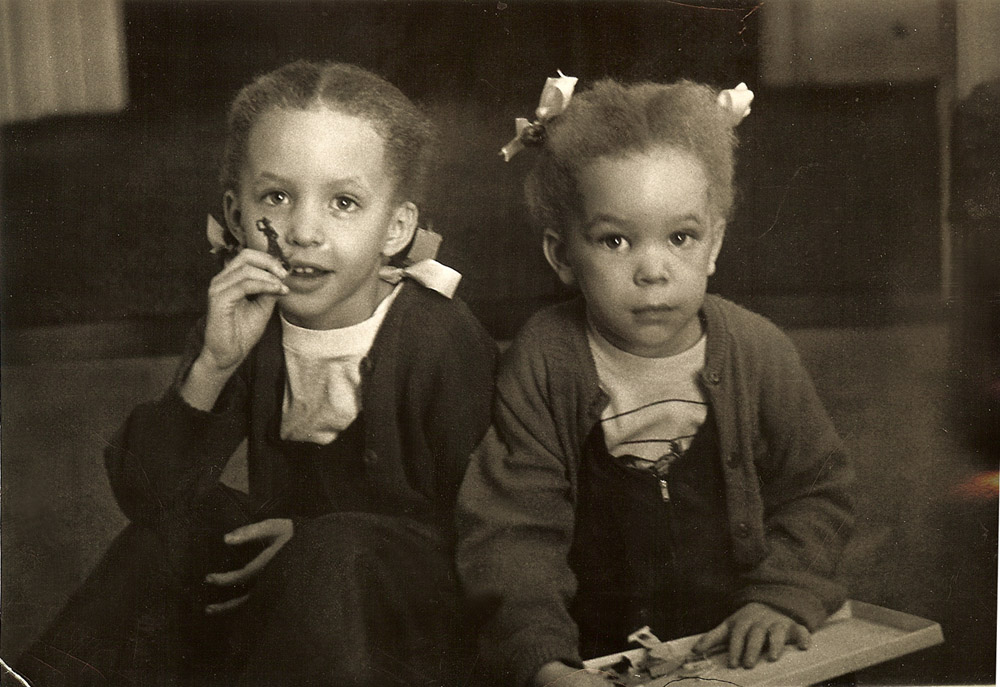
My sister and I – 1952
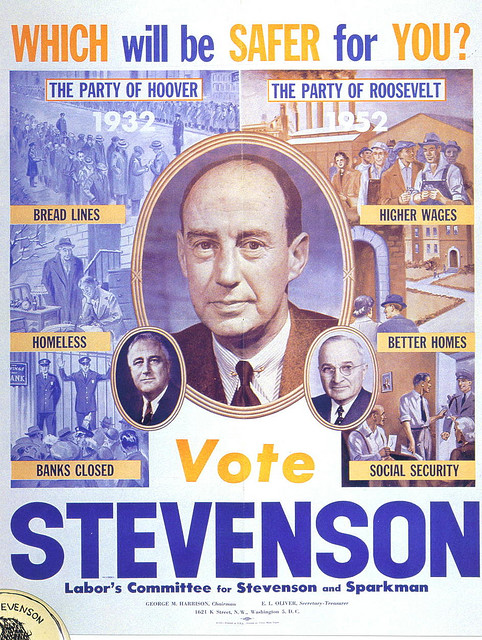
My first memory of politics is the 1952 presidential campaign. My parents supported Adlai Stevenson and I remember waking up the day after the election and asking who won. I was quite disappointed when I found it was not Stevenson.
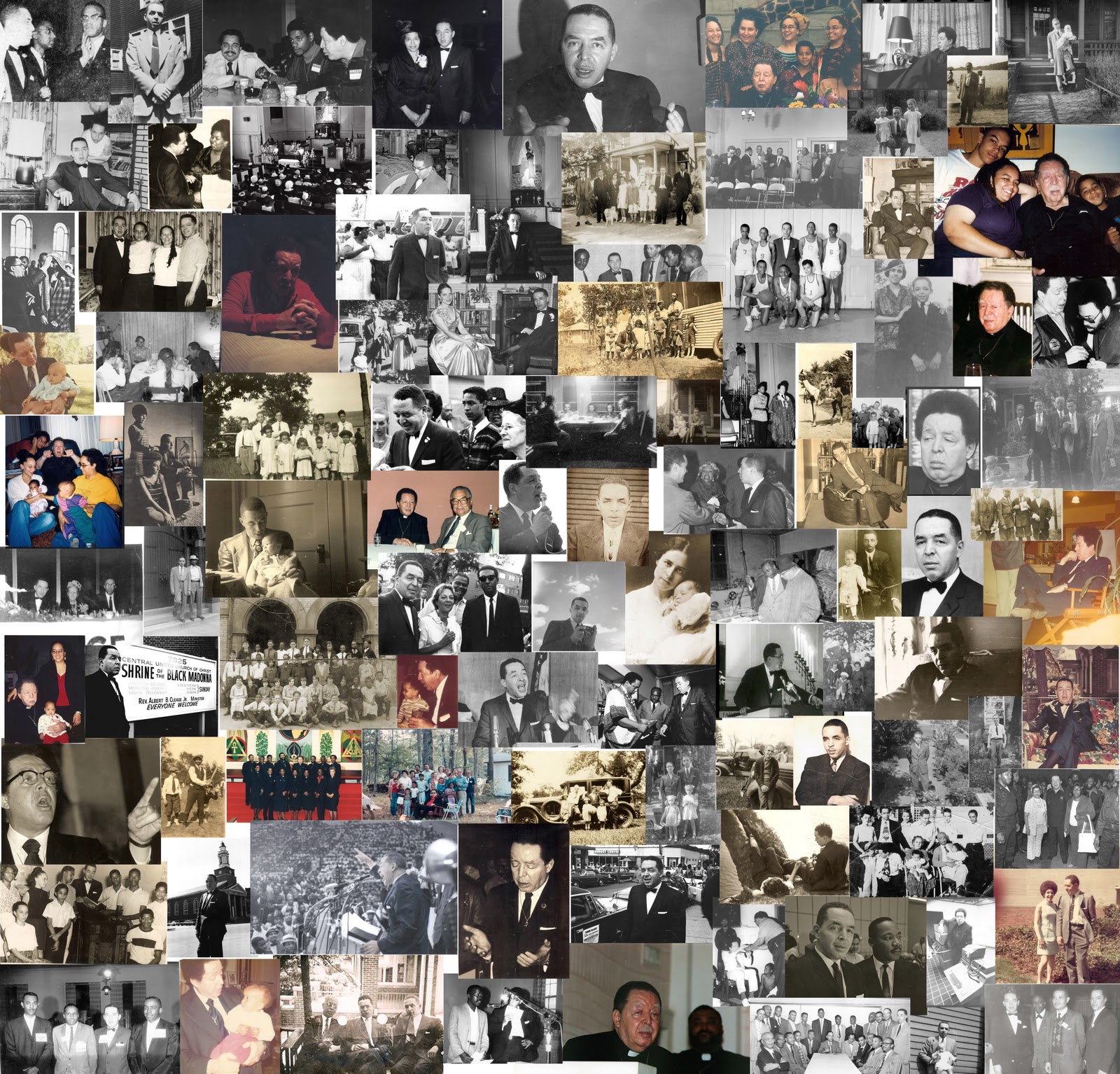
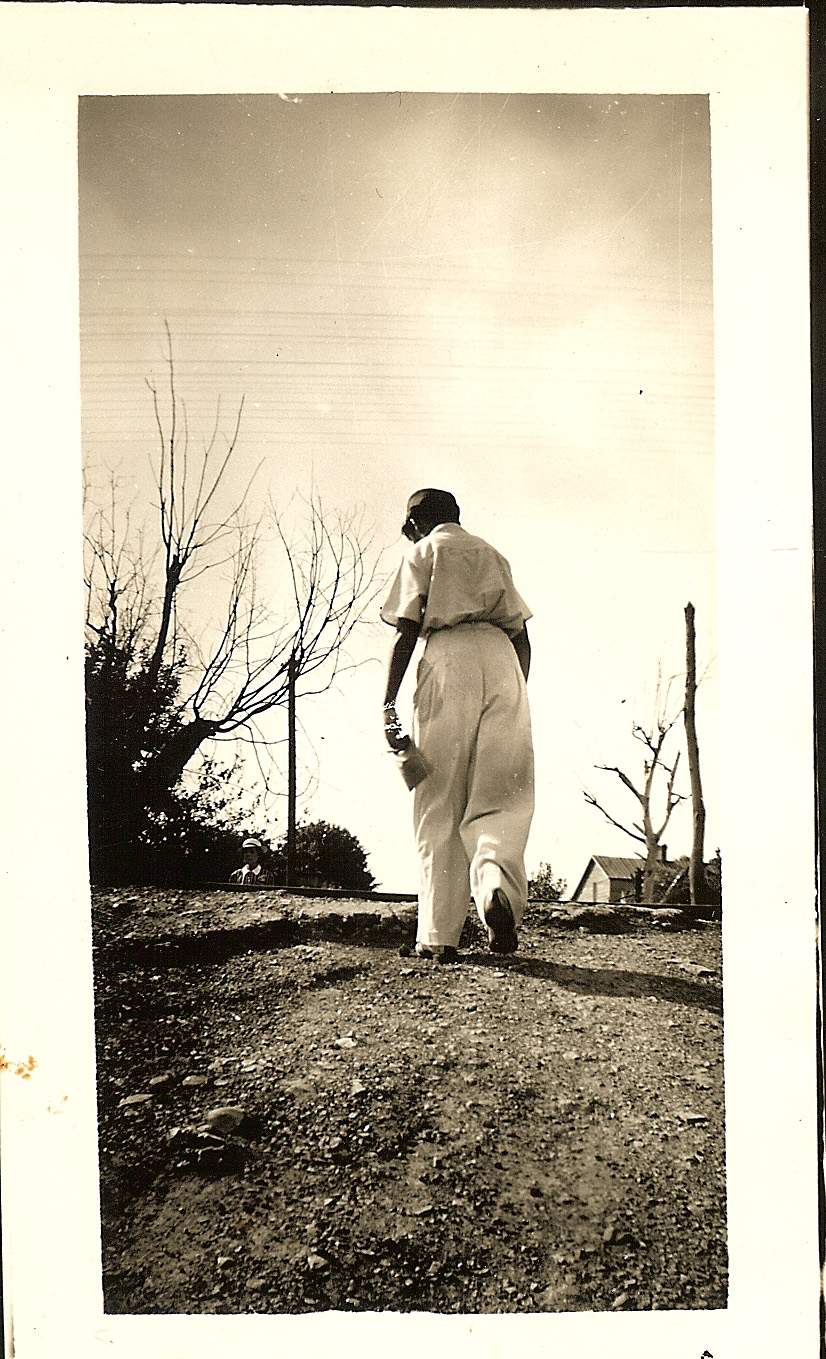
In 2009 Alan Burnett and Kate Mortensen founded Sepia Saturday. This week we celebrate it’s 100th week of existence. I contributed my first post to Sepia Saturday #48 on November 7, 2010. Since then I have usually been a “themer” and enjoy coming up with something from my family photograph collection related to whatever theme Alan comes up with each week. I also enjoy seeing what others come up with. I have chosen to celebrate the occasion by posting 100 photographs of my father, who would have been 100 years old this year.
Obituary from: The New York Times – U.S.
______________________________________
Albert Cleage is Dead at 88; Led Black Nationalist Church
Published February 27, 2000
Bishop Albert B. Cleage, who after the urban riots of the 1960’s built his Detroit church, the Shrine of the Black Madonna, into an important center for black theology and political power, died on Feb. 20 in Calhoun Falls, S.C. He was 88.
Bishop Cleage died while visiting Beulah Land, his church’s new farm, where he planned to raise food for the needy and give city youths peaceful summer vacations.
The bishop, who changed his name in the early 1970’s to Jaramogi Abebe Agyeman, presided for more than three decades at the Shrine of the Black Madonna, originally a Congregational church. The change came in the late 1960’s.
There were other black secessionist churches but Bishop Cleage’s became one of the biggest and most influential emphasizing black interpretations but retaining some traditional Protestant teachings.
Bishop Cleage was also drawn to politics. in 1973, Black Slate Inc., his political organization, helped Coleman A. Young become the first black mayor of Detroit, and the bishop was important in the careers of United States Representative Carolyn Cheeks Kilpatrick, Democrat of Michigan; former United States Representative Barbara-Rose Collins; and blacks who ran for smaller offices.
“He taught me the importance of organizing,” Ms. Kilpatrick said, “and he created networks of political activists that continue to have a profound impact on Detroit’s political landscape.”
Bishop Cleage became a focus of national attention during the 1967 Detroit riot, when 43 people were killed, and in the turbulent years afterward. Splitting with both the white power structure and more moderate black leaders, he emphasized black separatism in economics, politics and religion.
“The basic problem facing black people is their powerlessness,” he said. “You can’t integrate power and powerlessness.”
Trying to counter what he saw as white domination of religion, Mr. Cleage espoused a gospel of black nationalism. He installed a larger-than-life painting of a black Madonna holding a black baby Jesus, radical for its time, and preached that Jesus was a black revolutionary whose identity as such had been obscured by whites.
“That was the beginning of a whole new religious iconography” said Menelik Kimathi, chief executive officer of the Shrine of the Black Madonna. Mr. Kimathi, who joined a shrine youth group 30 years ago, added, “I think his legacy will be that he founded black liberation theology, the idea that the church could be more relevant to the day-to-day concerns of the community.”
The Rev. Jim Holley, pastor of Little Rock Baptist Church in Detroit, said: “He brought a black consciousness to the church community like it never had been brought before. And it translated into politics.”
In 1968, Life magazine called Bishop Cleage one of “the men who are speaking to black America,” along with Jesse Jackson, Julian Bond, Eldridge Cleaver and Dick Gregory.
The bishop was national chairman of the Black Christian Nationalist Church, an umbrella organization for similar churches, and he wrote “The Black Messiah” (1969) and “Black Christian Nationalism”(1972).
Albert Cleage was born in Indianapolis on Jun 13, 1911. his physician father moved the family to Detroit, and in 1937 the son received a sociology degree from Wayne State University. He received a divinity degree from Oberlin College, then served churches in Lexington Ky.; San Francisco; and Springfield, Mass. In 1951, he became pastor of St. Mark’s Community Church in Detroit, and two years later he formed the Central United Church of Christ, which later became the shrine.
Though he had believed in integration — some of the churches he served were racially mixed — Bishop Cleage came to despair of the hope that whites would ever willingly help blacks advance. He also befriended Malcolm X, the Muslim leader, who had Michigan roots.
Bishop Cleage’s vision of a church reemphasized social service programs reached out to young people and marched for civil rights. He organized black-owned businesses like grocery stores and bookstores, and built hundreds of units of housing.
All this activity made him frightening to many whites.
“When we take over, don’t worry,” he once responded. “We’ll treat you like you treated us.”
He later founded other shrines, including major ones in Atlanta and Houston. Today, Mr. Kimathi said, the church has about 50,000 members nationally.
In the 1970’s, Bishop Cleage backed out of the national spotlight to concentrate more on church programs and working with young people. In the late 80’s and much of the 90’s, he lived in Houston, then returned to Detroit.
Bishop Cleage married Doris Graham in 1943; they divorced in 1955. His survivors include their two daughters, Pearl Cleage of Atlanta and Kristin Williams of Idlewild, Mich.; three sisters; a brother; seven grandchildren, and one great-grandchild.
It was a marvelous party. It had that nebulous, dreamlike quality that is so mellow. I was tripping daintily across the floor with this mellowness of aspect, when a small table sprang upon my person and bore me to the floor. It was pleasantly surprised to find that the lower level was as thickly populated and as chummy as the upper. George was lying right next to me.
“Isn’t it though” said George raising his head to look about.
“Everyone seems to be having a very enjoyable time,” I said.
“Except Snuffy,” said George pointing towards a neglected part of the establishment.
He was right. Snuffy was peering wildly out from behind some draperies.
He obviously wasn’t up to snuff.
“Soon as I rest up,” said George, “I’m gonna crawl over and see what’s up.” He leaned back, tucked a bottle under his head and closed his eyes.
“Allow me,” I said, “I’m rested.
It was a gloomy hole that Snuffy had wormed into. Separated from the larger room by draperies. It was dark and full of shadows. Snuffy was sitting on a couch near the opening so that he could keep an eye on the party. But his eyes had a haunted look, like they had seen too much. Of course I knew personally that they had been around plenty, his eyes I mean, but there was definitely more here than met the eye, speaking of eyes that is to say.
“I’ve got a ghost,” said Snuffy.
“Female?” I asked.
“But talented,” said Snuff looking at me with respect.
I must admit that I was pleased. One must be of a sensitive nature to delve into the mysteries with the nonchalance I had shown. One must have imagination and faith. Also one must have a particularly fine edge on.
“Behold,” said Snuff gesturing largely across the little room.
And there she was, a genuine ghost of absolutely the first water. She was sitting across the room drinking a mellowroony.
She was, as far as I could see, a luscious piece of plunder too. Of course it was all dark and shadows, but her robes and things were draped where they should be draped. It was quite a ghost gown too. Slit up one side about to her… It was beastly dark, as I say, and I couldn’t just say for sure. The gown was very form fitting though and the ghost had no less a fitting form. As a matter of fact, the tiny shaft of light that lay across that slit in her gown rested upon a limb that was surprisingly lifelike. But that cape gave her away. That was a ghost cape if I ever saw one.
Immediately I realized the dire potentialities of the situation. At a party like this where all is fellowship and noble sentiment, a ghost with a silted ghost gown has no place, especially if she also has a genuine ghost cape with a hood, yet. Snuffy and I must protect the party, or vice versa.
But I wasn’t happy. The party was showing admirable reserve strength as it swung into the stretch. A lovely thing was doing a picturesque number on top of the piano. Across the room George, apparently refreshed, was reaching great heights with his speech on fellowship. Louis was standing before an Italian mirror, in a Mexican Sombrero, reciting German poetry. And I was tied up, in a manner of speaking, with a ghost. Giving my all—understand—for the group.
To top it all, Snuffy was well in was well in his cups and having difficulty remaining awake. The ghost was not far behind, speaking of cups. I was desperate. That beautiful bit of talent on top of the piano needed me, I felt. I couldn’t place her but that gown fascinated me. A bit of ribbon here, a bit there and neither definitely here or there – understand.
I took desperate measures. I marched right up to the ghost.
“Pffft, disappear,” I intoned whilst making mysterious motions with my hands. Motions a ghost would understand, mind.
But she wasn’t having any. She offered me a drink of mellowroony, which I accepted with a certain dignity and toddled back to my seat.
I was about to descend into a quandary when a nudge from Snuffy rescued me. I looked up. Our ghost was upon us.
“She must not pass,” said Snuff.
The ghost had no intentions of passing. She fixed us with those eyes and slowly raised her arms.
In those ghost capes and hoods she presented a most disheartening picture. The room was full of darkness and despair with her just sitting there, but now it had gone hog wild. It was as if some giant vulture had come among us. As she hovered there she seemed to expand until she filled every corner of the room. I was about to give her more room by leaving, when she spoke.
“Pfffffft,” she said. She looked like the devil.
“Vamoose,” she hissed.
It was rather a nasty shock. Being uncertain as to the powers of ghosts filled with mellowroonys, I quickly looked to see if Snuffy was still one of us. He was and I was relieved. Snuffy seemed relieved too. We three looked at each other. An impasse seemed to be reached.
Our ghost took in her stride though. She sad down between us and cuddled up against my shoulder. Snuffy cuddled against hers. I was perturbed.
“Snuff,” I bellowed, thinking to keep him awake with conversation.
“Ummmm,” he replied.
“That girl on the piano with that gown, who is she?”
Snuffy and the ghost leaned forward to the opening and directed four beery eyes upon the piano and then fell back heavily to their former positions.
“Girl from the show,” said Snuff “George brung em.”
“Oh. And it ain’t no gown,” said Snuff fast loosing consciousness.
No?”
“It’s her costume, they didn’t change”.
“They?” I asked pointedly.
“Two girls,” he said heavily, “From a skit called Flesh and …” here Snuff gave it up. He snuggled close to the ghost and put that devilish cape over his head and began to snore softly.
“Flesh and what,” I shouted hoping to arouse him. But I was let alone with a ghost with a slit in her gown.
I was beat – in a quandary-frantic. This ghost was so permanent and so heavy. The way she was leaning on my shoulder it wouldn’t be long before she had overcome me with sheer weight. What to do? Would I have to scream for help?
I was interrupted from my fast approaching neurosis by a giggle erupting from my left ear.
“Flesh and the Devil,” my ghost confided in rare good humor.
“Didn’t you notice my devil’s costume?”
She held up that devilish cape.
*****
Henry wrote this story about 1943. I looked up the drink “Mellowroony” and came up with the song “Cement Mixer” which you can hear near the end of the clip below. I had never heard of Slim Gaillard before but I think his performance fits in with the story. And he grew up in Detroit.
While looking over Henry’s Diary 1936 post I realized that I had left out the last entries. I offer them here. The photographs are from the same time period in the little Black Album full of contact photos.
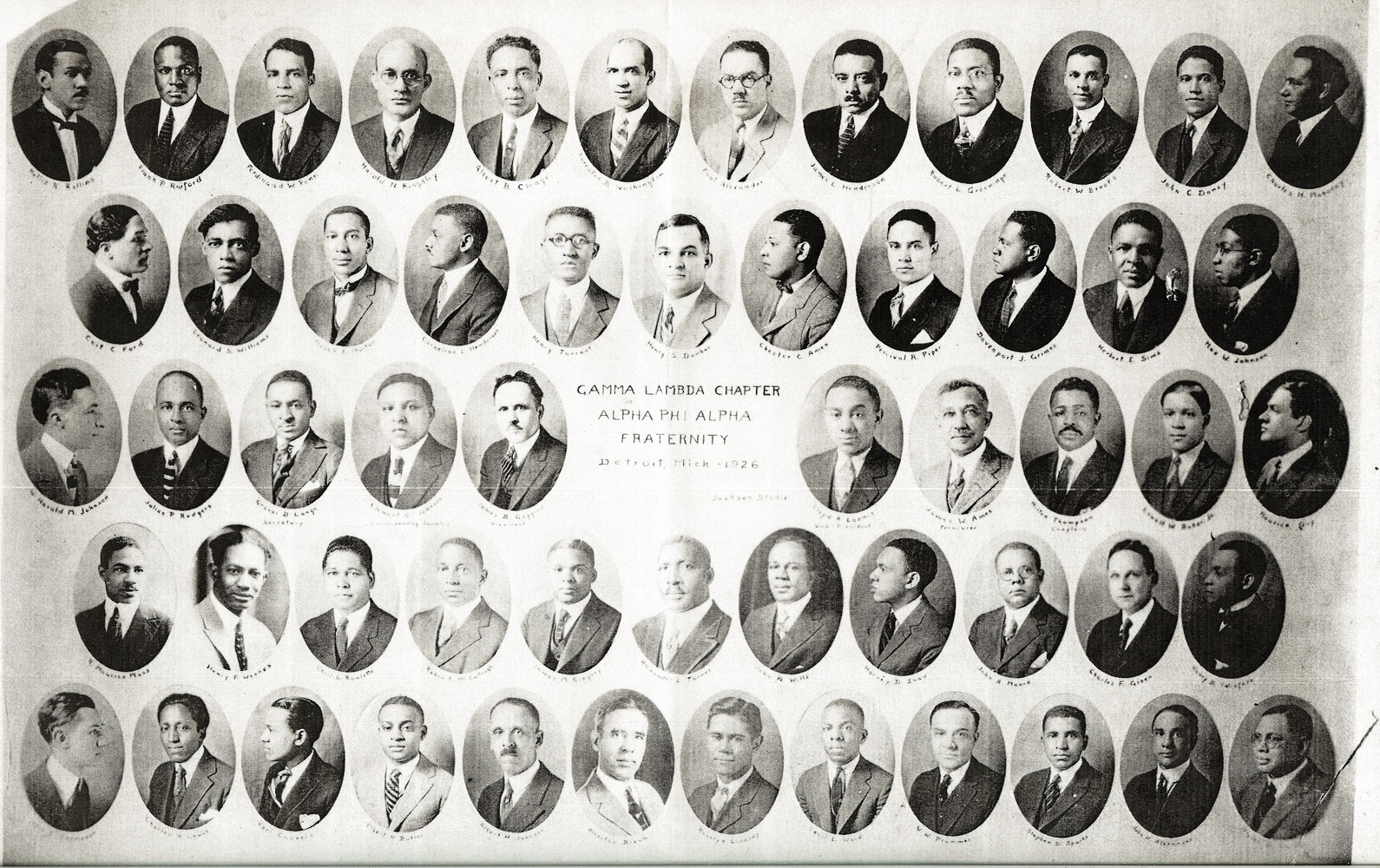
March 10 Nothing – home did find accounting problem. Brewer said three openings to Nacerema – invited me – Daddy not enthusiastic – social club, not for student at school – Brewer said that Alpha’s taking a batch – advised me to pay some on my back fees.
March 11 school & home –Rained – cold. tomorrowtwo tests Friday – history & accounting.
March 12 Found out from kid no test in History tomorrow, just in accounting. he had better be right- However I have studied History for a quiz (oral) tomorrow – I will study accounting during two vacants tomorrow – I hope Mama & Daddy have gone to Boulé “Keno” party -now about 1:00 a.m. going to bed.
Daddy and Mama
March 13Fri – after school (8:30) not enough money to go to the show, so I waited in Union till 7 o’clock class! Went over to Margret’s tonite – walked home with Elmo, Marion, Micky
March 14 had tooth treated – hair cut March 15 Went to shine meeting with Brewer, argument whether to get Laertes or Gloster for Dexus Desus – Laertes Everyone all bothered about going into fraternity. took car to Neil Hendersons tonight. took so long they were mad.
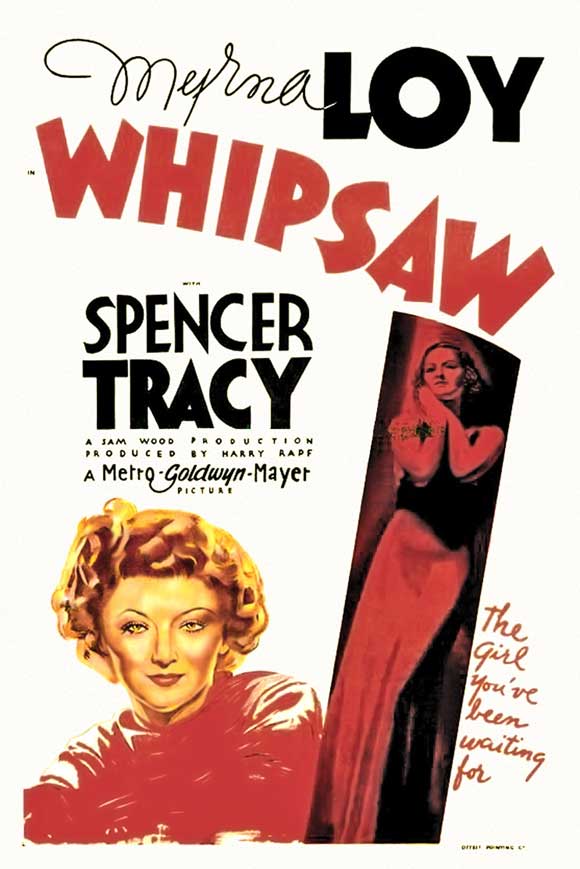
March 16 Went to show tonite and saw two good pictures – “Old Kentucky” Will Rodgers, Bill Robinson – & “Whipsaw” – Myrna Loy and Spencer Tracy
March 17 Hygiene class went to Risdon Creamery – again I collected fares. Nothing of import
March 18 Late for History Lecture. Tonite I went to show and saw “Man who Broke the Bank at Monte Carlo” (Ronald Coleman) and “Remember Last Nite?” Robert Young. Met Winafred DeGrasse at show –
March 19 Hygiene class didn’t meet so I didn’t got to school till 2:30
March 20 Accounting class didn’t meet. I & Clark went up to do our geology lab work, but teacher had neglected to leave questions so came home with Clark. tonight started to show with Bill Mitches after my 7 – 9 class – changed my mind Paper due for English next week.
March 21 Sat. Done nothing but work on accounting all day – am supposed to go to alpha meeting tomorrow to answer some questions. Again at 3:00 o’clock all ? excited about being made – few will be made. I could if I had the entrance fee, I think.
March 25 My birthday – 20
Henry & Oscar Hand
June 14 Went to Carolyn’s house with Bassset in someone’s Model A Ford – and Gene (a boy from Carolina) Oscar went with us the first time But Carolyn wasn’t home- she left a note for me (see note) – came back on west side and let Oscar out, he was mad!!!!! went back to Carolyn’s (she was home) – Basset left and said he would come back for me- Carolyn and I became better acquainted… Basset came at about 11:15 and we came home. June 15 Went to Velma’s – and not sure whether or not we have a real date Sunday or not ??? – am supposed to have a date too with Nancy and Carolyn too-
I meant to have my tooth pulled today but decided to wait until after the St. Matthew’s Moonlight July 6. (I must learn to dance) and get some ? I got and get a job.
June 16 Nothing – had dentist fix a molar – said back Sat at 11 and he would fill it. Played ball and went to bed.
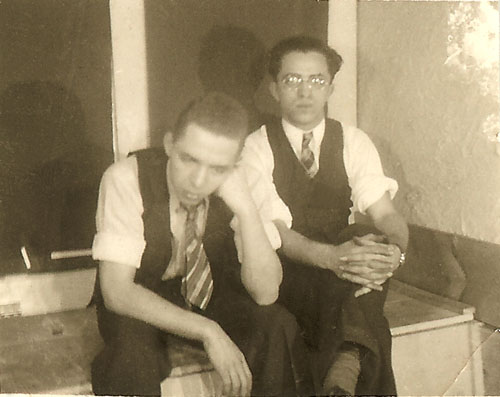
Toddy & Louis
June 20 Went to Carolyn’s – talked from 6 to 9:30 – some kids came over – Matthews, ?, Charlotte, etc -Toddy and Louis came over so I left – Went by Velma’s – we did have a date – she expected me.
June 21 Took Velma for a short ride – Mabel fixed it -!!
June 27 Went to Carolyn’s – me and Toddy took her and Clara ? & Wilberforce for a ride.-
Henry
August 29 Meadows Arrived at meadows at about 7:30 (getting dark) Had seen Velma before I left – I have her ring now – after had gotten our trunk in – we went down to creek – other’s brought some wood up and started a fire – I stayed down watching the creek and the farm – as it was dark they worried and came and got me. August 30 Meadows Sunday Richard’s club gave a picnic – we played ball off and on all day. Daddy came out and brought Bobby – wrote two letters – Velma and Carolyn. Bobby deliver them.
Last night when the others were in bed Morrow, George, Paul, Hugh and I sat around camp fire and sang – Nice but a little chilly (Benard’s parents came out)
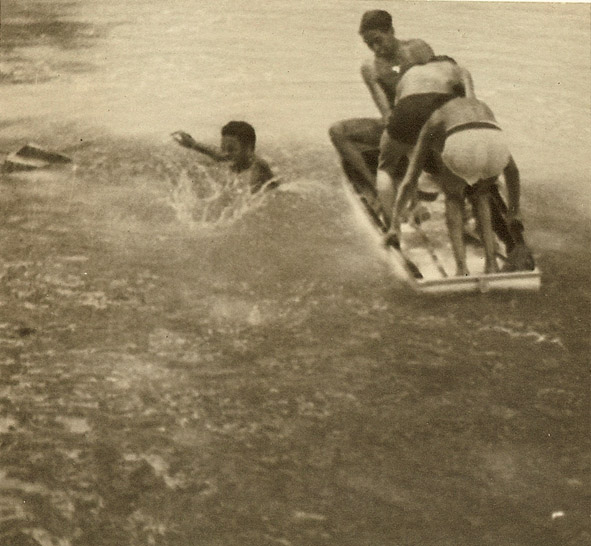
August 31 Meadows After breakfast some of us went swimming – after that we all worked on a raft till dinner – chopped heavy logs from a fallen tree – tied together with grape vines and barrel wire – after dinner went & christened it “Frogy Bottom” & launched it – it immediately sank – logs were too heavy – were we mortified – the same group sat around the campfire again sang after dark.
September 1 Meadows “Gee! but I’m blue, and so lonely, I don’t know what to do, but dream of you!” (a song I like to sing out here)
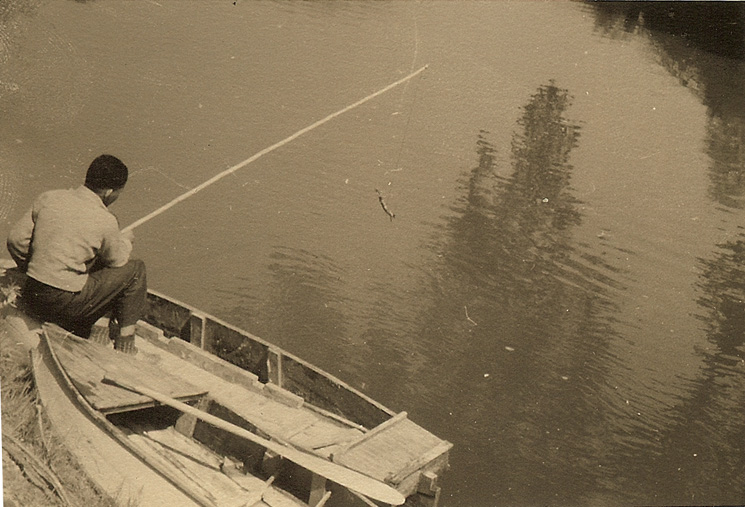
Hugh fishing.
Boys are playing horse shoes just after dinner – we fished and swam today – George caught a pretty large bass and I, trying to throw him across river to Morocco – threw him in.
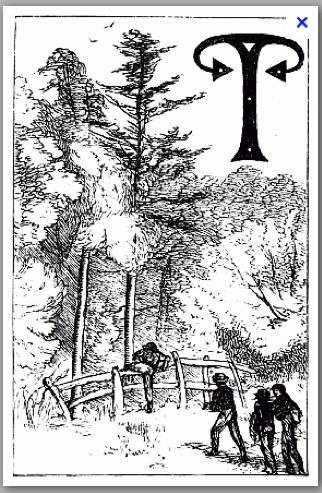
Illustration from Tom Brown’s School Days
I like to get on the hill and look down towards the creek in the evening and watch – The other nite I was there, Morocco, George, Hugh and Benard were chopping wood. Louis and Paul were sitting farther down the hill with their arms full of wood – It was almost nite – The faint light from the west gave the scene a surreal quality – The grass uneven, the rolling land, the giant trees, the creek, all outlined in this light and the boys too reminded me of an illustration in the book “Tom Browns School Days.”
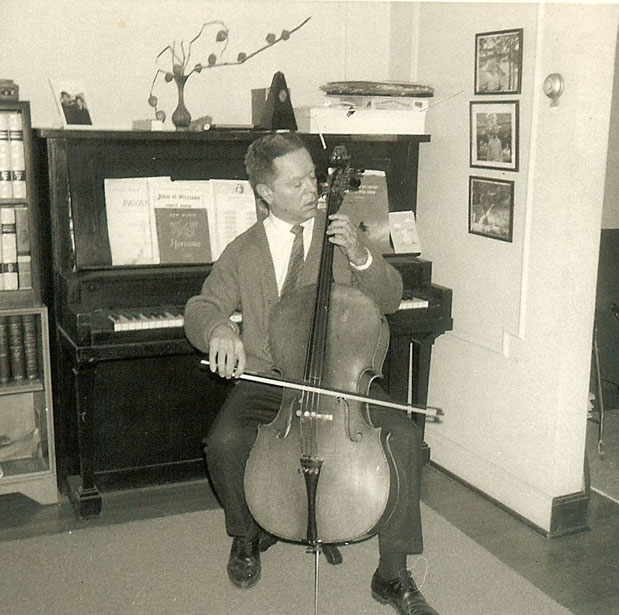
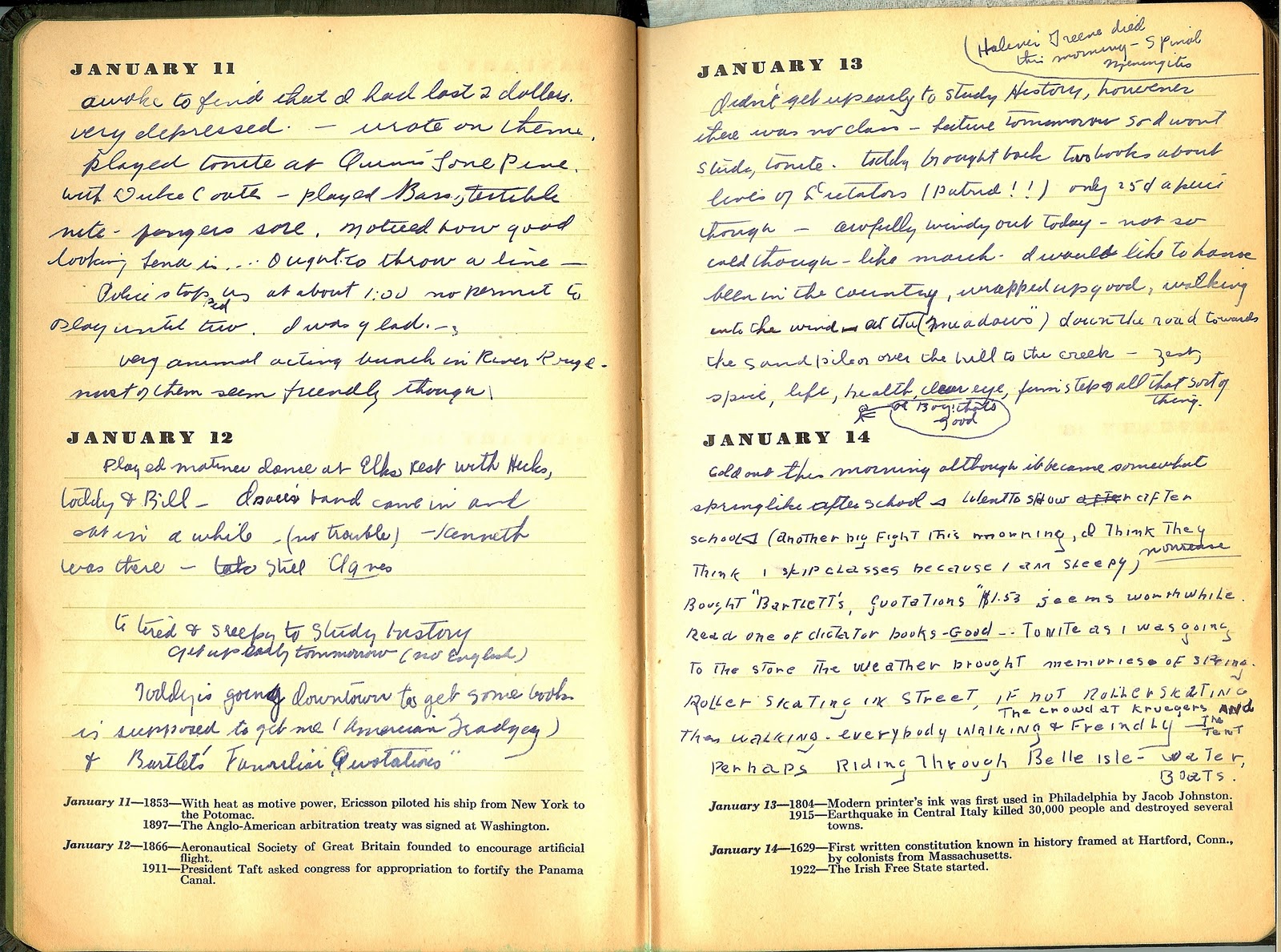
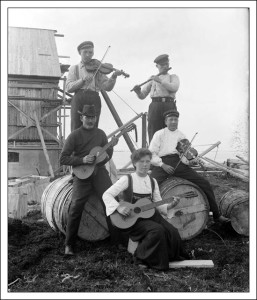
As soon as I saw this weeks prompt for Sepia Saturday, I thought of this photograph. I decided to revisit an old post from Henry’s journal, written during several months of 1936, where he mentions playing the bass at a club.
January 11
Awoke to find that I had lost 2 dollars very depressed. Wrote on theme. Played tonight at Quinn’s Lone Pine with Duke Conte, played bass, terrible night. Fingers sore. Noticed how good-looking Lene is… Ought to throw a line – Police stopped us at about 1:00AM. No permit to play until two. I was glad. Very animal acting bunch in River Rouge. Most of them seem friendly though.
January 12
Played matinee dance at Elks rest with Heckes, Toddy and Bill – Dracee’s band came in and sat in awhile (no trouble) Kenneth was there. Too tired and sleepy to study history. Get up early tomorrow (no English) Toddy is going downtown to get some books is supposed to get me ‘American Tragedy” and ‘Bartlett’s Familiar Quotations”
January 13
Haliver Greene died this morning -spinal meningitis. Didn’t get up early to study History, however there was no class – lecture tomorrow so I won’t slide, tonight. Toddy bought back two books about lives of Educators (putrid!!) only 25 cents a piece though – awfully windy out today-not so cold thought – like March. I would like to have been in the country, wrapped up good, walking into the wind at the Meadows, down the road towards the sand pile or over the hill to the creek – zest, spice, life, health, clear eye, firm step and all that sort of thing.
January 14
Cold out this morning although it became somewhat spring like after school. Went to show after school. Another big fight this morning, I think they think I skip classes because I am sleepy, nonsense. Bought ‘Bartlett’s Quotations” $1.53. Seems worthwhile. Read one of dictator books – Good – tonight as I was going to the store the weather brought memories of spring. Roller-skating in street, if not roller skating then walking. Everybody walking and friendly. The crowd at Krueger’s and the tent. Perhaps riding through Belle isle – water, boats.
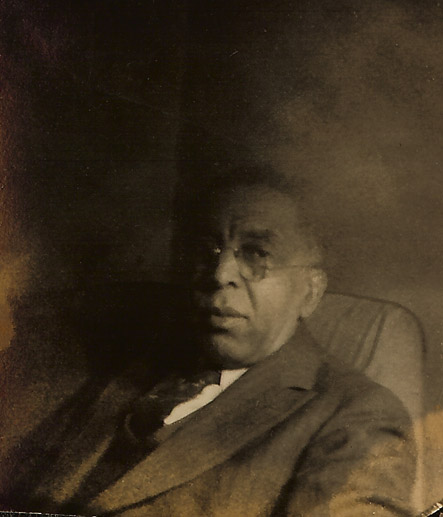
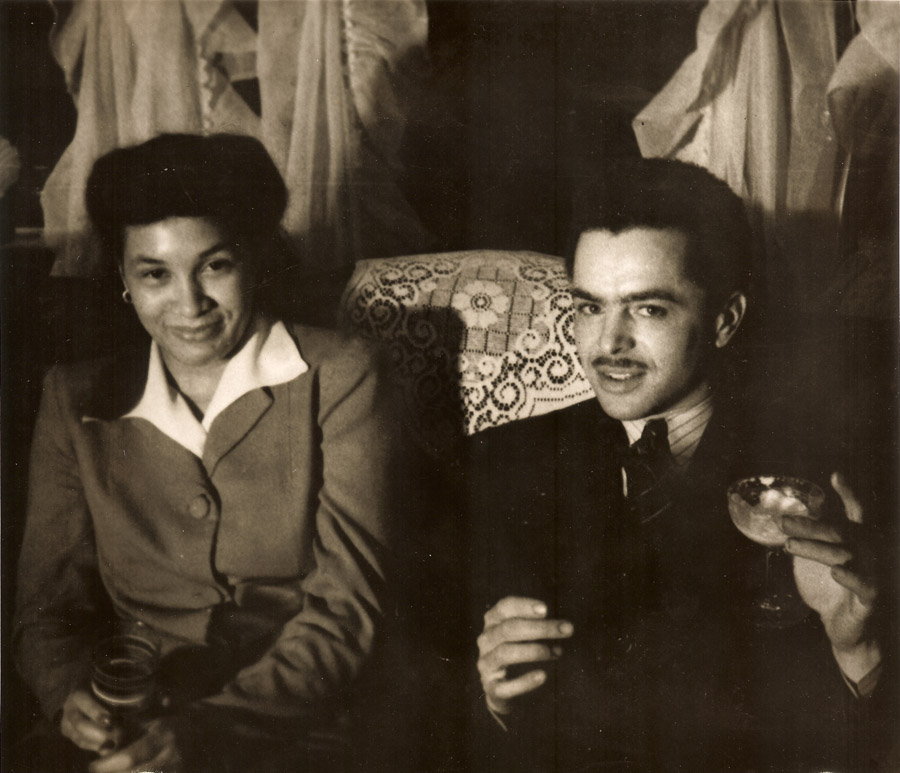
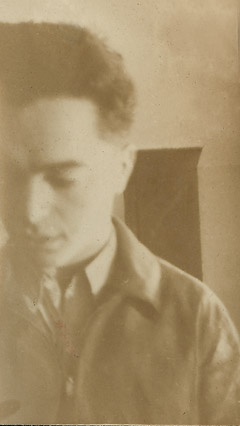
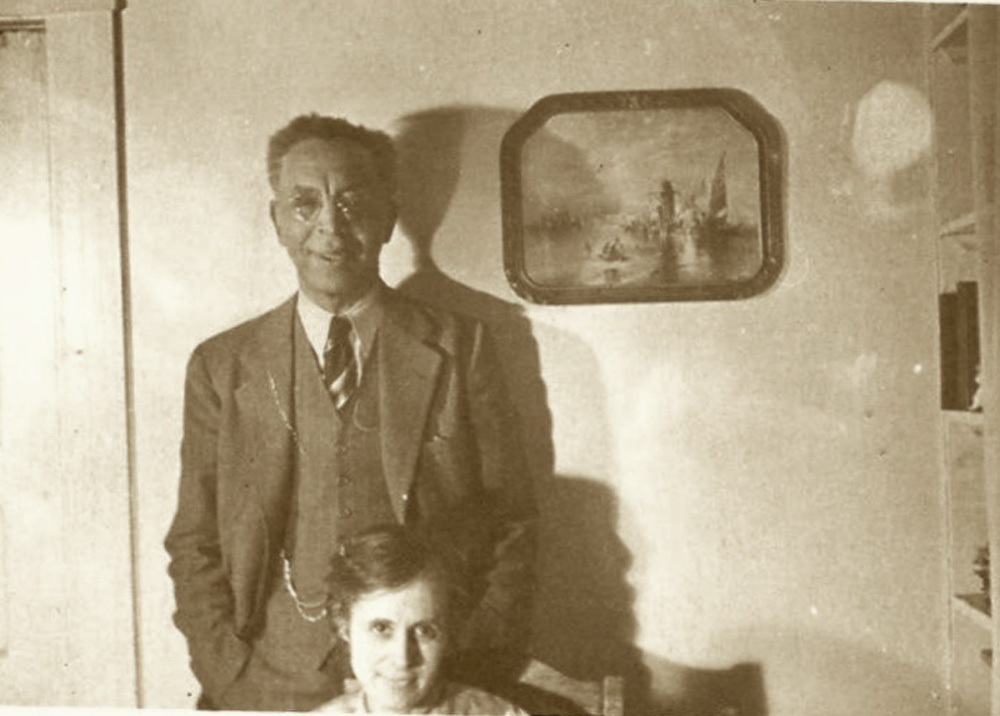
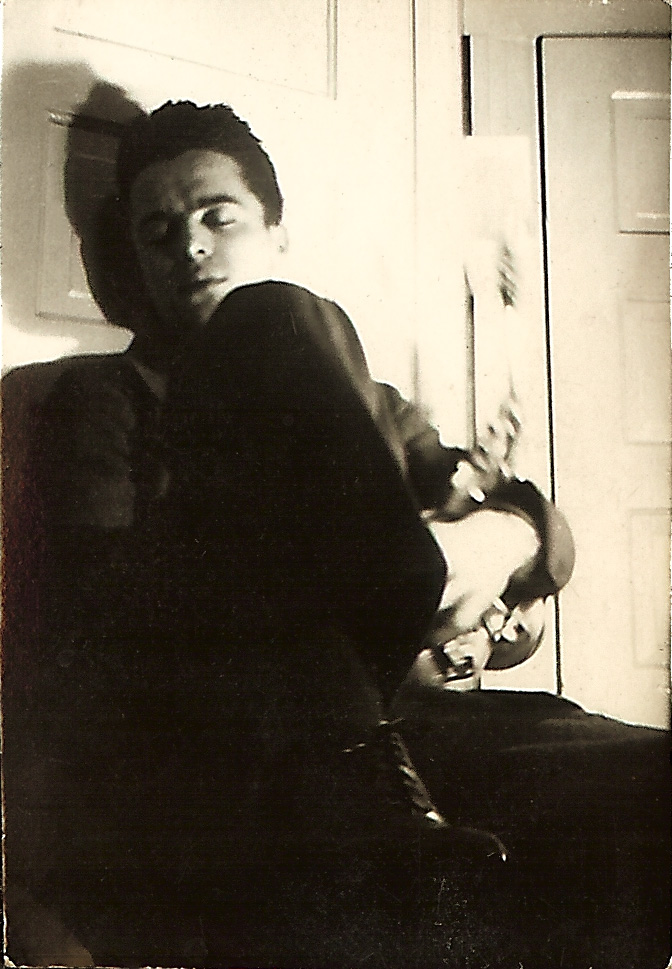
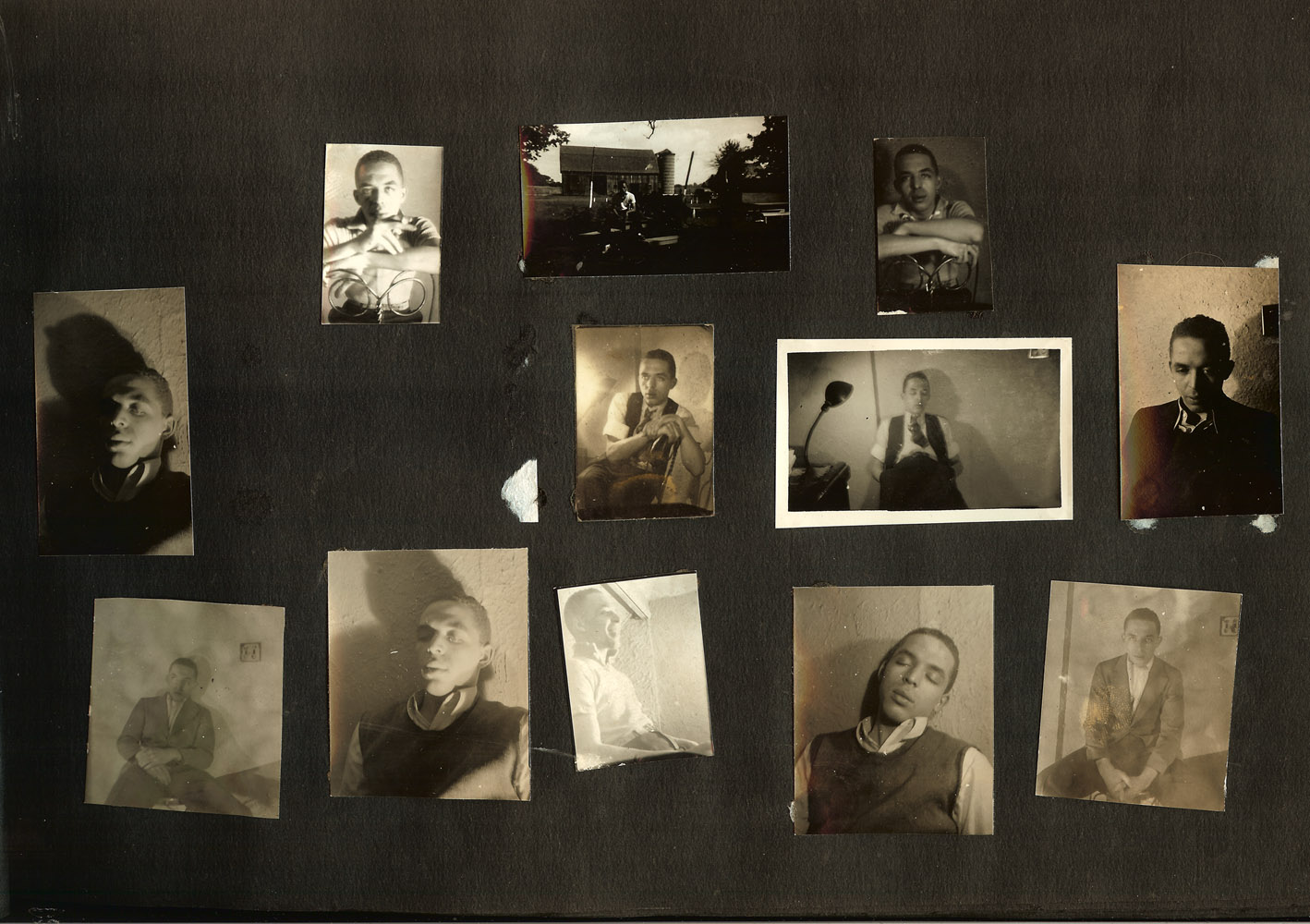
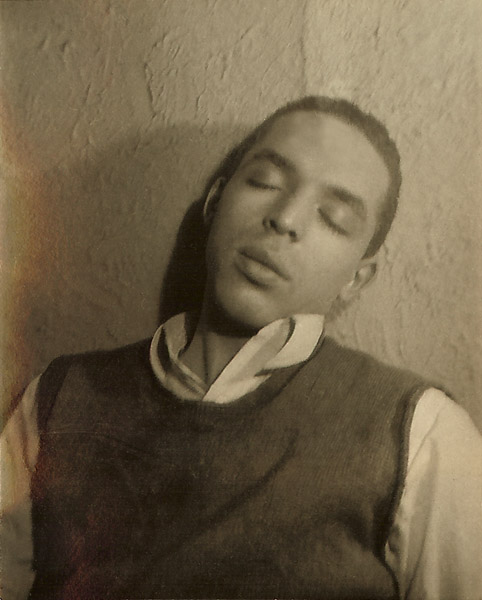
Today I have posted a page from a small photo album that featured a page for each member of my father’s family, plus some family friends. The contact size photos were not very carefully pasted in and are not identified or dated. Judging by the ages of the people, I think they were taken about 1938. Which makes my father, Albert B. Cleage Jr (Also known as “Toddy” to family and friends), 27. The theme this week is a man sleeping while posing for a photograph.
To see another page from the album, click Grandmother Pearl Reed Cleage
To see Sleeping (and other) Sepia Saturday offerings, click HERE.
My friend, historian Paul Lee, put this short clip of an interview of my father, Rev. Albert B. Cleage Jr. by Chet Huntley on You Tube. It is from late 1967 or early 1968, not long after the 1967 Detroit riot.
For a post about my experience of the Detroit riot click HERE. For an audio of my father’s sermon the Sunday after the riot click HERE.