Dr. Alexander Turner – Solving Mysteries – Part 2

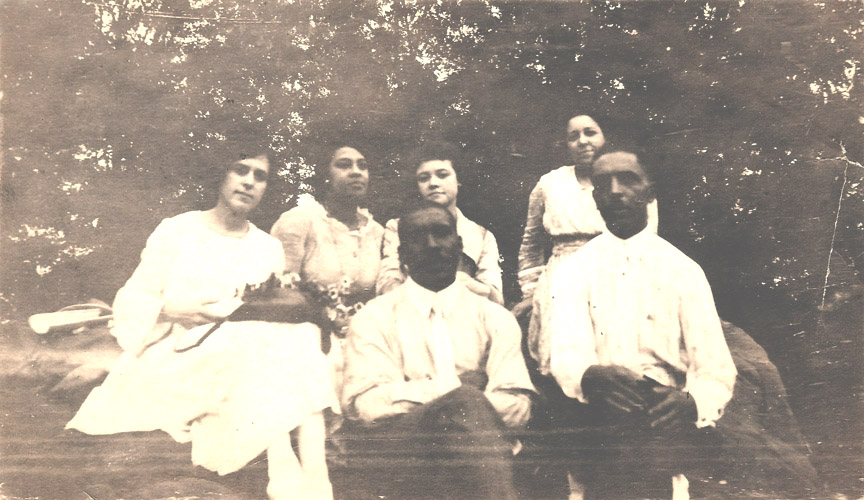
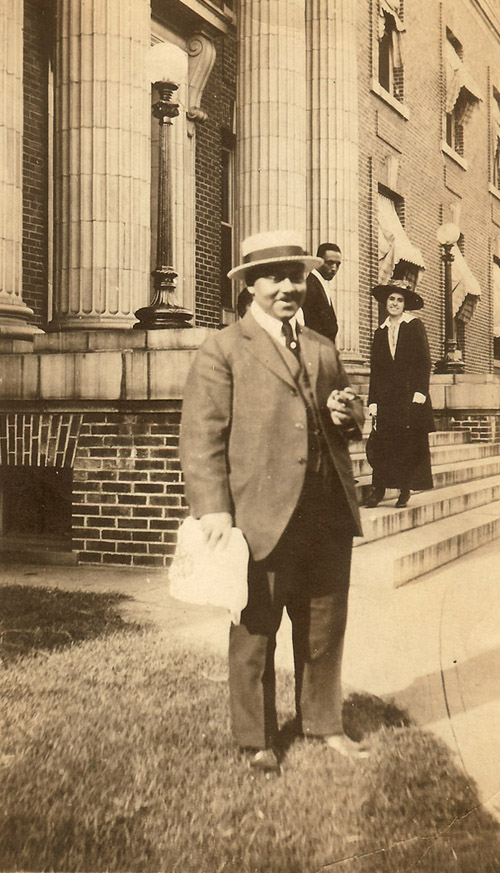
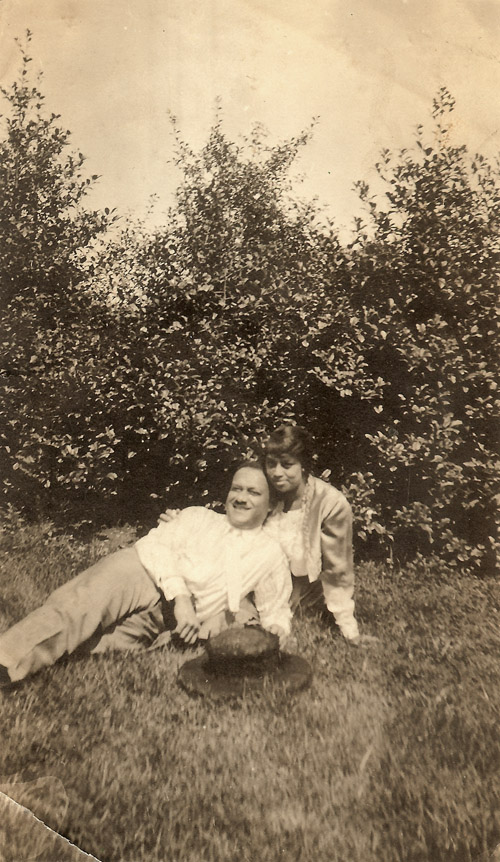
While trying to identify the people in the hat photo, I looked through my stash and found more photographs with some of the same people. They might have been taken at the same time, but might not have. Several other people were also included. On the back of one was written “Dr. Turner”.

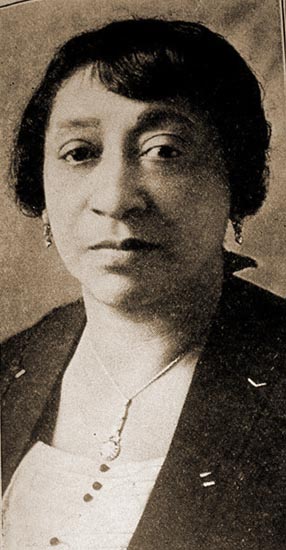
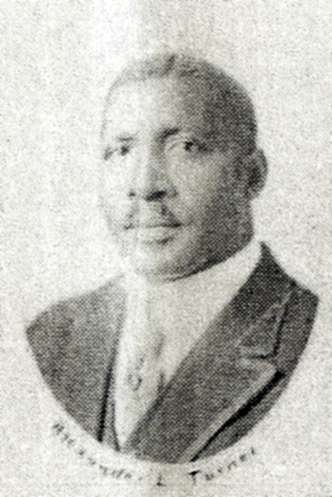
The women are my grandmother Pearl Cleage, Melzetta Gamble, lady in the polka dot hat, Leota Turner. Men are Dr. Alexander Turner and my grandfather Albert Cleage.

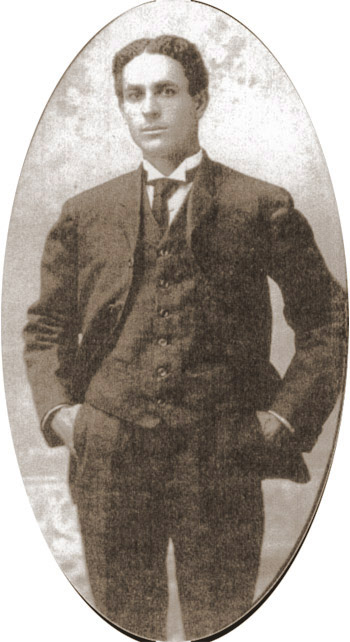
I wrote this earlier post which mentions Dr. Turner, “Births, Deaths, Doctors and Detroit – part 2“.  It was about the doctors that delivered three of my grandmother Fannie Graham’s babies and was with her two sons when they died.  So, I figured that I KNEW Dr. Turner but I decided to look some more anyway. And I thought maybe the lady in the polka dot hat was his wife.  Using Ancestry.com, FamilySearch.org, google maps, books and search along with newspaper articles found at GenealogyBank.com I was able to put together the following picture of Dr. Alexander Turner. And I did find his wife but it wasn’t the woman in the polka dot hat.

The “Michigan Manual of Freedmen’s Progress” published in 1915 to”celebrate 50 years of freedom for the former Negro slaves of this nation…” had this to say,

“Turner, Alexander L., M.D., 1042 W. Warren, Detroit.  Born in Georgia.  Graduate of the medical department of the University of Michigan.  Started his practice in Detroit, 1910 and became highly successful in the treatment of diseases peculiar to women and children.  Dr. Turner is also a Pharmacist and is the proprietor of two drugstores in the city of Detroit.”

In the 1900 census Alexander L. Turner was a 16 year old boarder living in Ravenna, Ohio.  The head of the household was Frederick Loudin who was 64 years old, occupation listed as “Showman”. The others making up the household were:  Wife, Harriett, age 54. No children. No occupation. Sister, Adeline Henson 54, widowed with one child and occupation housekeeper. Niece, Leota Henson 33, single with no children, occupation Musician. Alexander’s occupation was “at school.”

Frederick and Harriett Loudin. Click to see more photos.

Alexander graduated from the Ravenna high school in 1904 and then attended Buchtel College in Acron, Ohio. An article in The Gazette, a black newspaper out of Cincinnati, Ohio, ran a short article about Turner’s graduation it read.

“Graduation Present

Alexander Turner was made a graduation present of fifty dollars in gold by F.J. Loudin and wife.  Alexander came here from the south a few years ago.  He worked at the Loudin home and went to school.  He proved to be one of the brightest students that ever attended the Ravenna schools and he was a faithful worker for the Loudins.  For his faithfulness he received the reward mentioned above on Tuesday.

The commencement exercises of the high school were held recently in the First Congregational church (white) and Alexander Leigh Turner, one of the few Afro-American graduates who has completed the courses and received a diploma from the schools, fairly thrilled his hearers by his oration on “The Negro and His Progress” forcible and eloquently delivered.”

Later Alexander took the name “Loudin” as his middle name.  I can only suppose it was in honor of the Frederick J. Loudin.  This story ran on July 2, 1904. On November 3 of the same year Frederick J. Loudin died.  His wife, Harriett, died later that same year.

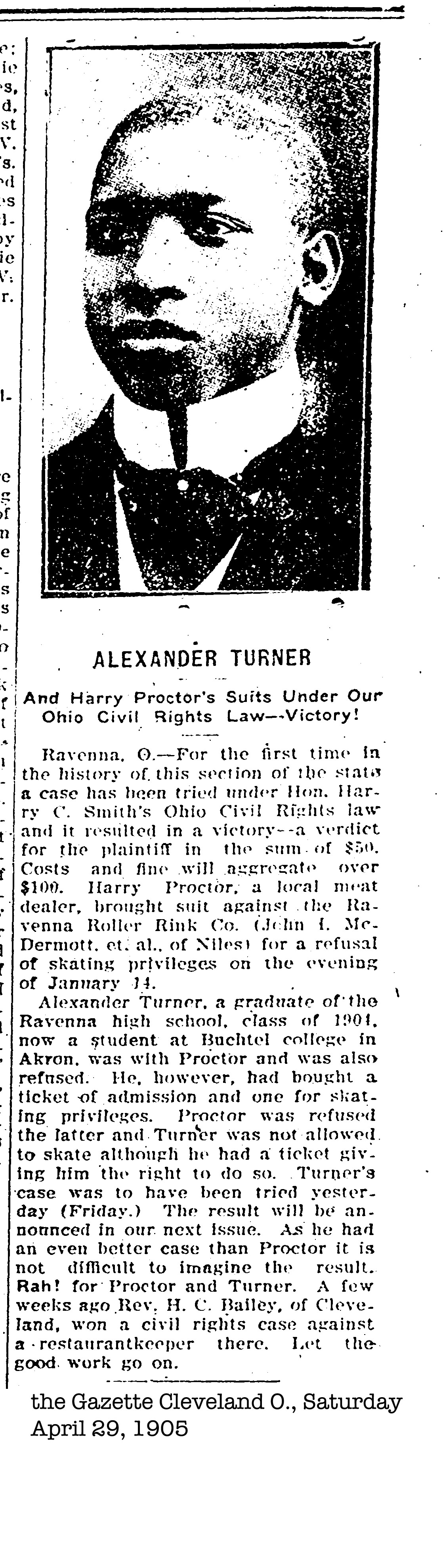
In April of 1905 while a student at Buchtel College Turner and Harry Proctor sued the Ravenna Rollar Rink Co. under the Ohio Civil Rights Law for refusing to allow them to skate after selling them tickets for skating. They won the suit.

After graduating from Buchtel College Turner enrolled in the University of Michigan Medical College. On September 16, 1908 twenty seven year old Alexander L. Turner married 45 year old Leota F. Henson in Ann Arbor Michigan. Leota’s mother  lived with them at 603 Catherine St. The house is still there.

In 1912 Turner graduated and the family moved to Detroit where he began to practice medicine. On his WW1 draft registration card he is described as 5 ft. 8 inches, slender with brown eyes and black hair.  He lived at 1042 Warren Ave. West and practiced at 287 Saint Antoine St. down the block from Dr. Gambles office. All these places are long gone, urban renewed decades ago.

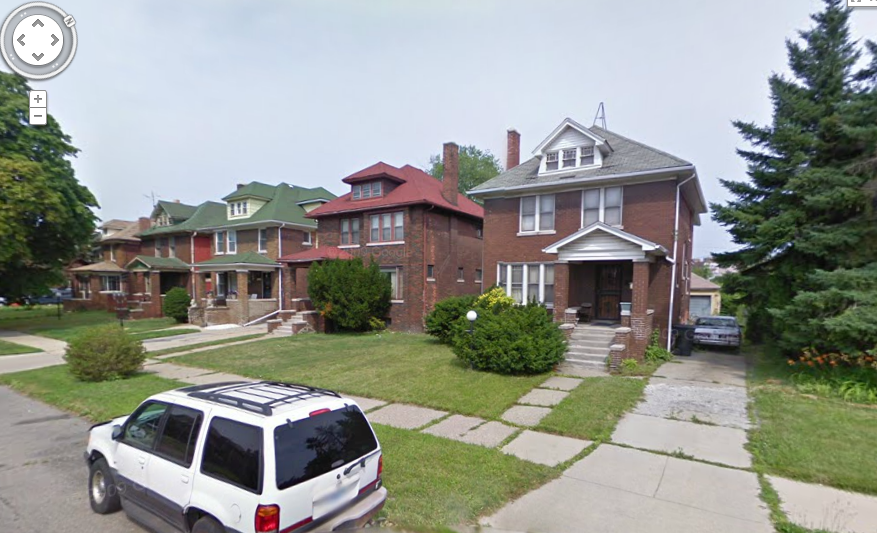
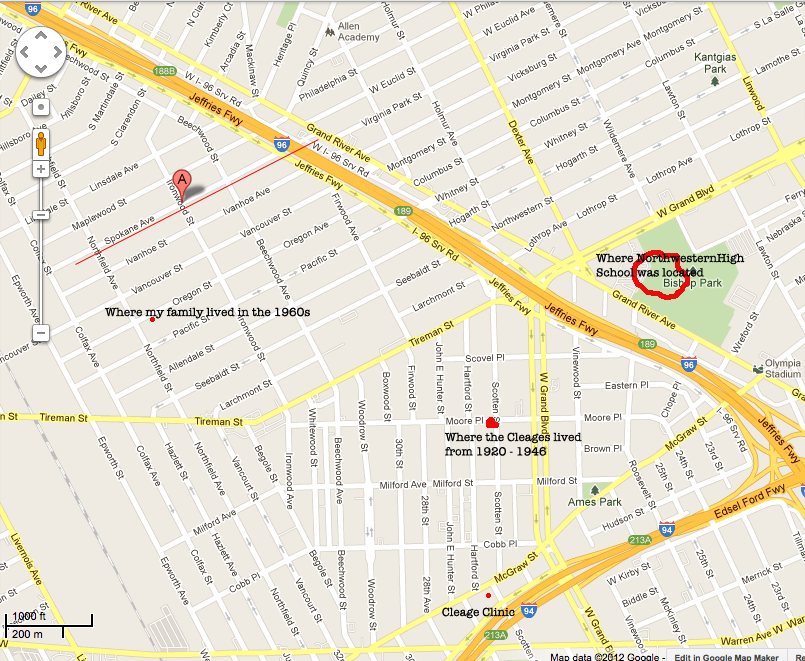
In 1918 Turner was one of the founders of Dunbar Hospital where he was the chief of surgery.  You can read more about the founding of Dunbar in the post mentioned earlier,  “Births, Deaths, Doctors and Detroit – part 2”. In that post I also described what the Turner’s suffered when they attempted to move into a house on Spokene Ave, into a white community on Detroit’s west side.  At that time some white men forced their way into the house, put a gun to Turner’s head and demanded he sign the house over to them. He did.  He and his wife and mother-in-law, were escorted out of the house, their furniture was packed in a van by the mob and in a hail of thrown objects that shattered the windshield, they drove back to their house on W. Warren where they resumed life.  Can you imagine the rage, the shame and the helplessness they must have felt as they drove away from that house? I don’t have the address of the house on Spokene, but here is a photograph from google maps that shows houses in that area today.

All of this happened not very far from  the Cleages house on Scotten (which was in a black neighborhood), from my grandfather’s Cleage Clinic on Lovett and Mcgraw, the high school my father and his siblings  attended and even closer to 5397 Oregon where my family lived in the 1960’s.  I’ve marked the places on the map below.

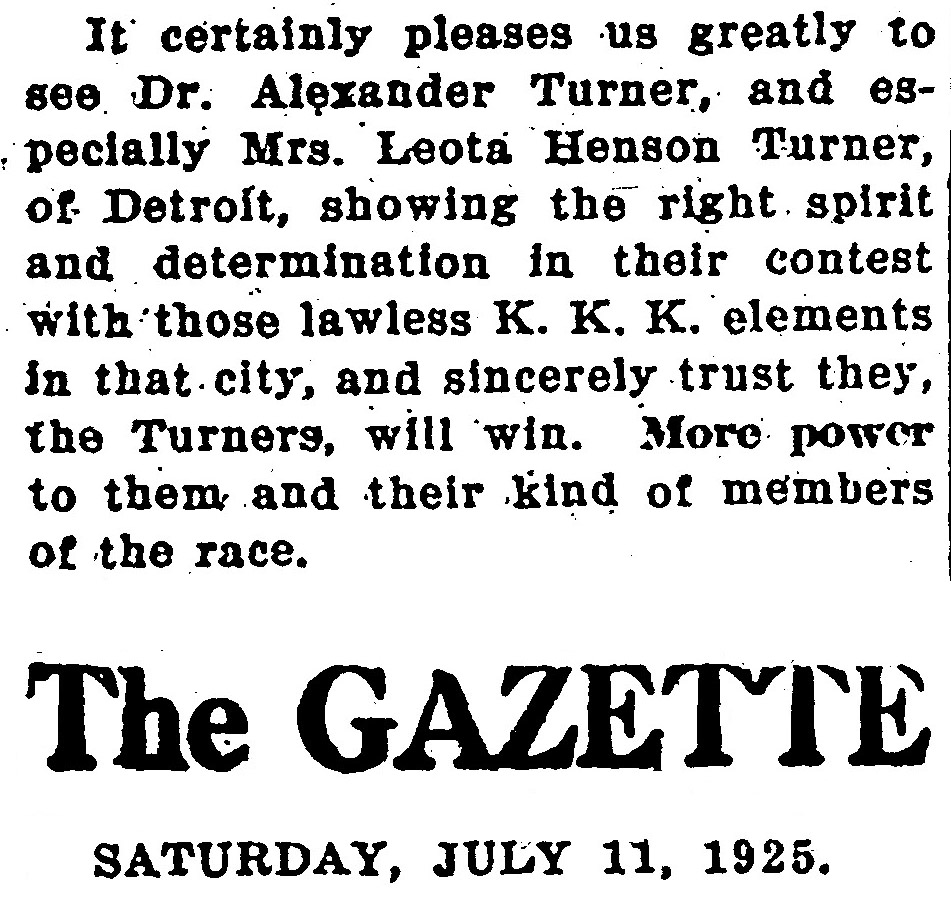
The gazette in Cleveland ran a lengthy article on July 11, 1925 in which they talk about the incident and also a short item supporting the Turners.  I will just include the short item.

I did not find anything else about the suit so I can’t report if they won any damages or not.  Perhaps they were most pleased with Leota Turner because it was reported that she didn’t want her husband to sign the papers, even though he had a gun to his head. It is said some thought him cowardly for doing so.

In June of 1943 Detroit experienced a race riot. Thirty-four people died during that week.  A year later Dr. Turner and his wife returned to Ravenna, Ohio where he died of a heart attack at 11pm on August 12.  he was 61 years old. His father was listed as Alfred Turner and his mother as Lucy, maiden name unknown.  Dr. Alexander Loudin Turner was buried in Maple Grove Cemetery in Ravenna, Ohio, on August 15.  Leota Turner was the informant on the death certificate.  She lived until 1955.  I will tell her story and that of her uncle Frederick Loudin in part 3, which will fit nicely with the Sepia Saturday theme of the theater.

Dr. Parker Blair Gamble – Solving Mysteries – Part 1

Since posting “The Hat” on January 12 I have been sucked into a research whirlpool.  It wasn’t that hard to find some of the names. I looked on the backs of other photos in the set and found “Dr. Gamble” and “Mrs Gamble” identified.

Of course I wasn’t satisfied with just their names.  Where were they from? What building was that in the background? How did they meet my grandparents? Why were they all in the DC area?   When were these photographs taken? And who was the lady in the polka dot hat?

I thought the building might be on the Howard University campus in Washington, DC, but looking at photos online I was unable to find one that looked exactly right. I asked my sister, who attended Howard, if she thought it was on the campus and she suggested it was Freedmen’s Hospital, which was established in 1862 and served as the teaching hospital for Howard. The building shown below was new and completed in 1909. Googling “Freedmen’s Hospital” I found several photographs of the hospital that showed me she was right.

Dr. Gamble in front of Freedmen’s Hospital in Washington D.C.  My grandparents in back.

Dr. and Mrs. Gamble

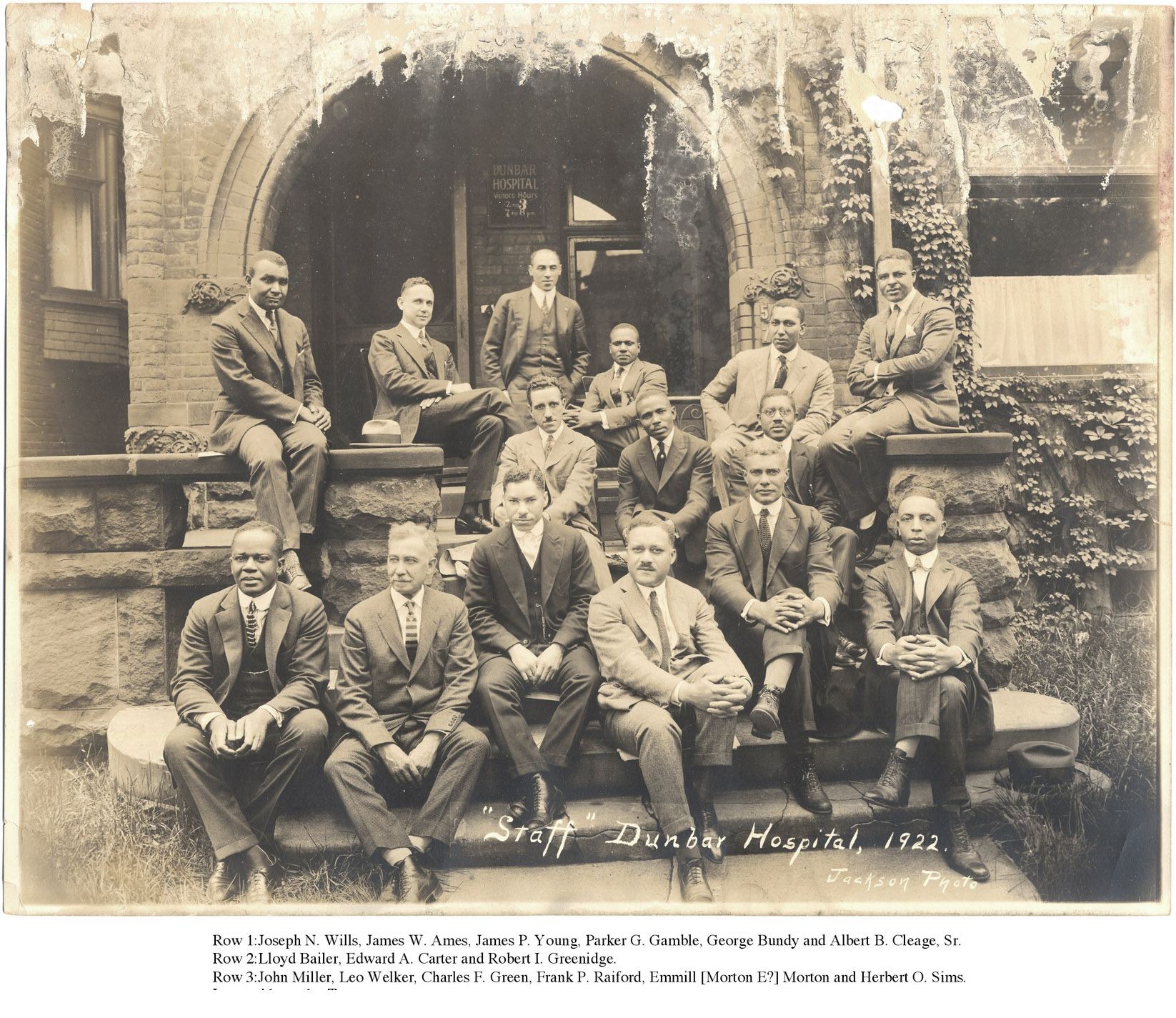
I needed the Gamble’s first names to do more research. First I looked at a photograph I have of the doctors who practiced at Dunbar Hospital in 1922 to see if he was there.  He was and you can see him third from the right in the first row.  His name is listed as Parker G. Gamble. His middle name was actually Blair. My grandfather is on the end of that same row, on the far right.

Next I looked in a book I have called “Michigan Manual of Freedmen’s Progress” published in 1915 to”celebrate 50 years of freedom for the former Negro slaves of this nation…” where I found this entry for Parker Gamble on page 53.

“Gamble, Parker Blair,M.D., 226 E. Lafayette, Detroit.  Born at Chattenooga, Tenn.  Graduate of Knoxville College and the medical department of the University of Michigan, class of 1912.  Like almost all other Negro Professional persons, Dr. Gamble worked his way to his sheepskin and is now successfully practicing medicine in Detroit.”

With this information it was easy to go to Ancestry.com and Familysearch.org and find the following information in census records, draft registration records and marriage records.  I also googled and found small bits of information online.

In 1900, 14 year old Parker Gamble was in school.  He lived in Hamilton County, Tennessee with his parents, Wesley and Mary Gamble. There were six children in the family ranging  from 20 year old Lula who was teaching to 12 year old Jessie. All the younger children were in school.  Mary Gamble had birthed nine children and six were still living. Wesley Gamble earned his living as an iron moulder, that is he made molds for casting iron.

Parker attended Knoxville at the same time as my grandfather, Albert B. Cleage.  In 1906 he graduated. He enrolled in the University of Michigan Medical College and worked his way through.  I wonder if he worked on the cruise lines that went from Detroit to New York, as my grandfather did in the summers to pay for his education. On September 21, 1909 twenty four year old Parker married twenty two year old Melzetta M. Crosby, a teacher in Ypsilanti Michigan. In 1912 he graduated and moved to Detroit to practice medicine.

By 1918  Dr. Gamble had his own practice as a physician and surgeon  at 346 St. Antoine on the east side of Detroit.  According to his World War 1 draft registration papers he was 5 foot 6 inches tall and weighed 178 lbs with brown hair and brown eyes.  His wife, Melzetta Gamble was someone who would always know where he was.

He and his wife had no children.  By 1942 according to his his World War 2 draft registration he was an inch taller and had gained 10 lbs. His hair was showing some grey mixed with the brown and he had a mustache.

I found a few things out about him by googling. He wrote a thank you letter to W.E.B Dubois.  He introduced another doctor at the National Medical Association Convention held in Detroit in 1927. There is a scholarship for medical students in his name at Wayne State University.  Dr. Parker Gamble died in 1948.

Dr. Parker Gamble seems to have led a pretty quiet life.  The same cannot be said for Dr. Alexander Turner and his wife Leota Henson Turner who I will write about in part two of Solving Mysteries.

The 7 Year Old Photographer – Wordless Wednesday

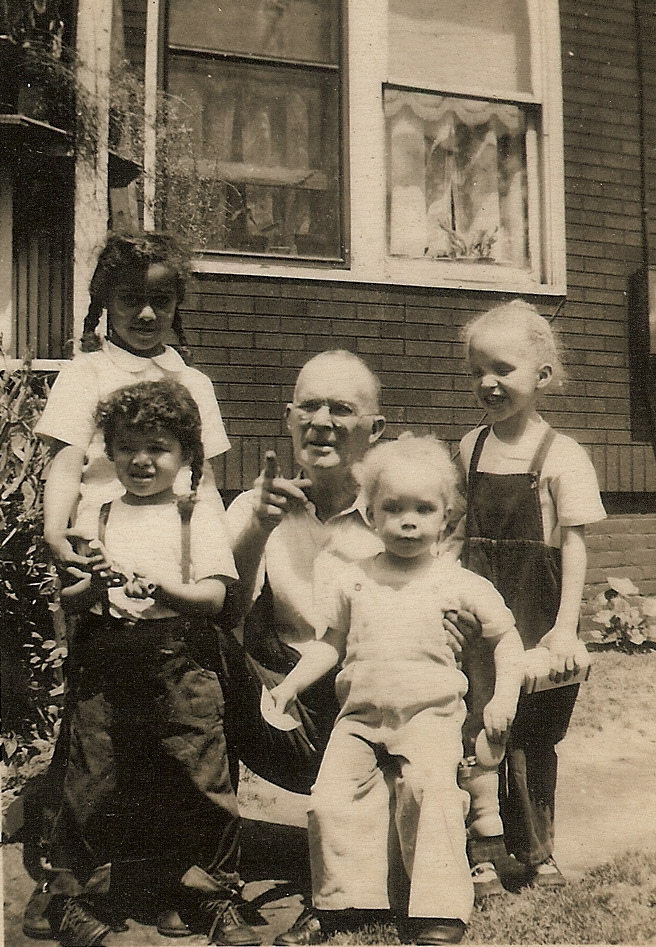
Photographer DeeDee behind worried Barbara, Poppy with Pearl & me (Kristin) laughing.

My cousin Dee Dee is the seven year old who took the photograph for Three in a Wagon.  This photo was taken the same day in my grandparents backyard.  Barbara still has her pistol and Pearl is still holding her pad and pencil plus Barbara’s boot which is hanging open by her right side. I seem to have traded the doll for a tin of powder?

Three in a Wagon 1951

 On the back of the photograph my grandmother, Fannie (aka Nanny), wrote “Barbara Lynne 3, Pearl Michelle 2, Kristin Graham 4.  May 30 – 1951.  This was snapped by DeeDee.”

This photo was taken in my grandparents backyard. We spent most Saturdays back then at Nanny’s and Poppy’s playing with our cousins.   On the left end of the wagon is my cousin Barbara holding a cowboy boot and a toy gun. In the middle is my sister Pearl who is writing madly.  I am on the right end holding a doll and looking worried.  My sister grew up to be a writer.  I grew up to have 6 children. If only cousin Barbara had grown up to ride bucking broncos or live on a ranch or rob banks, the mirroring of the future would have been complete.  This photograph was taken by Barbara’s older sister, Dee Dee who was 7 years old at the time.

Front: Barbara, Pearl. Back: Dee Dee the photographer, Poppy, Kristin

For more old photos, with or without dolls, click on the picture below.

The Hat

Unknown woman #1 and unknown woman #2 (who is leaning just a little too close to my grandfather.), my grandfather Albert, my grandmother Pearl. 1910.

My grandparents, Albert and Pearl (Reed) Cleage were married in October of 1910 in Indianapolis, Indiana. For their honeymoon they went to the Appalachian Exposition in Knoxville, Tennessee and from there to visit my grandfather’s people in Athens, Tennessee.  After returning home, they went to Decatur, Illinois to decide if that was where my grandfather wanted to practice medicine.  One of my aunts told me that this photo was taken at a medical convention they attended soon after their marriage.  Perhaps it was in Decatur.

Thanks to a comment below by Tattered and Lost I found that the location of the photograph was actually Mt. Vernon, VA at George Washington’s plantation. I will be posting more about this soon.

At any rate, the women are all wearing hats, although none are quite so fancy as the one in this weeks prompt.  To see other hat wearing women, men and babies plus several posts completely unrelated to hats, click on the picture below.

To see the 10 minute movie “The New York Hat” (1912) that the prompt came from, follow this link –  “The New York Hat.”

My best find of 2011

Even though it’s now Sunday night so I’m 24 hours late, I decided to do the Saturday Night challenge.  The question on Genea-Musings Saturday Night Genealogy fun  was to decide which of my genealogy research adventures in 2011 was my “very best” and to write about it.

My most exciting find of 2011 was discovering a newspaper article that validated my family’s oral history that my great great grandmother, Eliza Allen and her daughter Mary came off of the plantation of Colonel Edmund Harrison.  My cousin Margaret and I looked for years for something to prove the connection without any luck.   You can read all about it in my blog post here.  My only regret is that Margaret is no longer here to share my find.

"McCall family"
Mary Allen McCall with son James and his wife Margaret. Front row - his daughters Victoria and Margaret. Detroit about 1924.

My Mother and Bonzo 1933 – Sepia Saturday #107

Doris Graham and Bonzo 1933

My grandfather wrote in his little notebook in 1940,

“Bonzo taken away by
Humane Society Sept. 3rd 1940                                                                                                 $1.00 donation made.                                                                                                                 This dog was about 12 years old.”

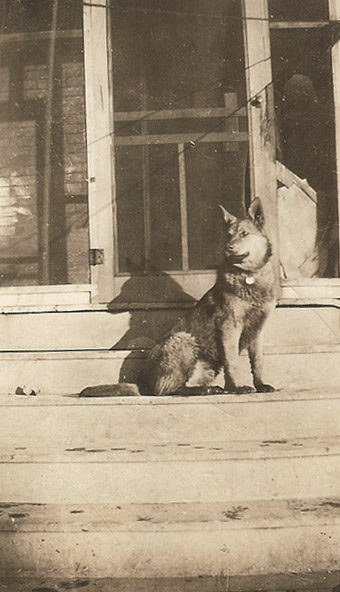
In this photograph my mother, Doris was 10 years old. Bonzo must be about 5.  They are in the backyard of my grandparents house on the east side of Detroit.  Bonzo was an outside dog and had a place under the porch to sleep and get out of the weather. He went through the cold winters there. When he was taken away by the Humane Society he was suffering terribly from rheumatism.

Before my mother’s family had Bonzo, they had a dog named Toodles.  Toodles was allowed in the house sometimes because once, when there was company and he was in the basement, he fell down the steps and, as I remember the story, broke his neck. Which is why Bonzo always stayed in the yard.

For more fine old photographs, some of girls and animals, click on the link below.

"Angora rabbit and girl"

I have a little problem in “Design”…

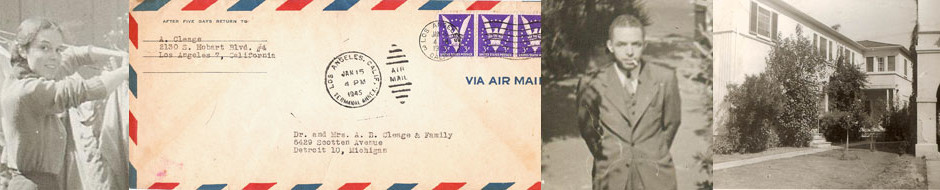
This letter should have come before the previous post where my father writes about lecturing on his Design Theory. “Gravi” is his younger sister, Gladys who was an art student at Wayne State University in Detroit at the time.  Below is a strip photograph of all the Cleages, the house on Scotten in Detroit and my parents and their apartment in LA.  This is how they looked at the time the letters were written and how they were identified in the letters.  If you click it, it will enlarge and you can enlarge it again which makes it big enough to see.

"The Cast"

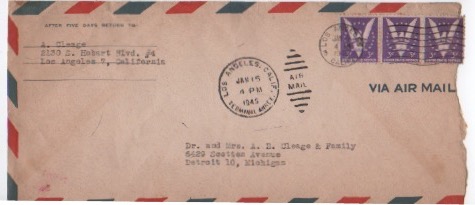
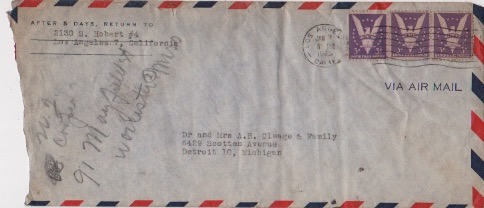
2130 s. Hobart Blvd. #4
Los Angeles 7, California
December 20, 1944

My dear Gravi:

I have a little problem in “Design” for you to work out for me during the Christmas vacation. (If your hectic love-life and gadding about permits of the time.) ‘taint very important, if you’re too busy.

I want you to work out some little designs (like the one you did breaking down the picture into abstract lines and masses for your first course in design…remember…you used show-card paint.

I have developed a “theory” of graphic design which I would like to illustrate.  It goes as follows. All design is based upon the principle of dialectic tension and progression…moving (just as Marxian social-change…remember social-causation) from THESIS to ANTITHESIS to SYNTHESIS and BACK TO A NEW THESIS.  I want abstract designs to illustrate the three stages of development and two to illustrate the proper transition between them.  I will describe just what to do to design each stage as follows:

THESIS represents security…peace…calm…status-quo…the power of order… stability …etc.  It is essentially unpleasant unless you are somewhat akin to a clod. It represents the Middle-class ideal…the bourgeois unconscious.  it is usually used in picture of New England churches etc…There is balance…with the emphasis upon spaciousness (figures are not compactly massed)…and HORIZONTAL LINES combined with VERTICAL LINES (both boldly done. THERE ARE NO CURVES OR DIAGONAL! There can be a soft triangle but not too conspicuous (like the spire atop a church which is essentially a HORIZONTAL.  ALL LINES AND MASSES indicate the STATIC QUALITY…EVERYTHING HAS TO COME TO REST!  ALL DIVIATIONS HAVE BEEN SQUASHED! Simple isn’t it.  You can find a picture of this sort and break it down into an abstraction if you like or just build up the abstraction.

ANTITHESIS represents REVOLT against the THESIS. It is done with diagonals (not triangles) Bold diagonals form the basis of design.  Small contradictory diagonals probably in the foreground add to the general confusion.  The confusion, however, is orderly because it is a design BUT EVERYTHING GIVES THE FEELING OF REVOLT or ANTITHESIS.  Picture of the CITY, INDUSTRY, WAR, and POVERTY are usually designed this way to suggest the underling conflict and revolt.  Do one design representing this stage.

(Inserted handwritten note by my father) “Keep the idea of one basic design merging into the next and then into the next – etc – like a circle – where the design pattern is being changed as taught by external force.”

SYNTHESIS represents the tendency of ANTITHESIS to resolve back into a new THESIS. It is the most pleasant of the three because it is a compromise having something of both. IT has something of the HORIZONTALS AND VERTICALS of the THESIS, and the DIAGONALS  of the ANTITHESIS have all bee softened into CURVES.  It is not so spacious as the THESIS nor so compact as the ANTITHESIS.  Most rural scenes are SYNTHESIS… the rolling countryside..the soft clouds in the sky (curves) and the swaying trees…the cattle in the fields etc. all make for “SYNTHESIS” composition.

The TRANSITION between THESIS and ANTITHESIS would tend to emphasize the TRIANGLE (I think) these transitions are more difficult.  Some of the stability of THESIS is maintained but the suggestion of conflict and revolt DIANGONALS is present in triangles)

The TRANSITION between ANTITHESIS and SYNTHESIS would tend to have softened diagonals which are already becoming CURVES… some would have already become horizontals and verticals (which is the result of spreading out diagonals beyond the point where they result in curves.

Simple isn’t it!  you can find pictures representing each stage in that book of American Paintings… and just break down examples of each.  I think the abstract breakdown would have the same FEELING (emotional effect upon the observer) as the original paintings in spite of the fact that the subject (human interest) has been lost.  Incidentally this is the basis of all abstract painting! and the schools of Modernists (Cubists, Expressionists, etc.) In addition this conception should determine the artist’s rendidtion of any picture.  The style he uses should be determined by the meaning of his subject.  Most artists do it unconsciously but I am now in the process of bringing this great truth out into the open!

I want it for a class in CINEMATIC DESIGN because in the designing of motion pictures this unity of subject matter and graphic design is absolutely necessary…but apparently no one ever discovered it before (or why are they keeping it so secret…or don’t I read the right books!

If you have time to do them let me know.  Put each one on a white cardboard and place the title (thesis, Antithesis, etc.) on each one.  It would be interesting to do them all in BLACK & WHITE…and another set in COLOR (suiting the colors to the basic idea…which I would leave to you) Two sets could be done in black and white REVERSING THE VALUES IN THE SECOND SET (to prove a contention of mine that the tonal pattern is secondary to the linear pattern which would be the same even after the black and white values were reversed.)  THAT WOULD MAKE THREE SETS. LET YOUR TIME BE YOUR GUIDE.  SEND ME A BILL FOR THE MATERIALS. (and I’ll file it away with my other bills)  Don’t take as much time with each as you took with the one you did for yourself…SO LONG AS THE BASIC IDEA IS RENDERED IN ABSTRACT DESIGN I’LL BE HAPPY. To do it myself would take twenty-years or so!

(Note written in my my mother) “Pauvre Gravi!! Beware!!! This Negro loves to see people work!! Signed, Voice of Experience.”

Hi folks: (HAPPY NEW YEAR) Part 2

"Albert B. Cleage"
Albert B. Cleage, Jr

Page two of the New Year Eve letter my father wrote home in 1944.  This part deals with a cinema class he was taking. I will have to post his theory, which he explained in a previous letter home, soon.

Everything is O.K….(pursues its petty pace from day to day etc.) Last week one of my Cinema Professors turned over his class to me and I delivered the lecture of the evening! Honest….I turned in my thesis on CINEMA DESIGN with my own personal theory of HOW and WHY.  He said he didn’t agree with my point of view but insisted that I take the lecture hour to explain my ideas…After I “explained” we argued until after ten o’clock and he asked permission to continue the discussion of my theories next week.  I very graciously granted the permission.  Doris “visited” the class that night.  She has her class Wednesday afternoon from four until six… then we eat supper at the Student Union, usual with Lee and Naomi (whom I have mentioned before)… then she goes to the Library until about eight and then comes over and looks at the picture we have in connection with the class…well Wednesday she got out Soroyan’s book instead of studying her lesson as I had instructed her to do…and came over to the projection room to wait until the picture.  Instead of the usual order the prof. reversed the order and we had the film first…and then the “Lecture” and when he “announced” that I would deliver the lecture she came on into class.  I had to sit on her (practically) to keep her from fighting the man when he tried to disagree with “our” ideas. (Quite a woman!)  (note from my mother written in here: I am not Mary V’s sister for nothing!!  Eh, Barbara!)

Doris Graham Cleage 1944

Well, I guess that’s all the news for the present… We received the BOX.  Thanks!!! There is one thing I want to know…WHO PICKED OUT THOSE “HOLLYWOOD FASHIONS” FOR ME?  THAT NYLON SHIRT…THOSE OUTSIZE TIES WITH THE BOLD DESIGNS!!!! I would presume that Pee-Wee and Gladys picked them out…I can sort of smell their fine Italian hands…THEY ARE JUST WHAT THE “FILM FOLKS” WEAR OUT HERE… fit right in and that…I’m gona put on my shirt and tie and visit the Studios one of these days soon…won’t have no trouble gettin’ in…they’ll think I’m one of the stars.  I ain’t kiddin’ the folks out here go for that flowing Art in dress…and Hollywood leads all the rest.  Everytime one of the men from Hollywood used to visit school to lecture I’d think he was a light Negro who had slipped in…until Moore introduced him as this Director or that Camera-man…etc.

Well so-long

P.S. Is anybody sick?  I dreamed some sort of nightmare this afternoon about somebody being sick…seemed like Louis had something wrong with his hand or something…probably just something I ate.  How is Uncle George?  Tell him we’ll probably see him before next New Years (we hope!)

P.P.S. Junior Doc. – How about a carton of Cigarettes from your black market – Can’t get none hardly here! (Will send cost by return mail!)

*******

My father’s brother Louis at some point in his medical career had to have a skin graft to his finger because of radiation burns he received while giving x-rays. I don’t know when it happened but it would be interesting if it happened around the time of my father’s dream. I will have to see if anyone else remembers. Note: My Aunt Gladys assured us that Louis had injured his hand years before this.

Uncle George was my grandmother Pearl’s oldest brother.  He became sick and moved from Indianapolis to live with my grandparents around this time. Uncle George died in May of 1945 in Detroit.  My father was appointed to St. John’s Congregational Church in August of 1945.  I’m not sure when my parents left Los Angeles but I don’t think it was by May so I doubt my father got to see his Uncle George before he died.

I have a little problem in “Design” December 20, 1944
X is for X-Ray – Story of Louis Cleage’s Puffy Finger
George Reed’s Funeral – May 31, 1945
The Missing Months March to November 1945
Idlewild 1945 – En route to Springfield