I just wanted to clarify a few things in the last post before moving on. Mary McCall’s daughter, Alma Otilla “Tillie” owned a three story brownstone in Chicago. She and her husband, Joseph Howard, lived in one unit and relatives lived in the other ones. In 1933, When Sayde visited her sister Blanch in Chicago, Mary McCall (Eliza’s oldest daughter) was 87. Mattie (Sayde’s mother and Mary’s half sister) was 59, Victoria (Mary McCall’s grandaughter) was 18, Sadye was 16 and Margaret(Mary’s grandaughter) was 15.
Mary Allen McCall was born in 1856 in Alabama, probably Lowndes or Dallas County where her mother, Eliza was the slave of Milton Saffold. Milton Saffold’s wife, Martha Harrison Saffold died in 1856 after the birth of her third son. Mary Allen McCall did live in Mississippi for a short time, but as an adult with one of her daughters between the death of her husband in Montgomery and the family’s move to Detroit, Michigan. By 1933 she was living in Detroit.
I hope that isn’t too confusing. I do have a chart showing all these various relationships but before I post that I would like to go back to my mother”s writings and then show what she got right in her memories of her great aunts and how I eventually met people from all branches of Eliza’s children and found more photographs and more stories.
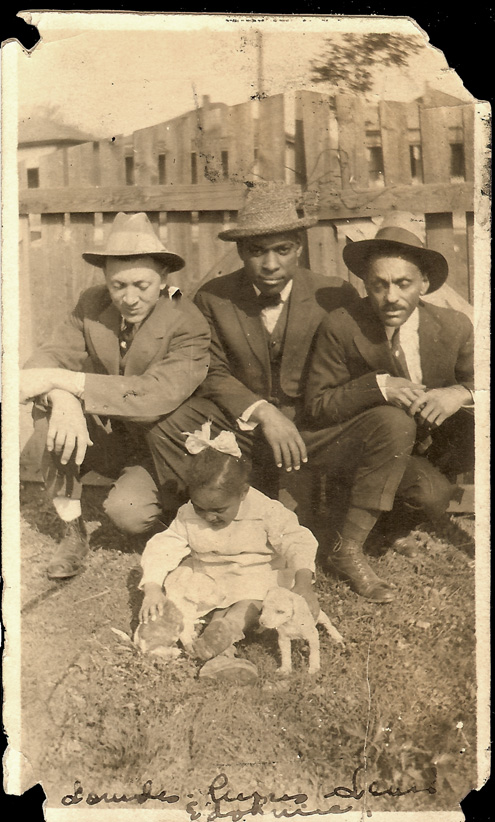
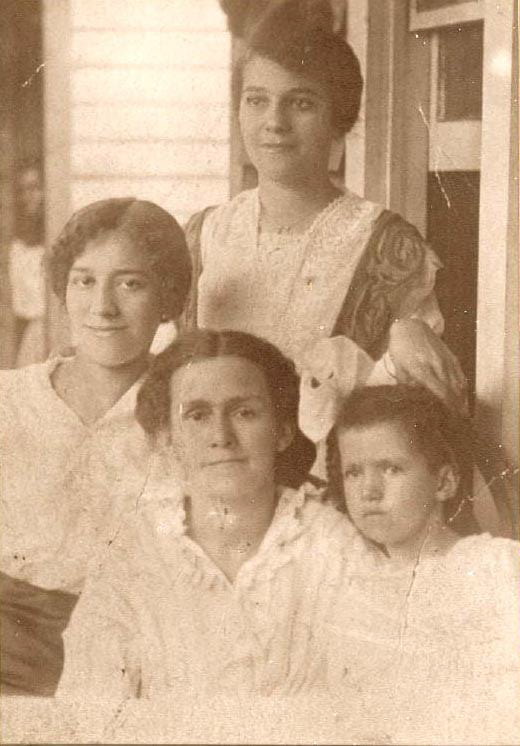
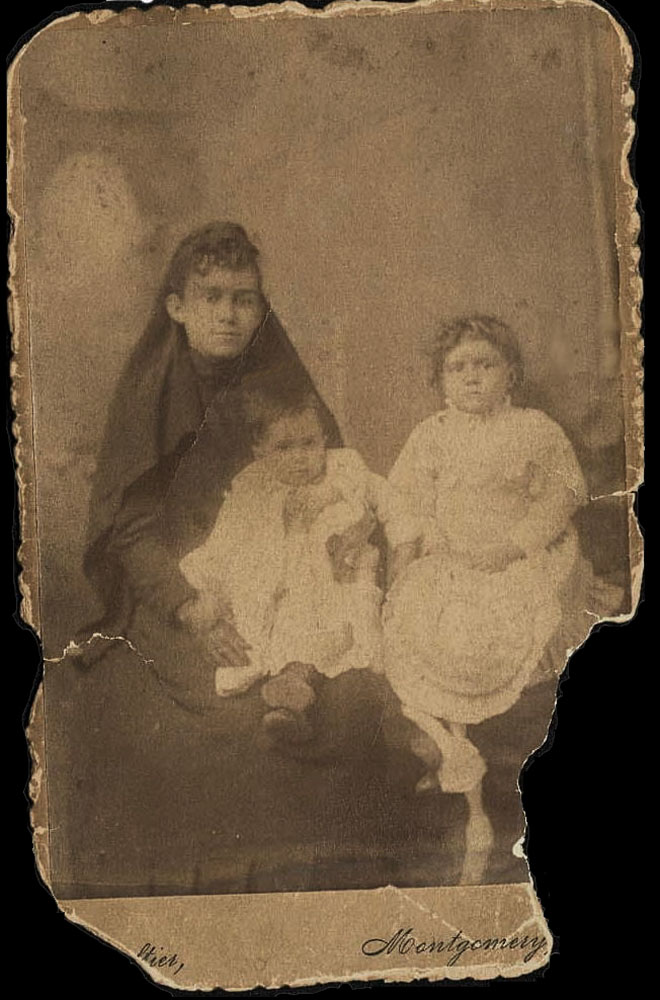
Mattie Saffold Harris with family. Sayde little girl, front. Her mother, Mattie, is on the far right.
Mary Allen McCall on left. Granddaguthers Victoria and Margaret, front.
This is an email conversation that took place between Janis M. and me. We shared a cousin, Margaret McCall. It was from information that Janis gave me from her mother that let me piece together the story of Eliza and her first daughter, Mary. It was so exciting to have the story unfold through her mother’s memories and the records I found online and things my mother had told me. Both Margaret and Janis’ mother Sayde have died. It was really one of those strange happenings where people are in the right place at the right time and can share the important information. Margaret and Sadye were related through the daughters Milton Saffold had with their grandmothers during and soon after slave times.
Date: Thu, 16 Oct 2003 Hi Janis,
You talked to my sister, Pearl, recently in Chicago at a book signing and gave her a chart. Have you ever been in touch with Margaret or Victoria? I can fill in the missing information for you from Mary McCall’s side. This past year I’ve been doing some research for Margaret about Milton Saffold. I found he married the daughter of Col. Edmund Harrison, who was the owner of Eliza Harrison who was Mary’s mother. Eliza’s mother was also named Annie and I remember my great-great aunt Abbie, who was Mary McCall’s half sister, saying that Annie was African but I can’t find a record yet of anyone before the 1870 census. Margaret and I have been trying to find some records to place Eliza and Annie on the Harrison plantation. I was wondering, after seeing your chart, if maybe they, or Eliza went with Harrison’s daughter (Eliza was also his daughter) when she married Saffold. Do you have access to any records from slave times for the Saffolds?
Eliza married Dock Allen and they raised 9 children. How do you know about Mary being a Saffold? Margaret said it was all very hush hush when she was growing up and it’s making it very hard to find information now.
Let me know if you want more complete info for Mary and descendants. I’m so glad you saw Pearl! I will pass on any information you send me to Margaret. Right now I’m at my daughter’s in Seattle helping her with her newborn twins and most of my information is back in Michigan but I’ve got all the basic info on Dock Allen and Eliza. Looking forward to hearing from you. Kristin
Date: Thu, 16 Oct 2003 22:45:31 EDT Hi, Kristin: Wow, I will have to contact my cousin in Birmingham. He is the family historian and if any information is forthcoming about the Saffolds it would be from him. I only know that Milton Saffold was my maternal grandmother’s father. Seems the judge “traveled” a lot! Will send my cousin your email and hopefully he can help us out.
Milton Saffold. Mattie’s family photos.
As it is late, I will have to take in all that you have written tomorrow. Janis
Date: Thu, 16 Oct 2003 22:58:25 EDT Kristin: Forgot to tell you that I talked to Pearl at a reading in Bowie, Maryland. No, I haven’t talked to any other member of your family. My mother, Sadye Harris James told me that you have a relative who lives near me in a neighborhood called Kettering. She is the daughter of Hugo Howard. If this is accurate, I would like to contact her. My Mom got this information from Margaret Ward this past August. Until then I never knew that Milton Saffold had any children other than Mattie (my grandmother), and Frank. I look forward to you filling in the blanks in my chart. Janis
Date: Fri, 17 Oct 2003 10:09:29 -0700 (PDT) Janis, That would be great if your cousin can give me some more information. I’ll get the information I have together and email it later today. I’ll also check with another cousin of mine who grew up in Chicago and might know about the daughter of Hugo Howard and let you know. Kris
James and Margaret McCall visit his sister Tillie Howard in Chicago.
Date: Sat, 18 Oct 2003 10:03:20 EDT Hi Kristin, I spoke with my mother, Sadye Harris James, the last surviving child of Mattie Saffold Harris. Mom told me that in l933 she visited her sister Blanche in Chicago. Blanche was living in an apartment building owned by Tillie and her husband Dr. Howard. Tillie and her husband lived in a unit of the building. Blanche told my mother that Tillie’s mother, Mary McCall, was visiting from Mississippi, and that she looked like their mother, Mattie. She was described as a little “white lady” dressed in a long white old-fashioned looking dress. (My mother only saw her from a distance). When Sadye returned home to Birmingham, she told her mother about Mary McCall. Mattie said she knew about a Mary McCall, and that she was her half sister. Mattie decided to visit Mary in Chicago and confirmed that indeed she was Mary Saffold McCall.
This seems to be in conflict with your information. According to your records, Mary McCall was the child of Eliza Harrison and Dock Allen. Perhaps Milton Saffold fathered Mary and Dock Allen reared her as his own. By the way, Mattie was born in Selma, Alabama. Janis
Date: Wed, 29 Oct 2003 22:05:05 -0800 (PST) Hi Janis, Today I decided to look for Eliza in the 1860 census as a free person in Dallas county. I searched by her first name since I have looked in Montgomery and Lowndes county before with various last names. I found a 25 year old Eliza Williams with a 3 year old Mary Williams in Dallas county living with a 27 year old woman named Nancy Morgan and several of her children. All are listed as white. But Williams is the last name of Anne, Eliza’s mother and they are the right ages. It wouldn’t be the first time family members were listed in the census as white.
Now I need to find out who Nancy Morgan is and connect her with the Saffolds or Harrisons. Another day. Nancy Morgan appears in the 1860, 1870 and 1880 census. She is listed as single in the first two but always has another child or two and in the last one she’s listed as widowed. She doesn’t have any occupation listed. Eliza Williams isn’t listed again as Eliza Williams but appears as Eliza Allen with her husband, Dock Allen. Her mother, Annie Williams lived with them in 1870 and with Mary McCall in 1880.
Anyway, I’m going to bed. Just wanted to share that. Kris
2005 – Janis taped an interview with her mother Sayde. In it she talked about her mother and Mary McCall being half sisters and their meeting in Chicago.
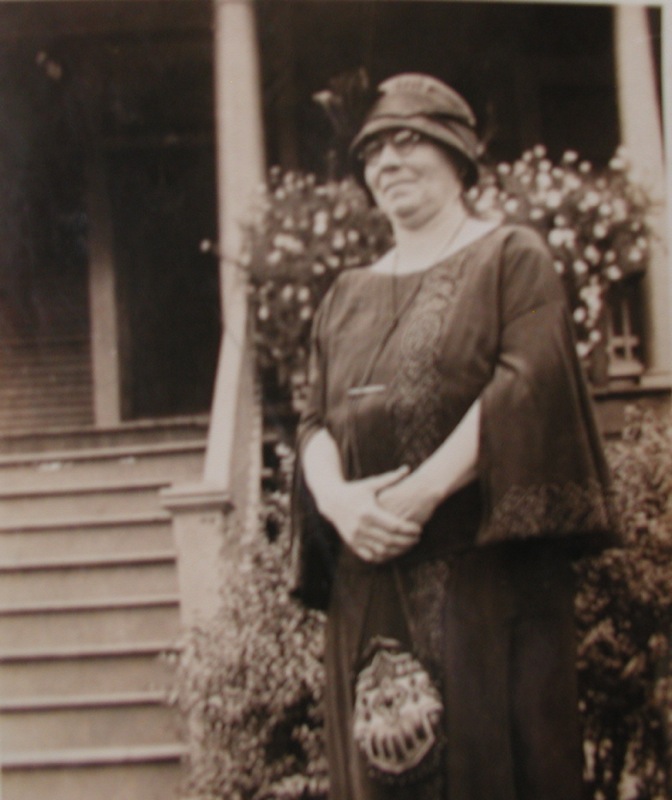
Mary Allen McCallMattie Saffold Harris
“Sadye: Okay. It was the summer of 1933 when Walter, my brother and I drove in his V-8 Ford (It was red) to Cincinnati where he married Edna Gaither and from that we went to Chicago to visit Blanche, my sister, and there she said to me, “Sayde, there’s a little old lady up on the third floor and she sits on the back porch and I think she looks a lot like Mama. And I’d like for you to meet her.” So I went out in the backyard and looked up on the 3rd floor and there she sat in her long white dress and white hair, but I don’t remember ever being introduced to her. However her granddaughters Margaret and Victoria McCall, they came to visit their Aunt Tillie Howard and I got to meet them, but I never did meet Miss Marry Saffold McCall. No her name was not McCall….her name was McCall. So Mama went up to Chicago, not just to see this woman that was one of the highlights of her visit to Blanch. I don’t think it was that summer, but may have been the next summer. And they had quite a delightful celebration because they were half sisters. And I remember Mama telling me she had a half sister named Mary in Mississippi. And I could not understand a half sister in Mississippi, but as time progressed I realized that her father, Judge Saffold, made visitations involving his work as a circuit court judge and this took him to a part of Mississippi. Now who the mother was of Mary, I have no idea. Perhaps Victoria or Margaret will have some information as to who was the mother of Mary.”
I still haven’t found out who Nancy Morgan is. I did find a marriage certificate between a Nancy Wiggins and an Isom Morgan in Dallas County. William Wiggins was the overseer of Edmund Harrison in the 1850 census but I haven’t found any records connecting William with Nancy yet.
When I attended cousin Victoria McCall Davenport’s 90th birthday celebration in Detroit she told me that her grandmother Mary told her she was about 10 at freedom. This fits in with the child Mary in the 1860 census.
In 1992 Margaret wrote back with corrections to my tree.
Dearest Kristin, I’ve had this buried on my desk too long. So to expedite information transfer, I’ve added to your lineage chart, the corrections I am sure of. I can help you in time with dates (birth and death) I certainly would like to help identify photos and perhaps I could share or exchange some with you. I’m quite happy to have help in unraveling some of the family secrets. Your interest will encourage me to start digging and tracing the Allen’s line again. Doc and Eliza died in Montgomery, Alabama and are buried in Oakwood Cemetery there. I’ll stay in touch with you. Let me know if and when you visit Detroit. Sincerely yours, Margaret
1998 – At this time we lived at the end of a dead-end dirt road in Idlewild, Michigan. We had two large dogs that ran lose in the fenced yard so people did not just walk up on the porch. I looked out of the window one day I noticed two confused looking woman standing in the road. I figured they were looking for someone else and went to see if I could help. One of them turned out to be a friend of my cousin Margaret bringing me a folder full of information from her with a note:
Dear Kristin, your letter asking for information on our mutual family history acted as a stimulant to get me going at research again. I had put my search on hold for (I can’t believe it) almost ten years. Your interest got me going again. I did not write then because I had no further information, but I decided to go to the LDS in Salt Lake City to try to get more information on Edmund and Jane Harrison. I have not been able to establish the connections we are looking for (namely the ownership of Eliza and Dock Allen before 1864. I am enclosing Xerox copies of census records and marriage records on the Harrisons. I’ll share what I can learn as I go along. My hope is that between us we can come up with some answers. I did not learn a lot in Salt Lake City. But I’m on the search trail again. Love, Margaret
P.S. Marion is a long time friend of mine who has done extensive research on family histories. I asked her to contact you and deliver this material since she is visiting Idlewild.
click to enlarge
Included in the folder was a copy of the 1870 Census with Dock and Eliza’s household. There was also a list of the large slave holders in Lowndes County in 1860 and a copy of the obituary of Edmund Harrison’s wife, Jane. Wait a minute…. she died surrounded by her loving family? I thought (according to my mother’s story) that she was childless? And I saw they lived not in Virginia but in Alabama, Lowndes County.
Marion proved to be a big help to me, giving me advice and recommending sources of information. One, gave me the names and husbands of Edmund Harrison’s three daughters. Something was off with my mother’s story.
Somewhere in here I got my first genealogical software – family tree maker for mac. In May of 2000 long time family friend Leontine “Teen” Smith died in Detroit. I attended the funeral and met Cousin Margaret face to face for the first time since I was a child. We got together and made plans to do so again. For the next 7 years we shared information, photographs and ideas.
On July 12, 2002 I joined Ancestry.com. Whooo Hooo!! I spent a lot of time at first finding information about Edmund Harrison. I ran into some people researching because they were Harrisons and hoped they had found some slave records, some photos, something. But no, they did not. They had suggestions though. One was to check and see if Jane Harrison had a will. I didn’t think so since she was married.. Another suggestion was that I find the records from the church the Harrisons attended because some of them listed the slaves that attended. I spent months online in 2002 and 2003 trying to find records that would give me proof that Annie and Eliza came from the Harrison’s plantation. To no avail. I also looked for Dock and Eliza Allen in the 1860 census in Montgomery. They weren’t there. I looked in Lowndes County because Edmund Harrison had a large plantation there. I looked for Annie and Eliza Harrison Could find none of them.
In 2003 I sent for and received death certificates for Dock and Eliza Allen, hoping to find the names of their father’s. Nope. Their mother’s names were there but the space for father’s names were empty. Margaret was certain that Edmund Harrison was not Eliza’s father.
Margaret sent me several tapes she made. One was a tape done in 1985 with her uncle Roscoe’s wife, Stella McCall. Roscoe was Aunt Mary’s son. Stella and Margaret discussed life in Montgomery at the turn of the last century….and Mary McCall, Eliza and the other sisters. Partial transcription below.
Margaret: Now, did her mother and father live near where they lived? Did Dock Allen and Eliza…? Stella: Who? Did who live? Margaret: The Allens, Mary McCall’s mother and father. Did you ever know them? Stella: Now Miss McCall’s father was white. Margaret: Who? Stella: Miss McCall’s father was white and then her mother married this man that she had. Oh yes he was white. That must have happened way back in, I’d say, near the time of slavery days because she was quite old. Quite old. Margaret: Who was quite old? Stella; Miss McCall. Oh yes. I couldn’t guess her age. She was very quiet about it anyway.(laughs)
Margaret: She never talked about her mother and father? And her real father. She only acknowledged this one, the stepfather. But Eliza was her own mother.? Stella: Who? Margaret: Eliza Allen, that was her mother? Stella: Eliza, yes Miss Allen. You know there were five of those girls. Five of them. Miss Willie and Abbie Allen and… Margaret: Jennie. Stella: Jennie and … name another one. Margaret: Willie. Stella: I named Miss Willie back here. I get confused. There was another… Margaret: There was Anna. Stella: Oh, Anna was the one who first made the move to Chicago and when people weren’t even traveling to Chicago. Oh it was a great thing anybody go to Chicago at that time. Ohhh it was a big deal. Well, this Anna, one that was in Chicago, she would come down one time a year and see her mother and they never heard from her because she didn’t write because she had a white husband up there and that’s the way they worked that, but that’s it. (note: she doesn’t appear in Montgomery in the 1900 census) Margaret: Now you’re saying Mary the oldest one had a different father from the others? Stella: Now yes, that’s what my mother told me. She said. Oh no, Miss McCall was the top of the bunch. She was as blue eyed as she could be. She had blue eyes and no trace of any darkness. So she was the first child. The other’s now Aunt Jennie she had a different one. You could look at her and tell. And Abbie, the same thing. Willie, oh yes, Miss Willie she had black hair. She was more of an Indian type. I don’t know who her daddy was but they were all different. Back in those days they paid no attention to difference (laughs) That’s right. No, they didn’t. They really didn’t. Margaret: So you feel, you know, that Mary’s father, was white? Stella: I don’t feel, I know it (laughs) Margaret: But you don’t know who? Stella: I know the people that know about her… yes she’s white. Looks to me like she’s all white. (laughs)
Mary Allen McCall
About this time Margaret asked me to look for a connection between Milton Saffold, a lawyer and son of Rueben and Mary (Phillips) Saffold who had a big plantation (Belvoir) in Dallas County and Edmund Harrison. She had received some information that Milton Saffold was her grandmother’s father. Was there a way Saffold could have come in contact with and fathered Margaret’s grandmother Mary?
I started looking on Ancestry.com and the web to see if I could find anything that would tie them together. I found earlier that Milton Saffold married Edmund Harrison’s daughter, Martha. I found Martha with her parents in the 1850 census. I found from the online marriage record that Milton Saffold married Martha in 1851. Mary was born about 1856. I looked for Saffold and Martha in the 1860 census but they were not together. I found Milton with several children and a new wife living with his sister and her family. I couldn’t find Martha at all. I found on Ancestry.com that Milton had married Georgia Whitting in 1857. I assumed Martha was dead.
2003 – In October I received a letter from my sister Pearl. Janis and her mother Sayde Harris had come up to her at a book signing in Maryland and given her a chart showing connections between our family and theirs. They were related, they said, to our cousins Margaret and Victoria through Milton Saffold. I emailed Janis Mercer.
Mary Allen McCall back row left, her son James, his wife Margaret. Grandaughters Victoria and Margaret in front. Late 1920’s. Jennie Allen Turner seated left, Mary Vee, Fannie, Doris.Back Mershell holding Howard. Early 1930’s. Detroit, MI
“My mother was the first child of my grandmother who was one of seven children born to Dock Allen, a free man and Eliza, a woman freed from slavery at seventeen. Before being freed this woman, my mother’s grandmother had been trained as a seamstress in the “big house” of the white master, Colonel Edmund Harrison, who was her father. Her mother, Annie, was the slave seamstress in the “big house”. For three generations, in slavery and in freedom, each mother taught her daughters to sew. My grandmother earned her living as a seamstress for white folks in Montgomery, Alabama. But she never taught my mother or her other two daughters to sew.”
My mother wrote me this as part of a piece she was writing about her own mother, Fannie Turner Graham. We grew up hearing it. There was also the part about Colonel Harrison’s wife. She was so angry about her husband having this child, my great great grandmother Eliza, with a slave that she was cruel to both Annie and and Eliza. Col. Harrison, the story went, finally freed both of them and married Eliza to a free man, Dock Allen, who was a carpenter in Montgomery, Alabama.
Because he was always referred to as “Colonel Harrison of Virginia” I pictured him driving Annie and Eliza in a carriage from Virginia to Montgomery, finding a free carpenter and arranging a marriage between his daughter and the carpenter before returning to his plantation in Virginia. I wasn’t really clear on the distance or terrain between Virginia and Montgomery, AL but I wondered why he took her all the way to Alabama. Later I read that freed slaves had to be taken out of the state they had been enslaved in.
In 1980 my mother began writing down her memories and stories of all her great aunts, Eliza’s daughters. She wrote about her mother and about herself growing up too. She made duplicates and sent my sister and myself both copies.
In one she mentioned a strange phone call from her cousin Margaret McCall Ward, who was a librarian and a genealogist and a founder of the Fred Hart Williams Geneological Society in Detroit. The first black genealogical group in Michigan. My mother wrote:
“Note of recent strange happening here: Teen (note: a longtime family friend) is still working on her family tree and sees Margaret who works in that dept. of the library. Margaret kept sending word to me by Teen that she would be happy to help if I wanted to get the family history together….I never called….but finally did one day when Teen insisted….somewhere in the conversation Margaret said of course you know our grandmothers were not really sisters (Aunt Mary and Grandmother Turner whom I had always thought were Dock Allen’s children…had never heard a suggestion of anything else)..I said o really…how…she mumbled…I mentioned Dock…she said you’ve seen the sisters you know how different they looked…I knew she meant some were light like her grandmother and some were dark like mine… they had different mothers? I said..she mumbled again (I have never heard her mumble before …different fathers? I said, really intrigued by this deep family secret now to be uncovered…more mumbles..at any rate, I said, if they weren’t sisters, we aren’t cousins, right?…more mumbles…I let it go, said good-bye and crossed her off the family list….who needs her?…. then a few weeks ago (the other conversation on the phone was months ago) she sends word by Teen that as she was helping someone search records she came across a record pertaining to our family and it proved beyond a shadow of a doubt that our grandmothers were sisters and we are cousins. I told Teen off again on again cousins I do not need and have heard no more…but I’m curious about what she was talking about in the first place and what she found in what records…I mentioned it to MV who had never heard it…she called Aunt Gwen (the only one left in that generation to talk to) who is the gossip of the group who said as far as she knew they were all full sisters and brothers (there were two of these.) I await further developments but not with baited breath…”
In 1982 my mother died of ovarian cancer. I inherited her photographs, scrapbooks and letters which she had inherited from her mother. In 1991 I wrote to my aunt, my mother’s only sister, Mary Vee and asked her to tell me about her parents and grandmother. She told me the little she knew and suggested I write to cousin Margaret asking for help with the family tree. I did. A year later I received a reply filling in blanks in the tree. She wrote that my letter revived her interest in looking at this branch of the family again, and be sure to look her up if I got to Detroit.
Dear “Shell” – From my early acting in answering your letter, you may know or imagine how proud I was to receive a letter from the boy. I have thought of you often and wondering at the same time, if I was just to receive a postcard from you; for as you have said about me, I consider you one of my closest and most trusted worthy friends. It doesn’t seem that one can realize the feeling that exists until a separation, but after looking into the proposition, knowing that you had to get located, being in a new land, and being among strangers would consume lots of your time. I am certainly pleased to know that you are so well satisfied with Detroit and the surroundings. Yes, I would be tickled to death if I could be up there with you, for I am sick and tired of this blooming place. I know it must be an inspiration to be where you can breathe a little freedom, for every body down here are beginning to feel that slavery is still existing in the south. The Teacher’s Association has been in session here from the 4th to the 7th and quite a number of visitors are here. The boys thru my chivalry managed to give a subscription dance, and believe me I came in an inch of being fagged out. You know how you have to run a “jinke” down to get a $1.00 from him. We had quite a success as well as an enjoyable one. Cliff was to make the punch but on account of his training being too late for him to even come to the ball, it fell my time to do something and I did wish for you but managed to brave the situation and tried to follow as close as I could remember my seeing your making punch and for a fact I really made that punch taste like “a la Shell punch”, and it turned out to be perfect class. Alabama Medical Association will convene here on 9 and 10 and they are giving a dance at Tabors Hall on Randolph and Decatur Sts. No, not a full dress affair, so I think I shall attend. Sam Crayton is here from Chicago and he is very anxious for me to return with him, but I am afraid he will have to go and I come later. Well, the U.S. is really in War with Germany and we can’t tell what the next war may bring. It will mean suffering for humanity, and we people down here especially. I am just as neutral as can be and expect to stand pat in the idea. Yes, people are leaving here in droves for all directions and now you can miss them off of the streets. As many people that hung around the drug store on Sunday, you can scarcely find a dozen there now. I have seen Miss Turner but once and that was down town. I know she keeps you well informed of herself. There is no news of interest. My sister Jessie was married in February and is now living in Pensacola, so you see so far 1917 has been lucky for me. Now old boy, I shall expect for you not to allow such long gaps between our writing each. All of my family sends the best of wishes to you and Mrs Wyman and Hubby. The boys and girls join in with me and send their share.
You may be wondering when I am going to find Eliza. I decided to post the information in the order that I received it. We’ll get there eventually. Today I am posting another writing by my mother. I also posted the personal parts of the letter she wrote to give you some idea of my mother as a person.
5 Nov 1980 by Doris Graham Cleage Dear Kris, Election Day! Did you ever? Here is a joke that sums it up for me: Man, traveling on horseback down a road toward a certain town, comes to a farmer working in a field. Just ahead was a fork in the road. The man hollered to the farmer, “Does it matter which road I take to _______, ” and he named his destination. “Not to me it don’t, ” said the farmer, who hardly looked up from his work. You don’t get it? That’s OK. It gives us a good laugh every time we tell it.
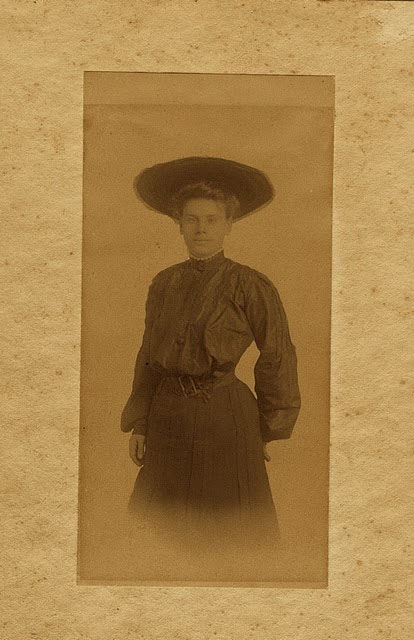
Grandmother Jennie Virginia Turner -1866 – 1954
Today I’m going to write about Grandmother. Grandmother Turner was born about 1872, (Note: she was actually born in 1866) nine years after the Emancipation Proclamation. Don’t know if she finished high school – but she did go. Her mother taught her to sew and it was a good thing she did because grandmother worked the rest of her life supporting herself and her children at sewing. That is, she worked after husband Howard Turner died. They married when she was about sixteen. Don’t know his age. He looked something like grandmother’s father and also like my father, mother said. He was a farmer’s son from around Hayneville, AL, but he preferred the big city – Montgomery. His father had three sons and planned to give each one a large share of the farm when they married. Howard and Jenny received their farm, but neither one liked the country. One day they were in Montgomery. He was at a Bar-B-Q. She was at her parents with their daughters, Fannie Mae, 4, and Daisy Pearl, 2. someone brought word that the had been shot dead. Apparently no one ever knew who did it, but mother always said grandmother thought his father had it done because he was angry that Howard would not farm and had even been talking about selling his part. The father did not want the land sold, but wanted it to stay in the family forever. (Bless his heart!). He and the son had had some terrible arguments before they left to come to the Bar-B-Q. I often wondered why he was there and grandmother wasn’t. She always seemed to like a good time.
I remember her laughing and singing and dancing around the house on Theodore. She was short, about five feet I guess, with brown eyes, thin dark brown hair that she wore in a knot. She was very energetic, always walking fast. She always wore oxfords, often on the wrong feet, and never had time to change them. We used to love to tell her that her shoes were on the wrong feet. (smart kids!)
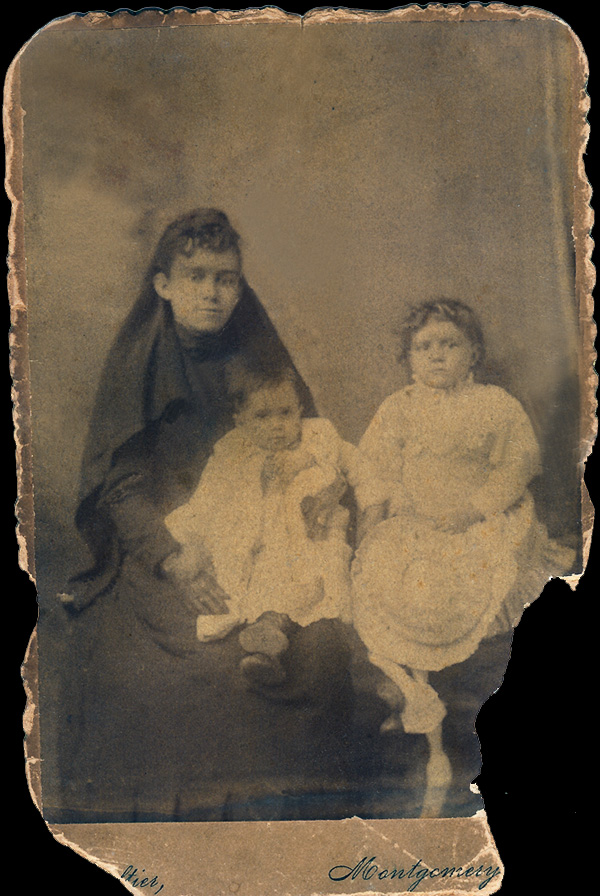
This photograph was taken in Montgomery during 1892 while the family was in mourning. Jennie holds two year old Daisy while four year old Fannie stands beside her.
She never did thing with us like read to us or play with us, but she made us little dresses. I remember two in particular she made me that I especially liked. My “candy-striped” dress – a red white and blue small print percale. She put a small pleated ruffle around the collar and a larger one around the bottom. I was about Deignan’s (note: that would have been about 5) size, I guess, and I really thought I was cool! The other favorite was an “ensemble” – thin, pale green material with a small printed blue green and red flower in it – just a straight sleeveless dress with neck and sleeves piped in navy blue – and a three – quarter length coat of the same material – also straight -with long sleeves and lapels – also piped in navy blue. She never used a pattern. Saw something and made it! She taught us some embroidery which she did beautifully but not often. She never fussed at us – never criticized – and I think she rocked me in the upstairs hall on Theodore when I was little and sick. The rocker Daddy made stood in that hall. I remember lots of people rocking in that chair when I was small.
Grandmother went to work when her husband was murdered – sewing for white folks – out all day fitting and sewing – and sewing all night – finishing while mother and Daisy stayed with their Grandfather Allen, who would tell on them when Grandmother came home and she would spank them. Mother said she remembered telling Daisy to holler loudly so Grandmother wouldn’t spank them hard or long and it worked!
Grandmother stayed single until she was about 37 or 38 when she married someone Mother hated – looked Italian, hardly ever worked. Liked a good time. Fathered Alice and left when she was very small. Somehow when mother spoke of him I had the feeling he would have like to have taken advantage of her. She was about 20 and had given up two college scholarships to stay and help Grandmother.
Sometimes after her husband’s death, Grandmother took the deed to the farm to a white lawyer. (was there any other kind?) and told him to sell it for her. He went to see it and check it out – told her to forget it – her title wasn’t clear, but he never gave the deed back and she figured he made a deal with her father-in-law.
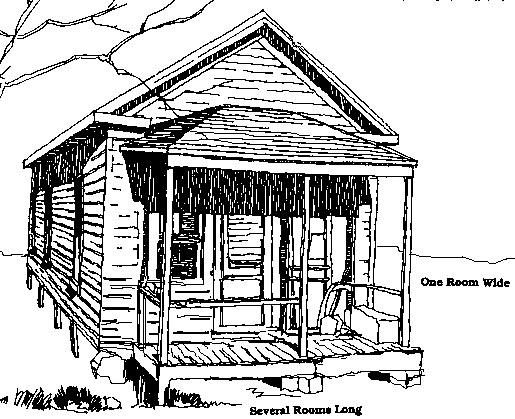
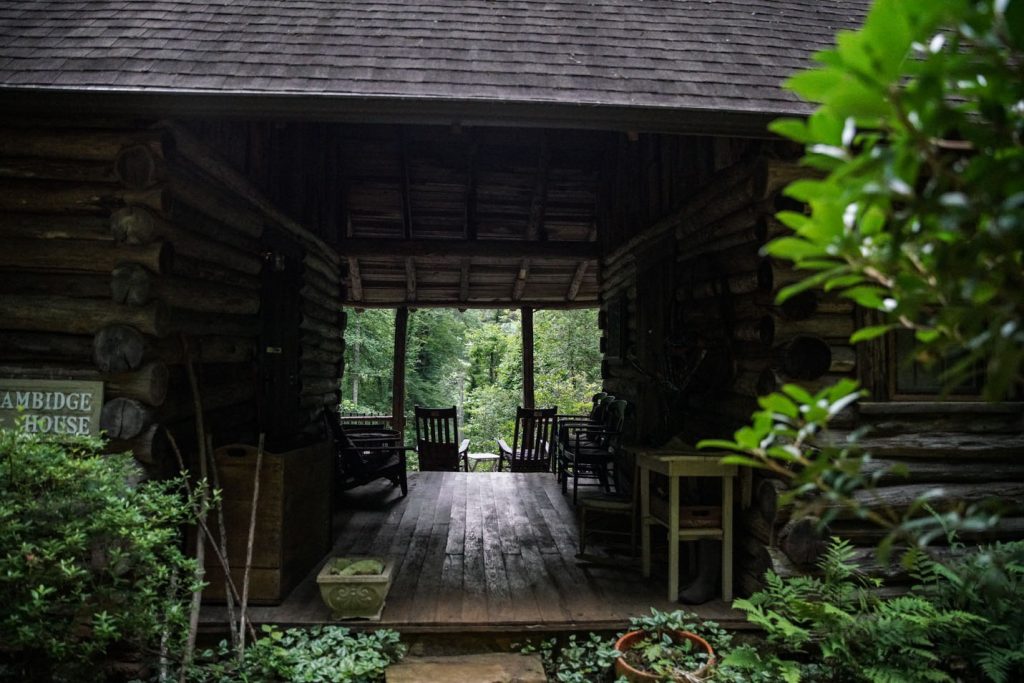
A shotgun house. My mother’ description is off. She describes a dog-trot house.
A dog trot house. Hambidge Center, Georgia.
Aunt Abbie said the father-in-law built Grandmother and Howard a “shotgun” house on the farm. She would turn up her nose as she said it. You know that is a house like this – no doors on front or back, you could shoot a gun through hall without damage. Animals (pigs, dogs) would wander into the hall and have to be driven out. Aunt Abbie only stayed there when the plague was raging in Montgomery. Yellow fever (malaria) and/or polio every summer. Many people sick or dying. Huge bonfires in the streets every night to ‘purify’ the air”, and closing the city if it got bad enough – no one in or out. More than once they fled the city in a carriage through back streets and swamps because they were caught by the closing which was done suddenly to keep folks from leaving and spreading the “plague”
In Detroit, when they came in 1923 when Mother and Daddy had bought the house on Theodore and had room for them (room? only 5 adults and 3 children!) Grandmother, Daisy and Alice got good jobs, (they were good – sewing fur coats, clean work and good pay.) at Annis Furs (remember it back of Hudsons?) and soon had money to buy their own house much farther east on a “nice” street in a “better ” neighborhood (no factories) on Harding Ave. While they lived with us I remember violent arguments between Alice and I don’t know who – either Grandmother or Daisy or Mother. Certainly not Daddy because when he spoke it was like who in the Bible who said, “When I say go, they goeth. When I say come, they cometh.” Most of the time I remember him in the basement, the backyard or presiding at table. Daisy and grandmother were what we’d call talkers.
Fannie, GM Turner, Alice. Standing: Daisy
Maybe here a word about Aunt Daisy. Look at her picture, sweet, soft, pretty, taught school awhile in Montgomery (with high school diploma) loved Congregational preacher named Duncan Erby who loved her and waited for her for years. Had the church in Buffalo, NY. Whenever she really considered leaving, Grandmother did the old guilt trick “How can you leave me to take care of Alice all by myself?” and “No man in this world is good enough to touch your little finger. They are all no good except (maybe) Shell.” and Daisy listened and stayed and played numbers, studied dream books and drank a little apricot brandy. I always found their house light, cheerful, full of magazines (McCall’s, Journal, etc.) which I loved to read, full of good things to eat. All three were super cooks and they had always just had a bunch of friends to dinner and to play cards or just about to have.
Daisy took us downtown to the show every summer and to Saunders for ice cream afterward. And I always ended up with a splitting headache. Too much high living I guess. She and Alice would buy us dainty, expensive little dresses from Siegel’s or Himelhoch’s. They all went to church every Sunday, Plymouth Congregational. Daisy always gave us beautiful tins of gorgeous Christmas candy, that white kind filled with gooey black walnut stuff, those gooey raspberry kind and those hard, pink kind with a nut inside, and chocolates, of course! She loved to eat and to cook. Never seemed bitter or regretful about her lost love.
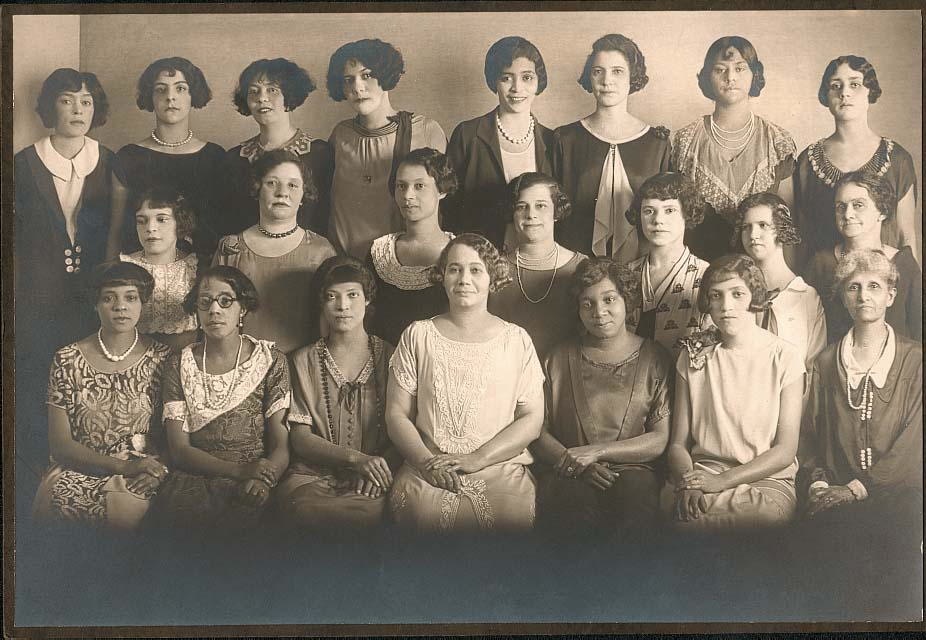
Grandmother got old, hurt her knee, it never healed properly. Daisy worked and supported the house alone. Alice only worked a little while. She had problems getting along with people. Grandmother was eventually senile. Died of a stroke at 83 or so. Alice spent years taking care of her while Daisy worked. Daisy added to their income by being head numbers writer at Annis!! Did I ever show you the picture of the “coloreds” who worked at Annis? Will send if you like. Looks like people from Mr. Polks book, were supposed to be the “best looking colored girls in Detroit” Mr. Annis had a colored mistress, of course.
Seamstresses at Annis Furs, Detroit 1920’s. Grandmother Turner far right, 2nd row. Alice next to her. Skip 1 + it’s Daisy.
15 Nov 1980 Dear Kris and Pearl, Figured I’d make a carbon of the stuff about the family and send you each one…this is a sort of wrap up of Grandmother….but first something the Snoopy cartoon (from Pearl) made me remember….about four blocks around the corner and down the street from Theodore was a vacant lot where for some years they had a small carnival every year…. I don’t remember the carnival at all… I never liked rides anyway… not even the merry-go-round..but I remember it being evening, dark outside…and we were on the way home….I don’t remember who was there except Daddy and I….he was carrying me because I was sleepy so I must have been very small…I remember my head on his shoulder and how it felt…the best pillow in the world…I remember how high up from the sidewalk I seemed to be…I could hardly see the familiar cracks and printings even when the lights from passing cars lighted thigs…which was fairly often because we were on Warren Ave. I remember feeling that that’s the way things were supposed to be. I hadn’t a worry in the world. I was tired, so I was carried. I was sleepy, so I slept. I must have felt like that most o my childhood because it’s still a surprise to me that life is hard. Seems that should be a temporary condition.
Jennie Virginia Turner about 1936.
Now as to Grandmother and her sewing… you know how long and voluminous dresses were either side of 1900… how many stitches there were in one I hate to think… machines were available at that time but whether or not she had one I don’t know… this is what she did… she was a seamstress. Let’s say you could afford to have someone make your clothes and she was your regular person. Every July she came to your house and sewed for you and your children, making everything, including winter coats, suits, dresses, sleepwear, underwear, everything except knitted stuff like socks and hats. She might have made shirts for the man of the house too. She had no patterns. She made a pattern or just cut the material if it wasn’t complicated, basted it together, fitted it, made corrections, got it ready for final sewing. All this she did at your house, all day. When she finally went home about supper time, she took with her the things ready to be sewed and worked on them all night, because the faster she finished things the faster she got paid and the more jobs she could take. She did plain stuff if they wanted it or she could tailor a suit (easy tailoring, she always said, and she didn’t like it. Too exact, she said) Or she could make fancy like smocking, the gathery stuff across the front of little girls dresses or nightgowns or ladies fancy blouses, or embroidery or ruffles or lace trim. She could even make the lace (tat, that is), put fur collars and cuffs on coat or suit, she could do it all and she did it all all the time.
One thing she liked about her work, it was not dirty. She was not a maid of any kind. She could choose her customers to some extent, because she was good, I guess., and there were people for whom she would not work. Usually referred to as “white trash” meaning in this case I guess that they were rude to her since they could not have been poor and had a seamstress. Another thing she liked was that she could talk while she worked and she loved to talk. I remember her talking all the time when she lived with us. And Daisy was a talker too. Grandmother would talk sometimes about the folks she had sewed for. Some were Jewish. I remember only two specifics. One who advised her to cut her long hair because it would “sap her strength” and also not to take hot or long baths for the same reason the other was complaining about life and GM said (with a mouth full of pins all sticking out and her talking through them as I remember) “Well, when we get to Heaven we won’t have to worry about that any more” The lady was horrified and said “Surely, Jennie (her name was Jennie Virginia and I almost named one of you after her) you don’t think you and I will go to the same Heaven”. Grandmother always laughed at that story and said she wouldn’t mind dying so much if she would just remember that she would see that lady in Heaven and enjoy her consternation at seeing Grandmother there too with NO segregation. Mother and Daisy always shook their heads at this and said she shouldn’t talk like that about dying. Grandmother laughed some more. She liked to shock them.
Small montage on metal with bandage frame by Fannie Turner Graham.
Today I am posting writings from my grandmother Fannie Mae Turner Graham’s scrapbook/journal, along with some of the notes she made about her son’s deaths. Entries were made from 1927 – 1946.
_______________
My Scrap book – started 1932 after Howard’s death to keep my mind off the tragic death of our Mershell Jr (6 years old), Nov 1 1927 and our Baby Howard (3 years) March 4, 1932 – Fannie Turner Graham – Maybe Dad and our girls will look over this book and see how some of “mothers” spare time was spent…. I get a kick out of this book myself. Fan
From the envelope holding Mershell’s school books: “In Memorium 11/10/1927 by his mother Our only little boy – Mershell – was struck by an auto truck on Tuesday, Nov. 1, 1927, just opposite Thomas School to which he was returning from lunch with his sister – at 12:40 P.M. His little skull was fractured, neck broken, shoulders fractured and he was rushed to St. Joseph’s Mercy Hospital by the man (Jno Merlo) who struck him and a foreign woman who picked him up before I could reach the scene. He never regained consciousness, and died at 12:20AM Wednesday, Nov. 2nd, 1927. Funeral services held from house on Friday Nov. 4th 1927. Rev. Laviscount officiating. Mr. Greenlaw sang “When he cometh” and Mrs Spaulding accompained him.
Our hearts are all but broken and only time can heal the wounds caused from shock and loss but God knows best and we still trust him and asking him to keep us realize “Thy will be done”
Truck owned by Charles Marimanti Bros. On West Grand Blvd.
(Inserted: Our hearts are bleeding still – but we know he’s safe with Jesus. Loyalty of friends and floral offerings never been equaled.) His mother.
Other side of envelope: Something has gone out of our hearts but I get comfort from the following song which I’ve so often heard my mother sing: as best I remember it “Go bury thy sorrow Go hide it with care, Go bury it deeply, The world has it’s share. Go tell it to Jesus, He **** will hear His is the best solace He always is near.”
God be with us, strengthen and comfort us in these, the saddest hours we’ve ever known, and prepare us to meet our darling boy in heaven Amen
9/27/28 Howard came in place of Mershell, we thought. He was such a beautiful darling. Stayed with us 3 1/2 years, then God took him…
8/25/1929 We went to cemetery for first time today. Now we go to cemetery weekly.
From an index card stuck in Howard’s baby book: Dear God: Give us strength and courage to bear whatever is in store for us. In Jesus name We ask it Amen
3/1/32 I believe my baby Howard is dying.
From the ‘Little Book’
Feb. 5, 1940 Dear God and Little Book: the mail has just brought us the long looked for letter from Wayne University and the Board of Education that Doris has received the yearly scholarship to Wayne… I shed tears of joy… for more reasons than one or even two and the main reason is she deserves it for being such a sweet little “trick”…even if we do say so ourselves.
February 12 – Doris’s birthday – 17 today. We had a nice dinner, cake, ice cream and gifts for her from all.
March 12, my birthday, among all a purchase certificate from JL Hudson’s from our daughters and dad
April 3 – Mary Virginia is 20 today. We had nice dinner cake and ice cream and gifts from us all – also Aunt Daisy never forgets with money. Dad celebrates Christmas day.
June 7, 1940 Doris received $100 scholarship from the Deltas today… Isn’t that grand! It served 2 years.
June 10 — Mary Virginia has just gotten (through Jim and May) a good job at the County Bldg — God is so good to us. and today our Mershell Jr would have been 19 if he had lived – but we still say – God knows best. Remember he was killed by auto – Nov. 1, 1927 and 10 months later Sept 7, 1928 our baby Howard came and on March 4, 1932 we buried him.
11/9/41 MV and Bud married. 9/7/43 Doris Diane born to them 11/17/43 Doris and Toddy married ( divorced!) 8-30-46 Kris arrives Dear God bless our dear children and their seed forever, for they’ve been good to our teachings and lost house for a good husband and father. Amen
Wednesday March 12, 1941 Dear little Book: – This is my birthday and as I waked up feeling fine for a change and as happy about it as any mortal could be I am now thrilled almost to pieces. The house wished me a “Happy Day” Maus and girls called up at 7:30 AM and Maus says they sang the whole verse “Happy Birthday to You” the sweetest song I’ve heard this year and the girls came down to breakfast with the most beautiful BD card $1 enclosed and I figured that was aplenty – but JL Hudson has just sent a beautiful toaster with a “Happy BD card” from my own Dad and girls” who wouldn’t be proud and cheerful for such a grand family – so bless them.
June 15, 1942 Our wedding anniversary. Having washed all day (it being Monday) it slipped my mind, when Dad came home with a lovely #2 box of Sanders’ chocolates and the most beautiful card to “The sweetest girl in the world, my wife.” I wouldn’t take a million for it.
June 23 – Doris marks just came and we’re so proud. she got 5 A’s and 2 B’s and in the fall will be a senior at Wayne. All marks so good that scholarship was extended another year – graduated with Distinction in June 1944 and was publicly acknowledged as a high honor student at honor convocation at the Horace Rackham building… so proud. M.V. won high honor in her business Institute for typing and short hand.
In the late 1970’s after my grandmother Fannie died, I asked my mother, Doris Graham Cleage, to tell me what she remembered about her family. This is one of the first pieces she wrote me. Later she wrote about her grandmother and her grandmother’s sisters. My mother died in 1982 at 59 from uterine cancer so I never got to talk to her about what I found out. I am so glad she wrote her memories for me when she did. Because it makes such a long post, I have decided to break her story up into 2 parts.
Jennie holds Daisy. Fannie in white. 1892
Mother said she was born in Montgomery, Alabama, in 1888, but Daddy said she was born in Hayneville a small town not far from Montgomery. I think he was right from the way the above exchange went. She was the first child of Jennie Virginia Allen Turner and Howard Turner. Jennie T. must have been about twenty when Mother was born. I know nothing about the circumstances of the birth. I heard Jennie T. speak many times on how “no good all men are” but I never heard her say a word about childbirth. Mother never said anything about it either, although she had a very difficult time delivering Mary Vee.
Mother’s sister Daisy was born about two years later. I know very little about their childhood except that they spent most of it in their Grandfather Allen’s house (which was in Montgomery) because their father died when Mother was about four and Jennie T. had to work to support them. It was a big house, Mother said, with a big porch around two sides and pecan trees in the big backyard. She never used the words “happy” or “unhappy” to describe her childhood and I have the feeling that it was happy on the whole. She told several incidents:
Their Grandfather took care of them while Jennie T. worked and when they were bad, he told Jennie T., who would sometimes spank them. Mother said she told Daisy to cry loudly when Jennie T. spanked them and so make the spanking short and not too hard. She said this worked! (This always surprised me because I never thought of Mother as a person who ever consciously manipulated people. Whenever she told this…and she didn’t mention it until she was in her eighties…she looked very pleased with herself.)
Everyday her Grandfather swept the backyard “smooth as silk” (it was dirt) and told Mother and Daisy not to set foot on it. (I hope this was just part of the yard and they had some space left for play, but I don’t know.) They got spanked with the flat of his saw if they made footprints on it. Mother said they would play on it when he dozed off, not realizing their footprints would give them away.
On Sundays they could do absolutely no work at all. Dinner had to be cooked the day before and could be warmed up. They couldn’t even sew a button on. They all went to the Congregational Church (black, of course) every Sunday morning. In the afternoons, Mother had to read the Bible to her Grandfather who would often doze off during the reading. Mother would get up and play and watch and run back if he seemed to be waking up.(I don’t know if he still did carpenter work at this time. Mother said he was a good cabinetmaker and would make furniture for people. I don’t know if this is all he did or if he also built houses or what. But I do know he made cabinets, tables, chairs, beds and whatever. I don’t know if he had money enough…I doubt it…to just stay home at this time or if Grandmother supported them all.)
Jennie T.’s Grandmother, whom Mother called Nannie, lived in the house and Mother used to heat water and help her soak an arthritic foot. I don’t know if Jennie T.”s mother was still living then.
Mother had hair like mine. Daisy’s hair was thinner and more curly than wavy. Jennie T. liked to curl it and would get up early every morning to curl Daisy’s hair around a broomstick. I guess she braided Mother’s but I don’t really know. When Mother and Daisy walked through Montgomery to school, Daisy always stopped at the town pump and held her head under it while Mother pumped until the curls were gone. No one else at school had curls, so Daisy didn’t want them either. Mother said they were often frightened on their way to school by herds of cows being taken to pasture. (This was the Big Town?) They always liked school and did very well. They went to a private school staffed and run by good Congregational white folks from New England for black students. They never went to public school. Both graduated from Alabama State Normal (high school). Mother was second in her class. The school got her a scholarship to Fisk University, but she decided not to accept it and went to work to help Jennie T.
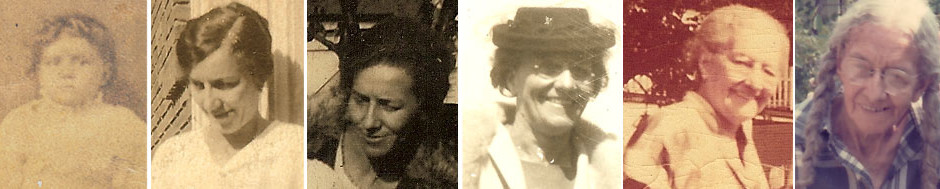
I saw a clock face on Finding Josephine this morning and it reminded me of a clock face I did a few years ago using photographs of my grandmother, Fannie Mae Turner Graham. She and my grandfather, Mershell, lost their both of their sons at young ages. Mershell Jr was run over by a laundry truck on the way back to school after lunch. Howard was born the next year. He died from complications of scarlet fever at the age of three. I am going to begin posting writings my mother sent me about her family at the beginning of my search.