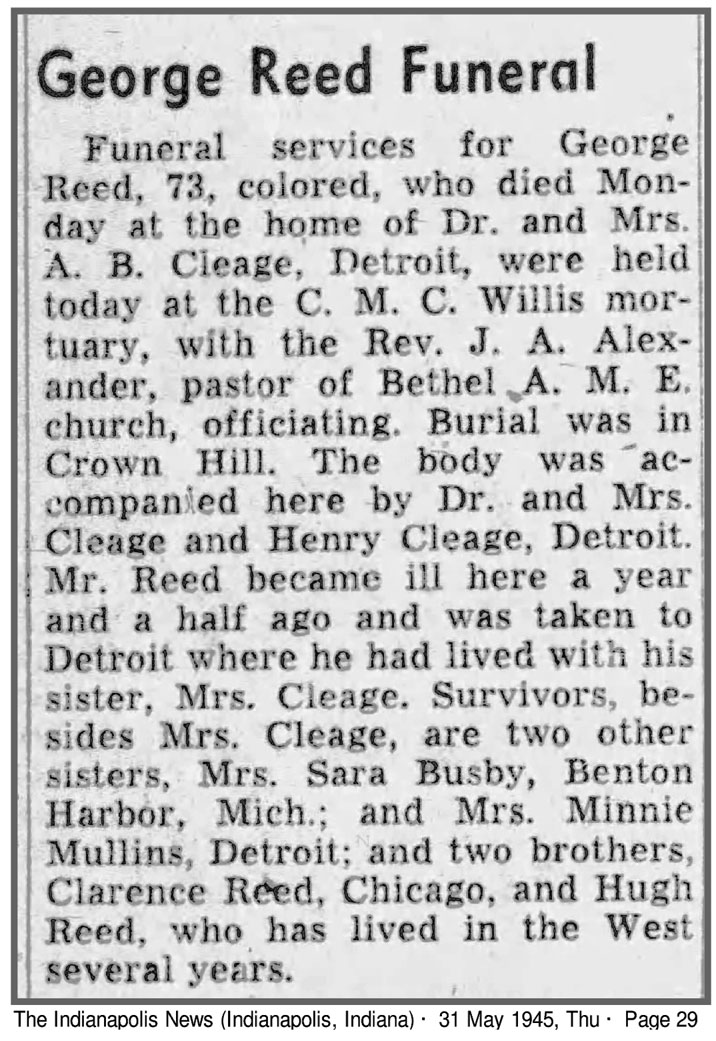
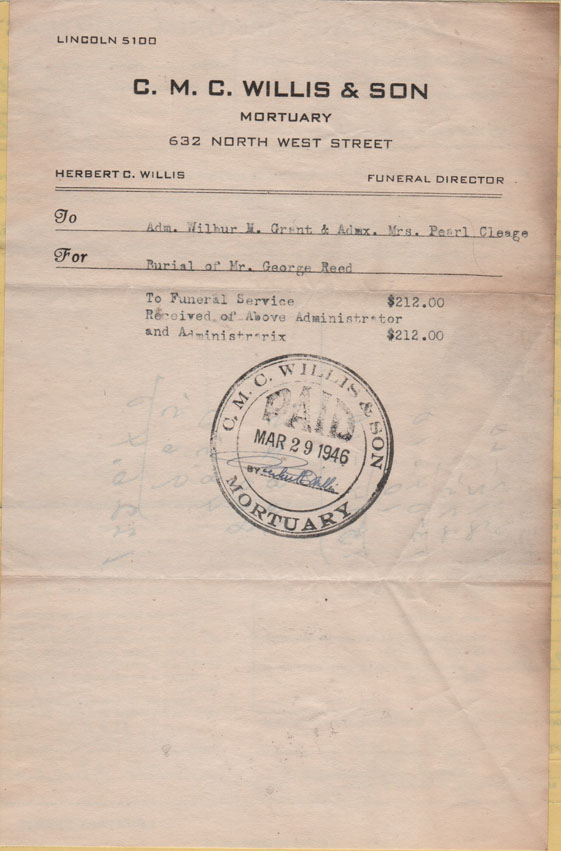
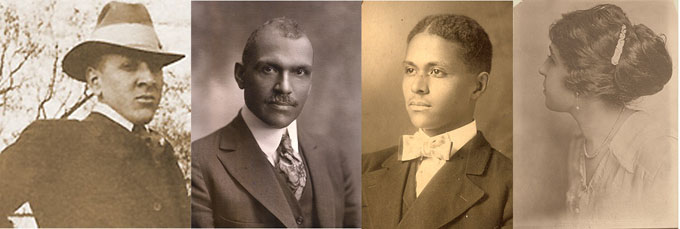
“Funeral Services for George Reed, 73, colored, who died Monday at the home of Dr. and Mrs. A. B. Cleage, Detroit, were held today at the C.M.C. Willis mortuary, with the Rev. J.A. Alexander, pastor of Bethel, A. M. E. church, officiating. Burial was in Crown Hill. the body was accompanied here by Dr. and Mrs. Cleage and Henry Cleage, Detroit. Mr. Reed became ill here a year and a half ago and was taken to Detroit where he lived with his sister, Mrs. Cleage. Survivors, besides Mrs. Cleage, are two other sisters, Mrs. Sara Busby, Benton Harbor, Mich.; and Mrs. Minnie Mullins, Detroit; and two brothers, Clarence Reed, Chicago, and Hugh Reed who has lived in the West several years.”
George was actually closer to 78. He appears in the 1870 census as three year old George Ray with his mother Annie Ray.
This year I am going through an alphabet of news items taken from The Emancipator newspaper, published between 1917 and 1920 in Montgomery, Alabama. Most are about my grandparent’s circle of friends. All of the news items were found on Newspapers.com. Each item is transcribed directly below the clipping. Click on any image to enlarge.
__________________
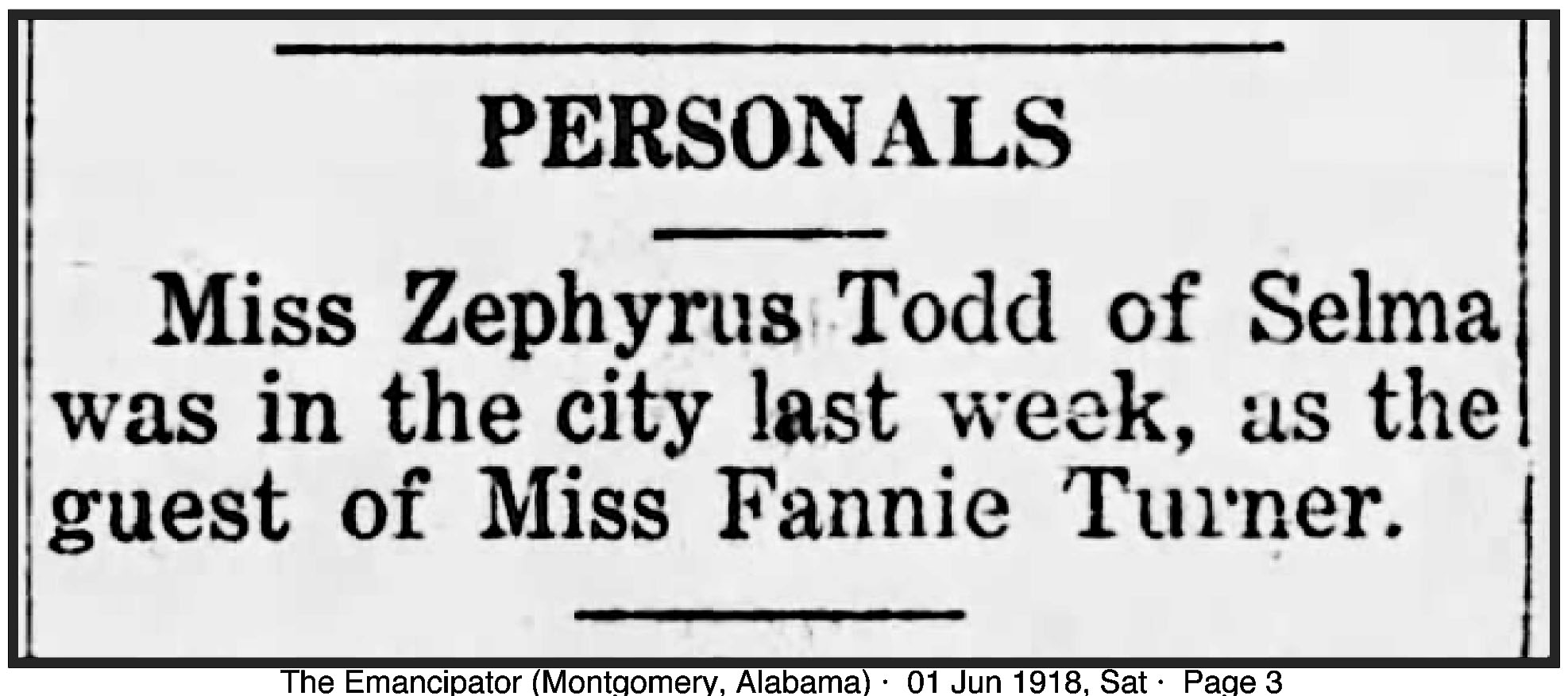
Zephyrus Todd was a friend of my grandmother Fannie Turner. When she visited my grandmother, Fannie Turner in May 1918, she was 26 years old. My grandmother was 30.
PERSONALS
Miss Zephyrus Todd of Selma was in the city last week, as the guest of Miss Fannie Turner.
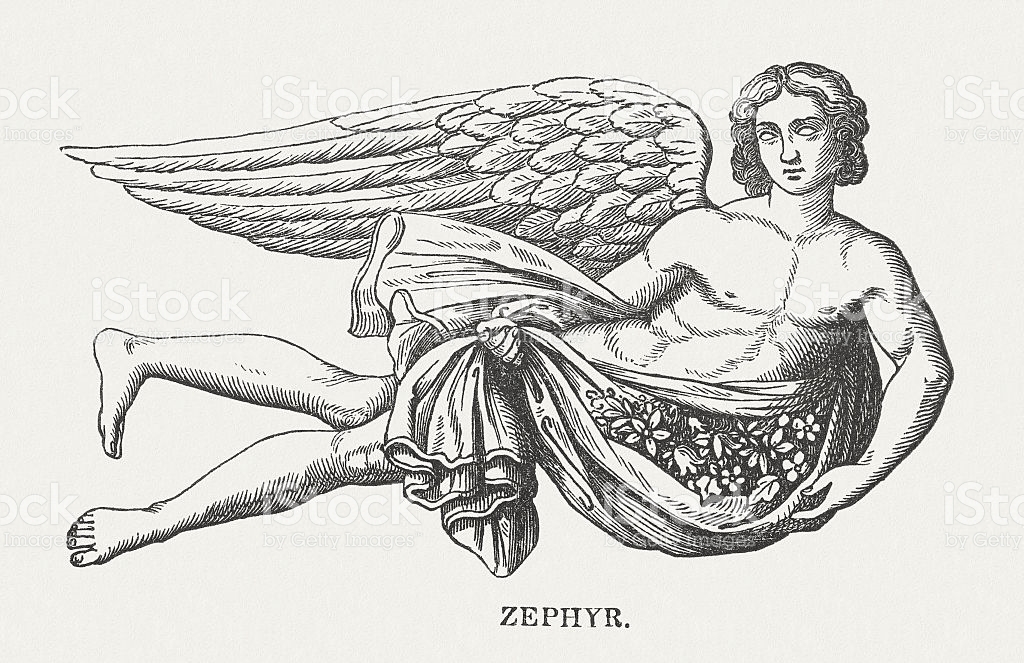
Zephyr – the Greek god of the west wind.
Zephyrus Todd was born in 1892, the second child of James and Corinne (Hunter) Todd. There were eight siblings. The one born after Zephyrus died in childhood, the rest lived well into adulthood. Both of her parents were born soon after the end of slavery. Both were literate.
In the 1900 census, her father James taught school. Her mother Corinne was a seamstress. There were Four children. The oldest, Percival, was ten and attended school. Zephyrus was eight, Ruby was three and James was one. Corinne had given birth to five children and four were living. The deceased child was probably born between Zephyrus and Ruby.
In the 1910 census, her father, James Todd was listed as a laborer in an oil mill. His wife Corinne was still pursuing her work as a seamstress while raising six children. Two more had been added to the family, Six year old Furrnis and two year old Nathaniel. The four oldest children had all attended school.
By the 1920 census, James Todd was an engineer at the oil mill. Their was no occupation listed for Corinne. Zephyrus was teaching. Percival was not living at home. All but six year old Corintha were attending school.
All of the children finished high school. At least five attended college. Zephyrus began teaching at Clark Elementary School in 1913 when she was 21. Here is a bit I found about education in Selma at that time.
“…in 1891 the Alabama state legislature approved new education laws that allowed for discrimination in facilities and in the salaries provided for black teachers compared to whites. Despite these impediments, Richard B. Hudson (1866-1931), who was a Selma University graduate, remained committed to building a public school presence for black children in Selma. In 1890 Clark Elementary School opened on the first floor of Sylvan Street Hall, the first public school for African American students in Selma. A permanent building was constructed and opened in 1894 on Lawrence Street. Hudson administered Clark School for approximately 40 years and coped with a white perception that black children did not need education when they were needed more in the cotton fields or in the cotton industry. The length of the school year for blacks in Alabama, for instance, decreased from 100 days in 1900 to a mere 76 days by 1910.” (1)
Zephyrus’ sister Ruby joined her as a teacher at Clark Elementary School in 1922. Both of them continued to live at home and teach at Clark until they moved 129 miles away to Lamar County and began to teach at Lamar County Training School. Eventually Zephyrus Todd became the principal. Neither Zephyrus nor her sister Ruby married.
At the age of 76, on August 13, 1968, Zephyrus died in Lamar County. She was buried in Elmwood Cemetery, the black cemetery in Selma,
“… Elmwood Cemetery on Race Street (note: so named because of the Race Track.) became a forgotten civic space. The earlier Confederate burials were removed c. 1878. By the turn of the century it was the town’s recognized African American cemetery and became the final resting place for many significant local leaders in commerce, religion, and education from the first half of the twentieth century.” (1)
________________
I found this information on Ancestry.com in Census Records, Directories, Death Records and Military Records. The news item was found on Newspapers.com. The history information was found here Section E. Historic Context (1)
This year I am going through an alphabet of news items taken from The Emancipator newspaper, published between 1917 and 1920 in Montgomery, Alabama. Most are about my grandparent’s circle of friends. All of the news items were found on Newspapers.com. Each item is transcribed directly below the clipping. Click on any image to enlarge.
________________
I know of no connection between my grandparents and Mrs. Bettie Young, aside from being part of the African American community in Montgomery, Alabama.
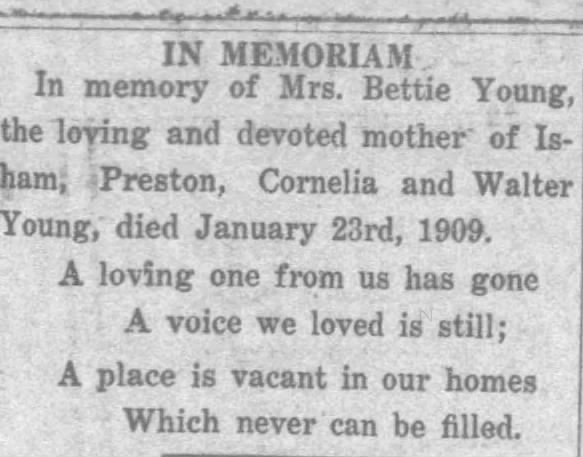
The Emancipator (Montgomery, Alabama) · 26 Jan 1918, Sat · Page 3
In Memoriam
In memory of Mrs. Bettie Young, the loving and devoted mother of Isham, Preston, Cornelia and Walter Young, died January 23rd, 1909.
A loving one from us has gone A voice we loved is still; A place is vacant in our homes Which never can be filled.
_________________
Bettie Henley and her mother Mary F. Gardner were born into slavery in Virginia. Bettie was born about 1850. Her younger sister Fanny was born in 1856 in Alabama, so she and her mother were brought to Alabama before 1856.
Bettie married Mark Young in 1869 in Montgomery, Alabama. She was 19 and he was 29. In 1870 he worked as a delivery man. Bettie did not work outside of the home. Her mother, Mary F. Gardner, a widow and an invalid, lived with them.
In 1880, Young worked as a porter for Loeb & Bros. Bettie did not work outside of the home. Her mother had moved and was living with Bettie’s sister Fanny. They had three children, The oldest, Fanny, was named after her aunt. She was eight years old and attended school. Isham was six and Preston was four. Eventually Bettie gave birth to seven children. Four of them lived to adulthood. Mark and Bettie were both literate. Her mother, Mary F. Gardener died later in 1880 of cancer.
On August 1, 1882, Mark Young died of bilious remittent fever. The term is no longer used but referred to a high fever accompanied by vomiting and diarrhea. The cause could be malaria or typhoid fever. He was 42 years old.
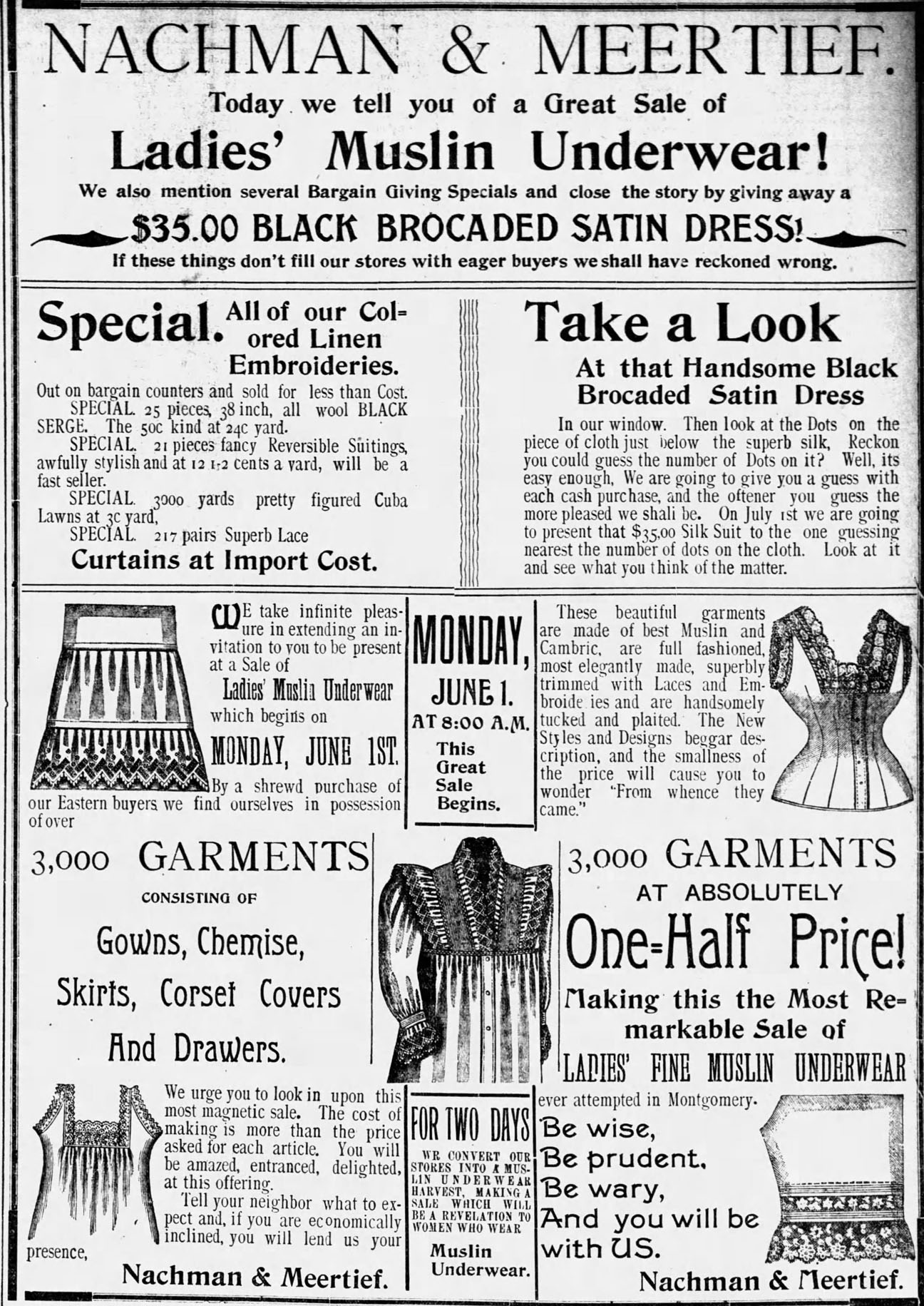
Bettie Young began taking in laundry in 1895. Her older sons both worked. Preston as a laborer. Isham drove a delivery wagon. In 1896 Preston was making deliveries for Nachman and Meertief when his horse became frightened by a wagon breakage. His 16 year old brother, Walter was with him. Here is an article from the paper about the incident.
A Close Call
A Negro Dragged Along Dexter Avenue by a Runaway Horse.
Isham Young should at once buy a lottery ticket – he made the narrowest escape from a frightful death yesterday that has been heard of in a long time. Isham is the driver of the delivery wagon of Nachman & Meertief, and about 5 o’clock yesterday afternoon something broke about the front part of the wagon, scaring the horse who dashed off at break-neck speed down the avenue. The wagon was swaying from side to side of the street and when near Perry Street, Isham was thrown to the ground, tangled up in the reins. He was dragged along this way for several yards, and his head and the wagon striking an iron post at the corner of Dexter Avenue and Perry Streets, he was torn loose from the lines and left lying, as everybody thought, dead. Officer Pat Sweeny rushed over, picked up the bleeding and motionless form, and carried it over to the drug store. Very soon, the negro (sic.) was able to be sent home in a hack–he was shocked more than hurt, and his cuts and bruises while painful are not serious. A small negro boy, his brother, was in the wagon with him and was not even scratched. None of the goods in the wagon were lost, and altogether it was one of the most fortunate things ever seen to look so serious. Further down the Avenue, Miss Maud Reid and her sister, Mrs. Johnson, were driving in a phaeton- the plunging wagon struck one of the front wheels of the phaeton, tearing it ______ and throwing the ladies out. Fortunately, they were driving very slowly at the time and their horse was a gentle one, or the result might have been worse. As it was, they were not hurt at all. Near Court Square the runaway horse and demolished delivery wagon were stopped.” From The Montgomery Advertiser Aug 2, 1896, pg 10.
The Montgomery Advertiser Sun May 31, 1896
In the 1900 census Bettie Young owned her home outright with no mortgage. She continued to take in laundry. Three of her four surviving children lived in the household. Sixteen year old Walter was at school. Cornelia was nineteen and not employed outside of the home. Twenty three year old Isham continued driving the delivery wagon. He received a permit to make $50 worth of repairs on the house that same year.
On January 23, 1908, Bettie Young died. She was 58 years old.
_________________
I found this information on Ancestry.com in Census Records, Directories, Death Records and Military Records. The new item was found on Newspapers.com.
This year I am going through an alphabet of news items taken from The Emancipator newspaper, published between 1917 and 1920 in Montgomery, Alabama. Each item was found on Newspapers.com and is transcribed directly below the clipping. Click on any image to enlarge.
___________
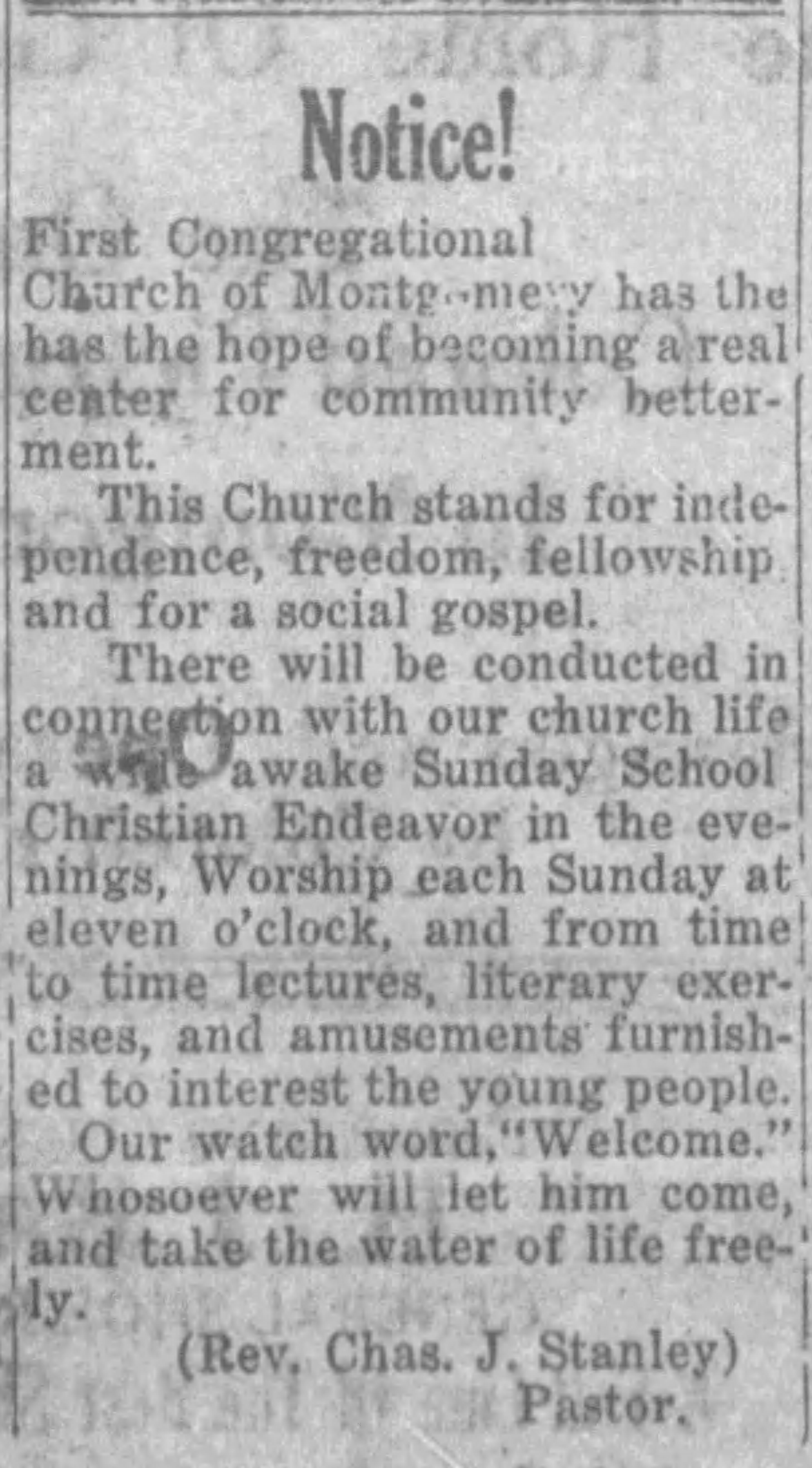
First Congregational Church was where my grandparents met and the church they attended when they lived in Montgomery. My grandmother Fannie, her siblings and cousins also attended the school that the Congregational missionaries from the North started. It went from elementary through high school and became State Normal School.
The Emancipator – Sat – July 3, 1920
Notice!
First Congregational Church of Montgomery has the hope of becoming a real center for community betterment.
This Church stands for independence, freedom, fellowship and for a social gospel.
There will be conducted in connection with our church life a wide awake Sunday School Christian endeavor in the evenings, Worship each Sunday at eleven o’clock, and from time to time lectures, literary exercises, ad amusements furnished to interest the young people.
Our watch word, “Welcome.” Whosoever will let him come, and take the water of life freely.
(Rev. Chas. J. Stanley) Pastor.
____________________
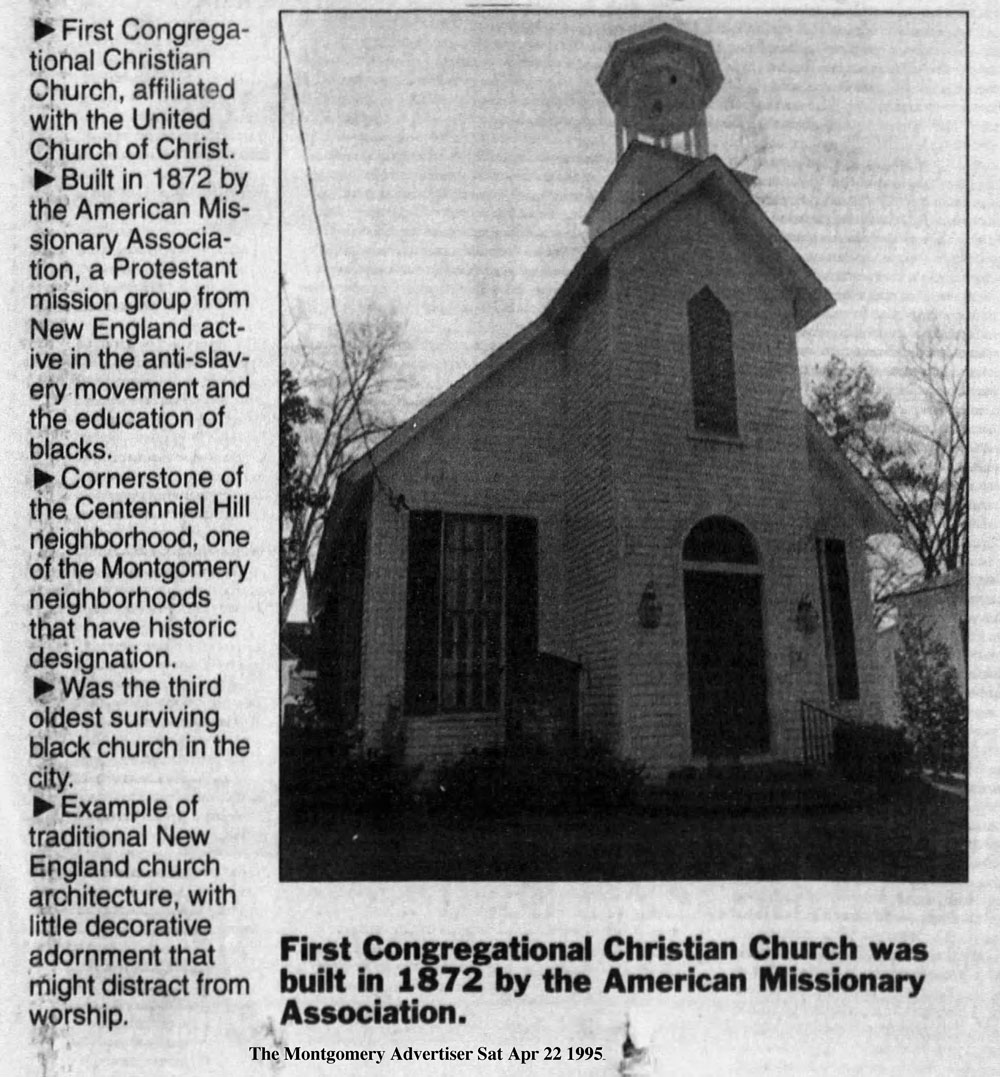
The photograph below is of First Congregational Church, which later changed it’s name to First Congregational Christian Church, came from The Montgomery Advertiser. There is a bit of the history of the church in the sidebar.
The original building burned to the ground after a lightening strike in 1995. The congregation has rebuilt in the same spot.
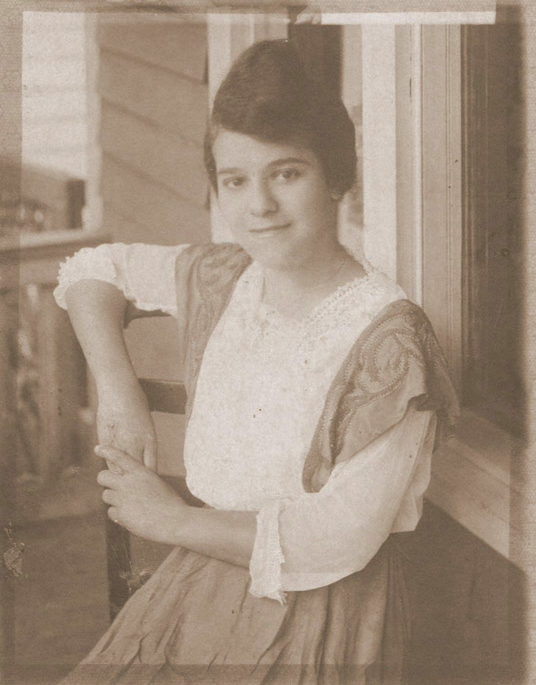
Daisy Pearl Turner, Montgomery, Alabama about 1913.
I always wondered about Duncan Irby, my Aunt Daisy’s lost love. Over the years I looked for him online, with no luck. Recently, I tried again. Lo’ and behold, I found Duncan Irby in Selma, Alabama. There was a small item from The Emancipator. Records and more news items began to show up.
In 1980 my mother wrote her memories of family memories. They proved to be an invaluable source when I started my research. She wrote the following about her mother’s sister, Daisy Turner. Some of my mother’s memories were a bit off, but close enough that I recognized Duncan Irby when I found him.
“Maybe here a word about Aunt Daisy. Look at her picture, sweet, soft, pretty, taught school awhile in Montgomery (with high school diploma) loved Congregational preacher named Duncan Erby who loved her and waited for her for years. Had the church in Buffalo, NY. Whenever she really considered leaving, Grandmother did the old guilt trick “How can you leave me to take care of Alice all by myself?” and “No man in this world is good enough to touch your little finger. They are all no good except (maybe) Shell.” (note: Shell referred to my grandfather, Mershell Graham.)and Daisy listened and stayed and played numbers, studied dream books and drank a little apricot brandy. I always found their house light, cheerful, full of magazines (McCall’s, Journal, etc.) which I loved to read, full of good things to eat. All three were super cooks and they had always just had a bunch of friends to dinner and to play cards or just about to have.
Daisy took us downtown to the show every summer and to Saunders for ice cream afterward. And I always ended up with a splitting headache. Too much high living I guess. She and Alice would buy us dainty, expensive little dresses from Siegel’s or Himelhoch’s. They all went to church every Sunday, Plymouth Congregational. Daisy always gave us beautiful tins of gorgeous Christmas candy, that white kind filled with gooey black walnut stuff, those gooey raspberry kind and those hard, pink kind with a nut inside, and chocolates, of course! She loved to eat and to cook. Never seemed bitter or regretful about her lost love.”
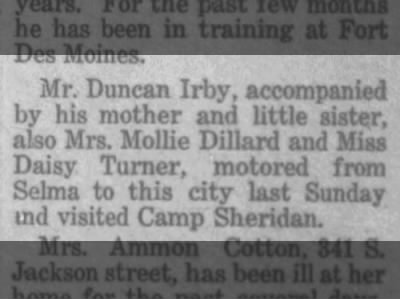
“Mr. Duncan Irby, accompanied by his mother and little sister, also Mrs. Mollie Dillard and Miss Daisy Turner, motored from Selma to this city last Sunday and visited Camp Sheridan.” The Emancipator, Montgomery, Alabama Sat. Oct 20, 1917.
Duncan Irby was five feet nine inches tall, stout, light complected with brown hair, brown eyes and freckles.
__________________
Duncan’s parents, Duncan Irby, Sr and Mary Smith were married in Selma, Alabama on Christmas Eve, 1890. Mary was the daughter of a house painter. Duncan’s mother, Emmeline Gee, inherited over 100 acres and a horse from a former enslaver Josiah Irby. I do not know if Emmeline was enslaved on Irby’s plantation. At his mother’s death, Duncan was to inherit the property.
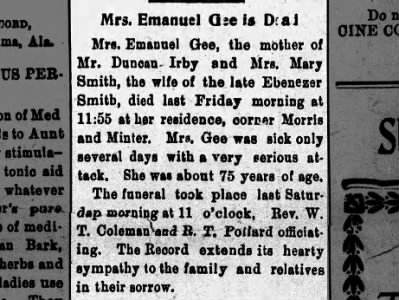
After this, Duncan used the surname “Irby” instead of “Gee”. I do not know if they were allowed to take possession of the property. Both Duncan Sr and his wife Mary were literate. His mother lived with the family until her death in 1901. The Mary Smith mentioned in this article was Duncan Irby Sr’s older sister. It was very confusing to have three Marys (sister, wife and daughter) and two Duncans (father and son).
Selma Record, Selma, Alabama, Sat, Nov 9, 1901
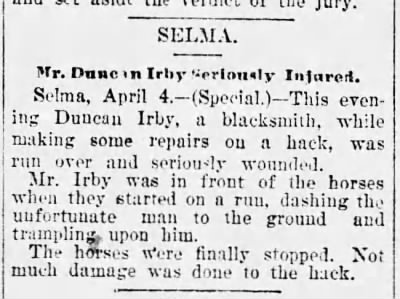
The younger Duncan Irby was born in 1892. The following year Duncan Sr, a blacksmith, suffered injuries when he was trampled by horses while making some repairs on a hack. He recovered.
Selma
Mr. Duncan Irby Seriously Injured.
“Selma, April 4.-(Special.)_ This evening Duncan Irby, a blacksmith, while making some repairs on a hack, was run over and seriously wounded. Mr. Irby was in front of the horses when they started on a run, dashing the unfortunate man to the ground and trampling upon him. The horses were finally stopped. Not much damage was done to the hack.” The Montgomery Advertiser Montgomery, Alabama Wed, Apr 5, 1893
Mary, Duncan Sr and Mary’s only other child, was born the following year. Both Duncan Jr and his sister Mary attended school. In 1908 they were both enrolled in Talledega College, a boarding school, in the College Preparatory Course. They studied Latin, Algebra, English Literature, Ancient history and Drawing along with hands on courses in Agriculture and Wood-Turning for young men and Dressmaking and Nurse-Training for young women.
Mary became a teacher. She married Edwin Gibson, a teacher and a principal. They had one son, Edwin Gibson Jr. They later divorced.
Duncan worked with his father in his blacksmith shop and later became a mechanic. The elder Duncan Irby died in November of 1915.
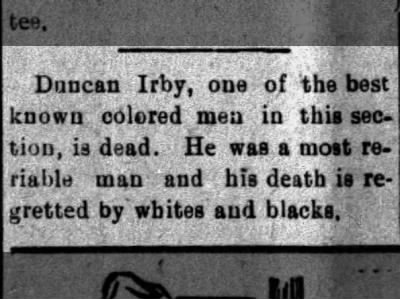
“Duncan Irby, one of the best known colored men in this section, is dead. He was a most reliable man and his death is regretted by whites and blacks.” The Selma Mirror, Selma, Alabama, Fri, Oct 15, 1915
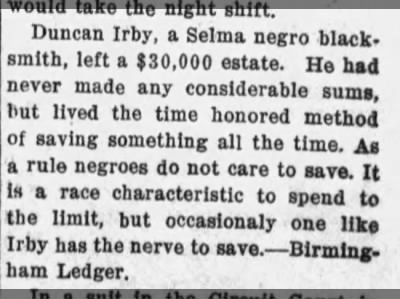
“Duncan Irby, a Selma negro blacksmith, left a $30,000 estate. He had never made any considerable sums, but lived the time honored method of saving something all the time. As a rule negroes do not care to save. It is a race characteristic to spend to the limit, but occasionaly one like Irby has the nerve to save. – Birmingham Ledger.” Our Mountain Home, Talladega, Alabama, Wed, Oct 27, 1915
Duncan Irby senior, left everything to his wife Mary with the proviso that should she ever remarry, everything would go to their children.
Duncan Irby’s widow, Mary Irby, remarried in 1921. She married Rev. Marshall Talley and that is where my mother got the minister. The family relocated to Homestead, Pennsylvania. This was the move to the northeast. Duncan was 35 in 1930 and worked as an auto mechanic in Homestead.
Several years later, they all relocated to Indianapolis, Indiana. Duncan, his sister Mary, who was divorced from her husband by this time and her son Edwin Gibson Jr. formed a household. Edwin Jr grew up to become a well known architect and the first black architect registered in Indiana.
In 1966 Duncan Irby died of pneumonia brought on by lung cancer. He was 74 years old and had lived in Indianapolis for 34 years. He never married.
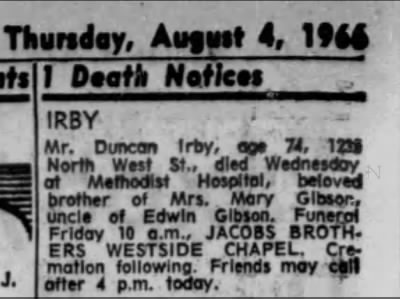
“Death Notices – Irby. Mr. Duncan Irby, age 74, 1238 North West St., died Wednesday at Methodist Hospital, beloved brother of Mrs. Mary Gibson, uncle of Edwin Gibson. Funeral Friday 10 a.m., Jacobs Brothers Westside Chapel. Cremation following. Friends may call after 4 p.m. today.” The Indianapolis News, Indianapolis, Indiana, Thu, Aug 4, 1966
In writing this story I used writings by my mother, Doris Graham Cleage; Census, death, and other records from Ancestry.com and a surprising number of news stories found on Newspapers.com. I discovered I could share them by embedding them in the post and may have gone overboard.
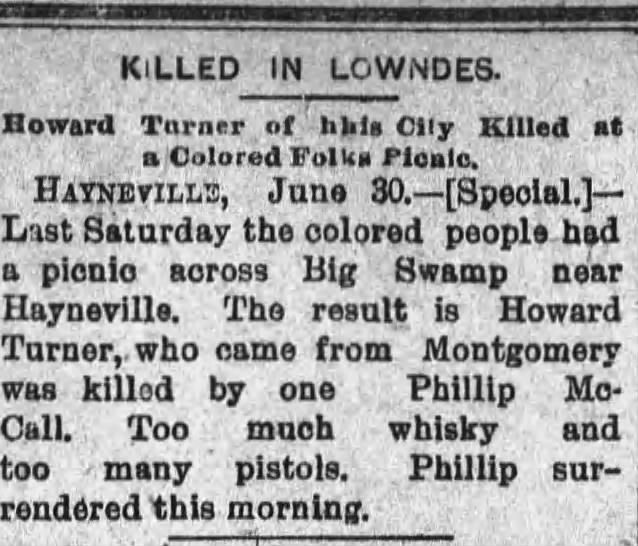
Howard Turner of This City Killed at a Colored Folks Picnic.
Hayneville, June 30. -[Special.]- Last Saturday the colored people had a picnic across Big Swamp near Hayneville. The result is Howard Turner, who came from Montgomery was killed by one Phillip McCall. Too much whisky and too many pistols. Phillip surrendered this morning.” The Weekly Advertiser (Montgomery, Alabama) Thursday, July 10, 1891 Page 2
We were always told that my grandmother Fannie Turner Graham’s father was killed at a barbeque when she was four years old. After years of being unable to find any documentation, I found this news item on Newspapers. dot com today. I was just looking for various people in the newspapers when I came across it.
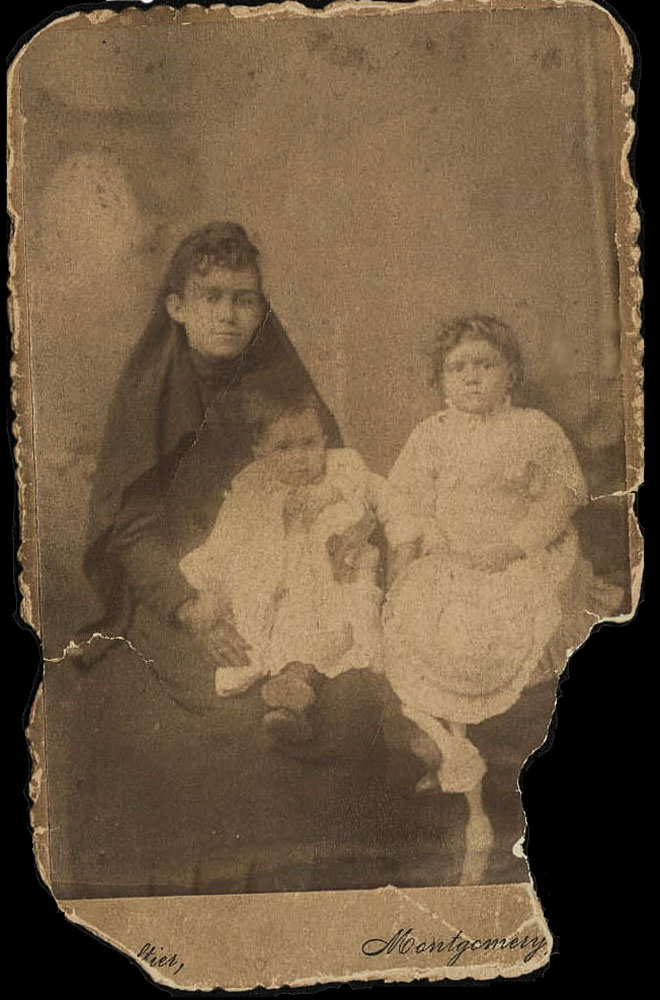
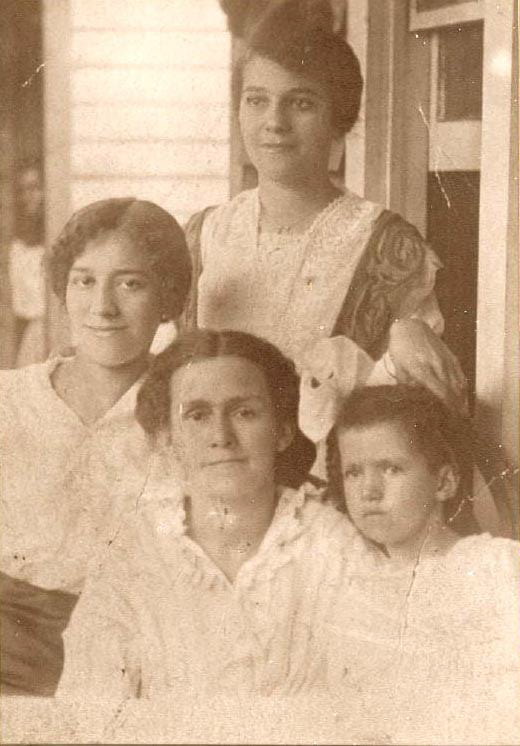
Howard Turner’s widow with their daughters. Jennie Virginia Allen Turner holding Daisy Turner (my great grandmother) and my grandmother Fannie sitting there holding her hat.
I have found so much new information since I started this blog that I feel the need to go back and put it all together for the various branches. My project for 2018.
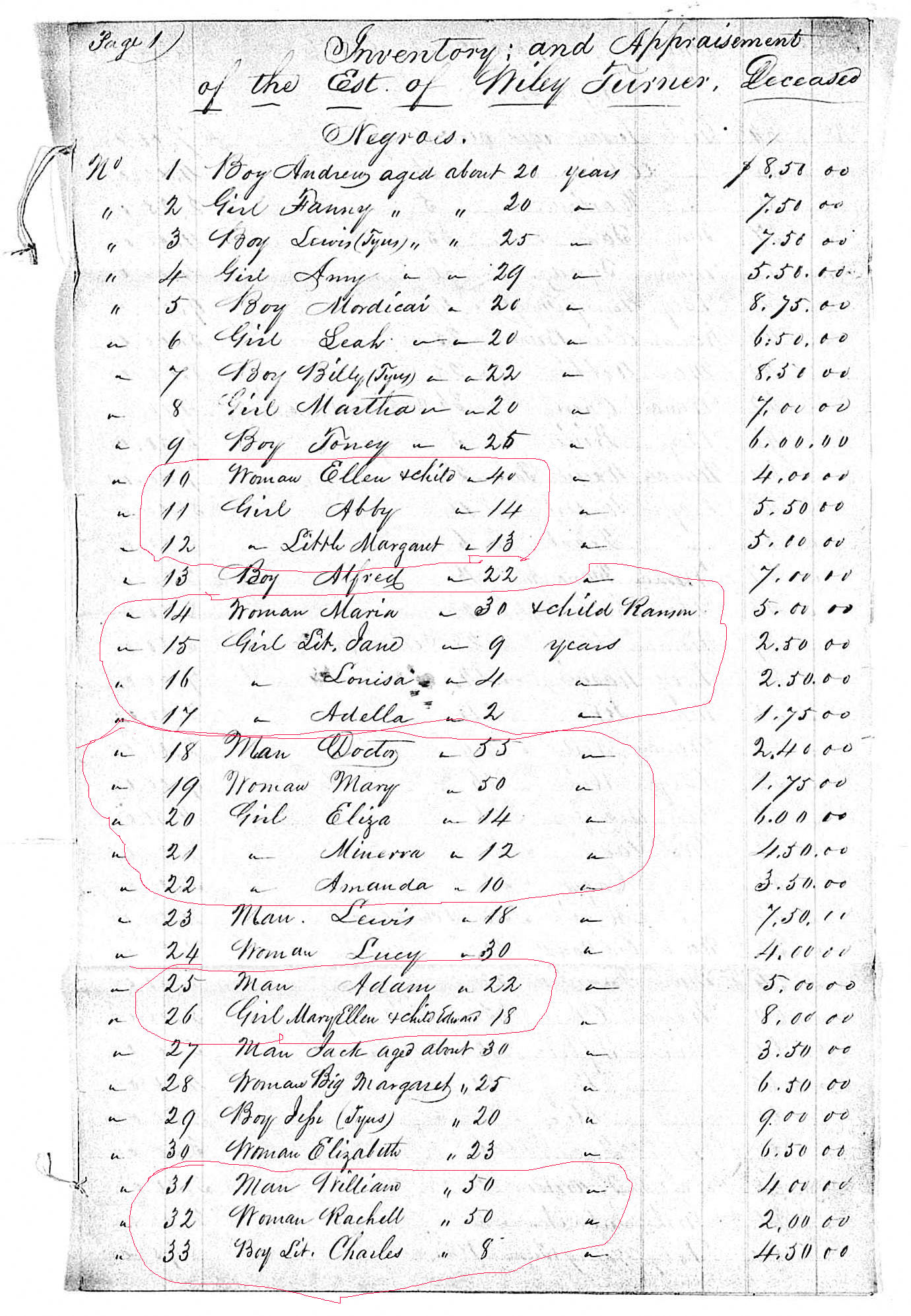
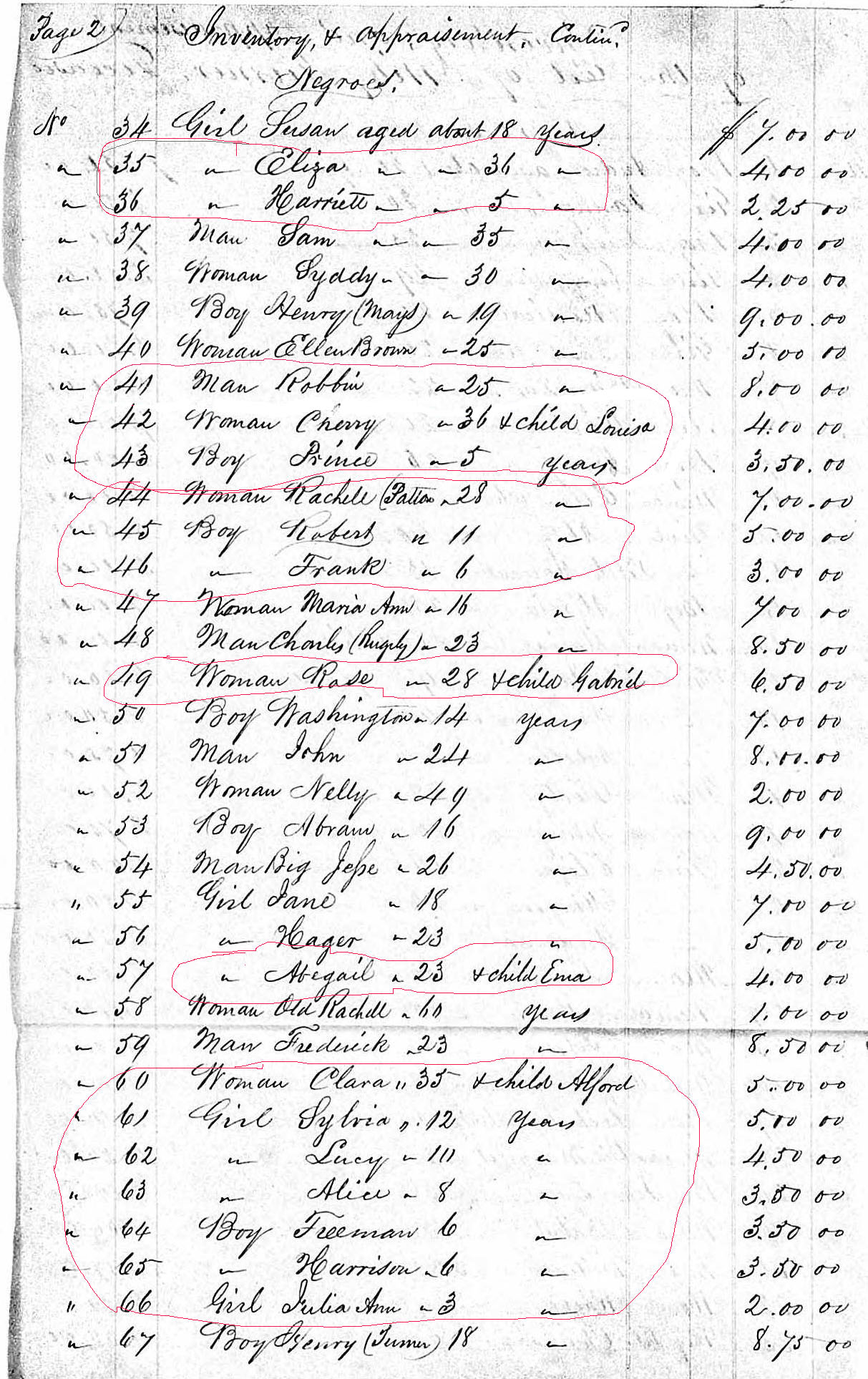
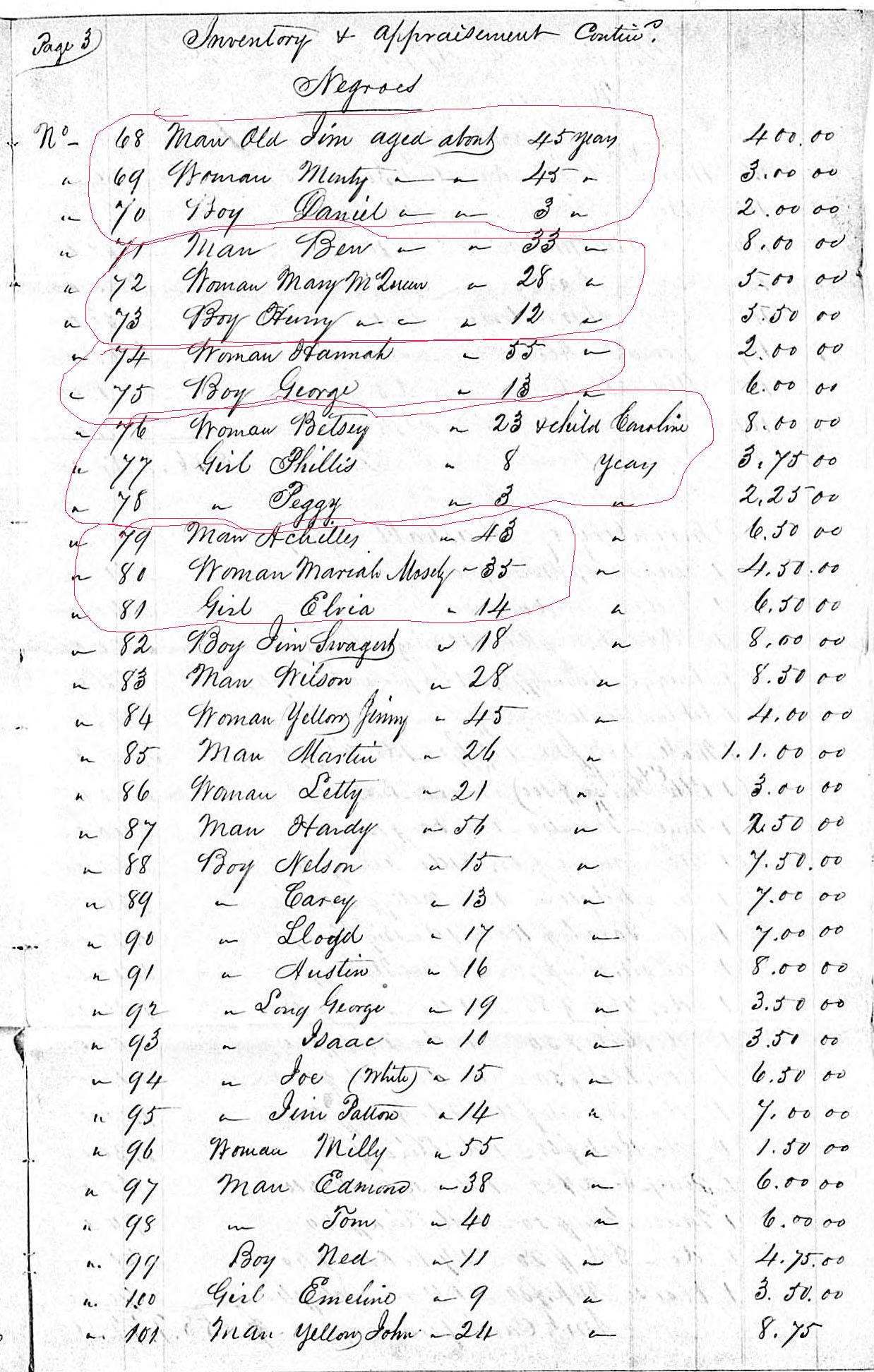
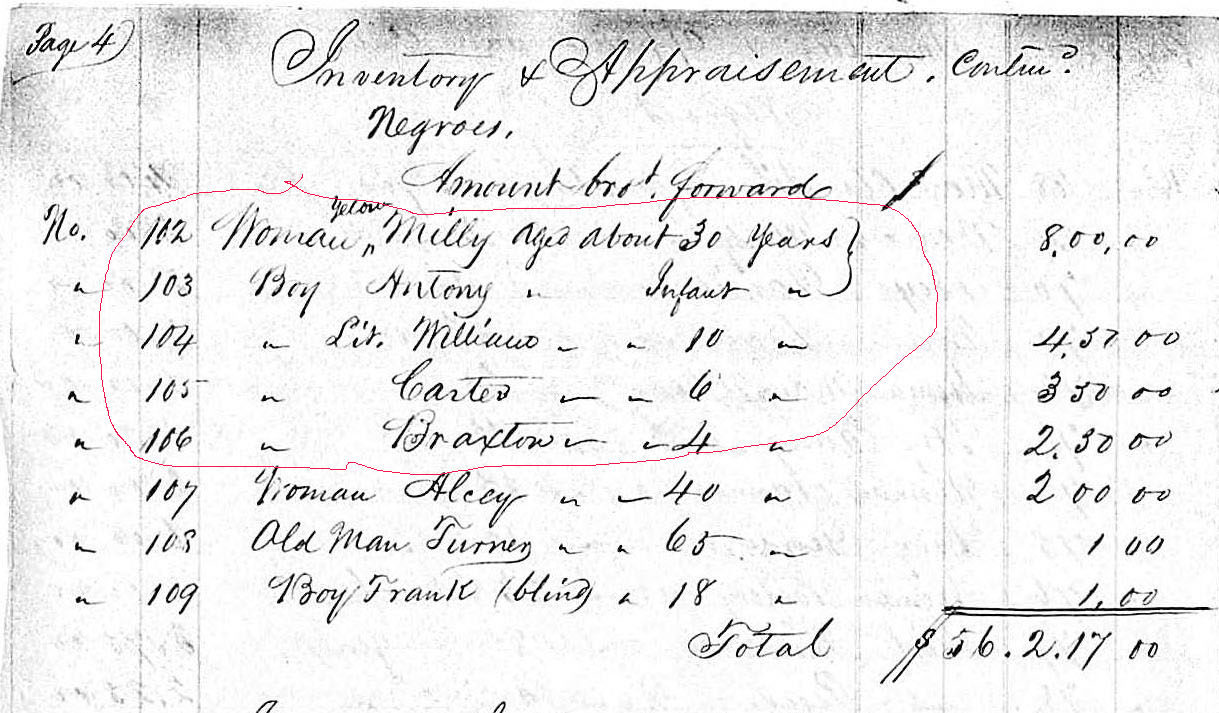
These are the family groups I picked out from the first (1852) appraisment done of Wiley Turner’s Lowndes County, Alabama estate. I will follow those I can through the other three lists and then see what families I can find in the 1870 census. My 2X great grandfather, Joseph Turner, is listed as “Joe (white)” on page 3. He was too old to be in a family group at 15, so I do not know if his mother was on this file.
There are four family groups on page one (above) of the 1852 probate record.
Forty year old Ellen and child, and Abby, age fourteen and Little Margaret age ten.
Thirty year old woman Maria and child Ransom, nine year old little Jane, four year old Louisa and two year old Adella.
Doctor, Mary and fourteen year old Eliza went to Wiley Turner’s wife and so do not appear in later lists. Twelve year old Minerva and Ten year old Amanda, who may be part of this family, were not included in Francis Turner’s group.
Twenty two year old Adam, eighteen year old Mary Ellen and child Edward.
Fifty year old William, fifty year old Rachell and eight year old little Charles.
There are six possible family groups on page 2 (above) in the 1852 record.
Eliza 36 and Harriett 5.
Robbin 25, Cherry 36 and child Louisa, Prince 5
Rachell Patton 28, Robert 11, Frank 6
Rose 28 and child Gabriel – to Francis Mosely Turner.
Abigail 23 and child Ema
Clara 35 and child Alford, Sylvia 12, Lucy 10, Alice 8, Freeman 6, Harrison 6, Julia Ann 3.
There were five family groups on page 3 (above) in the 1852 appraisment.
Man Old Jim 45 years, Minty 45, Daniel 3 – to widow Francis Mosley Turner
Ben 33, Mary McQueen 28, Henry 12
Hannah 55, George 13
Betsy 23, child Caroline, Phillis 8, Peggy 3
Achilles 43, Mariah Mosely 35, Elvira 14 – to widow Francis Mosley Turner
There was one family group on page 4 (above)
Yellow John 24 (from previous page), Yellow Milly 30, Anthony infant, Little William 10, Carter 6, Braxton 4
I will be taking each family as far as I can in time, through the other probate lists as groups are made up to give to various family members and into the 1866, 1870 and for some beyond to later censuses.
____________________
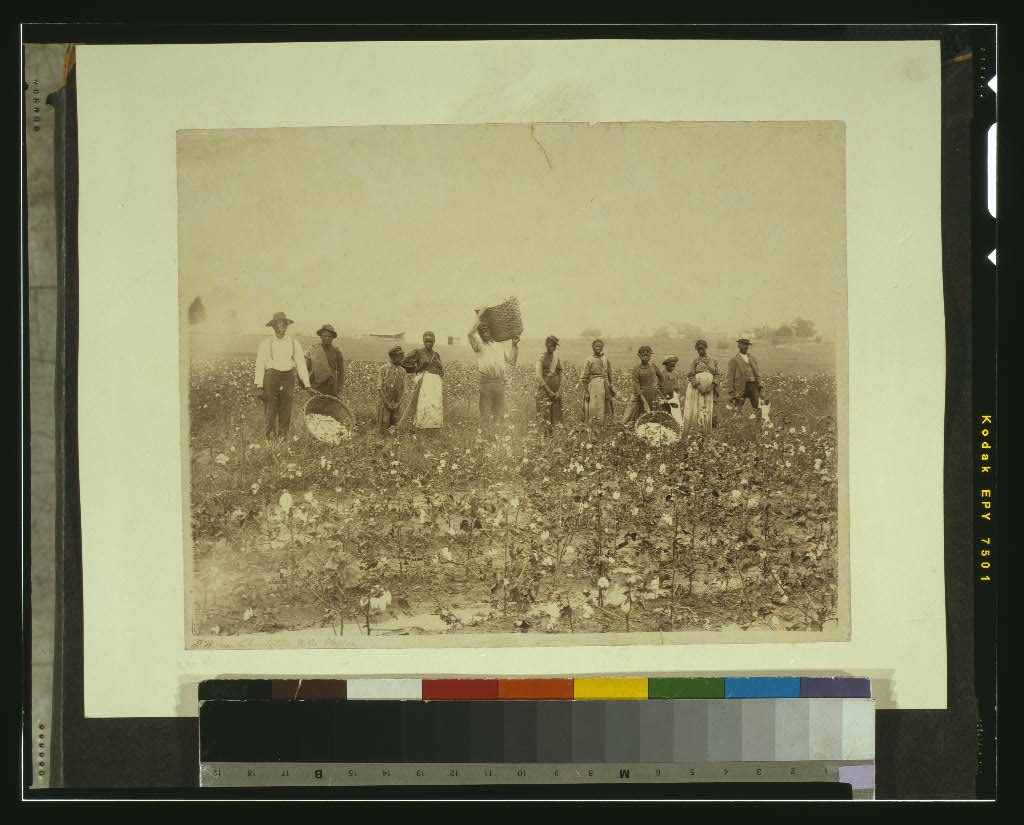
The photograph is from the National Archives. The pages from the Estate File are from Ancestry.com.
I recently found that The Emancipator newspaper was online at Newspapers.com. The Emancipator was published from October 1917 to August 1920. My grandmother’s first cousin, James Edward McCall and his wife were the publishers. You can read more about him at the link above.
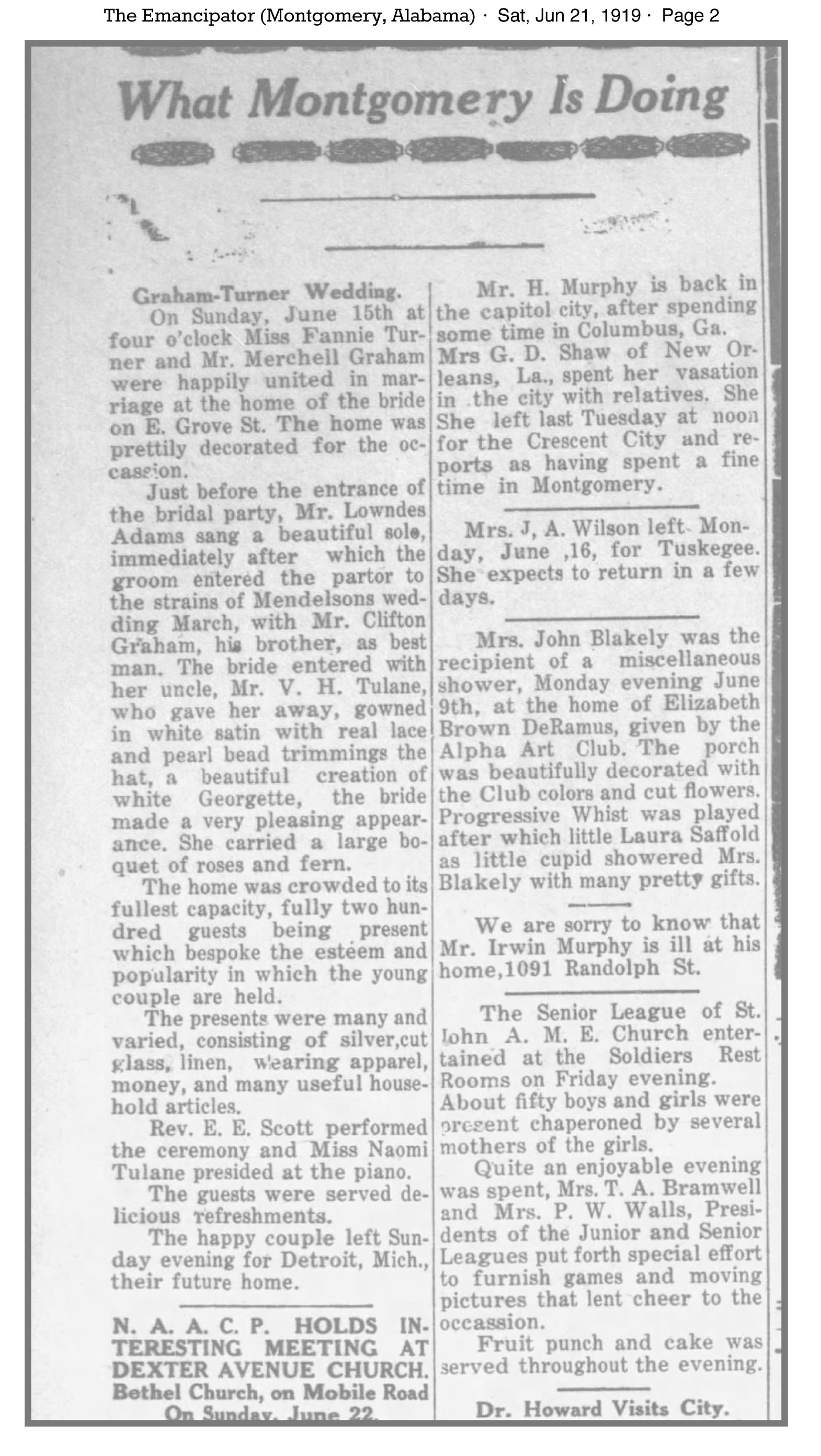
Lowndes Adams sang a solo. Victor Tulane walked the bride in. Clifton Graham was best man. Naomi Tulane played the piano.
Fannie, Jennie, Alice with Daisy standing in back.
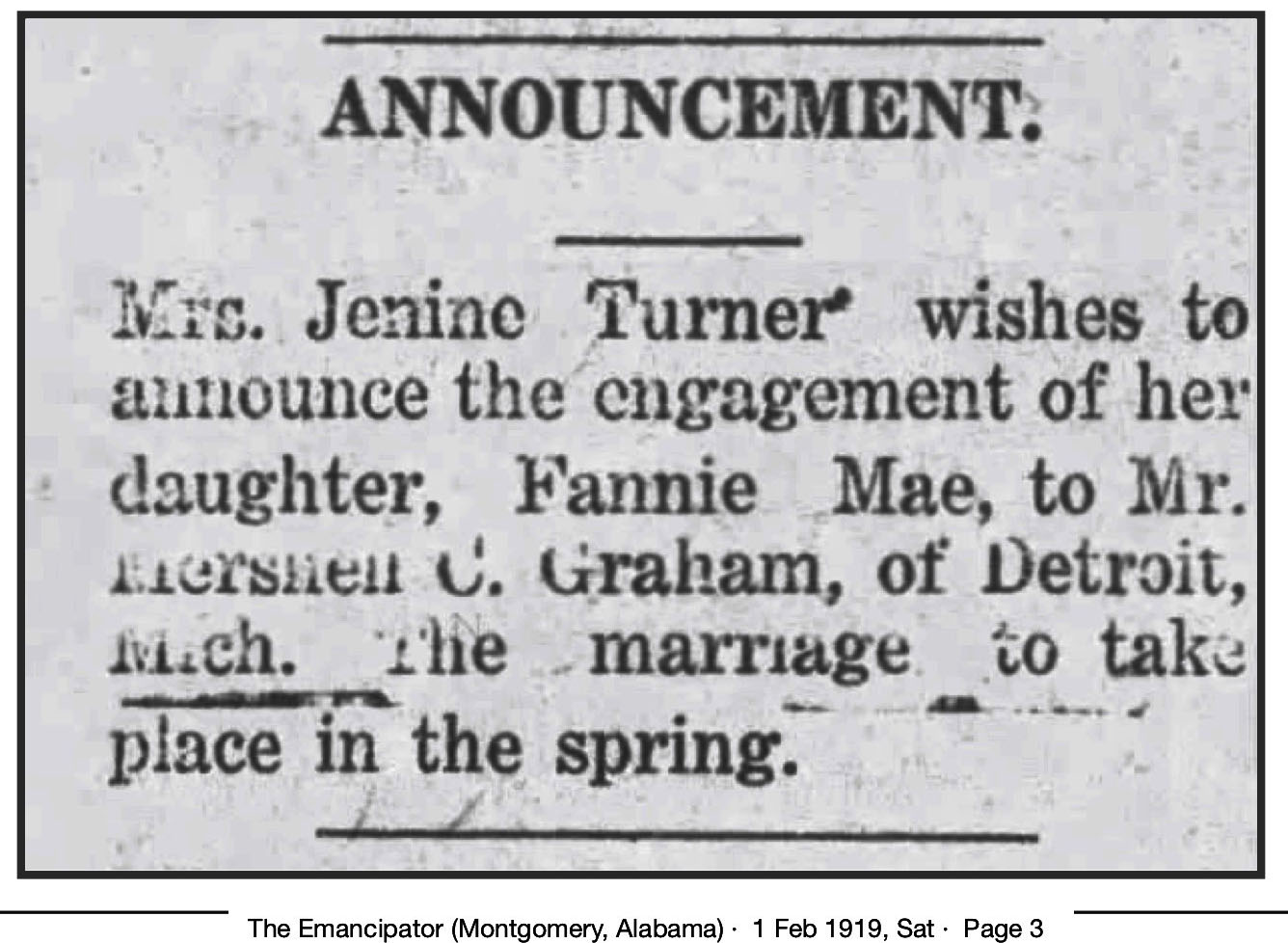
Announcement
Mrs. Jennie Turner wishes to announce the engagement of her daughter, Fannie Mae, to Mr. Mershell C. Graham of Detroit, Mich. The marriage to take place in the spring.
Mershell and Fannie (Turner) Graham. August 1919 Detroit, Michigan.
Graham-Turner Wedding
Graham-Turner Wedding
On Sunday, June 15th at four o’clock Miss Fannie Turner and Mr. Merchell Graham were happily united in marriage at the home of the bride on E. Grove St. The home was prettily decorated for the occasion.
Just before the entrance of the bridal party, Mr. Lowndes Adams sang a beautiful solo, immediately after which the groom entered the parlor to the strains of Mendelson’s wedding March, with Mr. Clifton Graham, his brother, as best man. The bride entered with her uncle, Mr. V.H. Tulane, who gave her away, gowned in white satin with real lace and pearl bead trimmings the hat, a beautiful creation of white Georgette, the bride made a very pleasing appearance. She carried a large bouquet of roses and fern.
The home was crowded to its fullest capacity, fully two hundred guests being present which bespoke the esteem and popularity in which the young couple are held.
The presents were many and varied, consisting of silver, cut glass, linen, wearing apparel, money, and many useful household articles.
Rev. E.E. Scott performed the ceremony and Miss Naomi Tulane presided at the piano.
The guests were served delicious refreshments.
The happy couple left Sunday evening for Detroit, Mich., their future home.
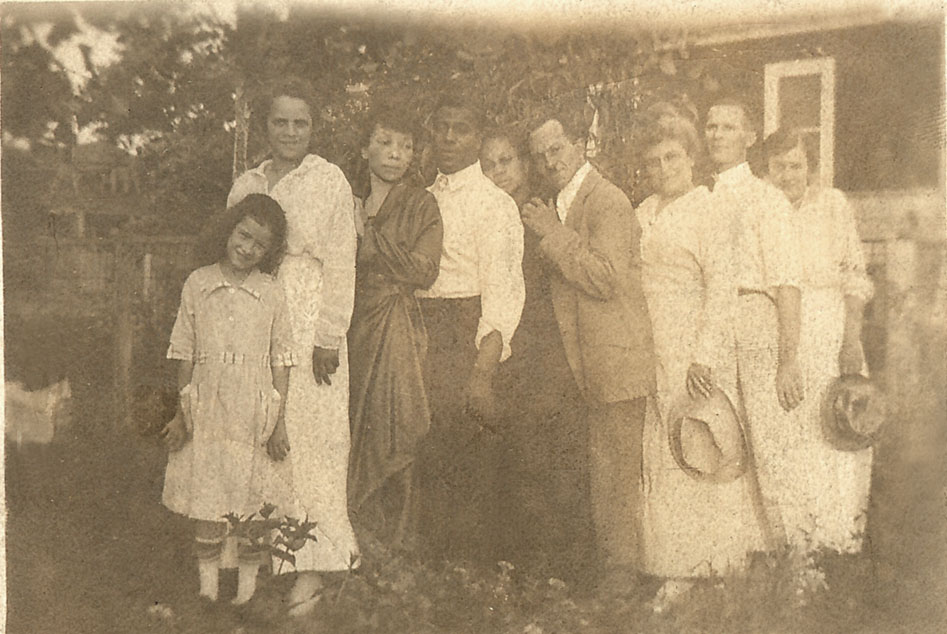
Some of the Graham’s friends in Detroit. Mershell and Fannie are at the end of the line.
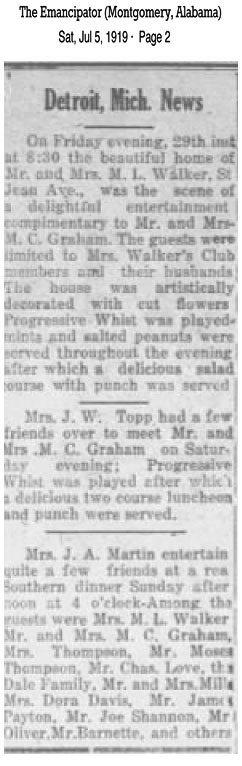
On Friday evening, 29th inst. at 8:30 the beautiful home of Mr. and Mrs. M.L. Walker, St. Jean Ave., was the scene of a delightful entertainment complimentary to Mr. and Mrs. M.C. Graham. The guests were limited to Mrs. Walker’s Club members and their husbands. The house was artistically decorated with cut flowers. Progressive Whist was played, mints and salted peanuts were served throughout the evening, after which a delicious salad course with punch was served.
________________
Mrs. Topp Detroit 1919
Mrs. J.W. Topp had a few friends over to meet Mr. and Mrs. M.C. Graham on Saturday evening. Progressive whist was played after which a delicious two course luncheon and punch were served.
_________________
Mrs. J.A. Martin entertain quite a few friends at a real Southern dinner Sunday afternoon at 4 o’clock. Among the guests were Mrs. M.L. Walker, Mr. and Mrs. M.C. Graham, Mrs. Thompson, Mr. Moses Thompson, Mr. Chas. Love, the Dale Family, Mr. and Mrs Mills, Mrs. Dora Davis, Mr. James Payton, Mr. Joe Shannon, Mr. Oliver, Mr. Barnette, and others.
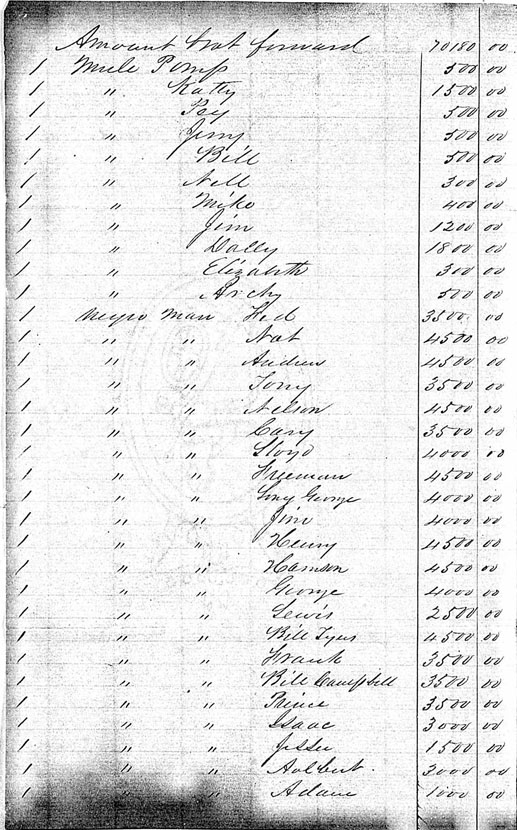
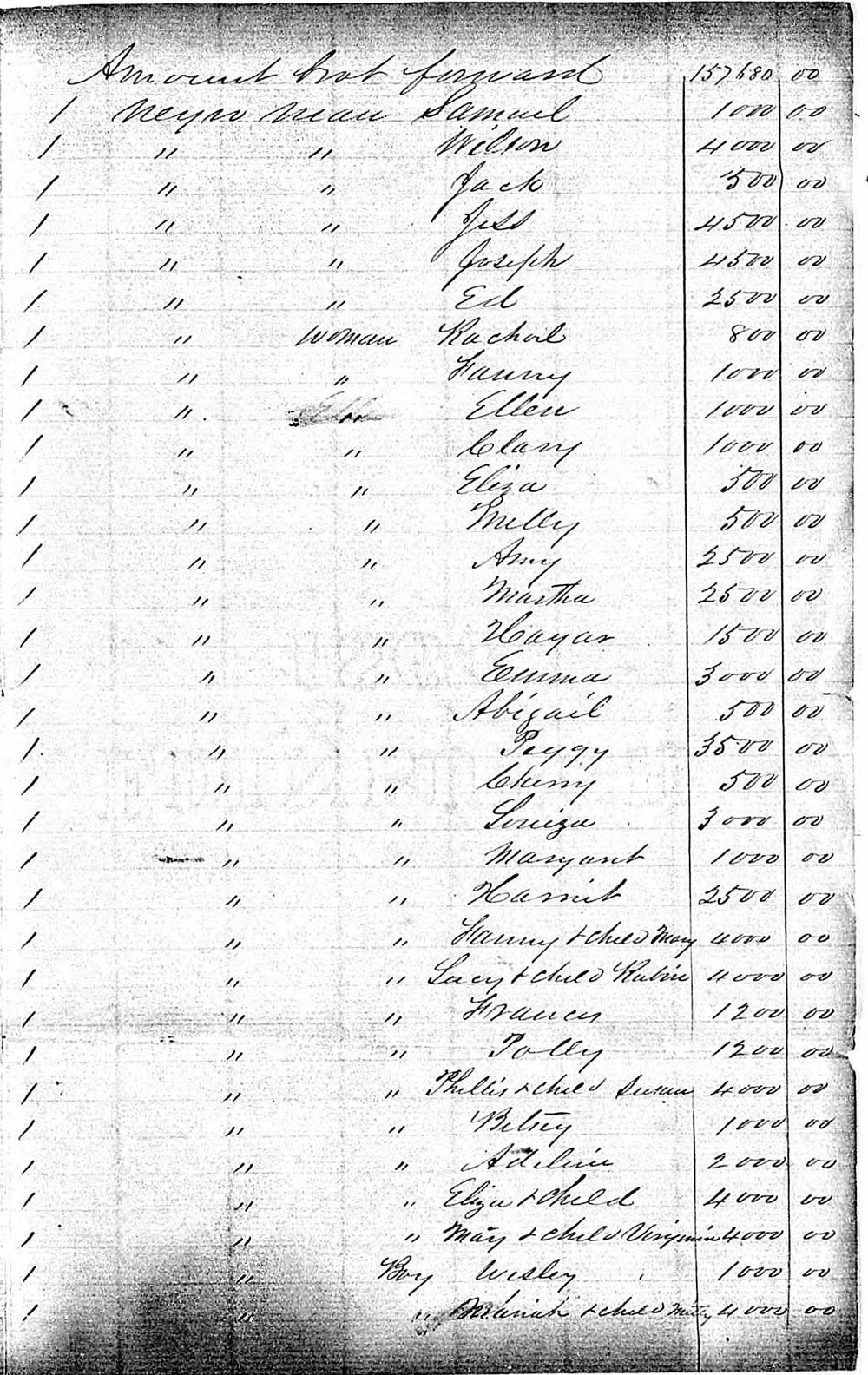
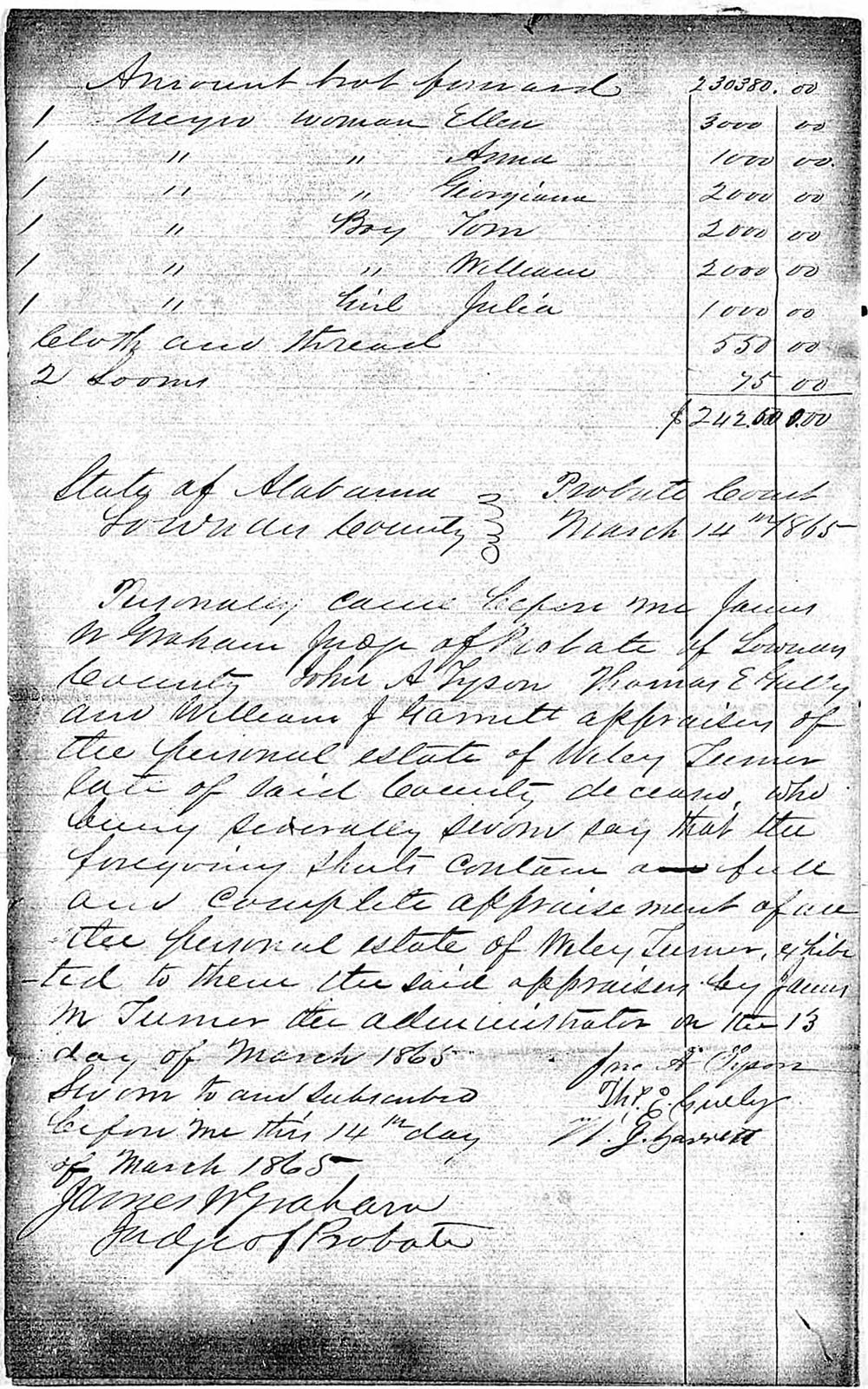
This was the fourth and final inventory of the estate of Wiley Turner, deceased, formerly of Lowndes County Alabama. In the spring of 1865 the people enslaved in Alabama were emancipated by the presence of the Federal Army. This list was made in March of 1865. Emancipation followed shortly thereafter. Columns are Name, Age (approximate and if known) and Value. Number 27. Joseph, was my great great grandfather. He was my maternal grandmother Fannie Turner Graham’s grandfather.
Fed 36 $3,500
Nat 4,500
Andrew 32 4,500
Tony 37 3,500
Nelson 27 4,500
Cary 25 3,500
Lloyd 29 4,000
Freeman 18 4,500
Long George 31 4,000
Jim 31 4,000
Henry 30 4,500
Harrison 18 4,500
George 25 4,000
Lewis 30 2,500
Bill Tyus 44 4,000
Frank 18 3,500
Bill Campbell 33 3,500
Prince 17 3,500
Isaac 22 3,000
Jessie 33 1,500
Aolbut 13 3,000
Adam 34 1,000
Samuel 47 1,000
Wilson 40 4,000
Jack 500
Jess 33 4,500
Joseph 27 4,500 (My 2X great grandfather)
Ed 15 2,500
Rachal 72 800
Fanny 33 1,000
Ellen 37 1,000
Clary 25 1,000
Eliza 49 500
Milly 67 500
Amy 41 2,500
Martha 37 2,500
Hagar 35 1,500
Emma 15 3,000
Abigail 45 500
Peggy 15 3,500
Cherry 48 500
Louiza 17 3,000
Margaret 25 1,000
Harrit 17 2,500
Fanny(35) & child Mary 4,000
Lucy(24) & child Rubie 4,000
Frances 1,200
Polly 1,200
Phillis (23) & child Susan 4,000
Betsy 1,000
Adeline 2,000
Eliza(29) & child 4,000
May & child Virginia 4,000
Wesley 8 1,000
Mariah & child Minty 4,000
Ellen 3,000
Anna 1,000
Georgiana 8 2,000
Tom 2,000
William 25 2,000
Julia 15 1,000
State of Alabama} Lowndes County} Probate Court March 14th 1865
Personally came before me James W. Graham Judge of Probate of Lowndes County John A. Tyson, Thomas E Gully and William J Garrett appraisers of the personal estate of Wiley Turner late of said County – deceased, who being severally sworn that the foregoing sheets contain a full and complete appraisementof all the personal estate of Wiley Turner, exhibited to them the said appraisement by James W Turner the administrator on the 13 day of March 1865.
Sworn to and subscribed before me this 14th day of March 1865 James W Graham Judge of Probate
John A Tyson Thomas E Gully W.J. Garrett
______________________________________
Related Links:
Joe Turner in the 1852 Estate File of Wiley Turner – The first list which was made in 1853 when all of the property of Wiley Turner was valued. It includes names, ages and valuations for all the enslaved before any divisions were made. My 2 X great grandfather, Joe was about 15 when this list was made.
Measuring Worth – An article about valuation of the enslaved. It includes several charts about valuation of enslaved people, at various ages and in various years, showing that (as I saw in these lists) values soared from 1852 to 1861.