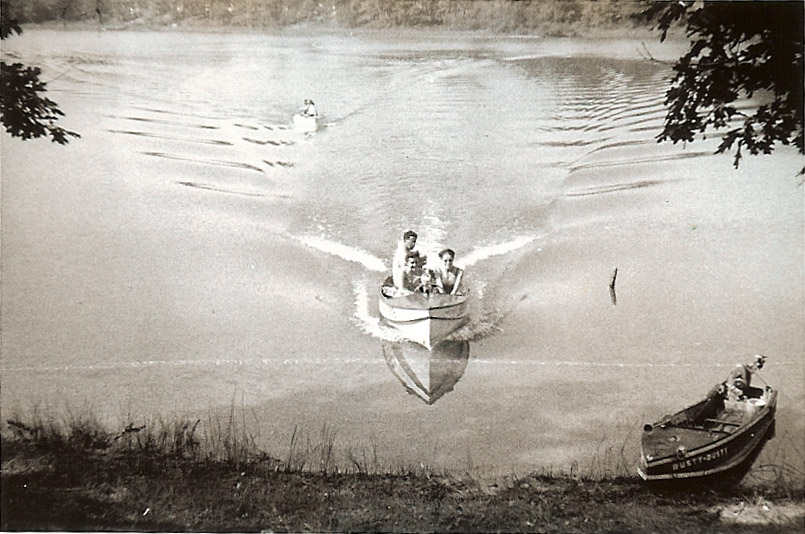
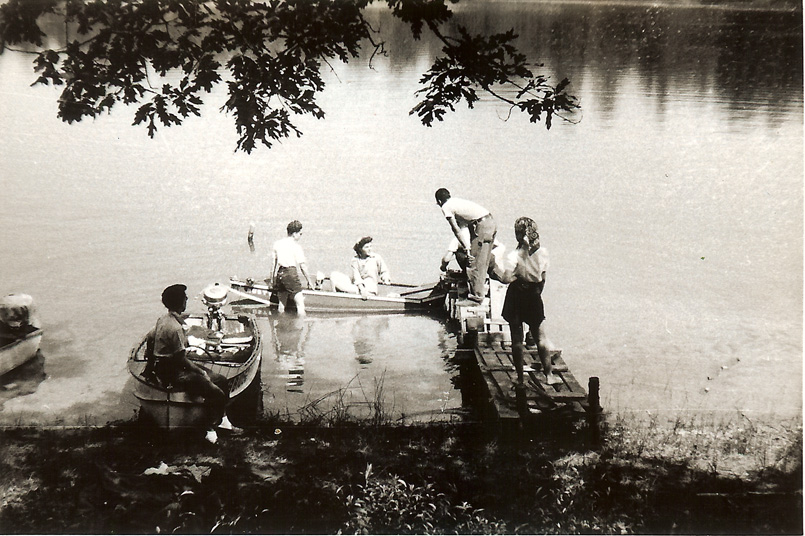
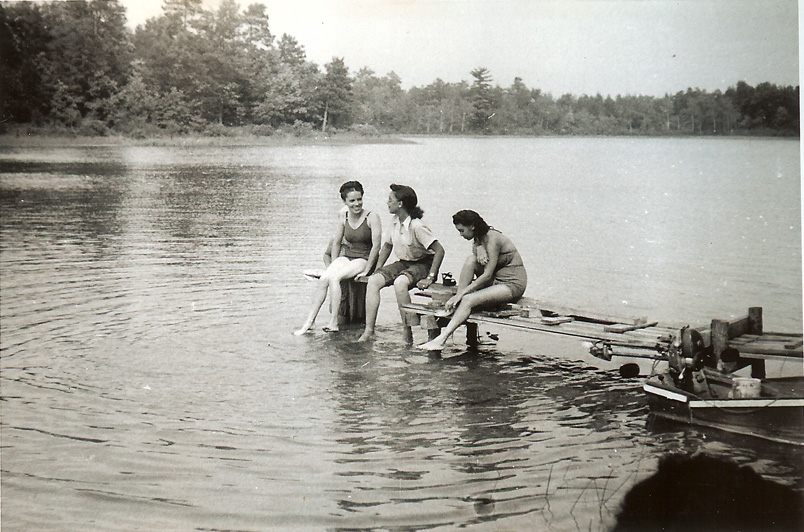
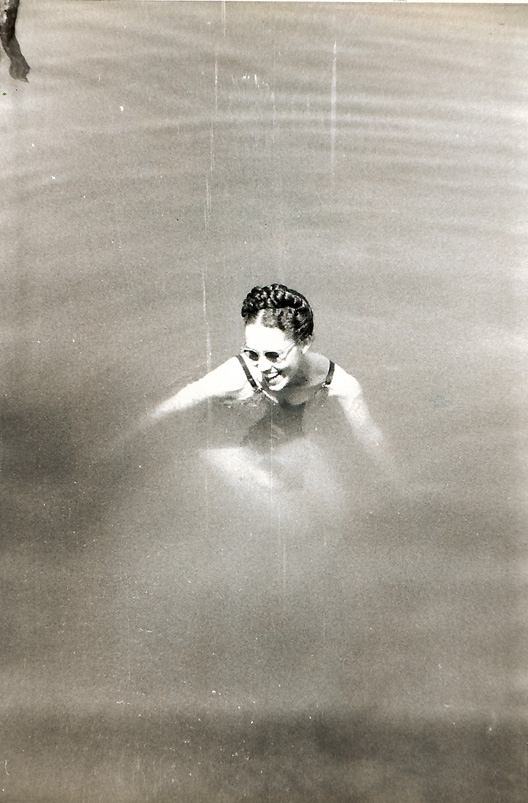
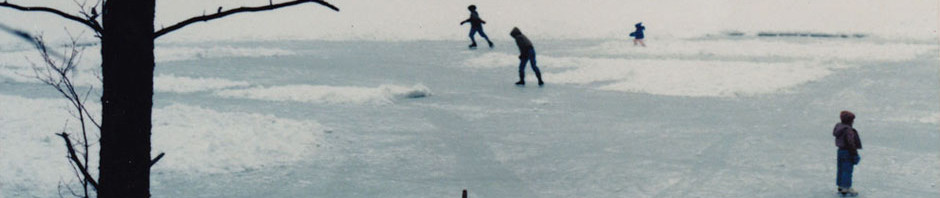
Back in the day, my uncles Hugh and Louis Cleage used to go up to Idlewild and ski. Sometimes my boy cousins got to go with them, but never any of the girls. It was a male bonding time, I guess. Anyway, we never did learn to ski, my sister and I, while the boy cousins became quite good at it. They sometimes went to Caberfae, a skiing resort very close to Idlewild. You can read about the history of Caberfae, with photographs, here Caberfae Peaks: 75 Years of Michigan Skiing.
My kids went cross country skiing there a few time. I wonder if I have any photos. Don’t seem to.
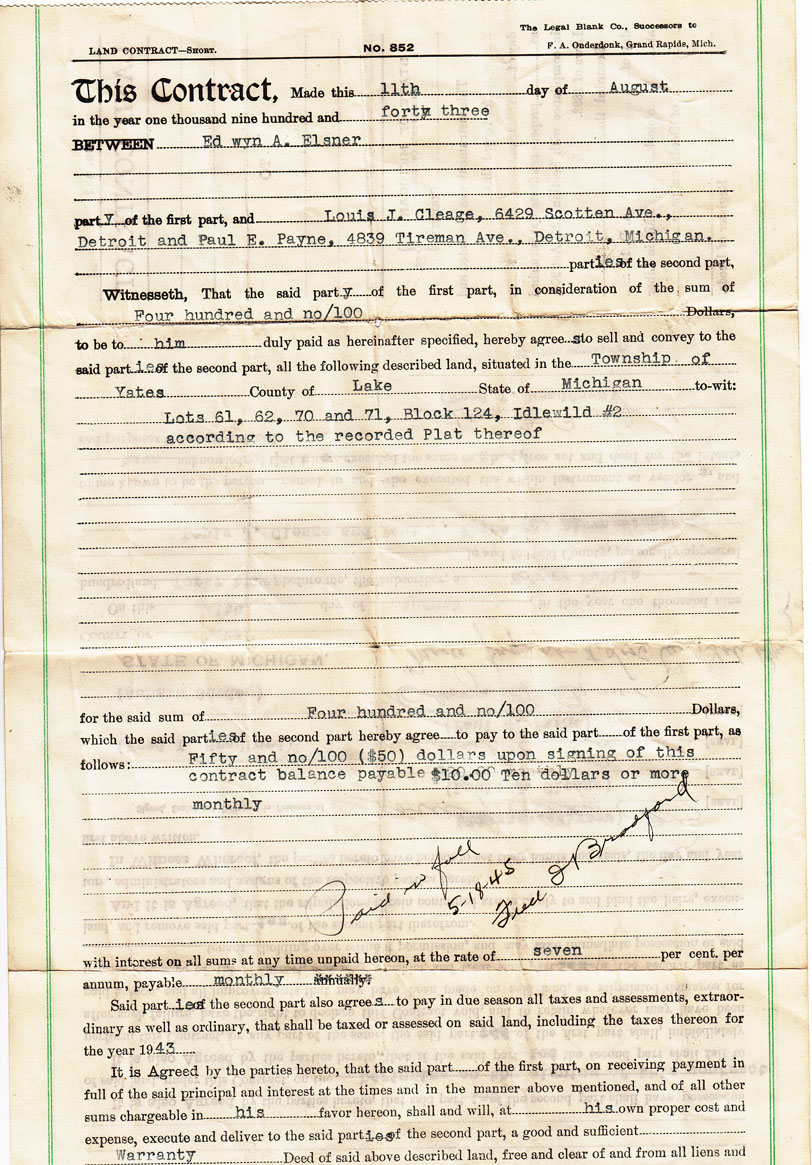
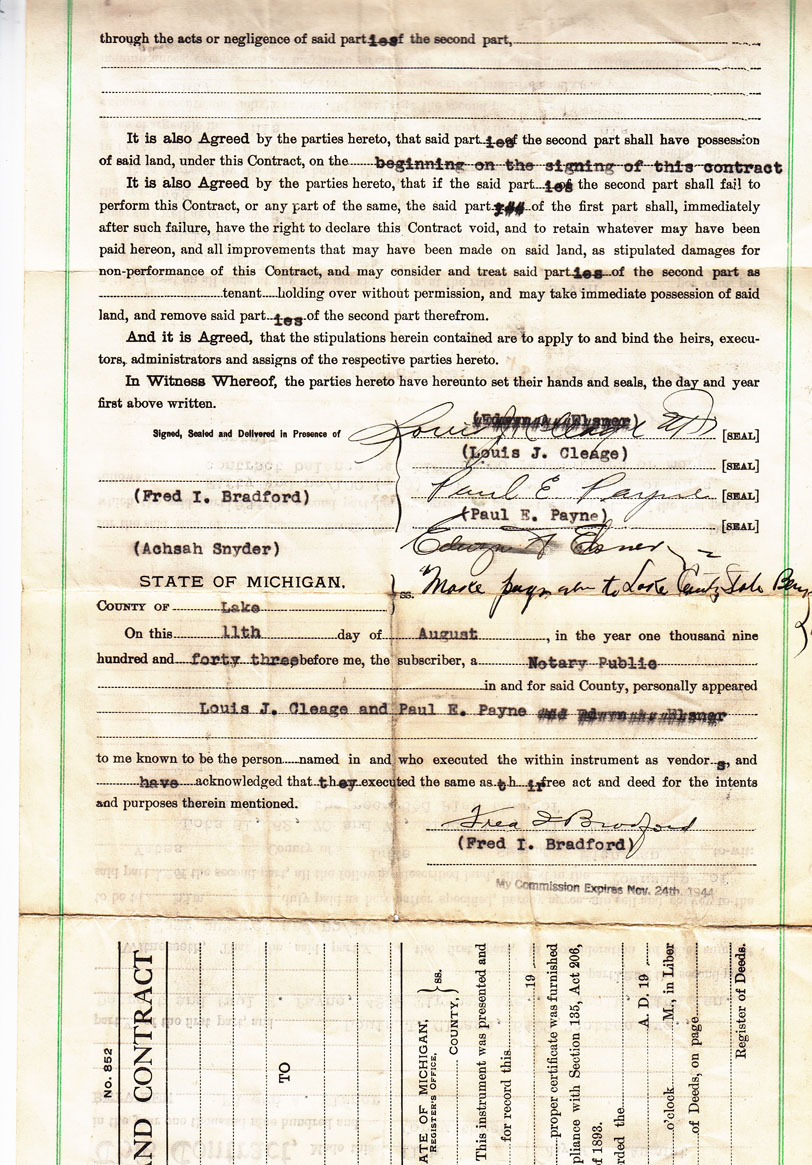
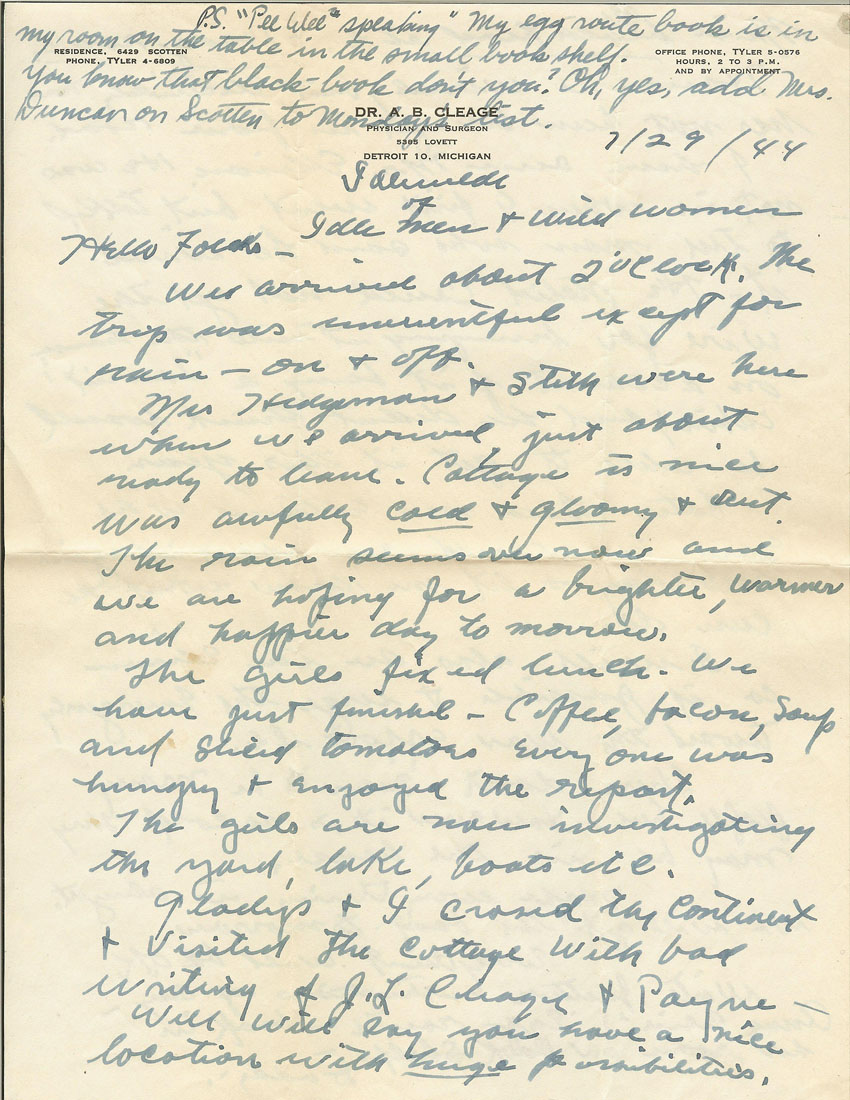
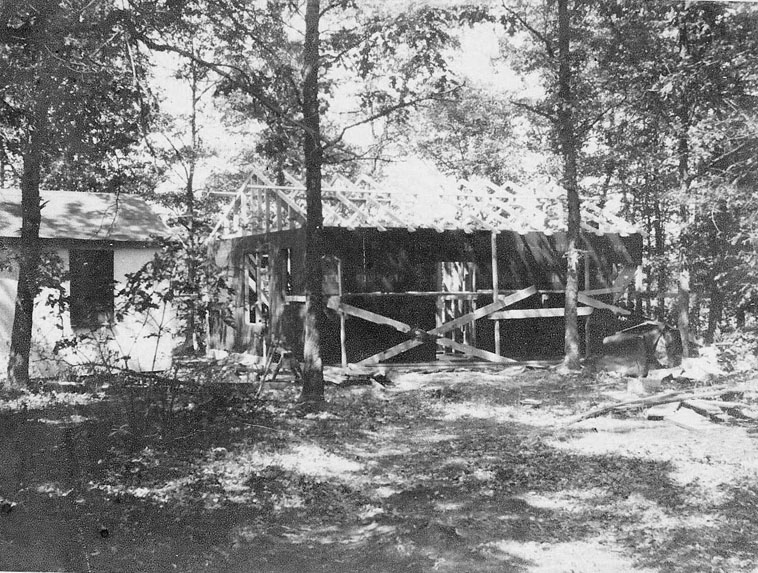
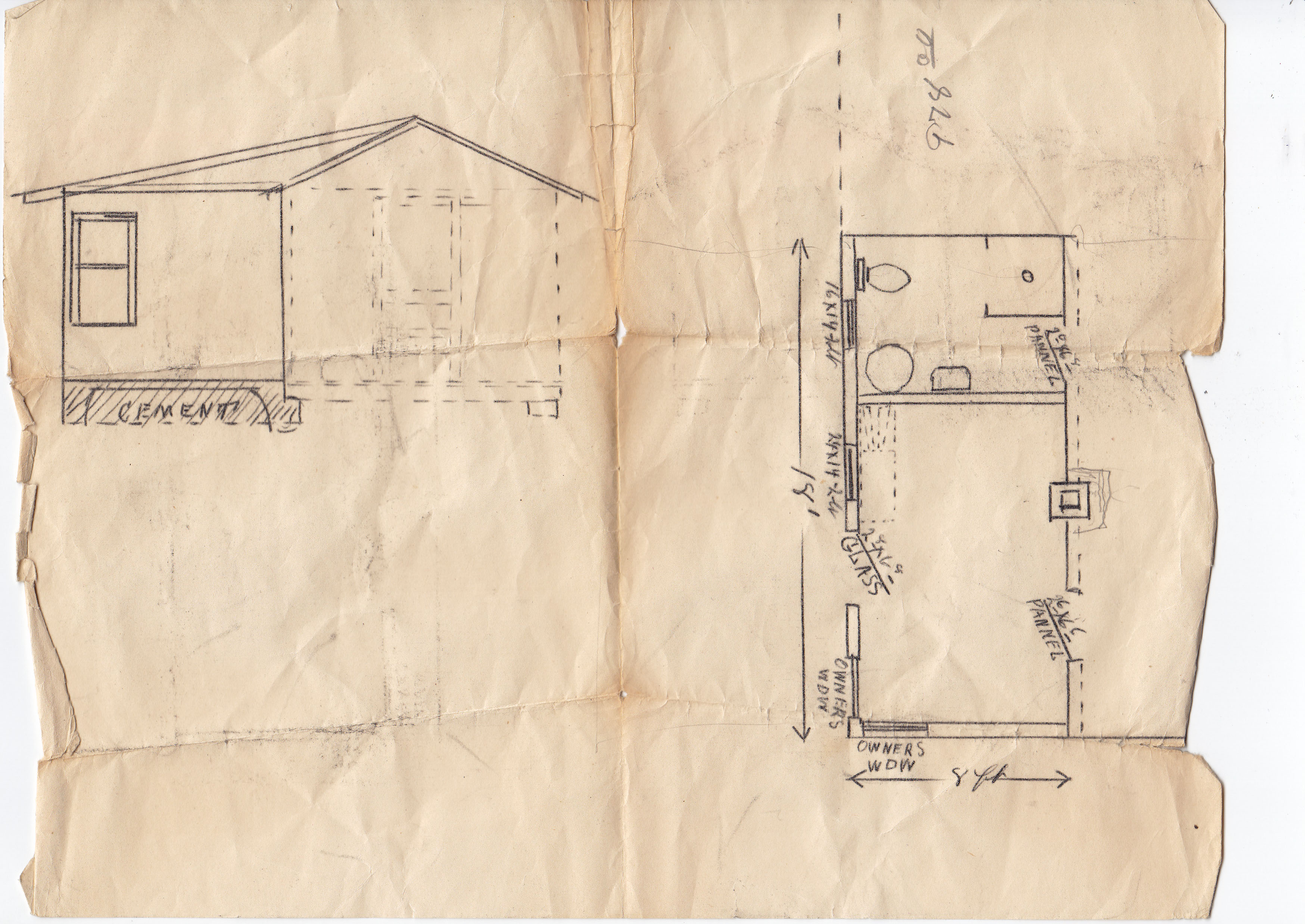
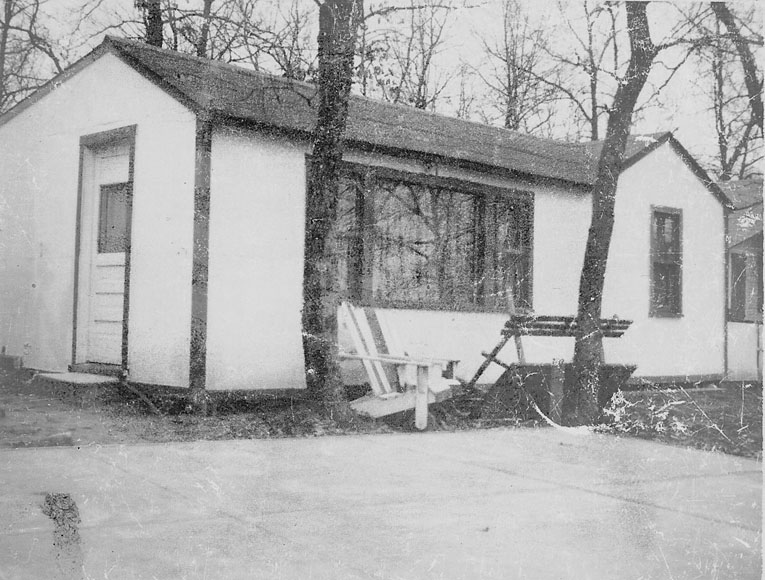
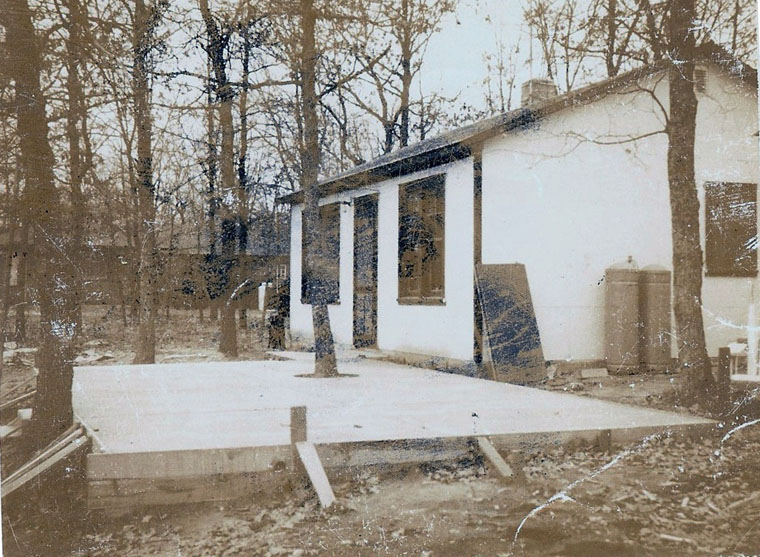
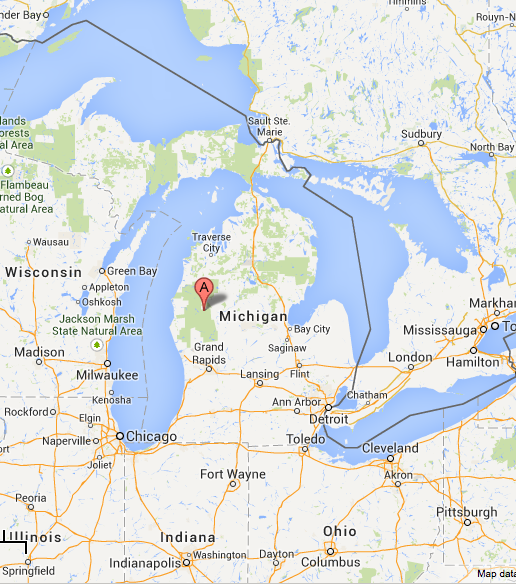
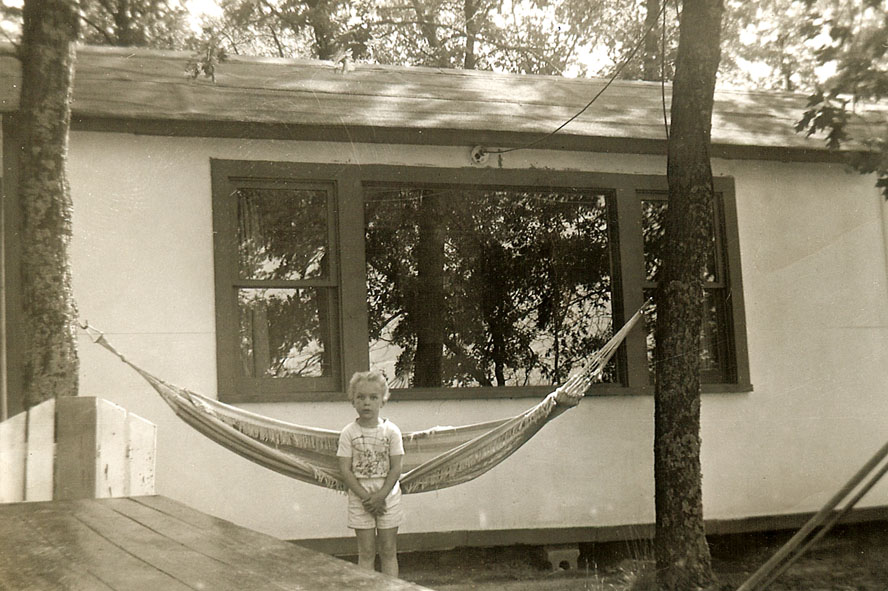
In 1943 my Uncle Louis Cleage and family friend, Paul Payne bought some lots in Idlewild, Michigan. Idlewild is a black resort located in the Manistee National Forest in Lake County. It’s 5 hours north of Chicago and 4 hours northwest of Detroit. Lake Michigan is half an hour away at Ludington. I’ve posted some photographs, documents and letters showing the progress of the original cottages. They did much of the work themselves. If you find the letter my grandfather wrote back to Detroit hard to read, scroll down to the transcription below.
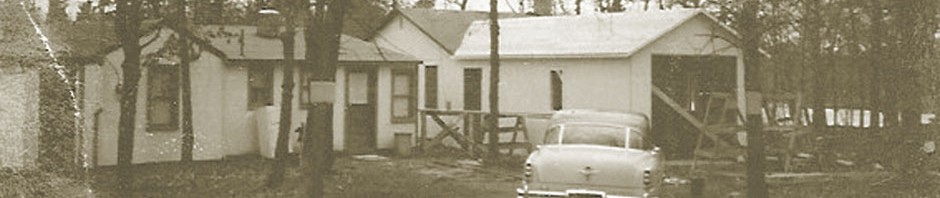
Original cottage under construction.
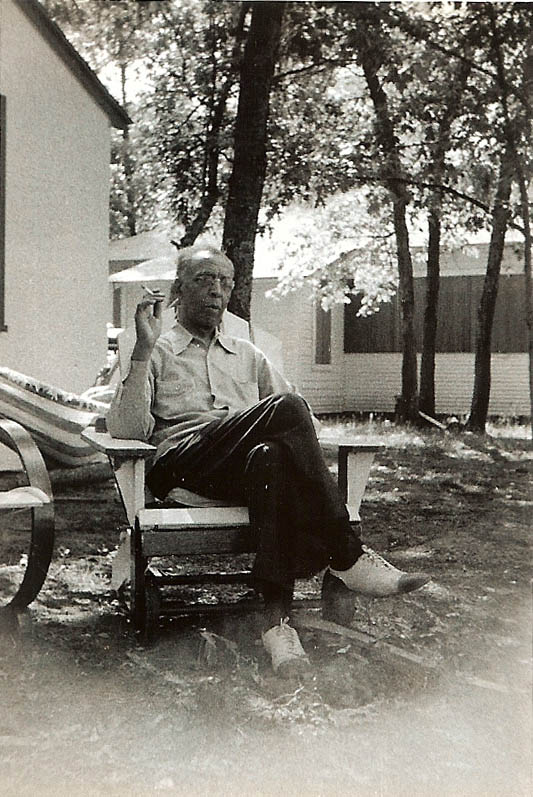
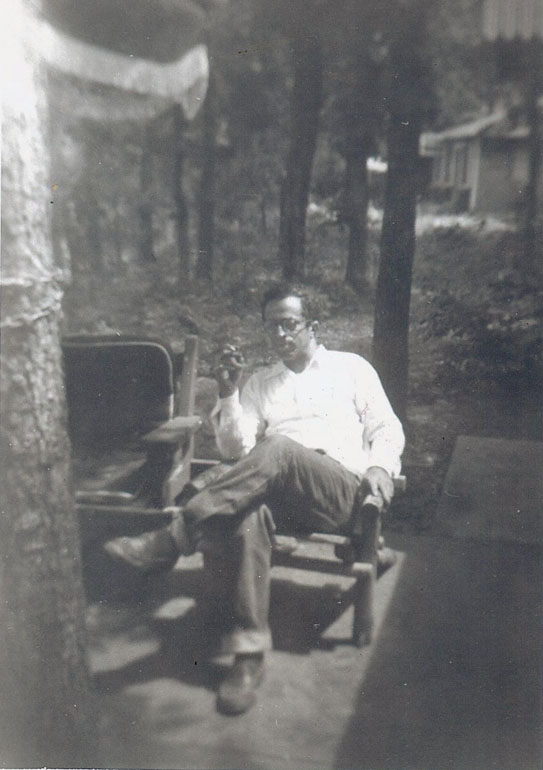
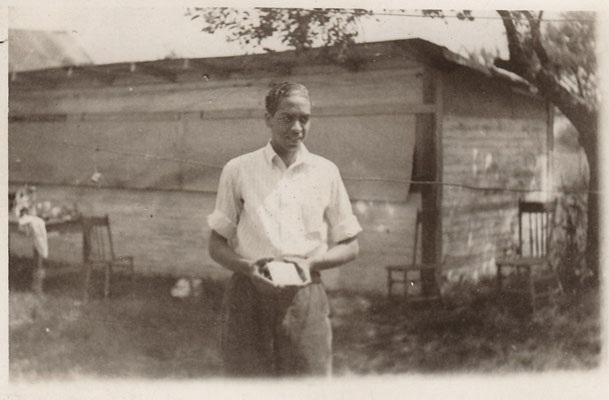
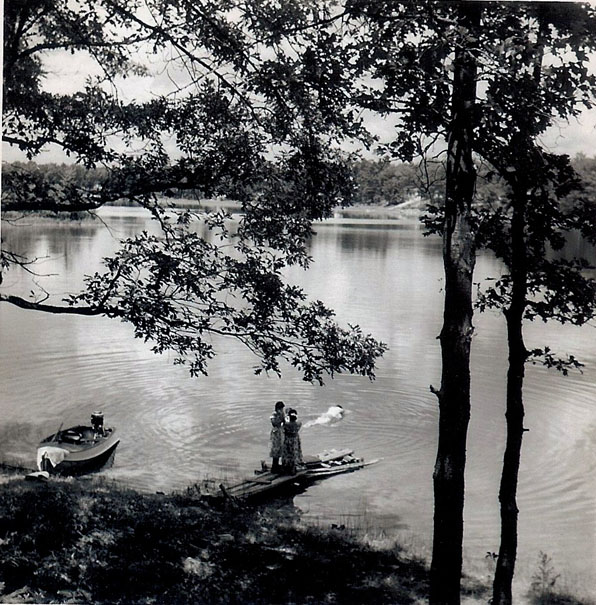
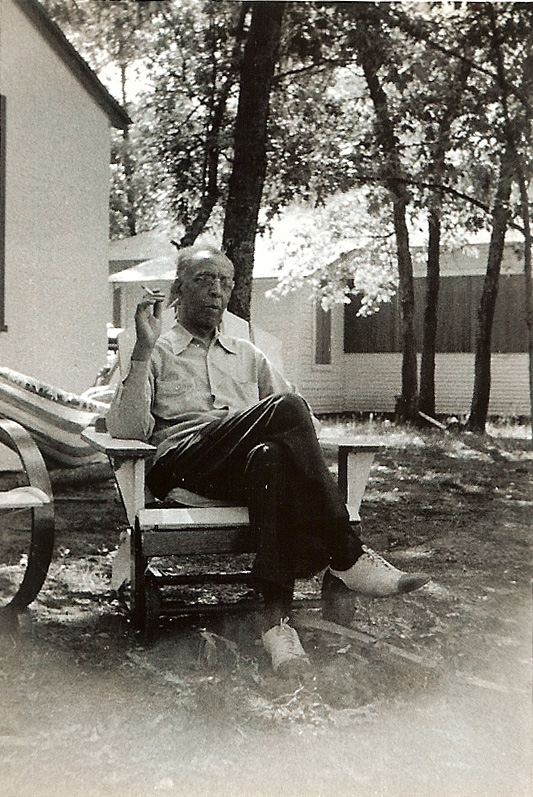
Dr. Albert B. Cleage, my grandfather.Louis Cleage on the patio.Paul Payne in Idlewild.On the dock looking at Lake Idlewild.
During WW 2, two of my uncle’s were conscientious objectors and farmed near Avoka, MI. They had milk cows and chickens, among other things. Their younger sister sold the eggs in Detroit around the neighborhood. While she was up in Idlewild, she needed someone at home – her mother – to handle the egg route. Like a paper route, but with eggs. Read more here.
P.S. “Pee Wee” speaking. My egg route book is in my room on the table in the small bookshelf. You know that black book, don’t you? Oh, yes, add Mrs. Duncan on Scotten to Monday’s list.
7/29/1944 Idlewild of Idle men and wild women.
Dear Folks –
We arrived about 2 o’clock. The trip was uneventful except for rain – on and off. Mrs. Hedgeman and Stith were here when we arrive just about ready to leave. Cottage is nice, was awfully cold and gloomy out. The rain seems over now and we are hoping for a brighter, warmer and happier day tomorrow.
The girls are now investigating the yard, lake, boats, etc. Gladys and I crossed the continent and visited the cottage with bad writing of J.L. Cleage and Payne – well, will say you have a nice location with huge possibilities. Nice beachhead etc, and hedgerows.
House is wired, but electricity has not been brought in from road. I have seen Mr. Ellison. He was not in when I first went but talked to the man who was and he wired it. He stated could not get the wire for bringing it into the house on account of it being a “tourist” cabin; and he didn’t think would be able to get it this year.
Later saw Mr. Ellison who said he would see about it again Monday and let me know what he can do. I will also see the Edison Co. if possible and urge the emergency toward the war effort etc.
There don’t seem to be many people here. However it is so cold they maybe in the house. Hope everything is alright. We will get the boat tomorrow. Everything will be ok. Write further instructions, if any – Anna Celia’s egg route book in her room on bookshelf –
Daddy
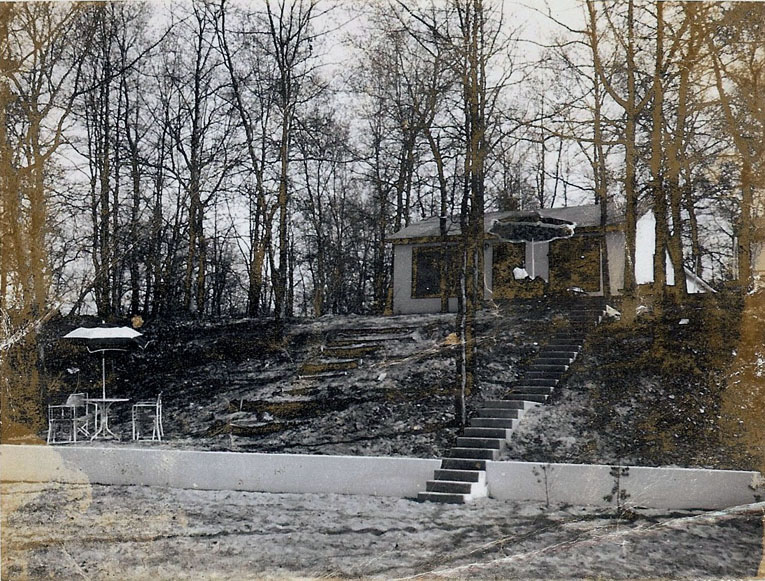
Starting work on the new cottage.Sketch on envelopeThe original cottage.The forms with the new patio. New cottage.Old stairs on the left. They were made of logs set in the sand. The new steps you can see on the right, all cement and even and smooth.
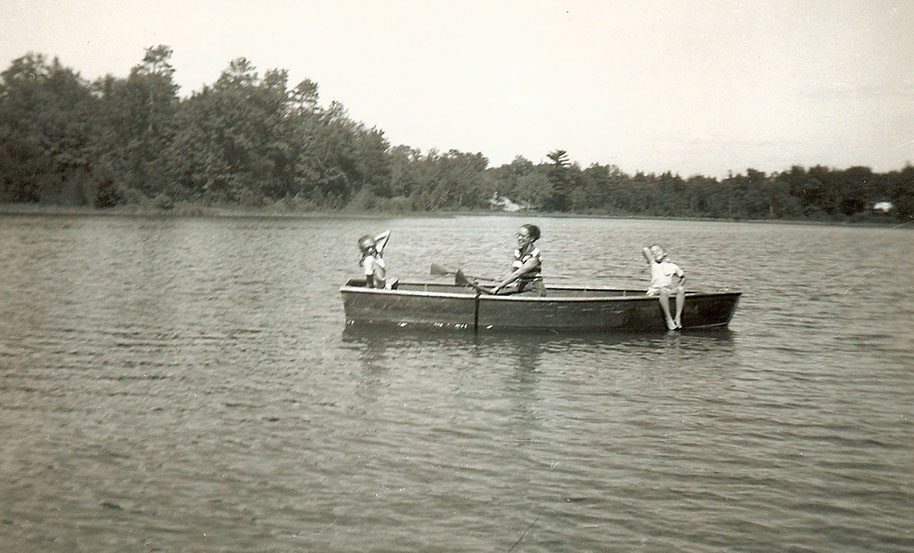
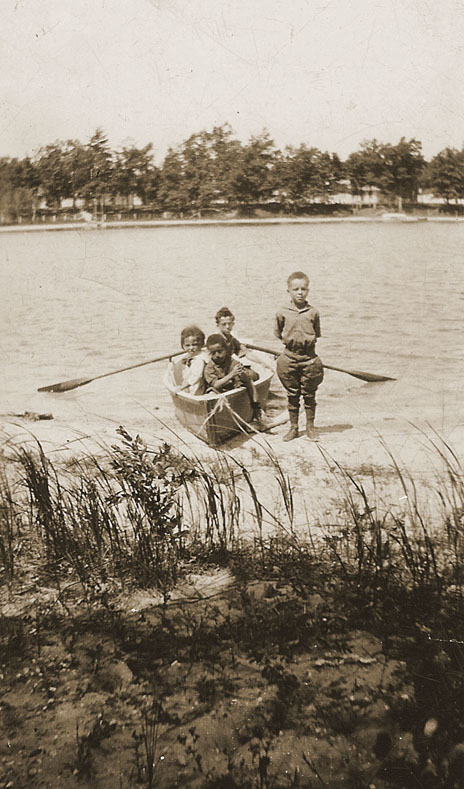
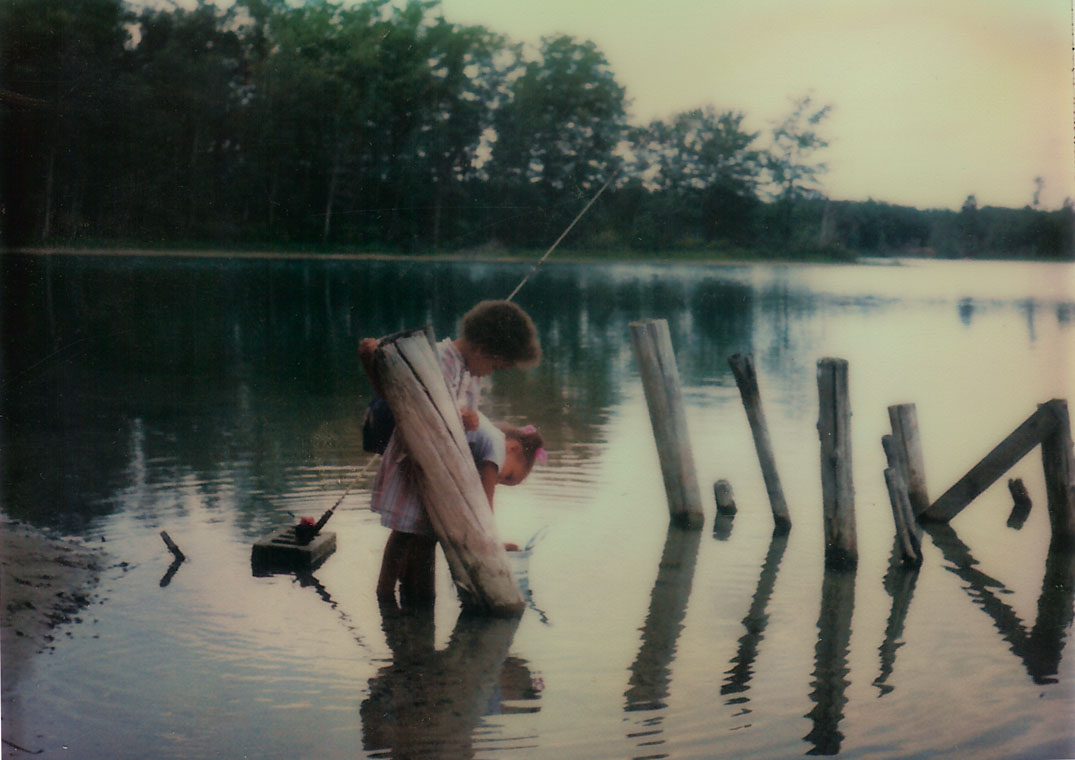
Kris, Doris and Pearl. Lake Idlewild, Michigan. 1956.
The summer of 1956, my mother would sometimes row over to the “island”, which was downtown Idlewild, not a real island, although you did have to go over a bridge or a drainage pipe to get there. At that time, Idlewild was booming, a place for black people to go in segregated America and forget about all that for awhile. Big name acts preformed at the Flamingo Club and there was a skating rink in the club house. But when we rowed over in the morning, we were going to get the paper or milk or something else mundane.
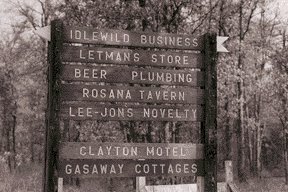
Sometimes my sister Pearl and I would take our savings and shop at Lee-Jon’s or at Ma Riddle’s Log Cabin. At Lee-John’s we bought tiny bears with movable limbs, about 3 inches tall. At Ma Riddle’s, we mainly looked while she tried to sell us salt and pepper
Idlewild is located at the red A
shakers that looked like picnic tables. Her store was a real log cabin. I don’t remember going inside because it was so small that the front was a shutter she raised and lowered and you looked at the merchandise right there.
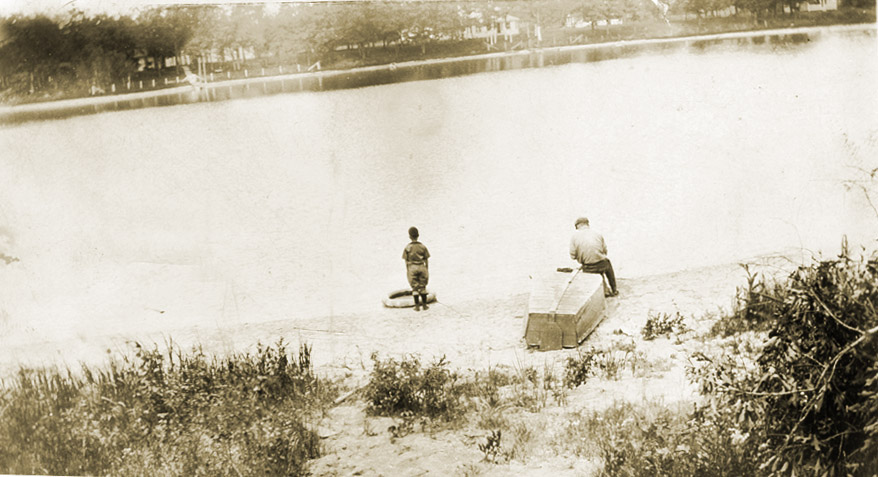
I wonder why we weren’t wearing life jackets in the photo above. We certainly couldn’t swim at the time. There were life jackets because I remember playing in the water and wearing them. The lake was 4 miles around and there were spots, my Uncle Henry used to say, where the bottom had never been found.
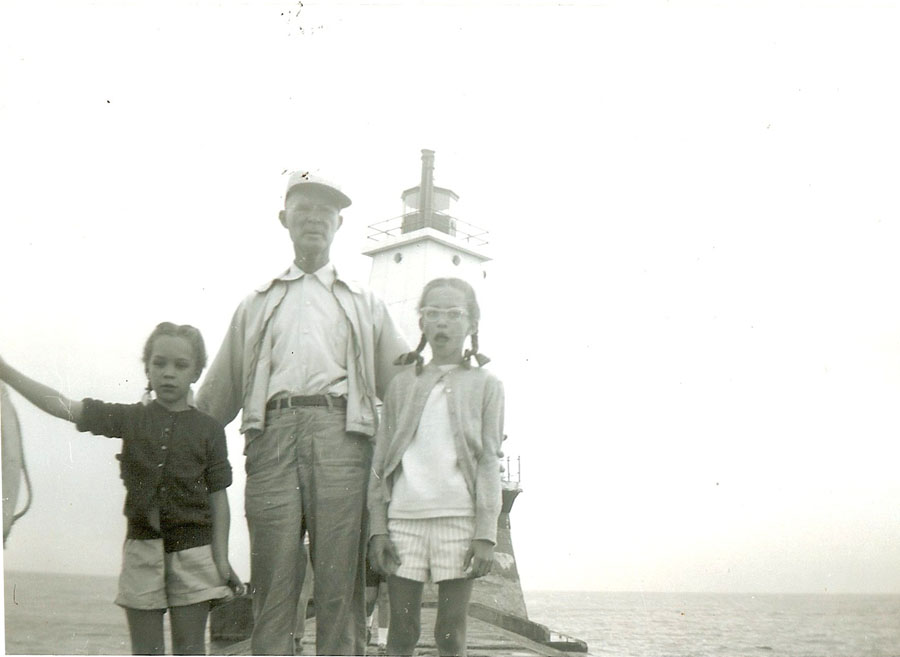
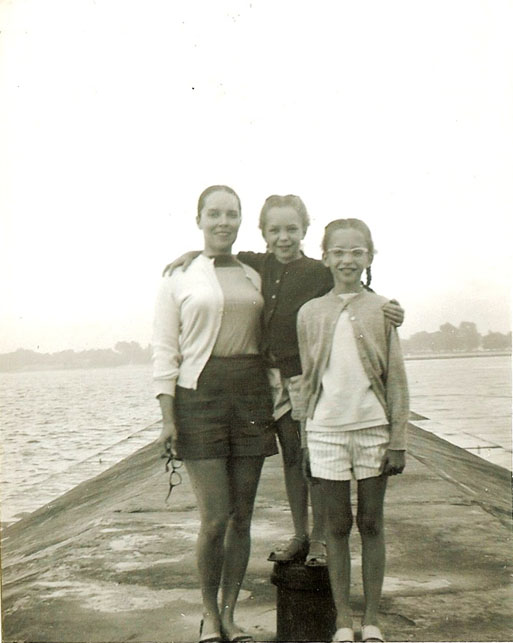
My grandfather, mother, sister and I were spending several weeks at my Uncle Louis Cleage’s cottage in Idlewild. We made a day trip to Ludington, on Lake Michigan, about 30 miles from Idlewild. We had walked out to the light house, which was no longer in use. 1956 was the year I wore glasses.
Pearl, Poppy and me. Ludington, Michigan 1956.
My mother, Pearl, me.
In this picture, taken facing land but on the same pier, you can see how the cement walk slopes down toward the lake. There was a flat part down by the water where fish had washed up and they were flopping around trying to get back to the water. My sister Pearl and I climbed down and were throwing the fish back in the water until our grandfather noticed and told us to come up and stop it before we fell in the water. We did it but we were not happy about it.
Poppy rowing on Lake Idlewild.
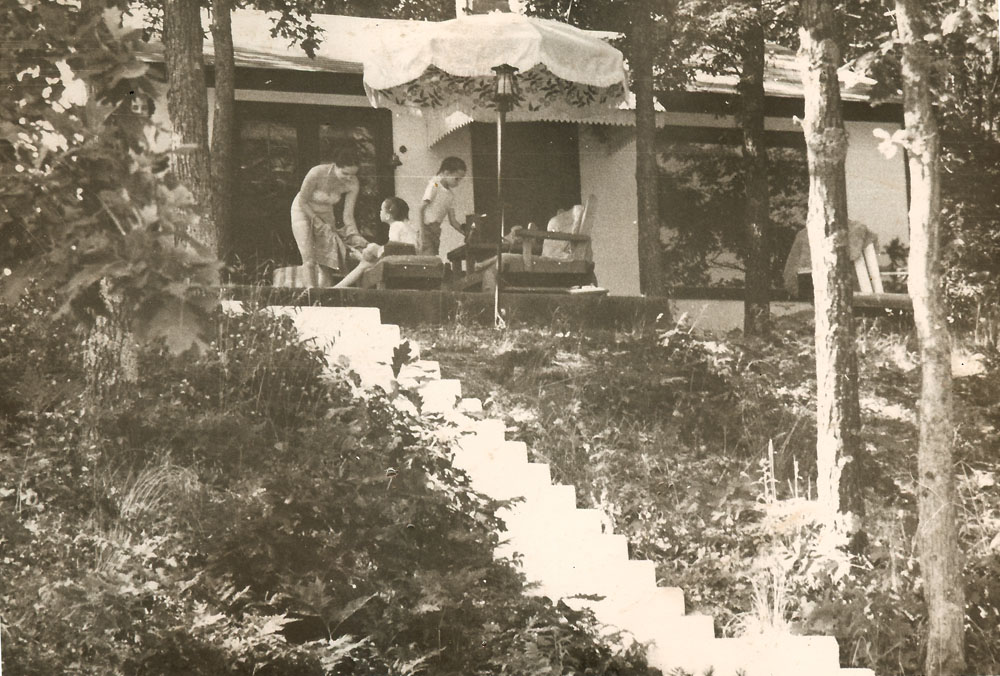
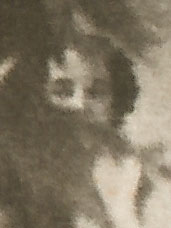
Patio in front of the 2 cottages. My mother, Pearl and me. Notice the face in the trees to the left. It looks like my grandmother in her younger days. Is it really there?
My Aunt Gladys sent word this weekend that my parents did, indeed, spend some time in Michigan before moving on to Springfield. These photographs are in an album and labeled “En Route to Springfield.” Most of them were taken in Idlewild, at my Uncle Louis’ cottage. There were only a couple taken in Detroit, all of my cousin Dee Dee and her mother, Mary Vee in my Graham grandparents yard. My father may have been taking the photographs in Idlewild, because he doesn’t appear in any of them. Henry and Hugh are not in the photos because, I suppose, they were still on the farm.
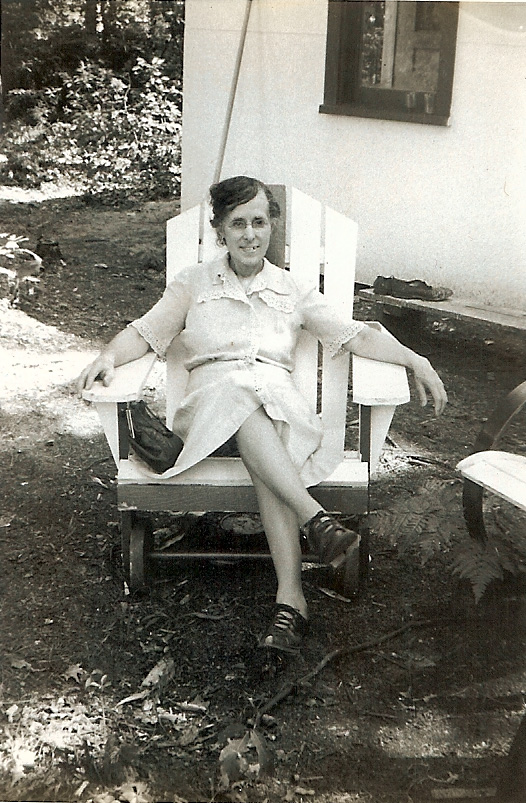
Grandfather Dr. Albert B. Cleage Sr.Grandmother Pearl Reed Cleage
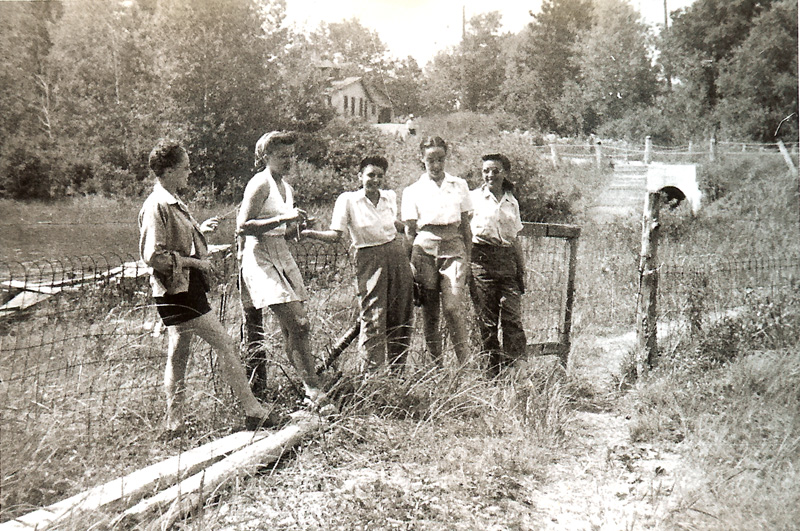
My mother Doris, Aunt Gladys, Lillian Payne (family friend), Aunt Barbara, Aunt Anna
Uncle Louis, Aunt Gladys, my mother Doris in the boat “Sassy Suzy”
Idlewild, Mich. 1945 Anna, Doris, Gladys, Louis, Paul, Barbara
Idlewild, Mich. 1945 Doris, Anna, Lillian Payne. Lillian was Paul and George Payne’s sister.
My mother, Doris
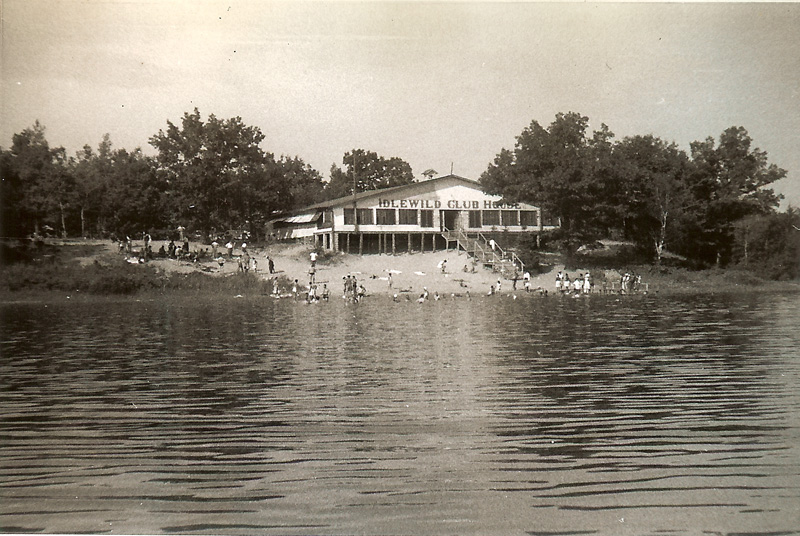
The Idlewild Clubhouse
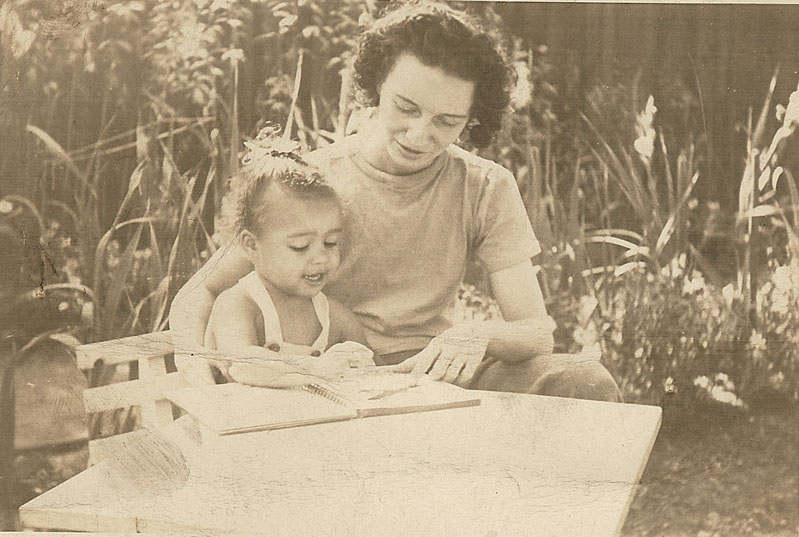
In Detroit my cousin Dee Dee reads to her mother Aunt Mary Vee Elkins
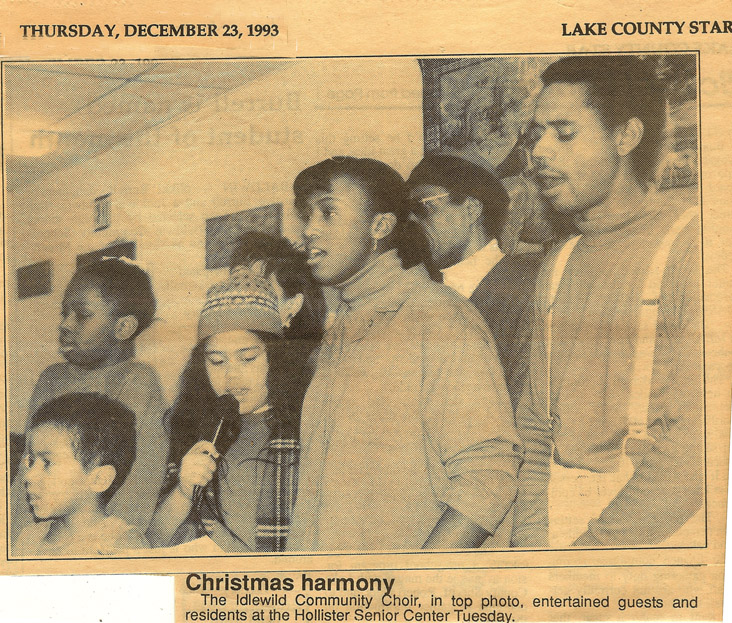
I did not go caroling when I was growing up but most of my children did, sometimes with Church groups and sometimes with community groups. In the photograph above my son Cabral (age 6) was the only one in the family to go caroling. He decided he wanted to and he did.
When I was elementary school age our neighborhood was majority Jewish for several years. We never celebrated the Jewish holidays but we learned about them. I remember singing the dreidel song in school and learning about the menorah.
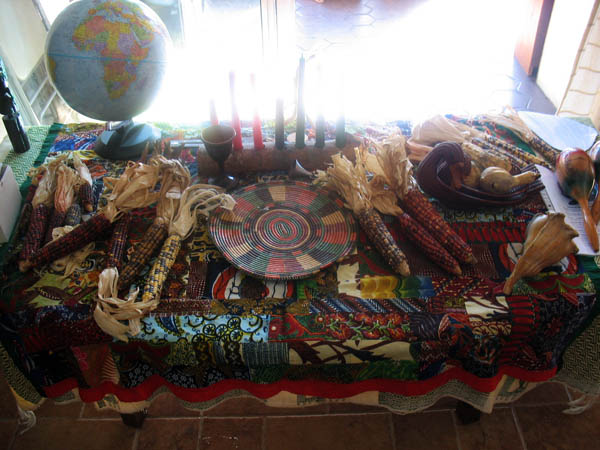
We have celebrated Kwanzaa in various ways over the years. Once again I bring you a reprint from Ruff Draft 1991. We didn’t celebrate it when I was growing up since it didn’t begin until the late 1960’s. Our children grew up celebrating either at home or in community celebrations. At one point we didn’t celebrate Christmas, only Kwanzaa but after the kids started school we gradually added Christmas back into the celebrations.
Kwanzaa
By Ayanna Williams
Kwanzaa is an African American holiday started in the U.S.A. in the 1960s.
This year on the last day of Kwanzaa, which was New Years Day, we had a big to-do and invited Henry over. We dressed up. Tulani and I in sarongs. That is material draped around your body and hung over your shoulder. James and Cabral wore baggy pants and African print shirts. Jilo and Ife, who were home on winter break, wore long skirts. All the girls but Jilo, wore geles (head wraps). Jilo didn’t want to cover her dreadlocks.
When Henry got there we were downstairs in our regular clothes so we ran upstairs and after much losing of skirts and falling off of wraps, we finally went down. As we went Tulani played the drum, James used the shakare, Cabral strummed the ukelele and I had to use two blocks. We chanted “Kwanzaa, First Fruits!” as we came. We giggled a little as we went through the kitchen. Black eye peas, sweet potatoes and rice were simmering on the stove for us to eat directly after the ritual. When we got to the living room, all the lights were off except one. By that light we, in turn, read the seven principles in Swahili and their meanings in English. The introduction was read by Daddy. Nia/Purpose was read by Henry. Umoja/Unity was read by Tulani. Kujichagulia/Self determination was read by Ayanna, Ujima/Collective Work and Responsibility by James. Ujamaa/Cooperative economics by Ife, Kuumba/Creativity by Mommy for Cabral and Imani/Faith by Jilo.
Then we read the meanings explained in plain English that Jilo had written. After we read the principles and lit all seven candles, Jilo read a story she had written about Kwanzaa with all of the principles included. We then ushered everybody into the dining room while chanting the principles and their meanings. Well, that was the plan, but nobody but us kids knew so the adults just sat there and watched us. So we finally just got up and told them to come to the table.
After dinner Henry told tales about when he was a kid and about his uncles and cousins. Some how the conversation went from reminiscing to the state of the world today. He and Jilo had quite a discussion that lasted for hours. At the end Henry went home and we all went to bed.
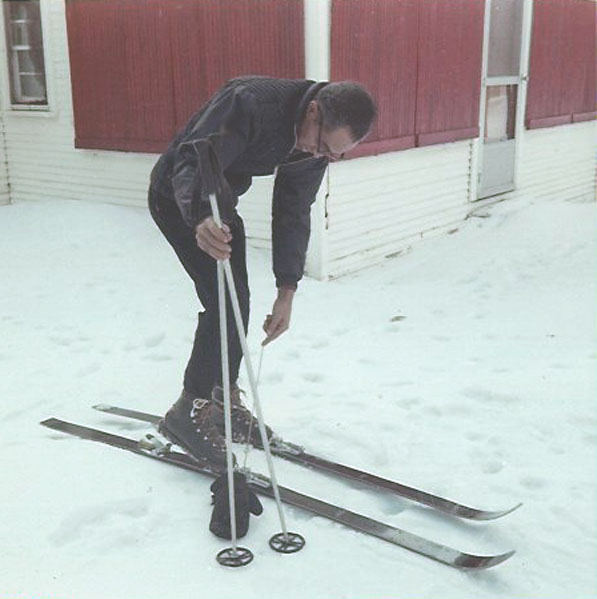 Getting ski’s on next to Louis’ cottage.
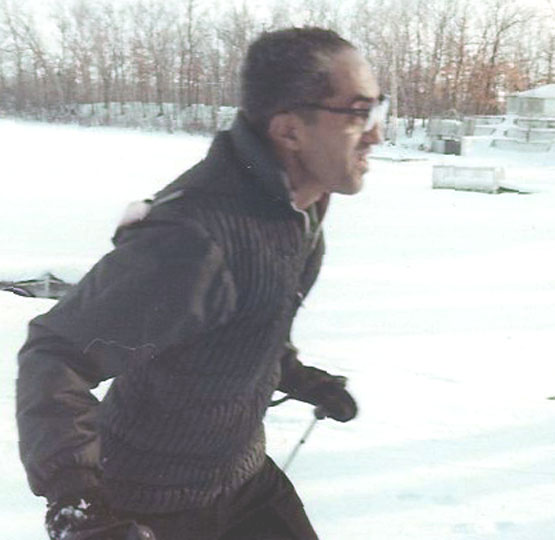 Hugh skiing on Lake Idlewild.