Category Archives: Grahams

Poppy Could Fix Anything

(This post was written for the 100th Edition of the Carnival of Genealogy There’s One In Every Family hosted by Jasia of Creative Gene)

I have never participated in a carnival of genealogy before.  I thought about it but never took the plunge.  After reading Jasia’s contribution about her tinkering father I started thinking about the handy men in my family.  On my father’s side his brother Hugh Cleage was called on when things needed to be fixed.  My husband’s father was famous for building things and taking them apart.  He could build and he could fix, he just didn’t seem to have enough time to finish.  Sometimes he would get ideas for how he could do it better and change up in the middle of a big project multiple times.

"Poppy on Fairfield"
Poppy outside the family flat.

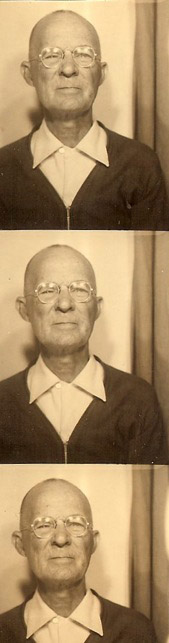
The one I’m going to write about is my mother’s father, Poppy.  I’ve written about him before, about his notebook with projects started and completed.  See that here.  Poppy had a workshop in his basement.  It was in the old coal room.  He had a workbench, a tool chest, and a bin full of small pieces of wood.  He had filled up an old treadle sewing machine with a stone to sharpen knives and tools.  Outside of the workshop in the main basement was a long workbench.  There were short pieces of wood stored underneath.  Against the wall were longer pieces.  The workshop had a special smell of machine oil and wood and basement.

Poppy made furniture sometimes.  Not fine pieces but basic, useful pieces.  A rocking chair that sat in the upstairs hall when my mother was growing up where it was used to rock fussy babies and sick children.  I remember it next his bedroom window where you could sit and rock and look out over the backyard.  He made a small table that sat on the landing for the telephone.  The phone had a long cord so it reached upstairs at night and downstairs during the day.  He built me a wonderful two-sided dollhouse when I was about 8 and described one I had seen at a friend’s house.  I was the envy of my cousin and sister.  I still have it.

During the summer he set up a homemade slide when we came over.  The wood was planed and sanded smooth and then waxed regularly with the ends of candles.  I don’t remember any splinters.  It wasn’t a very long slide and eventually it served more as a support for our tents.

Poppy built flower boxes for his back porch and the back yard as well as for his daughter’s porch.  He could be seen coming up the walk to repair things with his toolbox, like a doctor coming to see a patient.  I remember Saturday afternoon spent at Plymouth Congregational Church while he fixed something; often it was the temperamental furnace.  Both of my grandparent’s sons died as young children so my mother spent a lot of time with her father fixing things.

My grandfather was in his eighties when things in his neighborhood became very dangerous.  It was around 1968.  Someone shot into the house.  A man walked in to the open side door, went upstairs and went through my great, great Aunt Abbie’s things and stole some.  She thought it was odd but didn’t try to stop him.  Luckily he came in and out of the house without running into my grandfather.  Eventually someone came to the door with a gun.  Poppy slammed the door shut and fell to the floor.  After this he and my parents decided to sell their houses and buy a two family flat together.  They bought one out by the University of Detroit.  Poppy set up his basement workshop again.  He and my mother planted corn and green beans and tomatoes in every spare space in the small yard.  Some days he would take a wagon and collect useful or interesting items people had thrown out around the neighborhood.  It was my last year of college and I was ready to leave home.  I wish now I had taken the time to sit and talk to my grandparents.  Maybe they were ready to tell some of those stories I wonder about if I had just asked.

Memorial Day and the Fourth of July 1950’s

"4th of July Nanny and Poppys"

On most Saturdays and all holidays my mother, my sister and I would drive the two blocks down Calvert on Detroit’s west side to pick up my aunt and her three daughters for the ride over to my grandparent’s house on the East side.  We four oldest would sit in the back while the youngest sat up front between the adults.

Poppy, my mother’s father set up a table in the yard for holiday meals.  He made it from boards set up on saw horses.  There were chairs at each end of the table..  On each side of the table were benches made by setting planks on wooden boxes.

A wooden fence ran around three sides of the yard and separated us from the alley.  The block was laid out with two long sides with a lot houses and two short sides with only two houses.  Poppy and Nanny’s house was on a short side.  The alley cut behind the houses and makes an “H”.  If it hadn’t been for the wooden fence, we would have been sitting in the alley, as it was we had complete privacy.  That’s how it seemed to me at the time anyway. Above the fence we could see the backs of the houses and tenements and garages that ran along one long side.

Looking at the photographs the only thing I can make out on the table is the white enamel pitcher which would have held the Hawaiian punch, our picnic drink, which was usually served in red, green and gold metal “glasses’.

After the meal it was time to clean up.  The grownups would do it while we played in the yard.  This was in contrast to real life during the week when we did the clean up and the dishes.  I think this gave them time to talk while they worked and as I now know, doing the dishes is no big deal.

Then we’d have the long drive back home to the west side through all those interesting neighborhoods where I’d imagine what life would be like if I lived … there.  And we’d sing songs and play car games.  I wonder how long it really took.  An hour? We didn’t take the expressway, all through neighborhoods.  No urban renewal yet, or not on our route, and the neighborhoods were always full of people on porches and kids in the street.
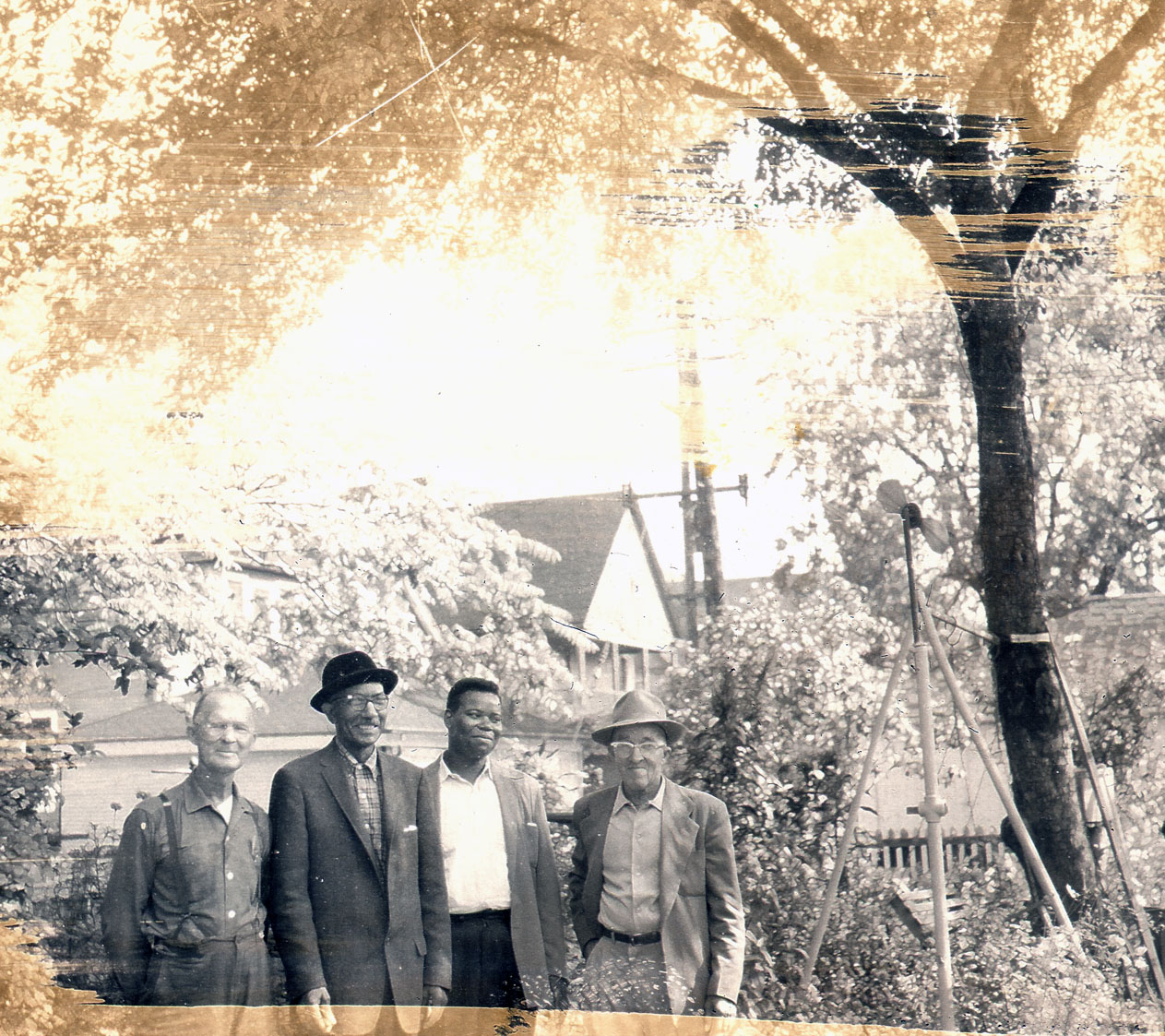
More Visitors in the yard

"Theodore backyard Rance Allen"

Another in the series of photographs taken in my maternal grandparents yard in Detroit.  Shell was my grandfather.  John Wesley was my grandmother’s first cousin who was visiting from Chicago.  This photo was taken the same day as the fourth photo down on the linked page, dated September 21, 1961.  On the back of the photo it says “Our backyard 9-21-1961 (right to left) John Wesley, John Bishops son, Ernest and Shell”

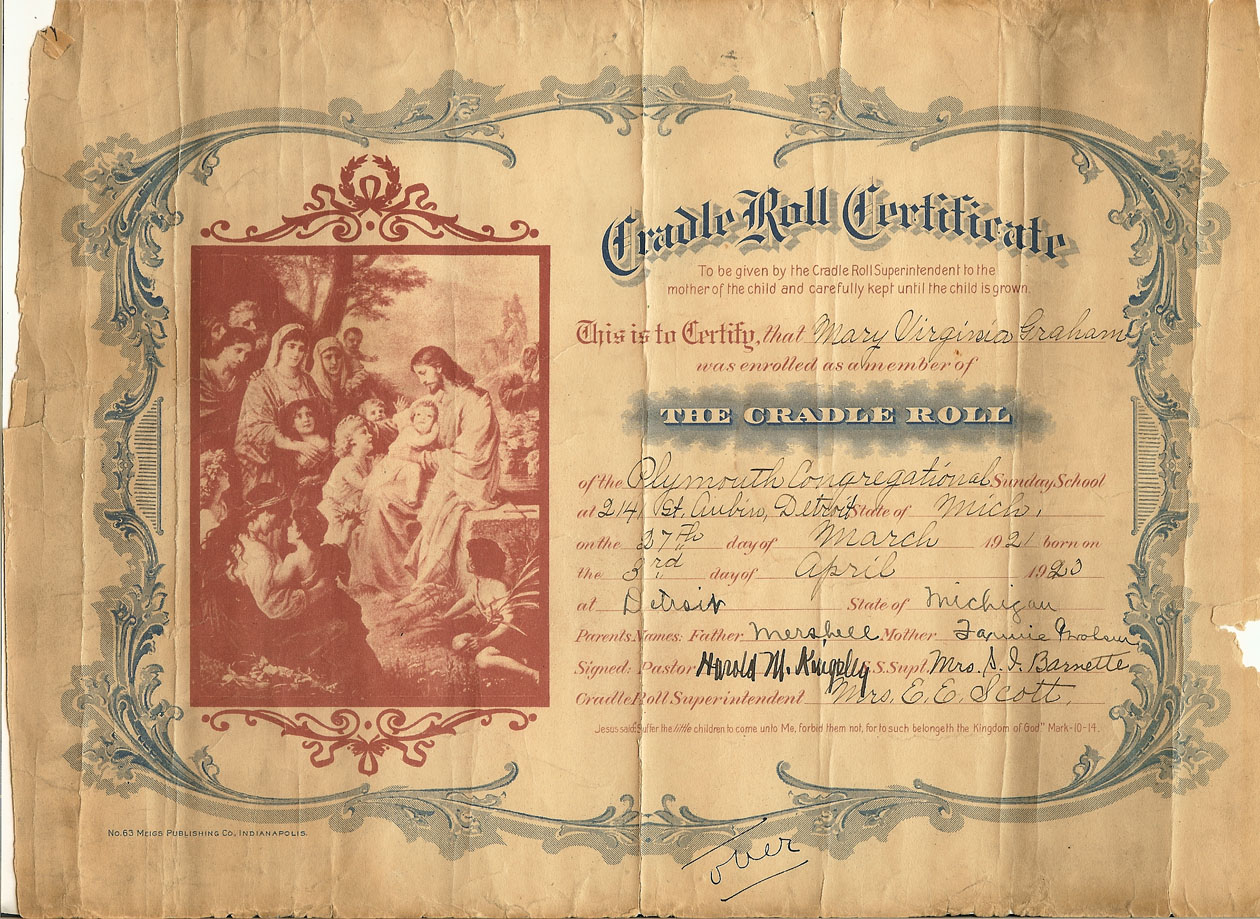
Cradle Roll Certificate Plymouth Congregational Church 1921

This is a certificate for my mother’s oldest sister, Mary V. that her mother filled out.  She also wrote information on the back.

Transcription:
Cradle Roll Certificate
To be given by the Cradle Roll Superintendent to the mother of the child and carefully kept until the child is grown.
This is to certify that Mary Virginia Graham
was enrolled as a member of The Cradle Roll
of the Plymouth Congregational Sunday School
at 2141 St. Aubin, Detroit, State of Mich.
on the 27th day of March 1921 born on
the 3rd day of April 1920 at Detroit State of Michigan.  Parents Names:  Father Mershell – Mother Fannie Graham
Signed Pastor Harold M. Kingsley
S.S. Supt. Mrs. S. I. Barnette
Cradle Roll Superintendent  Mrs. E.E. Scott
Jesus said “Suffer the little children to come unto Me, forbid them not, for to such belongeth the Kingdom of God.”  Mark – 10 – 14.

Reverse:
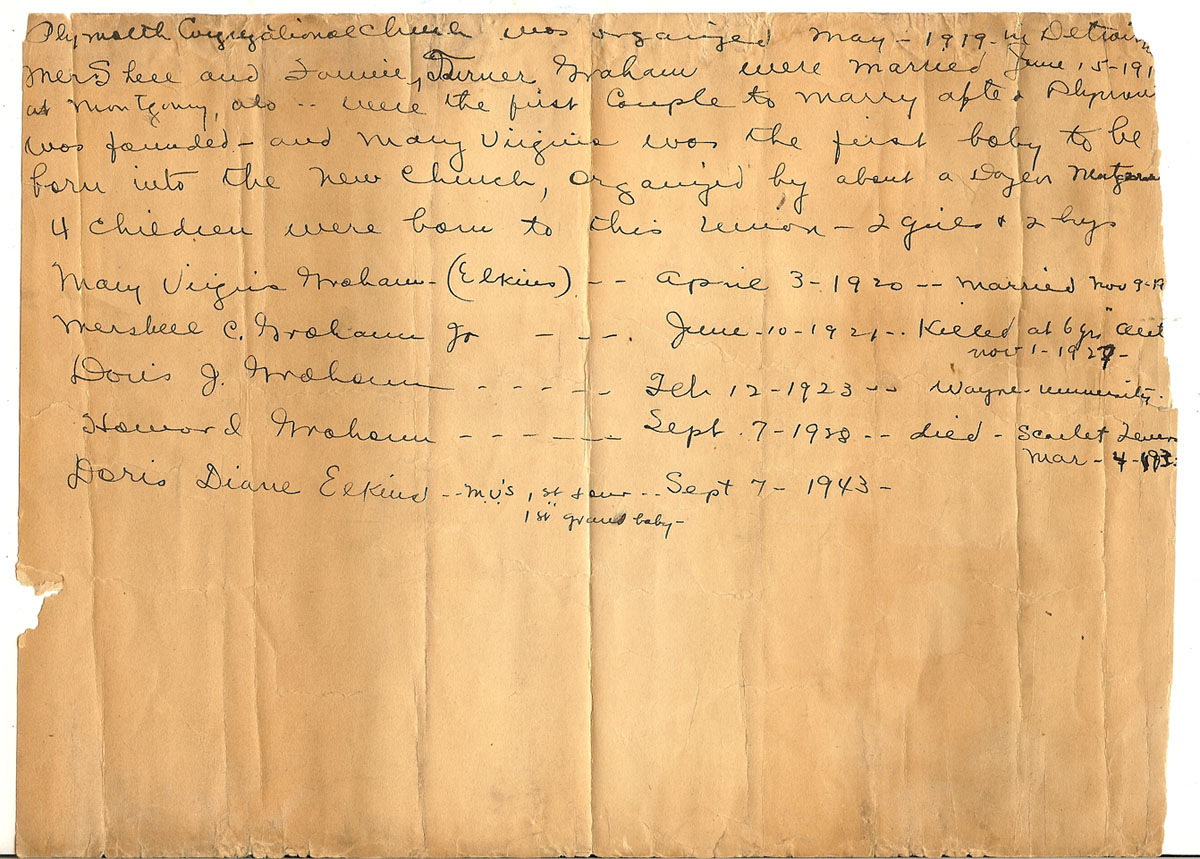
Mershell and Fannie Turner Graham were married June 15 – 191(9) at Montgomery, AL– were the first couple to marry after Plymouth was founded – and Mary Virginia was the first baby to be born into the new church, organized by about a dozen Montgom(ery__)
4 children were born to this union – 2 girls and 2 boys
Mary Virginia Graham – (Elkins) — April 3, 1920 — married Nov 9 19(41)
Mershell C. Graham Jr — June 10 – 1921 — Killed at 6 yrs aut(o)
Doris J. Graham —- Feb. 12 – 1923 — Wayne University
Howard Graham —-Sept. 7 – 1928 –died – scarlet fever Mar – 4 – 193(2)
Doris Diane Elkins – M.V.’s 1st and our 1st grand baby — Sept 7, 1943.

Memories of Chickens

I was reading a post over at Georgia Black Crackers about fried chicken and as I was getting into my third paragraph in the comment section I decided to just write about my chicken memories here.

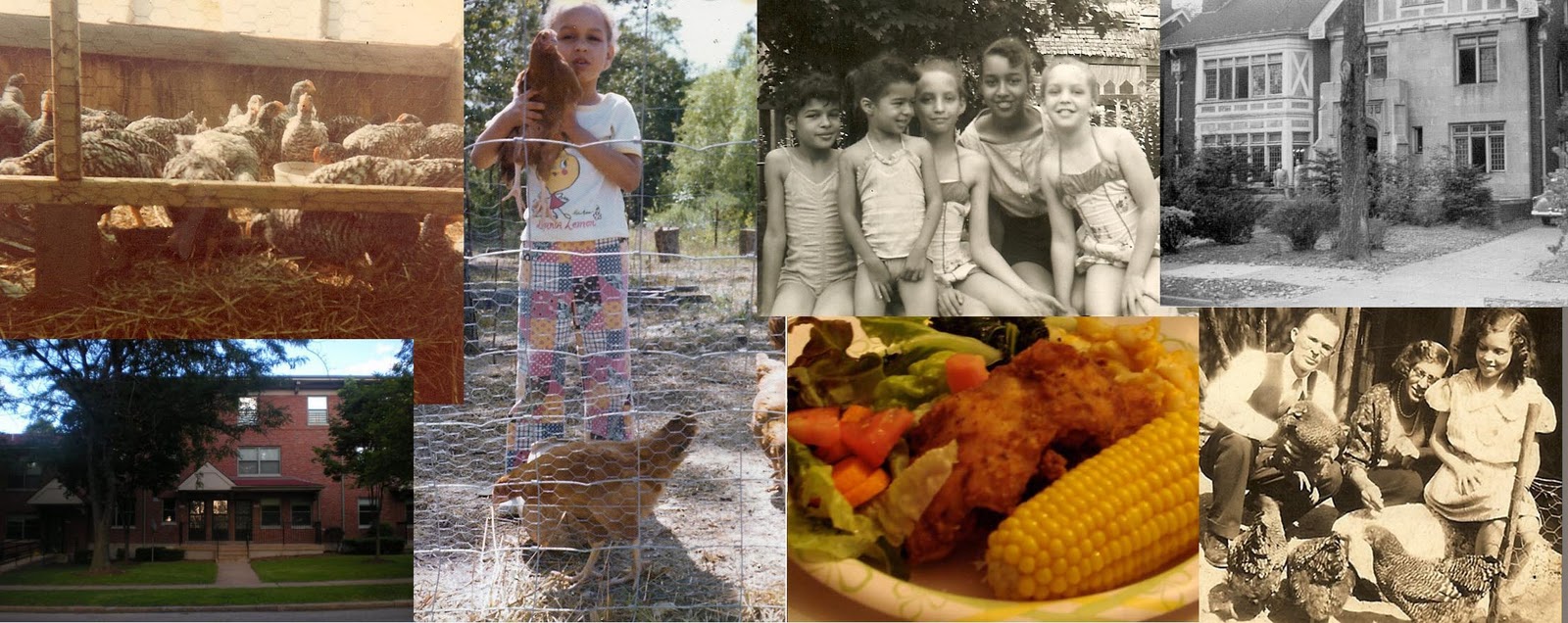
Fried chicken used to be the main part of my favorite meal along with mashed potatoes and green beans.  I grew up in Detroit, without chickens in the yard, but I remember going to the poultry market several times with my maternal grandmother, Nanny.  Crates full of live chickens were piled around the walls.  My grandmother would pick her chicken and they would kill it and dress it there.  When she cooked chicken she always smothered it in gravy.  Perhaps she bought the cheaper old birds that were too tough for frying.  It was delicious.

Every Saturday my mother drove us all across town to my grandparent’s house.  She and her sister would be in the front and the four, eventually five, of us cousins would be in the back.  No seat belts in those days.  We spent many happy hours playing in the backyard where our yard toys were kept in the old chicken house.  Of course it was free of all signs of chickens.  They were gone by the time we were there but I remember the story of the mean rooster that attacked my little uncle Howard and ended up as chicken dinner.  And of chickens running around the yard with no heads after they’d been chopped off.

Nanny was a great cook.  She didn’t know how to cook when she married at age 29, my grandfather taught her.  Where he learned to cook so well I am not sure.  Working in the dining car on the railroad?  I’ll have to ask my cousin and see if she knows.  He always cooked the turkey on Thanksgiving and Christmas.

When my sister and I were very small someone gave us three chicks for Easter.  We lived in a combination parsonage/community house.  It was huge.  We kept the chicks in a box in the basement and thinking back I don’t remember a heat light which may be the reason that, one by one, the chicks died.  I remember my mother throwing their bodies into the basement incinerator.

My Uncle Henry told a story about chickens from the time that he and his brother Hugh were conscientious objectors during the 2nd world war had a farm near Avoka, Michigan where they raised chickens and milked cows.  One day it rained and they hadn’t put the chickens up.  He said they piled up in the yard with their mouths open, just sat there and drowned from the rain running down their throats.

When I was grown living with my husband and children in rural Simpson County, Mississippi keeping goats and chickens, I learned first hand about killing, plucking and cutting up chickens.  From my yard to the table.  I wasn’t really that good at the killing part.  In fact, I only remember one time that I actually killed a chicken.  My husband was a printer working in nearby Jackson, MS.  It was time to fix dinner and there was not much food in the house.  He had the car so no chance for a trip to the store in town.  I decided to kill a chicken.  With the help of my two oldest daughters, who must have been about 9 and 12 at the time, we did it.  Each of them held a clothesline tied to either the chicken’s head or feet and I chopped off the head.  I would have gotten better I’m sure, but luckily never had to do it again.

One last memory.  It’s really my husband’s memory, but I’ve heard it so often I can see it as if it were mine.  Once during the annual family trip back to Dermott, Arkansas a relative gave them a chicken to take back home.    They were living in Carr Square Village in St. Louis, MO at the time.   They kept the chicken in the newspaper wagon long enough for it to become big enough to eat.  His name was Speckle because he was black and white.  One day they came home and they had a real treat, chicken sandwiches.  Nobody asked why chicken in the middle of the week, they were too busy eating it.  Later they found it was poor Speckle.

Poppy’s locket

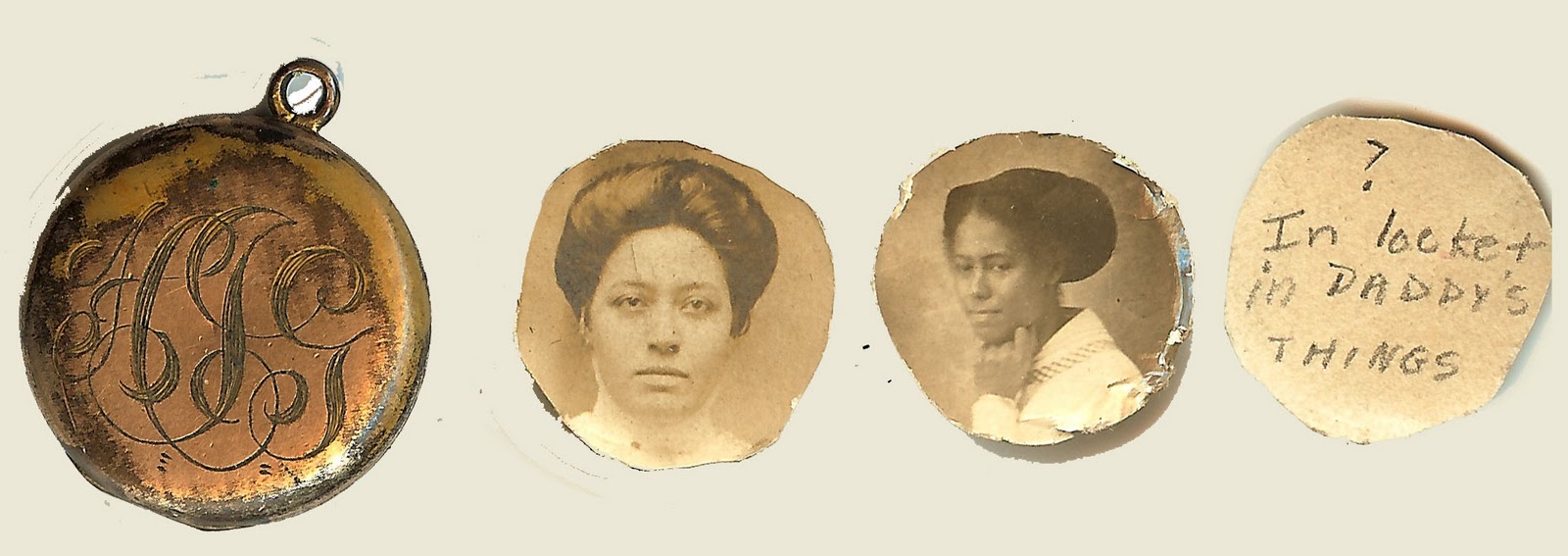
Several years after my mother’s death, I found a cigar box full of unidentified things – pocket watches, big buttons, lockets.  This locket had the note inside saying “? In locket in Daddy’s things”.  I don’t know who the women are.  The initials on the front seem to be H.J.G or maybe J.H.G.  My grandfather’s name was Mershell C. Graham.  His story is sketchy.

I find bits and pieces – unidentified photographs, old notebooks… If I could find him in the 1900 census with his family.  He was born in Coosada Station, Elmore County, Alabama about 1888.  He chose to celebrate his birthday on Christmas day because he didn’t know the actual day.  By the time I found him in the census in 1910 he was working on the railroad.  He moved to Detroit in 1917, married my grandmother in 1918 in Montgomery and they immediately removed to Detroit.  He worked at Ford Motor Co. for years.  He was a founder and trustee at Plymouth Congregational Church in Detroit.  He always grew a large, wonderful garden with cabbage, collards and tomatoes.  He could, and did, fix anything that needed fixing.  He taught himself to read so I assume he never went to school.  There is a story that he was a child servant and slept outside the little girls door at night.  The other story is that his parents came one one rainy day (from work?) to find him and his brother digging sweet potatoes out in the garden.  They had the measles. I’m thinking they were very hungry.  Who feels like digging in the rain when they have the measles?  There were at least three children older than he was according to his delayed birth certificate. There could have been younger siblings too. Those mentioned were a sister named Annie, and a brother named Bill who went west. My cousin, Margaret, told me that was a way to refer to relatives that passed for white.  Perhaps the Jacob, named in front of the little Bible that was also in the box was a brother.

Labor Day – Part 2 (Maternal side)

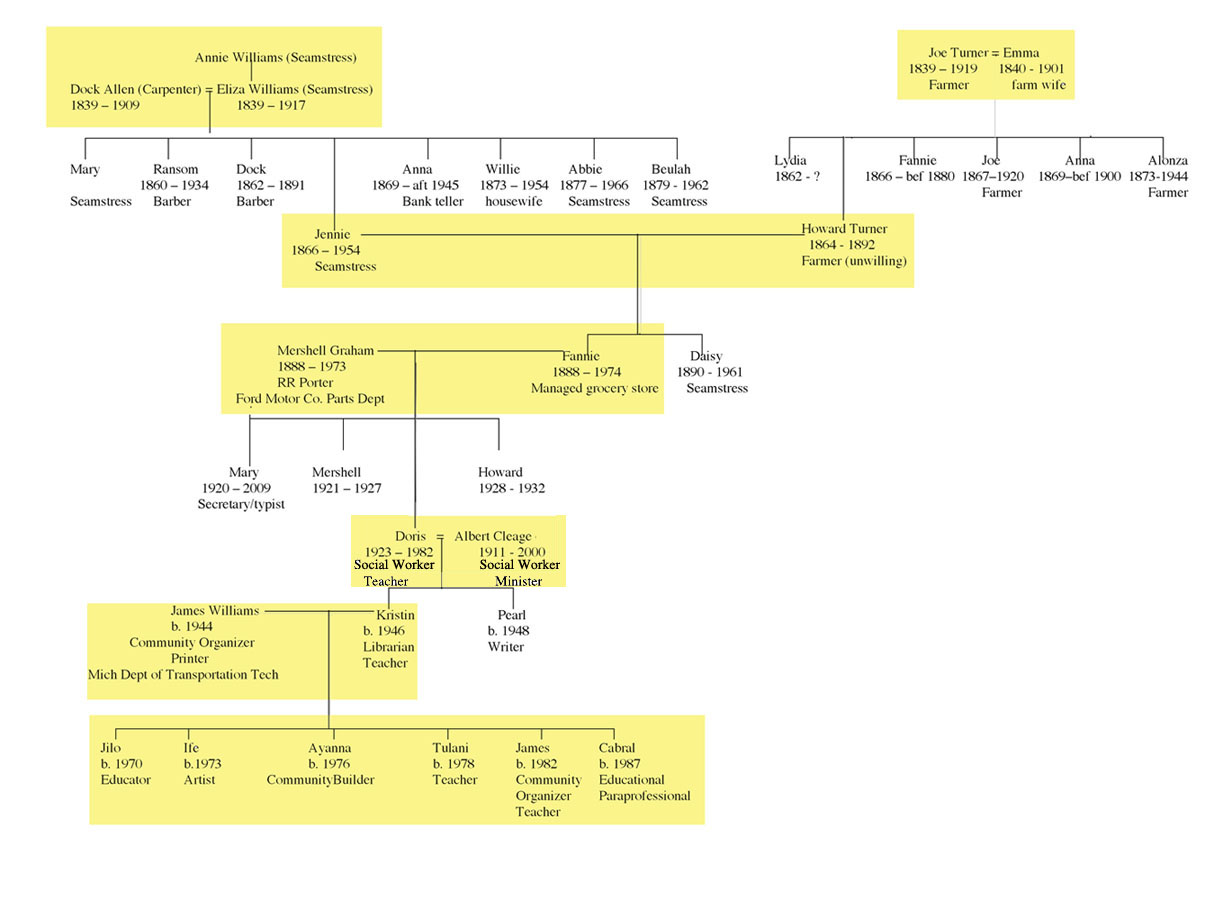
After working on the collage I uploaded yesterday for Labor Day, I kept thinking about the work that family members had done over the generations.  Here is a chart showing 7 generations of workers from my great-great-great-grandmother to my children.  My direct line is highlighted in yellow.  The women with children combined whatever else they did with cooking, cleaning, washing clothes and raising the children.  The first generations started their work life as slaves in Alabama.

7 generations of my maternal line and the work they did.

I made the chart using Microsoft Word.  That resulted in a very crowded chart.  I then imported it into Photoshop where I cut and pasted and moved things around and added the highlights.  I later thought I should have added places of birth and death, but I didn’t. Next time.  The paternal side chart is available HERE.

Backyard Photos – Theodore St. Detroit, Michigan

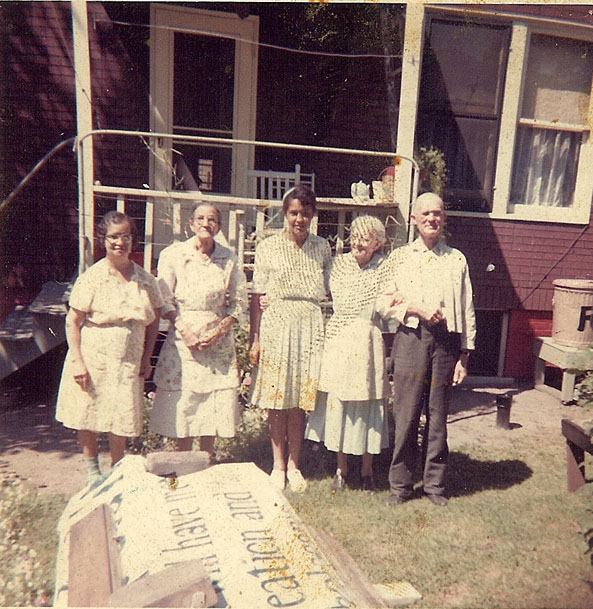
While going through my grandmother’s photographs awhile ago I noticed that they had photos of people lined up in the backyard.  When I looked closer I found some of the relatives I had not realized we had pictures of.  One lingering question is why was cousin Alphonso the only relative I met?

"theodore backyard"
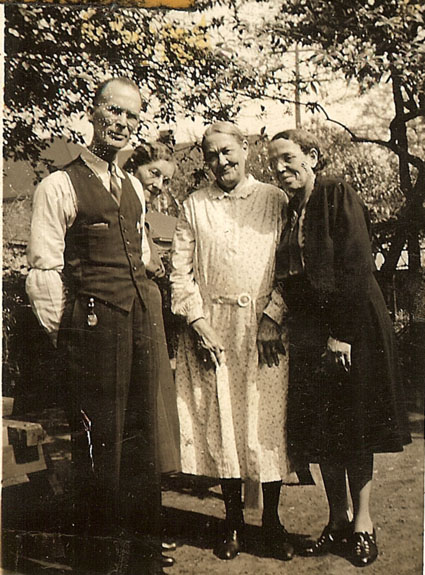
May 1940. My grandparents, Mershell and Fannie Graham, with unidentified visitors.

"theodore backyard alphonso"
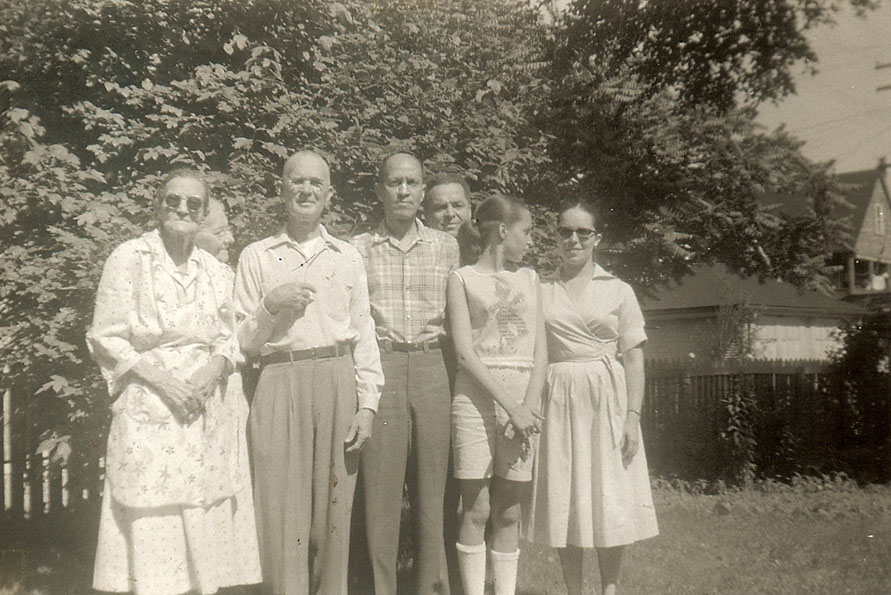
Summer 1960

Left to right:  Abbie Allen Brown, Mershell Graham (my grandfather), Alphonso Brown(Abbie’s son), me, Doris Graham Cleage (my mother)  Back – Fannie (my grandmother)  Henry Cleage (my uncle & step-father).  Abbie was my 2 x great aunt and Dock & Eliza’s daughter.

"theodore backyard roscoe and stella"
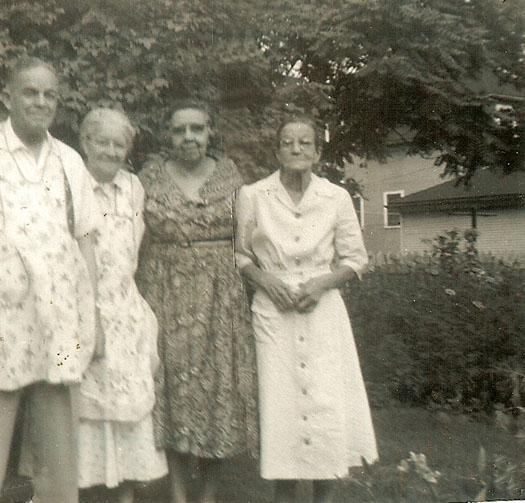
“Stella + Ros 1960 Our back yard. On visit from Chicago.”

Left to right: Roscoe, Fannie, Stella, Abbie. Roscoe McCall was Mary Allen McCall’s son. Stella was his wife. Mary was Eliza’s daughter.

"theodore backyard bobbie visits"
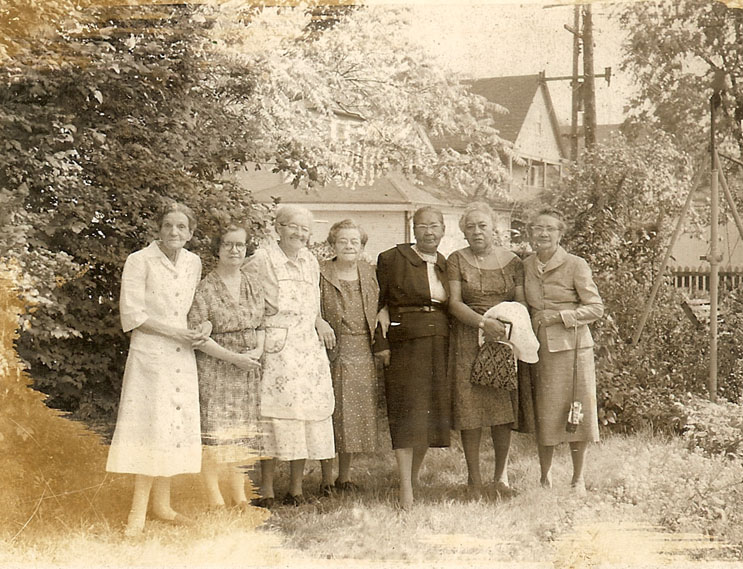
 “Right to left:  Bobbie, unintelligible name, Mrs. Bishop, Daisy, Fan, Alice, Abbie.  Taken by John Wesley Allen.  Our back yard.  9-21-61.  Daisy passed 11 – 24-61.  Her last picture.”

John Wesley Allen was Ransom Allen’s son.  Ransom was Eliza and Dock’s son.  Abbie was Dock and Eliza’s daughter.  Alice was my grandmother Fannie’s youngest sister.  Daisy was my grandmother’s sister. Bobbie was John’s wife.

"theodore backyard Rance and Bobbie Allen visit."
Same day as above with John Wesley Allen on the right.

"Theodore backyard Ruth Pope visits from Chicago. 1963."
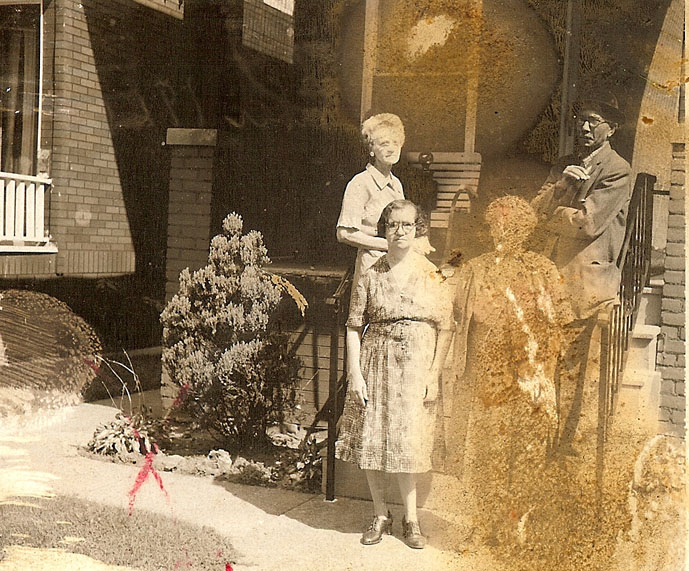
“Alice , Abbie , Ruth , Mother, Daddy. Ruth Pope age 15”

Ruth is Beulah Allen Pope’s granddaughter and Robert Pope’s daughter. Abbie and Beulah were Dock and Eliza’s daughters.  Robert Pope, Fannie and Alice were Dock & Eliza’s grandchildren. Ruth is Eliza’s great granddaughter.  August 1963.