Week 46. Politics. What are your childhood memories of politics? Were your parents active in politics? What political events and elections do you remember from your youth?
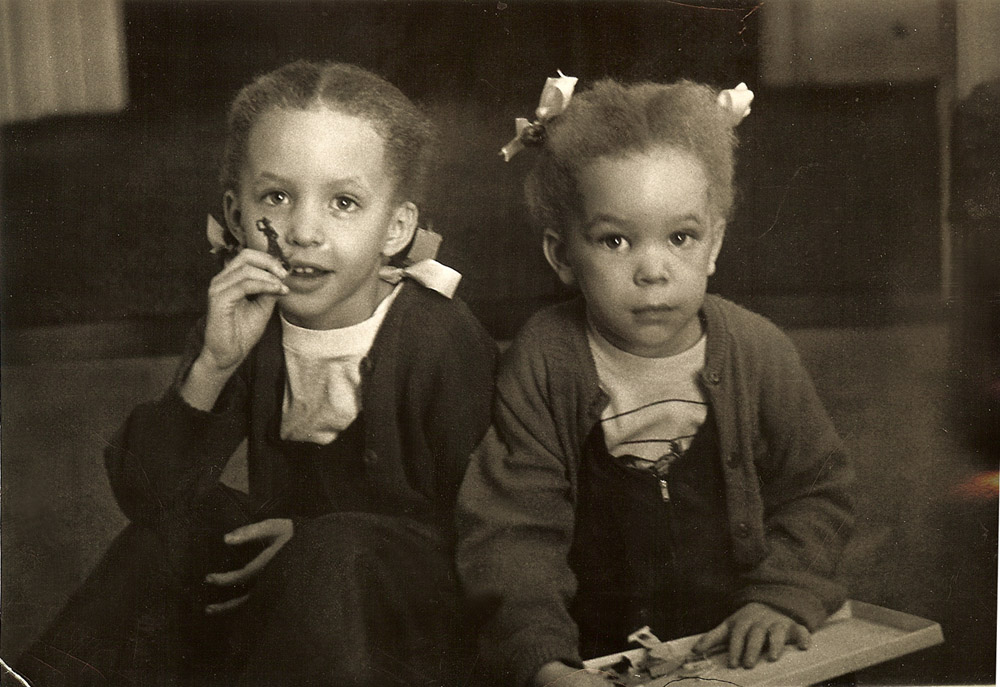
My sister and I – 1952
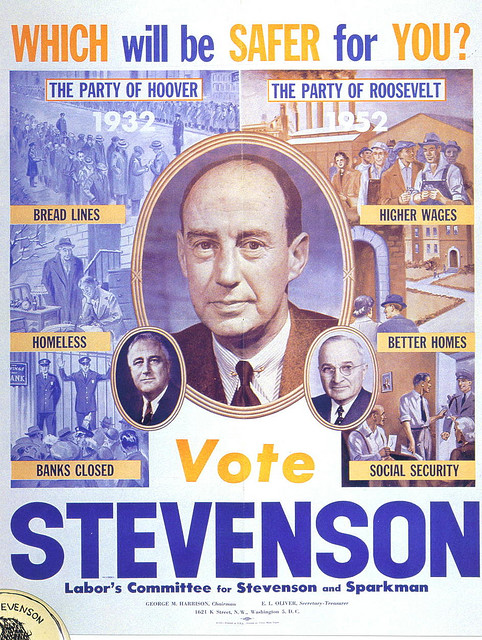
My first memory of politics is the 1952 presidential campaign. My parents supported Adlai Stevenson and I remember waking up the day after the election and asking who won. I was quite disappointed when I found it was not Stevenson.
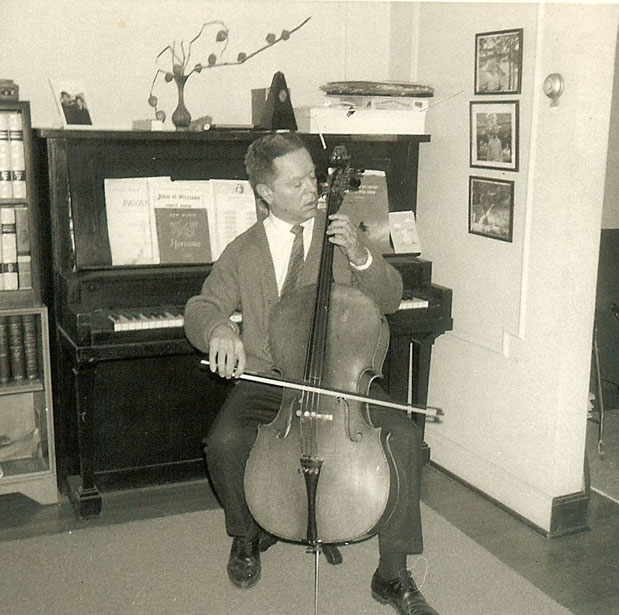
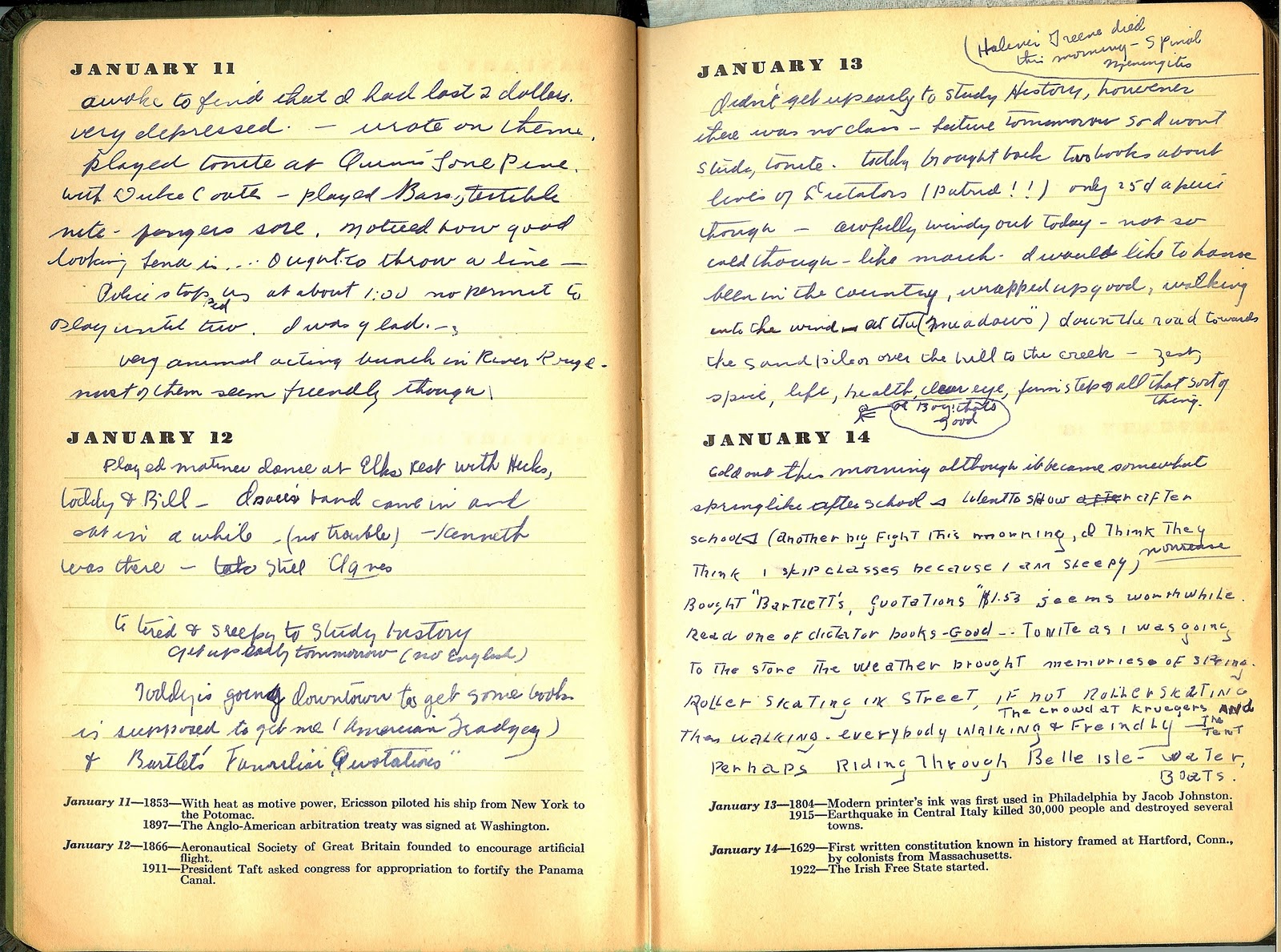
As soon as I saw this weeks prompt for Sepia Saturday, I thought of this photograph. I decided to revisit an old post from Henry’s journal, written during several months of 1936, where he mentions playing the bass at a club.
January 11
Awoke to find that I had lost 2 dollars very depressed. Wrote on theme. Played tonight at Quinn’s Lone Pine with Duke Conte, played bass, terrible night. Fingers sore. Noticed how good-looking Lene is… Ought to throw a line – Police stopped us at about 1:00AM. No permit to play until two. I was glad. Very animal acting bunch in River Rouge. Most of them seem friendly though.
January 12
Played matinee dance at Elks rest with Heckes, Toddy and Bill – Dracee’s band came in and sat in awhile (no trouble) Kenneth was there. Too tired and sleepy to study history. Get up early tomorrow (no English) Toddy is going downtown to get some books is supposed to get me ‘American Tragedy” and ‘Bartlett’s Familiar Quotations”
January 13
Haliver Greene died this morning -spinal meningitis. Didn’t get up early to study History, however there was no class – lecture tomorrow so I won’t slide, tonight. Toddy bought back two books about lives of Educators (putrid!!) only 25 cents a piece though – awfully windy out today-not so cold thought – like March. I would like to have been in the country, wrapped up good, walking into the wind at the Meadows, down the road towards the sand pile or over the hill to the creek – zest, spice, life, health, clear eye, firm step and all that sort of thing.
January 14
Cold out this morning although it became somewhat spring like after school. Went to show after school. Another big fight this morning, I think they think I skip classes because I am sleepy, nonsense. Bought ‘Bartlett’s Quotations” $1.53. Seems worthwhile. Read one of dictator books – Good – tonight as I was going to the store the weather brought memories of spring. Roller-skating in street, if not roller skating then walking. Everybody walking and friendly. The crowd at Krueger’s and the tent. Perhaps riding through Belle isle – water, boats.
George Reed was my grandmother Pearl Reed Cleage’s oldest brother. He gave his birth date as January 10, 1867, in Lebanon, Marion County, Kentucky. He never married and had no children but as the oldest in a home without a man, he became the man of the house. He never learned to read or write and earned his living as a laborer. We have no photographs of him.
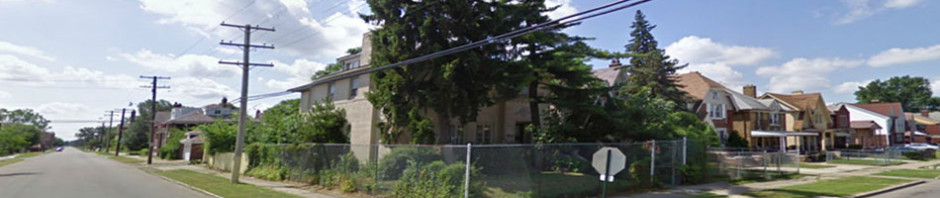
George is found in the 1870 through 1910 Census with his mother Anna Reed and various siblings. After Anna died and Pearl married I haven’t found him in any census but I did find him in the Indianapolis City Directory again in 1930. Turned out, George was not listed in the 1920 or the 1930 census due to the census taker stopping at the end of the 2800 block of Kenwood (both times). George does appear in the 1930 and 1940 Indianapolis City Directory at 2730 Kenwood Avenue. Pearl married in 1910 and mother Anna died in 1911, which means that George lived at 2730 Kenwood, alone, for over thirty years. Today the 2700 block of Kenwood is a parking lot.
George is listed as 3 in the 1870 census and 13 in the 1880 census. This would make him born in 1867. George is listed as 28 in the 1900 which would make him born in 1872, same as on his death certificate. Clearly there is a five year discrepancy in his age as reported on various documents.
According to my aunt, George migrated to Indianapolis as a young man of 15 to work at the Van Camp Canneries in 1887. Since there are two colored George Reed’s in Indianapolis during the 1880s we need to be careful here. Our George is listed in 1891 at 11 Willard Ave. There is a George E in 1889 and a George in 1888 in the City Directory that also may have been him. I believe that George did arrive in Indianapolis in 1887, however he would have been twenty years old and not fifteen at that time. During the next several years the whole family followed George to Indianapolis.
My Aunt Anna told me that a friend of her parents called them from Indianapolis in 1945 to tell them that George had been found wandering around disorientated. My grandparents went and got him and he stayed with them in Detroit where he died later that year. He died on May 28, 1945. His body was sent back to Indianapolis by train and he was buried in Crown Hill Cemetery. There is a simple marble slab with his name and dates on it. I visited once. You can see it here.
Click to enlarge
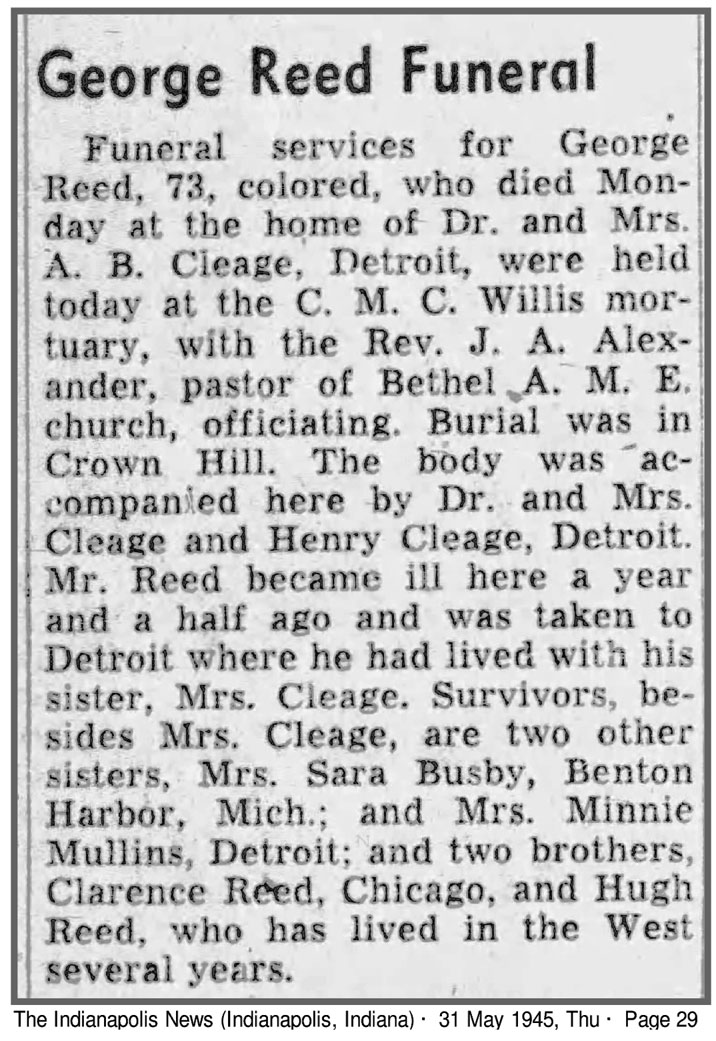
George Reed Funeral
“Funeral services for George Reed, 73, colored, who died Monday at the home of Dr. and Mrs. A. B. Cleage, Detroit, were held today at the C. M. C. Willis mortuary, with the Rev. J. A. Alexander, pastor of Bethel A. M. E. church, officiating. Burial was in Crown Hill. the body was accompanied here by Dr. and Mrs. Cleage and Henry Cleage, Detroit. Mr. Reed became ill here a year and a half ago and was taken to Detroit where he had lived with his sister, Mrs. Cleage. Survivors, besides Mrs. Cleage, are two other sisters, Mrs. Sara Busby, Benton Harbor, Mich; and Mrs. Minnie Mullins, Detroit; and two brothers, Clarence Reed, Chicago, and Hugh Reed, who has lived in the West several years.”
According to the Administrator’s Final Report there was $18,462.91 (Worth $243,814.95 in today’s dollars.) on deposit at the Railroad Men’s Building and Loan Association. He had a dividend on a savings account for $193.50 in 1945 and another $195.24 for 1946. Royalty from Rubber Stock came to $3.00, which brought his assets to $18,854.65. He also owned a single home at 2730 Kenwood, Ave. Included in the $1,025 costs for the administration of the Estate are $9.65 railroad fare to carry his remains back to Indianapolis and $75 to the Hoosier Monument Company.
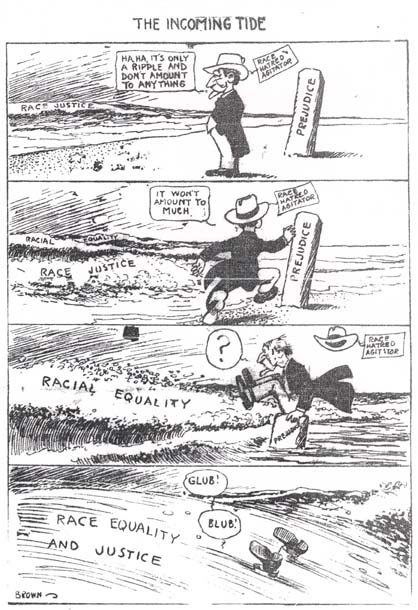
A cartoon from the 1919 July 26 issue of The Montgomery Emancipator. It was edited by James McCall who we saw here as a young, blind poet. He continued to write poetry and became a publisher of several newspapers, both in Montgomery and Detroit. Below is part of an essay written by his daughter, Margaret McCall Thomas Ward.
Pioneer Journalists: James Edward McCall and Margaret Walker McCall
by Margaret McCall Thomas Ward (their daughter)
James Edward McCall’s destiny was to become a pioneer African American journalist and Newspaper publisher. He began his life as a mixed race colored boy in the deep south, one generation away from slavery. His parents, Edward McCall and Mary Allen McCall, were emancipated slaves. They were the offspring of white masters. Edward was a skilled carpenter and Mary was a talented dressmaker.
The couple placed great stress on education and they used their resources to educate their five children to college level. James, the oldest of the five children, graduated from Alabama State Normal College in Montgomery, Alabama. He left Alabama for Washington, D.C. to enroll in Howard University Medical School. At that time, he was recognized in Montgomery literary circles as a gifted poet, however, he dreamed of following in the path of his paternal grandfather who was a physician. Fate intervened. At the end of his first year at Howard, he contracted typhoid fever which damaged his optic nerve. Gradually, his vision diminished and for the rest of his life he was totally blind.
He returned home to Alabama, broken hearted. After he accepted the shock of knowing that he would never see again, he decided to look for another career. He enrolled in Albion College in Albion, Michigan, and he graduated in 1907. This time, he returned to Alabama with the determination to help people by using his gift and skills as a writer. Even though he was unable to see, he had the advantage of a trained mind and a superior education. He embarked on a crusade against injustices African Americans endured, not only in the south but throughout the United States.
In 1910, his destiny as a compelling voice for racial equality began in Montgomery Alabama. He published a magazine dedicated to relieving the problems of domestic servants in the south by organizing and training this important work force. He named the magazine The Colored Servant Girl, and he wrote of the dignity of this occupation in an editorial entitled “What a Blind Man Sees in Passing.” Also, he wrote articles about the activities of the Black community, and he published the articles in the white daily newspaper. The articles were very widely read. The success which he enjoyed with the publication of the magazine and articles motivated him to publish his own newspaper, the Emancipator.
Now begins the story of James McCall and Margaret Walker McCall, which is a romantic saga of ambition, faith, and love which lasted fifty years. Margaret Walker, a lovely, ambitious graduate of Hampton Institute in Virginia and Tuskegee Institute in Alabama, fell in love with the blind newspaper man. In 1914, they married and became a team in publishing the Emancipator. Margaret worked in the capacity of Office Manager in their businesses. She was the “eyes” of the union. In 1929, when the Ku Klux Klan was most powerful in Montgomery, Alabama, the life of the outspoken editor was threatened. The McCalls decided to migrate to Detroit, Michigan. In a safer environment for themselves and their two daughters, they continued their newspaper careers. For several years, James, with Margaret at his side, edited the Detroit Independent, a Negro weekly that flourished through the 1920s.
By 1935, McCall was editor and owner of the Detroit Tribune, which at that time was the only Negro weekly newspaper edited and published by and for Negroes in Michigan. He called himself a “race man”. Quite often, he used his poetic skill to write poems such as “The New Negro.” which was published in many anthologies. He used the Detroit Tribune to crusade for better and more jobs for Negroes, better education for Negroes, promotion of Negroes in the Police and Fire Departments, and increased voter registration. His paper was the first to wage a fight against police brutality in Detroit. He campaigned for Black judges in the courts, for the right of labor to organize and for Negroes to join labor unions.
Due to advancing years, the McCalls sold the Detroit Tribune in 1946 and retired. In 1963 James Edward McCall died.
This is a shortened version of that published, in full, in “Our Untold Stories A Collection of Family History Narratives” Compiled and written by members of the Fred Hart Williams Genealogical Society of Detroit, Michigan You learn more about the book, which includes 64 African American family history stories, here Fred Hart Williams Genealogy Society. It’s available on ebay also.
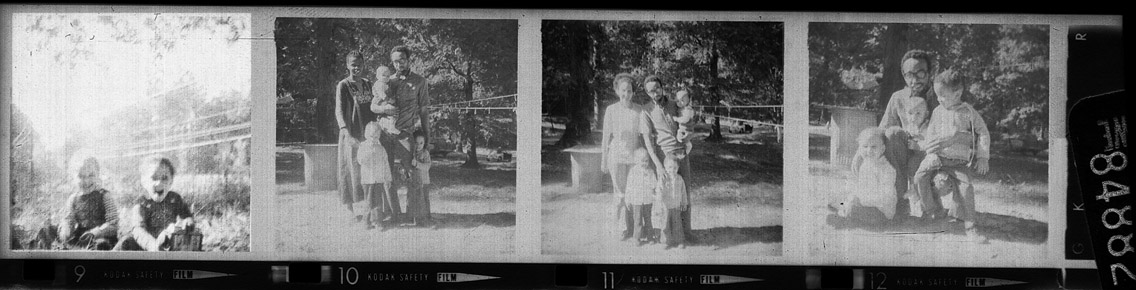
Uri – Me – Phil – Miriam – Me – Miriam – Miriam – MiriamJilo, Tyra- Shirley, Jim, Ife, Jilo & Ife – Me, Jim, Ife, Jilo, Ife – Jim, Ife, Jilo, Tyra
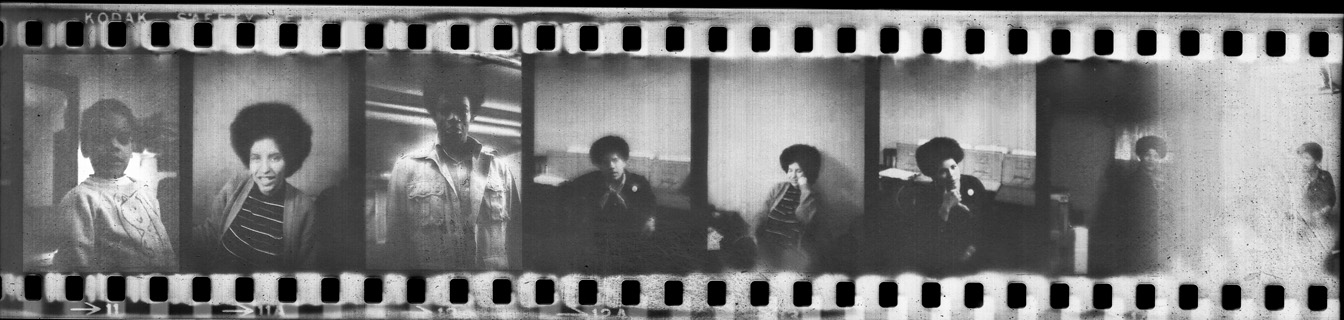
While looking through a box of photographs the other day, I came across some negatives from the 1970s.
The first strip was taken in 1970, when I was a revolutionary librarian at the Black Conscience Library in Detroit. I was pregnant with my first daughter, Jilo. Uri grew up to be an engineer. Phil later confessed to being a snitch, Miriam is Tyra’s mother. I was 23.
The second strip was made in 1974 in Atlanta. Shirley was visiting from Detroit, as was Tyra. Jim, my husband, was a printer with the Atlanta Voice. I was at home full time. Ife, my second daughter, was about to turn one year old. Jilo was 3. Tyra was 2. I was 26.
Although this is not a clock, which was the theme for this weeks Sepia Saturday, it does reflect time. You can see more timely entries here.
For Sepia Saturday #200, I am re-sharing a piece written by my mother, Doris Graham Cleage, which I first shared in February 2011. I am going to let her tell you about her home life and early years in this piece compiled from some of her writings when she was in her 50s. This is my entry for Jasia’s 103rd Carnival of Genealogy, Women’s History and for Sepia Saturday #63.
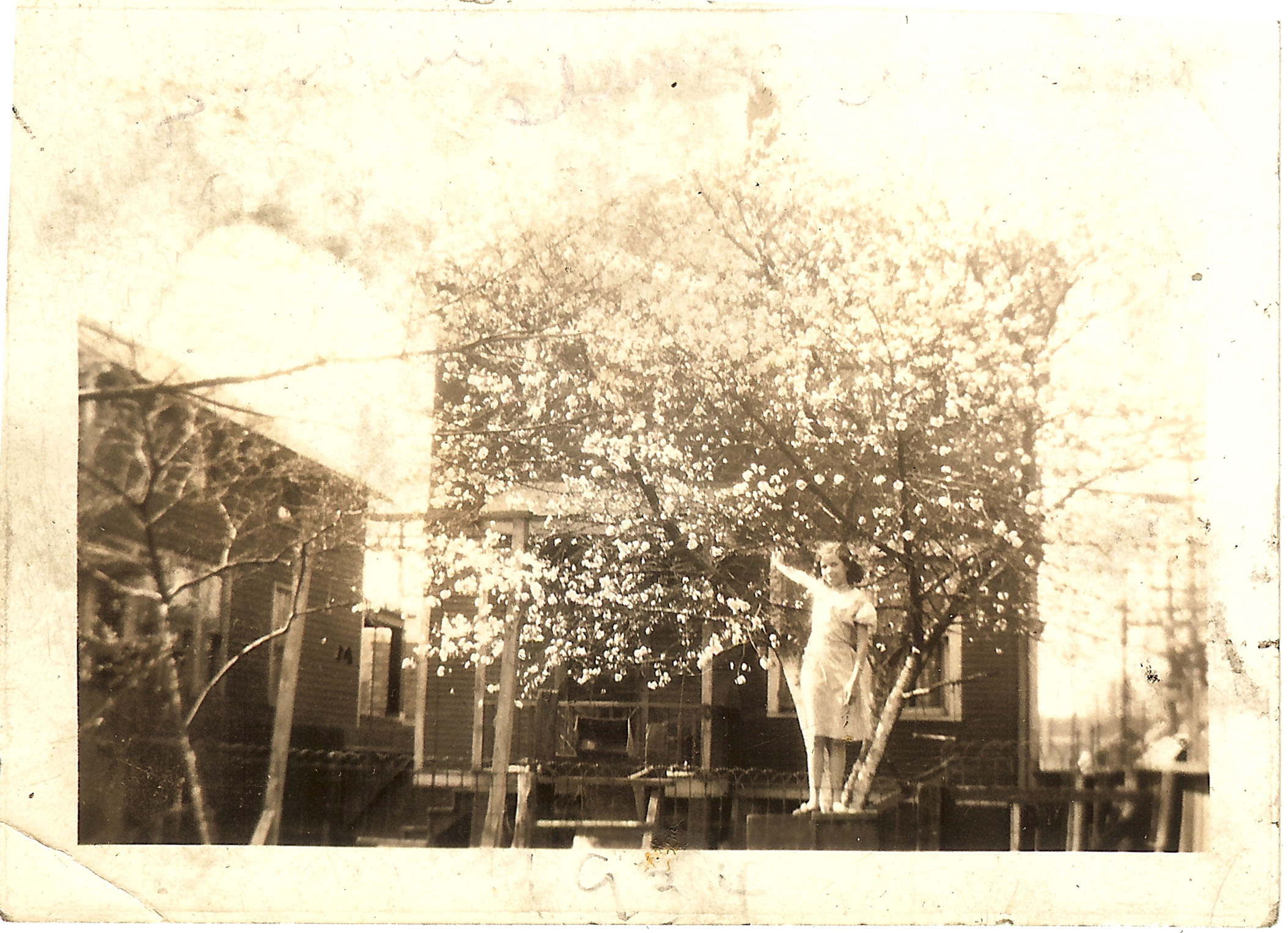
My mother in the cherry tree in the yard.
In Her Own Words
My parents married in Montgomery, went to Detroit and roomed with good friends from home, Aunt Jean and Uncle Mose Walker (not really related) A favorite way to pay for your house was to take in roomers from home and it was a good way for them to accumulate a down payment on their own house.
Mary Vee was born in this house. It was a very difficult delivery, labor was several days long. The doctor, whose name was Ames, was a big time black society doctor, who poured too much ether on the gauze over Mother’s face when the time for delivery came. Mother’s face was so badly burned that everyone, including the doctor, thought she would be terribly scared over at least half of it. But she worked with it and prayed over it and all traces of it went away. Mary Vee’s foot was turned inward. I don’t know if this was the fault of the doctor or not, but she wore a brace for years.
Finally that year ended and they bought a flat together with Uncle Cliff and Aunt Gwen (not really related). Mother got pregnant again very soon. Mershell Jr. was born the next year, 1921. I can imagine how she must have felt. She had never kept house, never cooked and never really had someone who told her what to do since she had worked at eighteen. She had never taken care of little children or babies.
Meanwhile I guess Daddy was enjoying being the man of the house, treasurer and trustee at Plymouth, with a good job, a good wife and money accumulating in the bank for a home of his own someday.
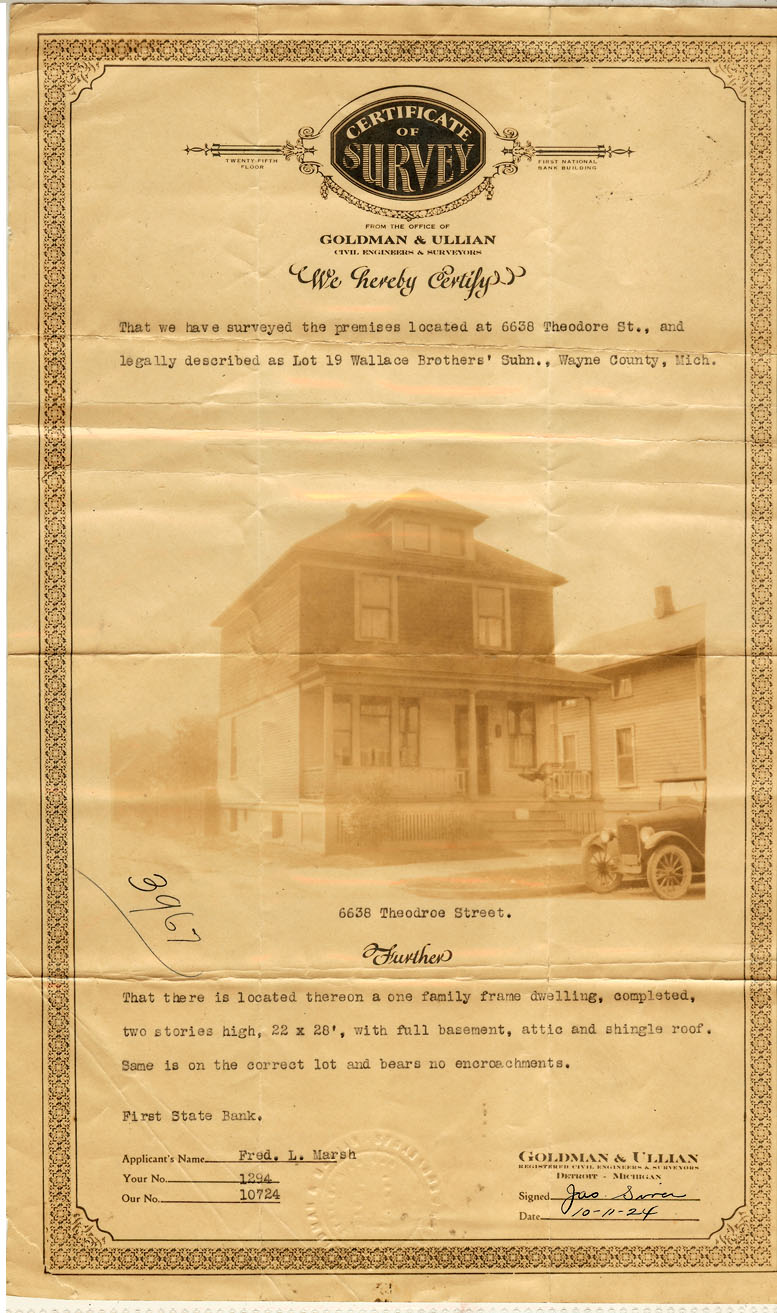
Their house. Survey photo.
Mershell Jr. was born in1921 at Dunbar Hospital, with a different doctor. When he was a year old, I was on the way. The flat was too small. Grandmother Jennie T. was consulted, sold the house in Montgomery and moved to Detroit with daughters Daisy and Alice. She and Daddy and Mother bought the Theodore house together in 1923. I was born in Women’s hospital and came home to that house where I lived for twenty years, until I married. Mother and Daddy lived in it for 45 years.
Grandmother, Daisy and Alice got good jobs, sewing fur coats, clean work and good pay, at Annis Furs (remember it back of Hudson’s?) and soon had money to buy their own house, much farther east, on a “nice” street in a “better ” neighborhood (no factories) on Harding Ave. While they lived with us I remember violent arguments between Alice and I don’t know who – either Grandmother or Daisy or Mother. Certainly not Daddy because when he spoke it was like who (?) in the Bible who said, “When I say go, they goeth. When I say come, they cometh.” Most of the time I remember him in the basement, the backyard or presiding at table. Daisy and Grandmother were what we’d call, talkers.
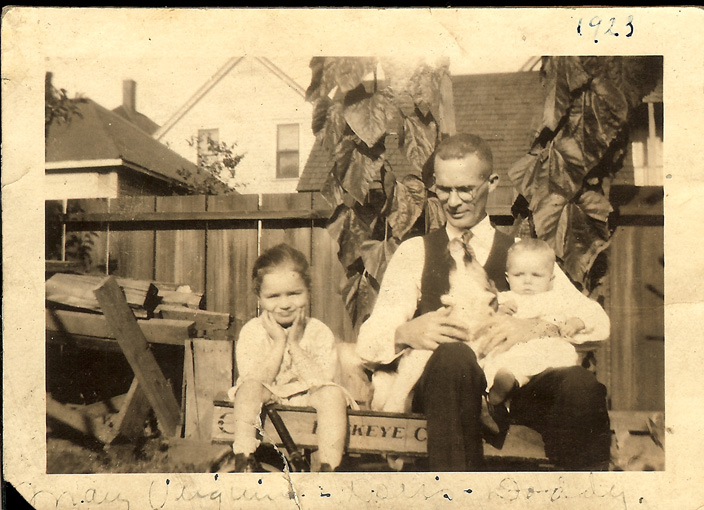
1923, backyard, Detroit – Mary V., Mershell holding my mother Doris.
About four blocks around the corner and down the street from Theodore was a vacant lot where, for some years ,they had a small carnival every year. I don’t remember the carnival at all. I never liked rides anyway. Not even the merry-go-round. But I remember it being evening, dark outside and we were on the way home. I don’t remember who was there except Daddy and I. He was carrying me because I was sleepy so I must have been very small. I remember my head on his shoulder and how it felt. The best pillow in the world. I remember how high up from the sidewalk I seemed to be. I could hardly see the familiar cracks and printings even when the lights from passing cars lighted things, which was fairly often because we were on Warren Ave. I remember feeling that that’s the way things were supposed to be. I hadn’t a worry in the world. I was tired, so I was carried. I was sleepy, so I slept. I must have felt like that most of my childhood because it’s still a surprise to me that life is hard. Seems that should be a temporary condition.
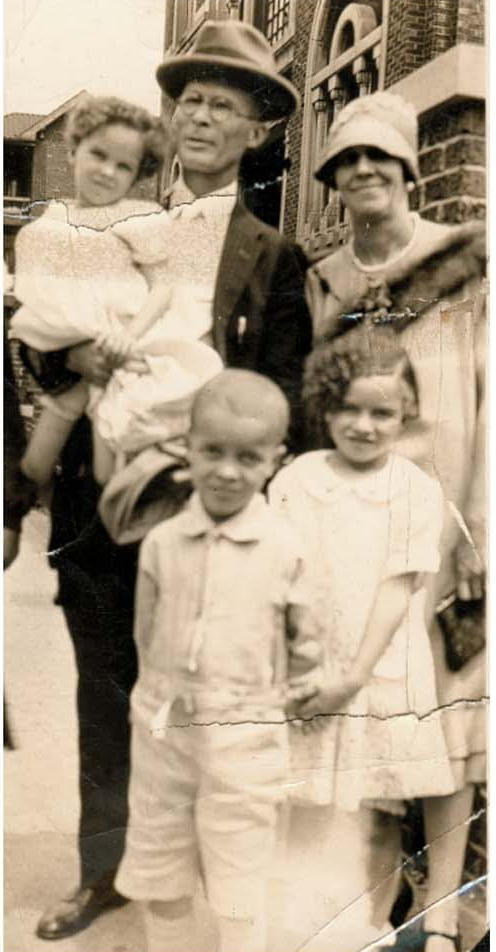
Mershell holding Doris. Fannie. Mershell Jr and Mary V in front of Plymouth Congregational Church. Detroit.
Boy children are very important to some people and my parents were both pleased to have a son. When Mershell Jr. was killed, run over by a truck on his way to school in 1927, it was a great unhappiness for them. I remember standing beside Mother at the front door. A big policeman stood on the front porch and told her about her child. She did not scream, cry or faint. Daddy was at work. She could not reach him. She put on her hat and coat and went to the hospital. I never saw her helpless. She always did what had to be done.
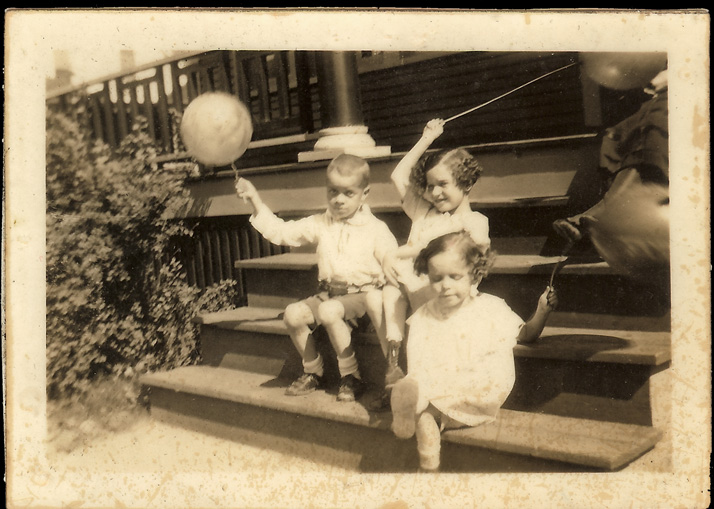
Mershell Jr, Mary V., my mother Doris in front. On front porch steps. Detroit, Theodore Street.
Howard was born the next year. They both rejoiced for here God had sent a son to replace the one they had lost. He died of scarlet fever at three. When you read carefully the things she wrote, you’ll know what this meant to her. But she never took refuge in guilt feelings or hysterics or depressions. She lived everyday as best she could and I never heard her complain.
Ours was a quiet, orderly house. Everything happened on schedule. Everything was planned. There were very few big ups and downs. When Daddy lost his job during the depression and when my brothers died, it was Mother who stayed steady and encouraging and took each day as it came. Daddy would be very depressed and Mother must have been too, but she never let on. I do remember one day when I was about seven and Howard had just died. I came into the kitchen to get a drink of water. She was at the sink peeling potatoes for dinner and tears were running down her cheeks. I don’t remember what I said or did but she said, “I will be alright, but you go and keep your father company.” I did, and I’m sure her saying that and my constant companionship with my father influenced my life profoundly. She was thinking of him in the midst of what was, I think the most unhappy time in her life. How could God send them a second son and then take him, too?
I remember…when I was very young seven or eight – if I got very angry I would go upstairs by myself-take an old school notebook and write, “I will not be angry” over and over until I wasn’t angry anymore. Anger was rarely expressed in our house. I only remember my father and mother arguing twice as long as I lived at home – and I was twenty before I left. But my sister and I fought often. Antagonism was the strongest feeling we had for each other.
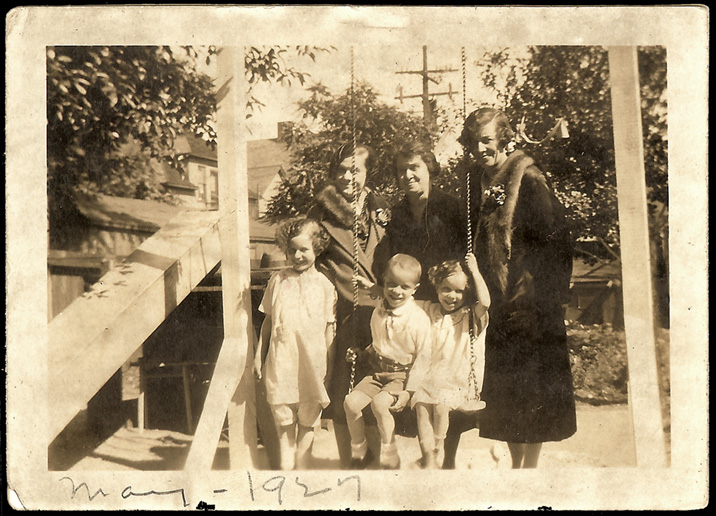
Back: Aunt Daisy, Grandmother Turner, my grandmother Fannie. Front: Mary V. Mershell Jr and my mother Doris. 1927, backyard Theodore, Detroit.
Aunt Daisy took us downtown to the show every summer and to Saunders for ice cream afterward. And I always ended up with a splitting headache. Too much high living I guess. She and Alice would buy us dainty, expensive little dresses from Siegel’s or Himelhoch’s. They all went to church every Sunday at Plymouth (Congregational). Daisy always gave us beautiful tins of gorgeous Christmas candy, that white kind filled with gooey black walnut stuff, those gooey raspberry kind and those hard, pink kind with a nut inside, also chocolates, of course!
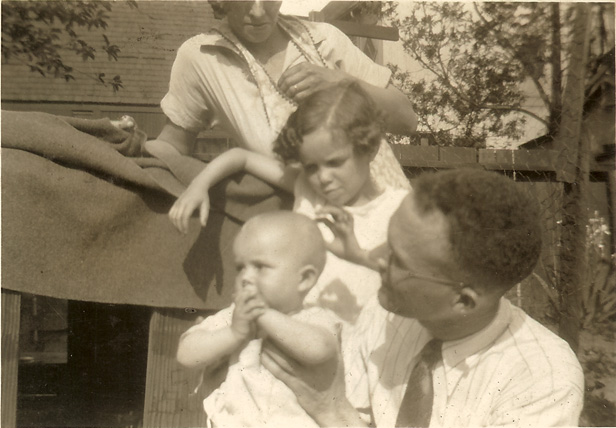
From top: my grandmother Fannie, my mother Doris picking something off of baby Howard who is held by my grandfather Mershell. Backyard of Theodore house, Detroit.
I lived at home until I finished college and married. Everyday when I got home from school the minute I opened the door I knew what we were having for dinner. The house would be full of the good smell of spaghetti or meat loaf or greens or salmon croquettes or pork chops and gravy or steak and onions. We had hot biscuits or muffins every day. My father did not like “store bought” bread. I hardly knew what it tasted like until I married. Our friends were welcome. The house was clean. Our clothes were clean and mended.
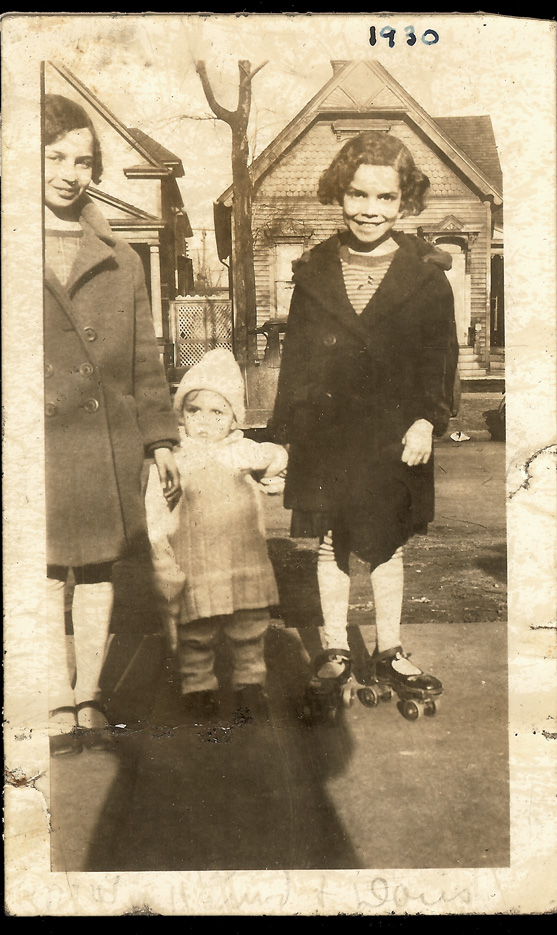
Mary V, Howard, my mother Doris. 1930. Detroit, MI.
Mother often spoke of friends in Montgomery but I never knew her to have a close friend. She was friendly with everyone, especially the Deaconesses with whom she worked at church. She was basically very reserved and what people call today a “very private person”. I don’t remember ever hearing her say “I want” for herself. Oh, she often said, “I want the best for my girls” or “I want you to be good girls” but I never heard her say “I want a new dress… or a day off… or a chocolate bar…” and I never heard her say “I feel this way or that” except sometimes she said, “Oh, I feel so unnecessary.” She was a great one for duty, for doing what was called for and not complaining. You could tell when she was displeased by the expression on her face. Whenever she corrected us, she always explained why, so we came pretty early to know what was expected of us and when we erred the displeased expression was all we needed. She didn’t nag either. No second and third warning. Yet I don’t remember ever being spanked by either parent. If either one said, “Did you hear what I said?”, that did it.
We never talked back to them. We did things we knew we weren’t supposed to do like all children, but we were careful not to get caught. When we did get caught, we were horrified. I never felt confined and resentful, but Mary Vee did.
Mother had some of the same reserve with us that she had with strangers. We rarely talked about feelings, good or bad. She and Daddy tried to keep things as even and calm as possible all the time. So everybody cried alone although you always knew they would do anything for you because they did. You didn’t bring your problems home and share them. You came home and found the strength to deal with those problems. At least I did. If you needed help, you asked for it, but first you did everything you could. I don’t think they ever said no to either of us when we asked for help and that extended to grandchildren too.
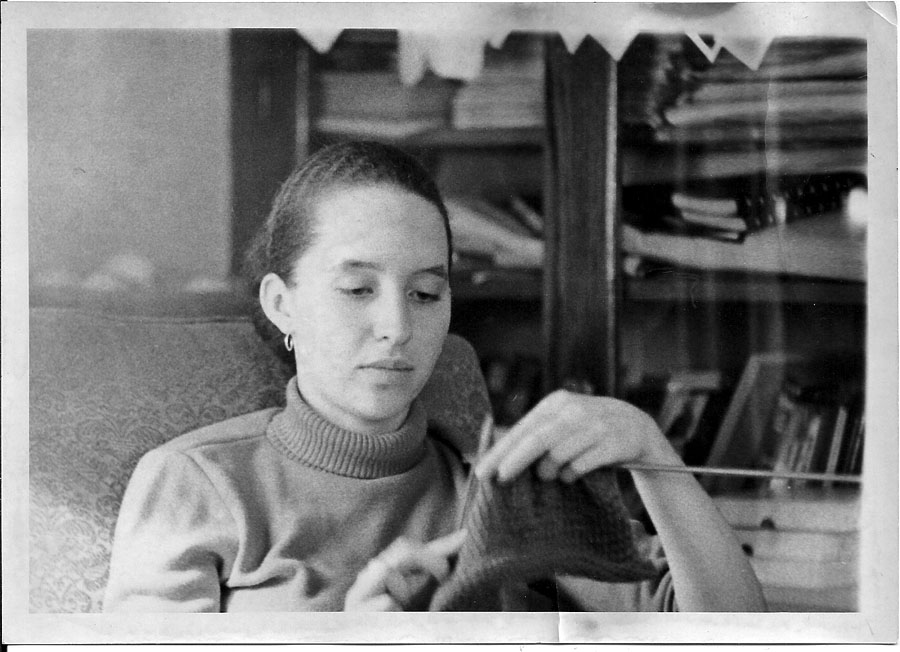
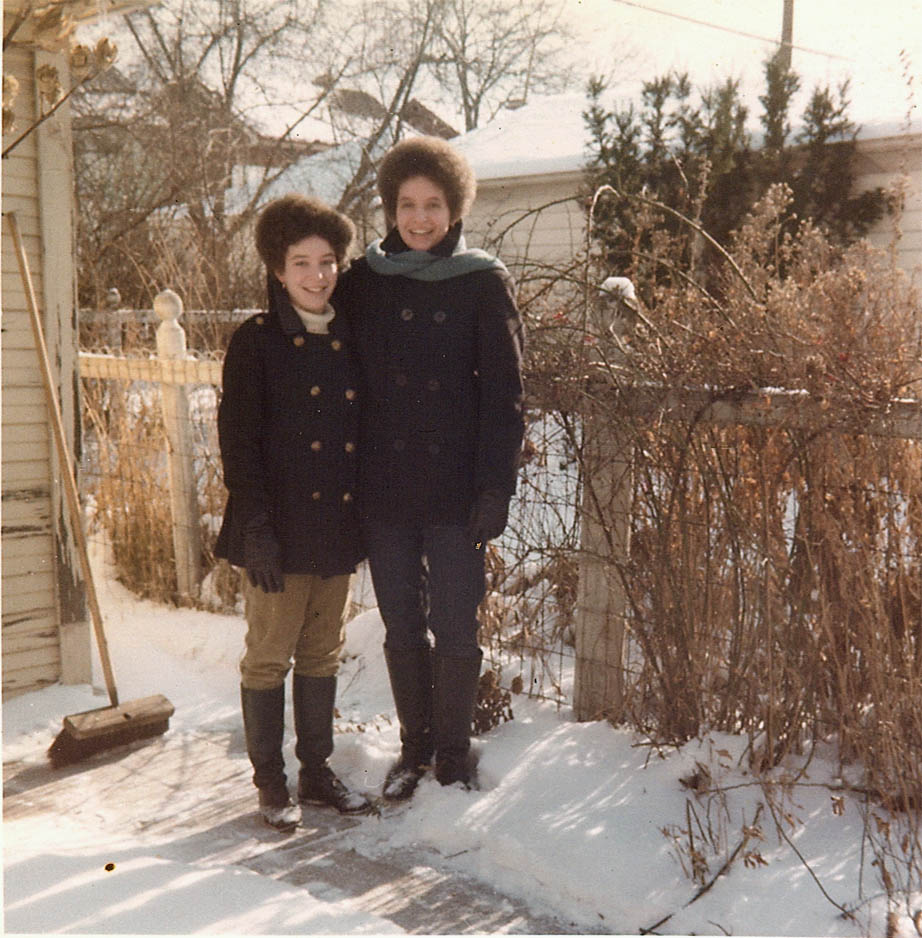
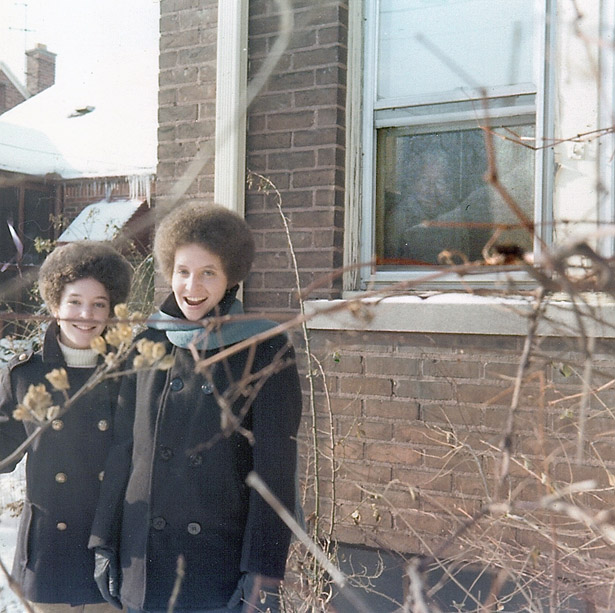
Here I am starting my one and only knitting project. When it was done the edges curled up. It was light blue, very long and wrapped around my head and face during the cold Detroit winters. I added fringe to the ends and wore it all through college. I’m wearing it below in 1969. To see other SepiaSaturday offerings click HERE.
Christmas 1968. L to R My sister Pearl, me, Nanny in the window.
I can’t find a picture from Christmas 1967 but I think we looked pretty much the same. I bought that pea jacket at the army surplus in Santa Barbara when I was there for a student conference, summer of 1967. I cut my hair that summer too, right after the Detroit riot. Not sure if Pearl had cut hers yet in 1967. I have looked at this photo many times but this was the first time I noticed my grandmother looking out of the window at us. We had moved to the flat with my grandparents that fall, so it’s a different house, but it’s Christmas time and I look the same. I had just graduated from Wayne State University with a major in Drawing and Printmaking and a minor in English. On January 2, I caught the Greyhound to San Fransisco. But that’s not today’s memory. Here is something I wrote in 1967.
Christmas 1967
It was Christmas and cold. Snow blew wet, sticking to my coat and hair. We went to the shortest corner, down Northfield, past three Junior High girls laughing and cars sliding slow on the ice. The sky was gray behind bare branches. Snow fell quiet, without any wind. My sister and I talked some about…I can’t even remember. We crossed to Pattengill Elementary, went down past the school and stopped outside the empty play field.
I got out my new movie camera and told her to walk away, down toward Colfax, and not to act silly. She started and I turned on the camera, feeling silly myself, taking pictures like a country bumpkin in the city. She started lunging to one side, sort of a half skip with some serious drag to it. I told her to be serious. She did, then walked back. I tried to keep the camera from moving. It stuck and I turned it off twice with a heavy click, jarring, blurring the picture.
We went inside the playground. I shot some more of her walking up and away. A little boy was sledging down a driveway into the street. She said, come on take some behind the trash cans. It’ll be good. I shot some more. Discovered while she was behind the garbage cans I was out of film.
Both of us bent over the camera and tried to shut it off, but we couldn’t. My hands were cold. Red, wet and cold. I put on my gloves and we unscrewed the battery door with her suitcase key to shut it off.
We walked back toward the far corner. I wrote BLACK POWER in the snow, and then PATRIA O MUERTE and VENCEREMOS. Pearl asked what else can we write but I didn’t know. We went on out of the playground and down Epworth talking about how bad somebody can be to you and you still love them. We went on down Allendale. There was a dog sleeping on a porch. Pearl said, loud, keep on sleeping! And he did.
It was getting dark and still snowing. Cold, wet, quiet snow. Grey like the inside of a shell and quiet like when your ears are stuffed up from a cold. Some girls went by across the street, talking loud. We turned back down Ironwood and went home.
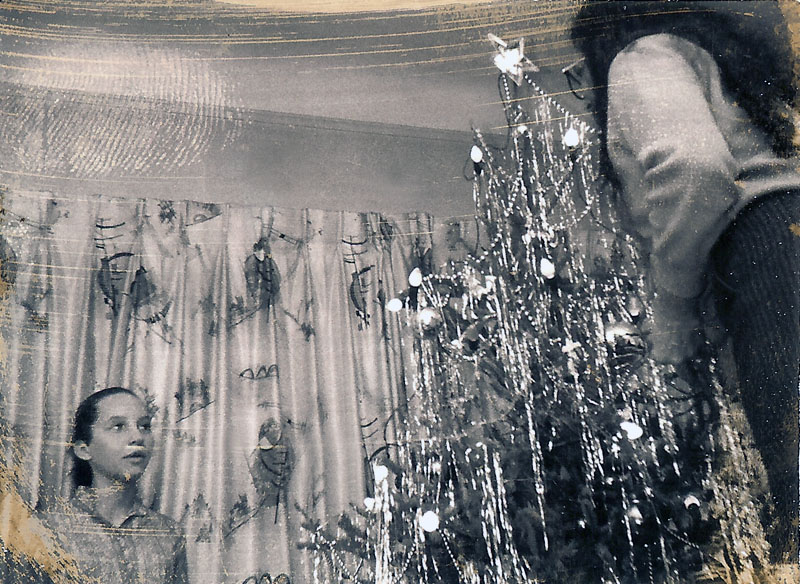
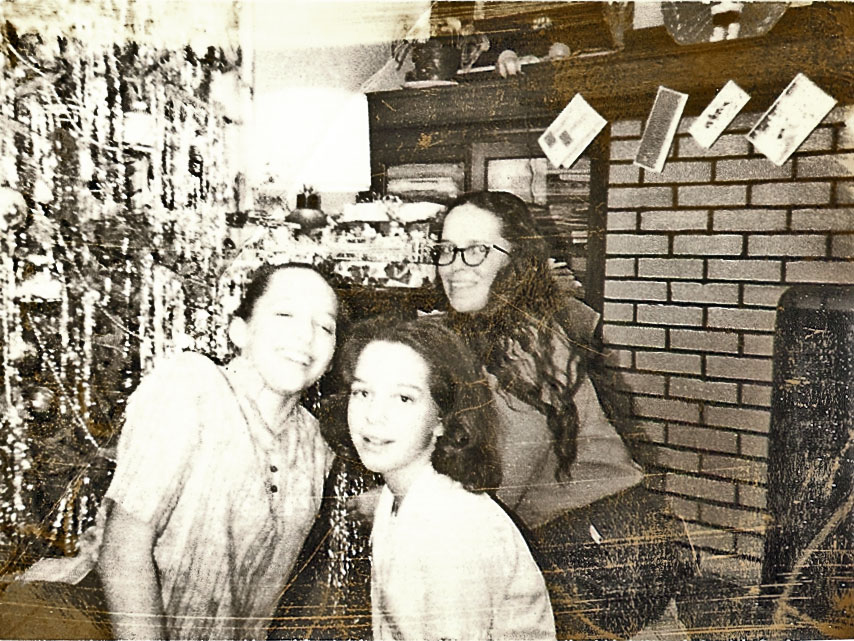
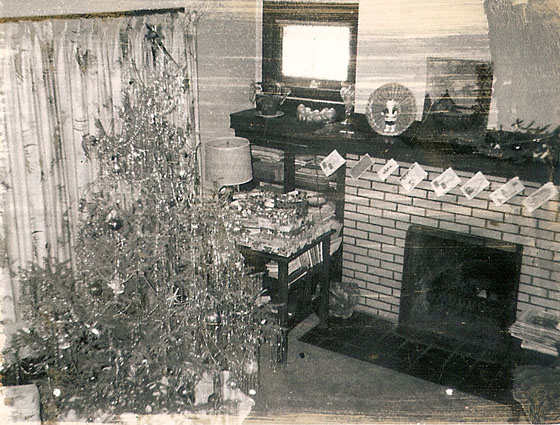
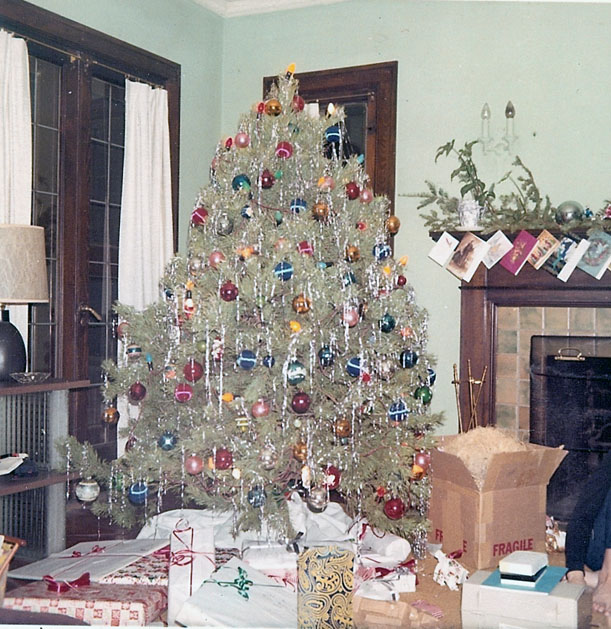
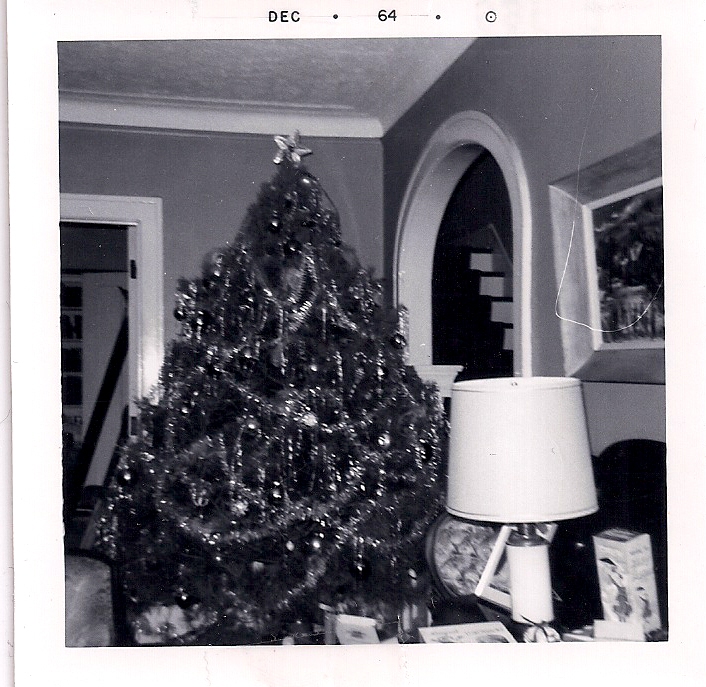
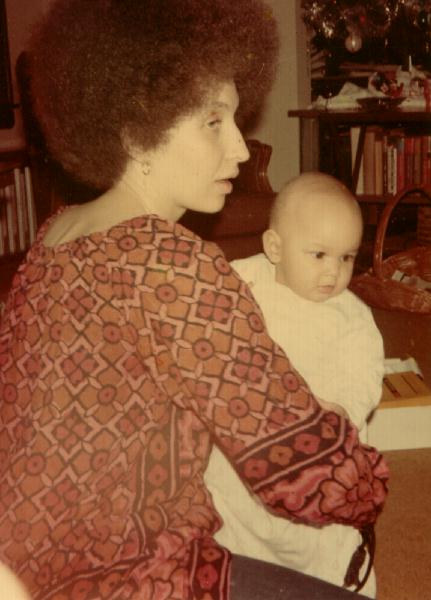
Our tree was always real. My sister, my mother and I would go to a tree lot to pick it about a week before Christmas. This was Detroit and in my memory it is cold and there is snow on the ground. We picked short needled trees of medium height and (of course) well shaped. We used a mix of glass balls my mother had collected over the years. When we were old enough, I can’t remember when that was, we helped decorate the tree – after my mother put on the beads, the tinsel and the multicolored lights. We had the big lights but they were pointy. My grandparents had round lights. The icicles went on last and there was no tossing. It was put on a few pieces at a time up and down all the branches. I remember one year that my mother did not want to trim the tree and was pretty unpleasant about my sister and me doing it and doing it NOW, but usually it was a pleasant evening, either Christmas eve or close to it. My mother usually had on the CBC, the Canadian station and by that time they would be playing Christmas music. The tree was always beautiful.
My maternal grandparents, Nanny and Poppy, waited until Christmas eve to buy the tree and set it up. The tree was always scrawny and thin but that was how their tree was supposed to be. Their ornaments were very old. I wonder what happened to them. What I remember are some little Santas that went on the tree and a jolly Father Christmas looking Santa that stood in the window with his removable pipe.
My paternal grandparents had a bigger house and a big, full, long needled tree that was in the corner of the living room next to the stairs. My uncles Louis and Hugh plus my aunt Barbara and cousin Ernie lived there in addition to my grandparents so there were always a lot of presents under the tree.
Christmas tree at Grandmother Cleages.
The black and white photographs are all from the same Christmas. I think it was 1962. I was still in high school, about 15. My sister was two years younger. Unfortunately these were all taken with a polaroid and they show it. The colored photo is from 1968. We had moved into the flat we shared with my grandparents. They were downstairs and we were upstairs. I had just graduated from Wayne State University and was about to head out into the world to seek my fortune. But that’s another story.
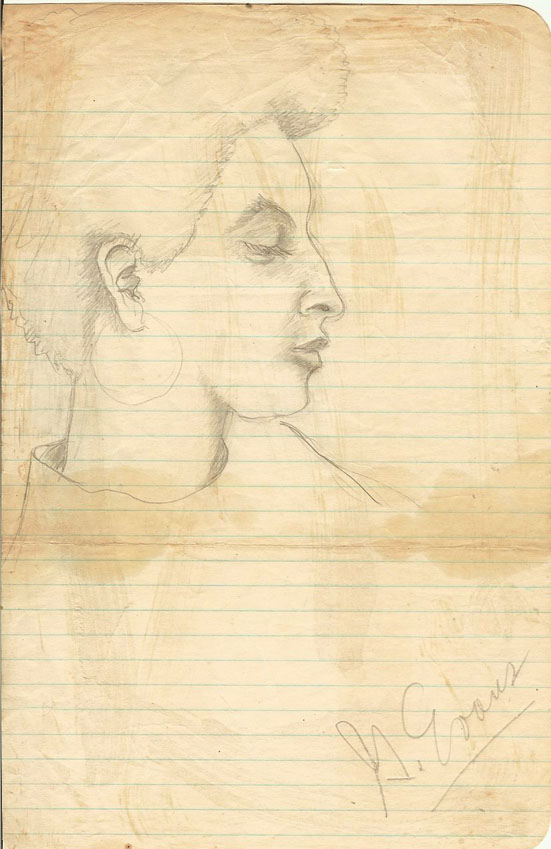
One day after dinner at my grandmother Cleage’s house, my aunt Gladys and I sketched each other. Mine was thankfully lost. I’ve kept her’s. I glued it in a scrapbook with rubber cement before I knew better. I should have framed it.