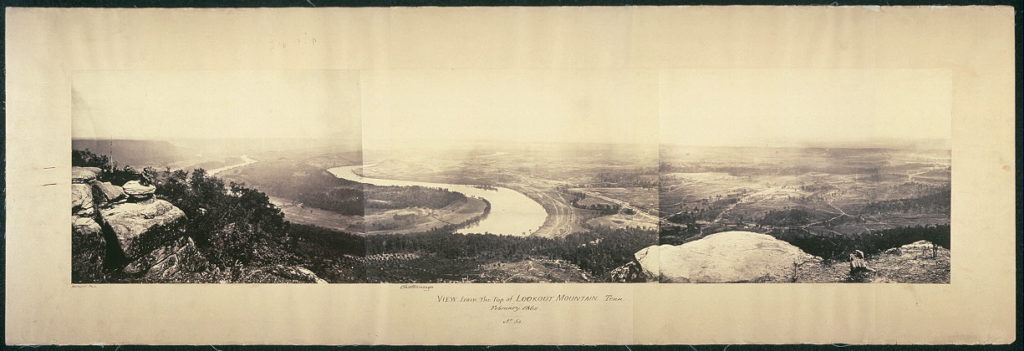
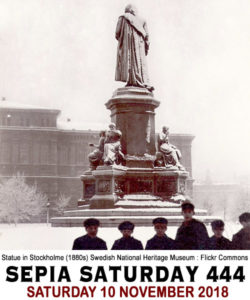
Chattanooga. View from Lookout Mountain. February 1864. Photographer George N. Banard
General Affidavit
State of Tennessee County of Hamilton 4 Dec 1889
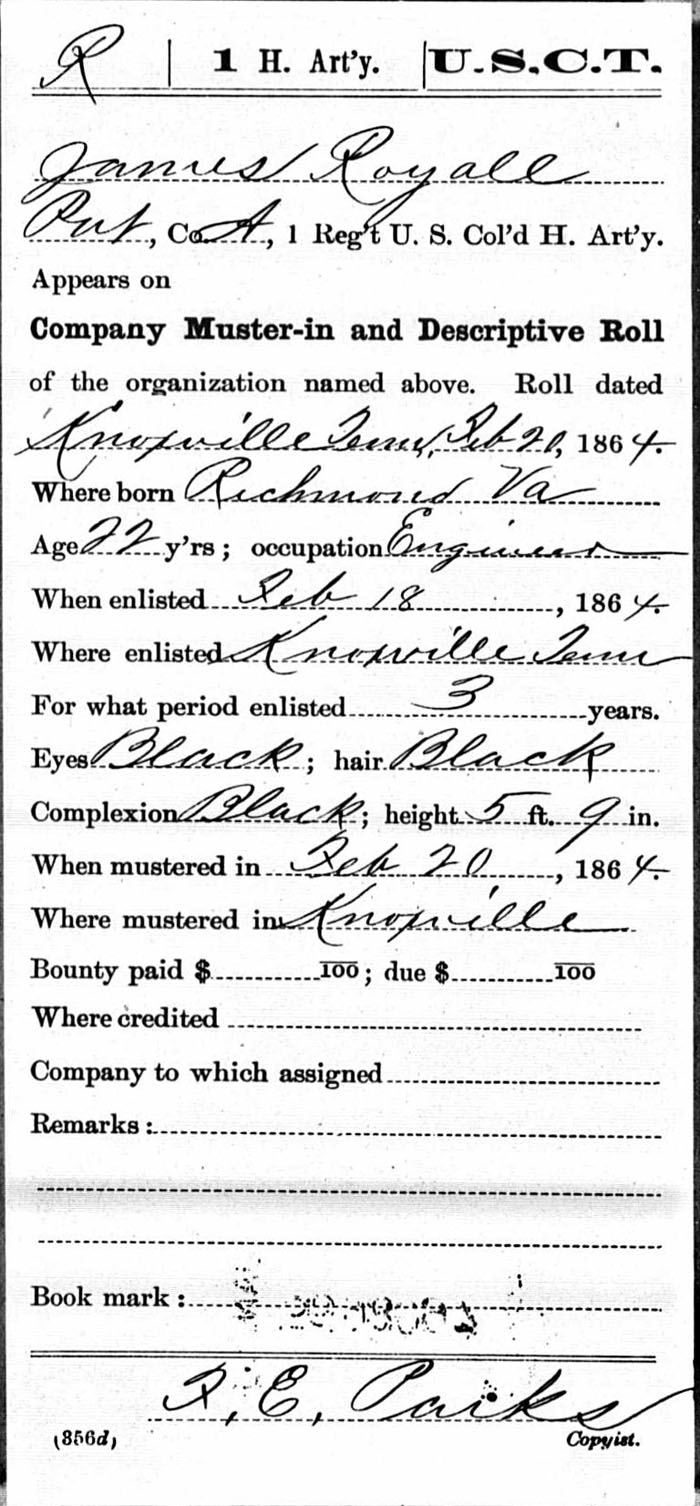
I, James Royal aged 46 years a citizen of the town of Cohutta in county of Whitfield state of Georgia. I, James Royal, was a private soldier in Company “A” 1st Regiment U.S.C. Heavy Artillery and first met the claimant Katie in Chattanooga when Sgt. Philip Cleage brought her into the camp of the same regiment and he introduced her to me as his wife. At all events, they lived and cohabited together in camp where no woman was allowed to remain unless she had a husband to protect her and when the ambulance came to move him to the smallpox camp, she insisted on going along to wait on him and nurse him, but I stood aloof and they took him away and the next thing I heard that he had died and I never saw her since.
My present P.O. address is Sherman Heights – Hamilton Co. Tenn. My home is Cohutta GA. I further declare that I have no interest in said case and am not concerned in its prosecution.
James Royal X his mark
Click image to enlarge ************
I found the information for this post in Katie Cleage’s Civil War Pension file and on ancestry.com.
Affidavit of Mrs. Jemima Cleage: The former owner of both Philip and Katie when slaves
11
Dec. 1889
Jemima Hurst age 52
I am the widow of Alexander Cleage deceased, late of Athens, McMinn County, Tennessee. I recognize the applicant, Katie, as one of our former slaves. My husband purchased her when quite a child, 13 years old, from my brother Russell Hurst – we then resided on a farm about 3 miles from Athens and my brother’s farm was about 6 miles distant.
All the ceremony at that time necessary for slaves to marry was the consent of the owners. I think it was in December 1862, Katie was delivered of a stillborn child. And again in December 1863 of another stillborn child. And I was present at the birth of both children.
In December 1863 Philip left us, all the slaves having been liberated by proclamation of the President, and I heard that he had joined the army. Katie remained with us some 8 months after Philip left us and then she went off.
I
further state they both were very young and had not been previously married and
I have never heard that she remarried. She was always a good clean girl and I
kept her in the house to sew. I know
what I here state from personal recollection. I have not seen her for a long
time.
And
I further declare that I have no interest in said case and am not concerned in
its prosecution.
Jemima Cleage
***********
I found the information for this post in Katie Cleage’s Civil War Pension file.
Today I begin with deposition made by Katie Cleage on 10 December 1989. Katie Cleage is not my ancestor. She and Philip were enslaved on the same plantation that my great grandfather Louis Cleage, his parents Frank and Juda and their other children were held in slavery. I have studied the whole community that made up the Cleage plantations in McMinn County, Tennessee in order to get a full picture of the life that my family lived during those times. I have found the pension files to be a wealth of information. I have also become interested in the extended community of Cleages for themselves as I study them.
***************
State of Tennessee
County of Hamilton
10 Dec 1889 In the matter of the Claim No. 288.391 of Katie Cleage widow of Philip Cleage deceased, late a sergeant In Company “A.” 1st Regiment United States Colored Heavy Artilliary (U.S.C.H.A.) Personally appeared the claimant Katie Cleage before me, a notary public in and fore the county and state aforesaid and after being duly sworn deposes and says –
I, Katie Cleage, am the widow of the late Phillip Cleage who was a Sergeant in Company “A” 1st regiment, United States Colored Heavy Artillery. I was born near Mouse Creek McMinn County and State of Tennessee and my P.O. address was the same when the war broke out.
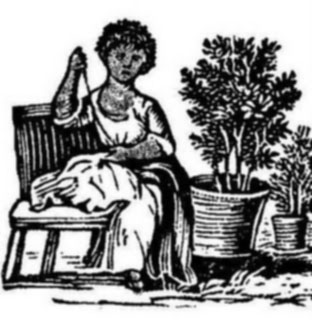
I belonged to Alexander Cleage. He bought me as a slave from Lewis R. Hurst, when I was only 13 years old and he took me to his home in Athens McMinn County. Philip Cleage the soldier, was one of Mr. Cleage’s Boys. Phillip was the best looking boy on the plantation and I was installed in the family as seamstress. Philip was nearly my own color. He began to pay attention to me and the feeling was reciprocated. I had one child by Philip and my master made us marry and he read the marriage ceremony himself and pronounced us husband and wife. The child which was born before our marriage died and the next one, which was born after our marriage, died also.
In 1863 the Yankee Army came along and took all the men who were fit for the service and my husband with the rest. Before going away he advised me to remain at home and I did as long as I could do so in safety, but the white people grew so tyrannical, I was obliged to leave. I went to Cleveland, Tenn. and was employed by a Mr. Griggesby who was a telegraph operator. My brother was there also and when my term expired, I moved to Chattanooga, where I was employed by Mrs. Colonel Grosverner and Mrs. General Wagner and I went with them and the army away down in Georgia and back again to Chattanooga.
When those two ladies returned to go back to the North, they requested me to go along with them. I then told them that I was a married woman and that my husband was in the Colored Troops, and that I could not go, lest I might lose sight of him. So they left me and I hired myself to a Mrs. Delany, whose husband was an officer in a Regiment at Chattanooga. She paid me 75 cents a day and my meals for sewing for her.
In the meantime, the 1st Heavy moved to Chattanooga and was here two days before I found out that it was the Regiment which my husband belonged to. I accidentally saw my brother and he told me that Philip was here. He went back and told Phillip that he had found me. Then Philip came and took me with him into camp and introduced to his friends and he prepared a place for me in Camp with him and I cooked for him and my brother Abe. And I still went back and forth and earned my 75 cents a day sewing as before for Mrs. Delaney.
Philip, my husband, was feeling bad one evening and was lying down with his head in my lap, and I noticed that there was a rash breaking out on his face and neck and next morning the doctor, Dr. E. McKnight, pronounced it small pox and sent him to the hospital but would not let me go with him. This was the last I seen of my husband, as he died and was buried away from me.
++++++++
General Grosverner was at the Reunion of the Army of the Cumberland last September. I went to see him and he recognized me immediately and told me how I missed it by not going north with his wife! I have remained in Chattanooga every since the death of my husband and have not remarried. I am positive that Philip had never any other wife, for his master Alexander Cleage would not permit any of his people to marry outside of his plantation.
I made application for widows Pension in 1885 and from sickness and poverty I have been unable to bear the expenses procuring the needed evidence. I am now informed that my husband’s people are trying to take advantage of my silence and I now ask the honorable commissioner’s recognition of this claim. I cannot see to sew as I used to do and have been trying to earn a living by washing. I have sewed so long that my eyes are ruined.
Witness J M Sutton
G R Phillips
Katie Cleage (X her
mark)
Sworn to and subscribed before me this day, by the above named affiant; I certify that the forgoing affidavit was read over to aforesaid affiant, and it’s contents fully explained.
Witness my hand and official seal this 5 day of Dec 1889 J.A. Holtzlaw Notary Public.
You can read more about the ending of slavery in Eastern Tennessee here -> Slavery Ends in Tennessee
************
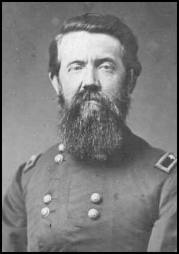
Charles H. Grosvenor
“Colonel (later Brevet Brigadier General) Charles H. Grosvenor took over command of the 18th Ohio Regiment of Veteran Infantry at Chattanooga, TN on October 31, 1864. Earlier Captain Charles H. Grosvenor had been recognized for “gallantry and coolness” under fire when the 18th Regiment made several “brilliant charges” on the second day of the Battle of Chickamauga. The regiment was involved in the occupation of Nashville during Hood’s threat to that city. They followed the pursuit of Hood in the Tennessee River Valley during December 17-28, 1864. During this period the 18th participated in the bloody but successful assault on Overton Hill. Here again, the battle took a heavy toll among the unit’s officers and men. But the heavy fighting was over for the 18th Regiment. They were sent to Columbus, Ohio, and were mustered out on October 22, 1865. General Charles H. Grosvenor returned to Athens (Ohio) where he resumed his law practice.” From the page General Grosvenor
**********
I found the information for this post in Katie Cleage’s Civil War Pension file, on ancestry.com and familysearch.org and the links above.
Philip Cleage was born into slavery about 1843 on the plantation of Alexander Cleage in Athens, McMinn County, Tennessee. Philip was the third child of the four known children of Julie Ann Evans. He grew up to work on the farm. Sometimes he drove the coach.
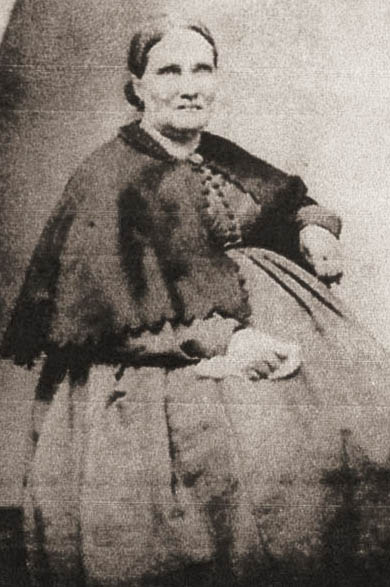
Katie Cleage was born on the Hurst plantation in Mouse Creek, McMinn County, Tennessee. She was the fourth of the seven known children of Hulda Hurst. When Katie was 13, Alexander and Jemima (Hurst) Cleage bought her from Jemima’s brother, Lewis Russell Hurst. She was put to work as the seamstress.
In 1862, when Philip was 19 and Katie was 16, they were married by the slave holder, Alexander Cleage. They had two children together. The first was stillborn. The second died soon after birth.
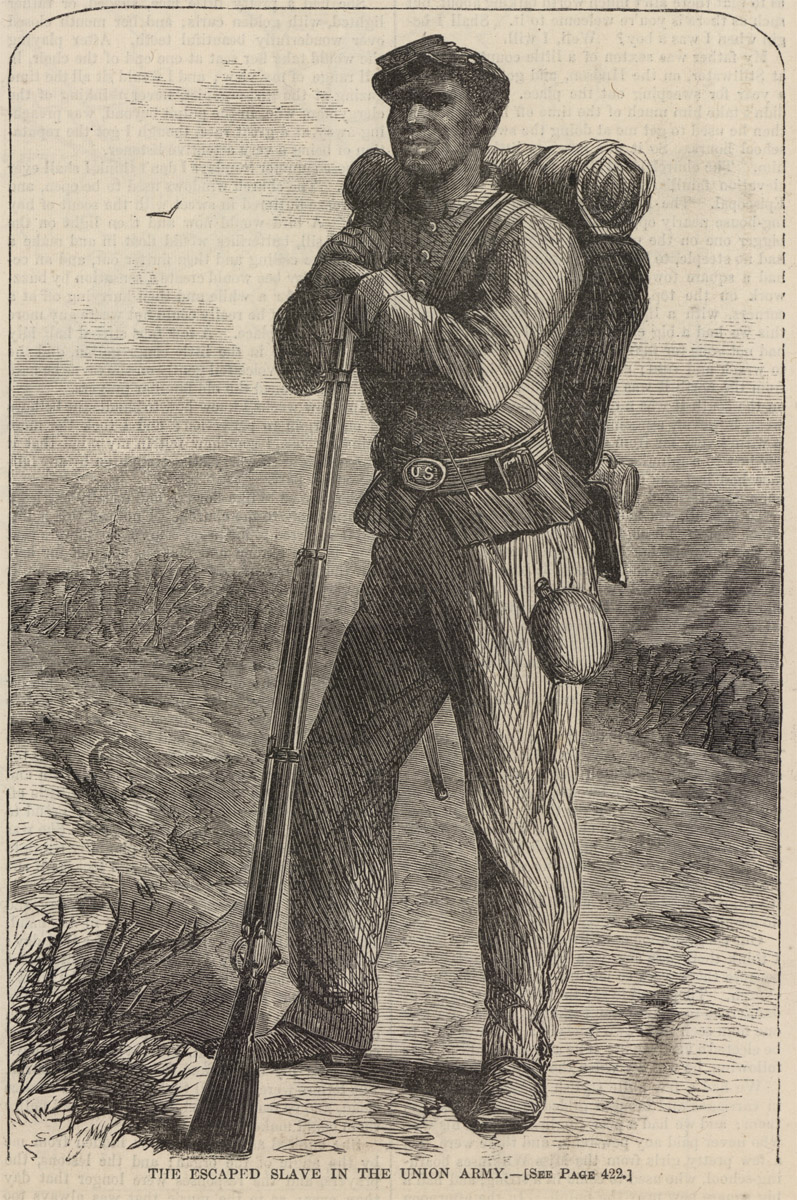
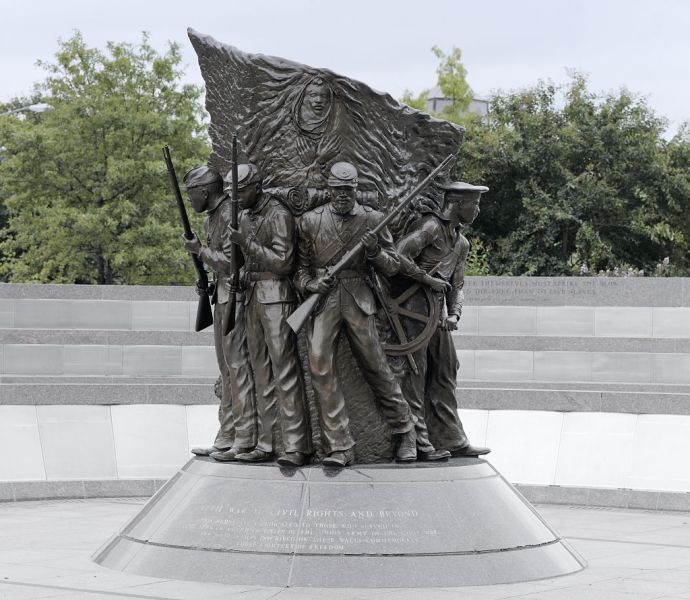
When Sherman’s army came to the area, Philip and other men from the Cleage plantations joined the 1st U.S. Colored Heavy Artillery (USCT).
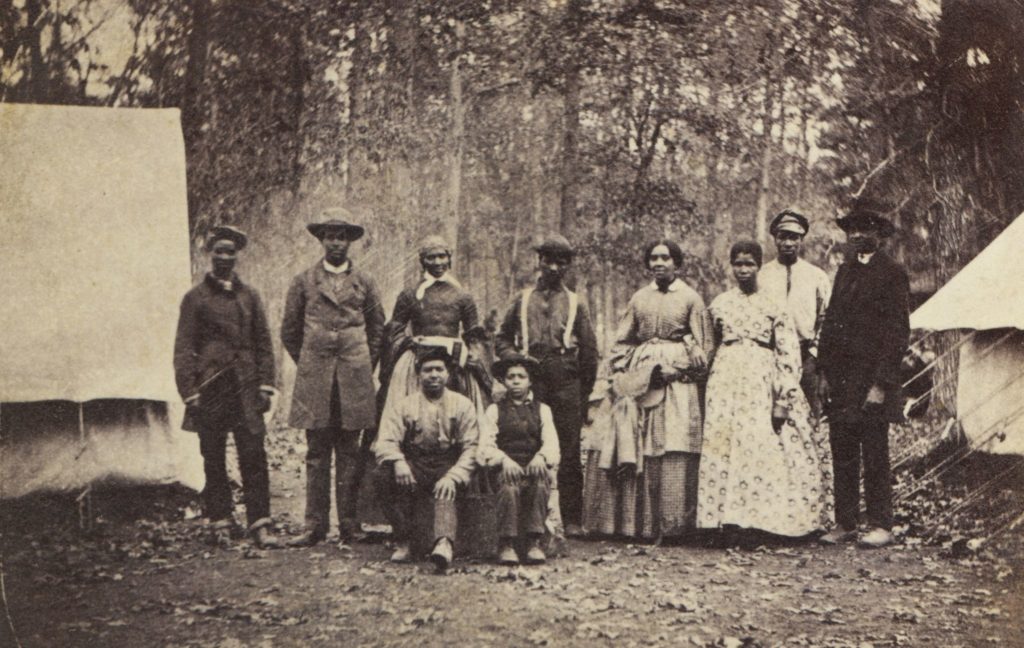
As the confusion of war intensified, Katie decided she would leave too. She first went to Cleveland, Tennessee and after working a variety of sewing jobs, eventually ended up in the USCT camp in Chattanooga. She lived on the base with her husband until he died of smallpox on 9 February 1866. In 1883 Katie filed for a widow’s pension. Her life story is told in her depositions and those of members of her community, including others who had been enslaved on the Cleage plantations, neighbors, men who served in the same unit as Philip and members of the slave holding Cleage family.
Using these testimonies and related information I will reconstruct Katie’s life in the coming series of blog posts.
Organized at Knoxville, Tenn., February 20, 1864. Attached to 2nd Brigade, 4th Division, 23rd Corps, Dept. of Ohio, to February, 1865. 2nd Brigade, 4th Division, District of East Tennessee, Dept. of the Cumberland, to March, 1865. 1st Brigade, 4th Division, District of East Tennessee, to March, 1866.
SERVICE.-Duty at Knoxville, Tenn., till January, 1865. Operations against Wheeler in East Tennessee August 15-25, 1864. Operations in Northern Alabama and East Tennessee January 31-April 24, 1865. Stoneman’s operations from East Tennessee into Southwestern Virginia and Western North Carolina February to April. At Greenville and in District of East Tennessee till March, 1866. Mustered out March 31, 1866.
Meanwhile, in Kentucky, my grandmother Pearl Reed Cleage’s uncle Thomas Allen (formerly Thomas Ray, who later dropped his slave name of “Ray” and took his father’s name of “Allen”), served with the 5h Regiment USCT Calvary.
Organized at Camp Nelson, Ky., October 24, 1864. Attached to 1st Division, District of Kentucky, Dept. of Ohio, to February, 1865. Military District of Kentucky and Dept. of Arkansas, to March, 1866.
Service:
Participated in Burbridge’s Raid from Kentucky into Southwestern Virginia September 20-October 17, 1864. Action at Saltsville, Va., October 2. At Lexington, Ky., October 19. Harrodsburg, Ky., October 21. Stoneman’s Raid into Southwestern Virginia December 10-29. Near Marion December 17-18. Capture of Saltsville and destruction of salt works December 20-21. Duty at Ghent, Paducah, LaGrange, Crab Orchard and Camp Nelson till August, 1865, and in the Dept. of Arkansas till March, 1866. Mustered out March 20, 1866.
Regiment lost during service 35 Enlisted men killed and mortally wounded and 1 Officer and 151 Enlisted men by disease. Total 187.
__________________
So much new information waiting to be written up, but to see what I have already done, click on the underlined links above.
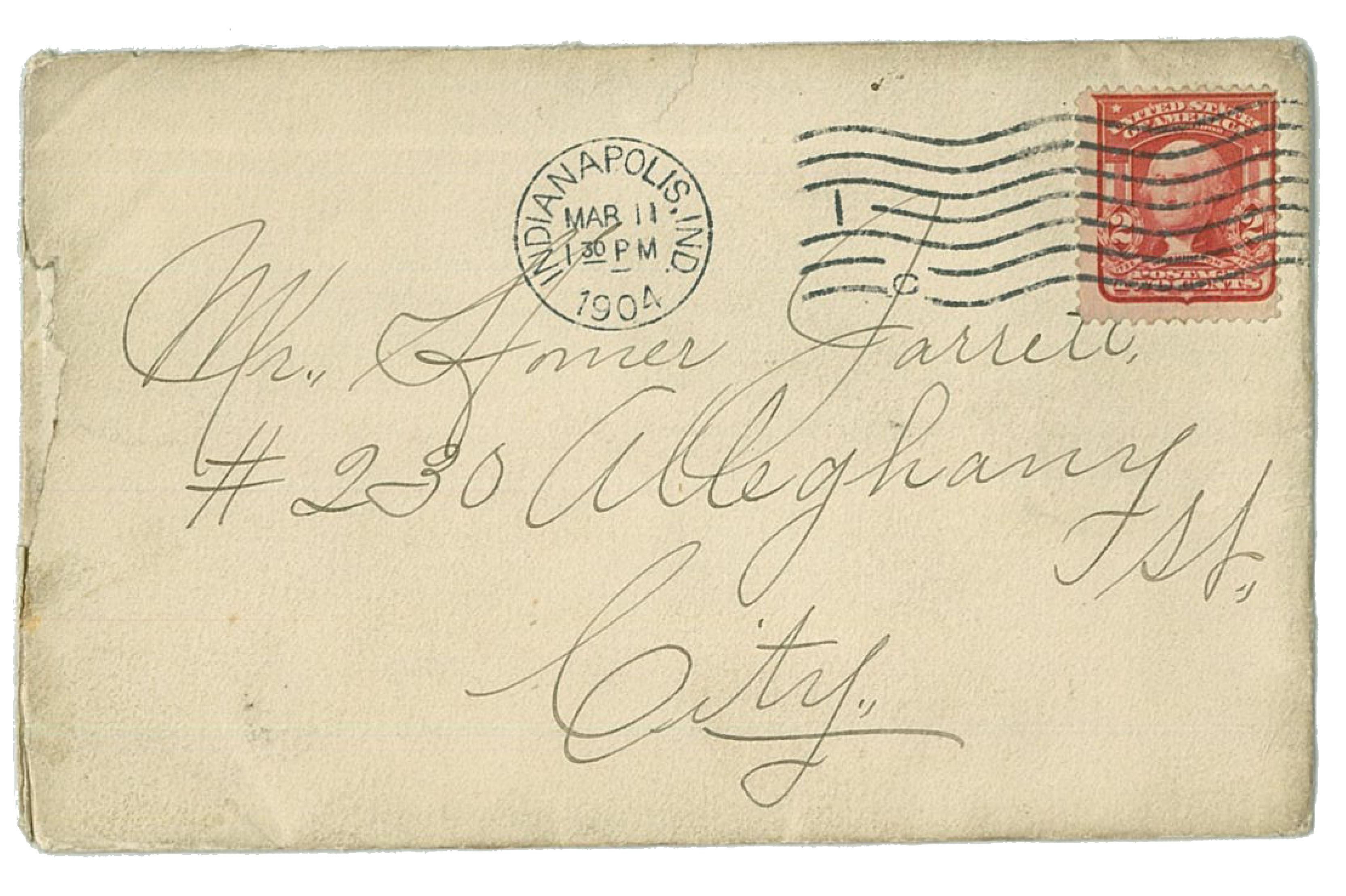
Courtesy of Hargrett Rare Book and Manuscript Library/University of Georgia Libraries. Click to enlarge.
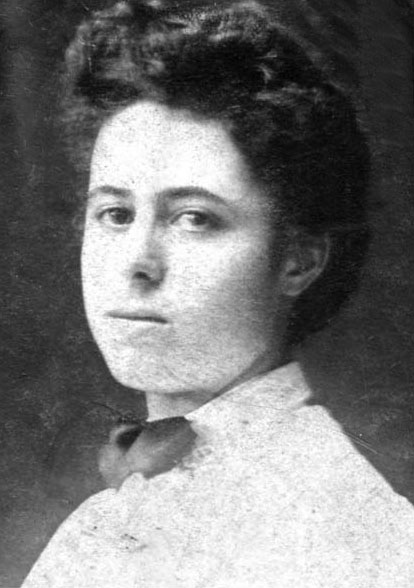
Pearl Reed
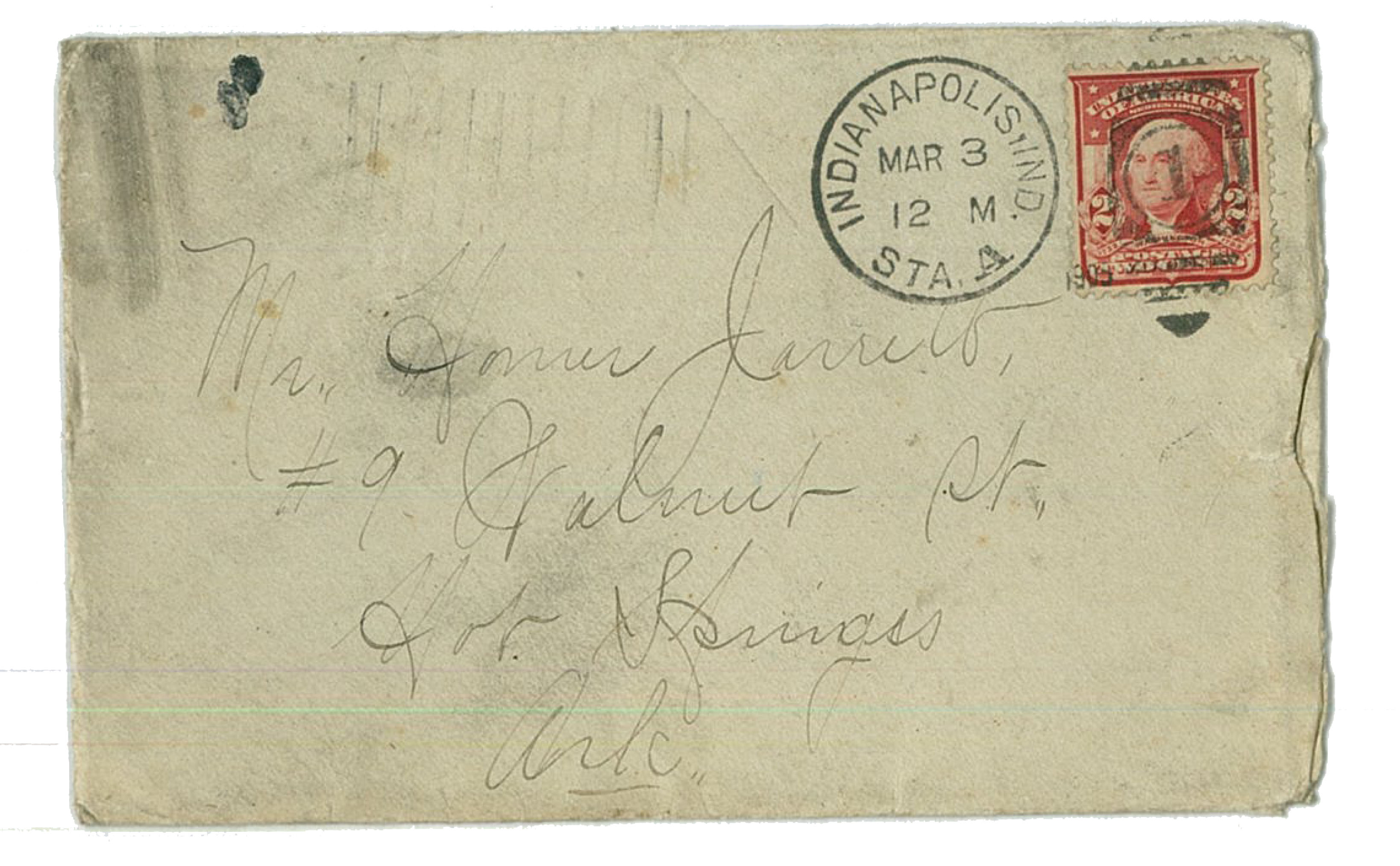
Homer Jarrett 9 Walnut St. Hot Springs, Ark
2730 Kenwood Ave. Indianapolis, In March 10, 1905
Dear Homer;
Your letter, stamps and music were received o.k. and I am very grateful to you. Since I wrote to you I’ve learned that the song mentioned is quite old and Hugh seems to have whistled it in a very long time and heard it at the theater. I do not like it a bit less for all that. I think it very sweet and sad and mother likes it too.
I asked you when you were coming back and for answer you sent me 50 stamps. Do you mean to be away until they are used? If I should write each week, why they would last 12 months and one half. Do you mean to remain away that long Homer? In asking you that, I did not imply that you should pay me postage sir.
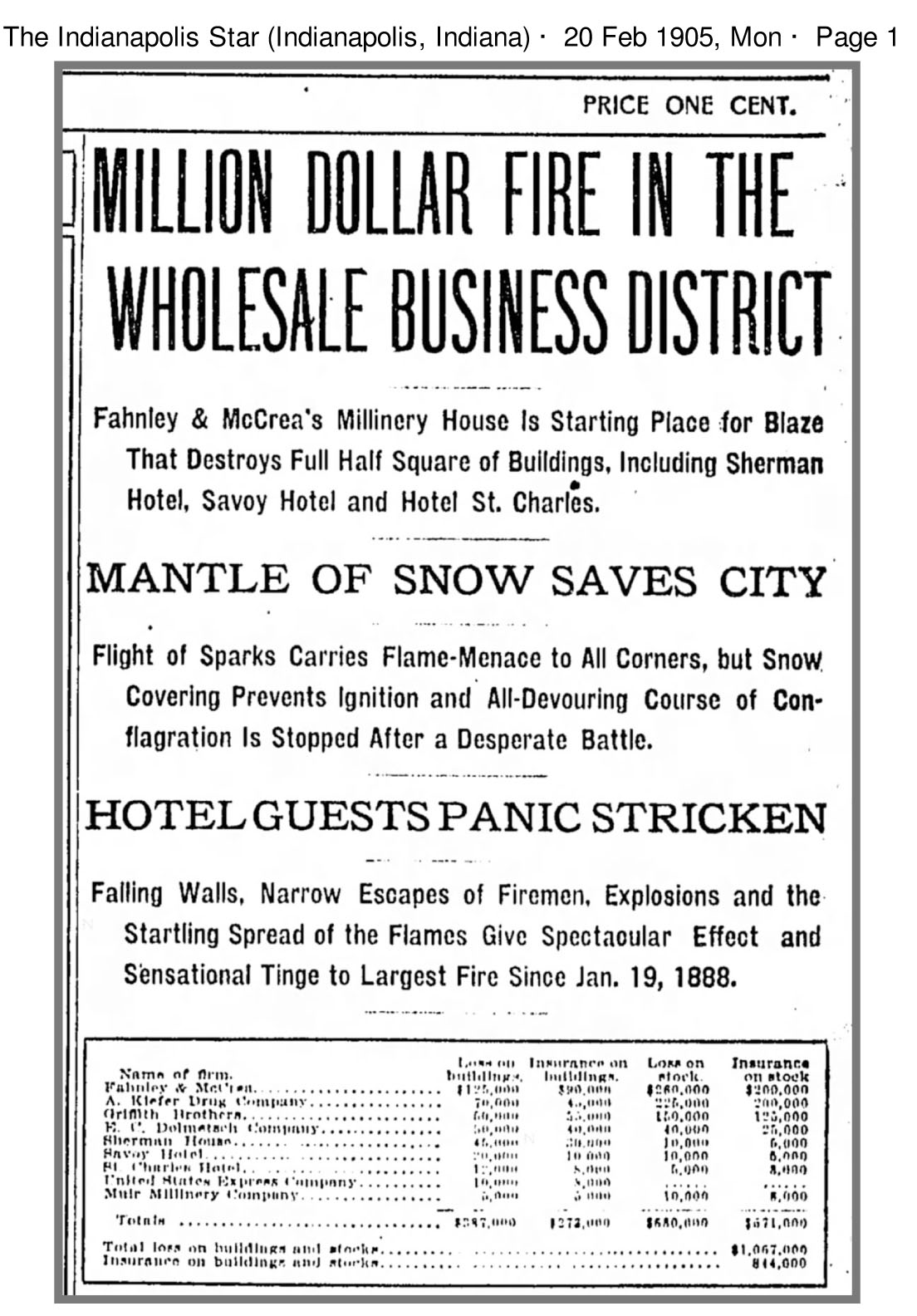
You spoke of the fire, Homer, well “my” paper said “The exact area burned over is 104 ½ acres” and also, “It is impossible to give a close estimate of the losses or the insurances. Probably a million dollars ($1,000,000) is not too high and may not be high enough. Insurance will not reach 50% of losses.”
The game of “Pit” is played with cards that resemble ordinary playing cards. All of the different grains are mentioned and worth from 35 to 100 points. The players try to corner all of one grain and when they do so they receive to their credit whatever it’s worth. The game has 500 points in all. Very interesting. Think you would like it. I did then.
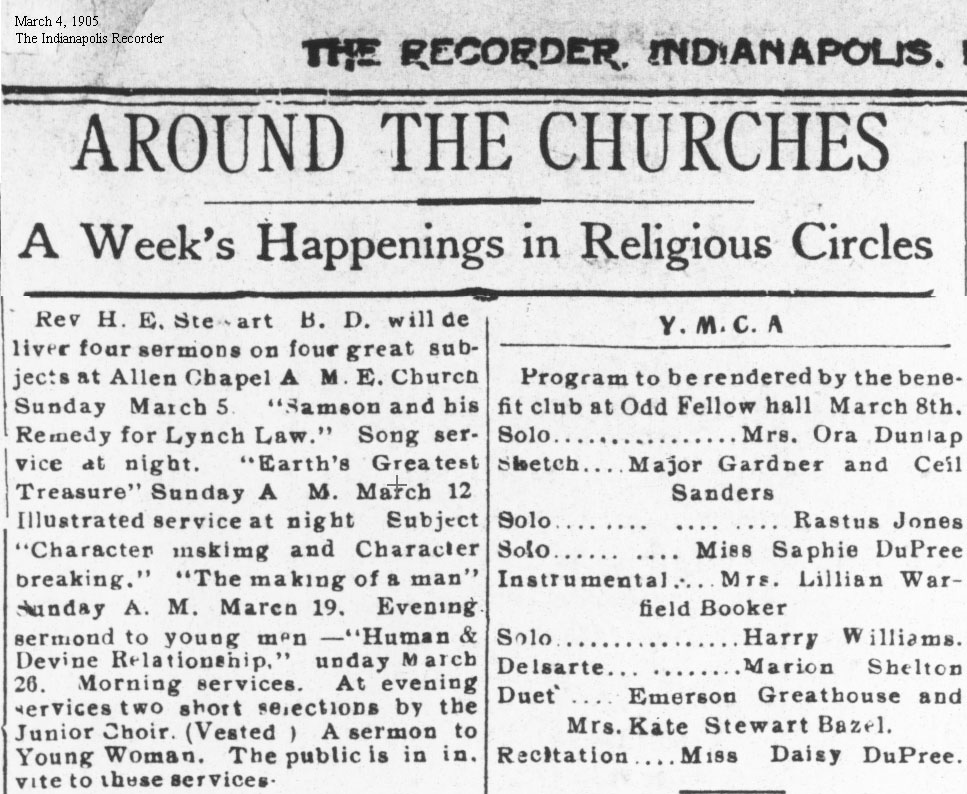
You asked me whom or who accompanied me to Allen Chapel; well I will inform you “mother and Hugh.”
Have you heard from home and friends lately? How are your mother and brother?
Forgive me Homer and how are you? I forgot to ask. I am very well; and very busy just at present. Mother wanted to go to Benton Harbor this spring and I did not so, I think I’m big girl tho to remain at home. Have I tired you Homer with this stuff? I am sure I have. You must write and tell me all about yourself and mates and O everything. It is almost 11:30 P.M. and I am sleepy so just,
Good night Pearl
___________________
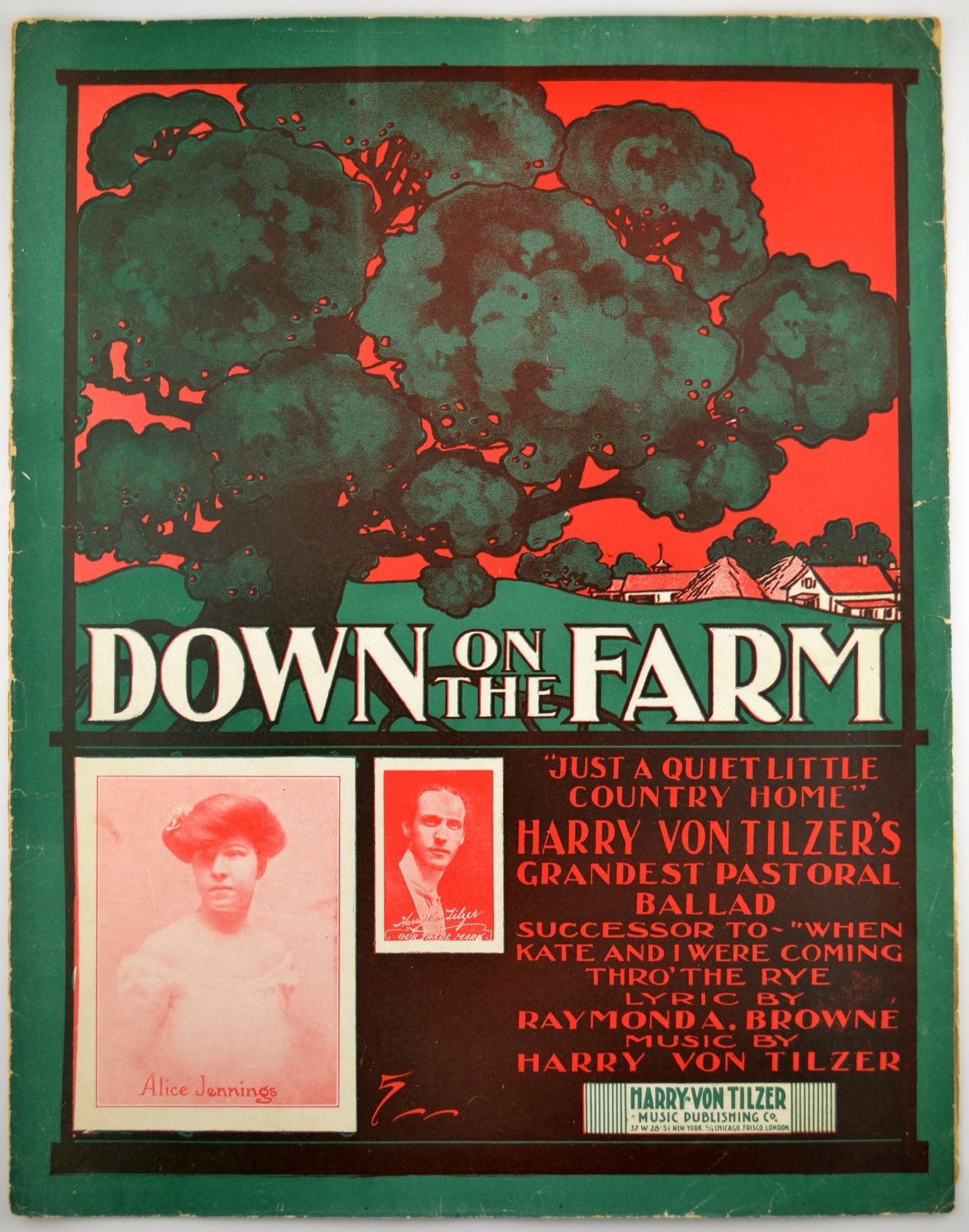
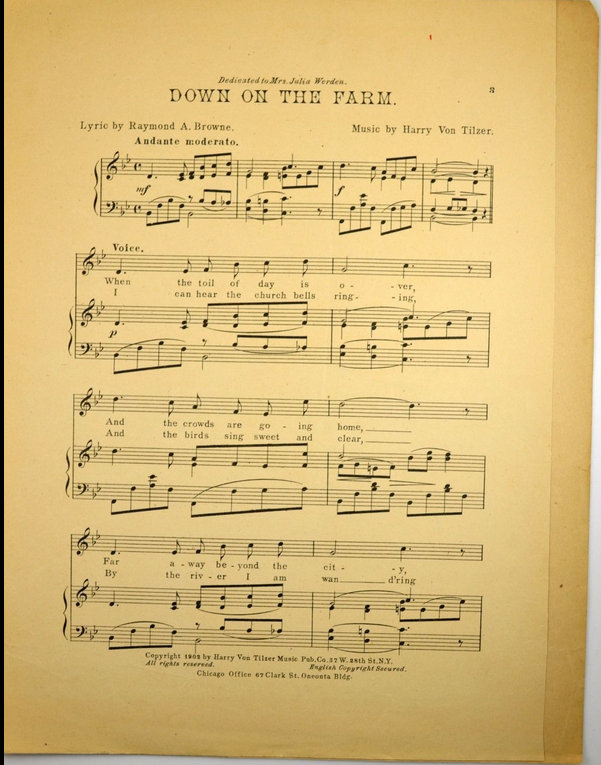
I looked for the song “Down on The Farm” on youtube, alas, I could not find it. I did find the sheet music, which I gather Homer sent and Pearl would have played on the piano, or the guitar.
Click the link for more about Harry Von Tilzer, the author of this and many popular songs.
Courtesy of Hargrett Rare Book and Manuscript Library/University of Georgia Libraries. Click to enlarge.
Pearl Reed
Homer Jarrett 9 Walnut St. Hot Springs, Ark
2730 Kenwood Ave Indianapolis Ind. March 2, 1905
Dear Homer
Your paper was received and I thank you for sending it to me. Very glad to hear that your mother is improving so nicely and that you will not be obliged to return home. It seems strange that it all happens while you are away but it seems that way, that when we would most have things do nicely and run smoothly – it most assuredly goes just the contrary.
You asked me if I still followed the advice of Mr. McFadden. Well to speak confidentially I think that I’ve neglected in some things, but the main and most important, I have followed closely as I hope ever to do. I am sorry that you have neglected also.
Our fire, which you mentioned, was not so very bad Homer, only about one half a block. Of course it was bad in a way it burned and smoked for two days. I have forgotten the cause of it, if indeed I ever knew. I was not interested in it, only that through it many poor men would find employment. The building at the corner of Mer(idian) & Wash(ington) the S.W. Cor(ner) is being torn down to make room for a large department store of L.S. Ayres.
O Homer, I almost forgot to tell you that I visited Allen Chapel Sunday Eve. There was an illustrated sermon with stereoscopic views, which was very good. Don’t you know I never tire of them. When I was real little I would be delighted with a series of these pictures and I am almost the same now. There was one set of pictures accompanied by a beautiful song entitled the or I should have said “Down on the Farm” which I thought just lovely. I never heard it before and I think I shall try and get it if I can.
Last night we had some company and someone had brought the game of “Pit”. It derived it’s name from it’s allusions to Wall Street. Really Homer it is great. I really enjoyed it.
I have tried your patience surely I know haven’t I, Homer. O, it takes so much scribbling to say such a little, where as in speaking in only a few minutes we can say so much.
When are you coming home or, I beg your pardon, back to Indianapolis?
Courtesy of Hargrett Rare Book and Manuscript Library/University of Georgia Libraries. Click to enlarge.
Pearl Reed
Homer Jarrett 9 Walnut St. Hot Springs, Ark
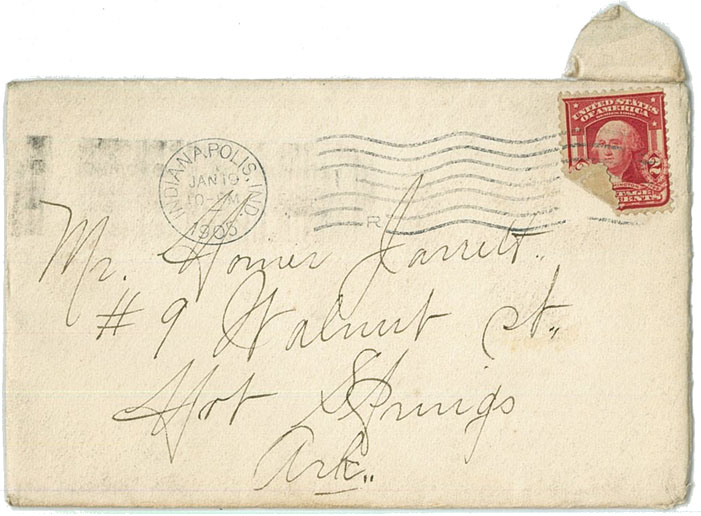
2731 Kenwood Ave Indianapolis Ind. January 18, 1905
Mr. Jarrett;
Homer, having just returned from a long walk with Helen, Jim and Ben, I wish to speak with you. I shall pretend that I see you and I can get on nicer or better. Homer I am sorry that our short acquaintance was so very disappointing to you and that I was and am so very contrary and flighty but you will see Homer, that I can’t be otherwise I could not if I tried. Of course I shall not say that I do try – for I should speak untrue. Maybe it is just as well that we did not go any more than we did together.
Listen, you speak of the gifts from you to me. Why, Homer, I would have given them back to you because I did not think myself worthy of them, do you understand? I was and am proud of the books and the parasol and shall always be and love them.
But Homer, listen if you do not believe anything that I say any more, don’t you think that I better cease writing to you? You do not care for me or you would trust me. Do you know that people generally trust those that they truly care for? Do you always expect proofs of things? Do you never think of trusting anybody, even those you profess to care for? Homer, this being the case I think we should cease to correspond, don’t you? You do and would not believe anything I should say and so it would be all of no avail.
Mother is getting on nicely and sends her best regards to you and advises you to be a good boy.
Minnie and family are quite well. They send love and best wishes to you. The children often speak of you to me.
Love from all to you.
Glad you heard from your mother and that she is well.
Our church is carrying on revival now and I think I shall attend tomorrow night.
Homer, Good By Yours Sincerely, Pearl D. Reed
________________
In January of 1905, Minnie Mullins and her four children were visiting Indianapolis from Benton Harbor, Michigan. Minnie was 27 years old. She was the mother of four children – Helen, Jim, Ben and Arthur.
Courtesy of Hargrett Rare Book and Manuscript Library/University of Georgia Libraries. Click to enlarge.
Pearl Reed
Homer Jarrett 9 Walnut St. Hot Springs, Ark
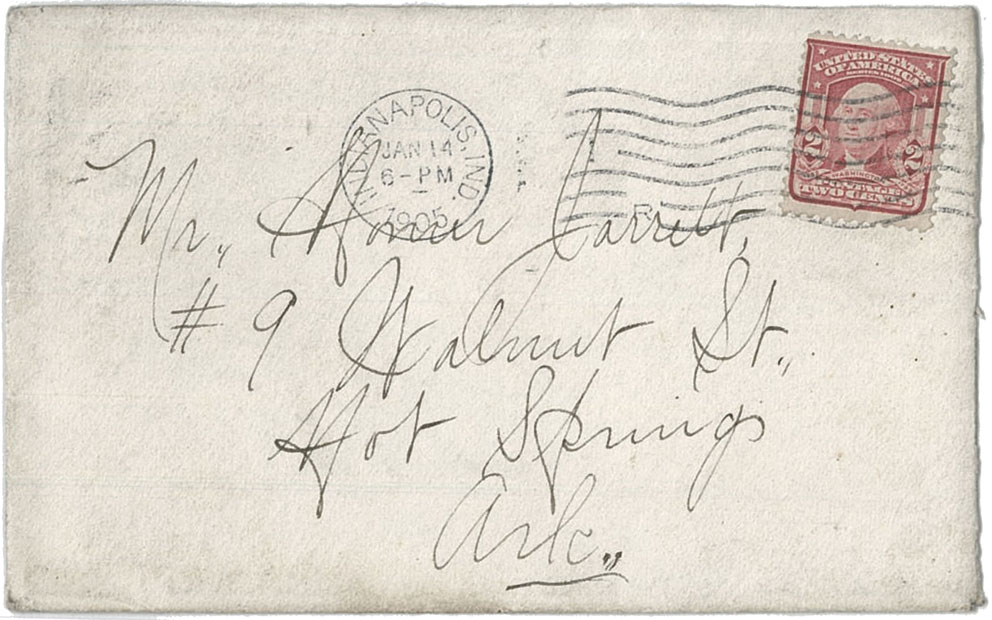
2730 Kenwood Ave. Indianapolis, Ind January 15, 1905
Dear Homer,
Your letter was received with delight. Was so glad to hear from you. Do you believe it? Of course you don’t. You never believed a thing I told you, do you, friend? Forgive me Homer, I did not mean to annoy you, and I forget that this year I was not to quarrel, not to worry anyone, if I could possibly avoid it.
Your scenic description was splendid, I could almost picture myself there among the mountains. So glad to hear that you have a church so very near you and that you are so pleased with your surroundings.
Mother is much better now. She sends her love to you. Do you believe it? Mr. Mullins and family are quite well. She sends her best regard to you. There is nothing of unusual happening that I know of Homer, to tell you of now so I shall say good-night.