
Lot to unpack here… my mind snagged on 75 people in 8 “cabins” Opps, I miscounted the first time, there were 48 people in eight cabins with four young girls, ages 12, 13 and 19 being rented out so that they weren’t living in the cabins.
By 1860 David Cleage had real estate worth $20,000 and a personal worth of $90,000. He now owned 48 people who lived in eight cabins.
Below is the 1860 slave census with those on David Cleage’s plantation being listed by age, sex and color Mu(lato) or B(lack). Unfortunately they are not arranged in family groups. Sometimes a family shared a cabin. Sometimes a group of unmarried young men shared a cabin.
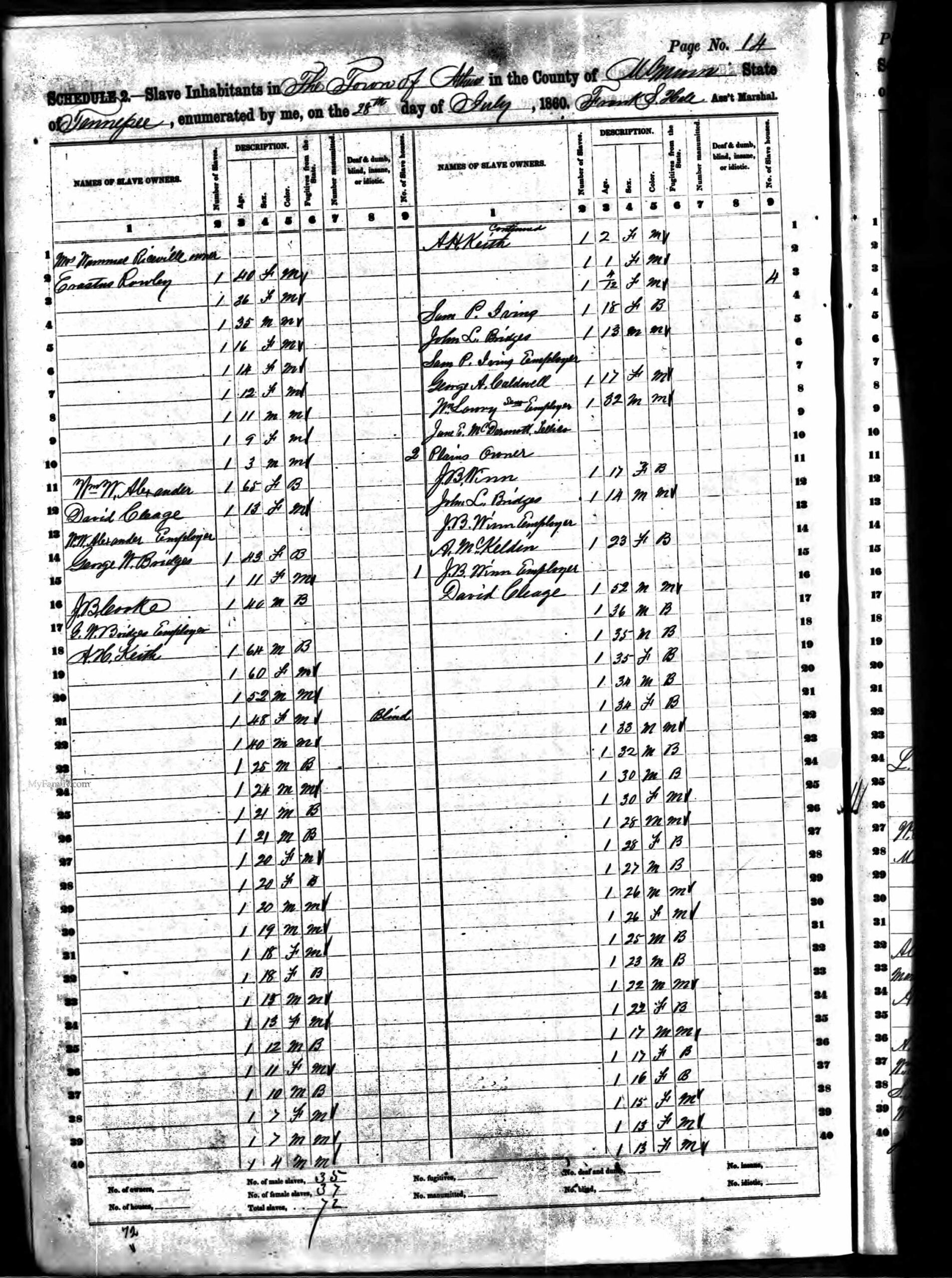
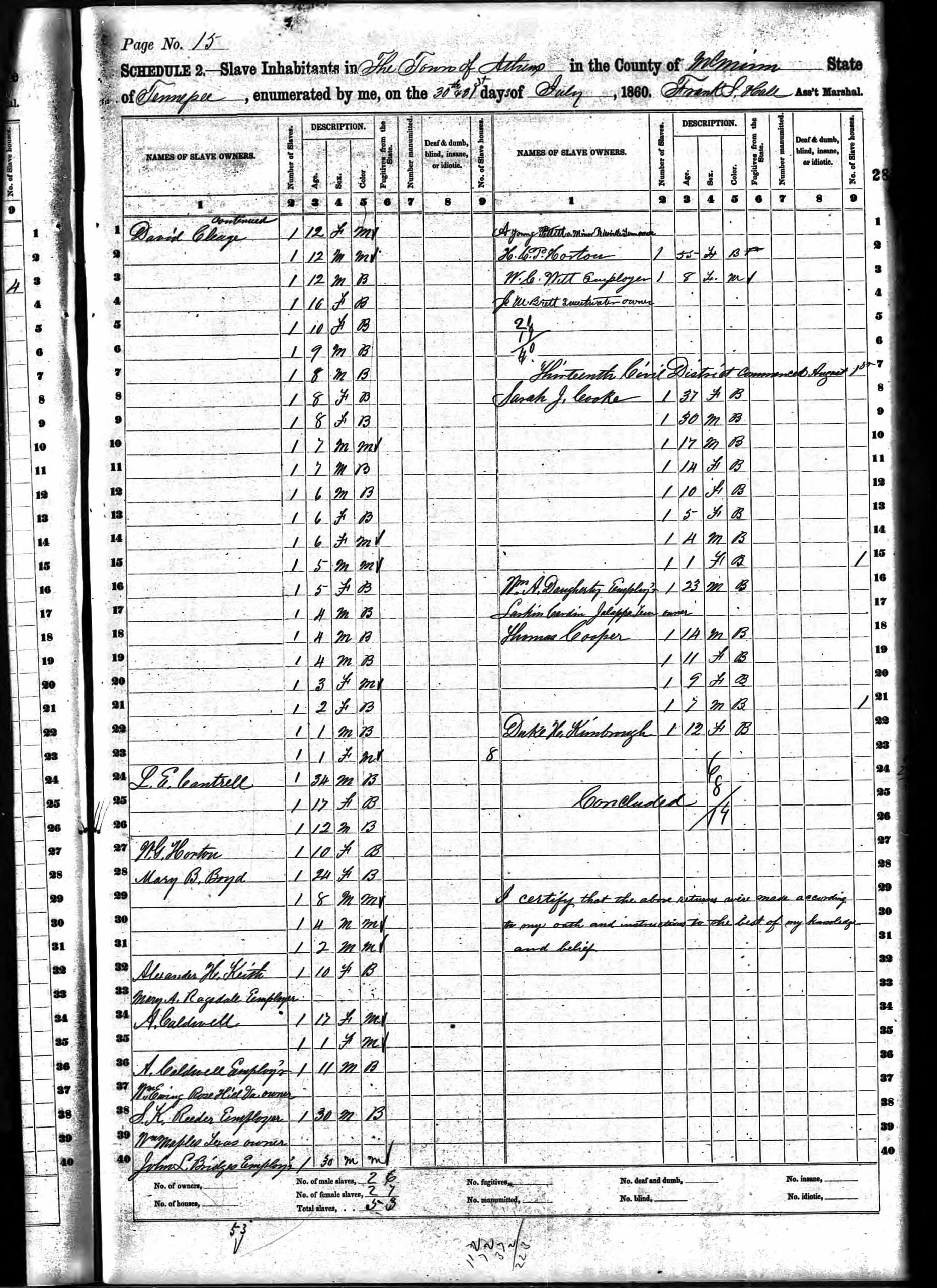
The 1860 Slave Census for David Cleage
Names and approximate ages of some of the enslaved people that lived in the quarters in 1860 on David Cleage’s plantation. They are in family groups.
Charles A. 32
Martha 25
Julie 11
Hillard 9
Frank 3
Philip 1
Charles 20
Mary 4
Richard 2
James 1
Jerry 33
Charlotte 25
Harriett 10
America Emaline 8
Joseph 3
Mary 2
Henry 36
Jane 29
Joseph 45
Amy 35
Henry 3
Jeff 2
Isaac 32
Fanny 35
William 13
Mariah 12
Neppie 10
Steve 9
Isaac 6
Malinda 3
Fanny 38
Martha Jane 20
Mary 18
Lydia 16
Ellen 14
Sydney 12
Jacob 9
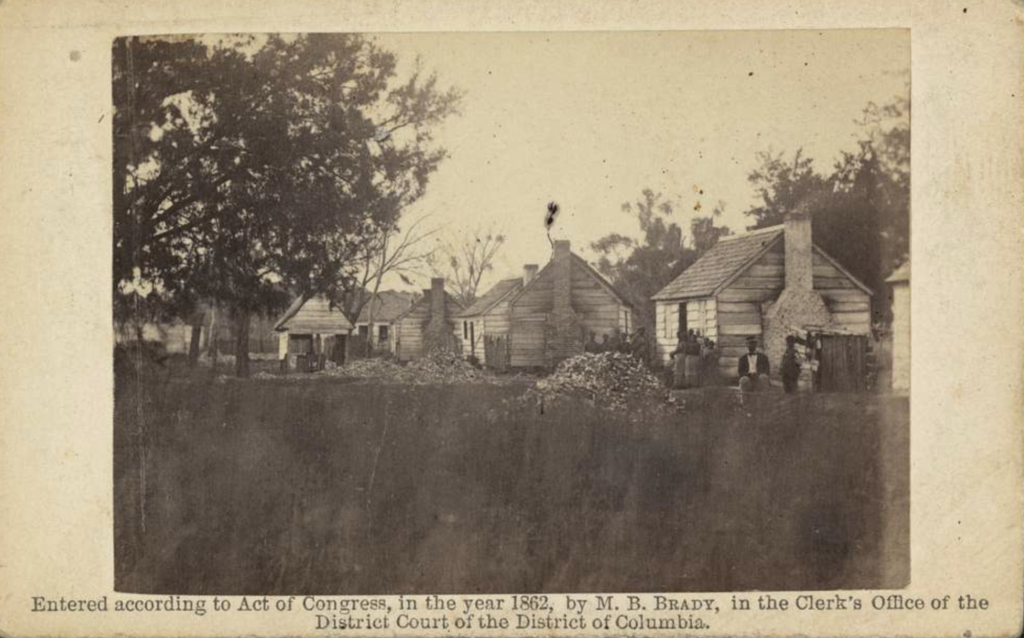
The pictures of these cabins are not from those on the Cleage plantation. None of those remain. They were probably similar. The cabins were grouped together near the house which allowed for community interaction. The cabins, at least some of them, had a loft that was used for sleeping, along with the downstairs. After all, quite a few people lived in most of the cabins.
A Cabin Story
“The rectangular one-story, two-room, weatherboard-clad building is constructed of southern yellow pine. It includes an overhanging porch roof, a brick masonry fireplace, and a back door. The original design featured a single front doorway, an open floor plan, and a loft. As many as 10 to 12 enslaved people were held in bondage in the cabin, where they slept in the open space and the loft.
” After freedom came, formerly enslaved Black people served as sharecroppers and lived in their former slave cabins, which they retrofitted in an effort to make them homes. They added newspaper for insulation. They added a wall dividing the large common area into two rooms. They also manifested their freedom by adding a back door, enabling them to come and go as they pleased, no longer under surveillance from the single entryway.”
In Fanny Cleage Turks application for a pension due her because her husband, Isaac Turk served in the United States Colored Troops, Charles A. Cleage gave the following testimony. Both families were enslaved on David Cleage’s plantation.
“…Charles A. Cleage, who, I hereby certify, is a respectable and credible person, and who, being duly sworn, declares in relation to the aforesaid claim as follows: that he and the said soldier Isaac Turk were slaves and belonged to the same master during the year 1849 and on up to the war of the rebellion they lived as the custom was, within a few nods of each other, both being married and having children; he further states he is enabled to fix the date of birth of Mariah Witt, daughter of said soldier Isaac Turk, by the birth of his own daughter Juley Ann Watts, which as his family Bible Record shows, occurred July 29th 1849, said Mariah Witt being born just one month later which would make the birth of said child Mariah August 29th 1849.”
Sallie Marsh said in a testimony in the Katie Cleage pension case:
“When his mother died she gave Phillip to me to take care of. Phillip slept in my house upstairs, until he went in the army. He slept with my oldest boy. My boys name was GEORGE Cleage, I don’t know whether he is living or not. The last I heard of him he was at Corinth, Mississippi.“
I wonder if Charles or some of some of the other men were in different groups?
I don’t think so. I may have gotten the ages mixed up because I was so late doing this post! I will take a look and report back!
It can be difficult to read about the lives our family lived in the past, but it’s great that you are recording this information. My mind goes to the size of the houses we live in today, and the few people that live in them. I do often wonder what our ancestors would think.
I’m 80 and I’m amazed at how big many houses are today. When I was growing up in Detroit in the 1950s and 1960s, homes were so much smaller than they are now.
I was talking to my daughter and she said she could easily move 8 more people into her apartment and still have more room than people had in the cabins for the enslaved. They weren’t build for comfort though. I meant to post a photo of David Cleages house for the contrast.
I remember visiting some of those cabins at plantation near New Orleans. As they were empty I did not realise how many people had to share each small one. Your posts are so educative, thanks.
They should have had that kind of information posted for visitors.
Houses in N America tend to be more spacious than any others I’ve visited. Eight people to a cabin couldn’t have been comfortable.
The whole idea of slavery turns my brain inside out. Similar situations in Fiji with the indentured labourers.
I’m sure it wasn’t comfortable. And no air circulation with just one door and sometimes a window. No screens, the bugs and in winter the cold. Often no furniture, just some quilts and covers. Very uncomfortable.
One of the most touching parts of this post for me was the way people redid the cabins after freedom came. They insulated for warmth, divided the space for privacy, and put in a back door for freedom to enter and exit their home without 24/7 surveillance. That back door, as well as giving a through breeze on stuffy days and nights, allowed them, “to come and go as they pleased”–something most of us take for granted, but it gives us a hint of the constant constraints they had to live under.
I liked that too.
I liked that as well. It shows how little agency they had while enslaved that they could not improve things before they were freed.
If people had been able to own their homes instead of having them tied to the sharecropping farm, they could have made more improvements.
The cabins were small for all those people but they surely felt the “luxury” when they were able to do modifications, making their lives more comfortable. I’m often bewildered how early settlers here had 8 kids or more and all lived in small houses. The difference was they could decide their living conditions.
A real difference. Plus, people expected to share space and beds. They spent time interacting and outdoors. Some housing now is so big and families so small.